
Knowledge – Fish
Swordfish fishing
Fishing for swordfish means: either fishing shallow at night from a drifting boat, or by day lowering an illuminated squid on a heavy weight several hundred metres down. Here is the way there in nine steps, each with a link to the detailed page.
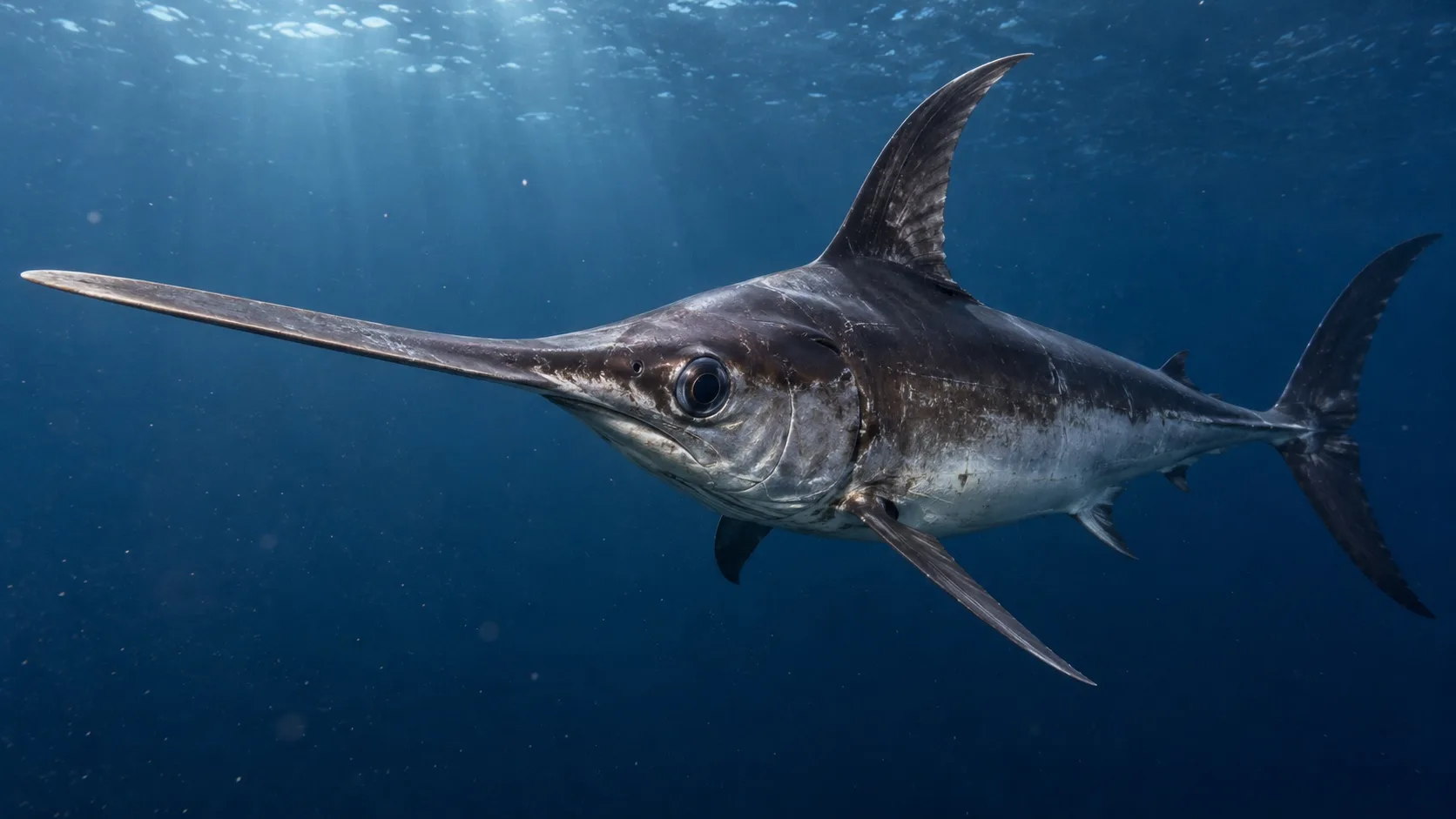
The Federal Institute for Risk Assessment (Bundesinstitut für Risikobewertung) counts swordfish among the large, older predatory fish whose flesh is most heavily contaminated with methylmercury; it advises pregnant and breastfeeding women to avoid such species. The IUCN lists it worldwide as near threatened. In US waters a swordfish you do not keep is released immediately without lifting it out of the water, and south of 5 degrees north recreational anglers are not allowed to catch or land one at all under US rules.
 Choose another fish117 fish with guides
 EelOff-peak season
 EelpoutPossible
 IdePossible
 ArapaimaGood
 GraylingPeak season
 Atlantic salmonSpawning time, please spare
 Brown troutSpawning time, please spare
 Brook troutSpawning time, please spare
 BarbelOff-peak season
 BarramundiSpawning season
 Greater amberjackGood
 Topmouth gudgeonOnly as bycatch
 Blue marlinSpawning season
 BonefishSpawning season
 BonitoGood
 BreamOff-peak season
 Dusky grouperOnly as bycatch
 CobiaPossible
 Spiny dogfishOnly as bycatch
 CodPeak season
 ChubPeak season
 MinnowOnly as bycatch
 European sturgeonOnly as bycatch
 FlounderPeak season
 PerchPeak season
 Largemouth bassGood
 Ballan wrasseOnly as bycatch
 Yellowfin tunaSpawning season
 Giant trevallyGood
 Prussian carpPossible
 BrillPossible
 Gilthead breamSpawning time, please spare
 Golden doradoSpawning season
 Golden mahseerOnly as bycatch
 Dolphinfish (mahi-mahi)Good
 Grass carpPossible
 Great barracudaGood
 GudgeonPossible
 White breamPossible
 DaceOff-peak season
 PikePeak season
 HalibutOff-peak season
 HerringPossible
 GarfishOut of season
 Huchen (Danube salmon)Possible
 Crucian carpOnly as bycatch
 CarpOff-peak season
 RuffeOff-peak season
 VendaceOnly as bycatch
 DabPeak season
 GurnardPossible
 Coley (saithe)Peak season
 Chinook salmonHardly any chance
 King mackerelSpawning season
 LingPeak season
 TuskOff-peak season
 MackerelPossible
 Bighead carpOut of season
 WhitefishPossible
 Conger eelOff-peak season
 Sea troutSpawning time, please spare
 Grey mulletPossible
 Murray codSpawning season
 MuskellungeGood
 Common nasePossible
 Nile perchPossible
 PayaraPossible
 Peacock bassPeak season
 PermitGood
 WeeverOnly as bycatch
 PollackOff-peak season
 BurbotOff-peak season
 AspPossible
 Red snapperSpawning season
 Rainbow troutPeak season
 RoosterfishGood
 RoachPeak season
 RedfishOut of season
 Bluefin tunaOnly as bycatch
 RuddPossible
 Russian sturgeonOnly as bycatch
 HaddockOff-peak season
 SnakeheadPossible
 TenchOff-peak season
 SpirlinOnly as bycatch
 PlaiceOff-peak season
 Greenland halibutOnly as bycatch
 Round gobyOnly as bycatch
- SwordfishGood
 Lake troutSpawning time, please spare
 HakeSpawning time, please spare
 Alpine charSpawning time, please spare
 MonkfishPossible
 SoleOff-peak season
 SailfishGood
 Silver carpOut of season
 SnookPeak season
 PumpkinseedOnly as bycatch
 SpratOnly as bycatch
 Atlantic wolffishSpawning time, please spare
 TurbotPeak season
 SterletOnly as bycatch
 SmeltOnly as bycatch
 Horse mackerelPossible
 TaimenGood
 TarponGood
 TigerfishSpawning season
 BleakPossible
 WahooGood
 Wels catfishOff-peak season
 WhitingPeak season
 Sea bassOff-peak season
 ZanderPeak season
 White-eye breamOnly as bycatch
 Blue breamOnly as bycatch
 Brown bullheadPossible
 VimbaOnly as bycatch
Season in October according to the catch calendar, an estimate and not a guarantee of a catch. The fish pictures are reduced natural-history plates and AI-generated.
Best time
All year, especially by day and at night.
In January: Good, spawningIn February: Good, spawningIn March: Good, spawningIn April: Good, spawningIn May: Good, spawningIn June: Good, spawningIn July: Good, spawningIn August: Good, spawningIn September: GoodIn October: GoodIn November: GoodIn December: Good, spawning
Good spot
- Coast: deep water, open water and just below the surfacedeep water, open water and just below the surfacedeep water, open water and just below the surfacedeep water, open water and just below the surface
Starter tackle
- Rod: powerful boat rod with a curved handle, off California class around 36 kg
- Line: braided, over 45 kg breaking strain
- Hook: circle hook 12/0 to 18/0 or J hook 8/0 to 12/0
- Rod: several heavy boat rods, lines fanned out wide
- Line: strong main line for fish that in the US fishery usually weigh 50 to 200 lb (about 25 to 90 kg)
- Hook: 8/0 to 11/0
In short
In short: According to the catch calendar, the best time is the whole year. Good spots on the coast: deep water, open water and just below the surface. Proven baits: large squid or baitfish, drifted shallow at night or lowered on a heavy weight to great depth by day. The swordfish has a flat bill and no pelvic fins, which sets it apart from marlins and sailfish. Large predatory fish like it contain, according to the BfR, particularly high levels of methylmercury.
Quick to recognise
A powerful, almost round open-ocean fish with a very long bill which, unlike the round spear of the marlins, is flat and oval in cross-section. Pelvic fins are missing, the first dorsal fin stands tall and sickle-shaped, and adults have neither scales nor teeth. Most fish from the US fishery weigh 25 to 90 kilograms, and FishBase gives up to 455 centimetres and 650 kilograms.
When
For south Florida and the Straits of Florida every month counts as good in the calendar, and there is no clear main season there; the time of day matters more, because at night it hunts near the surface and by day it sits deep. Spawning grounds in the western North Atlantic are, from December to March, the waters south of the Sargasso Sea and the northern Caribbean, and from April to August the south-east coast of the USA. According to the Florida Museum, the species even spawns all year in the waters of Florida, the Gulf of Mexico and the Caribbean.
- JanGood, spawning
- FebGood, spawning
- MarGood, spawning
- AprGood, spawning
- MayGood, spawning
- JunGood, spawning
- JulGood, spawning
- AugGood, spawning
- SepGood
- OctGood
- NovGood
- DecGood, spawning
Peak seasonGoodPossibleHardly any chanceSpawning season
Season in the destination
In the Straits of Florida swordfish are present all year, so every month is worth fishing there. Recreational boats off south-east Florida target swordfish mainly in summer and autumn, and catches from deep drop fishing are reported most often from September to November, perhaps because more fish pass through the strait then. More important than the month is the time of day: deep by day, shallow at night.
Season and biting time
In January: SpawningIn February: SpawningIn March: SpawningIn April: SpawningIn May: SpawningIn June: SpawningIn July: SpawningIn August: SpawningIn September: GoodIn October: GoodIn November: GoodIn December: Spawning
Where it is now
On the coast
It lives in the open ocean of warm and temperate seas, tolerates 5 to 27 °C and prefers it 18 to 22 °C warm. By day it sits several hundred metres deep below the thermocline, at night it rises to hunt in the upper, mixed water. In the Straits of Florida, spawning and nursery grounds lie close together, which is why sport fishing for it in the USA is centred there.
How to go about it: The swordfish lives in the open ocean and likes to stay at fronts, where ocean currents meet and there is plenty of food. Off south-east Florida the Straits of Florida act like a bottleneck that brings the migrating fish close to the coast. By day it usually sits at depths of 200 to 600 m, at night in the upper 100 metres.
| All year round | deep water, open water, just below the surface |
|---|
Biting time: mainly by day and at night. What that looks like in the water is shown by the picture of the holding spots just below.
Holding spots in the picture
Choose a season and time of day: the picture shows where the species sits then. Tap a fish or a spot in the list to bring it closer. The picture is schematic and AI-generated, every water is different.
Chance of a catch in springgoodSpawning, observe the closed seasons
Chance of a catch in summergoodSpawning, observe the closed seasons
Catch chance in autumngood
Chance of a catch in wintergoodSpawning, observe the closed seasons
- J
- F
- M
- A
- M
- J
- J
- A
- S
- O
- N
- D
Spawning season
No main time At night it hunts in the upper water, by day it sits deep and is then fished with deep rigs.
Active time At night it hunts in the upper water, by day it sits deep and is then fished with deep rigs.
No main time At night it hunts in the upper water, by day it sits deep and is then fished with deep rigs.
Active time At night it hunts in the upper water, by day it sits deep and is then fished with deep rigs.
On the coast
Deep, colder water
Swordfish sits here all year.
Open water, mid-water
Swordfish sits here all year.
Just below the surface
Swordfish sits here all year.
The swordfish lives in the open ocean and travels daily between the water layers. By day it sits far down in the cold deep water, at night it rises to hunt. It eats fish from all depths and squid.
Spring: chance of a catch good according to the catch calendar. This is when spawning falls, so observe the closed seasons.
Summer: chance of a catch good according to the catch calendar. This is when spawning falls, so observe the closed seasons.
Autumn: chance of a catch good according to the catch calendar.
Winter: chance of a catch good according to the catch calendar. This is when spawning falls, so observe the closed seasons.
Depth: By day it usually sits 300 to 600 metres deep, far below the thermocline. At night it comes into the upper, mixed layer.
Size comparison: AI-generated drawing, schematic.
How
Traditionally you fish at night in the drift: baited lines hang at shallow depth from the drifting boat, where it then hunts. Since around 2010, daytime deep drop fishing has predominated in south Florida and on the Gulf coast: the bait goes down several hundred metres. Often several lines run at different depths, and on those drifting off to the side floats signal the bite.
Easiest way
The usual way in today is daytime deep drop fishing in the Straits of Florida. A squid on a heavy weight goes down several hundred metres, and an electric reel brings the rig back up. The fishing grounds there are only 30 to 60 km off the harbours.
Daytime deep drop fishing
By day the swordfish sits deep below the thermocline. You lower an illuminated bait on a heavy weight vertically to several hundred metres.
- Steep edges and channels
Off California anglers look for seamounts, ridges and underwater canyons near the coast. Off south-east Florida the narrow Straits of Florida funnel the migrating fish close to land.
- Heavy weight, long hooklength
At the end of the main line hangs a weight of 2 to 4 kg, alongside a fluorocarbon leader 6 to 30 m long. Some anglers use a disposable weight that releases at the desired depth.
- Tie the squid on firmly
A large squid is preferred, tied firmly to the hook shank so that it doesn’t slip or tangle as it goes down. A light stick sits close to the hook, chemical or battery-powered.
- Lower to depth
The boat holds position with the engine running while the rig sinks, often deeper than 300 m. Off California anglers mostly fish between about 200 and 365 m.
- Cover several depths
One line goes straight down beneath the boat, others drift off to the side. A float at a fixed distance from the bait keeps these at depth and signals the bite at the same time.
- Bites at midday
In deep drop fishing off Florida, anglers hooked their fish between 9 am and 5 pm, most of them between 10 am and 3 pm.
- Bring it up electrically
Because the weight and rig are heavy and hang deep, most anglers use an electric reel. Others crank a large manual reel by hand.
- Unhook in the water
A swordfish you do not keep, you release right at the boat and do not lift it out for that. If the hook will not come free, cut the leader close to it.
At night in the drift
At night the swordfish rises into the upper water. You let the boat drift and offer several illuminated baits in the upper 100 metres.
- Into the Straits of Florida
Almost nine out of ten reported recreational catches in the USA come from off south-east Florida. The grounds there lie 30 to 60 km off the harbours between Fort Lauderdale and Lighthouse Point.
- Fan out the lines
Several rods put their lines out wide apart, each with a float, a light on the leader and enough weight to keep the bait in the upper 100 metres.
- Dead bait
Most drift catches came on dead bait, that is squid, mackerel or a strip. Well over one in seven drift trips fished with live baitfish such as small jacks.
- Depth by the moon
At full moon drift anglers offer their baits deeper. Fishing is said to run best around the full moon.
- Balloon as a bite indicator
A balloon on the line signals the bite. Off Florida the bites came between 7 pm and 4 am, most often from 9 to 11 pm.
- Spare the juvenile fish
The Straits of Florida are a nursery for young swordfish. Release undersized fish beside the boat in the water, without lifting them out.
What with
The usual bait is a large squid, which you tie firmly to the hook shank, with a light stick near the hook. Fish strips and baitfish are further natural baits, and the linked pages show how to put them on.
- Cuttlefish & squidwhen deep-dropping by day and drifting at night, all year round
Squid is the preferred bait for deep drop fishing and is one of the dead baits on which most swordfish off Florida are caught.
- Cut baitat night while drifting
Besides squid and mackerel, a strip bait is one of the dead baits that bring the majority of catches off south-east Florida.
- Baitfishat night while drifting, as a supplement
Well over one in seven drift trips off Florida fished with live baitfish such as small jacks.
Tackle
For deep drop fishing you need a powerful sea rod, a weight of 2 to 4 kilograms, a long leader and a large circle or J hook. Because of the depth, most anglers bring the rig up with an electric reel. You find the right line with the line calculator and the page on fishing line.
Daytime deep drop fishing
- Rod
- powerful boat rod with a curved handle, off California class around 36 kg
- Reel
- electric reel or large manual reel
- Line
- braided, over 45 kg breaking strain
- Leader
- 6 to 30 m of fluorocarbon with 68 to 136 kg breaking strain
- Hooks
- circle hook 12/0 to 18/0 or J hook 8/0 to 12/0
- Weight, float, lead
- weight of 2 to 4 kg
At night in the drift
Common mistakes
- Fishing shallow by day: By day the swordfish usually sits below the thermocline at several hundred metres. Baits offered shallow have little chance then, so go down with the deep rig.
- Just spiking the squid on: A loosely threaded bait slips off at the bite or twists as it goes down. Tie it firmly to the hook shank.
- Drifting without bite indicators: With several lines fanned out, you otherwise won’t see the bite. Balloons or floats on each line signal it.
- Too shallow at full moon: On bright nights the swordfish sits deeper. Drift anglers then set their baits correspondingly deeper.
- Lifting young swordfish out of the water: Of 16 young swordfish released from drift fishing off south-east Florida, well over a third died. Release undersized fish quickly in the water.
Rules
For the swordfish the rules of the country in which you fish apply, not the German fisheries laws. Licence, closed seasons, minimum sizes and keeping fish are set by each country, often by each water too.
What the profile says: The swordfish has a flat bill and no pelvic fins, which sets it apart from marlins and sailfish. Large predatory fish like it contain, according to the BfR, particularly high levels of methylmercury.
The fisheries authority (Fischereibehörde) of the country you travel to is what counts. Ask about the current rules before the trip and read in the profile how threatened the species is.
After the catch
Playing and landing
Bring the heavy deep rig up steadily with the electric reel or by hand. A swordfish you do not keep you leave in the water beside the boat and release there; if the hook will not come free, cut the leader as short as possible and use hooks that are not stainless steel. Do not put a gaff into the body of a fish you want to release. Young fish from the Straits of Florida do not always survive release, so treat them with particular speed. Rules, licence and keeping fish are set by the country in which you fish.
A swordfish you do not keep you release at once in the water under US rules and do not lift it out. If you keep one, you must report it within 24 hours there; gutting and heading are allowed, cutting up at sea is not. At first glance it resembles marlin and sailfish, yet both have a round spear and pelvic fins, and as adults scales too.
Frequently asked questions
When does the swordfish bite?
That depends on the method. When drifting at night off Florida, mostly between 9 and 11 pm; when deep drop fishing by day, mostly between 10 am and 3 pm.
How deep do you fish for swordfish by day?
Off Florida often deeper than 300 metres, off California mostly between about 200 and 365 metres. By day the swordfish hunts at 300 to 600 metres depth.
Which bait for swordfish?
Mainly dead bait: from 2003 to 2014, 91 per cent of reported catches off Florida came on dead baits such as squid, mackerel or a strip. In deep drop fishing a large squid is the usual bait.
Which hook size for swordfish?
For drifting at night the FWC gives 8/0 to 11/0. In deep drop fishing off California anglers use circle hooks of 12/0 to 18/0 or J hooks of 8/0 to 12/0.
How heavy are the swordfish that are caught?
NOAA Fisheries gives a usual weight of 50 to 200 lb for the US fishery, around 25 to 90 kg. In deep drop fishing off Florida the fish were on average slightly larger than when drifting.
Why do people fish for swordfish by day in Florida today?
Since around 2010, daytime deep drop fishing has been the most common method in south Florida. Between 2008 and 2014 its share of reported successful trips rose from 34 to 77 per cent.
Similar species
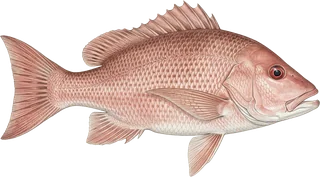
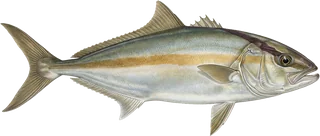
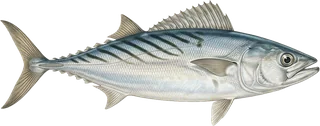
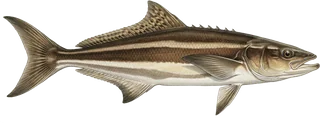
If you catch swordfish, you can fish for these species with similar tackle:
Sources
Correct as of October 2026. The practical knowledge comes from 7 sources, summarised in our own words.
View all 7 sources
- Characteristics and trends in the nighttime and daytime United States Atlantic recreational swordfish fishery based on fishery-dependent data (Bulletin of Marine Science 93: 539–555, 2017) · NOAA Fisheries (Davis, Cudney und Blankinship), Bulletin of Marine Science, University of Miami
- Characterization of a developing recreational deep-drop fishery for swordfish off southern California (California Fish and Wildlife Journal 108: e12, 2022) · California Department of Fish and Wildlife (Aalbers, Wang, Bellquist, Kauer, Jackson und Sepulveda)
- Swordfish (Saltwater Fish Profile) · Florida Fish and Wildlife Conservation Commission
- North Atlantic Swordfish (Species Directory) · NOAA Fisheries
- Xiphias gladius – Swordfish (Discover Fishes) · Florida Museum of Natural History, University of Florida
- Atlantic Highly Migratory Species Recreational Compliance Guide 2026 · NOAA Fisheries
- Careful Catch and Release – Atlantic Highly Migratory Species (Brochure, 2025) · NOAA Fisheries, Atlantic Highly Migratory Species Management Division
Text produced with AI support, based on the sources listed and these pages: Swordfish (profile), Sea fishing, Squid & calamari, Releasing fish.