
Knowledge – Fish
Herring fishing
Fishing for herring means: in spring, wait for the spawning shoals at steep quay walls and narrows and work a paternoster rig with small hooks slowly through the water layers. Here is the way to it in nine steps, each with a link to the detailed page.
 Choose another fish117 fish with guides
 EelOff-peak season
 EelpoutPossible
 IdePossible
 ArapaimaGood
 GraylingPeak season
 Atlantic salmonSpawning time, please spare
 Brown troutSpawning time, please spare
 Brook troutSpawning time, please spare
 BarbelOff-peak season
 BarramundiSpawning season
 Greater amberjackGood
 Topmouth gudgeonOnly as bycatch
 Blue marlinSpawning season
 BonefishSpawning season
 BonitoGood
 BreamOff-peak season
 Dusky grouperOnly as bycatch
 CobiaPossible
 Spiny dogfishOnly as bycatch
 CodPeak season
 ChubPeak season
 MinnowOnly as bycatch
 European sturgeonOnly as bycatch
 FlounderPeak season
 PerchPeak season
 Largemouth bassGood
 Ballan wrasseOnly as bycatch
 Yellowfin tunaSpawning season
 Giant trevallyGood
 Prussian carpPossible
 BrillPossible
 Gilthead breamSpawning time, please spare
 Golden doradoSpawning season
 Golden mahseerOnly as bycatch
 Dolphinfish (mahi-mahi)Good
 Grass carpPossible
 Great barracudaGood
 GudgeonPossible
 White breamPossible
 DaceOff-peak season
 PikePeak season
 HalibutOff-peak season
- HerringPossible
 GarfishOut of season
 Huchen (Danube salmon)Possible
 Crucian carpOnly as bycatch
 CarpOff-peak season
 RuffeOff-peak season
 VendaceOnly as bycatch
 DabPeak season
 GurnardPossible
 Coley (saithe)Peak season
 Chinook salmonHardly any chance
 King mackerelSpawning season
 LingPeak season
 TuskOff-peak season
 MackerelPossible
 Bighead carpOut of season
 WhitefishPossible
 Conger eelOff-peak season
 Sea troutSpawning time, please spare
 Grey mulletPossible
 Murray codSpawning season
 MuskellungeGood
 Common nasePossible
 Nile perchPossible
 PayaraPossible
 Peacock bassPeak season
 PermitGood
 WeeverOnly as bycatch
 PollackOff-peak season
 BurbotOff-peak season
 AspPossible
 Red snapperSpawning season
 Rainbow troutPeak season
 RoosterfishGood
 RoachPeak season
 RedfishOut of season
 Bluefin tunaOnly as bycatch
 RuddPossible
 Russian sturgeonOnly as bycatch
 HaddockOff-peak season
 SnakeheadPossible
 TenchOff-peak season
 SpirlinOnly as bycatch
 PlaiceOff-peak season
 Greenland halibutOnly as bycatch
 Round gobyOnly as bycatch
 SwordfishGood
 Lake troutSpawning time, please spare
 HakeSpawning time, please spare
 Alpine charSpawning time, please spare
 MonkfishPossible
 SoleOff-peak season
 SailfishGood
 Silver carpOut of season
 SnookPeak season
 PumpkinseedOnly as bycatch
 SpratOnly as bycatch
 Atlantic wolffishSpawning time, please spare
 TurbotPeak season
 SterletOnly as bycatch
 SmeltOnly as bycatch
 Horse mackerelPossible
 TaimenGood
 TarponGood
 TigerfishSpawning season
 BleakPossible
 WahooGood
 Wels catfishOff-peak season
 WhitingPeak season
 Sea bassOff-peak season
 ZanderPeak season
 White-eye breamOnly as bycatch
 Blue breamOnly as bycatch
 Brown bullheadPossible
 VimbaOnly as bycatch
Season in October according to the catch calendar, an estimate and not a guarantee of a catch. The fish pictures are reduced natural-history plates and AI-generated.
Best time
From March to May, mainly in the evening and at night.
In January: PossibleIn February: Possible, spawningIn March: Good, spawningIn April: Good, spawningIn May: Good, spawningIn June: PossibleIn July: PossibleIn August: PossibleIn September: PossibleIn October: PossibleIn November: PossibleIn December: Possible
Good spot
- Coast: Open and deep waterOpen and deep waterOpen and deep waterOpen and deep water
Top baits
Starter tackle
- Rod: spinning rod 2,70–3,00 m (also 2,40–3,50 m), not too stiff, casting weight about 40–60 g
- Line: mono 0,22–0,30 mm, 0,22 mm is usually enough; thin braid 0,10–0,14 mm only for very long casts
- Hooks: small, fine-wire gold hooks, usually size 8 to 14
- Rod: spinning rod 2,40–3,00 m with a soft tip
- Line: mono 0,22–0,30 mm, rather stronger over snaggy ground
- Hooks: size 8 and smaller
In short
In short: You catch herring best from March to May, mainly in the evening and at night. Good spots on the coast: open water and deep water. Proven lures: herring paternoster with small decorated hooks. From the shore herring are mainly worth it during the spring spawning run. The grade “possible” in the other months applies mainly to boats: over deeper water herring can be caught all year, often as bycatch.
Quick to recognise
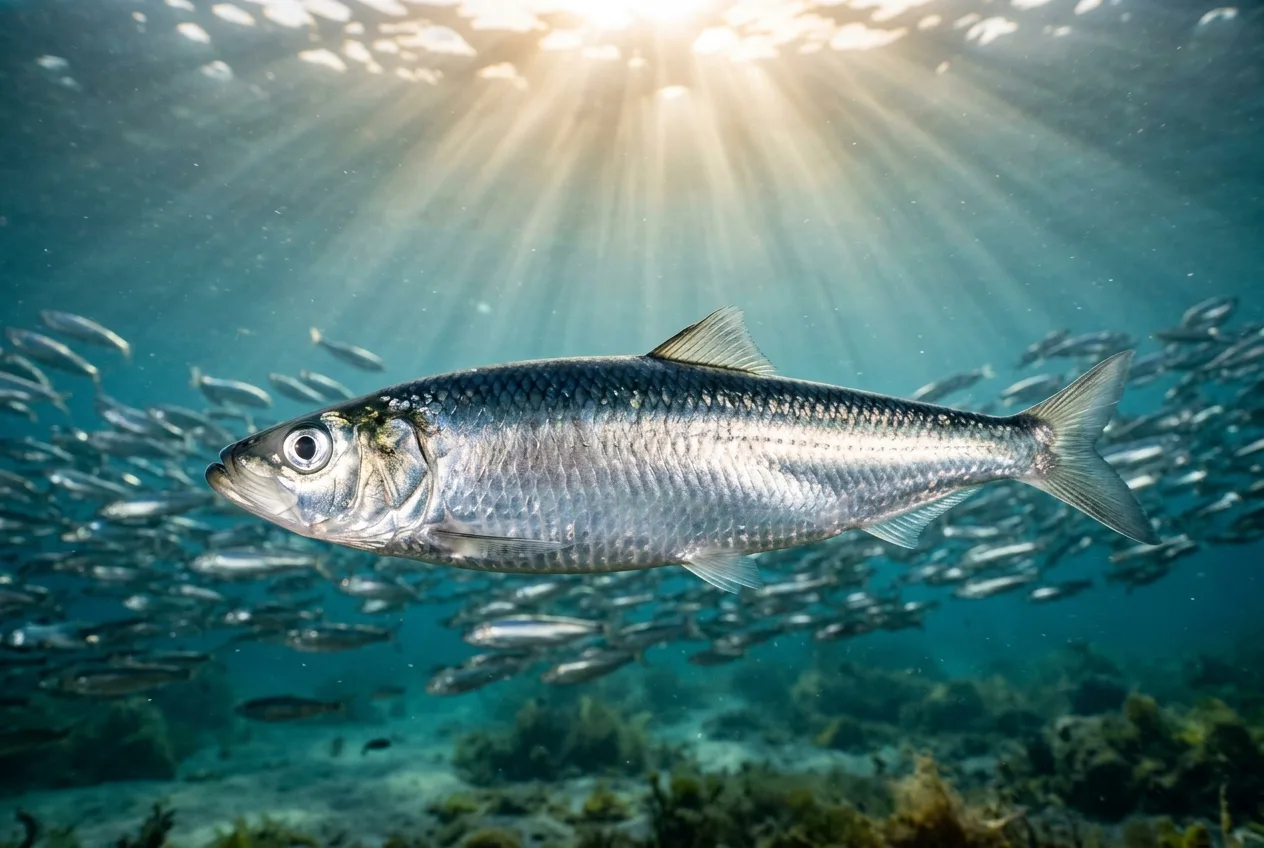
A silvery shoaling fish from the North Atlantic, North Sea and Baltic Sea that comes close inshore to spawn in spring. It usually measures around 30 centimetres, up to about 45 is possible.
When
The main time is March and April, and May is still good. In the other months you catch herring mainly from a boat over deeper water, often as bycatch. On the German Baltic coast the season starts at the end of March depending on place and water temperature, and it becomes productive from about 6 to 7 degrees. The spring spawners of the western Baltic spawn from February to May.
- JanPossible
- FebPossible, spawning season
- MarGood, spawning
- AprGood, spawning
- MayGood, spawning
- JunPossible
- JulPossible
- AugPossible
- SepPossible
- OctPossible
- NovPossible
- DecPossible
Peak seasonGoodPossibleHardly any chanceSpawning season
Spring tactics
The main time from the shore. On the German Baltic coast it runs from the end of March into May depending on place and water temperature, in Denmark from mid-March already, with April as the strongest month. After mild winters the shoals arrive earlier.
Summer tactics
From the shore there is hardly anything left to catch; the shoals have left the harbours. From a boat you still catch herring in the North Sea and Baltic Sea, mostly in water deeper than 10 m.
Autumn tactics
Some herring return to the coasts in autumn, when the fish are well fed. You often need a boat for it, though in some places it also works from the shore.
Winter tactics
Fishing for them deliberately from the shore is hardly worthwhile. Where you fish from a boat for other sea fish, herring occasionally end up on the hooks as bycatch.
Is it biting today?
In January: PossibleIn February: Spawning, please spare the fishIn March: Spawning, please spare the fishIn April: Spawning, please spare the fishIn May: Spawning, please spare the fishIn June: PossibleIn July: PossibleIn August: PossibleIn September: PossibleIn October: PossibleIn November: PossibleIn December: Possible
Today’s catch index needs JavaScript. Season and spawning time are in the catch calendar.
From the blog: Baltic Sea catch quotas 2027: what the agreement means for anglers
Where it is now
On the coast
In spring the shoals move into fjords, bays, harbours, canals and river mouths. From the shore you look for places with deep water right at your feet: quay walls, bridges, landing stages and above all narrows. They avoid shallow, gently shelving beaches. By day the shoals hold deeper, in the evening and at night they rise to the surface.
How to go about it: From the shore, places count where it is deep right at the edge: quay walls, bridges, landing stages and locks, especially in fjords, canals and river mouths. On riprap a herring weight snags less often than a spoon. If there are no bites for half an hour, change spot, because the shoals move on.
| All year round | open water, deep water |
|---|
Biting time: mainly in the evening and at night. What that looks like in the water is shown by the picture of the holding spots just below.
Waters with rules for herring
Holding spots in the picture
Choose a season and time of day: the picture shows where the species sits then. Tap a fish or a spot in the list to bring it closer. The picture is schematic and AI-generated, every water is different.
Chance of a catch in springgoodSpawning, observe the closed seasons
Catch chances in summerpossible
Catch chance in autumnpossible
Catch chance in winterpossible
- J
- F
- M
- A
- M
- J
- J
- A
- S
- O
- N
- D
Spawning season
No peak time By day the shoals hold deep, in the evening they break up and follow the plankton to the surface.
No peak time By day the shoals hold deep, in the evening they break up and follow the plankton to the surface.
Active time By day the shoals hold deep, in the evening they break up and follow the plankton to the surface.
Active time By day the shoals hold deep, in the evening they break up and follow the plankton to the surface.
On the coast
Deep, colder water
Herring are here all year.
Open water, mid-water
Herring are here all year.
The herring is a shoaling fish of open water. By day the shoals stay in deeper water layers near the bottom, at night they rise to the surface. Juveniles stay close to the coast, adult herring hold further out.
Spring: catch chance good according to the catch calendar. The spawning time falls in this season, observe the closed seasons. In spring the shoals come close inshore and move into river mouths, canals, harbours and bays to spawn. From the shore they hold where it drops steeply into the deep: at quay walls, bridges and landing stages, not on gently shelving beaches.
Summer: catch chance possible according to the catch calendar. In summer the shoals hold further out in deeper water. From a cutter or boat they can be caught all year, often as bycatch.
Autumn: catch chance possible according to the catch calendar. In some places herring are also caught from the shore from October to December.
Winter: catch chance according to the catch calendar possible.
Depth: Herring occur down to about 360 metres, usually to 200 metres. By day they mostly travel one to three metres above the bottom.
Size comparison: AI-generated drawing, schematic.
How
You cast the paternoster far out, let it sink and feel your way through the water layers with short pauses. Worked slowly it brings more fish than hard jerking: weight on the bottom, line taut, little winding, gentle inching. In weak current herring often hold higher up, in strong current rather near the bottom.
Easiest way
To get started, a not-too-stiff spinning rod of about 3 m with mono line, a herring rig with small hooks and a herring weight of 30 to 60 g is enough. With that you stand at a quay wall or bridge in a fjord or harbour in spring, ideally early in the morning.
Herring rig from the quay wall
Classic shore fishing in spring, when the spawning shoals move into fjords, harbours and canals.
- Secure a spot early
At the height of the season anglers stand shoulder to shoulder on well-known quay walls. Whoever arrives early gets the spots at narrows and channels, where the shoals have to pass.
- Rig and weight
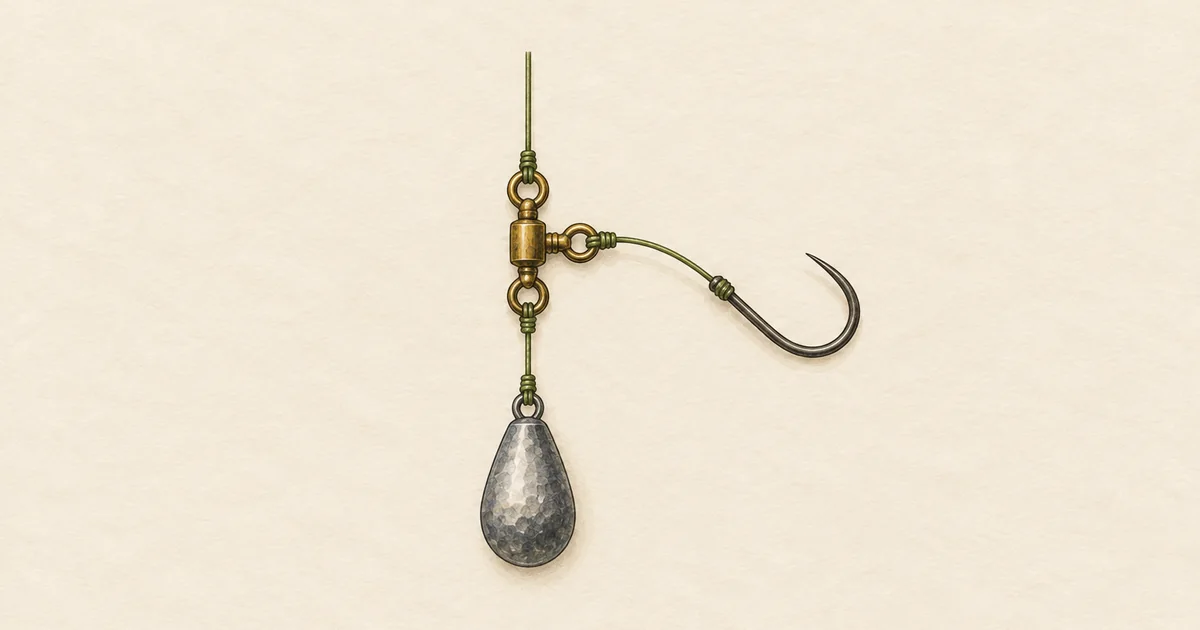
The weight goes at the end of the herring rig. If you hang the swivel in the wider eye of a herring weight, it tumbles down more slowly. A hookless spoon or small pilker can replace the weight as a casting weight.
- Straight and far
Cast straight out in front of you; the big shoals often travel further out. Many anglers cast 40 to 50 m. Close the bail arm straight afterwards.
- Slow and lazy
Let the rig sink to the bottom on a taut line; the bites often come already in mid-water. Then you wind in bit by bit on the reel and only twitch lightly. Once you have found the fishing depth, stay in that layer.
- Do not strike
A bite shows as a fine tremor in the rod tip or a short pull. Do not strike; wait a moment and then start winding slowly, because by then more herring have often hooked themselves.
- Keep the rod low
The mouth tears easily. Bring the fish in steadily and hold the rod rather pointing down.
- Lift out in one go
Most herring are lost when they are lifted out. Lift the rig over the edge in one calm, continuous movement and check afterwards whether a hook has bent open.
From a boat at the edge of the fairway
Calmer than at a full quay, and in fjords such as the Schlei often more productive; in the North Sea and Baltic Sea also possible outside the spawning season.
- Beside the fairway
The edges of the fairway are regarded as the best spots. Always anchor beside it, never in the fairway itself, and hoist an anchor ball. Chasing individual shoals achieves little.
- As from the shore
You fish with the same rig as from the shore. When the fish hold deep and close to the bottom, the weight can be heavier, because slow tumbling then does not matter.
- Let it down vertically
From a boat you hardly need to cast. Let the rig sink with the bail arm closed on a taut line, so you feel bites on the way down.
- Search the layers
By day herring often hold one to three metres above the bottom. In weak current they travel rather higher up, in strong current closer to the bottom.
- Wait for a full rig
After the first fish, move the rod on only very gently. The wriggling of the hooked herring often lures the next ones.
- Wind up calmly
Wind in steadily, without pumping. A soft rod tip and stretchy line absorb the thrashing of the fish.
- Deal with the catch at once
Swing the fish into the boat and deal with them at once. A wire keepnet in which you turn the dead herring saves a lot of work later when scaling.
What with
The main bait is the herring paternoster with two to six small gold hooks; the fish even take bare hooks. A herring weight hangs at the bottom as the weight, lighter or heavier depending on the current; when the shoals travel in mid-water, a light spoon sinks slowly through them. Where no paternoster is allowed, for example in the Banter See in Wilhelmshaven, a single free-drifting maggot catches.
- Sea paternosterspring at quay walls, all year from a boat
Herring hunt small plankton animals, and several tiny, flashing hooks in the shoal match exactly this prey pattern.
- Maggots & larvaeonly at places where multi-hook rigs are not allowed
A single small maggot on a fine hook resembles the small animals herring live on and needs only one hook.
Tackle
A rather soft spinning rod, a medium fixed-spool reel and mono line are enough. The stretch of mono absorbs the wriggling in the herring’s soft mouth, while braid reacts too hard.
Herring rig from the quay wall
- Rod
- Spinning rod 2,70–3,00 m (also 2,40–3,50 m), not too stiff, casting weight about 40–60 g
- Reel
- Fixed-spool reel size 2000–4000
- Line
- Mono line 0,22–0,30 mm, 0,22 mm is usually enough; thin braid 0,10–0,14 mm only for very long casts
- Leader
- Herring rig with two to six droppers, often five; in some places the number of hooks is limited
- Hooks
- small, fine-wire gold hooks, usually size 8 to 14
- Weight, float, lead
- Herring weight 30–60 g, up to 80 g in strong current
From a boat at the edge of the fairway
- Rod
- Spinning rod 2,40–3,00 m with a soft tip
- Reel
- Fixed-spool reel size 2000–4000
- Line
- Mono line 0,22–0,30 mm, rather stronger over snaggy ground
- Leader
- Herring rig with small gold hooks
- Hooks
- Size 8 and smaller
- Weight, float, lead
- Herring weight 30–60 g, for fish near the bottom in deeper water an ordinary weight too
More on tackle
Common mistakes
- Rig jerked frantically: If you rip the rig up with the long rod and let it fall, you usually catch less. Leave the weight on the bottom, keep the line taut and wind in only slowly with gentle inching.
- Only white rigs in the box: On bright days coloured rigs made of silicone foil or with glitter threads often bring clearly more fish. Pack several colours and change until it works.
- Hard rod and braid: Without a buffer the hooks tear out of the soft mouths. A rod with a soft tip and mono line hold the wriggling fish more securely.
- Fish drop off when lifted out: Jerking them up at the quay wall costs most herring. Keep the rod low during the fight and lift the rig out in one smooth movement at the end.
- Arriving without the right papers: Besides the fishing licence (Fischereischein) and the levy (Fischereiabgabe), on some waters you need a separate permit, for example on the Schlei, the Nord-Ostsee-Kanal or on the coast of Mecklenburg-Western Pomerania. Clear this up before the trip.
Rules
Each federal state (Bundesland) sets its own closed season (Schonzeit) and minimum size (Mindestmaß). Choose your state; the values come from our state pages.
Baden-Württemberg
Our overview for Baden-Württemberg does not list herring. What applies there is given on the page Fishing in Baden-Württemberg with the spots in the state.
Bavaria
Our overview for Bavaria does not list herring. What applies there is given on the page Fishing in Bavaria with the spots in the state.
Berlin
Our overview for Berlin does not list herring. What applies there is given on the page Fishing in Berlin with the spots in the state.
Brandenburg
Our overview for Brandenburg does not list herring. What applies there is given on the page Fishing in Brandenburg with the spots in the state.
Bremen
Our overview for Bremen does not list herring. What applies there is given on the page Fishing in Bremen with the spots in the state.
Hamburg
Our overview for Hamburg does not list herring. What applies there is given on the page Fishing in Hamburg with the spots in the state.
Hesse
Our overview for Hesse does not list herring. What applies there is given on the page Fishing in Hesse with the spots in the state.
Mecklenburg-Western Pomerania
- Minimum size
- –
- Closed season
- none
- Note
- Coast; paternoster with up to 6 single hooks allowed
As of October 2026. All rules, exceptions and sources: Fishing in Mecklenburg-Western Pomerania.
Lower Saxony
Our overview for Lower Saxony does not list herring. What applies there is given on the page Fishing in Lower Saxony with the spots in the state.
North Rhine-Westphalia
Our overview for North Rhine-Westphalia does not list herring. What applies there is given on the page Fishing in North Rhine-Westphalia with the spots in the state.
Rhineland-Palatinate
Our overview for Rhineland-Palatinate does not list herring. What applies there is given on the page Fishing in Rhineland-Palatinate with the spots in the state.
Saarland
Our overview for Saarland does not list herring. What applies there is given on the page Fishing in Saarland with the spots in the state.
Saxony
Our overview for Saxony does not list herring. What applies there is given on the page Fishing in Saxony with the spots in the state.
Saxony-Anhalt
Our overview for Saxony-Anhalt does not list herring. What applies there is given on the page Fishing in Saxony-Anhalt with the spots in the state.
Schleswig-Holstein
- Minimum size
- 20 cm
- Closed season
- none
- Note
- North Sea; Baltic Sea: minimum size (Mindestmaß) suspended until the end of 2026
As of October 2026. All rules, exceptions and sources: Fishing in Schleswig-Holstein.
Thuringia
Our overview for Thuringia does not list herring. What applies there is given on the page Fishing in Thuringia with the spots in the state.
The regulation and your fishing permit (Erlaubnisschein) are what count. Lake Constance, the Rhine and the coast, for example, have their own rules: Fishing waters in Germany.
After the catch
Playing and landing
You do not need to strike; wait briefly and then wind in steadily with the rod held low, because the soft mouth tears easily. Lift the rig out in one movement and grip the fish by the nape to unhook them, so fewer scales stay on your hands. Herring you keep you stun at once with a blow to the head and kill by a heart stab or a gill cut.
Herring you may keep you deal with at once: first stun, then heart stab or gill cut. Cover the herring with a wet cloth, otherwise the scales dry on. Think beforehand about what you will do with many fish. The western Baltic stock is very small; check local rules on the number of hooks and on the fishing permit (Erlaubnisschein) before fishing.
Frequently asked questions
Which hook size for herring?
Small, fine-wire hooks from size 8; on many days sizes 10 to 14 even catch better. The sizing differs a little between makers.
How heavy should the herring weight be?
Usually 30 to 60 g, up to 80 g in strong current. Bring several weights: a weight that is too heavy shoots past the shoal, one that is too light takes too long to reach the fishing depth.
Mono or braid for herring fishing?
As a rule mono of 0,22 to 0,30 mm, because the stretch prevents the hooks from tearing out. Thin braid is only worth it when the fish hold very far out; then you play them especially gently.
When do herring bite best?
In spring, on the German Baltic mostly from the end of March to May. During the day the best hours are morning and evening, but a dense shoal can also bring many fish at midday.
Can you fish for herring with a pilker?
Only as a hookless casting weight at the end of the herring rig. A small pilker or spoon without a treble then sinks through the shoal like a weight, and the fish are caught on the small hooks above.
May you keep herring alive in a bucket?
No, this is regarded as contrary to animal welfare. Stun and kill every herring you want to keep immediately after unhooking.
Similar species
Anyone who catches herring can also fish for these species with similar tackle:
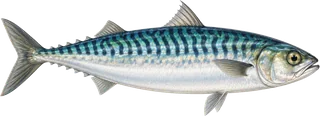 Fishing for mackerelPossible
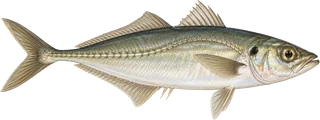 Fishing for scadPossible
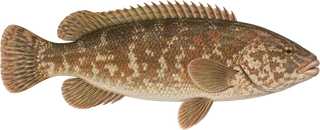 Fishing for ballan wrasseOnly as bycatch
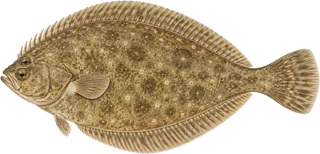 Fishing for brillPossible
Sources
As of October 2026. The practical knowledge comes from 8 sources, summarised in our own words.
View all 8 sources
- Silber satt: 18 Profitipps zum Angeln auf Hering · BLINKER (Johannes Müller, mit Fabian Frenzel)
- Heringsangeln: Wie fange ich Heringe an der Ostsee? · BLINKER (Redaktion)
- Steckbrief Hering · BLINKER (Redaktion)
- Hering: Das muss mit! · RUTE & ROLLE (Jesco Peschutter)
- Welche Rolle spielt das Heringsblei beim Heringsangeln? · BLINKER (Frank Schlichting)
- Heringsangeln in Dänemark · BLINKER (Lars Berding)
- Fisch des Jahres 2021/2022: Der Atlantische Hering (Faltblatt) · Deutscher Angelfischerverband (DAFV)
- Verhalten beim Angeln · Landesamt für Landwirtschaft, Lebensmittelsicherheit und Fischerei Mecklenburg-Vorpommern (LALLF)
Text produced with AI support, based on the sources named and these pages: Herring (profile), Paternoster, Dropper rig, Spinning.