
Knowledge – Fish
Asp fishing
Fishing for asp means casting far, retrieving briskly and being there when it hunts at the surface. Here is the way to get there in nine steps, each with a link to the detailed page.
 Choose another fish117 fish with guides
 EelOff-peak season
 EelpoutPossible
 IdePossible
 ArapaimaGood
 GraylingPeak season
 Atlantic salmonSpawning time, please spare
 Brown troutSpawning time, please spare
 Brook troutSpawning time, please spare
 BarbelOff-peak season
 BarramundiSpawning season
 Greater amberjackGood
 Topmouth gudgeonOnly as bycatch
 Blue marlinSpawning season
 BonefishSpawning season
 BonitoGood
 BreamOff-peak season
 Dusky grouperOnly as bycatch
 CobiaPossible
 Spiny dogfishOnly as bycatch
 CodPeak season
 ChubPeak season
 MinnowOnly as bycatch
 European sturgeonOnly as bycatch
 FlounderPeak season
 PerchPeak season
 Largemouth bassGood
 Ballan wrasseOnly as bycatch
 Yellowfin tunaSpawning season
 Giant trevallyGood
 Prussian carpPossible
 BrillPossible
 Gilthead breamSpawning time, please spare
 Golden doradoSpawning season
 Golden mahseerOnly as bycatch
 Dolphinfish (mahi-mahi)Good
 Grass carpPossible
 Great barracudaGood
 GudgeonPossible
 White breamPossible
 DaceOff-peak season
 PikePeak season
 HalibutOff-peak season
 HerringPossible
 GarfishOut of season
 Huchen (Danube salmon)Possible
 Crucian carpOnly as bycatch
 CarpOff-peak season
 RuffeOff-peak season
 VendaceOnly as bycatch
 DabPeak season
 GurnardPossible
 Coley (saithe)Peak season
 Chinook salmonHardly any chance
 King mackerelSpawning season
 LingPeak season
 TuskOff-peak season
 MackerelPossible
 Bighead carpOut of season
 WhitefishPossible
 Conger eelOff-peak season
 Sea troutSpawning time, please spare
 Grey mulletPossible
 Murray codSpawning season
 MuskellungeGood
 Common nasePossible
 Nile perchPossible
 PayaraPossible
 Peacock bassPeak season
 PermitGood
 WeeverOnly as bycatch
 PollackOff-peak season
 BurbotOff-peak season
- AspPossible
 Red snapperSpawning season
 Rainbow troutPeak season
 RoosterfishGood
 RoachPeak season
 RedfishOut of season
 Bluefin tunaOnly as bycatch
 RuddPossible
 Russian sturgeonOnly as bycatch
 HaddockOff-peak season
 SnakeheadPossible
 TenchOff-peak season
 SpirlinOnly as bycatch
 PlaiceOff-peak season
 Greenland halibutOnly as bycatch
 Round gobyOnly as bycatch
 SwordfishGood
 Lake troutSpawning time, please spare
 HakeSpawning time, please spare
 Alpine charSpawning time, please spare
 MonkfishPossible
 SoleOff-peak season
 SailfishGood
 Silver carpOut of season
 SnookPeak season
 PumpkinseedOnly as bycatch
 SpratOnly as bycatch
 Atlantic wolffishSpawning time, please spare
 TurbotPeak season
 SterletOnly as bycatch
 SmeltOnly as bycatch
 Horse mackerelPossible
 TaimenGood
 TarponGood
 TigerfishSpawning season
 BleakPossible
 WahooGood
 Wels catfishOff-peak season
 WhitingPeak season
 Sea bassOff-peak season
 ZanderPeak season
 White-eye breamOnly as bycatch
 Blue breamOnly as bycatch
 Brown bullheadPossible
 VimbaOnly as bycatch
Season in October according to the catch calendar, an estimate and not a guarantee of a catch. The fish pictures are reduced natural-history plates and AI-generated.
Best time
From July to August, in the morning, during the day and in the evening.
In January: Hardly any chanceIn February: Hardly any chanceIn March: PossibleIn April: Possible, spawning seasonIn May: Possible, spawning seasonIn June: Possible, spawning seasonIn July: Main seasonIn August: Main seasonIn September: GoodIn October: PossibleIn November: Hardly any chanceIn December: Hardly any chance
Good spot
- River: current seam, main current and quiet baycurrent seam, main current and quiet baycurrent seam, main current and quiet baycurrent seam
- Lake: open wateropen water, surface and reed edgeopen wateropen water
Top baits
Starter tackle
- Rod: 2,40–2,70 m, casting weight about 10–50 g, not too stiff; from a boat 2,10–2,40 m
- Line: braid 0,10–0,16 mm; with monofilament not under 0,20 mm
- Hook: sharp, strong trebles or a sturdy single hook; replace fine stock hooks
- Rod: about 2,70 m (9 ft), line class 6–8
- Line: floating WF line of class 6–8
- Hook: streamers on hooks of size 8–10
In short
In short: The best time to catch asp is from July to August, in the morning, during the day and in the evening. Good spots on a river: current seam, main current and quiet bay; on a lake: open water. Proven lures: slim spinners, spoons, small pilkers and inshore plugs, retrieved fast; streamers too under a bubble float. Depending on the water, spawning runs from March or April into June, and often it is over by May. From June the asp hunts near the surface, and the main season is July and August.
Quick to recognise
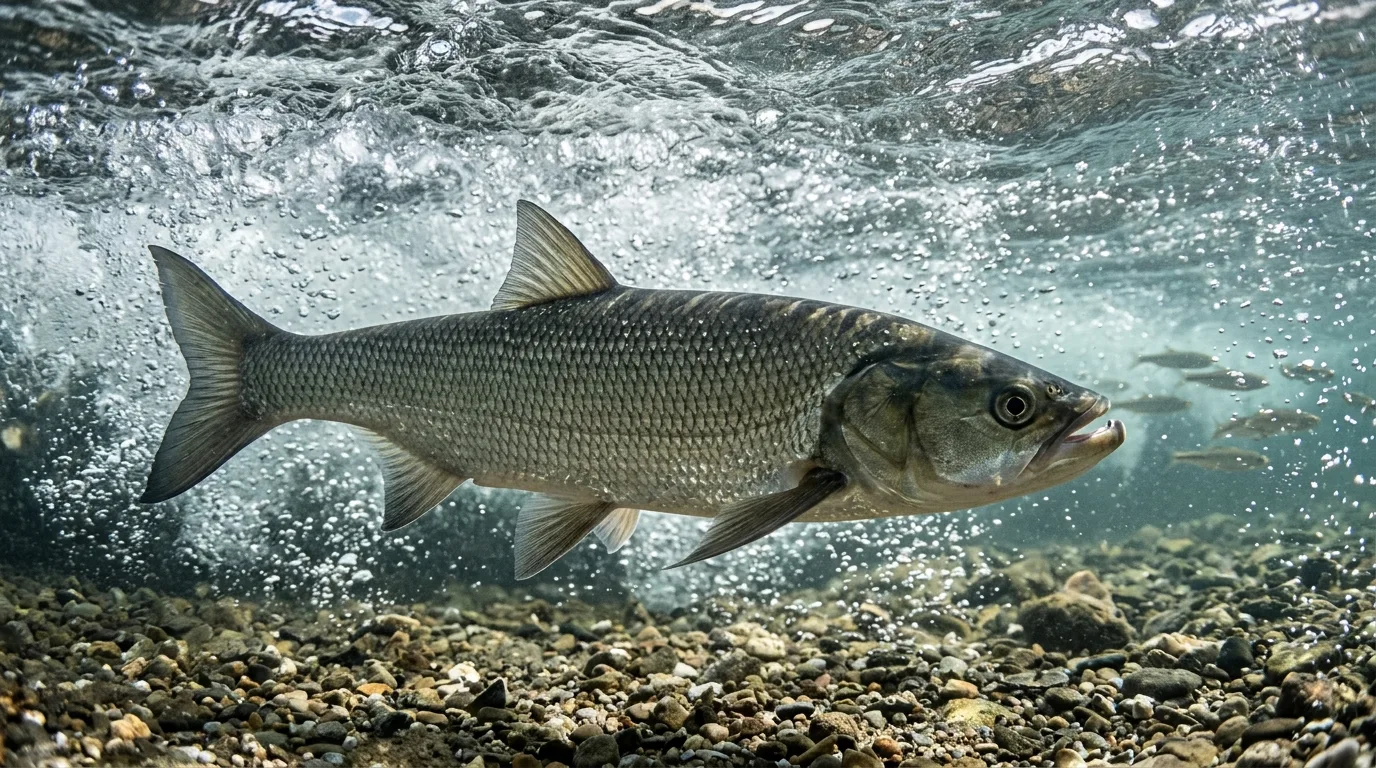
Also called Schied: a cyprinid that feeds on fish once fully grown. In summer it gives itself away with loud splashes at the surface; 40 to 80 centimetres is typical.
When
The main season is July and August, and September is still good. Depending on the source, asp spawn from March or April to June over gravel in the current. Whether a closed season (Schonzeit) applies then is set by your federal state (Bundesland). It is most active early in the morning and late in the evening.
- JanHardly any chance
- FebHardly any chance
- MarPossible
- AprPossible, spawning season
- MayPossible, spawning season
- JunPossible, spawning season
- JulPeak season
- AugPeak season
- SepGood
- OctPossible
- NovHardly any chance
- DecHardly any chance
Peak seasonGoodPossibleHardly any chanceSpawning season
Spring tactics
During the spawning season you leave the gravel banks in peace. Whether a closed season (Schonzeit) applies in these weeks is set by your federal state (Bundesland). Once it is over, asp hunt freshly hatched fry, and a small streamer is often the best bait, especially as the fish are still less wary at the start of the season.
Summer tactics
You mostly catch fish early and in the evening, and on hot days also at midday at oxygen-rich weir outflows. From July many asp know the usual lures, so unusual patterns such as small shads or streamers help. Where night fishing is allowed, it is worth carrying on for two to three hours after sunset.
Autumn tactics
The fry have grown, so the lure can get bigger. With the prey fish, asp leave the shallows and sit in calmer, deeper stretches. Search there below the surface too, instead of only waiting for fish that hit at the surface.
Winter tactics
Targeting them hardly pays off. In cold water asp also stay deep, and occasionally a big fish takes a baitfish on the bottom, mostly as a by-catch when fishing for zander.
Is it biting today?
In January: Out of seasonIn February: Out of seasonIn March: PossibleIn April: Spawning season, please spare the fishIn May: Spawning season, please spare the fishIn June: Spawning season, please spare the fishIn July: Main seasonIn August: Main seasonIn September: Off-peak seasonIn October: PossibleIn November: Out of seasonIn December: Out of season
Today’s catch index needs JavaScript. Season and spawning time are in the catch calendar.
From the blog: Freshwater fish in Germany: which species you catch where · Roach or rudd, bream or silver bream: how to tell these silver fish apart reliably
Where it is now
In the river
Look for the sharp current in front of groyne heads, below weirs, at outfalls and bridge piers. The big ones often hold in mid-stream, and in autumn they retreat into the depths at the edge of the current.
How to go about it: On a big river, asp often hunt in mid-current, so you need lures that fly a long way. On small, slow rivers without groynes, tributaries and weed beds are worth a try. In a canal they patrol along the stone revetment and hunt below locks as soon as water is let out.
| All year round | Current seam |
|---|---|
| Spring extra | main current, calm bay, riffle |
| Summer extra | main current, calm bay |
| Autumn extra | main current, calm bay |
In the lake
Asp live in a lake only if water flows through it or it is connected to flowing stretches. There it hunts in open water, in summer near the surface by the shoals of small fish.
How to go about it: In lakes with water flowing through, asp hunt in open water but also move over sandbanks and shallow zones in front of the reeds, sometimes into very shallow water. There small, light lures that still fly a long way are enough.
| All year round | Open water |
|---|---|
| Summer extra | surface, reed edge, seamount |
Biting time: in the morning, during the day and in the evening. What that looks like on the water is shown by the picture of the swims just below.
Holding spots in the picture
Choose the season and time of day: the picture shows where the species stands then. Spots outlined in red apply only in the chosen season. Tap a fish or a spot in the list to bring it closer. The picture is schematic and AI-generated, every water is different.
Catch chance in springpossibleSpawning season, observe closed seasons
Catch chance in summerPeak season
Catch chance in autumnpossible
Catch chance in winterhardly any
- J
- F
- M
- A
- M
- J
- J
- A
- S
- O
- N
- D
Spawning season
Active time Hunting is mostly in the early morning and late in the evening. But asp also bite during the day, even in the midday sun, and at hot spots for two to three hours after sunset.
Active time Hunting is mostly in the early morning and late in the evening. But asp also bite during the day, even in the midday sun, and at hot spots for two to three hours after sunset.
Active time Hunting is mostly in the early morning and late in the evening. But asp also bite during the day, even in the midday sun, and at hot spots for two to three hours after sunset.
No peak time Hunting is mostly in the early morning and late in the evening. But asp also bite during the day, even in the midday sun, and at hot spots for two to three hours after sunset.
In the river
Gravelly shallow (riffle)
Asp are found here only in spring.
Current seam
Asp are found here all year round.
Calm bay with aquatic plants
Asp are found here only in spring, summer and autumn.
Free current in mid-river
Asp are found here only in spring, summer and autumn.
The asp holds in sharp current in front of groyne heads, below weirs and at outfalls. Big asp like to stay far out in the middle of the river. Bridge piers, confluences and quiet bays in river bends are also mentioned.
Spring: catch chance according to the catch calendar: possible. The spawning season falls in this period, so observe closed seasons (Schonzeit). From April to June the asp moves upriver to spawn. The eggs are laid over strongly flowing gravel.
Summer: catch chance according to the catch calendar: possible in June, main season in July and August. After spawning it hunts near the surface among shoals of small fish and gives itself away by loudly slapping with its tail fin.
Autumn: catch chance according to the catch calendar: good in September, possible in October, hardly any in November. As the water cools the asp retreats into the depths at the edge of the current. It is caught there until late autumn.
Winter: catch chance according to the catch calendar: hardly any. In the cold season the asp sits deep at the edge of the current.
In the lake
reed edge
Asp are found here only in summer.
Open water
Asp are found here all year round.
plateau, underwater hump
Asp are found here only in summer.
Just below the surface
Asp are found here only in summer.
The asp also lives in lakes with water flowing through and in large lakes. There it stays in open water, old fish singly or in small groups.
Spring: catch chance according to the catch calendar: possible. The spawning season falls in this period, so observe closed seasons (Schonzeit). To spawn, asp move from lakes into the inflowing streams.
Summer: catch chance according to the catch calendar: possible in June, main season in July and August. After spawning the asp usually sits in the upper layers of water, where the shoals of small fish gather in summer. When the small fish move over sandbanks and into the shallows in front of the reeds, the asp follow them into very shallow water.
Autumn: catch chance according to the catch calendar good in September, possible in October, hardly any in November.
Winter: catch chance according to the catch calendar hardly any.
Depth: After spawning the asp usually sits in the upper layers of water. In the cold season it retreats into the depths.
Size comparison: AI-generated drawing, schematic.
How
You cast small pilkers, slim spoons and spinners a long way with the spinning rod and retrieve them briskly straight after they land. If asp are hunting at the surface, you work a stickbait or popper with short twitches and pauses. It is calmer with the fly rod and a streamer or wet fly.
Easiest way
To start with, a spinning rod of around 2,70 m that casts 30 to 50 g is enough, with 0,15 braid. In summer, look on a big river for a weir or groyne head where small fish are splashing. There you wind in a short, heavy metal lure as fast as the reel allows.
Lures at top speed
The usual method from June to October, when asp hunt fry in the river or in a lake with water flowing through.
- Spot the hunt
Watch for splashing small fish, loud slaps and gulls circling over one spot. With no visible hunting, try weir outflows, locks, cooling-water inlets and the back eddy behind groynes.
- Lure to match the prey
Look at the fry and choose a lure hardly longer than they are. In early summer that is often only 3 to 5 cm; from late summer it can be bigger. A swivel in front of a spinner or spoon prevents line twist.
- Cast beyond the hunt
Cast beyond the spot where it is splashing right now, then pull the lure quickly through. A short stop in the middle of the action and a light jerk can provoke a take.
- Shallow and fast
Start winding before the lure sinks and keep it a few centimetres below the surface. If it jumps out briefly, that does no harm. You work heavy spin jigs with the rod held high so that the head does not dive.
- Contact without a fish
Asp often stun their prey with the tail fin first and pick it up afterwards. A hard contact with no fish is therefore common. Many fish are hooked only lightly or on the outside, so you need sharp hooks.
- Give line
On its first run the asp takes a few metres of line. Set the drag beforehand so that it allows this without slipping at every pull. In strong current it turns broadside, and then only steady pressure helps.
- Landing net, then a pause
Take the fish out with the landing net, because just before the bank it often goes wild once more. After a catch the other asp usually hold back. Then give the spot 10 to 15 minutes‘ peace.
Streamer on the current seam
For spring and early summer, when asp are fixed on tiny fry and ignore larger artificial lures.
- Stalk the seam
Look for a clear edge between current and calm water where fry gather. Stalk in close, because casts of about 10 m are usually enough here.
- Loop on the leader
To the floating weight-forward line you add a tapered leader of about 2,70 m with a tip of 0,22 to 0,25 mm. A loop at the end of the fly line makes changing easy.
- Small, light streamer
Take a streamer of about 4 to 5 cm, preferably white or green with yellow. Patterns made of rabbit fur or marabou move lifelike even on a slow pull.
- Across the river
Cast across the river and wait until the current takes the line and swings the streamer in an arc to the seam.
- Strip and pause
During the drift give the streamer short pulls and then a pause again. If the asp are hunting wildly, you strip long and fast. After each cast you take a big step on, until the seam has been fished through.
- Take at the seam
Most bites come when the streamer reaches the boundary with the calm water. The hook usually takes hold securely.
- Unhook in the water
Crush the barb beforehand with pliers. Then you remove the streamer with forceps while the fish stays in the water.
What with
Stickbait and popper for the surface when asp are hunting, plus sinking lipless crankbaits, slim spoons and small pilkers for long casts. Spoons and pilkers can run fast and hop out of the water now and then. Red and white count as tempting colours.
- Stickbaitsummer and late summer, when asp feed at the surface
With quick rod twitches it zigzags and looks like a wounded small fish.
- Popperdusk and late summer, when the fry are just below the surface
The plopping noise draws asp’s attention even from further away; in waves use a bigger model.
- Lipless crankbaitbig rivers, when asp hunt far out in the main current
A compact, heavy lure flies a long way and stays stable in the water even at full speed.
Tackle
A spinning rod for long casts, not too stiff because the bite comes with a jerk, plus a fast-geared fixed-spool reel. You do not go below 0,20 millimetre line diameter. For the fly, a rod from line class 6 upwards is right.
Lures at top speed
- Rod
- 2,40–2,70 m, casting weight about 10–50 g, not too stiff; from a boat 2,10–2,40 m
- Reel
- Fixed-spool reel of size 2500–4000 with a high gear ratio (over 5:1, better around 6:1) and finely adjustable drag
- Line
- Braid 0,10–0,16 mm; with monofilament not under 0,20 mm
- Leader
- 1–1,5 m of fluorocarbon 0,25–0,35 mm; where pike are present, a wire trace
- Hooks
- sharp, strong trebles or a sturdy single hook; replace fine stock hooks
- Weight, float, lead
- lures mostly 4–10 cm to match the fry; spoons and metal lures for long casts about 10–30 g
More on tackle
- Spinning rod: choose length, casting weight and action
- Fly rod: choose line class, length and action
- Line calculator
- Fishing line: monofilament, braid or fluorocarbon?
- Spooling a reel properly – without line twist
- Wading net: the small landing net for wading
- Pliers and forceps: removing a hook deep in the mouth
Common mistakes
- Lure bigger than the fry: Just 2 to 3 cm too much is enough, and feeding asp ignore the lure. In high summer go clearly smaller, if need be to a streamer behind a sbirolino.
- Lure runs too deep: The deeper it runs in summer, the fewer bites you get. Start winding immediately after it lands, and fast enough that it stays just below the surface.
- Weak stock hooks: The fine trebles on some crankbaits bend open during an asp fight. Swap them for strong trebles or a sturdy single hook.
- Always the same lures: From July asp learn to avoid familiar lures, yet keep feeding. Switch to patterns that are rarely fished on the water, such as small shads or streamers.
- Tackle too light at the weir: In strong current a big asp pulls off a lot of line and chafes it on stones. Spool at least 150 m and use 0,35 monofilament there, or a braid of matching strength.
Rules
Each federal state (Bundesland) sets its own closed season (Schonzeit) and minimum size (Mindestmaß). Choose your state; the values come from our state pages.
Baden-Württemberg
Our overview for Baden-Württemberg does not list the asp. What applies there is on the page Fishing in Baden-Württemberg, with the places in that state.
Bavaria
Our overview for Bavaria does not list the asp. What applies there is on the page Fishing in Bavaria, with the places in that state.
Berlin
- Minimum size
- 40 cm
- Closed season
- 1.4.–30.6.
Correct as of October 2026. All rules, exceptions and sources: Fishing in Berlin.
Brandenburg
- Minimum size
- 40 cm
- Closed season
- 1.4.–30.6.
As of October 2026. All rules, exceptions and sources: Fishing in Brandenburg.
Bremen
- Minimum size
- 40 cm
- Closed season
- none
As of October 2026. All rules, exceptions and sources: Fishing in Bremen.
Hamburg
- Minimum size
- 50 cm
- Closed season
- none
- Catch limit
- 1 per day
- Note
- harvest slot (Entnahmefenster) 50–70 cm
As of October 2026. All rules, exceptions and sources: Fishing in Hamburg.
Hesse
Our overview for Hesse does not list the asp. What applies there is on the page Fishing in Hesse, with the places in that state.
Mecklenburg-Western Pomerania
Our overview for Mecklenburg-Western Pomerania does not list the asp. What applies there is on the page Fishing in Mecklenburg-Western Pomerania, with the places in that state.
Lower Saxony
- Minimum size
- 40 cm
- Closed season
- protected all year round
- Note
- catch only in stocked waters, then minimum size (Mindestmaß) 40 cm
As of October 2026. All rules, exceptions and sources: Fishing in Lower Saxony.
North Rhine-Westphalia
Our overview for North Rhine-Westphalia does not list the asp. What applies there is on the page Fishing in North Rhine-Westphalia, with the places in that state.
Rhineland-Palatinate
Our overview for Rhineland-Palatinate does not list the asp. What applies there is on the page Fishing in Rhineland-Palatinate, with the places in that state.
Saarland
Our overview for Saarland does not list the asp. What applies there is on the page Fishing in Saarland, with the places in that state.
Saxony
- Minimum size
- 40 cm
- Closed season
- 1.1.–31.5.
Correct as of October 2026. All rules, exceptions and sources: Fishing in Saxony.
Saxony-Anhalt
- Minimum size
- 40 cm
- Closed season
- none
- Note
- LAV waters: at most 2 barbel or asp per day
As of October 2026. All rules, exceptions and sources: Fishing in Saxony-Anhalt.
Schleswig-Holstein
Our overview for Schleswig-Holstein does not list the asp. What applies there is on the page Fishing in Schleswig-Holstein, with the places in that state.
Thuringia
- Minimum size
- –
- Closed season
- protected all year round
As of October 2026. All rules, exceptions and sources: Fishing in Thuringia.
The regulation and your fishing permit (Erlaubnisschein) are what count. Lake Constance, the Rhine and the coast, for example, have their own rules: Fishing waters in Germany.
After the catch
Playing and landing
Let the asp take line after the strike, then keep steady pressure without forcing it, as the hook often sits only lightly. Net it in a knotless net and unhook it in the water or on a wet mat. It has no teeth, but the trebles often sit on the outside of the head; long pliers help with that.
Land the asp with the landing net; that is safer than by hand. If you put it back, you unhook it with wet hands in the water. A fish of legal size that you are keeping you stun and kill straight away.
Frequently asked questions
When is the best time for fishing for asp?
In July and August, especially early in the morning and in the evening. There are good catches shortly after spawning and in September too. On hot days asp at weirs often bite at midday as well.
Which rod for asp fishing?
Spinning rods 2,40 to 2,70 m long with a casting weight of 10 to 50 g that are not too stiff are proven. From a boat a shorter rod up to 2,40 m is enough. Add a reel with a high gear ratio, around 6:1.
Can you catch asp at night?
Yes, in the dark they often lose their shyness, and it is worth carrying on fishing until two or three hours after sunset. Night fishing is banned in some federal states and waters, so check your fishing permit (Erlaubnisschein).
Which lure colour for asp?
Silver and white match the small silver fish that asp hunt. In murky water it can be more eye-catching. But the size and running depth of the lure count for more than the colour.
Why won’t asp bite although they are feeding?
Usually the lure is too big or too slow. Asp fix on tiny fry and on some days react only to extreme speed. A light-coloured streamer behind a sbirolino often helps then.
Can you eat asp?
Yes, but the flesh is very bony. Hot-smoked, the fillets can be put to good use.
Similar species
If you catch asp, you can fish for these species with similar tackle:
 Wels catfish fishingSecondary season
 Brook trout fishingSpawning season, please spare
 Fishing for rainbow troutPeak season
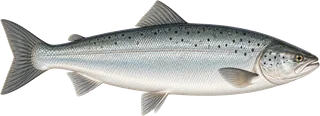 Atlantic salmon fishingSpawning season, please spare
Sources
As of October 2026. The practical knowledge comes from 16 sources, summarised in our own words.
See all 16 sources
- Angeln auf Rapfen: Die besten Tipps und Tricks · BLINKER (Matze Wendt, Dr. Wolfgang Schulte)
- Steckbrief Rapfen · BLINKER (Redaktion)
- Rapfen: Mit Volltempo an der Oberfläche · BLINKER (Frank Schlichting)
- Rapfenangeln an Wehren: Tipps für Turbinen-Räuber · BLINKER (Marvin Heins, Markus Schmidt)
- Zielfisch Rapfen: So klappt's mit den rasenden Räubern · BLINKER (Peter Schmidt)
- Rapfenangeln mit Popper: Oberflächenköder für rasende Räuber · BLINKER (Redaktion)
- Rapfen im Kanal · BLINKER (Redaktion)
- In allen Etagen zu Hause · BLINKER (Redaktion)
- Angeln auf Rapfen: Kleinkost fängt · BLINKER (Redaktion)
- Zielfisch Rapfen: Fünf Richtige · FISCH & FANG (Johannes Dietel u. a.)
- Zielfisch Rapfen: Rapfen-Streich · FISCH & FANG (Dustin Schöne, Jan Gutjahr)
- Zielfisch Rapfen: Raketen für Räuber · FISCH & FANG (Henk Simonsz)
- Rapfen: die Unfangbaren · RUTE & ROLLE (Tobias Norff)
- Rapfen: rasante Räuber · RUTE & ROLLE (Jesco Peschutter)
- Fischlexikon: Rapfen (Schied) · Landesfischereiverband Bayern
- Fische landen: Wie nutze ich Kescher, Lip-Grip und Co.? · BLINKER (Nick Bremer)
Text AI-assisted, based on the sources named and these pages: Asp (profile), Spinning, Fly fishing, Stickbait, Popper, Spinning rod.