
Knowledge – Fish
Wahoo fishing
Catching wahoo means this: troll at high speed over deep water, take in drifting debris and weed fields on the way, and hang the lure on a wire leader. Here is the way there in nine steps, each with a link to the detailed page.
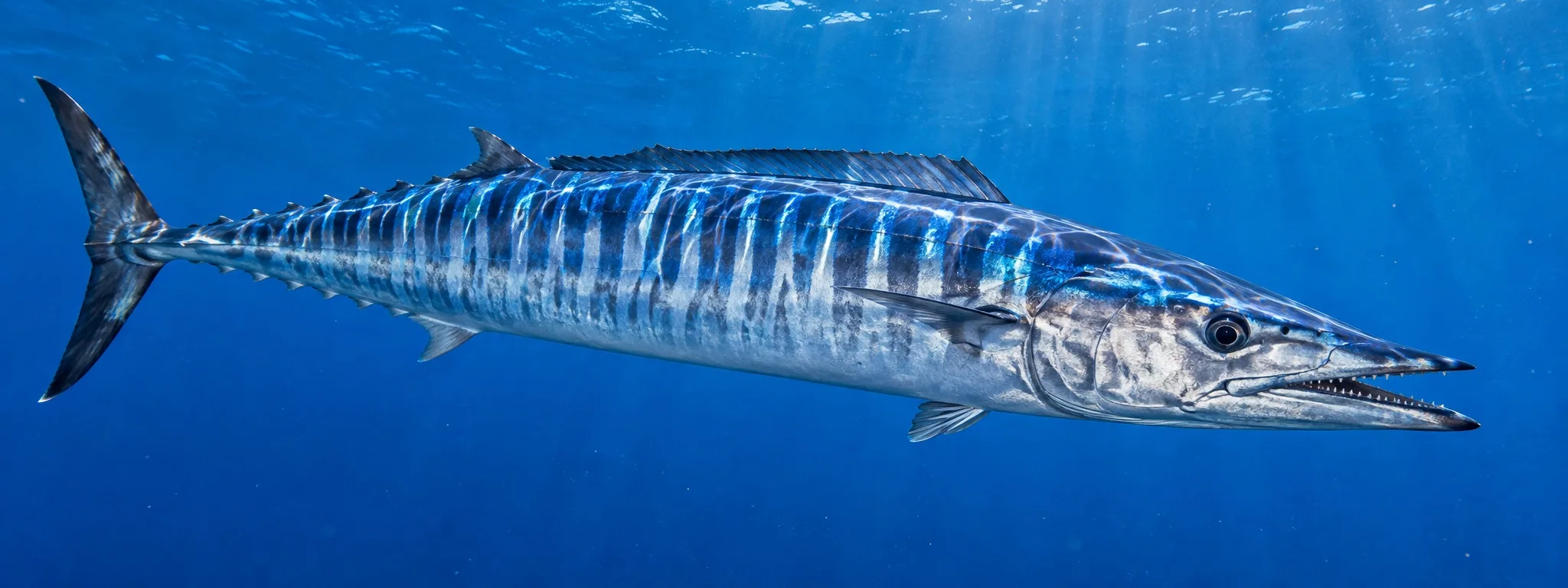
The wahoo has triangular, sharp and finely serrated teeth. Don’t reach near the mouth; use pliers or a disgorger to unhook.
 Choose another fish117 fish with guides
 EelOff-peak season
 EelpoutPossible
 IdePossible
 ArapaimaGood
 GraylingPeak season
 Atlantic salmonSpawning time, please spare
 Brown troutSpawning time, please spare
 Brook troutSpawning time, please spare
 BarbelOff-peak season
 BarramundiSpawning season
 Greater amberjackGood
 Topmouth gudgeonOnly as bycatch
 Blue marlinSpawning season
 BonefishSpawning season
 BonitoGood
 BreamOff-peak season
 Dusky grouperOnly as bycatch
 CobiaPossible
 Spiny dogfishOnly as bycatch
 CodPeak season
 ChubPeak season
 MinnowOnly as bycatch
 European sturgeonOnly as bycatch
 FlounderPeak season
 PerchPeak season
 Largemouth bassGood
 Ballan wrasseOnly as bycatch
 Yellowfin tunaSpawning season
 Giant trevallyGood
 Prussian carpPossible
 BrillPossible
 Gilthead breamSpawning time, please spare
 Golden doradoSpawning season
 Golden mahseerOnly as bycatch
 Dolphinfish (mahi-mahi)Good
 Grass carpPossible
 Great barracudaGood
 GudgeonPossible
 White breamPossible
 DaceOff-peak season
 PikePeak season
 HalibutOff-peak season
 HerringPossible
 GarfishOut of season
 Huchen (Danube salmon)Possible
 Crucian carpOnly as bycatch
 CarpOff-peak season
 RuffeOff-peak season
 VendaceOnly as bycatch
 DabPeak season
 GurnardPossible
 Coley (saithe)Peak season
 Chinook salmonHardly any chance
 King mackerelSpawning season
 LingPeak season
 TuskOff-peak season
 MackerelPossible
 Bighead carpOut of season
 WhitefishPossible
 Conger eelOff-peak season
 Sea troutSpawning time, please spare
 Grey mulletPossible
 Murray codSpawning season
 MuskellungeGood
 Common nasePossible
 Nile perchPossible
 PayaraPossible
 Peacock bassPeak season
 PermitGood
 WeeverOnly as bycatch
 PollackOff-peak season
 BurbotOff-peak season
 AspPossible
 Red snapperSpawning season
 Rainbow troutPeak season
 RoosterfishGood
 RoachPeak season
 RedfishOut of season
 Bluefin tunaOnly as bycatch
 RuddPossible
 Russian sturgeonOnly as bycatch
 HaddockOff-peak season
 SnakeheadPossible
 TenchOff-peak season
 SpirlinOnly as bycatch
 PlaiceOff-peak season
 Greenland halibutOnly as bycatch
 Round gobyOnly as bycatch
 SwordfishGood
 Lake troutSpawning time, please spare
 HakeSpawning time, please spare
 Alpine charSpawning time, please spare
 MonkfishPossible
 SoleOff-peak season
 SailfishGood
 Silver carpOut of season
 SnookPeak season
 PumpkinseedOnly as bycatch
 SpratOnly as bycatch
 Atlantic wolffishSpawning time, please spare
 TurbotPeak season
 SterletOnly as bycatch
 SmeltOnly as bycatch
 Horse mackerelPossible
 TaimenGood
 TarponGood
 TigerfishSpawning season
 BleakPossible
- WahooGood
 Wels catfishOff-peak season
 WhitingPeak season
 Sea bassOff-peak season
 ZanderPeak season
 White-eye breamOnly as bycatch
 Blue breamOnly as bycatch
 Brown bullheadPossible
 VimbaOnly as bycatch
Season in October according to the catch calendar, an estimate and not a guarantee of a catch. The fish pictures are reduced natural-history plates and AI-generated.
Best time
From April to October.
In January: PossibleIn February: PossibleIn March: PossibleIn April: GoodIn May: Good, spawning seasonIn June: Good, spawning seasonIn July: Good, spawning seasonIn August: Good, spawning seasonIn September: GoodIn October: GoodIn November: PossibleIn December: Possible
Good spot
- Coast: just below the surface, open water and edgejust below the surface, open water and edgejust below the surface, open water and edgejust below the surface, open water and edge
Top baits
Starter tackle
- Rod: strong boat rod for heavy lines
- Line: heavy line, as the North Carolina fisheries authority (Fischereibehörde) names it for fast trolling
- Hook: strong single hook, gape not narrower than the lure head; heavy-wire hooks on crankbaits
In short
In short: According to the catch calendar, the best time is April to October. Good spots on the coast: just below the surface, open water and edge. Proven baits: fast-trolled skirted lures in front of ballyhoo (halfbeak) and fast-running crankbaits on a wire leader. The wahoo has no gill rakers, which is a reliable way to tell it from the king mackerel. Off the Carolinas it is common mainly in the warm summer months.
Quick to recognise
A long, slim relative of the mackerels and tunas with a pointed, beak-like snout and 24 to 30 cobalt-blue bars that fade quickly on a dead fish. What separates it from the king mackerel is that it has no gill rakers. 100 to 170 centimetres is usual, and FishBase gives up to 250 centimetres and 83 kilograms.
When
Off the south-east coast of the USA from Florida to North Carolina, April to October count as good, and in winter a catch is possible. In summer it follows the Gulf Stream northwards and in winter returns to the tropics; no month counts as peak season, because the strongest spawning season falls in summer. Spawning takes place in the western central Atlantic from May to August, mostly in June and July, in the Caribbean and off Florida.
- JanPossible
- FebPossible
- MarPossible
- AprGood
- MayGood, spawning
- JunGood, spawning
- JulGood, spawning
- AugGood, spawning
- SepGood
- OctGood
- NovPossible
- DecPossible
Peak seasonGoodPossibleHardly any chanceSpawning season
Season in the destination
Off the south-east coast of the USA the chances are good from April to October. With the warm Gulf Stream the fish migrate in summer as far as the Carolinas and Bermuda, where they are most common, and return to tropical waters for the winter. There you can catch them all year round, in higher latitudes only in summer.
Season and biting time
In January: PossibleIn February: PossibleIn March: PossibleIn April: GoodIn May: Spawning seasonIn June: Spawning seasonIn July: Spawning seasonIn August: Spawning seasonIn September: GoodIn October: GoodIn November: PossibleIn December: Possible
Where it is now
On the coast
It hunts just below the surface over deep water, according to FishBase usually no deeper than 12 metres, alone or in small, loose groups. Good spots are drifting sargassum fields and other flotsam, plus banks off the coast and the boundaries between water masses.
How to go about it: You fish over deep water, because the wahoo usually stays in the top 12 metres. It holds singly or in small groups by sargassum and other flotsam, over banks off the coast and at the boundaries between water masses.
| All year round | just below the surface, open water, edge |
|---|
Holding spots in the picture
Choose a season and time of day: the picture shows where the species sits then. Tap a fish or a spot in the list to bring it closer. The picture is schematic and AI-generated, every water is different.
Chance of a catch in springgood
Chance of a catch in summergoodSpawning, observe the closed seasons
Catch chance in autumngood
Catch chance in winterpossible
- J
- F
- M
- A
- M
- J
- J
- A
- S
- O
- N
- D
Spawning season
On the coast
Drop-off
Wahoo are found here all year round.
Open water, mid-water
Wahoo are found here all year round.
Just below the surface
Wahoo are found here all year round.
The wahoo hunts just below the surface over deep water, alone or in small, loose groups. It likes to hold by drifting weed fields and other flotsam, and also by banks and underwater humps.
Spring: chance of a catch according to the catch calendar possible in March, good in April and May.
Summer: chance of a catch good according to the catch calendar. This is when spawning falls, so observe the closed seasons.
Autumn: catch chance according to the catch calendar good in September and October, possible in November.
Winter: catch chance according to the catch calendar possible.
Depth: It usually stays in the top 12 metres.
Size comparison: AI-generated drawing, schematic.
How
It is caught by trolling at high speed over deep water. Many anglers in North Carolina use heavy lines for this and take in flotsam and sargassum on their route.
Easiest way
The easiest way to catch a wahoo is trolling at high speed: skirted lures with ballyhoo or fast crankbaits run on a wire leader over deep water. Run deliberately along drifting sargassum and other flotsam as you go.
Fast trolling on wire
The main method for wahoo: artificial lures, often with ballyhoo, run at high speed over deep water, and a wire leader protects against the teeth.
- Flotsam and sargassum
Wahoo hunt alone or in small, loose groups and like to stay by drifting sargassum and other flotsam. Make a point of taking in such spots while trolling.
- Banks and current edges
Offshore fish gather over banks off the coast and where water masses meet and nutrients rise from the depths. Flocks of birds and FADs also point to good spots.
- Wire in front of the lure
The triangular, finely serrated teeth cut through mono in an instant. That is why many anglers in North Carolina troll colourful skirted lures with ballyhoo on a wire leader.
- Skirted lure or trolling crankbait
Besides the skirted lure with ballyhoo, fast crankbaits are used. A short, thin piece of wire in front helps if the wahoo takes the lure deep.
- Lines from outriggers
Run several lines, the outer ones from outriggers so that they don’t tangle. Choose a leader at least about 1.5 metres long so that the fish does not hit the main line with its tail.
- High speed
Wahoo are trolled for at high speed over deep water. Ordinary trolling crankbaits run cleanly at 6 to 8 knots, and purpose-built fast models also stand up to over 10 knots.
- Keep clear of the teeth
Bring the fish to the boat quickly and keep your hands away from the mouth. Remove the hook with pliers or a disgorger.
What with
Among offshore trolling lures, colourful skirted heads, often with a ballyhoo behind, and fast-running crankbaits work. A wire leader belongs in front of the lure, because the serrated teeth easily cut monofilament line.
- Offshore trolling luresover deep water, off the Carolinas mainly in summer
The North Carolina fisheries authority (Fischereibehörde) names fast trolling with colourful skirted lures and ballyhoo on a wire leader as the usual way of catching wahoo, plus fast crankbaits.
Tackle
A strong sea rod with heavy line for fast trolling, with a wire leader in front. Pliers or a disgorger lie ready on board for unhooking.
Fast trolling on wire
- Rod
- strong boat rod for heavy lines
- Reel
- All-metal multiplier reel with lever drag
- Line
- heavy line, as the North Carolina fisheries authority (Fischereibehörde) names it for fast trolling
- Leader
- Wire; in the skirt steel of 130 to over 200 lb, in front of it monofilament of 100 to 300 lb, together at least about 1.5 m
- Hooks
- strong single hook, gape not narrower than the lure head; heavy-wire hooks on crankbaits
Common mistakes
- Mono without wire: The serrated teeth cut through mono immediately. Put wire in front of skirted lures and crankbaits; a thin single strand or titanium hardly shows.
- A freshwater crankbait: Such models break out at high speed and skip over the waves. Use trolling crankbaits built for sea speeds.
- Thin stock hooks on the crankbait: A wahoo grabs a fast-running lure very hard. Swap thin hooks and weak split rings for strong ones; a crankbait with a through-wire is the strongest.
- Hand at the mouth: The jaws carry sharp, triangular teeth with a finely serrated edge. Never reach into the mouth, and remove the hook with pliers or a disgorger.
- Running only through open water: Wahoo gather at sargassum, flotsam and over banks. Run up to such spots deliberately instead of only pulling straight through the blue water.
Rules
For wahoo, the rules of the country where you fish apply, not German fisheries law. Each country, and often each water, sets its own licence, closed seasons, minimum sizes and rules on taking fish.
What the species profile says: The wahoo has no gill rakers, which is a reliable way to tell it from the king mackerel. Off the Carolinas it is common mainly in the warm summer months.
The fisheries authority (Fischereibehörde) of the country you travel to is what counts. Ask about the current rules before the trip and read in the profile how threatened the species is.
After the catch
Playing and landing
Bring the wahoo to the boat quickly; a short fight spares a fish that is to go back. Keep your hands away from the mouth, because the teeth are sharp and finely serrated, and remove the hook with pliers or a disgorger. A fish you want to release you leave in the water while doing so. The rules, licence and taking of fish are set by the country where you fish.
With smaller fish it is worth looking under the gill cover: if there are no gill rakers, you have a wahoo on the hook and not a king mackerel. For landing, unhooking and releasing, the linked fish welfare pages will help.
Frequently asked questions
How fast do you troll for wahoo?
At high speed, faster than for many other offshore fish. Trolling crankbaits usually run at 6 to 8 knots, fast special models also above 10 knots, and boats trolling off Hawaii usually pull artificial lures at 7 to 8.5 knots.
Do you need a wire leader for wahoo?
Yes. The North Carolina fisheries authority (Fischereibehörde) names skirted lures on a wire leader, and Blinker also advises a short piece of wire in front of crankbaits, because the teeth cut through mono like scissors.
When is the best time for wahoo?
In the tropics all year round. Off the Carolinas and Bermuda it is most common in the warm summer months, and for winter it migrates back south with the Gulf Stream.
How deep does the wahoo sit?
Usually just below the surface; FishBase gives mostly the top 12 metres. So you troll baits at or just under the surface.
Can you make your own wahoo lures?
Yes, Blinker describes simple trolling lures made from a soft plastic octopus, a small lead head and thick monofilament, with a piece of compressed-air hose on the hook as bite protection. They run best at 6 to 9 knots.
Similar species
If you catch wahoo, you can use similar tackle for these species too:
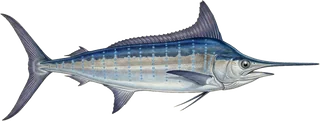 Blue marlin fishingSpawning season
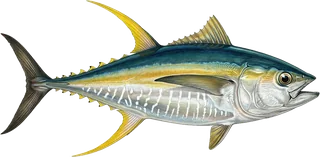 Yellowfin tuna fishingSpawning season
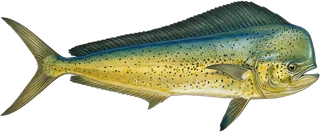 Dolphinfish fishingGood
 Sailfish fishingGood
Sources
As of October 2026. The practical knowledge comes from 10 sources, summarised in our own words.
See all 10 sources
- Wahoo (Species Profile) · North Carolina Department of Environmental Quality, Division of Marine Fisheries
- Atlantic Wahoo (Species Directory) · NOAA Fisheries
- Acanthocybium solandri – Wahoo (Discover Fishes) · Florida Museum of Natural History, University of Florida
- Acanthocybium solandri, Wahoo (Species Summary) · FishBase
- Köder beim Hochseeangeln: Erfolg auf hoher See · Blinker (Redaktion)
- Großfischköder einfach selber bauen: Big Game zum Spartarif · Blinker (Redaktion)
- Thunfisch angeln im Geschwindigkeitsrausch · Blinker (Redaktion)
- Hawaii Troll Fishery (MMPA List of Fisheries) · NOAA Fisheries
- Trolling for Artisanal Fishers (2nd Workshop on Development and Management of FAD Fishery) · Vanuatu Fisheries Department mit Japan International Cooperation Agency (JICA)
- Ethical Angling: Atlantic Highly Migratory Species Catch and Release (Careful Catch and Release Brochure) · NOAA Fisheries, Atlantic Highly Migratory Species Management Division
Text AI-assisted, based on the sources named and these pages: Wahoo (profile), Sea fishing, Offshore trolling lures, Landing and unhooking a fish.