
Knowledge – Fish
Horse mackerel fishing
Fishing for horse mackerel means working small lures on ultralight tackle through the shoals at dusk and at night. Here is the way there in nine steps, each with a link to the detailed page.
 Choose another fish117 fish with guides
 EelOff-peak season
 EelpoutPossible
 IdePossible
 ArapaimaGood
 GraylingPeak season
 Atlantic salmonSpawning time, please spare
 Brown troutSpawning time, please spare
 Brook troutSpawning time, please spare
 BarbelOff-peak season
 BarramundiSpawning season
 Greater amberjackGood
 Topmouth gudgeonOnly as bycatch
 Blue marlinSpawning season
 BonefishSpawning season
 BonitoGood
 BreamOff-peak season
 Dusky grouperOnly as bycatch
 CobiaPossible
 Spiny dogfishOnly as bycatch
 CodPeak season
 ChubPeak season
 MinnowOnly as bycatch
 European sturgeonOnly as bycatch
 FlounderPeak season
 PerchPeak season
 Largemouth bassGood
 Ballan wrasseOnly as bycatch
 Yellowfin tunaSpawning season
 Giant trevallyGood
 Prussian carpPossible
 BrillPossible
 Gilthead breamSpawning time, please spare
 Golden doradoSpawning season
 Golden mahseerOnly as bycatch
 Dolphinfish (mahi-mahi)Good
 Grass carpPossible
 Great barracudaGood
 GudgeonPossible
 White breamPossible
 DaceOff-peak season
 PikePeak season
 HalibutOff-peak season
 HerringPossible
 GarfishOut of season
 Huchen (Danube salmon)Possible
 Crucian carpOnly as bycatch
 CarpOff-peak season
 RuffeOff-peak season
 VendaceOnly as bycatch
 DabPeak season
 GurnardPossible
 Coley (saithe)Peak season
 Chinook salmonHardly any chance
 King mackerelSpawning season
 LingPeak season
 TuskOff-peak season
 MackerelPossible
 Bighead carpOut of season
 WhitefishPossible
 Conger eelOff-peak season
 Sea troutSpawning time, please spare
 Grey mulletPossible
 Murray codSpawning season
 MuskellungeGood
 Common nasePossible
 Nile perchPossible
 PayaraPossible
 Peacock bassPeak season
 PermitGood
 WeeverOnly as bycatch
 PollackOff-peak season
 BurbotOff-peak season
 AspPossible
 Red snapperSpawning season
 Rainbow troutPeak season
 RoosterfishGood
 RoachPeak season
 RedfishOut of season
 Bluefin tunaOnly as bycatch
 RuddPossible
 Russian sturgeonOnly as bycatch
 HaddockOff-peak season
 SnakeheadPossible
 TenchOff-peak season
 SpirlinOnly as bycatch
 PlaiceOff-peak season
 Greenland halibutOnly as bycatch
 Round gobyOnly as bycatch
 SwordfishGood
 Lake troutSpawning time, please spare
 HakeSpawning time, please spare
 Alpine charSpawning time, please spare
 MonkfishPossible
 SoleOff-peak season
 SailfishGood
 Silver carpOut of season
 SnookPeak season
 PumpkinseedOnly as bycatch
 SpratOnly as bycatch
 Atlantic wolffishSpawning time, please spare
 TurbotPeak season
 SterletOnly as bycatch
 SmeltOnly as bycatch
- Horse mackerelPossible
 TaimenGood
 TarponGood
 TigerfishSpawning season
 BleakPossible
 WahooGood
 Wels catfishOff-peak season
 WhitingPeak season
 Sea bassOff-peak season
 ZanderPeak season
 White-eye breamOnly as bycatch
 Blue breamOnly as bycatch
 Brown bullheadPossible
 VimbaOnly as bycatch
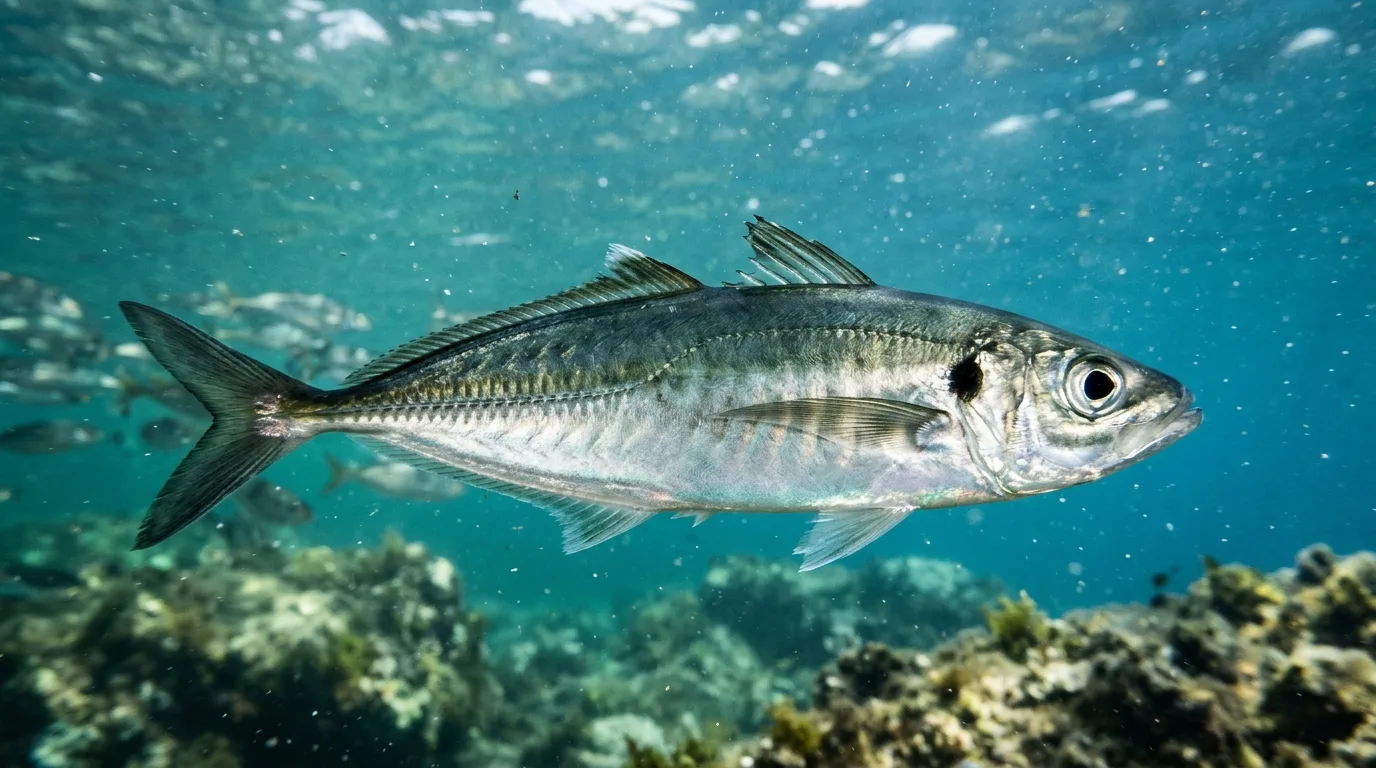
Season in October according to the catch calendar, an estimate and not a guarantee of a catch. The fish pictures are reduced natural-history plates and AI-generated.
Best time
In August, mainly in the evening and at night.
In January: Slim chancesIn February: Slim chancesIn March: Slim chancesIn April: PossibleIn May: Possible, spawning timeIn June: Good, spawning timeIn July: GoodIn August: Peak seasonIn September: GoodIn October: PossibleIn November: Slim chancesIn December: Slim chances
Good spot
- Coast: open water, just below the surface and sandy bottomopen water, just below the surface and sandy bottomopen water, just below the surface and sandy bottomrarely found
Starter tackle
- Rod: ultralight spinning rod, 1,80 m, with about 1–8 g casting weight
- Line: thin braid
- Hook: mini jig head
- Rod: a long, soft rod, such as a light bass or continental rod; a surf rod works but takes the fun out of playing small fish
- Line: braid for direct contact, but only with a soft rod
- Hook: size 6 at most, often better size 8–10 with a short shank and wide bend
In short
In short: you catch horse mackerel best in August, mainly in the evening and at night. Good spots on the coast: open water, just below the surface and sandy bottom. Proven baits: small soft lures and mini crankbaits on ultralight tackle, plus a herring rig. Lateral line with a row of large, keeled bony scutes, black spot on the gill cover. The IUCN lists the species worldwide as threatened (Vulnerable).
Quick to recognise
A shoaling fish of the jack family, also called scad, with large keeled bony scutes along the lateral line. It usually measures 15 to 40 centimetres, rarely 60 or 70.
When
The main season is August; June, July and September are good, and in April, May and October a catch is possible. In spring it migrates into the North Sea, from October it moves off towards the English Channel, and in winter it has almost vanished there. It spawns in the southern North Sea mainly in May and June, also off the German coast.
- JanHardly any chance
- FebHardly any chance
- MarHardly any chance
- AprPossible
- MayPossible, spawning season
- JunGood, spawning
- JulGood
- AugPeak season
- SepGood
- OctPossible
- NovHardly any chance
- DecHardly any chance
Peak seasonGoodPossibleHardly any chanceSpawning season
Spring tactics
In late spring the first horse mackerel appear on the south coast of England, for example in Dorset. In the North Sea, targeted attempts are still early then.
Summer tactics
The best time. From the piers at Scheveningen you catch them mainly in July and August, at the same time as mackerel, and on the Normandy coast summer counts as the main season for evenings in the harbour.
Autumn tactics
In early autumn, harbour evenings in Normandy are still worthwhile. After that it quickly gets quieter, because the shoals leave the North Sea.
Winter tactics
In the North Sea the shoals are largely gone in winter. Targeted attempts are hardly worthwhile then.
Is it biting today?
In January: Off seasonIn February: Off seasonIn March: Off seasonIn April: PossibleIn May: Spawning time, please spare themIn June: Spawning time, please spare themIn July: Shoulder seasonIn August: Peak seasonIn September: Shoulder seasonIn October: PossibleIn November: Off seasonIn December: Off season
Today’s catch index needs JavaScript. Season and spawning time are in the catch calendar.
Where it is now
On the coast
The shoals are large and move through open water, close to the coast gladly over sandy bottom; by day they stay low and at mid-depth, at night just above the bottom. When they hunt small fish they often give themselves away at the surface, and at night in harbours where lamps shine on the water.
How to go about it: Your best chances are lit harbours with deep water and piers that reach far out to sea, for example on Helgoland or at Scheveningen. On the rocky coasts of south-west England you catch them on light spinning or float tackle alongside mackerel, garfish and pollack, and on the Dorset coast in summer also with lures and float from the beach.
| Spring | open water, just below the surface, sandy bottom |
|---|---|
| Summer | open water, just below the surface, sandy bottom |
| Autumn | open water, just below the surface, sandy bottom |
| Winter | rarely found |
Biting time: mainly in the evening and at night. What that looks like in the water is shown by the picture of the holding spots just below.
Holding spots in the picture
Choose the season and time of day: the picture shows where the species stands then. Spots outlined in red apply only in the chosen season. Tap a fish or a spot in the list to bring it closer. The picture is schematic and AI-generated, every water is different.
Catch chances in springpossible
Catch chance in summergood
Catch chance in autumnpossible
Catch chance in winterhardly any
- J
- F
- M
- A
- M
- J
- J
- A
- S
- O
- N
- D
Spawning season
No main time Your best chances are at dusk and in the dark. In harbours the shoals hunt at night where lamps shine on the water.
No main time Your best chances are at dusk and in the dark. In harbours the shoals hunt at night where lamps shine on the water.
Active time Your best chances are at dusk and in the dark. In harbours the shoals hunt at night where lamps shine on the water.
Active time Your best chances are at dusk and in the dark. In harbours the shoals hunt at night where lamps shine on the water.
On the coast
Sandy bottom
Horse mackerel (scad) is found here only in spring, summer and autumn.
Open water, mid-water
Horse mackerel (scad) is found here only in spring, summer and autumn.
Just below the surface
Horse mackerel (scad) is found here only in spring, summer and autumn.
Horse mackerel travel in large shoals through open water, close to the coast gladly over sandy bottom. By day the shoals stand at the bottom and in mid-water, at night just above the bottom. When they hunt small fish, you often hear and see them at the surface.
Spring: chances according to the catch calendar are slim in March, possible in April and May. In spring the horse mackerel migrate into the North Sea.
Summer: chances according to the catch calendar are good in June and July, peak season in August. In high and late summer they are most numerous in the North Sea, especially in the south-east.
Autumn: chances according to the catch calendar are good in September, possible in October, slim in November. From October they leave the North Sea towards the English Channel.
Winter: chances according to the catch calendar are slim. In winter they have almost vanished from the North Sea.
Depth: horse mackerel live in open water over the shelf, mostly down to 200 metres.
Size comparison: AI-generated drawing, schematic.
How
It is most fun on ultralight spinning tackle. Your best chances are at dusk and in the dark; at night in the harbour you cast deliberately into the cones of light.
Easiest way
A lit harbour with deep water on a summer evening is a good place to start. An ultralight spinning rod, a mini jig head and a slim soft lure of 4 to 7 cm are enough. Once it gets dark, you search the bright patches under the lamps until a shoal bites.
Ultralight in the harbour light
The direct way at dusk and at night: tiny soft lures on very fine tackle, worked through the hunting shoals.
- Find the bright spots
At nightfall go to a harbour with deep water and lamps above the water surface. In one Normandy harbour the shoals hunted exactly there; now and then small sea bass and pollack bit as well.
- mini lead head
Put a slim soft lure or twister of 4 to 7 cm on a very small lead head. A thin braid belongs on the small reel.
- Search the depths
In daylight horse mackerel stay just above the bottom; in the dark they rise under the lamps up to the surface. So let the lure sink for different lengths of time before you retrieve it.
- Keep it moving
Horse mackerel attack moving lures. Work the soft lure steadily through the deep harbour water and change spot if nothing happens; finding the shoal can take a while.
- Stay with the shoal
When the first bite comes, cast straight back to the same spot. If the shoal is under you, all anglers often catch at the same time.
- Play with patience
For their size horse mackerel pull surprisingly hard. Still, be gentle, because the hook slips easily out of the mouth; the light tackle cushions the runs.
Sliding float at the harbour wall
With a small natural bait at piers and quay walls, when the water is clear and the horse mackerel stand in mid-water or just under the surface.
- Close to the wall
Fish close to the wall, at corners, in eddies and under floodlight. Fish that hunt in mid-water like the horse mackerel are caught at piers mainly in clear water.
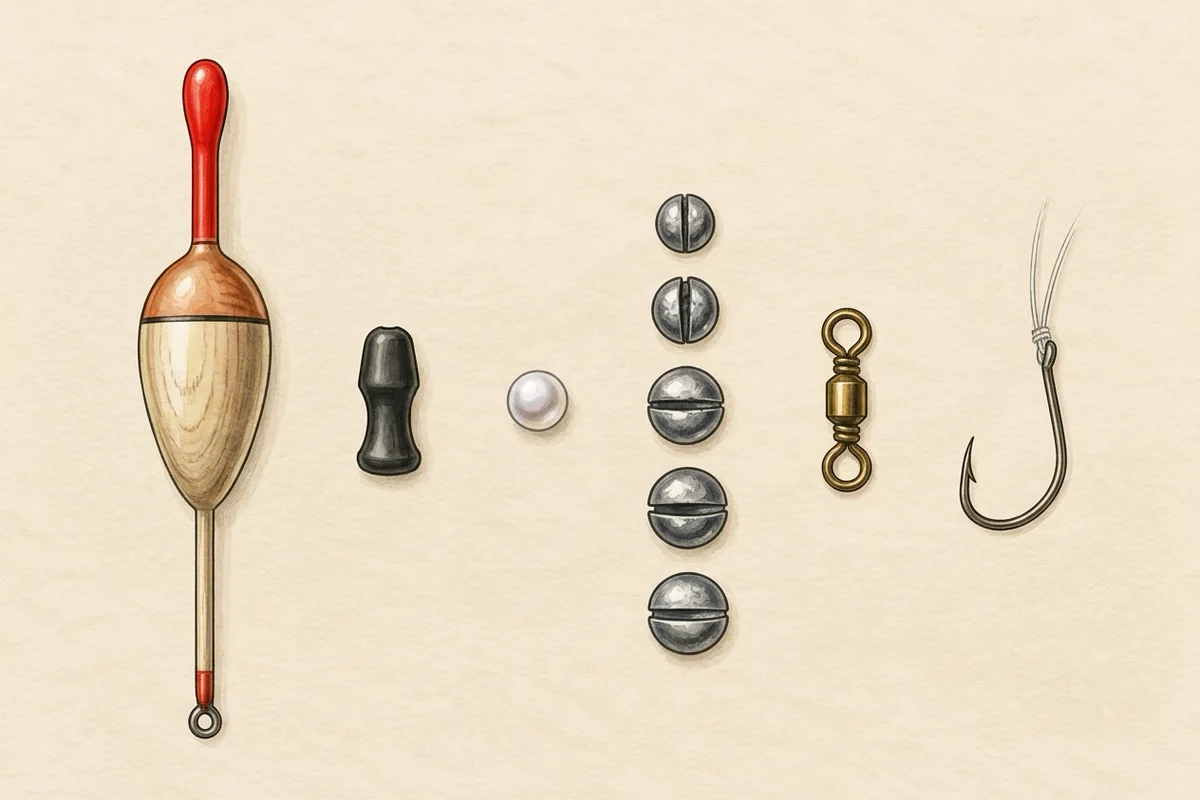
- Depth by stop knot
A stop knot of power gum above the sliding float sets how deep the bait hangs. By day you set it just above the bottom, at night shallow under the surface.
- Weight and hooklength
Under the float goes a weight that just stands it upright, then a swivel and a hooklength of a good 1 m with a small hook. A bead stops the stop knot from jamming in the float.
- Worm through the head
Hook a white or small ragworm through the head only, so that it wriggles. A narrow strip from the silvery belly of a mackerel, hooked once, works just as well.
- Adjust the depth
With the tide the water depth changes constantly. Move the stop along when the bites stop, and lift the bait now and then, because horse mackerel take more readily when it moves.
What with
When harbour fishing in Normandy, slim soft lures and twisters of 4 to 7 centimetres on light lead heads caught fish. Mini soft lures, small crankbaits and a herring rig with small flies or feathers also bring fish.
- Soft plastic (shad)in the evening and at night in the harbour
Slim soft lures of 4 to 7 cm gave the most bites when harbour fishing in Normandy.
- Sea paternosterby day from a pier or boat, when small shoaling fish are on the move
British sea anglers consider a paternoster with tiny flies on fine line very effective for small shoaling fish such as horse mackerel.
- Spoonin summer from piers with deep water
On Helgoland, pier anglers caught horse mackerel with spoons and spinners, often among mackerel.
Tackle
A specialist magazine describes a spinning rod with 1 to 8 grams casting weight for harbour fishing. Because the mouth is soft and the hook tears out easily, you play the fish carefully, with a soft rod and a finely set drag.
Ultralight in the harbour light
- Rod
- ultralight spinning rod, 1,80 m, with about 1–8 g casting weight
- Reel
- fixed-spool reel size 1000
- Line
- thin braid
- Hooks
- mini lead head
- Weight, float, lead
- soft lure or twister, 4–7 cm, on a mini lead head
Sliding float at the harbour wall
- Rod
- a long, soft rod, such as a light bass or continental rod; a surf rod works but takes the fun out of playing small fish
- Line
- braid for direct contact, but only with a soft rod
- Leader
- about 1,2 m, light hooklength of around 10 lb (about 4,5 kg), tough fluorocarbon in clear water
- Hooks
- size 6 at most, often better size 8–10 with a short shank and wide bend
- Weight, float, lead
- sliding float with a weight that just stands it upright
Common mistakes
- Searched for at the surface by day: In bright light horse mackerel stay just above the bottom. By day let the lure run deep and fish shallow under the lamps only in the dark.
- Played too hard: The hook does not hold firmly in the mouth. Play with a light rod and little force, and you will land most fish safely.
- Bait hangs stiff: Horse mackerel go for moving baits. Lift the natural bait regularly or let it drift with the current instead of leaving it motionless.
- Started in cloudy water: Fish of mid-water bite reliably at piers only in clear water. After heavy rain or a churned-up sea you are better off moving to clearer spots.
- Given up after a few casts: The shoals move around. Cast to various bright spots and stay patient; once a shoal is there, the bites often come thick and fast.
Rules
Our overview of the states has no figures for horse mackerel on minimum size (Mindestmaß) or closed season (Schonzeit). That does not mean there are no rules: individual states and water regulations protect the species or set their own limits.
On the coast the rules of the coastal states apply, partly with their own catch restrictions: North Sea coast, Baltic coast of Schleswig-Holstein and Baltic coast of Mecklenburg-Western Pomerania.
The regulation and your fishing permit (Erlaubnisschein) are what count. Lake Constance, the Rhine and the coast, for example, have their own rules: Fishing waters in Germany.
After the catch
Playing and landing
Keep the pressure low and play the fish patiently, because the hook slips easily out of the mouth. To unhook, handle the fish carefully; the bony scutes on the flank are sharp. A horse mackerel of legal size that you may keep is stunned and killed straight away; fish that are too small or protected are unhooked in the water and put back.
Hold the fish by the back, not along the lateral line, because the keeled scutes there are serrated. A horse mackerel of legal size that you may take is stunned and killed straight away; protected or undersized fish, and fish too large for a harvest slot (Entnahmefenster), go back at once, with wet hands, in the water. Worldwide the IUCN classes it as threatened, and according to ICES the spawning stock in the north-east Atlantic is below the reference value, so take only as many as you can use.
Frequently asked questions
When do horse mackerel bite best?
At dusk and at night. Then the fish rise under the harbour lamps up to the surface; by day they usually stay just above the bottom.
Which rod for horse mackerel?
For small lures an ultralight spinning rod of about 1,80 m with 1 to 8 g casting weight is enough. With a float and natural bait at the wall, take a longer, soft rod.
Which bait for horse mackerel?
Small, slim soft lures such as shads or twisters of 4 to 7 cm, a paternoster with small flies, and small spoons. Among natural baits, a narrow strip of fish or a ragworm hooked through the head works.
Which hook size for horse mackerel?
Small: no bigger than size 6; short-shanked hooks of size 8 to 10 with a wide bend often suit best.
Can you catch horse mackerel from the shore?
Yes, from harbour quays, piers and rocky ledges with deep water in front. Catches are documented in Normandy harbours, from the piers at Scheveningen and on Helgoland.
Similar species
If you catch horse mackerel, you can fish for these species with similar tackle too:
 Fishing for garfishOut of season
 Fishing for mackerelPossible
 Sea bass fishingShoulder season
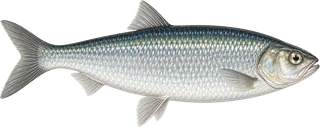 Herring fishingPossible
Sources
Correct as of October 2026. The practical knowledge comes from 12 sources, summarised in our own words.
View all 12 sources
- Farbenfrohe Fänge beim Spinnfischen an der Küste der Normandie · BLINKER (Christopher Chew)
- The Best Way to Fish a Sea Wall or Pier · Sea Angler (Alan Yates)
- How to Fish a Pier · Sea Angler (Redaktion)
- How to use a sliding float · Sea Angler (Jessica Reid)
- Pop it up! Master the art of using pop-ups · Sea Angler (Mike Thrussell)
- Fishing for Mackerel – Three Great Methods · Sea Angler (Redaktion)
- Carn Du Sea Fishing Mark, Lamorna · Sea Angler (Redaktion)
- Seatown · Sea Angler (Redaktion)
- Bravo Brent – species hunting supremo · Sea Angler (Redaktion)
- Ayr Harbour & Pier Sea Fishing Marks · Sea Angler (Redaktion)
- Die Molen von Scheveningen · FISCH & FANG (Dieter Schröder)
- Helgoland · FISCH & FANG (Hans Egidius)
AI-assisted text, based on the sources listed and these pages: Horse mackerel (profile), Spinning, Soft plastic (shad), Twister, Sea paternoster.