
Knowledge – Fish
Fishing for king mackerel
King mackerel fishing means this: following the schools along the coast and offering a bait fish or a spoon on a short wire hooklength. Here is the way there in nine steps, each with a link to the detailed page.
The US authorities EPA and FDA count king mackerel among the fish with the highest mercury levels: pregnant and breastfeeding women, women who could become pregnant and small children should avoid it. There are also reports of ciguatera from some areas, a poisoning caused by algal toxins. This does not replace medical advice.
 Choose another fish117 fish with guides
 EelOff-peak season
 EelpoutPossible
 IdePossible
 ArapaimaGood
 GraylingPeak season
 Atlantic salmonSpawning time, please spare
 Brown troutSpawning time, please spare
 Brook troutSpawning time, please spare
 BarbelOff-peak season
 BarramundiSpawning season
 Greater amberjackGood
 Topmouth gudgeonOnly as bycatch
 Blue marlinSpawning season
 BonefishSpawning season
 BonitoGood
 BreamOff-peak season
 Dusky grouperOnly as bycatch
 CobiaPossible
 Spiny dogfishOnly as bycatch
 CodPeak season
 ChubPeak season
 MinnowOnly as bycatch
 European sturgeonOnly as bycatch
 FlounderPeak season
 PerchPeak season
 Largemouth bassGood
 Ballan wrasseOnly as bycatch
 Yellowfin tunaSpawning season
 Giant trevallyGood
 Prussian carpPossible
 BrillPossible
 Gilthead breamSpawning time, please spare
 Golden doradoSpawning season
 Golden mahseerOnly as bycatch
 Dolphinfish (mahi-mahi)Good
 Grass carpPossible
 Great barracudaGood
 GudgeonPossible
 White breamPossible
 DaceOff-peak season
 PikePeak season
 HalibutOff-peak season
 HerringPossible
 GarfishOut of season
 Huchen (Danube salmon)Possible
 Crucian carpOnly as bycatch
 CarpOff-peak season
 RuffeOff-peak season
 VendaceOnly as bycatch
 DabPeak season
 GurnardPossible
 Coley (saithe)Peak season
 Chinook salmonHardly any chance
- King mackerelSpawning season
 LingPeak season
 TuskOff-peak season
 MackerelPossible
 Bighead carpOut of season
 WhitefishPossible
 Conger eelOff-peak season
 Sea troutSpawning time, please spare
 Grey mulletPossible
 Murray codSpawning season
 MuskellungeGood
 Common nasePossible
 Nile perchPossible
 PayaraPossible
 Peacock bassPeak season
 PermitGood
 WeeverOnly as bycatch
 PollackOff-peak season
 BurbotOff-peak season
 AspPossible
 Red snapperSpawning season
 Rainbow troutPeak season
 RoosterfishGood
 RoachPeak season
 RedfishOut of season
 Bluefin tunaOnly as bycatch
 RuddPossible
 Russian sturgeonOnly as bycatch
 HaddockOff-peak season
 SnakeheadPossible
 TenchOff-peak season
 SpirlinOnly as bycatch
 PlaiceOff-peak season
 Greenland halibutOnly as bycatch
 Round gobyOnly as bycatch
 SwordfishGood
 Lake troutSpawning time, please spare
 HakeSpawning time, please spare
 Alpine charSpawning time, please spare
 MonkfishPossible
 SoleOff-peak season
 SailfishGood
 Silver carpOut of season
 SnookPeak season
 PumpkinseedOnly as bycatch
 SpratOnly as bycatch
 Atlantic wolffishSpawning time, please spare
 TurbotPeak season
 SterletOnly as bycatch
 SmeltOnly as bycatch
 Horse mackerelPossible
 TaimenGood
 TarponGood
 TigerfishSpawning season
 BleakPossible
 WahooGood
 Wels catfishOff-peak season
 WhitingPeak season
 Sea bassOff-peak season
 ZanderPeak season
 White-eye breamOnly as bycatch
 Blue breamOnly as bycatch
 Brown bullheadPossible
 VimbaOnly as bycatch
Season in October according to the catch calendar, an estimate and not a guarantee of a catch. The fish pictures are reduced natural-history plates and AI-generated.
Best time
All year round.
In January: GoodIn February: GoodIn March: GoodIn April: GoodIn May: Good, spawningIn June: Good, spawningIn July: Good, spawningIn August: Good, spawningIn September: Good, spawningIn October: Good, spawningIn November: GoodIn December: Good
Good spot
- Coast: Open water, just below the surface and wreck, reefOpen water, just below the surface and wreck, reefOpen water, just below the surface and wreck, reefOpen water, just below the surface and wreck, reef
Starter tackle
- Rod: boat rod to match line of around 20 lb, heavier for big kings
- Line: around 20 lb (about 9 kg), heavier for big kings
- Rod: rod for line of around 20 lb, heavier for big kings; plus a second rod for the anchor
- Line: around 20 lb (about 9 kg), heavier for big fish
In short
In short: According to the catch calendar, the best time is all year round. Good spots on the coast: open water just below the surface, and wrecks and reefs. Proven baits: live menhaden or cigar minnows and dead cutlassfish for slow trolling, plus spoons and jigs. It moves with the water temperature: north in summer, off southern Florida in winter. The FDA and EPA advise pregnant women, nursing mothers and small children not to eat it because of its high mercury content.
Quick to recognise
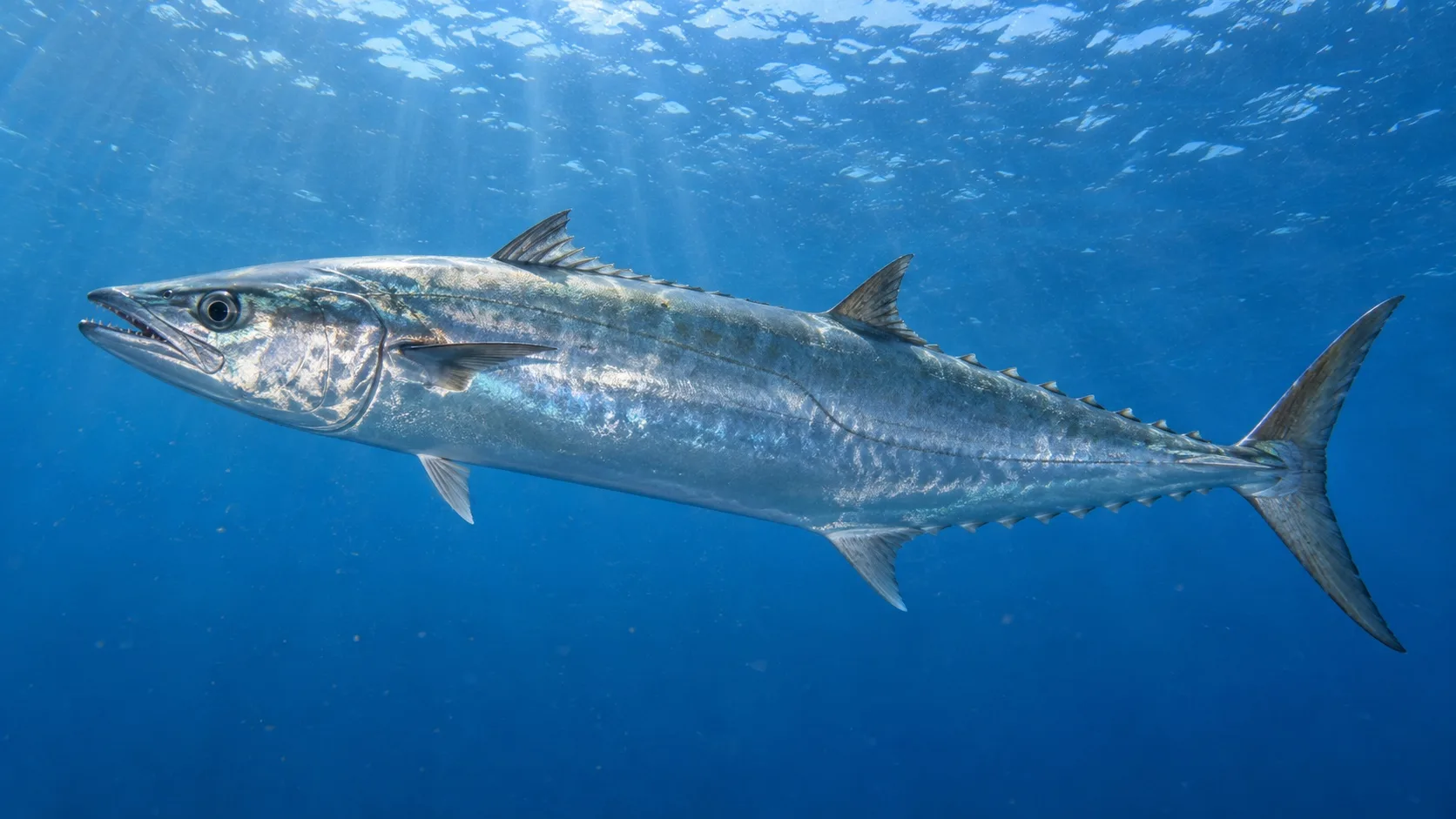
A long, torpedo-shaped mackerel with a pointed snout, which American anglers call king mackerel or kingfish. You can identify it reliably by its lateral line, which dips sharply downwards below the second dorsal fin. It usually measures 50 to 90 centimetres.
When
On the south-east coast of the USA and in the Gulf of Mexico every month counts as good, but the fish follow the warm water. In winter, southern Florida is worth a trip; from summer to autumn the Carolinas are the better bet. Spawning takes place on the outer shelf from May to October, mainly from late May to early August.
- JanGood
- FebGood
- MarGood
- AprGood
- MayGood, spawning
- JunGood, spawning
- JulGood, spawning
- AugGood, spawning
- SepGood, spawning season
- OctGood, spawning season
- NovGood
- DecGood
Peak seasonGoodPossibleHardly any chanceSpawning season
Season in the destination
Between North Carolina and Texas, king mackerel are found all year round, but they move with the warm water: from November to March the stocks gather south of the Florida Keys, in summer they move north and in winter back south. Below a water temperature of about 20 degrees you will rarely find them. Off North Carolina they sit on the edge of the shelf in winter and come in to the beaches from summer to autumn; on the piers there, September to mid-October is considered the best time.
Season and biting time
In January: GoodIn February: GoodIn March: GoodIn April: GoodIn May: SpawningIn June: SpawningIn July: SpawningIn August: SpawningIn September: SpawningIn October: SpawningIn November: GoodIn December: Good
Where it sits now
On the coast
King mackerel hunt in schools in open water close to the coast and on outer reefs, often leaping out of the water as they do. Off the Carolinas in summer and autumn they come close to beaches and piers and to harbour and river mouths.
How to go about it: Off Texas you look for oil platforms, the edges of bottom structure and anchored crab boats that throw their bycatch overboard. In winter the fish move to the edge of the shelf at the margin of the Gulf Stream; from summer to autumn they come right in to beaches, inlets and piers.
| All year round | Open water, just below the surface, wreck, reef, surf |
|---|
Holding spots in the picture
Choose a season and time of day: the picture shows where the species sits then. Tap a fish or a spot in the list to bring it closer. The picture is schematic and AI-generated, every water is different.
Chance of a catch in springgood
Chance of a catch in summergoodSpawning, observe the closed seasons
Chance of a catch in autumngoodSpawning season, observe the closed seasons
Catch chance in wintergood
- J
- F
- M
- A
- M
- J
- J
- A
- S
- O
- N
- D
Spawning season
On the coast
Surf close to the shore
King mackerel is found here all year round.
Wreck, reef
King mackerel is found here all year round.
Open water, mid-water
King mackerel is found here all year round.
Just below the surface
King mackerel is found here all year round.
The king mackerel hunts in schools in open water close to the coast and on outer reefs. While hunting it often shoots out of the water. In summer and autumn it comes right in to the beaches and to harbour and river mouths off the Carolinas.
Spring: catch chances according to the catch calendar are good.
Summer: chance of a catch good according to the catch calendar. This is when spawning falls, so observe the closed seasons.
Autumn: good chance of a catch according to the catch calendar. This is also the spawning period, so observe the closed seasons.
Winter: good chance of a catch according to the catch calendar.
Depth: It avoids water colder than about 20 degrees.
Size comparison: AI-generated drawing, schematic.
How
You fish from a boat or from the end of long piers. With natural bait you offer a bait fish; when spinning, the spoon does the work. From a boat in North Carolina, slow trolling with several baits at very low speed is common.
Easiest way
Without a boat of your own, a pier is the easiest way in: at the outer end you offer a live bait fish, which a second, anchored line holds in place. Use line of around 20 lb and a steel leader. In North Carolina autumn is the best time for it.
Slow trolling with bait fish
The most common method from a boat: several bait fish run behind the boat at very low speed; live baits are preferred mainly by anglers looking for big fish.
- Approach the structure
Off Texas, king mackerel hold at oil platforms, on the edge of bottom structure and around anchored crab boats that throw their bycatch overboard. Off the Carolinas, in summer and autumn you search the beaches and inlets.
- Choose the bait
Most often live menhaden and cigar minnows or dead cutlassfish are used. Herring, sardines, ballyhoo and mullet also come into question.
- Steel in front of the bait
Between the line and the bait fish belongs a leader made of steel or coated steel. Without this protection the sharp teeth usually cut the line before the fight has even begun.
- Put out several baits
Let several baits run behind the boat at the same time, and move very slowly.
- Bite at full speed
Kings grab the bait as they swim past quickly. This is usually followed by two or three powerful runs in which a lot of line leaves the reel.
- Wait out the runs
Let the fish make its runs and only take in line once it gives way. Afterwards, do not put your hand in its mouth; the teeth are sharp.
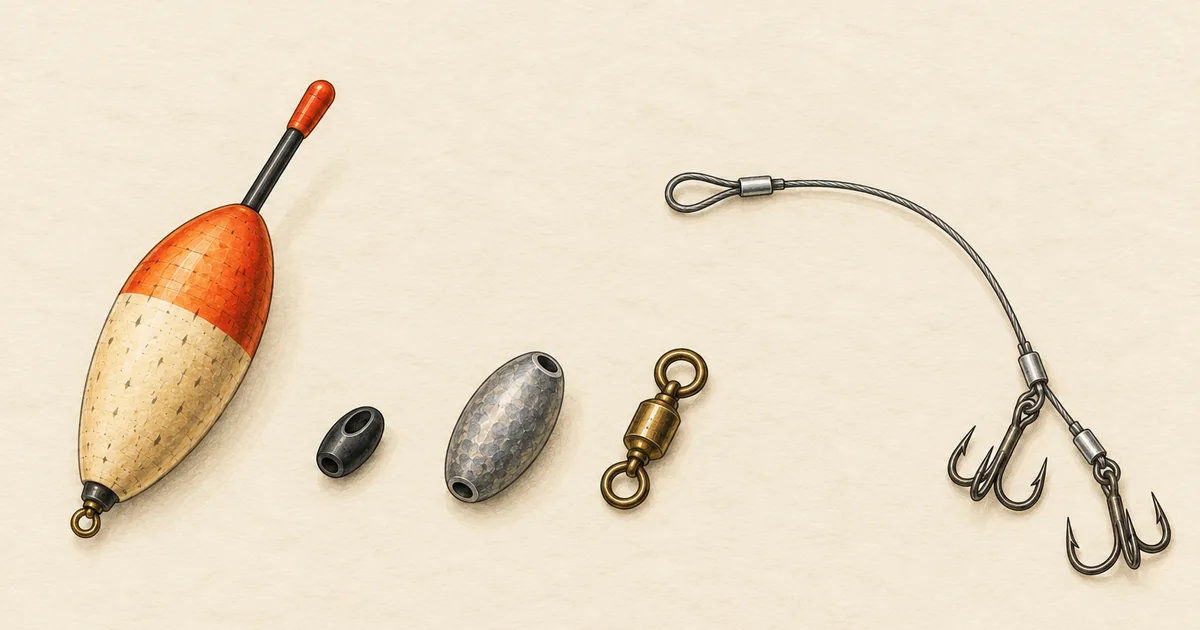
Pier with an anchor rod
The way without a boat: from the end of the pier, a second, anchored line holds the live bait fish in place.
- To the end of the pier
For king mackerel you go to the outer end of the pier, where the anglers after the big fish stand. In North Carolina autumn is the strongest time on the piers.
- Live bait fish
Take a live bait fish, such as menhaden, herring, sardine, ballyhoo or mullet.
- Join two rods
One rod carries an anchor, the second the live bait. A home-made connector joins the two lines, so the bait stays in place.
- The lines separate
When the king mackerel takes the bait, the connection pops open and your fishing line is free of the anchor line.
- Wait out the runs
Expect two or three long, powerful runs before the fish gives way. Keep the pressure steady and only then take in line.
What with
As bait fish, the authority in North Carolina names live menhaden and cigar minnows as well as dead cutlassfish. Jigs and spoons come on top of that; you work the spoon with a tumbling action and at varying speed.
- Baitfishall year round, especially for big fish and from a pier
If you are after big kings, go for live bait fish; menhaden and cigar minnows are among the most widely used.
- Spoonwhen trolling from a boat
King mackerel are also caught on trolled spoons, and conspicuous, shiny lures below the surface attract them well.
Tackle
A sea rod for the bait fish and a spinning rod for the spoon. Many anglers fit a short steel leader, because the sharp teeth easily cut through thin material.
Slow trolling with bait fish
More on tackle
Common mistakes
- Bait fish on a plain monofilament leader: The teeth of the king mackerel usually cut the line straight away. With natural bait, steel or coated steel belongs in front of the hook.
- Trolling bait fish too fast: When trolling with bait fish you go only very slowly. That way several baits run calmly behind the boat.
- Searching in cold water: Below a water temperature of about 20 degrees, king mackerel are scarce. Off the Carolinas in winter they sit far out on the edge of the shelf, not at the beach.
- Leaving the kept fish lying: How good the meat tastes depends on how you handle the fish after the catch. A fish you may keep, you kill straight away and let it bleed out.
Rules
For king mackerel the rules of the country in which you fish apply, not German fisheries law. Licence, closed seasons, minimum sizes and keeping fish are set by each country, often by each water separately.
What the species profile says: It moves with the water temperature: north in summer, off southern Florida in winter. The FDA and EPA advise pregnant women, nursing mothers and small children not to eat it because of its high mercury content.
The fisheries authority (Fischereibehörde) of the country you travel to is what counts. Ask about the current rules before the trip and read in the profile how threatened the species is.
After the catch
Playing and landing
After the bite, expect two or three powerful runs and only take in line once the fish gives way. Do not reach into its mouth; the teeth are sharp. Rules, licence and keeping fish are determined by the country in which you fish: a fish you may keep, you kill straight away and let it bleed out; all others you unhook quickly and release.
Before you take a fish home, check the lateral line, because different rules apply to Spanish mackerel and king mackerel. Anyone who eats king mackerel should know the mercury notes above. For landing, unhooking and releasing, the linked fish welfare pages will help.
Frequently asked questions
What leader do you need for king mackerel?
Steel or coated steel is the safest option, otherwise the line is often bitten through before the fight even starts. The fisheries authority (Fischereibehörde) in Florida names wire or monofilament as leader.
Which bait fish do you use for kingfish?
Most often live menhaden and cigar minnows as well as dead cutlassfish. The authority in Florida also names herring, sardines, ballyhoo and mullet.
What line strength for king mackerel?
The fisheries authority in Florida names line and tackle of around 20 lb, correspondingly heavier for bigger fish.
Can you catch king mackerel from a pier?
Yes, the fish often stay around piers, in North Carolina mainly in autumn. Anglers stand at the end of the pier and hold the live bait in place with a second, anchored line.
How fast do you troll for king mackerel?
Very slowly with bait fish. The fisheries authority in North Carolina names slow trolling with several baits as the most common method.
Similar species
If you catch king mackerel, you can fish for these species with similar tackle too:
Sources
Status: October 2026. The practical knowledge comes from 5 sources, summarised in our own words.
View all 5 sources
- King Mackerel (Species Profile) · North Carolina Department of Environmental Quality, Division of Marine Fisheries
- King Mackerel (Species Directory) · NOAA Fisheries
- Angling from Piers: Fall is Prime Fishing Season in North Carolina (Coastwatch) · North Carolina Sea Grant (NC State University)
- King Mackerel (Saltwater Species Profile, Fishing Tips and Facts) · Florida Fish and Wildlife Conservation Commission (FWC)
- Wild Blue Water (Abschnitt King Mackerel) · Texas Parks and Wildlife Magazine (Texas Parks and Wildlife Department), L. Bozka
Text prepared with AI support, based on the sources named and these pages: King mackerel (profile), Sea fishing, Spinning, Spoon.