
Knowledge – Fish
Plaice fishing
Fishing for plaice means: fish over sand and mud, keep the bait small and have a little patience after the first twitch. Here is the way there in nine steps, each with a link to the detailed page.
 Choose another fish117 fish with guides
 EelOff-peak season
 EelpoutPossible
 IdePossible
 ArapaimaGood
 GraylingPeak season
 Atlantic salmonSpawning time, please spare
 Brown troutSpawning time, please spare
 Brook troutSpawning time, please spare
 BarbelOff-peak season
 BarramundiSpawning season
 Greater amberjackGood
 Topmouth gudgeonOnly as bycatch
 Blue marlinSpawning season
 BonefishSpawning season
 BonitoGood
 BreamOff-peak season
 Dusky grouperOnly as bycatch
 CobiaPossible
 Spiny dogfishOnly as bycatch
 CodPeak season
 ChubPeak season
 MinnowOnly as bycatch
 European sturgeonOnly as bycatch
 FlounderPeak season
 PerchPeak season
 Largemouth bassGood
 Ballan wrasseOnly as bycatch
 Yellowfin tunaSpawning season
 Giant trevallyGood
 Prussian carpPossible
 BrillPossible
 Gilthead breamSpawning time, please spare
 Golden doradoSpawning season
 Golden mahseerOnly as bycatch
 Dolphinfish (mahi-mahi)Good
 Grass carpPossible
 Great barracudaGood
 GudgeonPossible
 White breamPossible
 DaceOff-peak season
 PikePeak season
 HalibutOff-peak season
 HerringPossible
 GarfishOut of season
 Huchen (Danube salmon)Possible
 Crucian carpOnly as bycatch
 CarpOff-peak season
 RuffeOff-peak season
 VendaceOnly as bycatch
 DabPeak season
 GurnardPossible
 Coley (saithe)Peak season
 Chinook salmonHardly any chance
 King mackerelSpawning season
 LingPeak season
 TuskOff-peak season
 MackerelPossible
 Bighead carpOut of season
 WhitefishPossible
 Conger eelOff-peak season
 Sea troutSpawning time, please spare
 Grey mulletPossible
 Murray codSpawning season
 MuskellungeGood
 Common nasePossible
 Nile perchPossible
 PayaraPossible
 Peacock bassPeak season
 PermitGood
 WeeverOnly as bycatch
 PollackOff-peak season
 BurbotOff-peak season
 AspPossible
 Red snapperSpawning season
 Rainbow troutPeak season
 RoosterfishGood
 RoachPeak season
 RedfishOut of season
 Bluefin tunaOnly as bycatch
 RuddPossible
 Russian sturgeonOnly as bycatch
 HaddockOff-peak season
 SnakeheadPossible
 TenchOff-peak season
 SpirlinOnly as bycatch
- PlaiceOff-peak season
 Greenland halibutOnly as bycatch
 Round gobyOnly as bycatch
 SwordfishGood
 Lake troutSpawning time, please spare
 HakeSpawning time, please spare
 Alpine charSpawning time, please spare
 MonkfishPossible
 SoleOff-peak season
 SailfishGood
 Silver carpOut of season
 SnookPeak season
 PumpkinseedOnly as bycatch
 SpratOnly as bycatch
 Atlantic wolffishSpawning time, please spare
 TurbotPeak season
 SterletOnly as bycatch
 SmeltOnly as bycatch
 Horse mackerelPossible
 TaimenGood
 TarponGood
 TigerfishSpawning season
 BleakPossible
 WahooGood
 Wels catfishOff-peak season
 WhitingPeak season
 Sea bassOff-peak season
 ZanderPeak season
 White-eye breamOnly as bycatch
 Blue breamOnly as bycatch
 Brown bullheadPossible
 VimbaOnly as bycatch
Season in October according to the catch calendar, an estimate and not a guarantee of a catch. The fish pictures are reduced natural-history plates and AI-generated.
Best time
From May to September, mostly in the evening and at night.
In January: Possible, spawningIn February: Possible, spawningIn March: Possible, spawningIn April: Possible, spawningIn May: Peak seasonIn June: Peak seasonIn July: Peak seasonIn August: Peak seasonIn September: Peak seasonIn October: GoodIn November: Good, spawningIn December: Possible, spawning
Good spot
- Coast: sandy bottom and deep watersandy bottom, deep water and surfsandy bottom and deep waterdeep water
Top baits
Starter tackle
- Rod: from a small boat a flatfish or spinning rod of 2,40–3,00 m with a casting weight of 30–60 g (flatfish rods up to 200 g); from a charter boat 3,00–3,30 m with 100–200 g
- Line: braid 0,13–0,20 mm, with a breaking strain of around 8 kg
- Hook: long-shanked flatfish hooks in size 4 to 1/0; larger hooks are swallowed deeply less often
- Rod: on the Baltic in summer a carp rod with a test curve of around 3 lb; otherwise a surf rod of 3,50–4,20 m that really casts about 200 g
- Line: monofilament of around 0,30 mm with a shock leader of 0,60–0,70 mm; or braid of around 0,14 mm with a tapered shock leader
- Hook: long-shanked hooks size 4–1 for one worm, 1/0 and larger for two worms
In short
In short: You catch plaice best from May to September, mostly in the evening and at night. Good spots on the coast: sandy bottom and deep water. Proven baits: lugworm and ragworm; from a boat also the flatfish spoon with a worm hook.
Quick to recognise
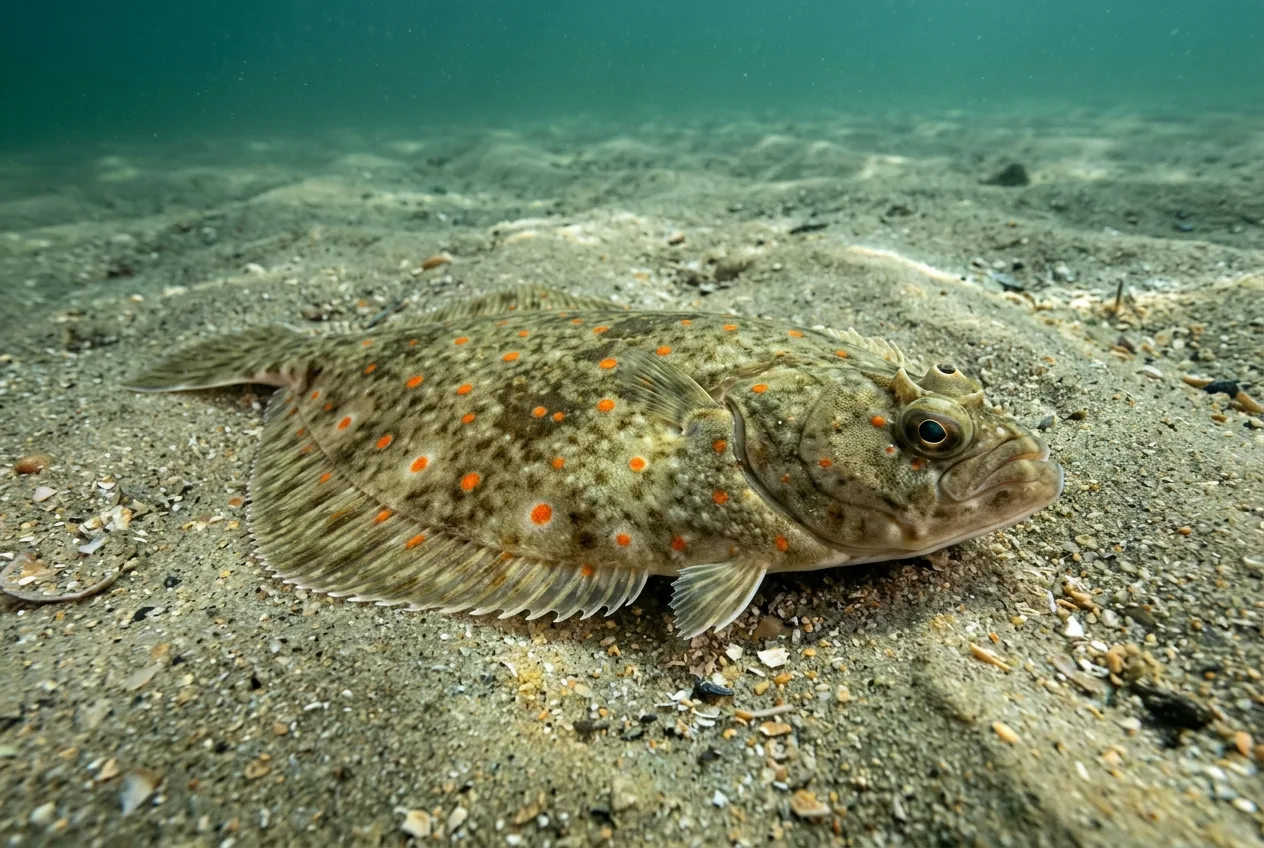
A flatfish with red to orange spots and smooth skin all round. Most fish measure 20 to 40 centimetres, larger ones are rare.
When
The main season runs from May to September, October and November are good; the biggest fish are usually caught from May to July. In winter plaice hold deep and are reachable almost only from a boat. Spawning is in winter: in the North Sea from January to April, in the Baltic from as early as November to March.
- JanPossible, spawning season
- FebPossible, spawning season
- MarPossible, spawning season
- AprPossible, spawning season
- MayPeak season
- JunPeak season
- JulPeak season
- AugPeak season
- SepPeak season
- OctGood
- NovGood, spawning
- DecPossible, spawning season
Peak seasonGoodPossibleHardly any chanceSpawning season
Spring tactics
After spawning many plaice are close to the shore but still lean. In May you can often catch many fish, but for the kitchen it is worth waiting until summer. In the Baltic off Schleswig-Holstein the closed season (Schonzeit) for female plaice is temporarily lifted, but the minimum size (Mindestmaß) still applies. Norway also prescribes a minimum size. You will find the exact values under “Rules” and on the state pages (as of October 2026); check the rules for your water before every trip.
Summer tactics
At the start of the season plaice in the Baltic hold rather shallow and move deeper in the course of summer. From a boat you then search banks at 10 to 20 m, and from the beach it works better at night. In warm water returned fish survive less well, so keep them in the air especially briefly then.
Autumn tactics
With cooler water the plaice return to shallower areas, well fed after the summer. Rough, murky weather with an onshore wind brings bites during the day too.
Winter tactics
The fish sit deep and are spawning, so a targeted attempt from the shore is hardly worthwhile. Boat anglers find them over the deeper sand flats.
Are they biting today?
In January: Spawning, please spare themIn February: Spawning, please spare themIn March: Spawning, please spare themIn April: Spawning, please spare themIn May: Peak seasonIn June: Peak seasonIn July: Peak seasonIn August: Peak seasonIn September: Peak seasonIn October: Off-peak seasonIn November: Spawning, please spare themIn December: Spawning, please spare them
Today’s catch index needs JavaScript. Season and spawning time are in the catch calendar.
Where it sits now
On the coast
Look for sand and silt bottoms. Larger plaice lie on banks off the coast in medium-deep to deep water, while smaller ones come into the shallow beach zone at night in summer. Where one bites, there are usually more.
How to go about it: In the North Sea and the western Baltic Sea, sandbanks with deep water all around are what count, especially where sand eels live. Avoid areas with little current and fine silt, as there is little food there. In the German Baltic, the waters off Fehmarn and the Hohwachter Bucht are regarded as good flatfish grounds.
| All year round | deep water |
|---|---|
| Spring extra | Sandy bottom |
| Summer extra | Sandy bottom, surf |
| Autumn extra | Sandy bottom |
Biting time: mainly in the evening and at night. What that looks like in the water is shown by the picture of the holding spots just below.
Waters with rules for plaice
Holding spots in the picture
Choose the season and time of day: the picture shows where the species stands then. Spots outlined in red apply only in the chosen season. Tap a fish or a spot in the list to bring it closer. The picture is schematic and AI-generated, every water is different.
Catch chance in springpossibleSpawning season, observe closed seasons
Catch chance in summerPeak season
Catch chance in autumngood
Catch chances in winterpossiblespawning season, observe the closed seasons
- J
- F
- M
- A
- M
- J
- J
- A
- S
- O
- N
- D
Spawning season
Not a prime time Plaice mostly feed at night and often rest buried in the sand during the day. In the western Baltic, however, they are now also caught in broad daylight in very shallow water.
Not a prime time Plaice mostly feed at night and often rest buried in the sand during the day. In the western Baltic, however, they are now also caught in broad daylight in very shallow water.
Active time Plaice mostly feed at night and often rest buried in the sand during the day. In the western Baltic, however, they are now also caught in broad daylight in very shallow water.
Active time Plaice mostly feed at night and often rest buried in the sand during the day. In the western Baltic, however, they are now also caught in broad daylight in very shallow water.
On the coast
Surf close to the shore
Plaice are only found here in summer.
Sandy bottom
Plaice are only found here in spring, summer and autumn.
Deep, colder water
Plaice are found here all year round.
The plaice lives on the bottom over sand and silt and buries itself for camouflage. Larger fish sit in medium-deep to deep water, on banks of sand and silt off the coast. In the Baltic Sea it occurs mainly in the west and above all in deep areas.
Spring: catch chances according to the catch calendar possible in March and April, peak season in May. Spawning falls in this period, so observe the closed seasons (Schonzeit). The season begins in May. The biggest fish are caught from May to July.
Summer: catch chances according to the catch calendar: peak season. Smaller plaice also stay in the shallow beach zone. At night plaice are active in very shallow water. In the western Baltic, larger plaice now also come in to a depth of one and a half metres, even during the day; in a diary study almost half of the plaice came from the shore.
Autumn: catch chances according to the catch calendar: peak season in September, good in October and November.
Winter: catch chances according to the catch calendar: possible. Spawning falls in this period, so observe the closed seasons (Schonzeit). In the winter half-year the plaice move into deeper water and can only be reached from a boat. Spawning takes place in the winter months.
Depth: Plaice live down to 200 metres, usually at 10 to 50 metres. The older the fish, the deeper they sit.
Size comparison: AI-generated drawing, schematic.
How
You usually catch larger plaice from a boat over sand and silt banks, which tends to bring more fish per day’s angling. From the beach a surf rig still often works: in a diary study by the Thünen-Institut, almost half of the plaice came from the shore. If you do not know the spots, let the boat drift slowly and drag the rig along the bottom.
Easiest way
The easiest way to get at plaice is from a small boat or on a flatfish trip aboard a fishing cutter. A spinning rod of 2,40 to 3 m with 30 to 60 g casting weight, a running lead with a long trace and lugworm are enough. Drift slowly with it over sandy ground in 10 to 20 m of water.
Drifting over sandbanks
The most productive way to larger plaice: you let the boat drift over sand and silt banks and drag the bait along the bottom.
- Sandbanks off the coast
Head for banks with deep water already around them, preferably at the transition to stony mixed ground. Gently sloping sand edges and headlands that run out sandy under the water are good starting points for a first trial drift.
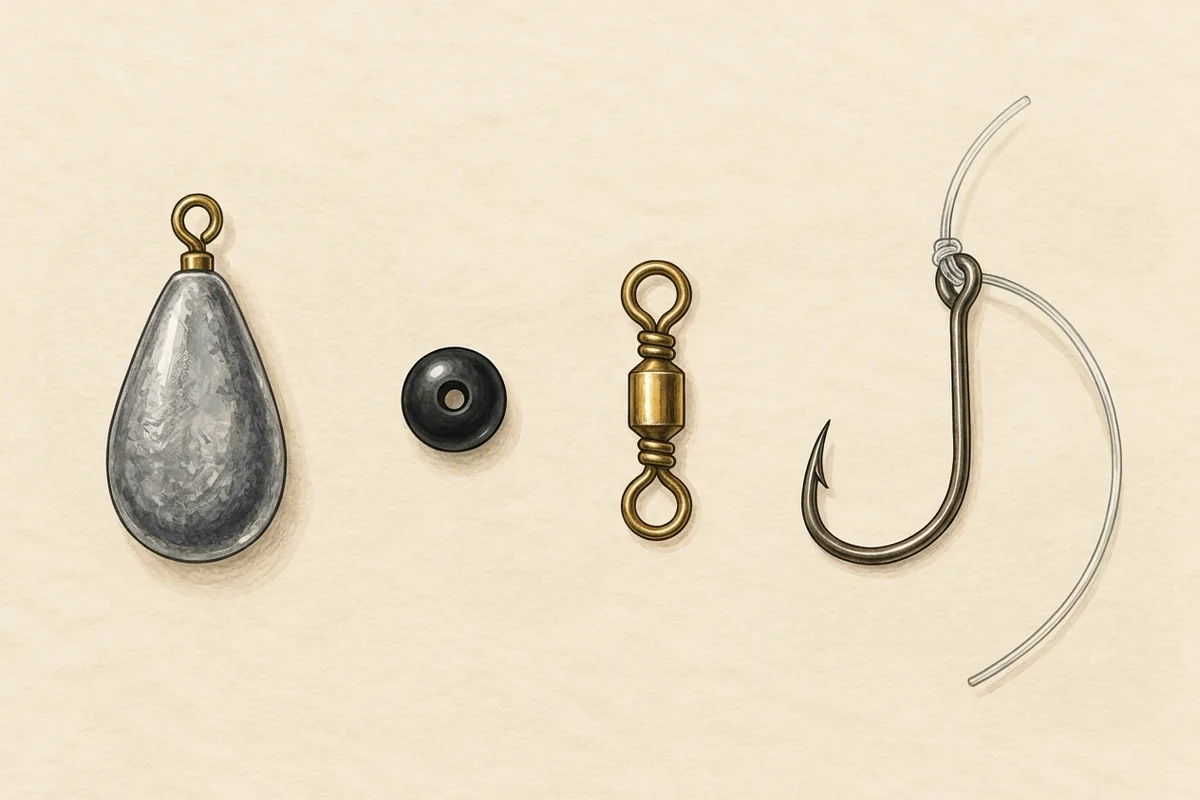
- Running lead with trace
The weight slides on a boom, stopped by a fixed bead and a snap swivel. A trace of one to three metres hangs from the swivel. One or two attractor beads or a small spinner blade in front of the hook arouse curiosity.
- Cut the worm small
Thread a lugworm or a piece of ragworm onto the long-shank hook and leave the point free. English sea anglers like to combine the worm with a narrow strip of squid.
- Lower right down to the bottom
Lower the rig vertically and close the bail as soon as the weight touches down. If it hops lightly over the bottom, you are over sand. If the boat hardly drifts, cast a little way ahead and retrieve slowly.
- Slow the drift
If the boat drifts too fast, the bait whizzes past the plaice. A drift sock slows it down. At the right speed the current keeps the long trace moving, and the weight stirs up a little sand each time it touches down.
- Finger on the line
Put a finger on the line and you will feel even timid plucks. Give a little line for a moment and make contact again. When the tip pulls steadily down, start winding. If you wait much longer, the hook often sits deep in the throat.
- Soft drag
After the first few metres the plaice turns broadside and shoots sideways in mid-water. A softly set drag and a light rod absorb these runs.
- Repeat the drift
Guide the fish into the boat net, as it is often only lightly hooked. Remember the spot and run the same drift again straight away; the next one is often there.
Worm on a sandy beach
From the shore in summer and autumn, above all at dusk and at night, when smaller plaice move onto the sandbanks.
- Sand next to seagrass
A good beach slopes gently into the sea over sand, with seagrass and mussel beds nearby. Dark water over a channel, with lighter sand behind it that slowly darkens, shows increasing depth. Groynes bring current and food.
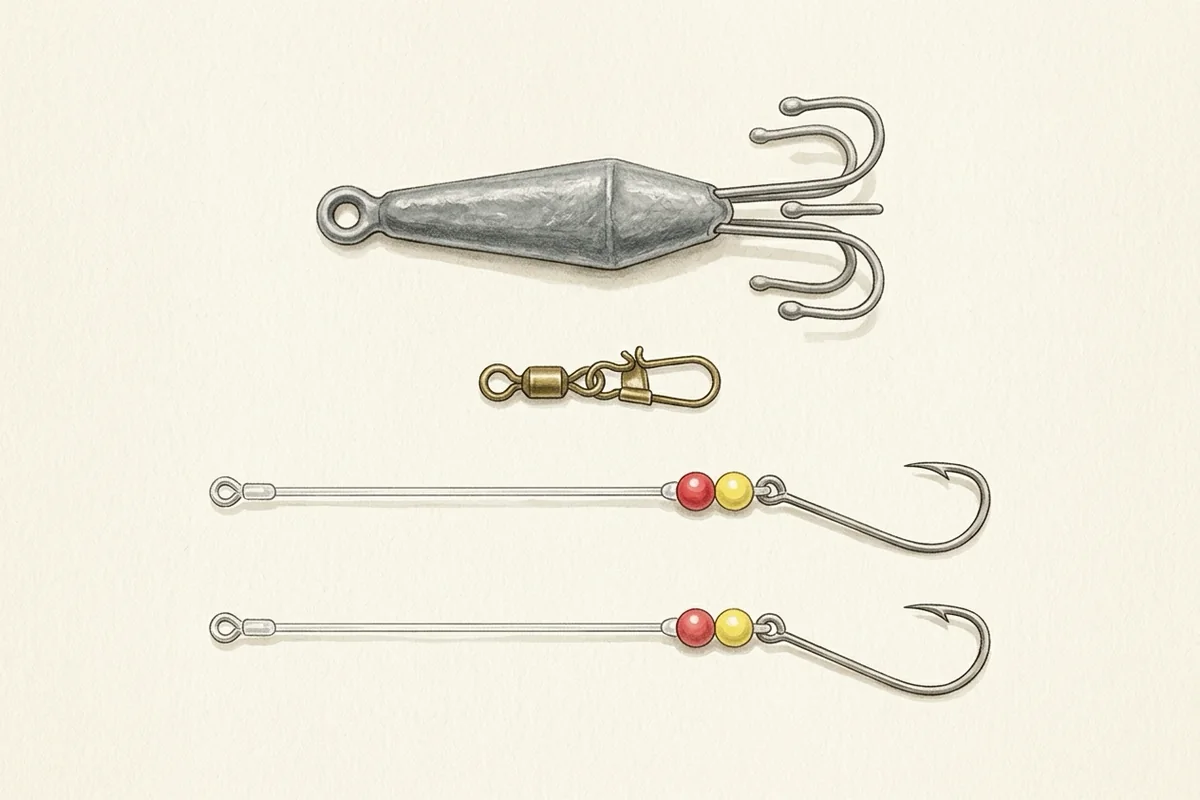
- Two snoods
A simple rig of around one metre carries a long trace of about 40 cm at the bottom and a short snood of about 25 cm above it. Small beads of about 6 mm in front of each hook are enough as an attractor.
- Two distances
On most beaches flatfish lie 40 to 100 m out, sometimes closer. Cast one rod far and the second clearly shorter. If the bites come on one rod, put both at that distance.
- Inch slowly
Pull the line down a little between thumb and forefinger and wind the slack back in. This moves the bait across the sandbank and you feel the bottom. The bite often comes just after such a pluck.
- Light the tip
At night a glow stick on the tip shows the fine tremble. Stay alert: if you notice the bite late, the plaice has often already swallowed the hook.
- Wind in steadily
On heavy surf tackle the fight is short. Wind in steadily so the hook does not tear out of the soft mouth.
- With the wave
Let the fish slide onto the wet sand with a receding wave rather than lifting it through the surf.
What with
Lugworm and ragworm are the first baits, along with mussel meat and small crabs. The mouth is small, so cut large worms and use a long-shank hook. A bait moved slowly across the sand catches more than one lying still.
- Lugwormall year, from the boat and from the beach
Flatfish anglers regard it as the standard bait; many would not even set out without it.
- Ragwormas a substitute or together with the lugworm
It is tougher than the lugworm and stays on the hook even during a drift over rough ground.
- Crustaceans & musselsover banks with mussel beds and where you do not have to cast far
Mussels and small crustaceans are part of the plaice’s natural diet, and a shell-on shrimp also sits firmly on the hook.
Tackle
From the beach, a surf rod for long casts; from the boat, a spinning rod is enough for the flatfish spoon (Buttlöffel). The page on the surf rod shows what matters when casting from the beach.
Drifting over sandbanks
- Rod
- from a small boat a flatfish or spinning rod of 2,40–3,00 m with 30–60 g casting weight (flatfish rods up to 200 g); from a cutter 3,00–3,30 m with 100–200 g
- Reel
- Fixed-spool reel size 4000 or small baitcaster reel
- Line
- Braid 0,13–0,20 mm, around 8 kg breaking strain
- Leader
- trace of monofilament, at least 1 m, better 2–3 m
- Hooks
- long-shank flatfish hooks size 4 to 1/0; larger hooks are less often swallowed deeply
- Weight, float, lead
- pear lead around 40 g at 5 m depth, up to 100 g and more depending on the drift; flatfish spoon 60–170 g
Worm on a sandy beach
- Rod
- on the Baltic in summer a carp rod with about 3 lb test curve; otherwise a surf rod of 3,50–4,20 m that genuinely casts around 200 g
- Reel
- large fixed-spool reel with a high gear ratio and a large spool
- Line
- Monofilament around 0,30 mm with a 0,60–0,70 mm shock leader; or braid around 0,14 mm with a tapered shock leader
- Leader
- Main section monofilament 0,60–0,80 mm, hooklengths 0,35–0,40 mm
- Hooks
- long-shank hooks size 4–1 for one worm, 1/0 and larger for two worms
- Weight, float, lead
- Surf lead 125–200 g, grip lead only in heavy surf
Common mistakes
- Searching only the first sandbank: Mostly small plaice bite there. The larger ones sit on the banks further out, where the water is 10 to 20 m deep.
- The boat drifts too fast: With too much speed the rig skips over the bottom and hardly any plaice can grab it. Slow it with a drift sock or find a more sheltered spot.
- Grip lead in calm water: It holds the bait rigid in one place. A round lead lets the current move the worm, and whoever recasts more often gets more bites.
- Too many attractors: A few small beads or a small spinner blade work better than large quantities. The calmer the water, the more sparing the decoration can be.
- The hook sits deep in the throat: Small hooks and waiting too long cause this. Use larger hooks instead and react as soon as the tip pulls steadily.
Rules
Each federal state (Bundesland) sets its own closed season (Schonzeit) and minimum size (Mindestmaß). Choose your state; the values come from our state pages.
Baden-Württemberg
Our overview for Baden-Württemberg does not list the plaice. What applies there is covered on the page Fishing in Baden-Württemberg, with the spots in that federal state (Bundesland).
Bavaria
Our overview for Bavaria does not list the plaice. What applies there is covered on the page Fishing in Bavaria, with the spots in that federal state (Bundesland).
Berlin
Our overview for Berlin does not list the plaice. What applies there is covered on the page Fishing in Berlin, with the spots in that federal state (Bundesland).
Brandenburg
Our overview for Brandenburg does not list the plaice. What applies there is covered on the page Fishing in Brandenburg, with the spots in that federal state (Bundesland).
Bremen
Our overview for Bremen does not list the plaice. What applies there is covered on the page Fishing in Bremen, with the spots in that federal state (Bundesland).
Hamburg
Our overview for Hamburg does not list the plaice. What applies there is covered on the page Fishing in Hamburg, with the spots in that federal state (Bundesland).
Hesse
Our overview for Hesse does not list the plaice. What applies there is covered on the page Fishing in Hesse, with the spots in that federal state (Bundesland).
Mecklenburg-Western Pomerania
Our overview for Mecklenburg-Western Pomerania does not list the plaice. What applies there is covered on the page Fishing in Mecklenburg-Western Pomerania, with the spots in that federal state (Bundesland).
Lower Saxony
- Minimum size
- 27 cm
- Closed season
- none
- Note
- coast only, EU minimum size (Mindestgröße)
As of October 2026. All rules, exceptions and sources: Fishing in Lower Saxony.
North Rhine-Westphalia
Our overview for North Rhine-Westphalia does not list the plaice. What applies there is covered on the page Fishing in North Rhine-Westphalia, with the spots in that federal state (Bundesland).
Rhineland-Palatinate
Our overview for Rhineland-Palatinate does not list the plaice. What applies there is covered on the page Fishing in Rhineland-Palatinate, with the spots in that federal state (Bundesland).
Saarland
Our overview for Saarland does not list the plaice. What applies there is covered on the page Fishing in Saarland, with the spots in that federal state (Bundesland).
Saxony
Our overview for Saxony does not list the plaice. What applies there is covered on the page Fishing in Saxony, with the spots in that federal state (Bundesland).
Saxony-Anhalt
Our overview for Saxony-Anhalt does not list the plaice. What applies there is covered on the page Fishing in Saxony-Anhalt, with the spots in that federal state (Bundesland).
Schleswig-Holstein
- Minimum size
- 27 cm
- Closed season
- 1.2.–30.4.
- Note
- North Sea, female fish only; Baltic 25 cm, closed season (Schonzeit) suspended there until the end of 2026
As of October 2026. All rules, exceptions and sources: Fishing in Schleswig-Holstein.
Thuringia
Our overview for Thuringia does not list the plaice. What applies there is covered on the page Fishing in Thuringia, with the spots in that federal state (Bundesland).
The regulation and your fishing permit (Erlaubnisschein) are what count. Lake Constance, the Rhine and the coast, for example, have their own rules: Fishing waters in Germany.
After the catch
Playing and landing
A hard strike is unnecessary: when the tip pulls steadily, wind in at an even pace and let the soft drag absorb the sideways runs. Land the plaice with the landing net, as it is often only lightly hooked. A plaice you may not keep, you quickly unhook with wet hands and return; a legal-sized one that you take home, you stun and kill straight away.
Because the hook often sits only in the lip, keep a landing net within reach. If you keep a legal-sized fish, stun and kill it straight away. Undersized or protected fish you unhook with wet hands in the water and return.
Frequently asked questions
What hook size for plaice?
Long-shank flatfish hooks in sizes 4 to 1/0 are usual. In a study by the Thünen-Institut, anglers using size 2/0 caught no fewer fish than with size 2, but the plaice swallowed the larger hook deeply less often.
When do plaice bite best?
The season runs from May to September, and big fish often come from May to July. Windy, murky weather and darkness are favourable; in glaring sunshine the catch is usually meagre.
Where do you fish for plaice in the Baltic Sea?
In the western Baltic over sandbanks and gentle sand edges, from the boat usually at 10 to 20 m depth. In the eastern Baltic the water is too low in salt, so you are more likely to catch flounder.
Can you catch plaice from the beach?
Yes, especially at night in summer, when smaller fish move into the shallows. Since the decline of cod, beach anglers in the western Baltic report clearly more plaice, but you usually catch more per day from a boat.
Which bait is best for plaice?
The lugworm, closely followed by the ragworm. Mussel meat, shrimp or a sand eel are good alternatives when the worms run out.
Similar species
Anyone who catches plaice can fish for these species with similar tackle:
 Flounder fishingMain season
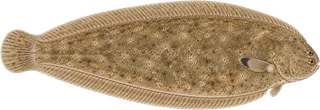 Fishing for soleShoulder season
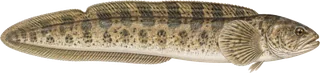 Eelpout fishingPossible
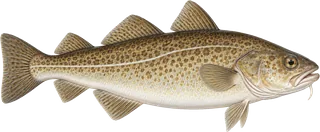 Cod fishingPeak season
Sources
As of October 2026. The practical knowledge comes from 15 sources, summarised in our own words.
View all 15 sources
- Steckbrief Scholle: Wissenswertes über diesen Fisch · BLINKER (Redaktion)
- Plattfisch in der Ostsee: Angeln mit leichtem Gerät bringt Fisch · BLINKER (Redaktion)
- Plattfisch-Trip auf der Ostsee: Was wirklich mit muss · BLINKER (Rainer Korn)
- Plattfisch: Platte vor Lolland · FISCH & FANG (Georg Baumann)
- Buttlöffel: Diese Montage fängt sie alle · BLINKER (Martin Liebetanz-Vahldiek)
- Plattfischangeln in Norwegen · RUTE & ROLLE (Timo Keibel)
- Plattfischangeln: 10 Tipps für mehr Erfolg · BLINKER (Redaktion)
- Plattfisch Vorfach: Für jede Situation das passende Rig · BLINKER (Redaktion)
- Brandungsangeln: Alles, was man über diese Angelmethode wissen muss · BLINKER (Rainer Korn)
- Plattfische angeln: Mit Wurm vom Ufer erfolgreich · BLINKER (Fabian Frenzel)
- Plattfischangeln im Nord-Ostsee-Kanal: Mit der Kälte kommt der Butt · BLINKER (Redaktion)
- Steckbrief Flunder: Unterscheidungsmerkmale und Fangtechniken · BLINKER (Redaktion)
- Selektivität und Überlebensraten nach dem Zurücksetzen in der Angelfischerei auf Plattfische (Thünen Working Paper 262) · Thünen-Institut für Ostseefischerei
- Allgemeinverfügung zur Zulassung von Ausnahmen nach § 22 der Küstenfischereiverordnung (Ostsee, 2024 bis 2026) · Land Schleswig-Holstein, Landesamt für Landwirtschaft und nachhaltige Landentwicklung
- Minstemål i fritidsfiske · Fiskeridirektoratet
Text AI-assisted, based on the sources named and these pages: Plaice (profile), Surf fishing, Lugworm, Surf rod.