
Knowledge – Fish
Zander fishing
Zander fishing means offering the bait close to the bottom, preferably at dusk and at night when it goes hunting. Here is the way there in nine steps, each with a link to the detailed page.
 Choose another fish117 fish with guides
 EelOff-peak season
 EelpoutPossible
 IdePossible
 ArapaimaGood
 GraylingPeak season
 Atlantic salmonSpawning time, please spare
 Brown troutSpawning time, please spare
 Brook troutSpawning time, please spare
 BarbelOff-peak season
 BarramundiSpawning season
 Greater amberjackGood
 Topmouth gudgeonOnly as bycatch
 Blue marlinSpawning season
 BonefishSpawning season
 BonitoGood
 BreamOff-peak season
 Dusky grouperOnly as bycatch
 CobiaPossible
 Spiny dogfishOnly as bycatch
 CodPeak season
 ChubPeak season
 MinnowOnly as bycatch
 European sturgeonOnly as bycatch
 FlounderPeak season
 PerchPeak season
 Largemouth bassGood
 Ballan wrasseOnly as bycatch
 Yellowfin tunaSpawning season
 Giant trevallyGood
 Prussian carpPossible
 BrillPossible
 Gilthead breamSpawning time, please spare
 Golden doradoSpawning season
 Golden mahseerOnly as bycatch
 Dolphinfish (mahi-mahi)Good
 Grass carpPossible
 Great barracudaGood
 GudgeonPossible
 White breamPossible
 DaceOff-peak season
 PikePeak season
 HalibutOff-peak season
 HerringPossible
 GarfishOut of season
 Huchen (Danube salmon)Possible
 Crucian carpOnly as bycatch
 CarpOff-peak season
 RuffeOff-peak season
 VendaceOnly as bycatch
 DabPeak season
 GurnardPossible
 Coley (saithe)Peak season
 Chinook salmonHardly any chance
 King mackerelSpawning season
 LingPeak season
 TuskOff-peak season
 MackerelPossible
 Bighead carpOut of season
 WhitefishPossible
 Conger eelOff-peak season
 Sea troutSpawning time, please spare
 Grey mulletPossible
 Murray codSpawning season
 MuskellungeGood
 Common nasePossible
 Nile perchPossible
 PayaraPossible
 Peacock bassPeak season
 PermitGood
 WeeverOnly as bycatch
 PollackOff-peak season
 BurbotOff-peak season
 AspPossible
 Red snapperSpawning season
 Rainbow troutPeak season
 RoosterfishGood
 RoachPeak season
 RedfishOut of season
 Bluefin tunaOnly as bycatch
 RuddPossible
 Russian sturgeonOnly as bycatch
 HaddockOff-peak season
 SnakeheadPossible
 TenchOff-peak season
 SpirlinOnly as bycatch
 PlaiceOff-peak season
 Greenland halibutOnly as bycatch
 Round gobyOnly as bycatch
 SwordfishGood
 Lake troutSpawning time, please spare
 HakeSpawning time, please spare
 Alpine charSpawning time, please spare
 MonkfishPossible
 SoleOff-peak season
 SailfishGood
 Silver carpOut of season
 SnookPeak season
 PumpkinseedOnly as bycatch
 SpratOnly as bycatch
 Atlantic wolffishSpawning time, please spare
 TurbotPeak season
 SterletOnly as bycatch
 SmeltOnly as bycatch
 Horse mackerelPossible
 TaimenGood
 TarponGood
 TigerfishSpawning season
 BleakPossible
 WahooGood
 Wels catfishOff-peak season
 WhitingPeak season
 Sea bassOff-peak season
- ZanderPeak season
 White-eye breamOnly as bycatch
 Blue breamOnly as bycatch
 Brown bullheadPossible
 VimbaOnly as bycatch
Season in October according to the catch calendar, an estimate and not a guarantee of a catch. The fish pictures are reduced natural-history plates and AI-generated.
Best time
From September to December, in the evening, at night and in the morning.
In January: PossibleIn February: PossibleIn March: PossibleIn April: Possible, spawning seasonIn May: Possible, spawning seasonIn June: Possible, spawning seasonIn July: GoodIn August: GoodIn September: Peak seasonIn October: Peak seasonIn November: Peak seasonIn December: Peak season
Good spot
- River: groyne pools, rock armouring and current seamsgroyne pools, rock armouring and current seamsgroyne pools, rock armouring and current seamsgroyne pools, rock armouring and current seams
- Lake: underwater hump, shelf edge and sunken treeunderwater hump, shelf edge and sunken treeunderwater hump, shelf edge and sunken treeunderwater hump, shelf edge and sunken tree
Top baits
Starter tackle
- Rod: 2,40–3,00 m, rather stiff, casting weight 40–60 g, not below 30 g
- Line: braid 0,10–0,17 mm, easy to see in pale colours
- Hook: jig hook of thin wire, with a stinger hook from a lure length of 12 cm
- Rod: 2,70–3,60 m, casting weight 10–50 g
- Line: monofilament around 0,22 mm
- Hook: size 4–6 or a small double hook
In short
In short: You catch zander best from September to December, in the evening, at night and in the morning. Good spots on a river: groyne pools, rock armouring and current seams; on a lake: underwater hump, shelf edge and sunken tree. Proven baits: dead baitfish or fish pieces on the bottom; soft plastic shad, twister, spoon or crankbait.
Quick to recognise
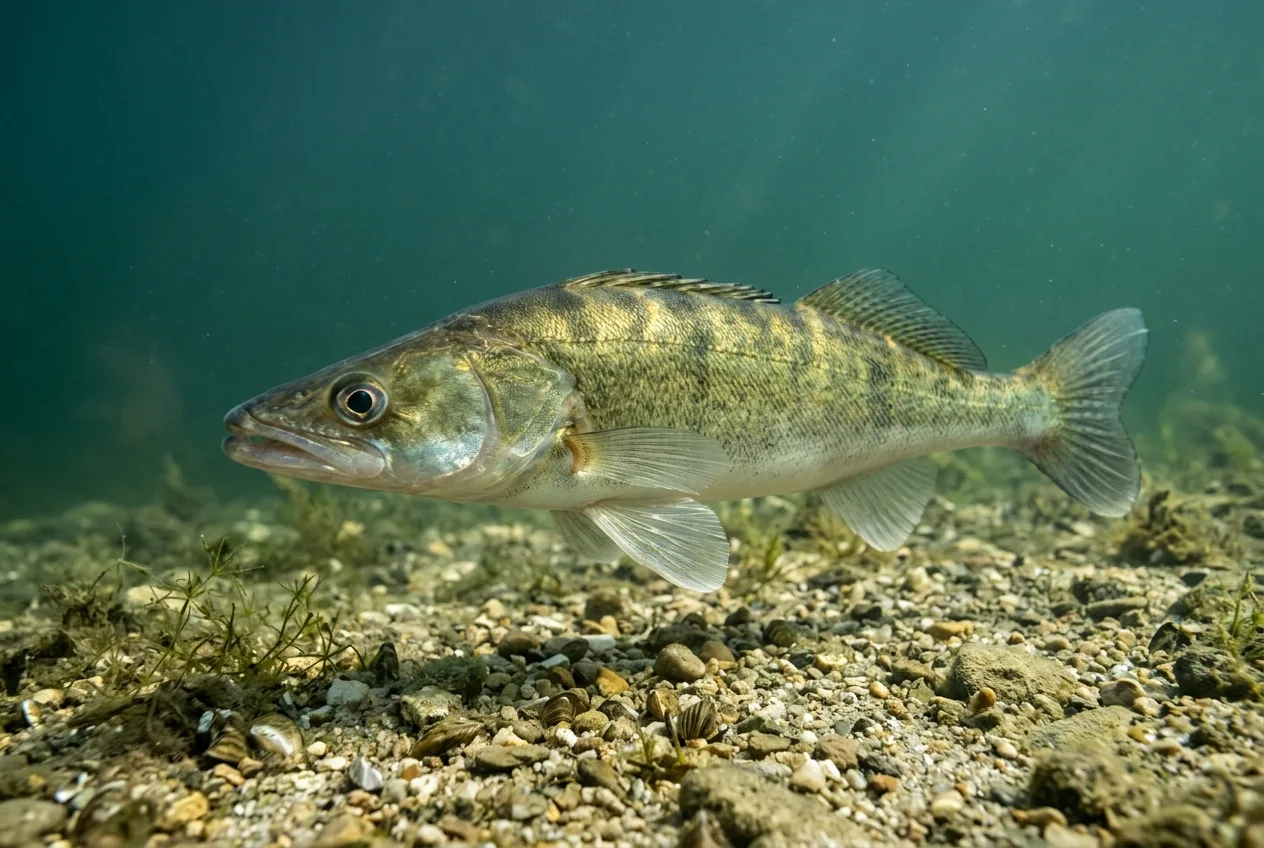
The largest perch-like fish of freshwater in Central Europe, with big eyes that shimmer silvery in the light, hence the name glass eye (Glasauge). Most catches measure 50 to 80 centimetres.
When
It goes best from September to December, July and August are also good. From April to June the zander spawns and the male guards the nest; during this time you leave it in peace. Dusk brings the most bites, in murky water it also bites by day.
- JanPossible
- FebPossible
- MarPossible
- AprPossible, spawning season
- MayPossible, spawning season
- JunPossible, spawning season
- JulGood
- AugGood
- SepPeak season
- OctPeak season
- NovMain season
- DecMain season
Peak seasonGoodPossibleHardly any chanceSpawning season
Spring tactics
As long as the water is cold, winter tactics still apply: deep and slow. When it warms up, the males dig spawning pits on hard ground at a depth of 0,5 to 3 m. You leave these places alone; whether a closed season (Schonzeit) applies then is regulated by your federal state (Bundesland).
Summer tactics
Algae cloud many waters, so the zander also bites by day. Otherwise you catch early in the morning, in the evening and at night, at midday you fish deeper. At night slim, shallow-running crankbaits pay off over shallow groyne fields, under lit bridges and in harbour basins.
Autumn tactics
The rivers get clearer and the night brings more bites. Because the thermocline in the lake breaks down, you can fish deeper again, but not deeper than about 10 m. Take slim soft plastics of 12 to 18 cm and in late autumn when reel-lift jigging (Faulenzen) reel only once or twice.
Winter tactics
The zander gather in the deepest places, and the time of day then plays a smaller role. Work the lure very calmly in small hops without hard knocks. Below 10 degrees they often hold deeper than 6 m in the current.
Is it biting today?
In January: PossibleIn February: PossibleIn March: PossibleIn April: Spawning season, please spare themIn May: Spawning season, please spare themIn June: Spawning season, please spare themIn July: Off-peakIn August: Off-peakIn September: Peak seasonIn October: Peak seasonIn November: Peak seasonIn December: Peak season
Today’s catch index needs JavaScript. Season and spawning time are in the catch calendar.
From the blog: Fishing in November: which fish bite now and where I look for them · Fishing in an east wind: what the wind really changes at the water · Freshwater fish in Germany: which species you catch where
Where it is now
In the river
On the river you look for the deep holes in the groyne field, the edges of rock armouring, sheet piling and the margins of the current. In daylight it almost always holds on the bottom there.
How to go about it: Fish one groyne thoroughly or walk from groyne to groyne. Rising water becomes cloudy and brings bites by day, at low water you catch more at dusk. In rock armouring you must expect snags.
| All year round | Groyne pool, rock armouring, current seam |
|---|
In the lake
On a lake underwater humps, sandbars, drop-offs and sunken trees pay off. Cover matters less to it than to the pike, it also hunts in the middle of open water and comes into the shallows at night.
How to go about it: Look for steep drop-offs, underwater humps and holes with a sandy bottom, many of which are within casting distance of the bank. In wind you fish the shore it blows onto, because the water gets cloudy there. Bright nights bring less than dark ones.
| All year round | Underwater hump, shelf edge, sunken tree, open water |
|---|
Biting time: in the evening, at night and in the morning. What this looks like on the water is shown by the picture of the holding spots just below.
Waters with rules for zander
Holding spots in the picture
Choose a season and time of day: the picture shows where the species sits then. Tap a fish or a spot in the list to bring it closer. The picture is schematic and AI-generated, every water is different.
Catch chance in springpossibleSpawning season, observe closed seasons
Catch chance in summergood
Catch chance in autumnPeak season
Catch chance in winterpossible
- J
- F
- M
- A
- M
- J
- J
- A
- S
- O
- N
- D
Spawning season
Active time The zander hunts at dusk and at night; its eye is adapted to low light.
Not the main time The zander hunts at dusk and at night; its eye is adapted to low light.
Active time The zander hunts at dusk and at night; its eye is adapted to low light.
Active time The zander hunts at dusk and at night; its eye is adapted to low light.
In the river
Groyne scour hole
Zander are present here all year round.
riprap, sheet piling, harbour
Zander are present here all year round.
Current seam
Zander are present here all year round.
In the river the zander holds in the depressions of the groyne pools, on the steps of rock armouring, at sheet piling and on current seams.
Spring: chance of a catch possible according to the catch calendar. The spawning season falls in this period, observe the closed seasons. In spring the zander spawns and is protected in many places.
Summer: chance of a catch according to the catch calendar possible in June, good in July and August. After the closed season the real fishing time begins. Overcast days are considered favourable.
Autumn: chance of a catch according to the catch calendar peak season. September to December are among the most productive months.
Winter: chance of a catch according to the catch calendar peak season in December, possible in January and February. In frost it is worth trying rather in the midday hours. Big zander are often caught in the cold season.
In the lake
Shelf edge
Zander are present here all year round.
Sunken tree
Zander are present here all year round.
Open water
Zander are present here all year round.
plateau, underwater hump
Zander are present here all year round.
In a lake it keeps to sandbars, underwater humps, drop-offs and sunken trees. It needs less cover than the pike and also hunts in open water.
Spring: chance of a catch possible according to the catch calendar. The spawning season falls in this period, observe the closed seasons. In spring the zander spawns and is protected in many places.
Summer: chance of a catch according to the catch calendar possible in June, good in July and August. After the closed season the real fishing time begins.
Autumn: chance of a catch according to the catch calendar peak season. September to December are among the most productive months.
Winter: chance of a catch according to the catch calendar peak season in December, possible in January and February. Big zander are often caught in the cold season.
Depth: It prefers large, rather murky waters with a firm bottom. FishBase gives depths of 2 to 30 metres, mostly 2 to 3 metres.
Size comparison: AI-generated drawing, schematic.
How
By day a soft lure on a jig head hops over the bottom, and bites mostly come while it sinks. At night in the shallows you slowly retrieve suspending crankbaits and keep making short stops. The deadbait on the bottom is the calm alternative, especially on heavily fished waters.
Easiest way
The simplest start is a soft plastic shad of about 12 cm on a jig head of 15 to 20 g. With it you work the groynes and rock armouring on a large river, best at dusk. A stiff 2,70 m spinning rod and 0,12 braid are enough for this.
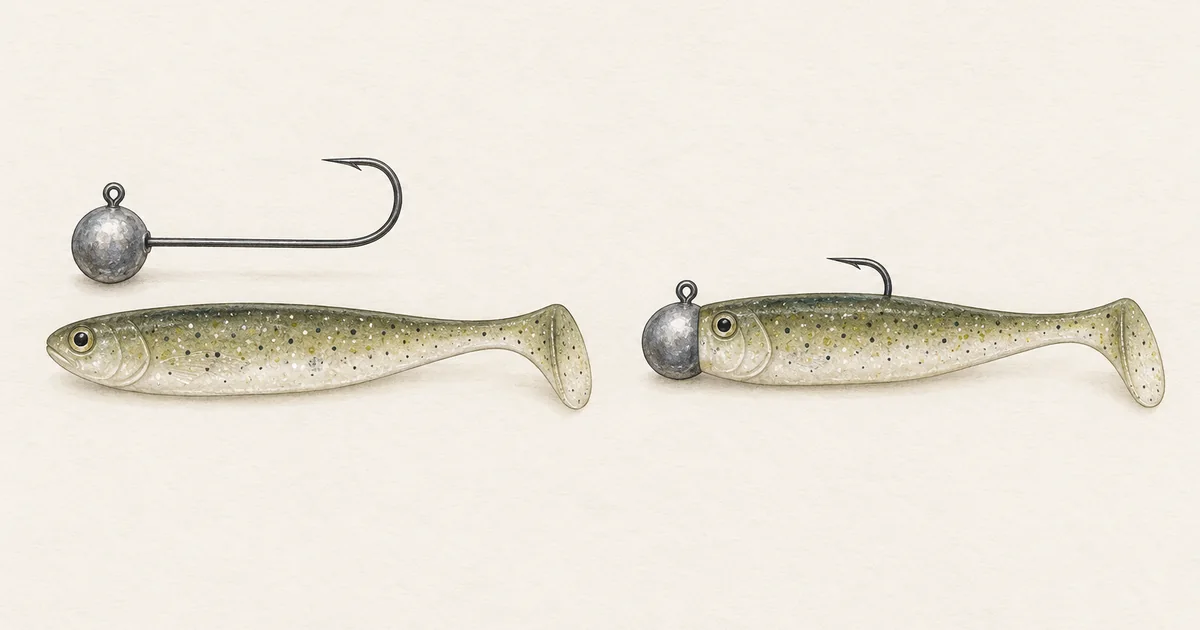
Soft plastic shad on a jig head
The usual daytime method on rivers and lakes, with which you quickly search many spots on the bottom.
- Look for hard ground
On a river you try the groyne pool, the area in front of the rock armouring and the current seam one after another. On a lake drop-offs, humps and holes with sand pay off. The zander avoids mud and dense weed.
- Choose the head
Take the lightest jig head that still reliably reaches the bottom, usually 10 to 20 g. First lay the hook against the outside of the soft plastic and mark where it should come out. From a lure length of about 12 cm a stinger hook is needed.
- Count the sink
Cast out and wait with the bail arm closed. As soon as the line briefly goes slack, the lure is on the bottom and you start the retrieve.
- Lift-and-drop or jigging
With reel-lift jigging (Faulenzen) you reel half to two turns and let the lure fall again. In summer it jumps 1 to 1.5 m, in winter only 30 to 50 cm.
- Strike at once
A zander bite comes as a hard tug, mostly while the lure is sinking. Strike hard at once at every contact, because the fish quickly spits out the soft plastic.
- Line taut
Keep the line taut throughout the fight. Even a moment of sagging line is enough for the hook to fall out of the hard mouth.
- Net with the rod held low
Landing is the trickiest moment. Do not hold the rod too high while doing so, otherwise the line loses tension, and draw the fish over the landing net.
Sitting out with a deadbait at dusk
The calm way on heavily fished waters, from evening into the night, where that is allowed.
- Edge by the shallows
Ideal is a flat headland that drops away steeply. By day the zander hold at the edge, in the evening they move onto the shallows. Sandbars and sunken branches are also good hunting places.
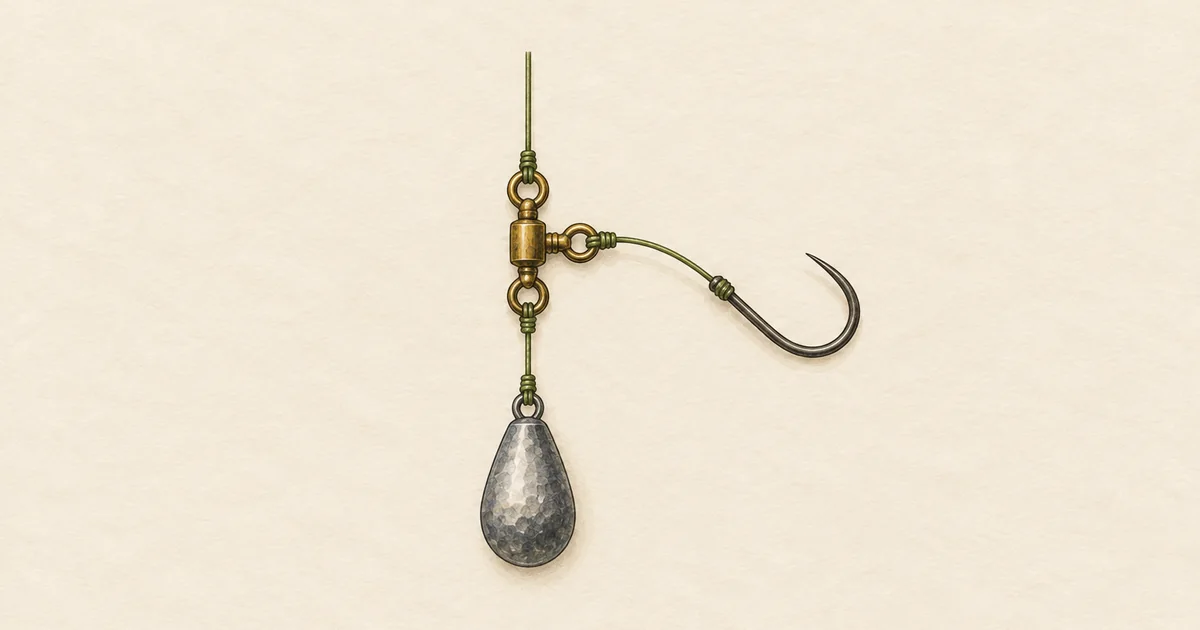
- Fit the side arm
The running weight hangs on a short side arm, so the zander takes the bait without noticeable resistance. Behind it follows a fine hooklength with a single or double hook.
- Small and fresh
Take a freshly killed fish up to about 15 cm, roach or gudgeon are good. A piece of fillet from the back gives off more scent. Live baitfish are banned in many places.
- Short and soft
Cast with a calm underarm swing and then leave the bait lying. If nothing comes after about half an hour, move it a few metres along the bank.
- Watch the indicator
The bite indicator hangs low and is very light. Strike while it is still on its way to the rod, and do not clamp the rod fast, otherwise the zander feels resistance.
- Pump calmly
The zander does not fight for long, a medium line is enough. Bring it in evenly without letting the line sag.
- Light away from the water
Do not shine the head torch on the surface of the water, that makes zander shy. Net the fish and only switch on the light on land to unhook.
What with
Soft plastic shad, twister, pintail and V-tail on a jig head are the basic kit, and for sitting out the deadbait is added. Take slim, rather medium-sized lures, because the zander’s mouth is smaller than the pike’s. If you share the water with pike, a thin wire trace protects against bite-offs.
- Soft plastic (shad)all year by day, especially on the river
A soft plastic moves its tail even on a slow sink, and most bites come in this phase.
- Baitfishdusk and night, on heavily fished waters
A small dead fish matches the natural prey, zander mostly eat fish under 15 cm.
- V-tailautumn and winter in cold water
It hardly moves by itself and therefore suits the calm presentation that sluggish zander need in the cold.
Tackle
A stiff rod with tip action so that the strike takes hold in the bony mouth, plus a fixed-spool reel with braid and a length of fluorocarbon as the leader. Lengths and reel sizes are on the page about the zander rod.
Soft plastic shad on a jig head
- Rod
- 2,40–3,00 m, rather stiff, casting weight 40–60 g, not below 30 g
- Reel
- Fixed-spool reel size 3000–4000, 100–150 m of braid over backing line
- Line
- Braid 0,10–0,17 mm, easy to see in pale colours
- Leader
- about 1 m of fluorocarbon 0,30–0,35 mm; where pike occur, thinner 7×7 wire
- Hooks
- Jig hook of thin wire, with a stinger hook from a lure length of 12 cm
- Weight, float, lead
- Jig head usually 10–20 g, in wind and current up to 30 g; soft plastic shad 10–17 cm
Sitting out with a deadbait at dusk
- Rod
- 2,70–3,60 m, casting weight 10–50 g
- Reel
- Fixed-spool reel size 2500–4000 with an open bail arm or free spool
- Line
- Monofilament around 0,22 mm
- Leader
- Monofilament 0,25–0,32 mm; where pike occur, a fine wire or Kevlar trace
- Hooks
- size 4–6 or a small double hook
- Weight, float, lead
- Running weight as light as the current allows
Common mistakes
- Striking too late: The zander quickly spits out the soft plastic shad after the bite. Strike at once at every little tug, even if it might only be a snag.
- Fishing over mud: If you feel no hard contact when it touches down, the lure is lying in mud. Find a spot with sand or stones.
- Slack line when landing: If you hold the rod too high when netting, you take the tension out of the line. Hold it lower and guide the fish calmly into the net.
- Light on the water: A head torch shining on the surface drives the fish away from the bank. Point the light downwards onto your own spot.
- Too much resistance when sitting out: A heavy weight sinks into soft ground, then the zander feels the line and lets go. Use a light weight on a side arm and a light bite indicator.
Rules
Each federal state (Bundesland) sets its own closed season (Schonzeit) and minimum size (Mindestmaß). Choose your state; the values come from our state pages.
Baden-Württemberg
- Minimum size
- 45 cm
- Closed season
- 1.4.–15.5.
- Note
- in the Main 1.2.–30.4. and 50 cm
As of October 2026. All rules, exceptions and sources: Fishing in Baden-Württemberg.
Bavaria
- Minimum size
- 50 cm
- Closed season
- 15.2.–30.4.
As of October 2026. All rules, exceptions and sources: Fishing in Bavaria.
Berlin
- Minimum size
- 45 cm
- Closed season
- 1.1.–31.5.
- Catch limit
- 3 eels and zander combined per day
- Note
- closed season applies to hand-held rods
Correct as of October 2026. All rules, exceptions and sources: Fishing in Berlin.
Brandenburg
- Minimum size
- 45 cm
- Closed season
- 1.4.–31.5.
- Note
- closed season applies to hand-held rods
As of October 2026. All rules, exceptions and sources: Fishing in Brandenburg.
Bremen
- Minimum size
- 40 cm
- Closed season
- 1.2.–15.5.
As of October 2026. All rules, exceptions and sources: Fishing in Bremen.
Hamburg
- Minimum size
- 45 cm
- Closed season
- 1.2.–31.5.
- Catch limit
- 2 per day
- Note
- harvest slot 45–75 cm
As of October 2026. All rules, exceptions and sources: Fishing in Hamburg.
Hesse
- Minimum size
- 50 cm
- Closed season
- none
As of October 2026. All rules, exceptions and sources: Fishing in Hesse.
Mecklenburg-Western Pomerania
- Minimum size
- 45 cm
- Closed season
- none
- Note
- Inland: the closed season is usually set by the rights holder. Coast: 45 cm (Stettiner Haff, Peenestrom, Darßer Boddenkette 40 cm), closed season 23.4.–22.5., 3 per day
As of October 2026. All rules, exceptions and sources: Fishing in Mecklenburg-Western Pomerania.
Lower Saxony
- Minimum size
- 35 cm
- Closed season
- 15.3.–30.4.
- Note
- Coast: 40 cm, closed season 15.3.–15.5.
As of October 2026. All rules, exceptions and sources: Fishing in Lower Saxony.
North Rhine-Westphalia
- Minimum size
- 40 cm
- Closed season
- 1.4.–31.5.
As of October 2026. All rules, exceptions and sources: Fishing in North Rhine-Westphalia.
Rhineland-Palatinate
- Minimum size
- 45 cm
- Closed season
- 15.3.–15.5.
- Note
- Lahn 1.4.–31.5., border Moselle 1.1.–14.6.
As of October 2026. All rules, exceptions and sources: Fishing in Rhineland-Palatinate.
Saarland
- Minimum size
- 45 cm
- Closed season
- 15.2.–31.5.
- Note
- Border Moselle 1.1.–14.6.
As of October 2026. All rules, exceptions and sources: Fishing in Saarland.
Saxony
- Minimum size
- 50 cm
- Closed season
- 1.2.–31.5.
Correct as of October 2026. All rules, exceptions and sources: Fishing in Saxony.
Saxony-Anhalt
- Minimum size
- 50 cm
- Closed season
- 15.2.–31.5.
- Note
- keeping fish in a keepnet is prohibited
As of October 2026. All rules, exceptions and sources: Fishing in Saxony-Anhalt.
Schleswig-Holstein
- Minimum size
- 45 cm
- Closed season
- 15.3.–15.5.
- Note
- coastal waters 40 cm, in the Elbe and adjoining waters 15.2.–15.5.
As of October 2026. All rules, exceptions and sources: Fishing in Schleswig-Holstein.
Thuringia
- Minimum size
- 45 cm
- Closed season
- 1.4.–31.5.
As of October 2026. All rules, exceptions and sources: Fishing in Thuringia.
The regulation and your fishing permit (Erlaubnisschein) are what count. Lake Constance, the Rhine and the coast, for example, have their own rules: Fishing waters in Germany.
After the catch
Playing and landing
Strike hard so that the hook takes hold in the bony mouth, and keep the line constantly taut throughout the fight. Net the zander with the rod held low and lift it with wet hands horizontally, never vertically by the gills. Take care with the gill covers and the spiny dorsal fin.
Bring the zander up from the depths with pauses, because without a duct to the swim bladder it lacks quick pressure equalisation. Handle it carefully, the gill covers and scales prick. It goes back with wet hands directly in the water, and a fish of legal size to take home you stun and kill at once.
Frequently asked questions
Does zander bite at night?
Yes, in clear water it hunts mainly at night and then comes right up to the bank. Dark nights are better than bright ones. Night fishing is banned in some states and waters, so check your fishing permit (Erlaubnisschein).
Which jig head weight for zander?
Usually 10 to 20 g, less in shallow water. In wind and current you need up to 30 g, when fishing vertically from a boat in the current 30 to 50 g.
Do you need a wire trace for zander fishing?
Not for zander alone, 0,30 to 0,35 mm fluorocarbon usually gets more bites. Where pike occur, use a thin wire trace, because fluorocarbon only withstands pike teeth from about 0,80 mm.
How big should the soft plastic shad for zander be?
10 to 17 cm is proven, often around 12 cm. In autumn it can be one size bigger, and from about 12 cm a stinger hook belongs in the rear third.
In what weather do zander bite?
Overcast sky is better than sun, mild weather matters more than wind or rain. Murky water brings bites by day as well.
Which baitfish for zander?
Gudgeon, roach and small perch are among the best, as long as they are allowed as bait. Stay at 15 cm at most, the zander’s mouth is small.
Similar species
If you catch zander, you can use similar tackle to fish for these species too:
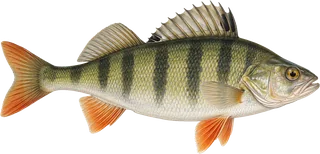 Perch fishingMain season
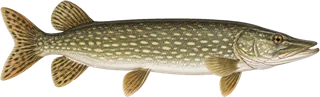 Pike fishingPeak season
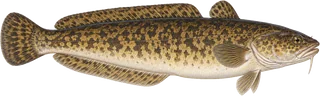 Burbot fishingSecondary season
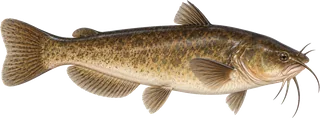 Brown bullhead fishingPossible
Sources
As of: October 2026. The practical knowledge comes from 9 sources, summarised in our own words.
View all 9 sources
- Das erste Mal mit Gummifisch auf Zander · BLINKER (Frank Schlichting)
- Zanderangeln: Die 12 wichtigsten Fragen · BLINKER (Steve Kaufmann)
- Zanderangeln im Herbst: Strategie für die goldene Zeit · BLINKER (Steve Kaufmann)
- Zanderangeln im Sommer: 5 Tipps zum Erfolg · BLINKER (Steve Kaufmann)
- Zanderangeln mit Köderfisch: Vorsicht, fängig · BLINKER (Redaktion)
- Praxis Zander: Fänge im Strom · BLINKER (Redaktion)
- Ein feines System für Zander (Planungshilfe Jugendarbeit) · Landesfischereiverband Westfalen und Lippe
- Angeln mit dem Gummifisch (Planungshilfe Jugendarbeit) · Landesfischereiverband Westfalen und Lippe
- Fische landen: Wie nutze ich Kescher, Lip-Grip und Co.? · BLINKER (Redaktion)
Text AI-assisted, based on the sources named and these pages: Zander (profile), Night fishing, Soft plastic shad, Baitfish, Zander rod.