
Knowledge – Fish
Tarpon fishing
Fishing for tarpon means: watching for rolling fish at passes, bays and mangrove edges, presenting a natural bait and unhooking the jumping fish in the water. Here is the way there in nine steps, each with a link to the detailed page.
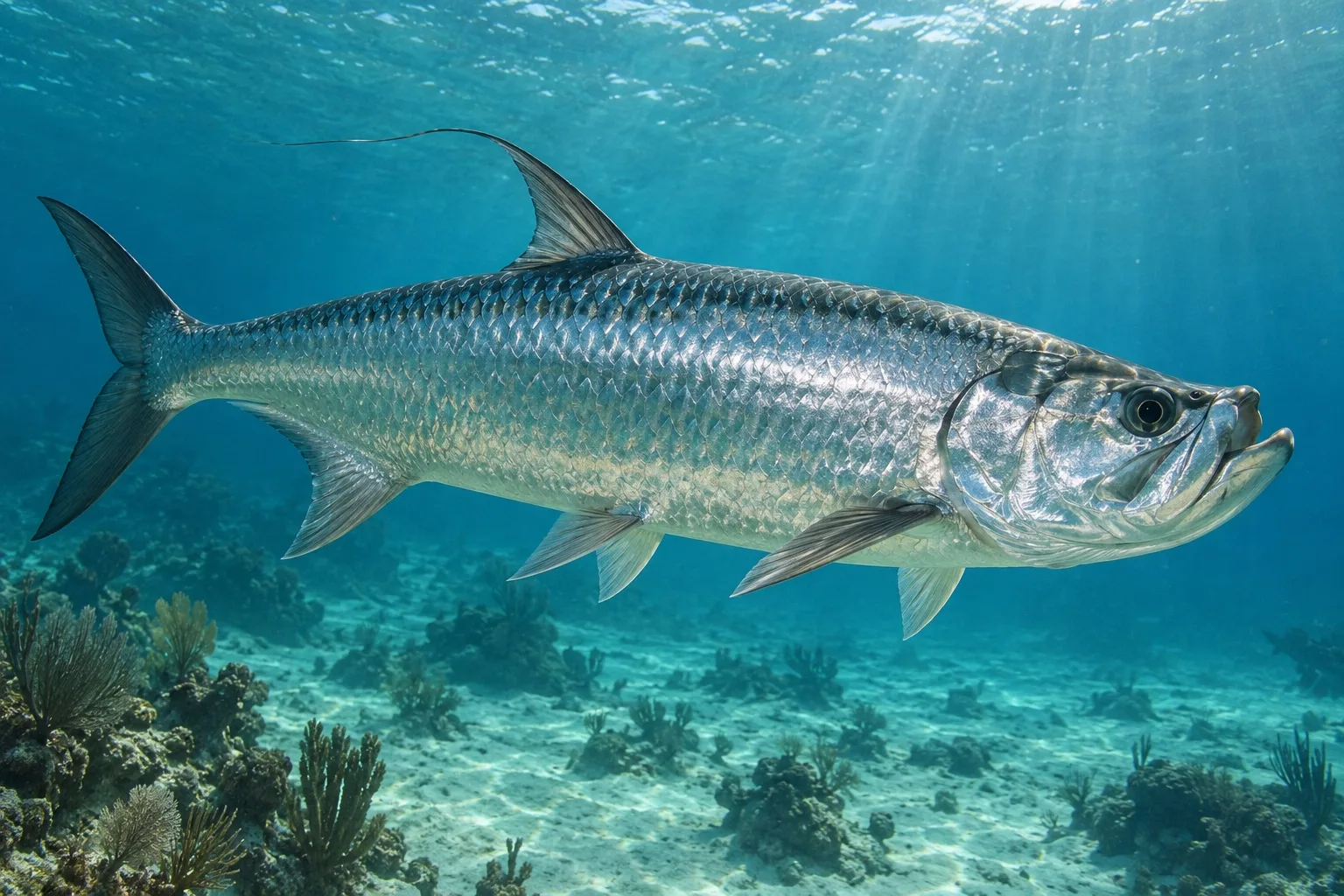
The IUCN has listed the tarpon as Vulnerable since 2018. In Florida it is strictly catch and release. Keeping one is allowed there only for a record claim (world or state record), with a tarpon tag bought in advance, of which there is at most one per year. A large, still strong tarpon can thrash about when unhooked and injure people.
 Choose another fish117 fish with guides
 EelOff-peak season
 EelpoutPossible
 IdePossible
 ArapaimaGood
 GraylingPeak season
 Atlantic salmonSpawning time, please spare
 Brown troutSpawning time, please spare
 Brook troutSpawning time, please spare
 BarbelOff-peak season
 BarramundiSpawning season
 Greater amberjackGood
 Topmouth gudgeonOnly as bycatch
 Blue marlinSpawning season
 BonefishSpawning season
 BonitoGood
 BreamOff-peak season
 Dusky grouperOnly as bycatch
 CobiaPossible
 Spiny dogfishOnly as bycatch
 CodPeak season
 ChubPeak season
 MinnowOnly as bycatch
 European sturgeonOnly as bycatch
 FlounderPeak season
 PerchPeak season
 Largemouth bassGood
 Ballan wrasseOnly as bycatch
 Yellowfin tunaSpawning season
 Giant trevallyGood
 Prussian carpPossible
 BrillPossible
 Gilthead breamSpawning time, please spare
 Golden doradoSpawning season
 Golden mahseerOnly as bycatch
 Dolphinfish (mahi-mahi)Good
 Grass carpPossible
 Great barracudaGood
 GudgeonPossible
 White breamPossible
 DaceOff-peak season
 PikePeak season
 HalibutOff-peak season
 HerringPossible
 GarfishOut of season
 Huchen (Danube salmon)Possible
 Crucian carpOnly as bycatch
 CarpOff-peak season
 RuffeOff-peak season
 VendaceOnly as bycatch
 DabPeak season
 GurnardPossible
 Coley (saithe)Peak season
 Chinook salmonHardly any chance
 King mackerelSpawning season
 LingPeak season
 TuskOff-peak season
 MackerelPossible
 Bighead carpOut of season
 WhitefishPossible
 Conger eelOff-peak season
 Sea troutSpawning time, please spare
 Grey mulletPossible
 Murray codSpawning season
 MuskellungeGood
 Common nasePossible
 Nile perchPossible
 PayaraPossible
 Peacock bassPeak season
 PermitGood
 WeeverOnly as bycatch
 PollackOff-peak season
 BurbotOff-peak season
 AspPossible
 Red snapperSpawning season
 Rainbow troutPeak season
 RoosterfishGood
 RoachPeak season
 RedfishOut of season
 Bluefin tunaOnly as bycatch
 RuddPossible
 Russian sturgeonOnly as bycatch
 HaddockOff-peak season
 SnakeheadPossible
 TenchOff-peak season
 SpirlinOnly as bycatch
 PlaiceOff-peak season
 Greenland halibutOnly as bycatch
 Round gobyOnly as bycatch
 SwordfishGood
 Lake troutSpawning time, please spare
 HakeSpawning time, please spare
 Alpine charSpawning time, please spare
 MonkfishPossible
 SoleOff-peak season
 SailfishGood
 Silver carpOut of season
 SnookPeak season
 PumpkinseedOnly as bycatch
 SpratOnly as bycatch
 Atlantic wolffishSpawning time, please spare
 TurbotPeak season
 SterletOnly as bycatch
 SmeltOnly as bycatch
 Horse mackerelPossible
 TaimenGood
- TarponGood
 TigerfishSpawning season
 BleakPossible
 WahooGood
 Wels catfishOff-peak season
 WhitingPeak season
 Sea bassOff-peak season
 ZanderPeak season
 White-eye breamOnly as bycatch
 Blue breamOnly as bycatch
 Brown bullheadPossible
 VimbaOnly as bycatch
Season in October according to the catch calendar, an estimate and not a guarantee of a catch. The fish pictures are reduced natural-history plates and AI-generated.
Best time
In April, mainly by day and by night.
In January: PossibleIn February: PossibleIn March: GoodIn April: Peak seasonIn May: Good, spawningIn June: Good, spawningIn July: Good, spawningIn August: GoodIn September: GoodIn October: GoodIn November: PossibleIn December: Possible
Good spot
- Coast: open water, just below the surface and trough in front of the sandbaropen water, just below the surface and trough in front of the sandbaropen water, just below the surface and trough in front of the sandbaropen water, just below the surface and trough in front of the sandbar
- River: undercut bank and quiet bayundercut bank and quiet bayundercut bank and quiet bayundercut bank and quiet bay
Top baits
Starter tackle
- Rod: medium-heavy to very heavy spinning rod
- Line: braid 50–60 lb (about 23–27 kg)
- Hook: single circle hook 6/0–10/0, no offset and no barb, not stainless
- Rod: medium-heavy to very heavy spinning rod
- Line: braid 50–60 lb (about 23–27 kg)
- Hook: lure with only one hook
In short
In short: According to the catch calendar, the best time is April. Good spots on the coast: open water, just below the surface and trough in front of the sandbar; in the river: undercut bank and quiet bay. Proven baits: live baitfish and crabs, dead baits on the bottom and lures. In Florida it is strictly catch and release, and large tarpon must stay in the water. The IUCN lists the species as Vulnerable.
Quick to recognise
A large coastal fish with huge, shiny silver scales, deep flanks and a strongly protruding lower jaw. Around 130 centimetres is usual, FishBase gives up to 250 centimetres and 161 kilograms.
When
The main season in the Florida Keys is April to June, because that is when large tarpon travel along the coast; at Boca Grande Pass the season ran from April to July. There are good chances until October, and in winter it avoids the cold and stays deeper. Spawning usually takes place from May to July far out on the open sea.
- JanPossible
- FebPossible
- MarGood
- AprPeak season
- MayGood, spawning
- JunGood, spawning
- JulGood, spawning
- AugGood
- SepGood
- OctGood
- NovPossible
- DecPossible
Peak seasonGoodPossibleHardly any chanceSpawning season
Season in the destination
In Florida you catch large tarpon mainly in one season around their spawning time, in the Keys with a focus on April to June. Younger tarpon up to about 9 kilos stay in backwaters, estuaries and ponds all year and can also be fished in winter. In late spring and summer sharks become more numerous at the passes, and then more hooked fish are lost. Sudden cold snaps drive the fish into deeper, warmer water.
Season and biting time
In January: PossibleIn February: PossibleIn March: GoodIn April: Peak seasonIn May: SpawningIn June: SpawningIn July: SpawningIn August: GoodIn September: GoodIn October: GoodIn November: PossibleIn December: Possible
Where it is now
On the coast
It travels along the coast through bays and passes and hunts shoaling fish in open water, by day and by night. Because it gulps air, it often gives itself away by rolling at the surface. Troughs are also worth a look.
How to go about it: Passes, bays and beaches are the classic places, and large fish travel along the coast there in spring. Avoid bridges and piers: from there you cannot unhook a large fish properly and have to leave a long length of line on the fish.
| All year round | open water, just below the surface, trough in front of the sandbar |
|---|
In the river
Estuaries and mangrove-lined lagoons are also part of its range, and fresh water does not bother it. Look for it along banks and in quiet bays, from where it travels far upriver.
How to go about it: Young tarpon grow up in estuaries, backwaters and brackish ponds and can be found there all year. Lighter tackle is enough for them, and you also keep them in the water when unhooking.
| All year round | undercut bank, quiet bay |
|---|
Biting time: mainly by day and at night. What that looks like in the water is shown by the picture of the holding spots just below.
Holding spots in the picture
Choose a season and time of day: the picture shows where the species sits then. Tap a fish or a spot in the list to bring it closer. The picture is schematic and AI-generated, every water is different.
Chance of a catch in springgood
Chance of a catch in summergoodSpawning, observe the closed seasons
Catch chance in autumngood
Catch chance in winterpossible
- J
- F
- M
- A
- M
- J
- J
- A
- S
- O
- N
- D
Spawning season
No main time Adult tarpon hunt both by day and by night.
Active time Adult tarpon hunt both by day and by night.
No main time Adult tarpon hunt both by day and by night.
Active time Adult tarpon hunt both by day and by night.
On the coast
gully in front of the sandbank
Tarpon are here all year.
Open water, mid-water
Tarpon are here all year.
Just below the surface
Tarpon are here all year.
Tarpon travel along the coast, through bays and passes, and hunt shoaling fish in open water. Because they gulp air, they roll at the surface again and again.
Spring: according to the catch calendar, the chance of a catch is good in March, peak season in April, good in May.
Summer: chance of a catch good according to the catch calendar. This is when spawning falls, so observe the closed seasons.
Autumn: catch chance according to the catch calendar good in September and October, possible in November.
Winter: catch chance according to the catch calendar possible.
In the river
Undercut bank, overhanging branches, timber
Tarpon are here all year.
Calm bay with aquatic plants
Tarpon are here all year.
The tarpon is at home in river mouths and lagoons with mangrove banks, and it also tolerates fresh water. From there it travels far upstream. Young tarpon grow up in sheltered parts of estuaries.
Spring: according to the catch calendar, the chance of a catch is good in March, peak season in April, good in May.
Summer: chance of a catch good according to the catch calendar. This is when spawning falls, so observe the closed seasons.
Autumn: catch chance according to the catch calendar good in September and October, possible in November.
Winter: catch chance according to the catch calendar possible.
Depth: It mostly stays shallower than 30 metres. In cold snaps it moves into deeper, warmer water.
Size comparison: AI-generated drawing, schematic.
How
You offer a dead bait on the bottom, which is one of the methods documented by Florida’s fisheries authority. At Boca Grande Pass guides mostly use live bait, and anglers also catch fish on lures and freely drifting crabs without a weight. In one study live bait produced more fish, lures larger ones on average.
Easiest way
The simplest way is a live baitfish on a circle hook without a barb, presented from the boat in a bay, at a pass or off the beach. Use a heavy spinning rod with strong braid and a thick leader so that the fight stays short.
Live bait from the boat
The most productive method at passes, bays and beaches: a live fish or a crab, drifting freely or under a float.
- Pass or beach
Head for passes, bays and the beach zone, where tarpon travel along and roll at the surface. In Texas most fish are caught off the Gulf beaches.
- One circle hook
Tie a single circle hook in size 6/0 to 10/0 to a leader of 60 to 80 pounds. Use a hook with no offset and no barb, not made of stainless steel.
- Present the bait
Offer a live pinfish or a mullet under a float, or let menhaden drift with the current. You can let a crab drift freely without any weight at all.
- Let the circle hook set
The circle hook sets when the line tightens and you build up steady pressure. Take care not to foul-hook the fish, because tarpon hooked that way survive less well.
- Lower the rod on the jump
When the tarpon jumps, point the rod tip at it and lower it as you keep reeling. When it pulls away, hold the other way with the butt of the rod and gain line with short turns of the handle.
- Unhook beside the boat
Unhook a large tarpon alongside the boat in the water with a long hook remover, or cut the line close to the hook. Never lift it over the gunwale, over rocks or over a railing.
Jig and spoon
For active fish by day: jigs and spoons are cast or trolled and bring the larger tarpon on average.
- Rolling fish
Watch for tarpon that gulp air at the surface and roll as they do. That tells you fish are travelling nearby.
- One hook is enough
Rig the lure with only one hook and tie it to a thick leader. In some waters, such as Boca Grande Pass, special rules apply to jigs, so check them before you head out.
- Trolling or casting
In Texas anglers let spoons and jigs run behind the slowly moving boat. At Boca Grande Pass the jig is mostly fished by day.
- With the hip
Brace the butt of the rod against your hip or use a fighting belt; that way you fight with more power and for less time. If the fish dives under the boat, move to the bow so that the line does not break.
- Short and wet
Have the camera ready before the fish is at the boat. Handle smaller tarpon only with wet hands and support them horizontally under the belly, with the gills staying in the water.
What with
Adult tarpon eat mullet, sardines, garfish and other fish, plus shrimp and crabs. A baitfish or a crab therefore fits. A circle hook lowers the risk of the fish swallowing deep, and multiple hooks on natural baits are banned in Florida.
- Baitfishthe whole season, at passes also at night
At Boca Grande Pass anglers with live bait landed almost half of the hooked tarpon and had clearly shorter fights than with jigs.
- Crustaceans & musselsat passes and in bays when crabs drift with the current
Crabs are part of the diet of adult tarpon, and observers from the fisheries authority saw catches on crabs drifting freely without a weight at Boca Grande Pass.
- Spoonwhen trolling from a slowly moving boat
In Texas anglers let spoons run behind the boat. Rig it like any lure with only one hook and tie it to a thick leader.
Tackle
A sea rod matched to a fish that can grow longer than two metres. You choose reel and line with the line calculator and the page on fishing line; a circle hook reduces the risk of the bait being swallowed deep.
Live bait from the boat
- Rod
- medium-heavy to very heavy spinning rod
- Reel
- Fixed-spool reel in size 5000–10000, drag at least 12 lb (about 5,4 kg)
- Line
- Braid 50–60 lb (about 23–27 kg)
- Leader
- Monofilament or fluorocarbon, at least 60–80 lb (about 27–36 kg)
- Hooks
- single circle hook 6/0–10/0, no offset and no barb, not stainless
- Weight, float, lead
- Float for live baitfish; let a crab drift without a weight
Jig and spoon
- Rod
- medium-heavy to very heavy spinning rod
- Reel
- Fixed-spool reel in size 5000–10000
- Line
- Braid 50–60 lb (about 23–27 kg)
- Leader
- Monofilament or fluorocarbon, at least 60–80 lb (about 27–36 kg)
- Hooks
- lure with only one hook
Common mistakes
- Tackle that is too light: A long fight exhausts the tarpon and makes it prey for sharks. For large fish Florida advises braid of 50 to 60 pounds and a drag of at least 12 pounds.
- Rod up on the jump: If you hold the rod up when the fish jumps, it easily breaks off or throws the hook. Lower the tip towards it until it is back in the water.
- Fighting on with a shark close behind: If a shark appears, bring the tarpon in quickly and cut the line close to the hook while it still has the strength to escape. Then change spot.
- Towing the fish to the boat: In one study, tarpon that were towed for minutes after the fight had the highest stress values in their blood. Unhook the fish where you land it.
- Fishing from bridges and piers: You can neither unhook a large tarpon in the water there nor cut it free cleanly, and it then drags a long length of line behind it. Florida therefore advises against it.
Rules
For tarpon, the rules of the country where you fish apply, not German fisheries law. Each country, and often each water, sets its own licence, closed seasons, minimum sizes and rules on keeping fish.
What the profile says: In Florida it is strictly catch and release, and large tarpon must stay in the water. The IUCN lists the species as Vulnerable.
The fisheries authority (Fischereibehörde) of the country you travel to is what counts. Ask about the current rules before the trip and read in the profile how threatened the species is.
After the catch
Playing and landing
Fight the tarpon with a firm drag and the butt of the rod at your hip as briefly as possible, because exhausted fish fall prey to sharks. Large tarpon stay in the water when unhooked; handle smaller ones only with wet hands, support them horizontally under the belly and keep your fingers away from the gills and eyes. If it has swallowed deep, cut the line close to the hook. If it looks limp, hold it in the water until it pumps water through its gills by itself, and shorten the fight with the next fish. The country where you fish sets the rules, licence and rules on keeping fish.
Do not bring a still strong tarpon to the boat; unhook it in the water beside the boat instead. In Florida larger tarpon must not be lifted out of the water. Keep the fight short, because in one study almost 10 per cent of released fish died to sharks, and another advises no more than two minutes in the air.
Frequently asked questions
Which hook size for tarpon?
For large tarpon Florida’s fisheries authority recommends circle hooks in sizes 6/0 to 10/0, depending on the bait. They should have no barb, no offset and not be stainless.
Which line and leader for tarpon?
Braid of 50 to 60 pounds, so about 23 to 27 kilos, and a monofilament or fluorocarbon leader of at least 60 to 80 pounds.
Which reel do you need for tarpon?
A fixed-spool reel in size 5000 to 10000 whose drag holds at least 12 pounds of pressure. A fighting belt takes the strain off you in a long fight.
How do you revive a tarpon before releasing it?
Hold it horizontally in the water so that water flows through the mouth and gills until it pumps strongly by itself. It should swim off on its own and be able to come to the surface to breathe.
Is tarpon fishing worthwhile at night?
Yes, at Boca Grande Pass live bait is mostly fished at night and jigs more by day. At night, however, you see sharks coming less well.
Similar species
If you catch tarpon, you can also fish for these species with similar tackle:
 Chinook salmon fishingSlim chances
 Snook fishingPeak season
 Amberjack fishingGood
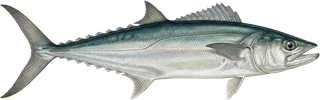 King mackerel fishingSpawning season
Sources
Correct as of October 2026. The practical knowledge comes from 7 sources, summarised in our own words.
View all 7 sources
- Keep silver kings reigning: FWC shares best fishing practices for tarpon anglers (15,04,2024) · Florida Fish and Wildlife Conservation Commission (Pressemitteilung)
- Summary Report on the Catch-and-Release Mortality Study on Tarpon in Boca Grande Pass, 2002–2004 (rev. 2013) · Florida Fish and Wildlife Conservation Commission, Fish and Wildlife Research Institute
- Tarpon Genetic Recapture Study Newsletter 2012 (Tipps zum Zurücksetzen) · Florida Fish and Wildlife Conservation Commission
- Evaluating lethal and sub-lethal effects of catch-and-release angling in Florida's Central Gulf Coast recreational Atlantic tarpon fishery, Kapitel 3 (Dissertation K. Guindon, University of South Florida) · Florida Fish and Wildlife Conservation Commission / University of South Florida
- Best Practices For Catch & Release Fishing For Tarpon · Bonefish & Tarpon Trust
- Tarpon (Megalops atlanticus) · Texas Parks and Wildlife Department
- Megalops atlanticus – Tarpon (Discover Fishes) · Florida Museum of Natural History, University of Florida
Text AI-assisted, based on the sources named and these pages: Tarpon (profile), Sea fishing, Baitfish, Crustaceans & shellfish, Releasing fish.