
Knowledge – Fish
Sole fishing
Fishing for Dover sole means fishing at night over sand and mud, with a slim worm on a small hook. Here is the way there in nine steps, each with a link to the detailed page.
 Choose another fish117 fish with guides
 EelOff-peak season
 EelpoutPossible
 IdePossible
 ArapaimaGood
 GraylingPeak season
 Atlantic salmonSpawning time, please spare
 Brown troutSpawning time, please spare
 Brook troutSpawning time, please spare
 BarbelOff-peak season
 BarramundiSpawning season
 Greater amberjackGood
 Topmouth gudgeonOnly as bycatch
 Blue marlinSpawning season
 BonefishSpawning season
 BonitoGood
 BreamOff-peak season
 Dusky grouperOnly as bycatch
 CobiaPossible
 Spiny dogfishOnly as bycatch
 CodPeak season
 ChubPeak season
 MinnowOnly as bycatch
 European sturgeonOnly as bycatch
 FlounderPeak season
 PerchPeak season
 Largemouth bassGood
 Ballan wrasseOnly as bycatch
 Yellowfin tunaSpawning season
 Giant trevallyGood
 Prussian carpPossible
 BrillPossible
 Gilthead breamSpawning time, please spare
 Golden doradoSpawning season
 Golden mahseerOnly as bycatch
 Dolphinfish (mahi-mahi)Good
 Grass carpPossible
 Great barracudaGood
 GudgeonPossible
 White breamPossible
 DaceOff-peak season
 PikePeak season
 HalibutOff-peak season
 HerringPossible
 GarfishOut of season
 Huchen (Danube salmon)Possible
 Crucian carpOnly as bycatch
 CarpOff-peak season
 RuffeOff-peak season
 VendaceOnly as bycatch
 DabPeak season
 GurnardPossible
 Coley (saithe)Peak season
 Chinook salmonHardly any chance
 King mackerelSpawning season
 LingPeak season
 TuskOff-peak season
 MackerelPossible
 Bighead carpOut of season
 WhitefishPossible
 Conger eelOff-peak season
 Sea troutSpawning time, please spare
 Grey mulletPossible
 Murray codSpawning season
 MuskellungeGood
 Common nasePossible
 Nile perchPossible
 PayaraPossible
 Peacock bassPeak season
 PermitGood
 WeeverOnly as bycatch
 PollackOff-peak season
 BurbotOff-peak season
 AspPossible
 Red snapperSpawning season
 Rainbow troutPeak season
 RoosterfishGood
 RoachPeak season
 RedfishOut of season
 Bluefin tunaOnly as bycatch
 RuddPossible
 Russian sturgeonOnly as bycatch
 HaddockOff-peak season
 SnakeheadPossible
 TenchOff-peak season
 SpirlinOnly as bycatch
 PlaiceOff-peak season
 Greenland halibutOnly as bycatch
 Round gobyOnly as bycatch
 SwordfishGood
 Lake troutSpawning time, please spare
 HakeSpawning time, please spare
 Alpine charSpawning time, please spare
 MonkfishPossible
- SoleOff-peak season
 SailfishGood
 Silver carpOut of season
 SnookPeak season
 PumpkinseedOnly as bycatch
 SpratOnly as bycatch
 Atlantic wolffishSpawning time, please spare
 TurbotPeak season
 SterletOnly as bycatch
 SmeltOnly as bycatch
 Horse mackerelPossible
 TaimenGood
 TarponGood
 TigerfishSpawning season
 BleakPossible
 WahooGood
 Wels catfishOff-peak season
 WhitingPeak season
 Sea bassOff-peak season
 ZanderPeak season
 White-eye breamOnly as bycatch
 Blue breamOnly as bycatch
 Brown bullheadPossible
 VimbaOnly as bycatch
Season in October according to the catch calendar, an estimate and not a guarantee of a catch. The fish pictures are reduced natural-history plates and AI-generated.
Best time
From July to September, mainly at night.
In January: Slim chancesIn February: Slim chances, spawning timeIn March: Slim chances, spawning timeIn April: Possible, spawning timeIn May: Possible, spawning timeIn June: Good, spawning timeIn July: Peak seasonIn August: Peak seasonIn September: Peak seasonIn October: GoodIn November: PossibleIn December: Slim chances
Good spot
- Coast: sandy bottomsandy bottomsandy bottomdeep water
Top baits
Starter tackle
- Rod: surf rod; at close, calm spots a carp rod is enough; from a boat, rods with around 200 g casting weight
- Line: braid of 0,15 mm with a shock leader
- Hook: small, long-shanked hooks, size 4–6; in England on beach and pier also Aberdeen hooks, size 1–2
In short
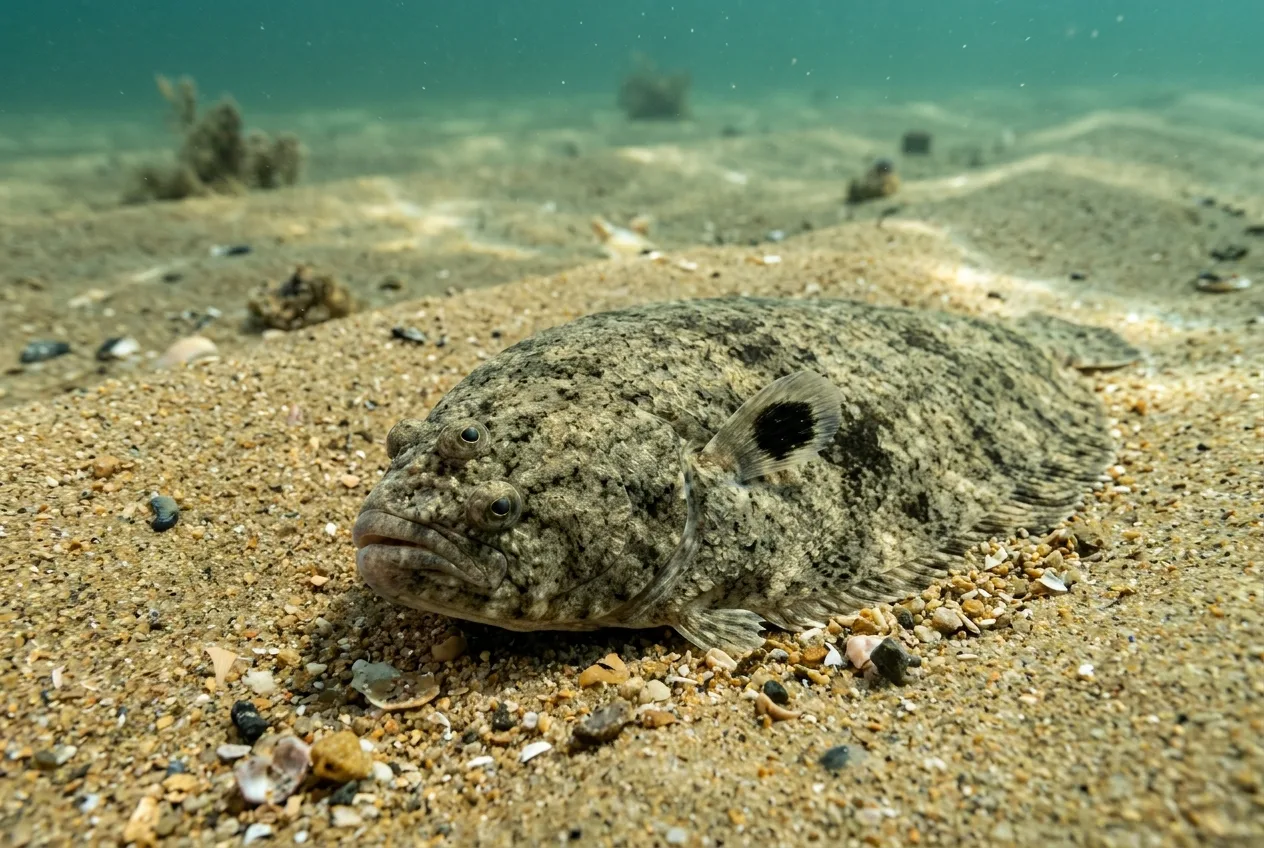
In short: you catch Dover sole best from July to September, mainly at night. Good spots on the coast: sandy bottom. Proven baits: lugworm and ragworm, small shellfish or shrimps on small, long-shanked hooks. A right-eyed, tongue-shaped flatfish with a dark spot at the end of the pectoral fin. It hunts at night and lies buried by day.
Quick to recognise
A slim, right-eyed, tongue-shaped flatfish with a dark spot on the pectoral fin, one of the most expensive food fish in Europe. Typically around 35 centimetres; up to 70 centimetres and 3 kilograms are reported.
When
The main season is July to September; June and October are good, and in April, May and November a catch is possible; in winter it stays deep and is hardly reachable from the shore. Because it feeds at night, the time after sunset, when it is dark, is the most worthwhile. It moves to the coast to spawn, depending on water temperature: for the North Sea February to May are given, for the north also April or May to June.
- JanHardly any chance
- FebHardly any chance, spawning
- MarSlim chances, spawning
- AprPossible, spawning season
- MayPossible, spawning season
- JunGood, spawning
- JulPeak season
- AugPeak season
- SepPeak season
- OctGood
- NovPossible
- DecHardly any chance
Peak seasonGoodPossibleHardly any chanceSpawning season
Spring tactics
Before May, a targeted attempt from the shore is rarely worth it. On beaches in south-east England the sole season starts in May, and anglers on piers caught sole in May alongside small smooth-hounds and bass.
Summer tactics
As the water warms, the fish move into the shallows. The beaches are often crowded by day; the evening and night tides are quieter and usually bring more bites.
Autumn tactics
On English beaches sole are caught until October. In Ireland, autumn evenings around high water on shallow beaches are considered especially productive.
Winter tactics
You can hardly expect any sole from the shore. On piers and beaches, cod, whiting and flounder are more likely to bite then.
Are they biting today?
In January: Out of seasonIn February: Spawning, please spare the fishIn March: Spawning, please spare the fishIn April: Spawning, please spare the fishIn May: Spawning, please spare the fishIn June: Spawning, please spare the fishIn July: Peak seasonIn August: Peak seasonIn September: Peak seasonIn October: Off-peakIn November: PossibleIn December: Out of season
Today’s catch index needs JavaScript. Season and spawning time are in the catch calendar.
Where it sits now
On the coast
Look for sandy or muddy bottom, in salt water as well as brackish water; by day the sole lies buried there, in shallower water in summer than in winter. The North Sea coast offers good chances, including off the Netherlands, in areas with plenty of current, and piers are considered especially good spots. In the German Baltic it mostly turns up as bycatch on the hook. In winter the species moves into warmer, deeper water.
How to go about it: Look for sand or silt bottom, preferably with shell debris, and for river mouths with brackish water such as the Thames. In the Netherlands anglers catch it regularly in summer on the piers of Scheveningen and in Zeeland. On the German North Sea islands it is more of an occasional catch in the surf.
| Spring | Sandy bottom |
|---|---|
| Summer | Sandy bottom |
| Autumn | Sandy bottom |
| Winter | deep water |
Biting time: mostly at night. What this looks like in the water is shown by the picture of the holding spots just below.
Holding spots in the picture
Choose the season and time of day: the picture shows where the species stands then. Spots outlined in red apply only in the chosen season. Tap a fish or a spot in the list to bring it closer. The picture is schematic and AI-generated, every water is different.
Catch chance in springpossibleSpawning season, observe closed seasons
Catch chance in summerPeak season
Catch chance in autumngood
Catch chance in winterhardly any
- J
- F
- M
- A
- M
- J
- J
- A
- S
- O
- N
- D
Spawning season
Not the main time By day the sole lies buried; it goes hunting at night.
Not the main time By day the sole lies buried; it goes hunting at night.
Not the main time By day the sole lies buried; it goes hunting at night.
Active time By day the sole lies buried; it goes hunting at night.
On the coast
Sandy bottom
Sole are only found here in spring, summer and autumn.
Deep, colder water
Sole are only found here in winter.
The sole lies on sandy or muddy bottom, in the sea as well as in brackish water. By day it buries itself.
Spring: chances according to the catch calendar are slim in March and possible in April and May. This is when spawning takes place, so observe the closed seasons.
Summer: chances according to the catch calendar are good in June and peak season in July and August. In summer the sole stays in shallower water than in winter. Summer and autumn are considered the best time.
Autumn: catch chance according to the catch calendar is peak season in September, good in October and possible in November.
Winter: chances according to the catch calendar are slim. In winter it retreats into warmer, deeper water and is hardly within reach from the shore.
Depth: Sole live from the coast down to about 150 metres, mostly between 10 and 60 metres. Older fish stay deeper.
Size comparison: AI-generated drawing, schematic.
How
You fish from the shore or from a boat, on the beach with surf tackle and a bait lying still on the bottom. Plan your fishing day so that you are at the water after dark.
Easiest way
The easiest way is on a sandy beach or pier on the North Sea on a warm summer night. A beachcaster or, in calm spots, a sturdy carp rod, a two-hook rig with small hooks and a piece of ragworm are enough. Cast only 40 to 50 m; the fish often feed even closer to the shore.
Night fishing on a sandy beach
From May to October after dark on sandy beaches, piers and river mouths, when the sole comes out of the sand and feeds.
- Sand with shell debris
Beaches of sand and shell debris, where storms uncover worms and mussels, are good. Cast to where the waves cut a gully into the bottom at low water. On the North Sea, piers with current are also good spots.
- Bait close to the bottom
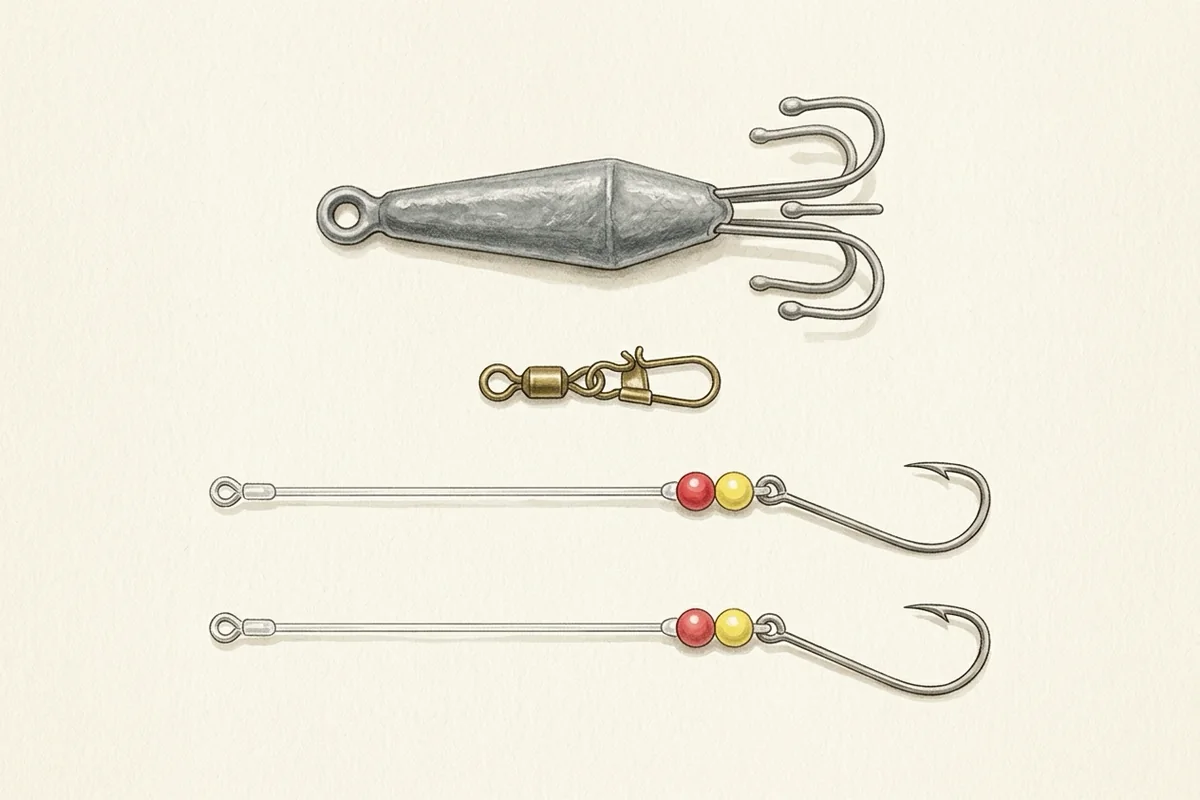
Use a two-hook rig with short hooklengths so that the baits lie flat on the bottom. A split shot just above each hook pushes the worm further down.
- Small pieces of worm
On English beaches ragworm is the standard, and half a worm or a short piece is often enough. Where many mussels or crabs get washed up, these also catch fish.
- Close to the shore
Long casts are rarely necessary; sole often feed only 40 to 50 m out or even a few metres in front of you. Put two rods out at different distances and you will find the fish faster.
- Leave it lying
Sole pay little attention to beads and flash; they find their prey mainly by smell and vibration. Leave the bait where it is and renew it regularly instead of constantly moving it.
- Darkness and the flood tide
Most bites come after dark or in cloudy water. In the Thames estuary the best time is from about an hour after low water until high water.
- Small, strong hook
Reel in steadily. A small, thick-wire hook fits in the mouth and does not open out during the fight; large all-round hooks with a wide bend are not suitable for sole.
What with
Lugworm and ragworm, small mussels or prawns all work. The mouth is small, so choose small long-shank hooks and a slim worm rather than a big chunk. If the current is strong, the bait holds better if you follow the lugworm with a piece of ragworm.
- Ragwormin summer at night on the beach, breakwater and pier
On English beaches it is regarded as the best sole bait and can be split into small pieces that fit the narrow mouth.
- Lugwormwhen it can be dug on the spot or ragworm are not available
Sole eat plenty of worms, and on Dutch piers lugworm catches regularly.
- Crustaceans & musselson beaches where mussels and crabs are washed up after storms
Crab and mussel meat are part of their natural diet, and Irish experts recommend mussels especially for fish with a small mouth.
Tackle
From the shore, surf tackle with thin braid as the main line and a shock leader is enough; from a boat it can be heavier. What matters when casting from the beach is explained on the page about the beachcaster.
Night fishing on a sandy beach
- Rod
- Beachcaster; in close, calm spots a carp rod is enough; from a boat, rods with a casting weight of around 200 g
- Reel
- a large fixed-spool reel
- Line
- Braid 0,15 mm with a shock leader
- Leader
- A two-hook rig with short hooklengths of fluorocarbon around 20 lb (about 9 kg)
- Hooks
- small long-shank hooks size 4–6; in England on the beach and pier also Aberdeen hooks size 1–2
- Weight, float, lead
- a small split shot above each hook, plus a casting weight suited to the current
Common mistakes
- Casting too far: Sole often feed right in front of the shore, on some beaches only a few metres out. Put at least one rod out short and only then try greater distances.
- By day in clear water: By day the sole lies buried. Plan your session for the night or for days when the water is cloudy.
- Too much flash on the hooklength: Beads and sequins help with plaice and flounder, but the sole responds to them much less. Rely instead on fresh bait and a scent trail.
- The bait floats above the bottom: Long hooklengths and buoyant beads lift the worm. Short hooklengths and a split shot above the hook keep it where the sole searches.
- Packed up at low water: The rising tide after the low can fish particularly well. Stay until high water, especially if it is dark by then.
Rules
Our country overview gives no figures for the minimum size (Mindestmaß) or closed season (Schonzeit) for sole. That does not mean there are no rules: individual countries and water regulations protect the species or set their own limits.
On the coast the rules of the coastal states apply, partly with their own catch restrictions: North Sea coast, Baltic coast of Schleswig-Holstein and Baltic coast of Mecklenburg-Western Pomerania.
The regulation and your fishing permit (Erlaubnisschein) are what count. Lake Constance, the Rhine and the coast, for example, have their own rules: Fishing waters in Germany.
After the catch
Playing and landing
After the bite reel in steadily; a strong small hook will not straighten out. On the beach you draw the fish across the shallows onto the sand, on a pier a long-handled landing net helps. A sole you may not keep you unhook with wet hands and release; one of legal size that you take home you stun and kill immediately.
A fish of legal size that you may take you stun and kill immediately; protected or undersized fish you unhook with wet hands in the water and release. Closed seasons and minimum sizes are set by the federal states (Bundesland) and by the fisheries authorities (Fischereibehörde) of neighbouring countries such as Denmark, Norway or Poland; what binds you is your state regulation and your fishing permit (Erlaubnisschein).
Frequently asked questions
Can you fish for sole from the beach?
Yes, mainly on summer nights on sandy beaches and piers of the North Sea, for example in the Netherlands and on the English coast. On the German coast it is rarer; on the East Frisian Islands it is more of an occasional catch.
What hook size for sole?
Because of the small mouth, long-shank hooks in sizes 4 to 6 are the usual choice. On English beaches some anglers also use Aberdeen hooks in sizes 1 and 2 with a narrow piece of worm.
When do sole bite best?
From May to October, with the peak in summer. Most happens after dark and in cloudy water, on many beaches on the rising tide.
What bait for sole?
Ragworm, lugworm, and crab and mussel meat. Offer small pieces; the fish cannot fit big lumps of bait into its mouth.
How far do you have to cast for sole?
Usually 40 to 50 m is enough, and they often feed even closer in. On piers with strong current, though, you cast further so that the weight does not drift in among the rocks in front of the pier.
Similar species
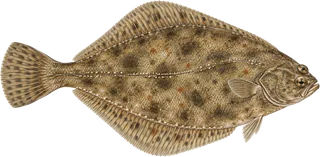
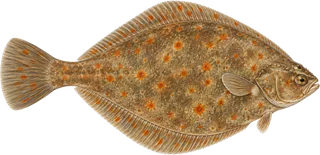
If you catch sole, you can use similar tackle to fish for these species too:
Sources
As of October 2026. The practical knowledge comes from 17 sources, summarised in our own words.
See all 17 sources
- Seezunge: Infos und Angeltipps zu diesem Fisch · BLINKER (Jannik Westerkamp)
- How to catch flatfish from the shore · Sea Angler (Jessica Reid)
- Know Your Fish | Dover Sole · Sea Angler (Redaktion)
- Clacton and Holland Beaches · Sea Angler (Redaktion)
- Sea Fishing Near Me | Five spots on the south-east coast · Sea Angler (Redaktion)
- Jaywick and St Osyth · Sea Angler (Redaktion)
- Clacton Pier · Sea Angler (Redaktion)
- Catch Plenty of Eels, Flounders, Bass and Soles at Grays Promenade · Sea Angler (Redaktion)
- A sea fishing guide to the Pink Bay · Sea Angler (Simon Smith)
- Hastings Pier, East Sussex · Sea Angler (Redaktion)
- Sea Angler's guide to choosing the right hooks · Sea Angler (Redaktion)
- The complete guide to sea fishing hooks · Sea Angler (Redaktion)
- Knock knock, who's there? · Sea Angler (Redaktion)
- Die Molen von Scheveningen · FISCH & FANG (Dieter Schröder)
- Auf Plattfisch und Wittling · FISCH & FANG (Johannes Dietel)
- Norderney · FISCH & FANG (Kati Kathmann)
- A Guide to Sea Angling in the Southern Region · Southern Regional Fisheries Board (heute Inland Fisheries Ireland)
Text produced with AI support, based on the sources listed and these pages: Sole (profile), Surf fishing, Lugworm, Crustaceans & mussels.