
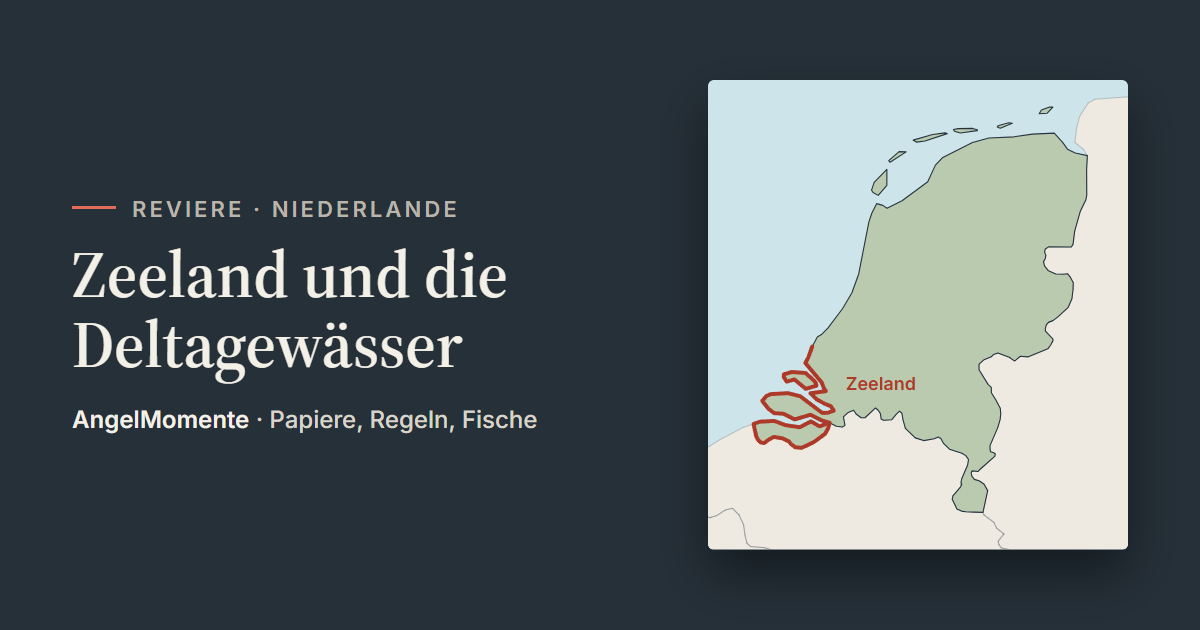
Destinations · the Netherlands
Fishing in Zeeland
In Zeeland you fish two kinds of water: the Oosterschelde and Westerschelde are tidal sea arms with ebb and flow, while the Veerse Meer and Grevelingenmeer are dammed salt lakes. On the sea arms you need no fishing licence (VISpas), on the two lakes you do.
- Papers
- Sea arms without a permit, Veerse Meer and Grevelingen with a VISpas
- Season
- all year, sea bass from 1.2. to 31.3. catch and release only
As of October 2026
At a glance
- Papers
- Sea arms without a permit, Veerse Meer and Grevelingen with a VISpas
- Licence and permit
- Season
- all year, sea bass from 1.2. to 31.3. catch and release only
| Fish | Minimum size | Closed season | Catch limit | Note |
|---|---|---|---|---|
| Sea bass | 42 cm | 1.2.–31.3. catch and release only | 3 per day | Rule for 2026 |
| Cod (Kabeljau) | 35 cm | none | 25 fish or 20 kg | size according to the water list; land whole |
| Flounder | 20 cm | none | – | |
| Sole | 24 cm | none | – | Size according to the list of waters |
| Mackerel | 30 cm | none | – | Size according to the list of waters |
| Eel | – | protected all year round | – | straight back alive, do not keep |
Coastal waters Ooster- and Westerschelde: Uitvoeringsregeling visserij, Uitvoeringsregeling zeevisserij and Verordnung (EU) 2026/249; sizes for cod, sole and mackerel from the federation’s list of waters. On the Veerse Meer and Grevelingenmeer the VISpas conditions also apply. Status: October 2026. The regulation and your fishing permit (Erlaubnisschein) are what count.
Location and waters Oosterschelde, Westerschelde, Grevelingen and Veerse Meer
The Oosterschelde lies between Schouwen-Duiveland, Tholen, Zuid-Beveland and Noord-Beveland and covers around 350 km² (Rijkswaterstaat). Since 1986 a 9 km storm surge barrier has separated it from the North Sea. It closes only when a high tide of three metres or more is expected, on average once a year. This keeps the ebb and flow intact (Oosterschelde National Park). The Oosterschelde has been a national park since 2002, and in the mouth the channels are over 40 m deep (Natura 2000).
The Westerschelde is 95 km long, 2 to 8 km wide and open to the North Sea and the Scheldt (Rijkswaterstaat).
The Veerse Meer (around 20 km²) was dammed in 1961. Since June 2004 water has flowed in and out of the Oosterschelde through a culvert again. Salinity and oxygen content now match the Oosterschelde (Natura 2000). The Grevelingenmeer is, at 140 km², the largest salt-water lake in Western Europe and has been separated from the North Sea by the Brouwersdam since 1971 (Rijkswaterstaat). The Brouwerssluis has been open almost all the time since 1999/2000, so fish move between lake and sea (Natura 2000). The fresh water further north in the delta is described in the profile Biesbosch and Hollands Diep.
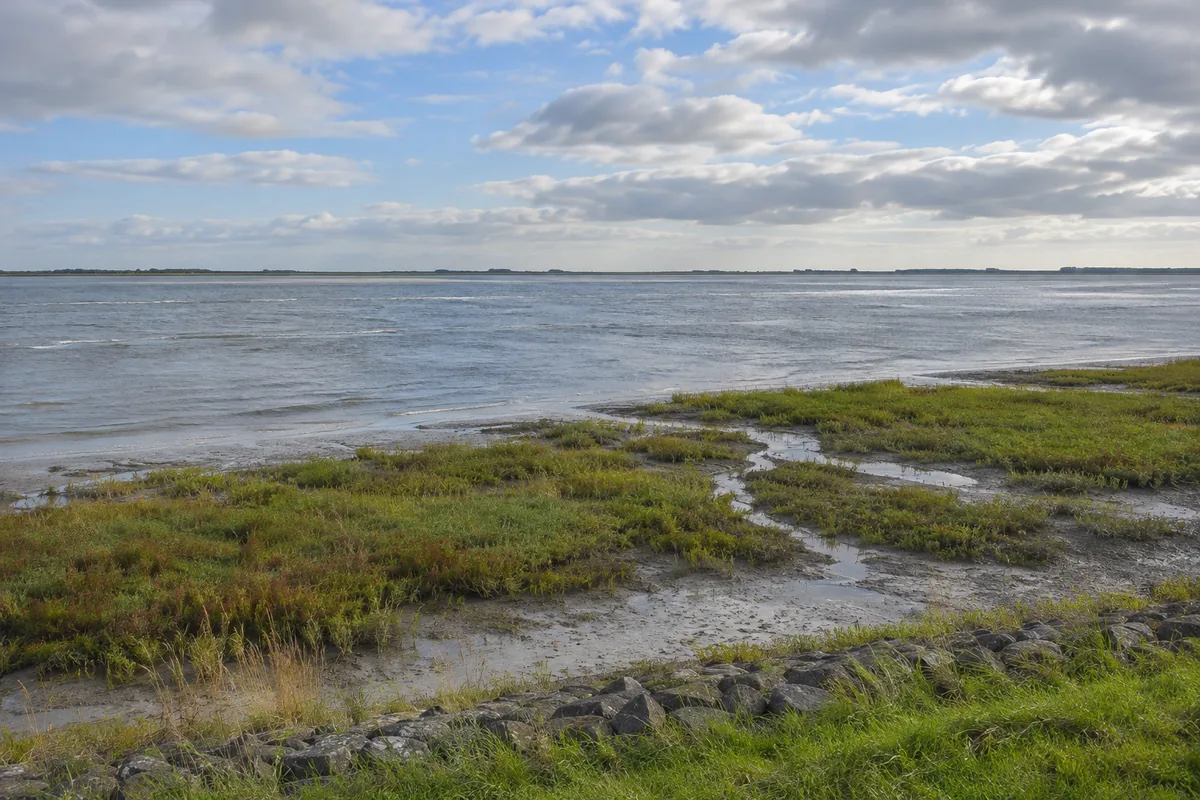
Fish and best time Sharks, rays, sea bass and red mullet
- Oosterschelde from a boat: The federation names sharks, rays, sea bass and red mullet. Depending on the current, you need anchor weights of 150 to 300 g (Sportvisunie).
- Sharks: In the summer half of the year, mainly adult females of the starry smooth-hound (Gefleckter Glatthai) up to 130 cm move into the Oosterschelde and the mouth of the Westerschelde. Studies with Wageningen Marine Research show that the tope (Hundshai) also gives birth to its young in the Oosterschelde. It is classed as critically endangered on the IUCN Red List (Sharkatag). The federation asks you to release both species and to report the catch (Sportvisunie).
- Beaches: On summer evenings people here mostly fish for flounder, sole, sea bass and sharks. When mackerel come in close to shore, a light beach rod is worth using in the evening (Sportvisunie).
- The lakes: In the Veerse Meer, marine species are slowly increasing again. In the Grevelingenmeer, the deep water can run out of oxygen from about 5 to 6 m below the surface in dry, warm summers (Natura 2000).
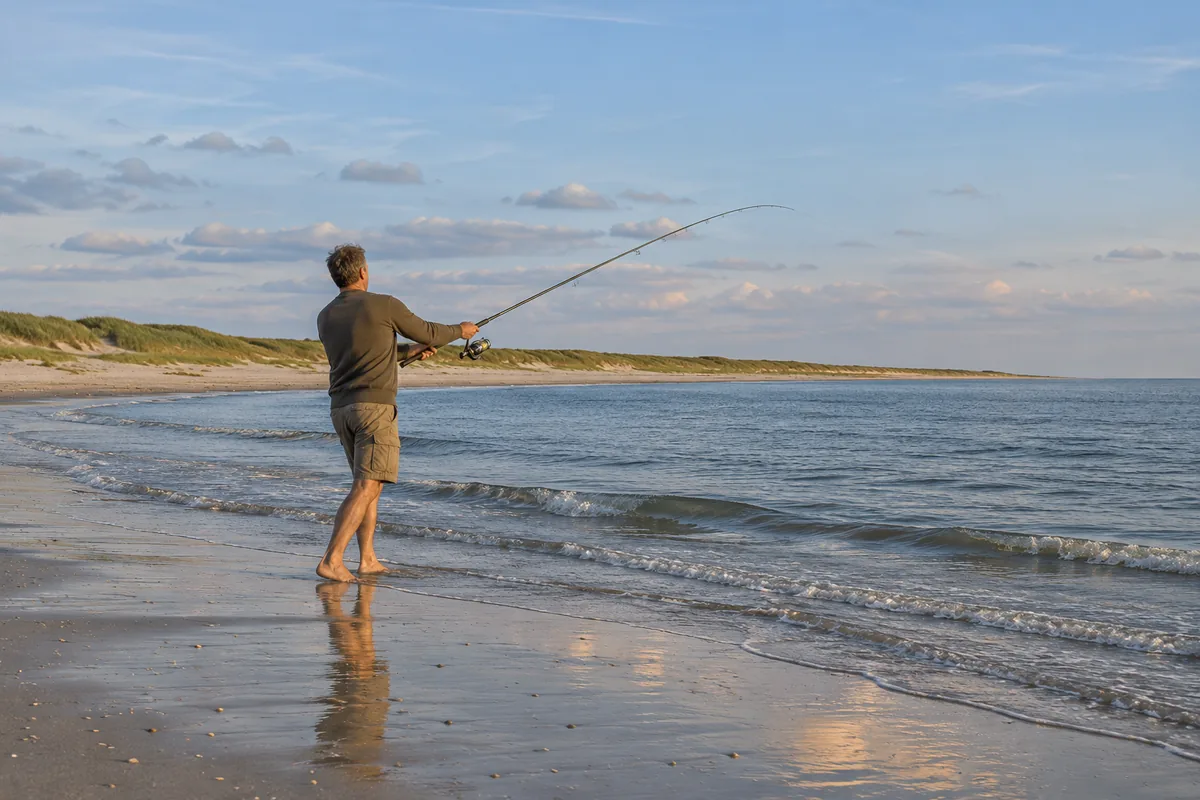
The catch calendar shows when each species is worth fishing for.
Documents and permit No permit on the coast, RecFishing app from 14
- Ooster- and Westerschelde: These are coastal waters, with the Oosterschelde reaching as far as the Grevelingendam, Philipsdam and Oesterdam. The Brouwershavense Gat also counts as part of it (Besluit aanwijzing zeegebied en kustwateren). Here you fish without a permit with no more than two rods (Visserijwet, Artikel 7), and no more than three hooks on each rod. From the age of 14 you register beforehand in the RecFishing app (RVO).
- Open North Sea: The fishing zone (Visserijzone) begins off the coast. There the federation’s list of waters sets no limit on rods and hooks (Gezamenlijke Lijst).
- Veerse Meer and Grevelingenmeer: These are inland waters (RVO). There you need the VISpas with the list of waters or the VISplanner app (Sportvisunie). How to order it is explained on the country page.
Special rules Sea bass pause, eel ban and bait ban
- Sea bass: The size and daily limit are in the box. In February and March 2026 you may not keep any sea bass (Verordnung (EU) 2026/249). Cod and sea bass must be landed whole, not filleted and with the head on (Uitvoeringsregeling zeevisserij, Artikel 140p).
- Eel: On the coast it goes straight back alive, and you may not have any on you while fishing (Uitvoeringsregeling visserij, Artikel 23a).
- Bait ban: In inland waters, artificial lures, dead baitfish and fish strips are banned from 1 April to the end of May. Exempt are the Veerse Meer and Grevelingenmeer, the waters of Walcheren, Schouwen-Duiveland, Tholen and Noord-Beveland, the canal through Zuid-Beveland and the harbour of Goes (Reglement voor de binnenvisserij, Artikel 6). The list of waters names only the two lakes, so check the VISplanner.
- Veerse Meer: Some strips around the Platen are closed to fishing and marked with posts and signs. Canals, harbours and creeks that the list of waters does not name as fishing water are also off limits. The map is in the list.
- Collecting mussels: For your own use, no more than 10 kg per person per day is allowed, only on areas that are accessible at low water, not on farming plots (RVO). On the Oosterschelde you collect only at the foot of the dyke in designated areas. You do not walk on the mud (slik), and you do not take crabs or lobsters (Oosterschelde National Park).
- Digging for worms: Only with the federation’s permit, only in designated plots on the Ooster- and Westerschelde, not between sunset and sunrise and no deeper than 30 cm. You keep 25 m away from the foot of the dyke (Wormenspitvergunning). With the VISpas you can dig at a good thirty places (Sportvisunie).
Status: October 2026. The sea bass rules apply for 2026 only. The EU regulation allows only catch and release in February and March, while RVO calls targeted fishing banned in that period. If you want to be safe, follow the stricter statement from the authority. Ask the federation whether the catch rules for sea bass and cod also apply on the Veerse Meer and Grevelingenmeer.
Safety
- Tides: In the Oosterschelde the water rises for a good six hours and falls again over the same time (National Park). At Yerseke there are around 3,25 m between high and low water. At the gates of the storm surge barrier the water scours, on the North Sea side at ebb and on the inside at flood (National Park). A restricted zone for shipping lies around the barrier (Uitvoeringsregeling visserij, Bijlage 5).
- Platen: The sandbanks dry out only at ebb, and seals and birds rest on them. You are often not allowed onto them (Rijkswaterstaat).
- Ships: The Westerschelde is the shipping route between Antwerp and Vlissingen (Rijkswaterstaat), so watch out for large ships there.
- In a boat: Take a life jacket for everyone on board (Rijkswaterstaat). For a fast motor boat on the Ooster- and Westerschelde you need the Klein Vaarbewijs part 2 boating licence (Rijkswaterstaat). More under Boat and life jacket and Tides, ebb and flow.
Related
- Fishing on the coast and in the surf, fishing from a cutter and boat and fishing in the Netherlands
- Biesbosch and Hollands Diep: fresh water in the delta, and North Sea coast and Wadden Sea
- Sea bass, flounder, sole, mackerel, cod and gurnard in the fish encyclopedia
- Surf rig and Releasing fish
Sources
- Visserijwet 1963 und Besluit aanwijzing zeegebied en kustwateren 1970
- Uitvoeringsregeling visserij (Fassung vom 11.07.2026), Uitvoeringsregeling zeevisserij (Fassung vom 01.09.2026), Reglement voor de binnenvisserij 1985 und Verordnung (EU) 2026/249
- RVO: Freizeitfischerei in Küstengewässern, Seegebiet und Visserijzone (geprüft 03.08.2026) und Übersicht der Gewässer
- Rijkswaterstaat: Oosterschelde, Westerschelde, Grevelingenmeer, Zomerdrukte op de Oosterschelde, Voorbereid varen und Snelvaren
- Natura 2000: Oosterschelde, Veerse Meer und Grevelingen
- Nationalpark Oosterschelde: Sturmflutwehr, Ebbe und Flut und Regeln zum Sammeln
- Sportvisunie: Gezamenlijke Lijst van Nederlandse VISwateren 2026 bis 2028, VISpas, Wormenspitvergunning, Sharkatag und Meeresangeln (abgerufen 04.10.2026)
A guide without guarantee, status October 2026. The Dutch regulations, the EU catch rules for sea bass, the rules of the Oosterschelde National Park and the VISpas conditions with the list of waters, in their current versions, are what count.