
Knowledge – Fish
Gurnard (grey and red gurnard): Identification and catching
Gurnards are bottom-dwelling fish with an armoured head and finger-like pectoral fin rays that they use to feel across the seabed. In the North Sea the main ones are the grey gurnard (Eutrigla gurnardus) and the tub gurnard (Chelidonichthys lucerna). The German name, Knurrhahn, comes from the growling sounds they make with the swim bladder.
In short: The best time for gurnard is May to September, especially in the evening. Good spots on the coast: sandy bottom, stony mixed ground and deep water. Proven baits: lugworm, small strips of herring or mackerel and shrimp on the bottom; tub gurnards occasionally take small pilkers. The grey gurnard has a dark spot on the first dorsal fin. The fish make growling sounds with the swim bladder. Step by step: Fishing for gurnard.
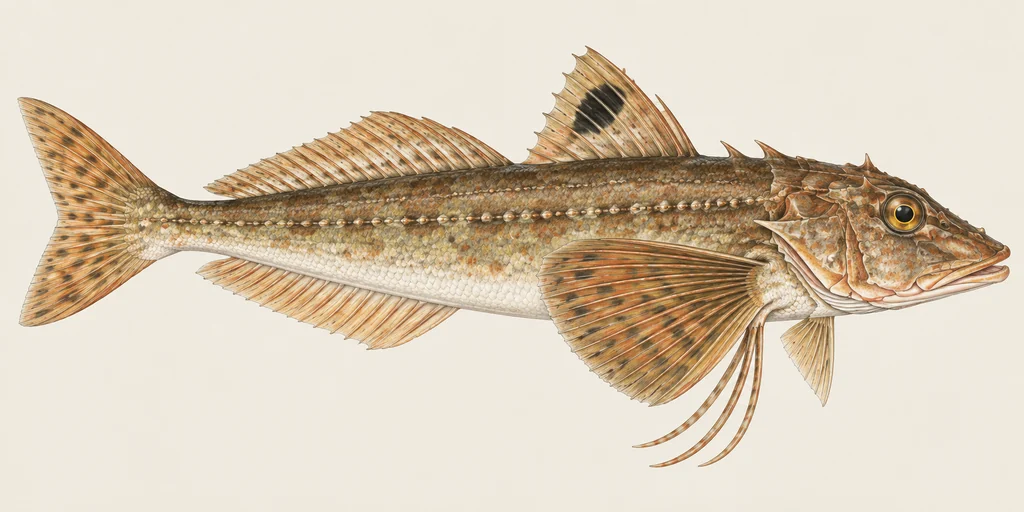
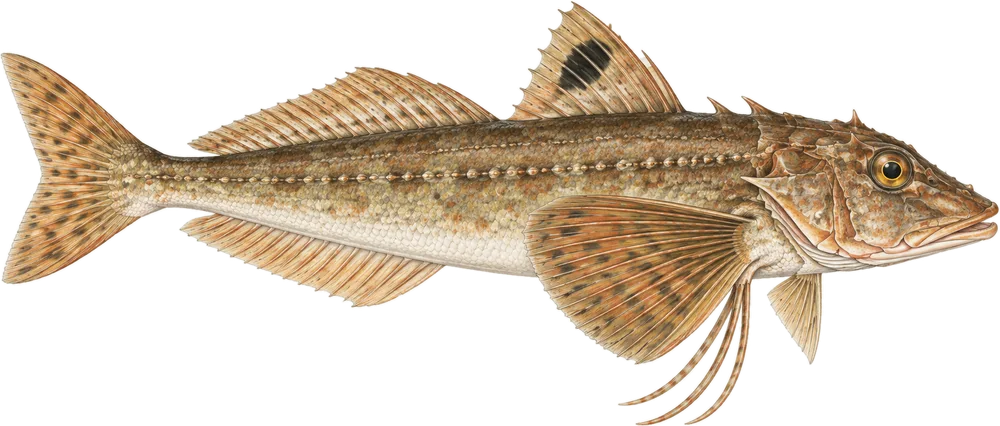
- Large head armoured with bony plates, with spines on the gill cover
- Three free, finger-like rays on the lower edge of the pectoral fin
- In the grey gurnard a dark spot on the first dorsal fin and bony knobs along the lateral line
Catch chances through the year
- Hardly any chance
- Possible
- Good
- Peak season
- Spawning (observe the closed season)
Editorial assessment for waters in Germany, not a measured value and no guarantee. Spawning time is not the same as the legal closed season.
Species profile and sources in the catch calendarAll species compared month by monthThe rules of your federal state
How to recognise it
All gurnards have a large head armoured with bony plates. The lowest rays of the pectoral fin stand free. With these feelers the fish stalk slowly across the bottom in search of food.
The grey gurnard is usually green-brown to reddish with a pale belly. Typical features are a dark spot on the first dorsal fin, bony knobs along the lateral line, spines on the gill cover and pelvic fins that are longer than the pectorals. FishBase gives up to 60 centimetres, the Norwegian Institute of Marine Research 45 centimetres and 1,2 kilograms; around 30 centimetres is usual. It rarely lives longer than six years.
The tub gurnard is reddish in colour and its lateral line is smooth. The longest ray of the pectoral fin reaches to the start of the anal fin. According to FishBase it grows clearly larger: almost 83 centimetres, 6,6 kilograms and 15 years, with around 30 centimetres usual here too.
Compared directly: grey gurnard, tub gurnard or red gurnard?
| Feature | Grey gurnard | Tub gurnard | Red gurnard |
|---|---|---|---|
| Lateral line | Scales with a thorny keel, felt as knobs | small, smooth scales | tall, plate-like scales |
| First dorsal fin | large round black spot | no spot described | no spot described, yellowish |
| Pectoral fins | short, barely reach the anal fin | pink-violet or blue with pale dots, edge pale blue or red | yellowish |
| Body colour | mostly grey-brown, often with small white dots, rarely reddish | pink to red-brown, belly golden to white | bright red above, pale below |
| Size according to FishBase | up to 60 cm, usually around 30 cm | up to 83 cm, usually around 30 cm | up to 70 cm, usually 20 to 28 cm |
Grey gurnards can also be red-brown and can then be mistaken for tub gurnards. Look for the dark spot on the first dorsal fin and the knobs on the lateral line: both point to the grey gurnard.
A third species is the red gurnard (Chelidonichthys cuculus), called Seekuckuck in German. Its lateral line consists of tall, plate-like scales. It lives from the British Isles to Mauritania and in the Mediterranean, and in German waters it is not considered established.
Where they live
The grey gurnard occurs on almost all European coasts, from Iceland and Norway to Morocco, in the Mediterranean and in the Black Sea. It is absent from the eastern Baltic, and in the German Baltic it only turns up as bycatch. It lives on sand, mud or mixed ground of sand and gravel, usually at depths of 10 to 150 metres. In Norway it is most common in the top 50 metres.
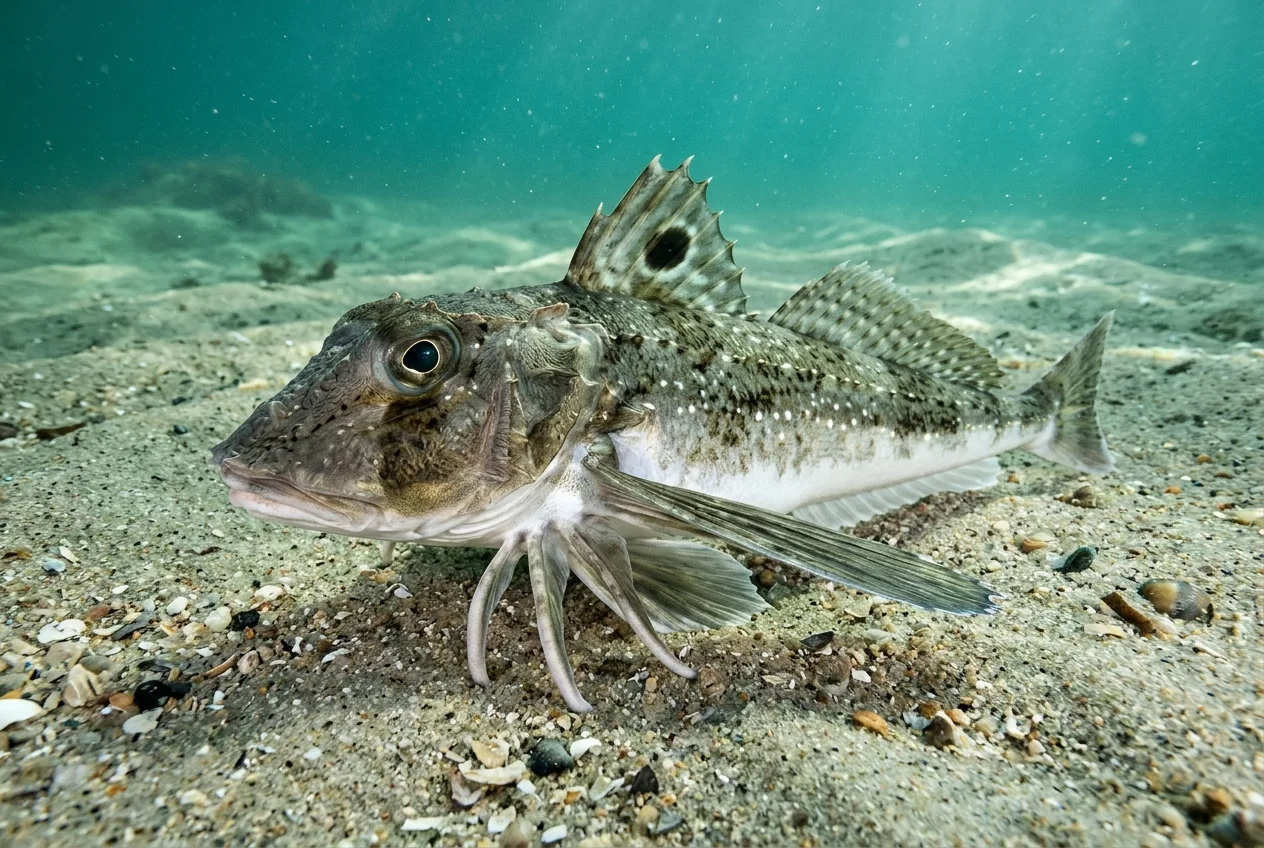
The tub gurnard ranges from Norway to West Africa and into the Mediterranean. In the German North Sea it appears mainly in summer, and there are increasing records from the Baltic. It lies on sand, muddy sand or gravel.
Good stocks of the grey gurnard are found around Heligoland and throughout the southern North Sea, and in summer also in the Kattegat and off the coasts of Britain and Ireland. In summer the fish move into shallow water and can then be reached from the shore as well.
Holding spots in the picture
Choose a season and time of day: the picture shows where the species sits then. Tap a fish or a spot in the list to bring it closer. The picture is schematic and AI-generated, every water is different.
Catch chance in springpossibleSpawning season, observe closed seasons
Chance of a catch in summergoodSpawning, observe the closed seasons
Catch chance in autumnpossible
Catch chance in winterhardly any
- J
- F
- M
- A
- M
- J
- J
- A
- S
- O
- N
- D
Spawning season
No main time It bites best in the evening, hardly at all in glaring sun.
No main time It bites best in the evening, hardly at all in glaring sun.
Active time It bites best in the evening, hardly at all in glaring sun.
No main time It bites best in the evening, hardly at all in glaring sun.
On the coast
Sandy bottom
Gurnard (grey and red gurnard) is found here all year round.
Stony mixed ground
Gurnard (grey and red gurnard) is found here all year round.
Deep, colder water
Gurnard (grey and red gurnard) is found here all year round.
Gurnards live on sand, mud or mixed bottom of sand and gravel. If you fish for plaice, you often have them on the hook. From the shore you reach them only where the water is reasonably deep.
Spring: chances according to the catch calendar are slim in March, possible in April, good in May. This is the spawning time; observe the closed seasons.
Summer: chances according to the catch calendar are good. This is the spawning time; observe the closed seasons. In summer they come into the shallows, and then it works from the shore too.
Autumn: chances according to the catch calendar are good in September, possible in October, slim in November. When the water cools noticeably in autumn, they leave the North Sea.
Winter: chances according to the catch calendar are slim. In winter gurnards are hardly to be expected on the German North Sea coast; most have withdrawn westwards with the colder water.
Depth: the grey gurnard lives mostly at depths of 10 to 150 metres, in Norway most often in the upper 50 metres.
Size comparison: AI-generated drawing, schematic.
How they feed and spawn
Gurnards are constantly looking for food. The grey one eats mainly shrimps and shore crabs, plus worms and small fish such as gobies, flatfish, young herring and sand eels. If there is fish fry in open water, it hunts there too. Gurnards often occur in groups, and the sounds probably help keep contact within the shoal.
The grey gurnard spawns from April to August near the coast. A female lays up to 300.000 eggs, which drift freely in the water and hatch after about five days. The young live in open water until about three centimetres long and then move to the bottom. Both sexes mature at three to four years.
When they bite
According to Blinker, gurnards bite on the North Sea from May to September, and on the British coasts it already starts in April. July is regarded as the peak month; because it falls in the spawning season, the catch calendar rates summer only as “good”. When the water cools noticeably in autumn, the fish leave the North Sea.
The evening hours are a good time to bite. On glaring, sunny days gurnards bite poorly.
Today’s catch index needs JavaScript. Season and spawning time are in the catch calendar.
You will find the monthly overview of all species and the water temperature check in the catch calendar.
What to catch it with
Step by step: Fishing for gurnard: tips on bait, rig and tackle – season, spots, baits, tackle and rules on one page.
Hardly anyone fishes for gurnard on purpose. It usually bites while you are fishing for flatfish or cod, typically when fishing for plaice over sandy ground. From the shore, rocks, groynes and harbour installations with reasonably deep water are worth a try.
A light running-weight rig with one or two small, long-shanked sea hooks or flatfish hooks has proved its worth. Suitable baits are lugworm, small strips of herring or mackerel about the size of a thumbnail, and shrimp, presented right on the bottom. If you catch a tub gurnard while pilking for cod or pollack, you can switch to natural bait at that spot. More under Animal natural baits.
Stay on the spot: Gurnards are sociable. If one has bitten, anchor or drift over the same spot several times; more often stand there.
In bright sun, bet on the evening: On bright days, plan for the evening hours; the fish bite much better then.
Suitable lures
Lugworm, small strips of herring or mackerel and shrimp on the bottom; tub gurnards occasionally on small pilkers.
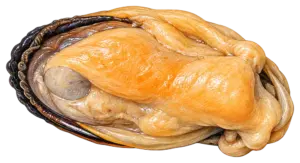
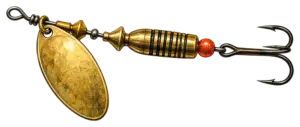
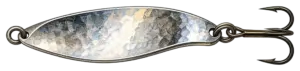
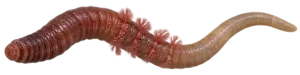
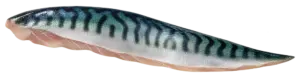
AI-generated illustrations. A click opens the lure’s page.
Rigs for these baits: surf rig, natural bait rig for the sea.
Mostly bycatch when fishing for flatfish or cod; where one bites, there are often several.
What the gurnard offers in the kitchen
As bycatch the gurnard is welcome to many sea anglers, as it is regarded as a good eating fish. Its flesh is white and firm, mild with a slightly sweet note, and the tub gurnard in particular yields fine fillets. In Norway it is hardly eaten all the same. It goes well as a fillet in the pan, but you can also grill, bake or steam it.
Handle it carefully, as its long spiny rays can sting painfully if you grip it wrongly. Like any sea fish, the gurnard can carry roundworm larvae; heat and freezing kill them, and thoroughly cooked it is safe in this respect.
What you need to observe
Grey and tub gurnard are listed in the 2025 Red List of Marine Fishes of Germany as not threatened. For the grey gurnard the list records a clear long-term increase.
Closed seasons (Schonzeit), minimum sizes (Mindestmaß) and harvest windows are set by the federal states (Bundesland) and by the fisheries authorities (Fischereibehörde) of the neighbouring coastal countries (Denmark, Norway, Poland). They vary by type of water, stretch of coast and time of year. We only give figures with a date and a source; the fisheries regulation of your federal state and your fishing permit (Erlaubnisschein) are always what counts. In Schleswig-Holstein they are set out in the Küstenfischereiverordnung and time-limited general orders. A list of links to the official sources is in the catch calendar.
A fish of legal size that you want to keep, you stun and kill immediately in line with animal welfare rules. Protected or undersized fish you unhook, if possible, with wet hands in the water and release gently.
What closed season, minimum size and harvest slot mean and where to find them is explained on the page Closed season and minimum size explained.
Frequently asked questions (FAQ)
Why is the gurnard called Knurrhahn in German?
It makes growling sounds. Muscles on the swim bladder set it vibrating.
How do I tell grey and tub gurnard apart?
The grey has a dark spot on the first dorsal fin and bony knobs on the lateral line. In the tub gurnard the lateral line is smooth and the pectoral fin reaches the anal fin.
When do I catch gurnards?
On the North Sea from May to September, with July as the best month, best in the evening.
Sources
The rating of catch chances is an editorial assessment. The facts come from these sources, and the text is worded in our own words. The illustration is an original design by Angel Momente in the style of a natural history plate (AI-generated, see the AI notice).
- FishBase: Eutrigla gurnardus (Grauer Knurrhahn; Größe, Tiefe, Nahrung, Laute)
- FishBase: Chelidonichthys lucerna (Roter Knurrhahn; Größe, Alter, Merkmale)
- FishBase: Chelidonichthys cuculus (Seekuckuck; Merkmale, Verbreitung)
- Havforskningsinstituttet: Knurr (Grauer Knurrhahn; Merkmale, Laute, Laichzeit, Alter)
- Blinker: Steckbrief Knurrhahn (Lebensraum, Saison, Beißzeit, Köder, Montage)
- Rote-Liste-Zentrum: Grauer Knurrhahn (Rote Liste der Meeresfische Deutschlands 2025: ungefährdet)
- Rote-Liste-Zentrum: Roter Knurrhahn (Rote Liste der Meeresfische Deutschlands 2025: ungefährdet)
- Rote-Liste-Zentrum: Seekuckuck (Gesamtartenliste 2025: nicht etabliert)
- Land Schleswig-Holstein: Welche Mindestmaße und Schonzeiten gelten in Schleswig-Holstein?
- Naturalis, Fishes of the NE Atlantic and Mediterranean: Eutrigla gurnardus (Grauer Knurrhahn)
- Naturalis, Fishes of the NE Atlantic and Mediterranean: Chelidonichthys lucerna (Roter Knurrhahn)
- Naturalis, Fishes of the NE Atlantic and Mediterranean: Chelidonichthys cuculus (Seekuckuck)
- Bundeszentrum für Ernährung (BZfE): Fisch und Meeresfrüchte, Gesundheit und Umwelt
- LAVES Niedersachsen: Parasiten in Fischen und Fischereierzeugnissen – ein Problem?
Created with AI support from the sources listed. Figures only appear in the text if a source gives them. Last updated: 27 October 2026. Found a mistake? Write to us. Who is behind this site: About me.
More in the lexicon
- All fish species at a glance
- Catch calendar – month, water temperature and profile for 93 species
- Line calculator – breaking strain after the knot, drag guideline, backing
- Angling methods