
Knowledge · Lures
Spinner
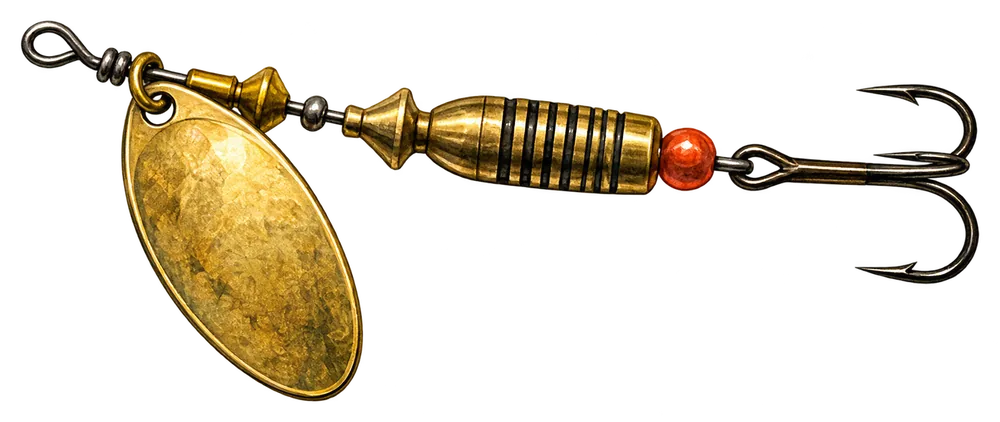
Metal lures · Spin fishing
A spinner is an artificial lure whose metal blade turns around a fixed axle as you wind it in. The blade flashes and sends out pressure waves that perch, trout, pike and zander respond to. Because the lure works by itself, it is a good start into spin fishing.
- Water depth
- Near the surface to mid-water
- Retrieve
- Active: retrieve steadily, speed up when fish follow
- Fishing method
- Spinning
- Category
- Metal lures
PerchBrown troutPikeZanderChubIdeGarfishGurnardHorse mackerelSea troutAspBrook troutRainbow troutLake troutAlpine char
How a spinner works
When water flows past the blade, it starts to turn. That creates two stimuli: the blade throws flashes of light that recall the scales of fleeing prey fish, and the rotation sends pressure waves through the water. Predators pick them up with their lateral line organ, even when the water is murky. A spinner looks little like a prey fish, yet it is one of the most widely used artificial lures in the world.
The blade sits on a clevis and spins on a stainless steel axle. Behind it follow beads that reduce friction and a brass axle body that gives weight and casting distance. At the end the treble hook hangs on a split ring. The heavier the blade, the more pressure waves it creates; wafer-thin, untreated blades are weaker and rust quickly. According to a tackle guide from the Fischereiverein Löningen, casting weights are around 2 to 15 grams.
The size depends on the target fish. As a guide, size 0 to 2 for trout and perch, 0 to 1 for chub and ide, size 3 for zander and 3 to 5 or larger for pike. Larger spinners catch larger fish on average. There are no fixed rules: on some days big pike take only tiny perch spinners because they are tuned to small fish.
How to work the lure
Active: retrieve steadily, speed up when fish follow
Schematic illustration, AI-generated.
- Cast
- dives on the retrieve
- keeps running steadily
- Reached the bank
Anatomy
The points on the picture above explain the most important parts – on hover or tap.
- Eyelet: The swivel with the snap hangs here and catches the twist.
- Spinner blade: Turns around the axle, flashes and creates pressure waves. Heavy blades push more water.
- Clevis: Holds the blade on the axle and lets it rotate freely.
- Axle body: Gives casting weight and is usually made of brass.
- Bead: Reduces friction on the blade. Several beads add extra weight.
- Treble hook: Sits on a split ring behind the body. The number of hooks and trebles is governed by the state and the water rules.
Rig in three steps
- 1. Tie on the hooklengthFor trout and perch you fish a thin hooklength. Where pike occur, you add steel or titanium.
- 2. Swivel with snapA ball-bearing swivel takes up the rotation. Its breaking strain should be at least that of the line.
- 3. Hook into the eyeletThe snap goes into the eyelet at the head of the spinner. The treble hook hangs at the back on a split ring and can be swapped.
Drawings: AI-generated, schematic.
When the target fish are in season
Hardly any chancePossibleGoodPeak seasonValues from the catch calendar.
When and where
The spinner is a search bait for shallow to medium depths and works in almost every water: in a stream for trout, in a lake for perch and pike, in a river for zander, asp, chub and ide. Coarse fish take it too: in summer big rudd and ide take very small blades. In flowing water you cast upstream and wind in with the current. That way the spinner runs at the depth you want and passes the fish from the front. If it is pulled against the current, the flow pushes it up.
The water decides the choice of blade. In murky water and with sluggish fish, a round Colorado blade works, which creates a lot of pressure and starts up at a light pull. In clear water slim willow blades show more area, and they run better through plants and at depth. In early spring even big predators hunt small fish, and a medium-sized spinner pays off. On heavily fished waters, pike learn to avoid spinners according to pond trials. Then a different blade shape, a different size or a different lure helps.
How to choose blade, size and colour
- Tie on the leader For trout and perch, fish a thin leader, and where pike occur, steel or titanium.
- Swivel with snap A ball-bearing swivel with a snap goes on the leader. It absorbs the rotation of the blade.
- Into the eyelet at the head Hook the snap into the eyelet at the head of the spinner. At the back the treble hook hangs on a split ring, so it can be swapped.
Start with the size for your target fish, then choose the blade. The willow blade is long and narrow, puts little resistance in the water and suits flowing water and weed. The Colorado blade is round, stands far out from the axle and creates the most water pressure and lift. The Indiana blade lies in between and runs deeper than a Colorado, which is why zander anglers like to reach for it.
For colour a simple rule helps: in sun and clear water you take copper or dark tones, under an overcast sky and in murky water bright silver. A red spot on the blade or on the treble hook gives the fish a point to aim at.
The hook is best attached to a split ring so that you can swap blunt hooks. Where pike occur, put a steel or titanium leader in front of the spinner. Whether treble hooks, double hooks or only single hooks are allowed is governed by the state, the water rules and the fishing permit (Erlaubnisschein).
These designs change depth and pressure
The tandem spinner carries two blades one behind the other. It creates more pressure waves and more lift and runs very shallow without added weight, so it suits murky water and bankside zones.
With the bucktail spinner, which comes from the USA, a tuft of hair or synthetic fibre protects the treble hook from plant debris and makes the silhouette larger. Models with a very large blade and a strong treble hook are made for pike.
A lead head placed in front turns any spinner into a deep runner and lengthens the cast. You can also remove the treble hook and hang a twister tail or soft plastic behind it via a split ring. Then all the hook bends stand free and the soft plastic works without disturbing the run of the blade.
How to work it and make the most of bites
On the cast, brake the line briefly with your finger just before it hits the water. That straightens the rig and stops it tangling. Then wind steadily. You feel the rotation as resistance in the rod tip. If it is missing, give a short jerk or cast again. Often there is weed on the blade.
Steady winding is enough. Variety brings more bites: slower at times, faster at others. If a fish follows without taking, speed up. That looks like an escape attempt, and the lure rises slightly as it does. Letting it sink and lifting it as with a soft plastic brings little with a spinner.
In a trial on pike, hooks sat in the gills and throat less often with spinners and crankbaits than with natural baits, soft plastics and spoons. Even so, a disgorger and an unhooking mat belong at every spinning spot, because a fish should not be held longer than necessary.
Which colour?
Starting points to try, not rules. Depth and speed are usually more important than colour.
Spinner or another lure instead?
| Baits and lures | Depth | Retrieve | Take this lure if … |
|---|---|---|---|
| Spinner | Near the surface to mid-water | Active: retrieve steadily, speed up when fish follow | this page |
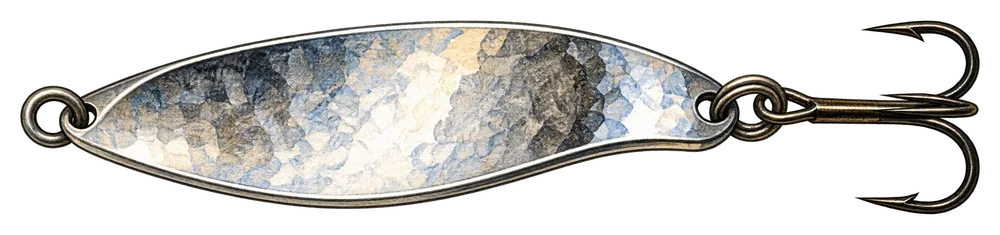 Spoon | All depths, depending on weight | Active: reel in tumbling, vary speed and stops | you want to cast further and run the lure deeper |
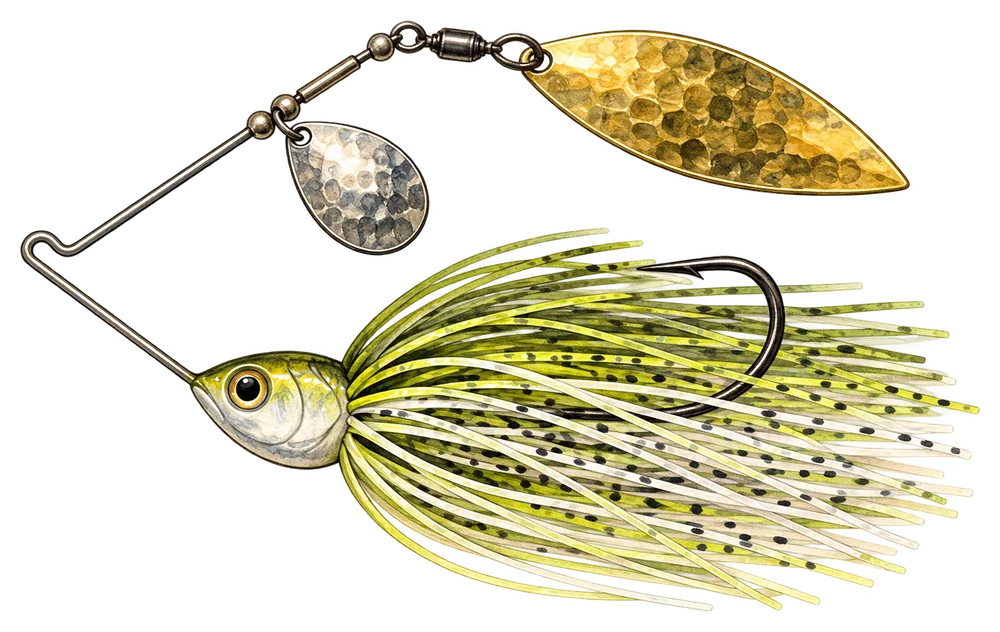 Spinnerbait | Near the surface to mid-water | Active: retrieve steadily, even slowly | you are fishing in weed or among obstacles and the hook needs protection |
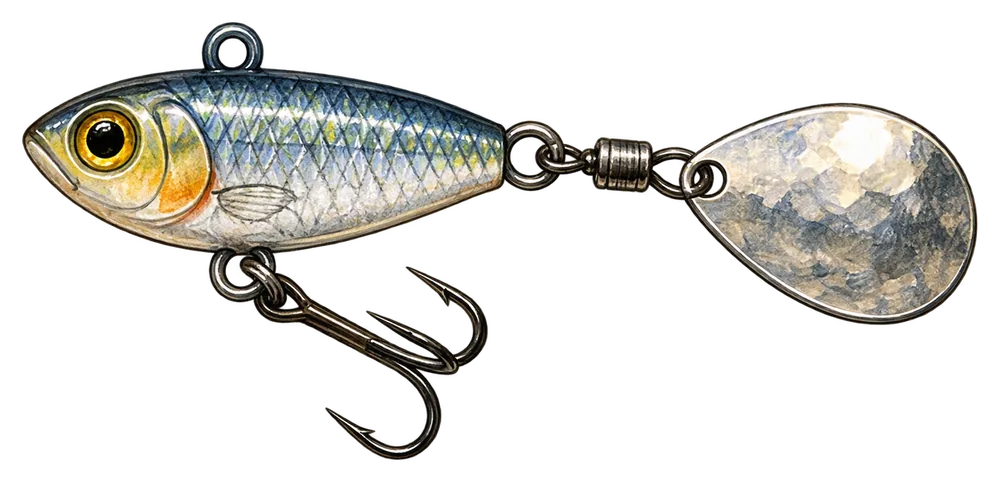 Tailspinner | Bottom to mid-water | Active: cast far, retrieve steadily or jig on the bottom | you want to cast far and jig near the bottom or at depth |
What you need
- Spinning rodFor perch and trout a light spinning rod with a casting weight of up to about 30 g is enough. A fine tip shows whether the blade is turning. More
- Ball-bearing swivelStops the rotation of the blade from passing on to the line and causing tangles. More
- Pike leaderWhere pike lie, a steel or titanium leader protects against bite-offs. More
- DisgorgerRemoves the treble hook from the mouth without you having to hold the fish for long. More
More on the method: Spinning.
At a glance
Editorial assessment, not measured values.
If it does not work
Add a ball-bearing swivel ahead of the bait and check that it still turns. If you retrieve too fast, the twist increases.
Give a short jerk, wind a little faster or remove weed from the blade. The blade must turn freely on the axle.
Choose a lead-head model or add a weight in front. A willow blade runs deeper than a Colorado blade.
Speed up as soon as a fish follows. It looks like an escape and often triggers the bite.
Add a steel or titanium leader. From blade size 3 a stiff 1×7 steel leader suits; small models run better with finer wire.
Change the size, blade shape or colour, hang on a twister tail or swap the lure for a while so the fish forget it.
Frequently asked questions
Which size for which fish?
As a guide, size 0 to 2 for trout and perch, 0 to 1 for chub and ide, 3 for zander and 3 to 5 for pike. On some days pike still take only small models.
Do I really need a swivel?
Yes. In the Bavarian exam questions swivels count as especially important in spin fishing. Without a swivel the rotation passes to the line, which twists and forms tangles.
How fast should I wind?
Fast enough for the blade to turn reliably. You feel that as resistance in the rod. If fish follow without biting, speed up briefly.
Is the spinner gentle on the fish?
In pike, hooks sat in the gills and throat less often with spinners than with natural baits, soft plastics and spoons. Even so, use a disgorger and, if needed, lay the fish on an unhooking mat.
Before fishing, the current permits, state rules and water rules apply: bait bans, number of hooks, closed seasons, protected species and catch limits can differ. Many federal states expressly ban live baitfish. Take bait remains and packaging away with you. All details are guide values without guarantee and do not replace legal advice.
Sources
- Blinker: Spinnfischen mit dem Spinner, ein Guide für Anfänger
- Blinker: Licht im Blätterwald, Tandemspinner, Bucktailspinner, Spinnerbaits
- Blinker: Angeln mit Spinner, ein Köder für alle Fälle
- Rute & Rolle: Vergesst die Spinner nicht
- Bayerische Landesanstalt für Landwirtschaft: Prüfungsfragen Staatliche Fischerprüfung 2023/2024
- Fischereiverein Löningen: Gerätekunde
- Carleton University und IGB Berlin: Bait type, bait size and hooking injury in northern pike
- Fisch & Fang: Zielfisch Hecht, Stahl der Wahl
- Deutscher Angelfischerverband: Fisch des Jahres 2016, der Hecht (Broschüre)
- Humboldt-Universität zu Berlin und IGB: Waidgerechtes Zurücksetzen, Hecht
The sources explain terms and basic principles. Retrieve, colour choice and values are editorial starting points and depend on water, weather and lure.
More metal lures
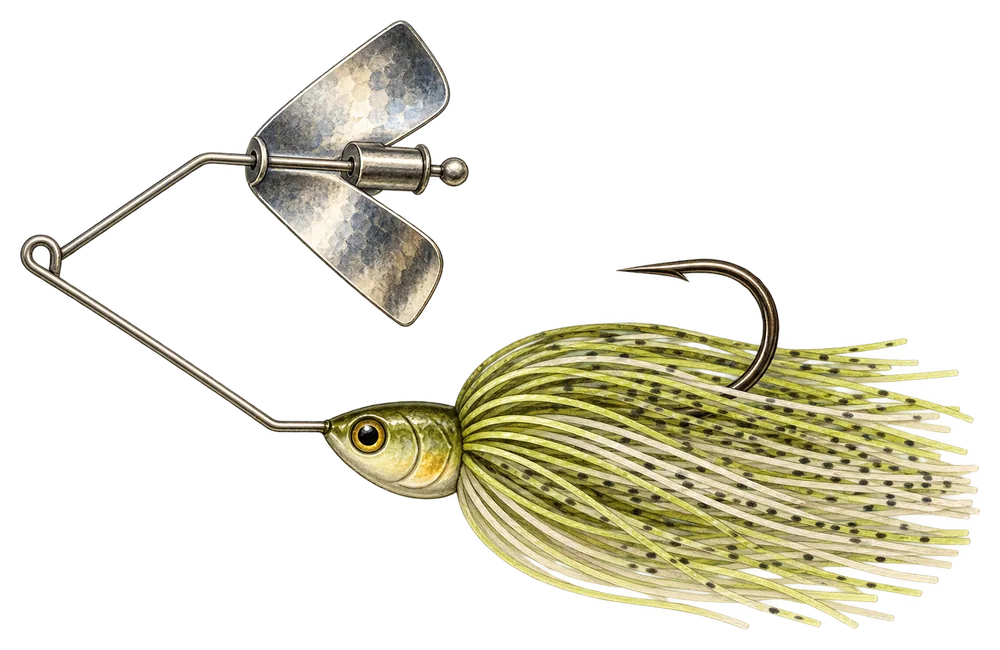 Buzzbait
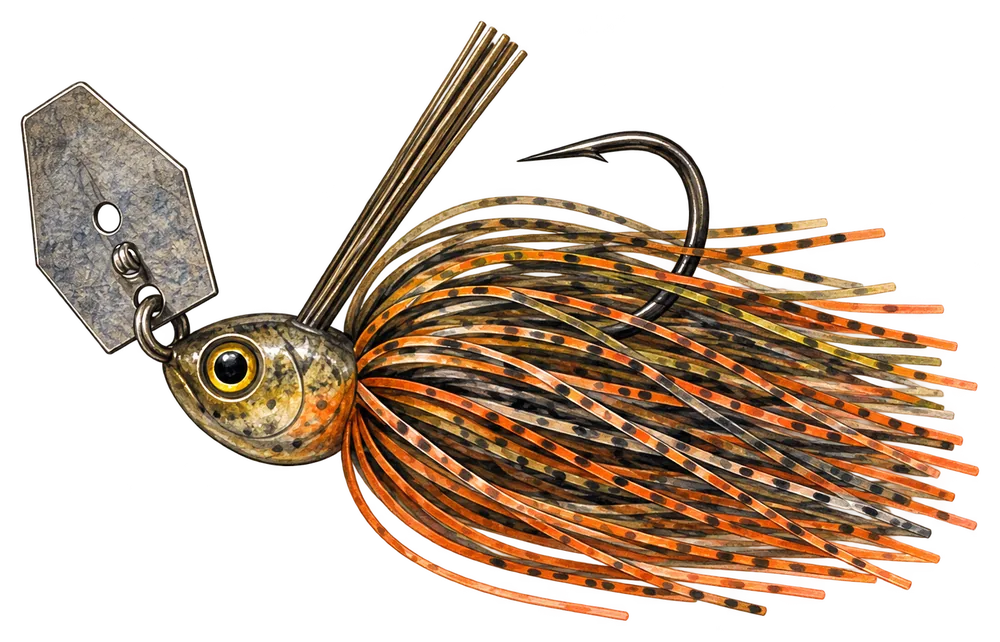 Bladed Jig
 Pilker
Created with AI support from the sources listed (AI notice). Last updated: 31 October 2026. Found a mistake? Write to us. Who is behind the site: About me.