
Knowledge · Lures
Bladed Jig
Metal lures · Spin fishing
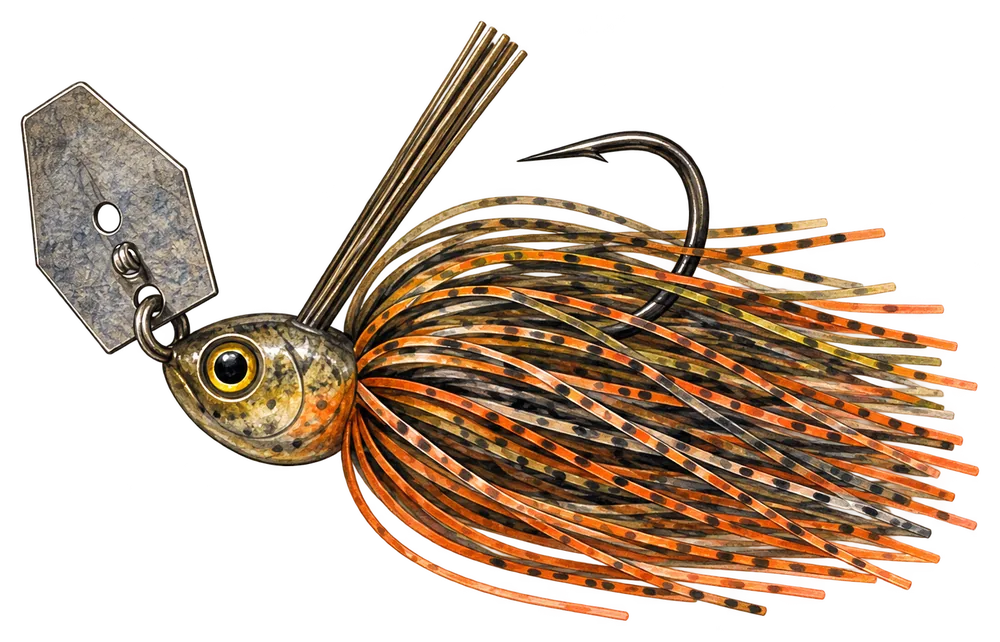
A Bladed Jig is a jig head with a ring of skirt strands and a movable metal blade in front of it. The blade flutters on the retrieve and sends out strong vibrations that predators pick up even when they cannot see the lure. A soft bait is usually put on the single hook as a trailer.
- Water depth
- Mid-water
- Retrieve
- Active: retrieve steadily, vary the speed and the trailer
- Fishing method
- Spinning
- Category
- Metal lures
How a Bladed Jig works
The metal blade sits loosely in front of the jig head. Under tension it does not rotate like a spinner blade, but flutters from side to side and sends out strong vibrations. This sets the skirt strands moving, and the trailer passes the vibrations on. In weed a predator often cannot see the lure, but feels it through its lateral line.
Behind the blade sits an ordinary jig head, usually made of lead or tungsten. Tungsten is smaller, harder and finer. Small, thin blades respond more easily to pull and send finer vibrations; large, heavy blades for pike create very strong pressure. A soft bait sits on the single hook as a trailer. It changes the size, action and sink rate, but the lure also catches without it.
If you stop winding and the lure sinks, the blade behaves neutrally. The skirt strands play around the trailer and create a calm, natural picture. Even on the bottom, fine movements remain that do not leave wary predators cold.
How to work the lure
Active: retrieve steadily, vary the speed and the trailer
Schematic illustration, AI-generated.
- Cast
- dives on the retrieve
- keeps running steadily
- Reached the bank
Anatomy
The points on the picture above explain the most important parts – on hover or tap.
- Metal blade: Flutters from side to side on the retrieve and sends out strong vibrations.
- Jig head: Made of lead or tungsten. Its weight helps determine the running depth.
- Weedguard: Bristles in front of the hook point fend off plants, but do not give complete protection.
- Single hook: Carries the trailer and points upwards. Can be removed from the mouth quickly.
- Skirt: Pulses, plays around the trailer and gives the lure volume.
Rig in three steps
- 1. Tie on the hooklengthWhere pike are present, a pike-proof trace is a must. It does not bother even big zander.
- 2. Attach the snapThe snap goes into the central hole in the metal blade.
- 3. Putting on the trailerThread the soft bait onto the single hook straight. It determines how lively the lure runs.
Drawings: AI-generated, schematic.
When the target fish are in season
Hardly any chancePossibleGoodPeak seasonValues from the catch calendar.
When and where
The Bladed Jig is a search lure for perch and, with larger trailers, for zander and pike. Because it works through vibration, it also works in weed, where fish cannot see it well. A zander pro on the canal starts at new spots with shallow-running lures and first casts the bank sections to the left and right, then the middle of the canal. Only then does he switch to the soft plastic shad on the bottom.
The stimulus wears off. Big fish in particular get used to the vibrations. Give them time to forget, or change small details of the action, trailer and speed. In high summer there is a limit for pike: above 22 degrees water temperature, researchers at the Humboldt-Universität zu Berlin and the IGB advise against catching and releasing pike.
How to choose the trailer, head weight and trace
- Tie on the leader Where pike occur, a pike-proof leader is a must. Big zander do not mind it.
- Attach the snap Hook the snap into the hole in the middle of the metal blade.
- Thread on the trailer Thread the soft bait straight onto the single hook. It determines how lively the lure runs.
A no-action bait, preferably with a skirt, passes on all the vibrations and, when you stop, sinks head first like a jig. It suits spots where you suspect fish and want to fish thoroughly. A soft bait with its own action works as a search bait. You control the strength of the vibration with the retrieve speed and the running depth with the head weight. A firmer, bellied shad makes the action cut out more often under tension, which can help on heavily fished spots.
Larger trailers turn the lure into a zander and pike lure. For pike, soft shads of 9 to 12 cm are suitable, slim and with a wriggling tail. Small lures sat in pike’s gills more often than larger ones.
Where pike are present, a bite-proof trace belongs in front of the lure, even for perch. The thin piece of steel is lost in the lure’s flurry of stimuli. Whether single hooks, treble hooks or barbed hooks are allowed is set by the state, the water regulations and the fishing permit (Erlaubnisschein).
These designs run differently
The blades differ in size and thickness. Small, thin blades vibrate finely even with little pull; large, heavy ones push a lot of water and suit pike. For the head you can choose between lead and tungsten, which is smaller and harder.
The skirt strands are usually made of stretchy silicone and move almost by themselves. Some models also have a weedguard made of bristles. It is not full protection against snags, because the head itself often wedges in the obstacle.
How to work it and make the most of bites
Wind steadily. The retrieve speed determines how strongly the blade vibrates. Start shallow and feel your way deeper, because the right depth is the most important point. If you work the lure below the fish, you warn them with the line running across. When weed hangs on the blade, you hardly feel any vibration.
Fish every spot right to your feet. Zander often follow the lure up the rock revetment and only bite at the last moment. Perch eagerly suck in food, so the hook can sit deep.
The single hook can be removed from the mouth quickly and gently. Hooks in the gills take longest to deal with on pike, so an unhooking mat and a disgorger help. Actively worked lures hooked pike deep less often than passively fished ones.
Which colour?
Starting points to try, not rules. Depth and speed are usually more important than colour.
Bladed Jig or another lure?
| Baits and lures | Depth | Retrieve | Take this lure if … |
|---|---|---|---|
| Bladed Jig | Mid-water | Active: retrieve steadily, vary the speed and the trailer | this page |
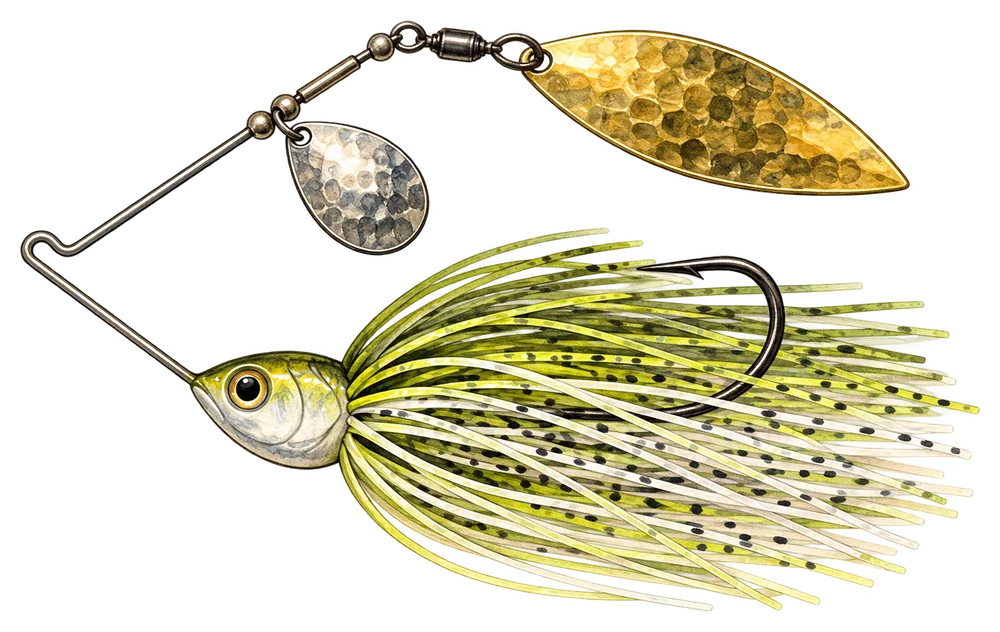 Spinnerbait | Near the surface to mid-water | Active: retrieve steadily, even slowly | you are fishing in dense weed and the hook needs to be protected |
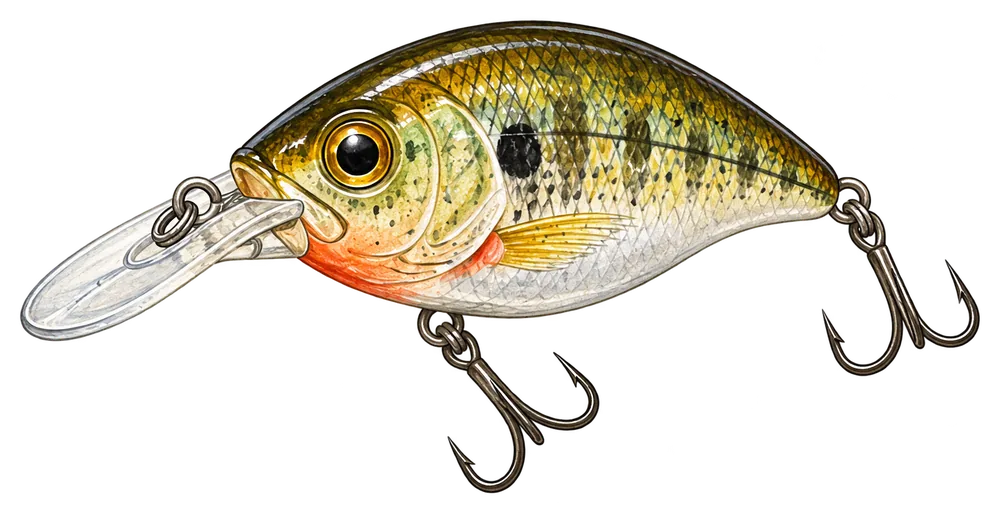 Crankbait | Mid-water, depending on the diving bill | Active: retrieve steadily, even briskly | you want to search a fixed depth without a skirt |
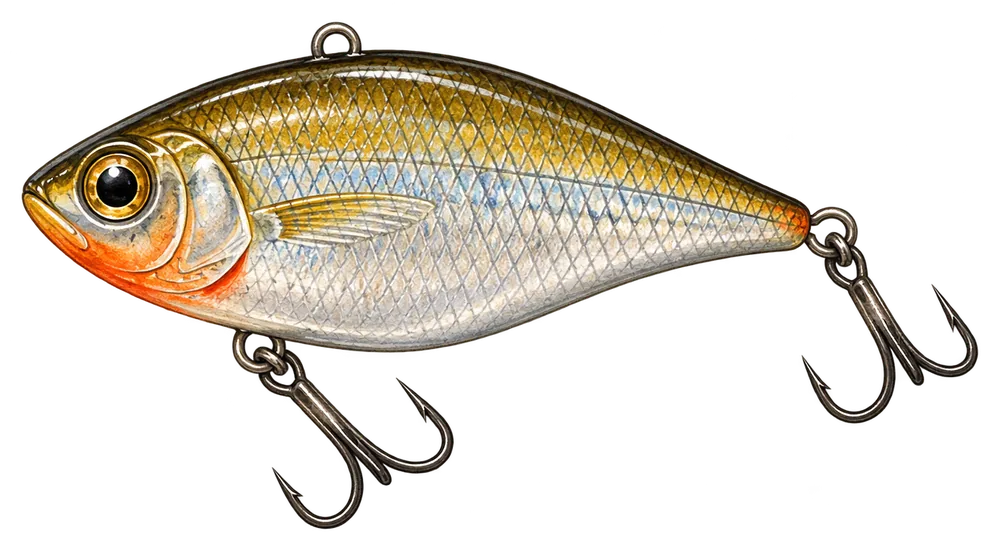 Lipless crankbait | mid-water to bottom | Active: retrieve, tick along the bottom or jig | you want vibration with more casting distance |
What you need
- Spinning rodChoose the casting weight to suit the head weight and the trailer. More on this
- LineBraided main line with a leader. The line calculator works out the breaking strength after the knot. More on this
- Pike traceWhere pike are present, a bite-proof trace protects against bite-offs and does not interfere with the lure’s stimulus. More on this
- Soft bait as a trailerTake calm and lively shapes with you, because they change the action and sink rate. More on this
More on the method: Spinning.
At a glance
Editorial assessment, not measured values.
If it does not work
Wind faster, because the speed controls the strength. Check whether weed is hanging on the blade.
Change the speed, trailer or weight. Big fish get used to the stimulus and need some variety.
Thread the trailer onto the hook straight.
Choose a lighter head. The heavier you fish, the greater the risk of snags and break-offs.
Put on a bite-proof trace, even if you are fishing for perch. The piece of steel hardly bothers the attractor lure.
Fish right to your feet. Many predators follow for a long time and only strike at the last moment.
Frequently asked questions
What is a trailer?
That is what the soft bait on the single hook is called. It changes the size, action and sink rate. The Bladed Jig also catches without a trailer, but only with one does it become really effective.
How do I work a Bladed Jig?
Wind steadily. The speed controls the vibration, the head weight the depth. If you stop, the lure sinks like a jig and the blade stays quiet.
Do I need a steel trace for perch?
Where pike are present, yes. The lure attracts pike, and a bite-proof trace protects them from bite-offs. It does not bother big zander.
Does it also catch zander and pike?
Yes, with larger trailers. For pike, soft shads of 9 to 12 cm are suitable. Zander often take the lure at rock revetments and follow it right to your feet.
Why do the bites eventually tail off?
Fish get used to the vibrations. Change the trailer, speed or weight, or rest the spot so that the fish forget the stimulus again.
Before fishing, the current permits, state rules and water rules apply: bait bans, number of hooks, closed seasons, protected species and catch limits can differ. Many federal states expressly ban live baitfish. Take bait remains and packaging away with you. All details are guide values without guarantee and do not replace legal advice.
Sources
- Blinker: Fangen mit dem Reiz-Köder, Jig mit Vibrationsblatt
- Blinker: Der neue Hecht-Köder schlägt Wellen
- Blinker: Barsch-Alarm, fängt man mit Stahl wirklich weniger?
- Blinker: Skirted-Jigs, Fallschirm fürs Gummi
- Rute & Rolle: Zander, Tipps für die Steinpackung
- Rute & Rolle: Auswechselspieler, Köderwechsel beim Spinnfischen
- Humboldt-Universität zu Berlin und IGB: Waidgerechtes Zurücksetzen, Hecht
- Carleton University und IGB Berlin: Bait type, bait size and hooking injury in northern pike
- Deutscher Angelfischerverband: Der Flussbarsch, Fisch des Jahres 2023 (Broschüre)
- Fischereiverein Löningen: Gerätekunde
The sources explain terms and basic principles. Retrieve, colour choice and values are editorial starting points and depend on water, weather and lure.
More metal lures
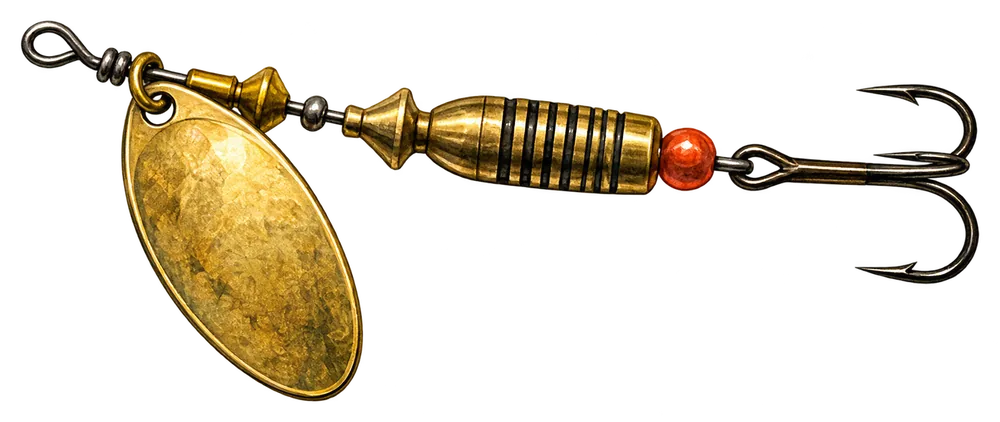 Spinner
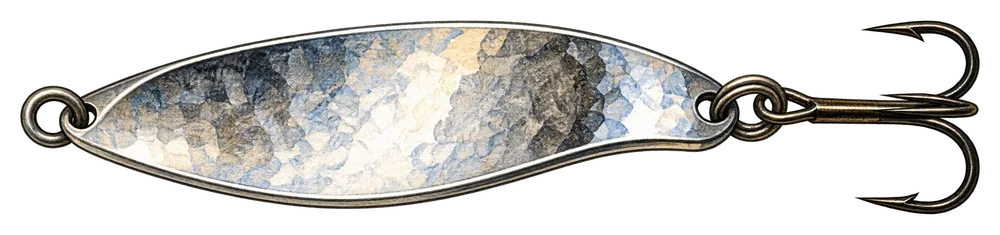 Spoon
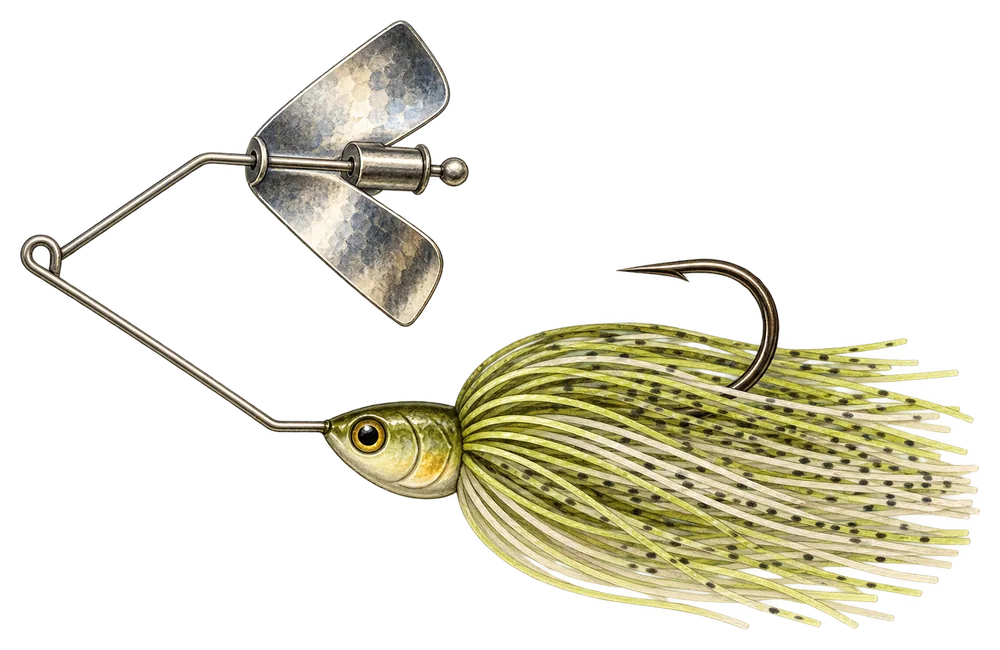 Buzzbait
 Pilker
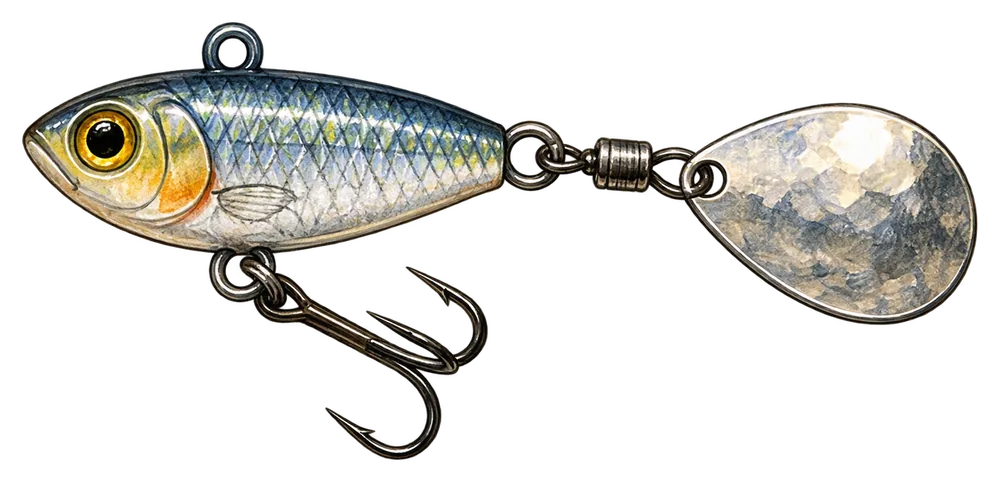 Tailspinner
Created with AI support from the sources listed (AI notice). Last updated: 2 November 2026. Found a mistake? Write to us. Who is behind the site: About me.