
Knowledge · Lures
Metal lures: spinners, spoons and jigs
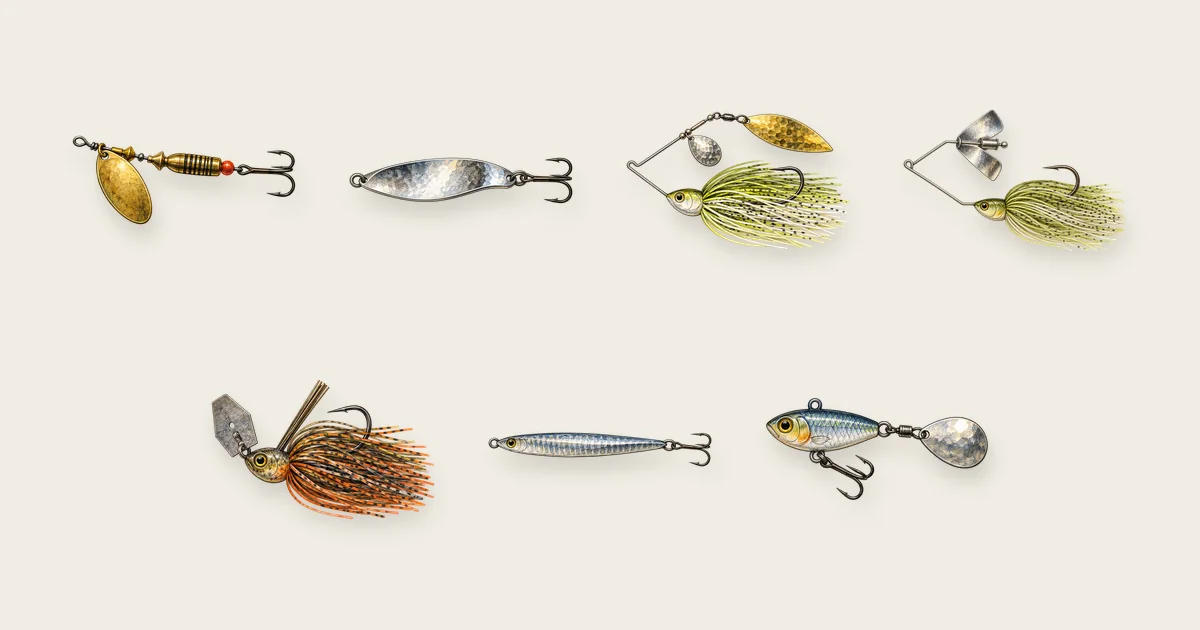
Metal lures work through light reflections and movement. Spinner blades rotate, spoons wobble, bladed jigs vibrate and pilkers sink compactly into the depths. The group also includes hybrids with wire, skirts or soft plastic. The right retrieve decides whether the metal works or is merely pulled through the water. A rotating spinner blade flashes and sends out pressure waves that predators pick up through their lateral line, even in murky water. When jigging with a pilker, most bites come while the lure is sinking.
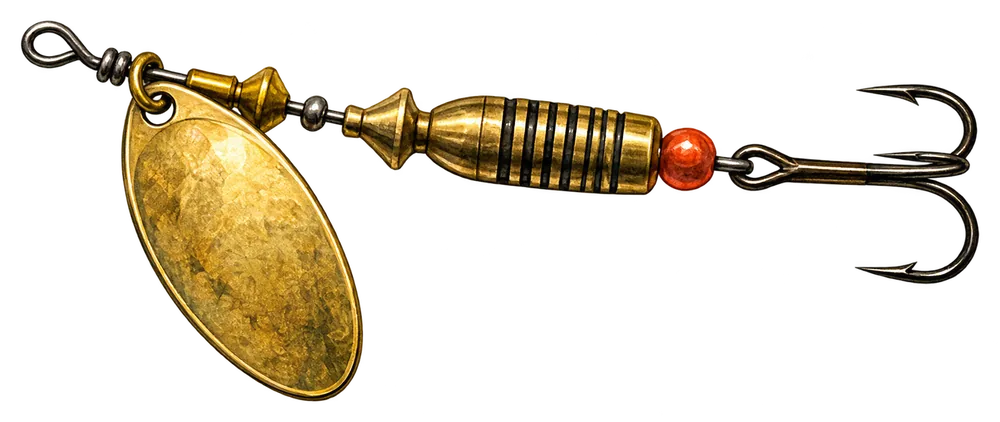 SpinnerActive: retrieve steadily, speed up when fish followMid-water
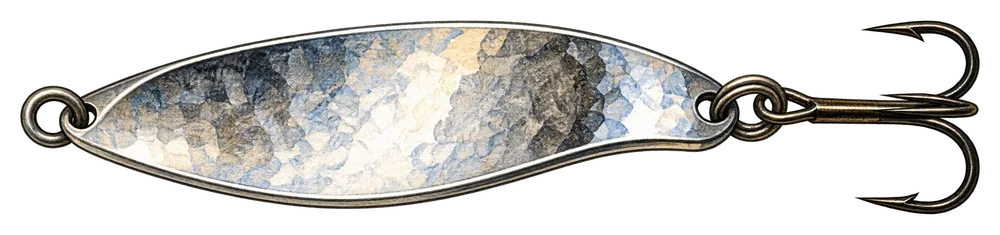 SpoonActive: retrieve with a wobble, vary speed and add stopsNear the surface
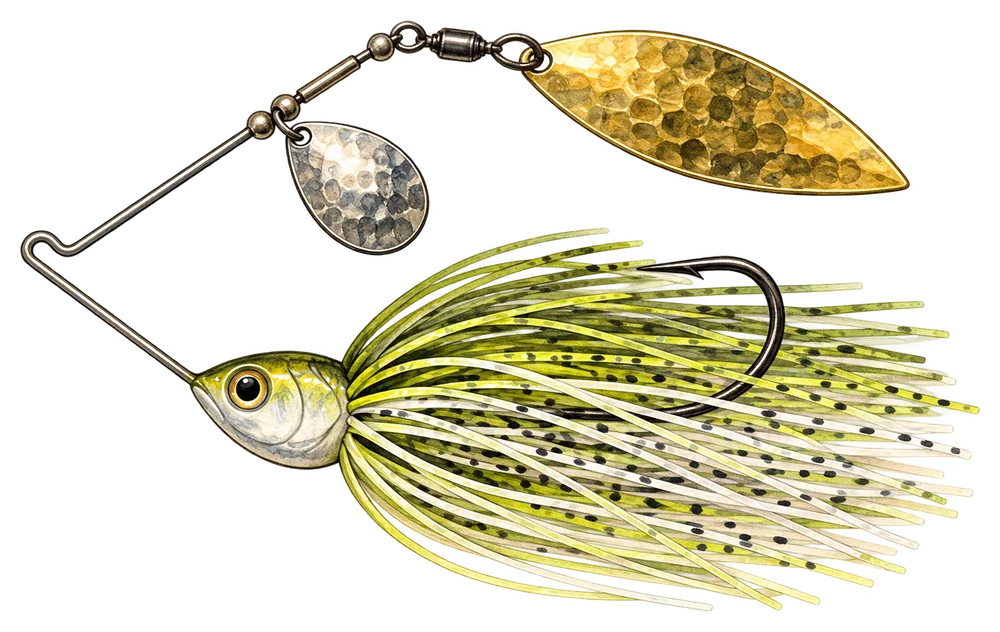 SpinnerbaitActive: retrieve steadily, slowly tooSurface
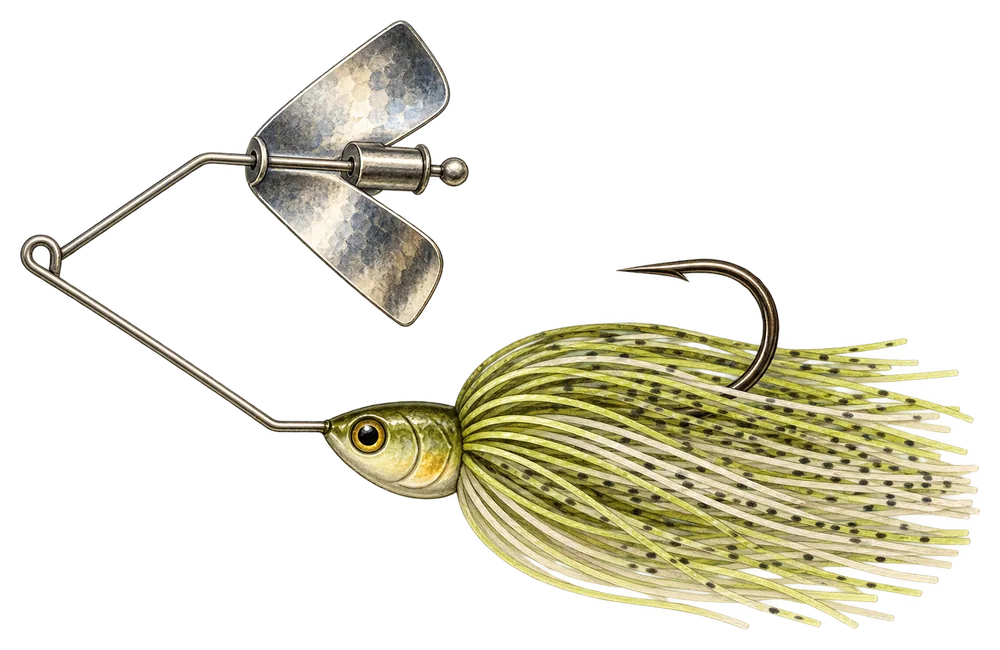 BuzzbaitActive: retrieve briskly at the surfaceMid-water
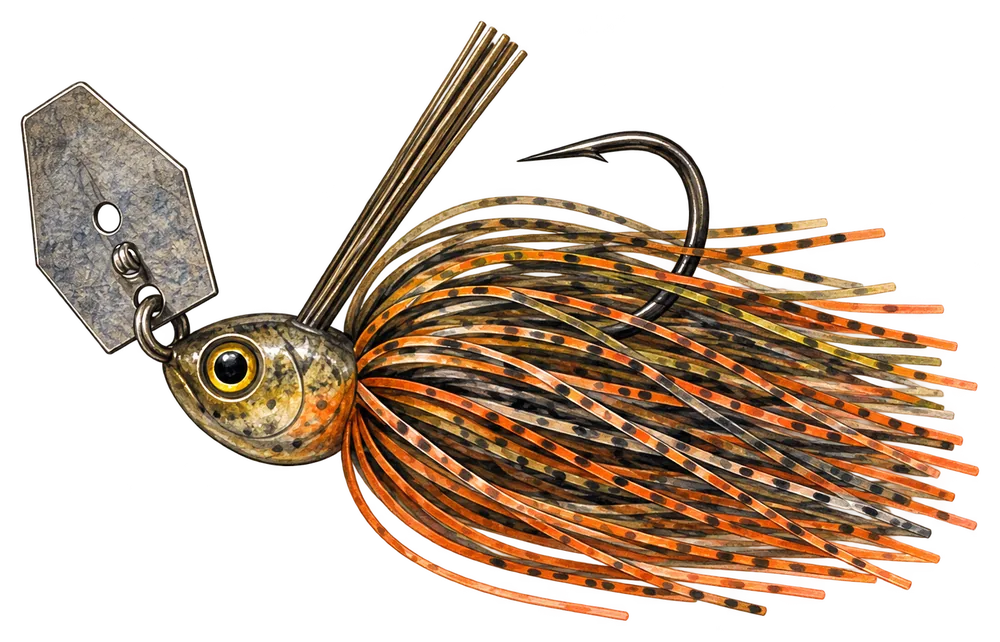 Bladed jigActive: retrieve steadily, vary speed and trailerBottom
 PilkerVertical: lower to the bottom, lift, let it sink; from a boat also cast a long wayBottom
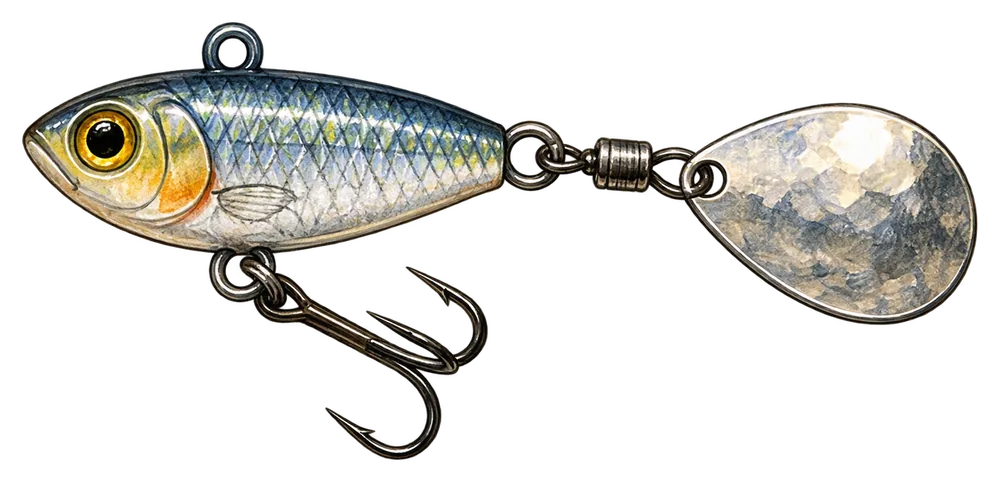 TailspinnerActive: cast far, retrieve steadily or jig near the bottom
AI-generated illustrations. A click opens the lure’s page.
Named in the fish profiles for: pike, zander, perch, wels catfish, brown trout, ide, asp, brook trout, huchen, rainbow trout, sea trout, cod, garfish, mackerel, weever, monkfish, Atlantic wolffish, plaice, coley, pollack, Atlantic salmon, lake trout, Alpine char, flounder, tusk, haddock, turbot, gurnard, sea bass
A good start
A small spinner or spoon that suits your gear is easy to try. Check how it runs in the water in front of you and reel just fast enough for the lure to work reliably. Silver, brass and dark versions are different visual stimuli; no colour is superior in all conditions.
Tips for the water
| Use | Baits and lures | What to watch for |
|---|---|---|
| An easy start with spinning | Spinner | Check the blade running close in and retrieve steadily. |
| Trout on a water where spinning is permitted | Small spoon | Retrieve slowly; avoid constant rotation. |
| Weed edge for pike | Spinnerbait or a suitable bladed jig | Fish open lanes, check hook and leader. |
| Deeper open water | Tailspinner, zocker or a suitable pilker | Control depth and sink rate; observe the rules on gear and on the water. |
Avoid common mistakes
The blade and the vibrating plate must be free to work. Very fast retrieval, weed on the lure and line twist can change how it runs. Where it makes sense, choose lead-free weights; recover lost lures where possible without endangering people or the bank.
Before you fish, the current fishing permits (Erlaubnisschein), state rules and the water’s rules apply: bait bans, hook numbers, groundbaiting, closed seasons and catch limits can differ. Do not treat protected animals as freely available bait. Take leftover bait and packaging home with you. All details are guidelines without guarantee and are no substitute for legal advice.
Sources
- Landesfischereiverband Baden-Württemberg, Gerätekunde: Spinner, Spinnerbaits, Blinker, Pilker, Zikaden und Balance Jigs
- LfL Bayern, Fragenkatalog Fischerprüfung: Blinker und Spinner
- Blinker: Spinner – Lichtreflexe, Druckwellen, Drall und Wirbel
- Rute & Rolle: Pilker und Zocker – Bauform, Führung, Bisse beim Absinken
The sources explain terms and basic principles. Target-fish assignments and practical tips are editorial recommendations and depend on the water, the food available and the bait model. Water depth and presentation are typical starting points, not fixed rules. Accessed: 2 October 2026.
Created with AI support. Last updated: 25 October 2026.