
Knowledge – Fish
Weever: Recognising venomous spines, stings and handling
The greater weever (Trachinus draco) lives buried on sandy bottoms in the North Sea, the western Baltic Sea and the Atlantic. It carries venomous spines on the first dorsal fin and on the gill covers. Anglers mostly catch it as bycatch.
In brief: The greater weever is most likely to bite from May to October, usually as bycatch. Good spots on the coast: sandy bottom. Venomous spines on the first dorsal fin and the gill covers: unhook only with gloves. The venom works even in a dead fish. Step by step: Fishing for weever.
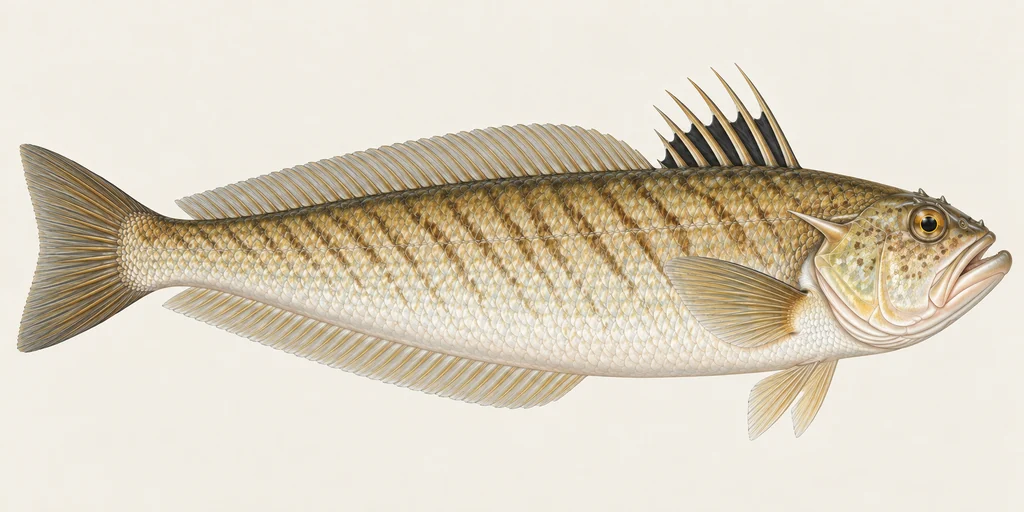
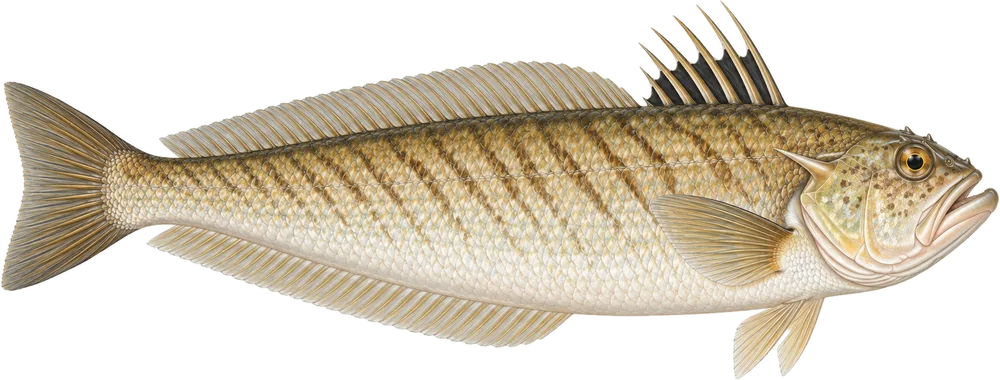
- Short, black first dorsal fin with 5 to 7 venomous spiny rays
- Strong venomous spine on the upper edge of each gill cover
- Gape pointing steeply upwards and eyes set high on the head
Catch chances through the year
- Hardly any chance
- Possible
- Good
- Peak season
- Spawning (observe the closed season)
Editorial assessment for waters in Germany, not a measured value and no guarantee. Spawning time is not the same as the legal closed season.
Species profile and sources in the catch calendarAll species compared month by monthThe rules of your federal state
How to recognise it
The body is elongated and flattened from the sides. The eyes sit on top of the head and the mouth slit points steeply upwards. The upper side is greenish and the flanks carry pale, oblique stripes.
The first dorsal fin is short and black and has 5 to 7 spines. Venom gland tissue lies in its longitudinal grooves. Another strong venomous spine sits on the upper edge of each gill cover. The greater weever is usually 20 to 30 centimetres long.
Side by side: greater weever or lesser weever?
| Feature | Weever | Lesser weever |
|---|---|---|
| In front of the eye | two to three small spines | no spines |
| Colour | greenish above, with oblique yellowish-white stripes | back greyish brown, flanks silvery white |
| Size according to FishBase | usually around 25 cm, up to 53 cm | usually around 10 cm, up to almost 28 cm |
| Venom | venom glands on the black first dorsal fin and on the gill cover | the same; regarded as the most dangerous species because it often lies in the sand right off bathing beaches |
The lesser weever (Viperqueise), which is smaller, is venomous too. The greater weever (Gewöhnliche Petermännchen) has two or three small spines in front of each eye; the lesser weever lacks them. Handle any fish with a short black spiny fin with care.
Where it lives
The species lives on the coasts of the eastern Atlantic, in the North Sea, the western Baltic Sea, the Mediterranean and the Black Sea. It inhabits sandy, muddy and gravel bottoms from a few metres down to about 150 metres.
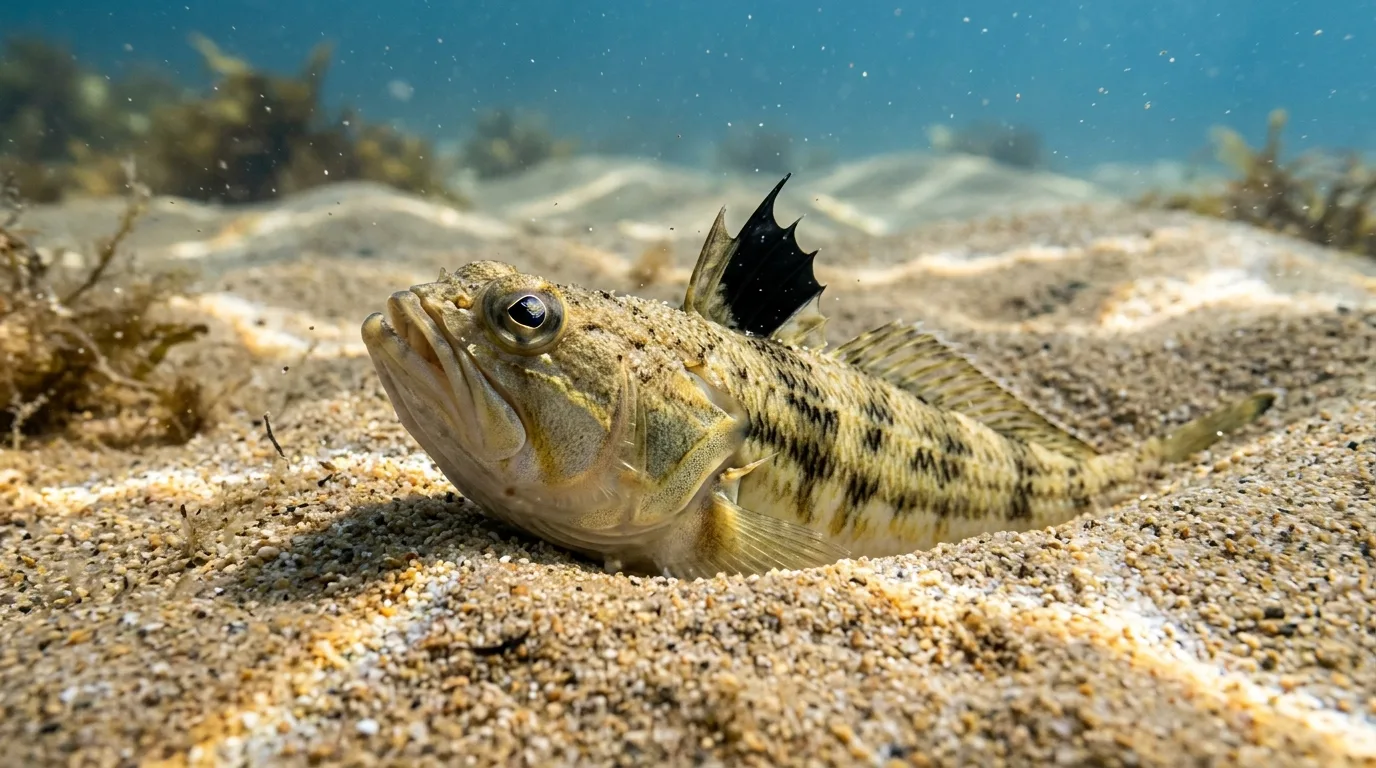
In summer the greater weever usually stays at depths of 5 to 15 metres, and shallower during the spawning season. By day it is buried up to its eyes. In autumn it retreats into deeper water.
Holding spots in the picture
Choose the season and time of day: the picture shows where the species stands then. Spots outlined in red apply only in the chosen season. Tap a fish or a spot in the list to bring it closer. The picture is schematic and AI-generated, every water is different.
Chance of a catch in springslim
Chance of a catch in summerpossibleSpawning, observe closed seasons
Catch chance in autumnpossible
Catch chance in winterhardly any
- J
- F
- M
- A
- M
- J
- J
- A
- S
- O
- N
- D
Spawning season
Not the main time By day the weever lies buried, at night it swims about freely.
Not the main time By day the weever lies buried, at night it swims about freely.
Not the main time By day the weever lies buried, at night it swims about freely.
Active time By day the weever lies buried, at night it swims about freely.
On the coast
Sandy bottom
Weever is present here all year round.
Deep, colder water
Weever is present here only in autumn.
The weever lives close to the coast on sandy bottoms, also on mud and gravel. By day it is usually buried up to its eyes in loose sand, lying in wait for prey. At night it leaves the bottom and often swims in small shoals.
Spring: chances according to the catch calendar are slim in March and April, possible in May.
Summer: chance of a catch according to the catch calendar possible. Spawning falls in this period, observe closed seasons. In summer the weever usually lives at depths of between 5 and 15 metres. It also comes into shallow water to spawn.
Autumn: chance of a catch according to the catch calendar possible in September and October, hardly any in November. In autumn it withdraws into deeper water.
Winter: catch chance according to the catch calendar hardly any.
Depth: The species lives from a few metres down to about 150 metres, usually shallower than 30 metres. In summer it sits at 5 to 15 metres.
Size comparison: AI-generated drawing, schematic.
How it hunts and spawns
Buried, the greater weever lies in wait for shrimps, gobies and other small bottom fish. At night it swims about freely, often in small groups. Spawning takes place in summer, depending on the source from June or only from July and into August. The eggs drift in open water.
The fish cannot control the release of venom. The venom is released when a spine penetrates the skin, for example when you tread on a buried fish or while unhooking it. The pain sets in at once and is severe, and the spot usually swells up badly. General symptoms such as circulatory problems are rare according to the Giftzentrale Bonn, and stings are generally not life-threatening.
When it bites
In summer the greater weever stays shallow and close to the shore. That is when bycatch is most likely, and the spawning season falls in the bathing season.
From autumn it moves into deeper zones and is hardly ever caught from the shore any more.
Today’s catch index needs JavaScript. Season and spawning time are in the catch calendar.
You will find the monthly overview of all species and the water temperature check in the catch calendar.
What to catch it with
Step by step: Fishing for weever: how to catch it, step by step – season, spots, bait, tackle and rules on one page.
The greater weever is rarely targeted. Most often it bites on the side during surf fishing with worm over sand, during spinning on the coast, or on the charter boat when others are fishing for cod and flatfish.
Do not touch the fish with bare hands. Wear sturdy gloves and remove the hook with long pliers. If you want to use the fish, cut off the dorsal spines and gill cover spikes with scissors. The flesh itself is not poisonous.
Have gloves and pliers ready: The Giftzentrale Bonn and the federal state (Bundesland) of Schleswig-Holstein advise using gloves when unhooking. The venom stays active after the fish has died, so the same caution applies when gutting and preparing it.
After a sting: clean the wound, remove any remains of the spine and disinfect. A tourniquet must not be applied. The venom consists mainly of heat-sensitive proteins, which is why both poison centres name heat as the immediate measure. The leaflet of the state of Schleswig-Holstein, produced with the Giftinformationszentrum-Nord, describes it: warm the spot locally for about two minutes, for example with a heat pad or hair dryer, and then cool it straight away. For cases where medical help is not immediately available, the Giftzentrale Bonn gives immersion in tolerably hot water of about 45 °C. Check the temperature beforehand with a healthy hand, or have a companion check it, so that you do not scald yourself. Then see a doctor in every case, also because of tetanus protection.
Suitable lures
Bycatch when bottom fishing with natural bait over sandy ground and when spinning from the beach.
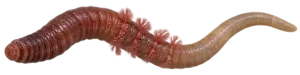
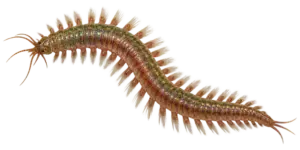
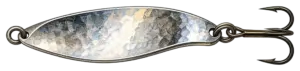
AI-generated illustrations. A click opens the lure’s page.
Rigs for these lures: surf rig.
Rarely targeted. Venomous spines: never grab it with a bare hand.
From hook to kitchen
The flesh is firm, pale and not poisonous. You still need to be careful until the last cut: according to the leaflet of the state of Schleswig-Holstein, the venom stays effective even after the fish has died. So handle it only with sturdy gloves and pliers.
The Danish nature conservation association recommends removing the head together with the gill covers and the first dorsal fin in one cut. That gets rid of all the venomous spines at once. After that you lift the two fillets as with other small sea fish; the steps are shown under Filleting fish. The fillets fry well in butter on the skin side.
What you need to observe
Closed seasons, minimum sizes and harvest slots are set by the federal states (Bundesländer) and by the fisheries authorities of the neighbouring countries on the coast (Denmark, Norway, Poland). They vary by type of water, stretch of coast and time of year. We only give figures together with the date and source; the fisheries regulation of your federal state and your fishing permit (Erlaubnisschein) are always what is binding. You will find a list of links to the official sources in the catch calendar.
A fish of legal size that you want to keep you stun and kill at once, in line with animal welfare rules. Protected, undersized fish or fish too large under a harvest slot you unhook, if possible still in the water and with wet hands, and release gently. What exactly applies is regulated by state law and your fishing permit (Erlaubnisschein).
The IUCN lists the greater weever as least concern. After a sting, a poison helpline can advise in addition to a doctor. By their own account, the Giftzentrale Bonn (0228 19240) and the Giftinformationszentrum-Nord in Göttingen (0551 19240), which is responsible for northern Germany, are reachable around the clock. The information on this page does not replace medical advice.
What closed season, minimum size and harvest slot mean and where to find them is explained on the page Closed season and minimum size explained.
Frequently asked questions (FAQ)
What should I do after a sting?
Clean the wound, remove any remains of the spine, disinfect, do not apply a tourniquet. As an immediate measure the poison centres name heat: warm locally for about two minutes and then cool (leaflet of the state of Schleswig-Holstein with the Giftinformationszentrum-Nord) or, if no doctor is immediately available, tolerably hot water of about 45 °C, tested beforehand with a healthy hand (Giftzentrale Bonn). Then see a doctor.
Can you eat weever?
Yes. The flesh is not poisonous and is regarded as a delicacy in France. All spines must be removed beforehand.
Where are the venomous spines?
In the short first dorsal fin and as a single spike on each gill cover.
Sources
The rating of catch chances is an editorial assessment. The facts come from these sources, and the text is worded in our own words. The illustration is an original design by Angel Momente in the style of a natural history plate (AI-generated, see the AI notice).
- Wikipedia: Gewöhnliches Petermännchen
- Wikipedia: Petermännchen (Familie)
- FishBase: Trachinus draco
- Blinker: Petermännchen, Giftstacheln und Verhalten nach einem Stich
- Informationszentrale gegen Vergiftungen Bonn: Petermännchen (Symptome, Erste Hilfe)
- Land Schleswig-Holstein (LASG) mit Giftinformationszentrum-Nord: Faltblatt Petermännchen, 3. Auflage Juli 2025 (Sofortmaßnahmen, Vorsicht)
- Fisk & Fri: Fjæsing på stang og tallerken (Köder, Abhaken, Erste Hilfe)
- Fisk & Fri: Læsø – Artsrigdom til hele familien (Seeringelwurm an der Pose)
- Danmarks Naturfredningsforening: Fang og fortær en „farlig“ fjæsing (Blinker vom Strand, Zange)
- Blinker: Das Petermännchen – Achtung vor dem giftigsten Fisch Deutschlands (Brandung, Spinnfischen, zwei Zangen)
- Fisch & Fang: Schweden – Invasion der Petermännchen (Beifang beim Brandungsangeln)
- FishBase: Echiichthys vipera (Viperqueise, zur Unterscheidung)
Created with AI support from the sources listed. Figures only appear in the text if a source gives them. Last updated: 27 October 2026. Found a mistake? Write to us. Who is behind this site: About me.
More in the lexicon
- All fish species at a glance
- Catch calendar – month, water temperature and profile for 93 species
- Line calculator – breaking strain after the knot, drag guideline, backing
- Angling methods