
Knowledge – Fish
Fishing for weever
Catching a weever happens almost always by accident, when fishing over sandy ground on the coast. Here you will find in nine steps when and where it bites, how to unhook it safely and what to do after a sting, each with a link to the detailed page.
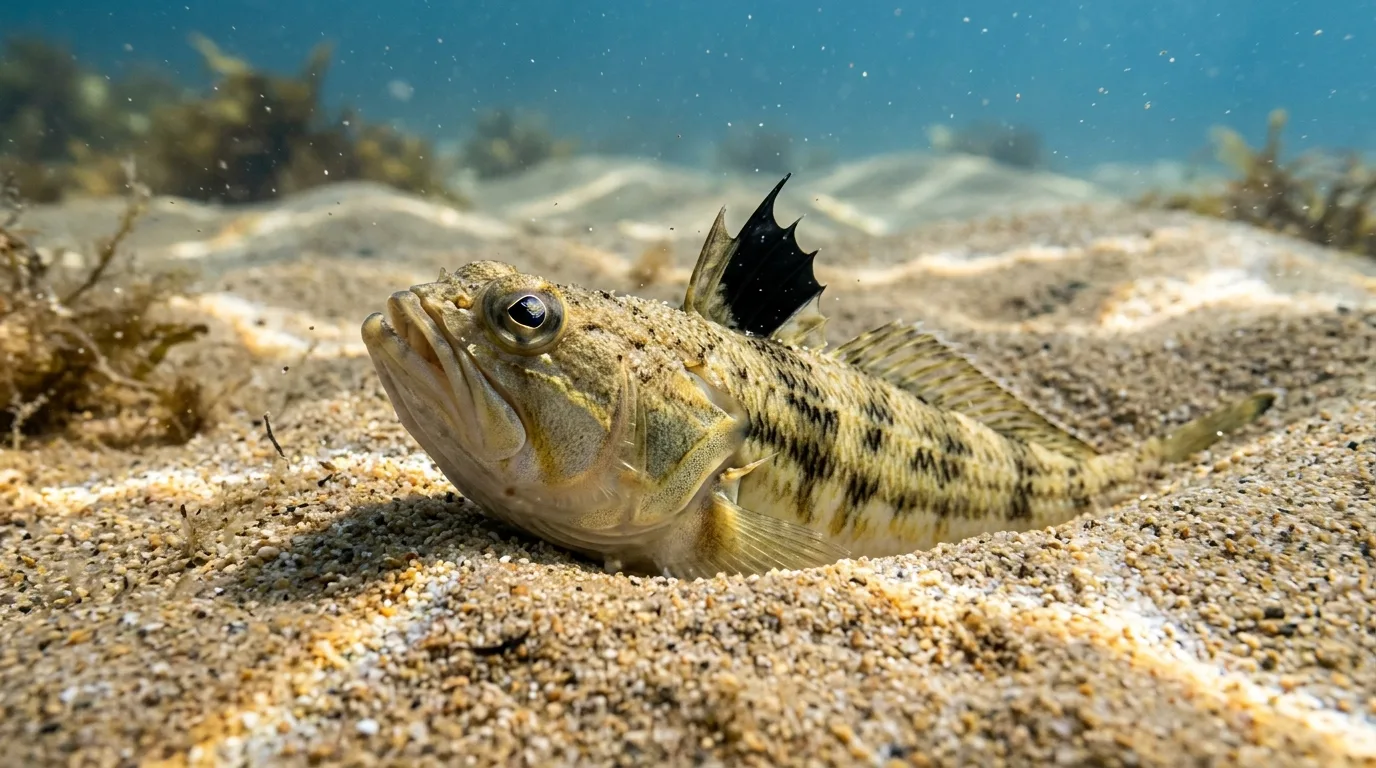
Poisonous by-catch: the weever has venomous spines in the front dorsal fin and on each gill cover, and the poison works even in a dead fish. Never touch it with bare hands. After a sting the poison information centre (Giftnotruf) will advise you, for northern Germany the GIZ-Nord on 0551 19240.
 Choose another fish117 fish with guides
 EelOff-peak season
 EelpoutPossible
 IdePossible
 ArapaimaGood
 GraylingPeak season
 Atlantic salmonSpawning time, please spare
 Brown troutSpawning time, please spare
 Brook troutSpawning time, please spare
 BarbelOff-peak season
 BarramundiSpawning season
 Greater amberjackGood
 Topmouth gudgeonOnly as bycatch
 Blue marlinSpawning season
 BonefishSpawning season
 BonitoGood
 BreamOff-peak season
 Dusky grouperOnly as bycatch
 CobiaPossible
 Spiny dogfishOnly as bycatch
 CodPeak season
 ChubPeak season
 MinnowOnly as bycatch
 European sturgeonOnly as bycatch
 FlounderPeak season
 PerchPeak season
 Largemouth bassGood
 Ballan wrasseOnly as bycatch
 Yellowfin tunaSpawning season
 Giant trevallyGood
 Prussian carpPossible
 BrillPossible
 Gilthead breamSpawning time, please spare
 Golden doradoSpawning season
 Golden mahseerOnly as bycatch
 Dolphinfish (mahi-mahi)Good
 Grass carpPossible
 Great barracudaGood
 GudgeonPossible
 White breamPossible
 DaceOff-peak season
 PikePeak season
 HalibutOff-peak season
 HerringPossible
 GarfishOut of season
 Huchen (Danube salmon)Possible
 Crucian carpOnly as bycatch
 CarpOff-peak season
 RuffeOff-peak season
 VendaceOnly as bycatch
 DabPeak season
 GurnardPossible
 Coley (saithe)Peak season
 Chinook salmonHardly any chance
 King mackerelSpawning season
 LingPeak season
 TuskOff-peak season
 MackerelPossible
 Bighead carpOut of season
 WhitefishPossible
 Conger eelOff-peak season
 Sea troutSpawning time, please spare
 Grey mulletPossible
 Murray codSpawning season
 MuskellungeGood
 Common nasePossible
 Nile perchPossible
 PayaraPossible
 Peacock bassPeak season
 PermitGood
- WeeverOnly as bycatch
 PollackOff-peak season
 BurbotOff-peak season
 AspPossible
 Red snapperSpawning season
 Rainbow troutPeak season
 RoosterfishGood
 RoachPeak season
 RedfishOut of season
 Bluefin tunaOnly as bycatch
 RuddPossible
 Russian sturgeonOnly as bycatch
 HaddockOff-peak season
 SnakeheadPossible
 TenchOff-peak season
 SpirlinOnly as bycatch
 PlaiceOff-peak season
 Greenland halibutOnly as bycatch
 Round gobyOnly as bycatch
 SwordfishGood
 Lake troutSpawning time, please spare
 HakeSpawning time, please spare
 Alpine charSpawning time, please spare
 MonkfishPossible
 SoleOff-peak season
 SailfishGood
 Silver carpOut of season
 SnookPeak season
 PumpkinseedOnly as bycatch
 SpratOnly as bycatch
 Atlantic wolffishSpawning time, please spare
 TurbotPeak season
 SterletOnly as bycatch
 SmeltOnly as bycatch
 Horse mackerelPossible
 TaimenGood
 TarponGood
 TigerfishSpawning season
 BleakPossible
 WahooGood
 Wels catfishOff-peak season
 WhitingPeak season
 Sea bassOff-peak season
 ZanderPeak season
 White-eye breamOnly as bycatch
 Blue breamOnly as bycatch
 Brown bullheadPossible
 VimbaOnly as bycatch
Season in October according to the catch calendar, an estimate and not a guarantee of a catch. The fish pictures are reduced natural-history plates and AI-generated.
Best time
From May to October, mostly at night.
In January: Slim chancesIn February: Slim chancesIn March: Slim chancesIn April: Slim chancesIn May: PossibleIn June: Possible, spawning seasonIn July: Possible, spawning seasonIn August: Possible, spawning seasonIn September: PossibleIn October: PossibleIn November: Slim chancesIn December: Slim chances
Good spot
- Coast: sandy groundsandy groundsandy ground and deep watersandy ground
Tackle
- Rod: your usual beachcaster, you do not need separate tackle for this
- Line: as for flatfish fishing; more important are two long pairs of pliers and sturdy work gloves
- Rod: the pirk or natural-bait rod you are fishing with anyway
- Line: unchanged; what matters are pliers and thick gloves on board
In short
In short: The weever most likely takes the hook from May to October, usually as a by-catch. Good spots on the coast: sandy ground. Venomous spines on the first dorsal fin and the gill covers: unhook only with gloves. The poison works even in a dead fish.
Quick to recognise
A small, slim bottom fish that sits buried in the sand up to its eyes by day. It usually measures 20 to 30 centimetres; the venomous spines sit at the front of the back and on both gill covers.
When
From May to October a catch is possible, especially in the warm summer months. It spawns from June to August, when the species comes right into the shallow water where people bathe. From autumn it moves deeper and is hardly reachable from the shore any more.
- JanHardly any chance
- FebHardly any chance
- MarHardly any chance
- AprHardly any chance
- MayPossible
- JunPossible, spawning season
- JulPossible, spawning season
- AugPossible, spawning
- SepPossible
- OctPossible
- NovHardly any chance
- DecHardly any chance
Peak seasonGoodPossibleHardly any chanceSpawning season
Spring tactics
The fish spend the winter in deeper water and return to the shallows to spawn. By then at the latest, the tools belong in your tackle bag.
Summer tactics
Spawning falls in the bathing season, and the fish then sit shallow and close to the shore. Stings to anglers are most frequent in these months, especially when fishing small baits over sand.
Autumn tactics
In autumn weevers move into deeper water, in places down to 150 m. From the beach a catch then becomes rare, from a boat it remains possible.
Winter tactics
In winter they sit deep and hardly feature as bycatch.
Season and biting time
In January: Bycatch onlyIn February: Bycatch onlyIn March: Bycatch onlyIn April: Bycatch onlyIn May: Bycatch onlyIn June: Bycatch onlyIn July: Bycatch onlyIn August: Bycatch onlyIn September: Bycatch onlyIn October: Bycatch onlyIn November: Bycatch onlyIn December: Bycatch only
Where it sits now
On the coast
Sandy stretches of coast are its territory, and mud and gravel bottoms are also possible. In summer it usually lies buried five to fifteen metres down, and at night it swims freely above the bottom.
How to go about it: The weever lives in the North Sea and the western Baltic Sea on sand, mud and gravel. Stings to anglers have been reported, for example, in the Flensburg Fjord and on a boat off Fehmarn. In Denmark it counts as a possible catch from piers too, and Swedish anglers occasionally catch it in the surf or while fishing for mackerel.
| All year round | Sandy bottom |
|---|---|
| Autumn extra | deep water |
Biting time: mostly at night. What this looks like in the water is shown by the picture of the holding spots just below.
Holding spots in the picture
Choose the season and time of day: the picture shows where the species stands then. Spots outlined in red apply only in the chosen season. Tap a fish or a spot in the list to bring it closer. The picture is schematic and AI-generated, every water is different.
Chance of a catch in springslim
Chance of a catch in summerpossibleSpawning, observe closed seasons
Catch chance in autumnpossible
Catch chance in winterhardly any
- J
- F
- M
- A
- M
- J
- J
- A
- S
- O
- N
- D
Spawning season
Not the main time By day the weever lies buried, at night it swims about freely.
Not the main time By day the weever lies buried, at night it swims about freely.
Not the main time By day the weever lies buried, at night it swims about freely.
Active time By day the weever lies buried, at night it swims about freely.
On the coast
Sandy bottom
Weever is present here all year round.
Deep, colder water
Weever is present here only in autumn.
The weever lives close to the coast on sandy bottoms, also on mud and gravel. By day it is usually buried up to its eyes in loose sand, lying in wait for prey. At night it leaves the bottom and often swims in small shoals.
Spring: chances according to the catch calendar are slim in March and April, possible in May.
Summer: chance of a catch according to the catch calendar possible. Spawning falls in this period, observe closed seasons. In summer the weever usually lives at depths of between 5 and 15 metres. It also comes into shallow water to spawn.
Autumn: chance of a catch according to the catch calendar possible in September and October, hardly any in November. In autumn it withdraws into deeper water.
Winter: catch chance according to the catch calendar hardly any.
Depth: The species lives from a few metres down to about 150 metres, usually shallower than 30 metres. In summer it sits at 5 to 15 metres.
Size comparison: AI-generated drawing, schematic.
How
It most often ends up on the hook when surf fishing with worm over sand, less often when spinning from the beach. It also takes the hook on a boat when the real target is cod or flatfish.
Have it ready beforehand
You do not need to target a weever. In summer it often takes a worm by accident when you are fishing for flatfish over sand. So before the first cast, put two long pairs of pliers and sturdy work gloves within reach. If you wade into shallow water to cast, wear sturdy bathing shoes.
By-catch on a sandy beach
When surf fishing in summer with worm over sand, the weever is the most common venomous bycatch; this is how to handle it safely.
- What to expect
Weevers lie up to their eyes in loose sand by day. In summer they come into shallow water to spawn, and on the North Sea and western Baltic they then repeatedly end up on the hook as bycatch over sandy bottoms.
- Tools before the cast
Lay out two long pairs of pliers and work gloves so that you can grab them without searching. Some anglers use barbecue tongs instead of pliers to keep more distance from the spines.
- Look closely at the catch
If a small, slender fish comes out of the surf, look at it before you grab it. At first glance it resembles a small whiting, but the mouth and eyes point upwards, and there is a spine on each gill cover.
- Not in your hand
Do not grab the flapping fish. Precisely because it is so small, you quickly touch the spines of the dorsal fin when holding it, and even a little venom causes severe pain.
- Release with two pairs of pliers
Hold the fish by the lower jaw with gloves and pliers, and pull the hook out with the second pair.
- If it stings after all
Remove any remaining spines, then clean and disinfect the wound. Do not apply a tourniquet, call a poison information centre (Giftnotruf), and then have yourself examined by a doctor.
By-catch on a charter boat
On boat trips for cod and flatfish over sand, too, a weever repeatedly takes the hook in summer, and medical help has to come across the water first.
- Sandy bottom in summer
In summer weevers usually sit at 5 to 15 m over sand. If you fish for cod or flatfish from a boat there, you should expect them.
- Equipment on board
Take pliers and thick gloves on board. The specialist press expressly advises removing a weever from the hook only with thick gloves.
- Identify first
Look closely at every small fish before you touch it. An angler in the Flensburg Fjord grabbed one because he did not know the species, and afterwards needed an ambulance.
- Unhooking without a hand
Remove the hook with pliers and gloves, never with bare fingers. Off Fehmarn a weever stung a boat angler at exactly the moment he tried to unhook it.
- Tell the skipper
If you are stung, tell the skipper straight away. Off Fehmarn the captain sent out an emergency call and sea rescuers took the casualty ashore.
What with
Lugworm and ragworm on a flatfish hooklength are regarded by a Danish angling magazine as the best way in. From the beach it also bites on a spoon of about 15 grams, worked close over the sand.
- Lugwormwhen surf fishing for flatfish in summer
Lugworm and ragworm are the main baits in the surf, and small baits over sand in particular often bring weevers onto the hooklength; so have pliers and gloves ready.
- Ragwormwhen surf fishing over sand, on its own or together with lugworm
It is fished at the same spot and with the same rig as the lugworm, so the bycatch risk is the same.
- Spoonwhen spinning from the beach in summer
Even an artificial lure gives no protection: weevers bite just as readily when spinning at sea. Here too, remove the hook only with pliers and gloves.
Tackle
A surf rod is enough for the worm, a spinning rod for the spoon. More important are long pliers or a disgorger and sturdy gloves, lying within reach before the first cast.
By-catch on a sandy beach
- Rod
- your usual surf rod, you need no special tackle for this
- Line
- as for flatfish fishing; two long pairs of pliers and sturdy work gloves matter more
By-catch on a charter boat
- Rod
- the pirk or natural-bait rod you are fishing with anyway
- Line
- unchanged; pliers and thick gloves on board are what count
Common mistakes
- Mistaken for a whiting: At first glance a small weever looks harmless. Look for the upward-pointing mouth, the high-set eyes and the spine on the gill cover.
- Waded in barefoot: Buried fish are barely visible. Wear sturdy bathing shoes when wading in the shallows.
- Applied a tourniquet: After a sting nothing is tied off. Clean and disinfect the wound and get advice from a poison information centre.
- Water too hot: The Giftzentrale Bonn gives about 45 °C. Test the temperature with your healthy hand or have someone else test it, so that a scald does not add to the sting.
- Did not see a doctor once it eased: Without treatment, pain and swelling can last for weeks. Have the wound looked at by a doctor and your tetanus protection checked.
Rules
For the weever, our overview by state has no figures for minimum size (Mindestmaß) or closed season (Schonzeit). That does not mean there are no rules: individual states and water regulations protect the species or set their own limits.
On the coast the rules of the coastal states apply, partly with their own catch restrictions: North Sea coast, Baltic coast of Schleswig-Holstein and Baltic coast of Mecklenburg-Western Pomerania.
The regulation and your fishing permit (Erlaubnisschein) are what count. Lake Constance, the Rhine and the coast, for example, have their own rules: Fishing waters in Germany.
After the catch
Playing and landing
Bring the small fish in quickly and lay it down without touching it. In work gloves you hold it by the lower jaw with pliers and release the hook with the second pair. If you may keep it and want to, you stun and kill it immediately, again only in gloves; otherwise you return it without touching it by hand.
A fish you may take, you stun and kill at once, again only with gloves and pliers; protected or undersized fish you release in the water. After a sting, clean the wound, remove any remaining spines and do not apply a tourniquet. Warmth helps, the exact instructions are in the profile, and then you go to a doctor, also because of tetanus protection.
Frequently asked questions
How do you recognise a weever?
It is slender, usually 20 to 30 cm long, greenish to brownish with blue markings on the sides. Mouth and eyes point upwards, the short front dorsal fin carries venomous spines, and each gill cover has a venomous spine.
What should you do after a weever sting?
Remove any remaining spines, clean and disinfect the wound, and do not apply a tourniquet. The venom is sensitive to heat, and the poison centres describe the exact procedure with warmth slightly differently, so call a poison information centre (Giftnotruf) straight away. Afterwards always have the wound treated by a doctor and your tetanus protection checked.
How dangerous is a weever sting?
It is very painful, and the area swells up badly. It is not normally life-threatening; circulatory problems are rare, but an allergic reaction up to shock is possible. For children, older people and people with heart conditions it is considered particularly risky.
Is a dead weever still venomous?
Yes, even a dead fish can still poison you. Keep wearing work gloves when preparing it, and first cut the spines off the dorsal fin and gill covers with scissors.
Where are weevers found in Germany?
On the North Sea coast and in the western Baltic Sea, usually on sandy bottoms close to the shore. In summer they sit shallow, in autumn and winter they move deeper.
Similar species
If you catch weever, you can also fish for these species with similar tackle:
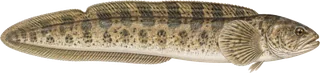 Eelpout fishingPossible
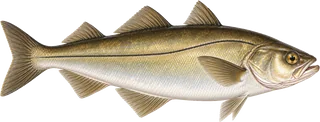 Pollack fishingSecondary season
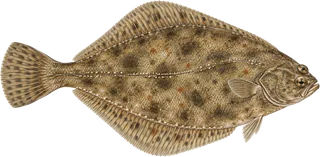 Flounder fishingMain season
 Fishing for garfishOut of season
Sources
Correct as of October 2026. The practical knowledge comes from 12 sources, summarised in our own words.
View all 12 sources
- Petermännchen (Informationen der Giftzentrale) · Informationszentrale gegen Vergiftungen NRW / Giftzentrale Bonn (Universitätsklinikum Bonn)
- Petermännchen – Giftfische in Nord- und Ostsee (Faltblatt, 3. Auflage Juli 2025, mit dem GIZ-Nord) · Landesamt für Arbeitsschutz, Soziales und Gesundheit Schleswig-Holstein (LASG)
- Petermännchen: Achtung vor dem giftigsten Fisch in Deutschland · BLINKER (Redaktion)
- Das Petermännchen – Achtung vor dem giftigsten Fisch Deutschlands · BLINKER (Redaktion)
- Fehmarn: Giftiges Petermännchen sticht Angler · BLINKER (Redaktion)
- Vorsicht: Petermännchen – klein und giftig · FISCH & FANG (Redaktion)
- Schweden: Invasion der Petermännchen · FISCH & FANG (Redaktion)
- Brandungsangeln: Alles, was man über diese Angelmethode wissen muss · BLINKER (Redaktion)
- An den Molen ist was zu holen · BLINKER (Redaktion, Kutter & Küste)
- Britain's Most Dangerous Fish · Sea Angler (Redaktion)
- Sea Fishing Near Me: 4 iconic surf spots · Sea Angler (Redaktion)
- Hastings Pier, East Sussex · Sea Angler (Redaktion)
Text AI-assisted, based on the sources named and these pages: Weever (profile), Surf fishing, Spinning, Lugworm.