
Knowledge – Fish
Tench fishing
Fishing for tench means: sitting at weed and reeds at dusk and presenting a small bait delicately on the bottom. Here is the way to get there in nine steps, each with a link to the detailed page.
 Choose another fish117 fish with guides
 EelOff-peak season
 EelpoutPossible
 IdePossible
 ArapaimaGood
 GraylingPeak season
 Atlantic salmonSpawning time, please spare
 Brown troutSpawning time, please spare
 Brook troutSpawning time, please spare
 BarbelOff-peak season
 BarramundiSpawning season
 Greater amberjackGood
 Topmouth gudgeonOnly as bycatch
 Blue marlinSpawning season
 BonefishSpawning season
 BonitoGood
 BreamOff-peak season
 Dusky grouperOnly as bycatch
 CobiaPossible
 Spiny dogfishOnly as bycatch
 CodPeak season
 ChubPeak season
 MinnowOnly as bycatch
 European sturgeonOnly as bycatch
 FlounderPeak season
 PerchPeak season
 Largemouth bassGood
 Ballan wrasseOnly as bycatch
 Yellowfin tunaSpawning season
 Giant trevallyGood
 Prussian carpPossible
 BrillPossible
 Gilthead breamSpawning time, please spare
 Golden doradoSpawning season
 Golden mahseerOnly as bycatch
 Dolphinfish (mahi-mahi)Good
 Grass carpPossible
 Great barracudaGood
 GudgeonPossible
 White breamPossible
 DaceOff-peak season
 PikePeak season
 HalibutOff-peak season
 HerringPossible
 GarfishOut of season
 Huchen (Danube salmon)Possible
 Crucian carpOnly as bycatch
 CarpOff-peak season
 RuffeOff-peak season
 VendaceOnly as bycatch
 DabPeak season
 GurnardPossible
 Coley (saithe)Peak season
 Chinook salmonHardly any chance
 King mackerelSpawning season
 LingPeak season
 TuskOff-peak season
 MackerelPossible
 Bighead carpOut of season
 WhitefishPossible
 Conger eelOff-peak season
 Sea troutSpawning time, please spare
 Grey mulletPossible
 Murray codSpawning season
 MuskellungeGood
 Common nasePossible
 Nile perchPossible
 PayaraPossible
 Peacock bassPeak season
 PermitGood
 WeeverOnly as bycatch
 PollackOff-peak season
 BurbotOff-peak season
 AspPossible
 Red snapperSpawning season
 Rainbow troutPeak season
 RoosterfishGood
 RoachPeak season
 RedfishOut of season
 Bluefin tunaOnly as bycatch
 RuddPossible
 Russian sturgeonOnly as bycatch
 HaddockOff-peak season
 SnakeheadPossible
- TenchOff-peak season
 SpirlinOnly as bycatch
 PlaiceOff-peak season
 Greenland halibutOnly as bycatch
 Round gobyOnly as bycatch
 SwordfishGood
 Lake troutSpawning time, please spare
 HakeSpawning time, please spare
 Alpine charSpawning time, please spare
 MonkfishPossible
 SoleOff-peak season
 SailfishGood
 Silver carpOut of season
 SnookPeak season
 PumpkinseedOnly as bycatch
 SpratOnly as bycatch
 Atlantic wolffishSpawning time, please spare
 TurbotPeak season
 SterletOnly as bycatch
 SmeltOnly as bycatch
 Horse mackerelPossible
 TaimenGood
 TarponGood
 TigerfishSpawning season
 BleakPossible
 WahooGood
 Wels catfishOff-peak season
 WhitingPeak season
 Sea bassOff-peak season
 ZanderPeak season
 White-eye breamOnly as bycatch
 Blue breamOnly as bycatch
 Brown bullheadPossible
 VimbaOnly as bycatch
Season in October according to the catch calendar, an estimate and not a guarantee of a catch. The fish pictures are reduced natural-history plates and AI-generated.
Best time
In August, in the morning, in the evening and at night.
In January: Hardly any chanceIn February: Hardly any chanceIn March: PossibleIn April: GoodIn May: Good, spawningIn June: Good, spawningIn July: Good, spawningIn August: Peak seasonIn September: GoodIn October: GoodIn November: Hardly any chanceIn December: Hardly any chance
Good spot
- Lake: Weed bed and reed edgeWeed bed and reed edgeWeed bed, reed edge and deep bottomWeed bed and reed edge
- River: quiet bayquiet bayquiet bayquiet bay
Top baits
Starter tackle
- Rod: match or float rod of 3,60–4,00 m, test curve around 1,5 lb
- Line: monofilament 0,18–0,22 mm, in weed not under 0,20 mm, better 0,25 mm
- Hook: size 10–14 for dung worms, heavy-wire size 4–8 for lobworms
- Rod: bottom rod of about 3 m with medium action or carp rod with a 2–2,75 lb test curve
- Line: monofilament 0,25–0,30 mm, where carp bite rather stronger
- Hook: size 6–8, very sharp
In short
In short: You catch tench best in August, in the morning, in the evening and at night. Good spots on a lake: weed bed and reed edge; on a river: quiet bay. Tried and tested baits: dung worm, mussel meat, maggots or casters; also sweetcorn, paste and mini boilies.
Quick to recognise
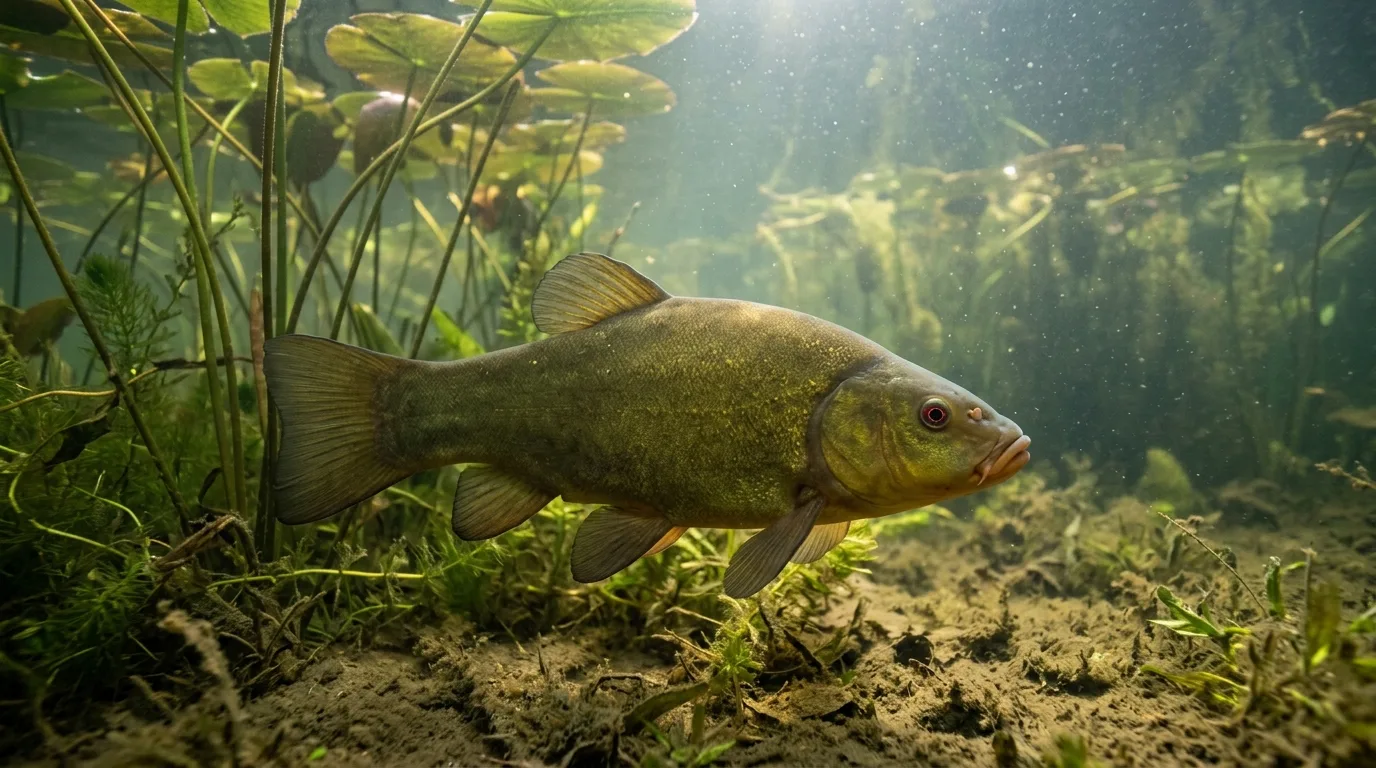
A wary bottom-feeding fish of weedy, silty waters with a red iris and tiny, deep-set scales. It usually measures 20 to 45 centimetres, and fish of up to 7,5 kilograms are documented.
When
August is best; April to July and September and October are good. Spawning takes place in batches from May to July, once the water reaches about 18 degrees. They bite mainly at dawn and dusk, in some places only at night or on cloudy days.
- JanHardly any chance
- FebHardly any chance
- MarPossible
- AprGood
- MayGood, spawning
- JunGood, spawning
- JulGood, spawning
- AugPeak season
- SepGood
- OctGood
- NovHardly any chance
- DecHardly any chance
Peak seasonGoodPossibleHardly any chanceSpawning season
Spring tactics
The first bites come at around 10 °C in shallow ponds and small bays, then mainly during the day, because the shallow water cools down again at night. With a cold east wind the north-east shore lies in the lee, with a south-west wind warm water collects there. Whether a closed season (Schonzeit) applies during the spawning period is set by your federal state (Bundesland).
Summer tactics
There is plenty of natural food now, and tench feed heavily. The best hours are early morning until about 9 o’clock and the evening until shortly after dark. On warm, overcast, rainy days they often bite all day.
Autumn tactics
As the temperature falls, tench feed intensively once more, and the heaviest fish often take the hook then. In early autumn dying weed beds and reed edges are worth fishing; use rather smaller baits then.
Winter tactics
Tench usually spend the winter buried in the mud. Catches are then by chance, and targeted fishing is hardly worthwhile.
Are they biting today?
In January: Out of seasonIn February: Out of seasonIn March: PossibleIn April: Shoulder seasonIn May: Spawning, please spare the fishIn June: Spawning, please spare the fishIn July: Spawning, please spare the fishIn August: Peak seasonIn September: Shoulder seasonIn October: Shoulder seasonIn November: Out of seasonIn December: Out of season
Today’s catch index needs JavaScript. Season and spawning time are in the catch calendar.
From the blog: More bites from the bank: what I adjust, from swim to hook · Freshwater fish in Germany: which species you catch where
Where it sits now
In the lake
Tench hold at the outer edge of the reeds, at weed belts and among water lilies. In spring they feed in shallow bays with young weed, in summer in gaps in dense growth, in autumn sometimes in the deepest spots.
How to go about it: In old gravel pits the bank is often fringed by a reed belt three to four metres wide. Fish the edge where the reeds turn into open water, with a fine float and the bait just above the bottom. Good tench lakes are usually shallow, rarely deeper than three metres.
| All year round | weed bed, reed edge |
|---|---|
| Autumn extra | deep bottom |
In the river
In a river the tench stays in slow stretches and backwaters with a silty bottom and plenty of plants. It avoids fast current.
How to go about it: On a river you look for oxbows, bays and ditches with a silty bottom and dense plants. There you fish as on a lake with a float or light bottom weight and place the bait at the edge of the weed.
| All year round | calm bay |
|---|
At the pond
How to go about it: The classic is small, shallow ponds with a soft bottom and water lilies. In spring knee-deep water is often enough, and a transparent float hardly stands out there.
Feeding time: in the morning, in the evening and at night. How this looks on the water is shown by the picture of the holding spots right below.
Waters with rules for tench
Holding spots in the picture
Choose the season and time of day: the picture shows where the species stands then. Spots outlined in red apply only in the chosen season. Tap a fish or a spot in the list to bring it closer. The picture is schematic and AI-generated, every water is different.
Chance of a catch in springgood
Chance of a catch in summergoodSpawning, observe the closed seasons
Catch chance in autumngood
Catch chance in winterhardly any
- J
- F
- M
- A
- M
- J
- J
- A
- S
- O
- N
- D
Spawning season
Active time Tench are on the move at dusk and at night and feed most in the morning and evening. During the day they stay hidden among the water plants.
No main time Tench are on the move at dusk and at night and feed most in the morning and evening. During the day they stay hidden among the water plants.
Active time Tench are on the move at dusk and at night and feed most in the morning and evening. During the day they stay hidden among the water plants.
Active time Tench are on the move at dusk and at night and feed most in the morning and evening. During the day they stay hidden among the water plants.
In the lake
reed edge
Tench is found here all year round.
Water lilies and weed bed
Tench is found here all year round.
Deep bottom
Tench is found here only in autumn.
The tench lives on the bottom of weedy waters with a silty bed. During the day it usually holds hidden among water plants. You will find it by beds of water lilies, along the outer edge of the reeds and by weed belts.
Spring: catch chances according to the catch calendar possible in March, good in April and May. In spring tench feed in shallow bays with emerging weed, at the mouths of small ditches and at reed edges. If the wind pushes warm surface water into a shallow bay, you can expect them there from midday.
Summer: catch chances according to the catch calendar good in June and July, peak season in August. Spawning falls in this period, so observe closed seasons. In summer tench feed in the densest weed. Natural gaps in the weed and the edge of water-lily fields are promising. On warm rainy days they also bite all day.
Autumn: catch chances according to the catch calendar good in September and October, hardly any in November. As temperatures fall, tench feed more heavily once more. Then the deepest spots of the water are sometimes worth fishing, and in an Indian summer also dying weed beds and reed edges.
Winter: catch chances according to the catch calendar hardly any. Tench spend the winter buried in the mud.
In the river
Calm bay with aquatic plants
Tench is found here all year round.
In a river the tench lives in slow-flowing stretches and backwaters with a silty bottom and dense plant growth.
Spring: chance of a catch according to the catch calendar possible in March, good in April and May.
Summer: catch chances according to the catch calendar are good in June and July, with August the peak season. The spawning season falls in this period, so observe the closed seasons.
Autumn: chance of a catch according to the catch calendar good in September and October, slim in November.
Winter: catch chances according to the catch calendar hardly any. Tench spend the winter buried in the mud.
Size comparison: AI-generated drawing, schematic.
How
You mostly fish with a float, in shallow, clear water with a transparent float and the shot placed just under the float. A light running lead on a fine-tipped bottom rod also catches well, and then you strike at once. Where tench feed at night, a night session is worthwhile.
Easiest way
Take a float rod of about 3,60 m, 0,20 to 0,25 monofilament, and a dung worm or a grain of sweetcorn with a worm. Sit down early in the morning at a shallow, weedy pond and place the bait right in front of the reed edge, where the water is 0,5 to 1 m deep. Sit quietly and wait for the float to rise.
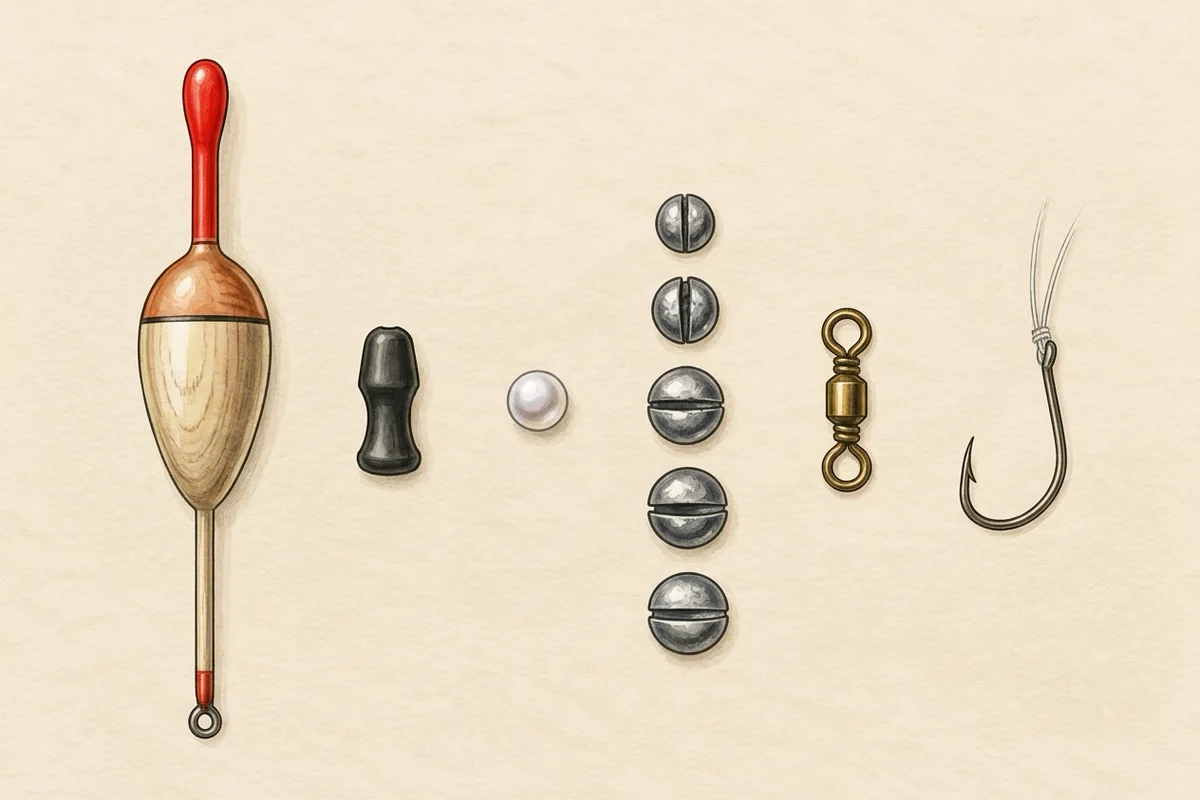
Float at reeds and water lilies
The first choice for spots near the bank in shallow water, at gaps in the weed and water-lily fields, especially at dawn.
- Look for bubbles
Watch for fine, beaded bubbles on the surface. They indicate grubbing tench, while carp make denser and larger bubbles. Gaps between water lilies are good, often only two to three metres wide.
- Measuring the depth exactly
Measure the depth at the spot exactly. The bait should lie just on the bottom, with wary fish also two to three centimetres above it, so that only the end of the worm touches the bottom.
- Hemp in balls
Mix cooked hemp with a little powder feed into balls that break up on impact. To start, two to three handfuls per square metre are enough; more quickly fills the fish up.
- Lift rig
Set the float slightly deeper than the water is and place the weight close to the hook. After the cast you tighten the line until only the antenna shows.
- Cast beyond
Cast a little beyond the spot and then slowly pull the float back into place. That way the rig does not land in the middle of the fish.
- Float rises
When the tench takes the bait, it lifts the weight. The float rises and often tips over to the side. Then strike at once. If it only plucks at the bait for a long time, a worm on the hair helps.
- Out of the weed
Tench flee close to the bottom and head into the weed. Hold against them with the rod while they are still in front of the plants.
- Long net handle
A sturdy handle of about three metres and a round or oval frame help to net the fish before the weed.
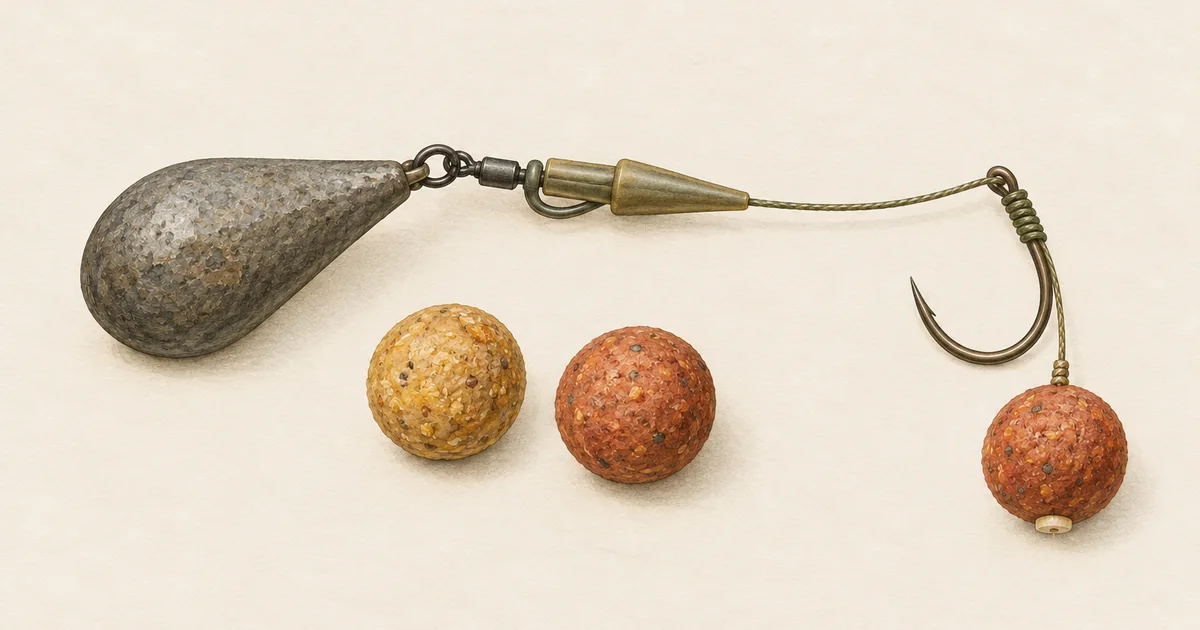
Fixed lead with a mini boilie
For waters with big tench and lots of small fish, when you sit for several hours at one bank edge.
- Choose the bank edge
Place the rigs at bank edges and reed belts with a silty bottom or light weed. Tench pass along there at night and early in the morning.
- Feed sparingly
Before fishing, throw a small amount of boilies by hand or with a catapult onto the edge. Large amounts quickly fill the fish up.
- Hair and fixed lead
A fixed lead of 50 to 80 g sets the hook as the fish moves off. The siltier the bottom, the longer the hooklength should be so that the bait does not sink in.
- Offer small baits
Use 12 or 15 mm boilies on the hair. On soft silt a small, buoyant boilie on top of the sinking bait keeps the hook above the bottom.
- Screen the weed
A PVA strip above the hook prevents plant debris from catching on the point as it sinks.
- Pick up the rod
The tench is usually already hooked when the bite alarm sounds. Pick up the rod and lead the fish away from the weed at once.
- Expect carp
Where carp also live, the rod, line, hook and landing net need reserve strength. A carp can come in at any time.
- Fine-mesh net
Net the tench with a soft, fine-mesh net and lay it on a wet mat.
What with
A bunch of small dung worms or, where big tench live, a fat lobworm that you move lightly now and then. In summer maggots also work. If you are sitting for carp, boilies catch tench on a distinctly longer hooklength.
- Wormsall year round, mainly in spring and early summer
A compact bunch of small dung worms catches reliably, and a big lobworm protects against rudd and roach.
- Sweetcorn & particlessummer, with hemp as feed
A yellow grain of sweetcorn with a small worm or a maggot stands out, and hemp keeps tench at the spot for a long time.
- Boiliesspring to autumn, where big tench live
Small boilies of 12 to 15 mm sort out silver fish and perch.
Tackle
A float rod for fishing at weed and reeds, a bottom rod with a fine quiver tip or swing tip for the running lead, and a carp rod for boilie sessions. For a bunch of worms a short-shank hook of size 10 is suitable.
Float at reeds and water lilies
- Rod
- match or float rod of 3,60–4,00 m, test curve around 1,5 lb
- Reel
- small fixed-spool reel, size 2500, with about 150 m of line
- Line
- monofilament 0,18–0,22 mm, in weed not under 0,20 mm, better 0,25 mm
- Leader
- often a continuous main line without a hooklength, in dense weed a soft braided hooklength
- Hooks
- size 10–14 for dung worms, heavy-wire size 4–8 for lobworms
- Weight, float, lead
- waggler with a carrying capacity of 2–5 g, transparent in shallow, clear water
Fixed lead with a mini boilie
- Rod
- bottom rod of about 3 m with medium action or carp rod with a 2–2,75 lb test curve
- Reel
- fixed-spool reel with about 150 m of line
- Line
- monofilament 0,25–0,30 mm, where carp bite rather stronger
- Leader
- thin hair-rig hooklength, longer on silt than on firm bottom
- Hooks
- size 6–8, very sharp
- Weight, float, lead
- fixed lead 50–80 g
More on tackle
- Float rod: match, Bolognese and pole
- Bottom rod: length, casting weight and bite indicator
- Carp rod: length, test curve and action
- Line calculator
- Fishing line: monofilament, braid or fluorocarbon?
- Spooling a reel properly – without line twist
- Landing net: mesh, size and handle
- Unhooking mat: lay the fish down softly, unhook gently
- Disgorger: unhooking quickly and gently
Common mistakes
- Too much feed at the spot: Tench quickly fill up and leave the spot. Feed little at the start and add more only when bites come.
- The gap in the weed is too small: A narrow lane is not enough, and the fish let go of the bait at the edge. Where clearing weed is allowed, clear an area of a few metres.
- Light on the water: A head torch and bright glow sticks scare tench in shallow water. Use red or blue lights and never shine them on the water.
- All day at the spot: Constant disturbance on the bank scares the fish. Feed, fish for a few hours during the biting time and come back the next day.
- The rod is too soft: A soft rod will not stop a dash into the weed. Use at least a 1,5 lb test curve and strike before the tench reaches the plants.
Rules
Each federal state (Bundesland) sets its own closed season (Schonzeit) and minimum size (Mindestmaß). Choose your state; the values come from our state pages.
Baden-Württemberg
- Minimum size
- 25 cm
- Closed season
- 15.5.–30.6.
As of October 2026. All rules, exceptions and sources: Fishing in Baden-Württemberg.
Bavaria
- Minimum size
- 26 cm
- Closed season
- 1.5.–30.6.
As of October 2026. All rules, exceptions and sources: Fishing in Bavaria.
Berlin
- Minimum size
- 25 cm
- Closed season
- none
Correct as of October 2026. All rules, exceptions and sources: Fishing in Berlin.
Brandenburg
- Minimum size
- 25 cm
- Closed season
- none
As of October 2026. All rules, exceptions and sources: Fishing in Brandenburg.
Bremen
Our overview for Bremen does not list the tench. What applies there is explained on the page Fishing in Bremen, with the spots in the state.
Hamburg
- Minimum size
- 25 cm
- Closed season
- none
- Note
- harvest slot 25–45 cm
As of October 2026. All rules, exceptions and sources: Fishing in Hamburg.
Hesse
- Minimum size
- 25 cm
- Closed season
- 1.5.–30.6.
- Note
- harvest slot 25–45 cm
As of October 2026. All rules, exceptions and sources: Fishing in Hesse.
Mecklenburg-Western Pomerania
- Minimum size
- 25 cm
- Closed season
- none
As of October 2026. All rules, exceptions and sources: Fishing in Mecklenburg-Western Pomerania.
Lower Saxony
Our overview for Lower Saxony does not list the tench. What applies there is explained on the page Fishing in Lower Saxony, with the spots in the state.
North Rhine-Westphalia
- Minimum size
- 25 cm
- Closed season
- none
As of October 2026. All rules, exceptions and sources: Fishing in North Rhine-Westphalia.
Rhineland-Palatinate
- Minimum size
- 25 cm
- Closed season
- none
- Note
- observe the general closed seasons (Schonzeit)
As of October 2026. All rules, exceptions and sources: Fishing in Rhineland-Palatinate.
Saarland
- Minimum size
- 25 cm
- Closed season
- none
- Note
- Grenzmosel 1.3.–14.6.
As of October 2026. All rules, exceptions and sources: Fishing in Saarland.
Saxony
- Minimum size
- 25 cm
- Closed season
- none
Correct as of October 2026. All rules, exceptions and sources: Fishing in Saxony.
Saxony-Anhalt
- Minimum size
- 25 cm
- Closed season
- none
As of October 2026. All rules, exceptions and sources: Fishing in Saxony-Anhalt.
Schleswig-Holstein
- Minimum size
- 25 cm
- Closed season
- none
As of October 2026. All rules, exceptions and sources: Fishing in Schleswig-Holstein.
Thuringia
- Minimum size
- 25 cm
- Closed season
- none
As of October 2026. All rules, exceptions and sources: Fishing in Thuringia.
The regulation and your fishing permit (Erlaubnisschein) are what count. Lake Constance, the Rhine and the coast, for example, have their own rules: Fishing waters in Germany.
After the catch
Playing and landing
Strike firmly, as the lip is hard, and keep the tench away from the weed at once. Net it with a soft, fine-mesh net on a long handle. Its skin carries a thick layer of slime, so handle it only with wet hands, lift it horizontally and lay it on a wet unhooking mat.
Protected or undersized tench you release gently with wet hands. A tench to take home you stun and kill beforehand. Its skin is thick and slimy and the scales sit deep; how to deal with that is described on the pages on scaling and skinning.
Frequently asked questions
When do tench bite best?
Early in the morning, often only until about 9 o’clock, then again from dusk until about an hour into the dark. In spring the day may go better, because the shallow water first has to warm up.
Which bait is best for tench?
The dung worm is regarded as the standard, and sweetcorn with a worm or maggot is also good. Where lots of small fish are a nuisance or big tench live, small boilies are more selective.
Which hook size for tench?
Size 10 to 14 for one or two dung worms, size 6 to 8 for boilies. With a lobworm in weed use a heavy-wire hook of size 4 to 8.
Which line for tench fishing?
On the float 0,18 to 0,22 mm monofilament, in weed at least 0,20, better 0,25 mm. For a session with a fixed lead 0,25 to 0,30 mm.
How can you tell that tench are at the spot?
By fine bubbles that rise while they grub on the bottom. Carp bubbles are larger and denser.
How much feed for tench?
Little: two to three handfuls per square metre are enough. When there is a lot of silver fish, ten to fifteen boilies make a reserve that the small fish cannot eat quickly.
Similar species
Anyone who catches tench can fish for these species with similar tackle:
 Carp fishingSecondary season
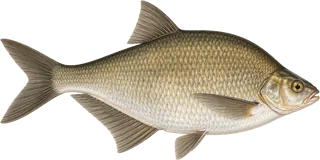 Fishing for breamShoulder season
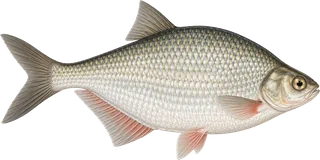 Fishing for silver breamPossible
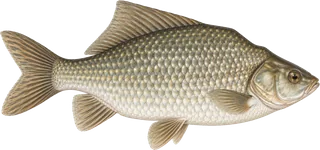 Prussian carp fishingPossible
Sources
Correct as of October 2026. The practical knowledge comes from 12 sources, summarised in our own words.
View all 12 sources
- Angeln auf Schleie: Tipps und Tricks für den Fangerfolg · BLINKER (Redaktion)
- Tipps und Tricks: Wie fange ich eine Schleie? · BLINKER (André Pawlitzki)
- Baits and lures, Taktik und Reviere: das erste Mal auf Schleie · BLINKER (Johannes Müller)
- Auf Schleie angeln im Kraut-See: Sense nicht vergessen! · BLINKER (André Pawlitzki)
- Schleien mit Boilies fangen: Gezielt auf ganz Große · BLINKER (Florian Pippardt)
- Sie wollen Schleien im Frühjahr? Dann machen Sie diese Fehler nicht! · BLINKER (Johannes Müller, Tipps von Tobias Steinbrück)
- Schleien im Frühjahr – Ein grüner Saisonstart · BLINKER (Tobias Steinbrück)
- Steckbrief Schleie: Wo und wie fängt man diesen Fisch? · BLINKER (Redaktion)
- Zielfisch Schleie: Im grünen Bereich · FISCH & FANG (Specimen Hunting Group Dortmund)
- LFV Fischlexikon: Fische bayerischer Gewässer (Schleie) · Landesfischereiverband Bayern
- Die Schleie ist Fisch des Jahres 2024 · Österreichisches Bundesministerium für Land- und Forstwirtschaft, Klima- und Umweltschutz, Regionen und Wasserwirtschaft (Text: Österreichischer Fischereiverband)
- Fische landen: Wie nutze ich Kescher, Lip-Grip und Co.? · BLINKER (Redaktion)
Text AI-assisted, based on the sources named and these pages: Tench (profile), Float fishing, Bottom fishing, Worms.