
Knowledge · Lures
Boilies
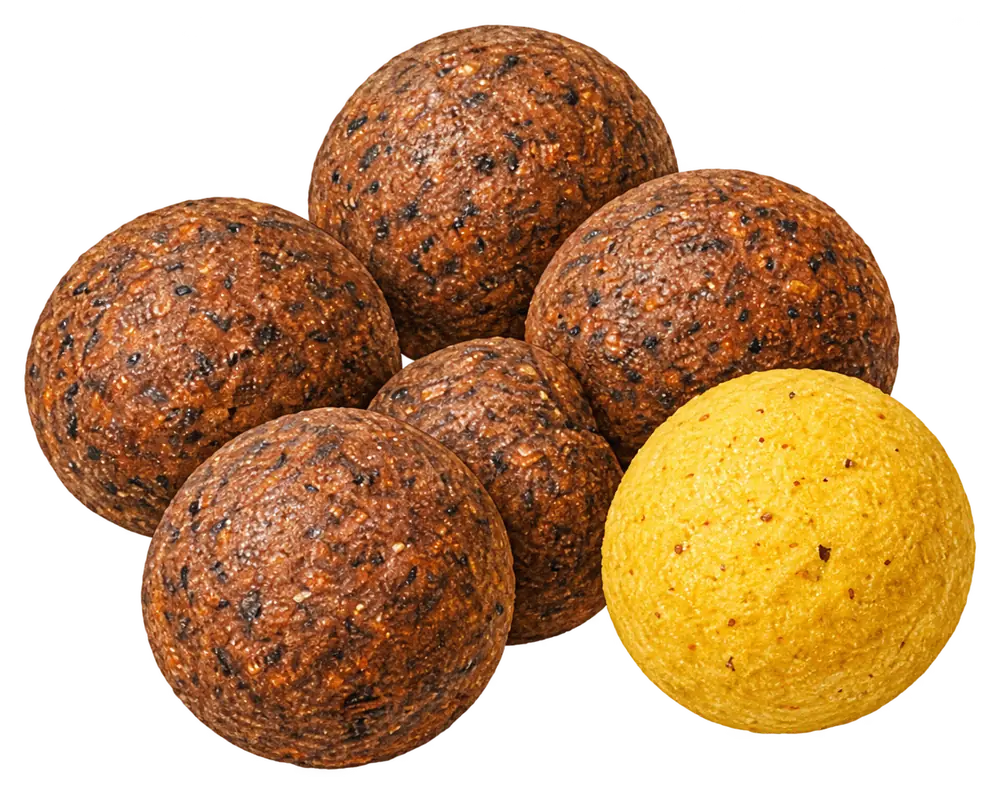
Plant-based baits · Stationary fishing with a float or on the bottom
The boilie is the standard bait of carp fishing: a ball of paste that is boiled briefly, which gives it a tough skin. It lasts a long time in the water, releases scent and is hardly nibbled by small fish. The bait sits on the hair, not on the hook.
- Water depth
- Bottom, pop-ups just above it
- Presentation
- Resting on the bottom, on the hair beside the hook
- Fishing method
- Waiting game with a float or on the bottom
- Category
- Plant-based baits
How it works
A boilie is a paste of protein-rich ingredients such as milk protein, flours, semolina and bird food, bound with eggs. Brief boiling creates a tough skin that stops roach and bream from nibbling it away. The name comes from the English word for boiling. Small fish find it hard to pull the ball off the hair; only crayfish manage it.
Flavours and water-soluble attractants, which the boilie releases over a long time, provide the appeal. On some waters carp prefer fishmeal baits, on others sweet, nutty balls. Fishmeal is richer in protein, while sweet milk-protein baits are considered easier to digest and can be fed in larger amounts.
Size works as a filter. Balls on sale range from a few millimetres to around 30 millimetres, most often 15 to 20 millimetres. Balls of around 24 millimetres reduce visits from bream and roach. Mini boilies bring quick bites, but also more bycatch.
The boilie hangs on the hair below the hook. When the carp sucks it in, the hook point is exposed and takes hold. With a heavy fixed lead the fish largely hooks itself as it moves off. Trials with carp show, however, that they learn quickly: they keep feeding on the baited spot but take the hook less and less often, or spit it out.
Boilies come in three grades. The bottom bait sinks and lies on the bottom. A wafter is balanced so that it almost cancels out the weight of the hook and rests lightly on the bottom. A pop-up hovers above the bottom and is easy to see. A sinking and a floating boilie on the same hair make the snowman.
How to present the bait
Resting on the bottom, on the hair beside the hook
Schematic illustration, AI-generated.
- cast out
- lies on the bottom or hangs from the float
- wait for the bite
- re-bait
Anatomy
The points on the picture above explain the most important parts – on hover or tap.
- Sinking boilie: A boiled ball of paste that lies on the bottom and gives off flavour.
- Tough outer skin: Forms during boiling. Small fish can hardly nibble the ball off.
- Pop-up: A buoyant ball that hovers just above the bottom and is easier to see.
Rig in three steps
- 1. Boilie on the hairThread the ball onto the hair with the boilie needle and secure it with a stop, about a centimetre from the hook bend. Hair rig step by step
- 2. Hooklength at the leadShort hooklength behind a heavy fixed lead: when the fish moves off with the bait, the hook sets itself.
- 3. Place on the bottomThe rig lies still on the bottom with a few boilies around it as feed. Running-weight rig step by step
Drawings: AI-generated, schematic.
When the target fish are in season
Hardly any chancePossibleGoodPeak seasonValues from the catch calendar.
When and where
Boilies are baits for longer sessions on the bottom. On clean, firm ground a sinking boilie lies just like the feed balls around it. Over soft silt, weed or fallen leaves a pop-up stays visible and does not sink in.
In winter and spring, when carp are sluggish, many anglers choose eye-catching, strongly flavoured pop-ups. In summer and autumn they go for baits that look like the feed. In the cold season carp eat little, so small balls of around 10 millimetres are enough. On heavily fished waters carp are often wary of standard sizes; there larger or smaller balls stand out.
You can also target tench on boilies of 12 to 15 millimetres. At night and early in the morning they patrol along the bank and reed edges; quiet spots with silt or light weed suit them. Rudd, roach and perch then largely keep away.
What you may feed is set by the water. Some water rules (Gewässerordnung) limit the amount of feed per fishing day and ban bait boats. The water rules and your fishing permit (Erlaubnisschein) apply. Boilies bring nutrients into the water: according to the Anglerverband Niedersachsen fact check, homemade boilies contain more phosphorus per kilo than bought ones. Only top up once fish are on the spot.
How to choose size, hook and amount
- Match the hook to the ball Boilie and hook must go together, for example a 15-millimetre ball on a size 8 hook.
- Thread the ball onto the hair Thread the ball onto the hair with the boilie needle.
- Secure it with a stop Then secure the ball with a stop.
- Check the gap Leave about a centimetre between the ball and the hook bend. If the ball sits against the bend, bait and hook do not move freely.
Boilie and hook must go together. An experienced carp angler puts balls of 10 to 12 millimetres on a size 10 hook, 15 millimetres on size 8 and 18 to 20 millimetres on size 6. A small bait on a big hook presents badly, and so does a big bait on a small one. More on sizes and shapes can be found under fishing hooks.
Consistency counts when feeding. If you feed with a throwing stick, stick to one size, such as 16 or 18 millimetres, so that the balls fly evenly. With the spod it is better to mix sizes, which makes it harder for carp to sort them. Small balls allow many baits for the same weight: thirty balls of 10 millimetres instead of ten of 15.
The hookbait may stand out from the feed, for example a boilie with an artificial grain of sweetcorn, or a snowman made of a boilie and a small pop-up. Two small balls on the hair or a halved ball behave differently from round balls when sucked in. This helps above all on heavily fished spots.
How to store and prepare boilies
Long-life boilies are dried, which inhibits mould and bacteria. Product without preservatives is softer and belongs in the freezer. Which kind you use is largely a matter of taste today.
Dry boilies release their flavours only once they have taken up water, which takes several hours. If you want the scent straight away, soak them for at least two hours, overnight is better. Use soaked baits within 24 hours.
If you roll your own, use fresh ingredients, boil the balls for just a few minutes, dry them and freeze them in portions.
Keep it fresh and present it
Keeping it fresh: store natural baits cool and in the shade, take only as much as necessary and do not tip leftovers into the water. When baiting up, the hook point must stay free so that the strike takes hold.
Boilies or another bait after all?
| Baits and lures | Depth | Presentation | Take this lure if … |
|---|---|---|---|
| Boilies | Bottom, pop-ups just above it | Resting on the bottom, on the hair beside the hook | this page |
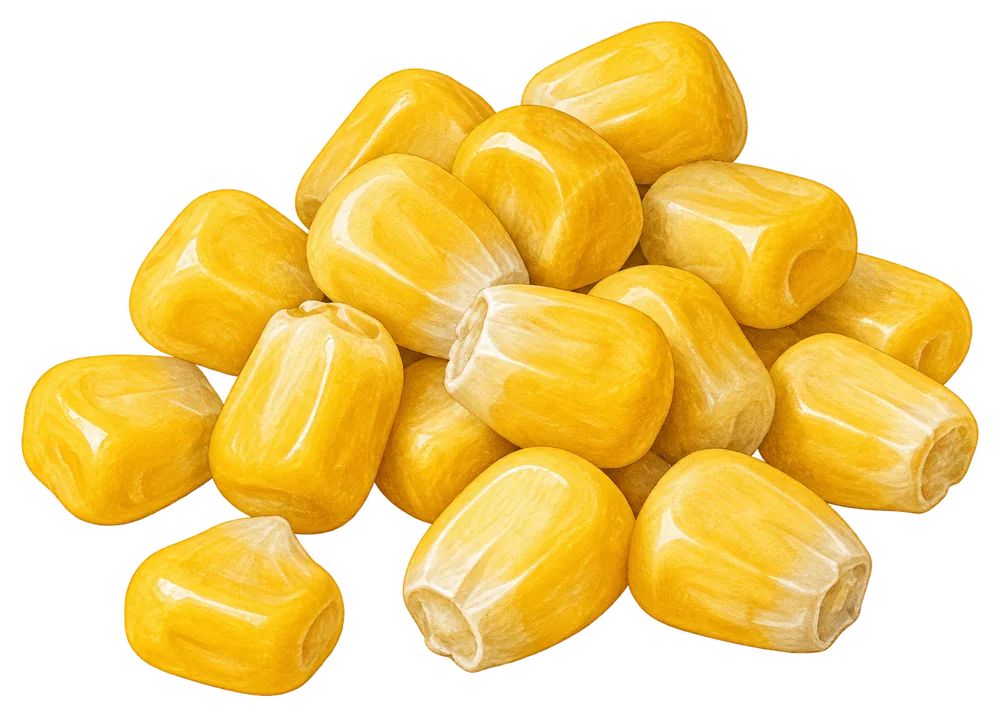 Sweetcorn & particles | Bottom | Resting on the bottom, usually over some feed | you want to feed cheaply or fish a water where almost everyone puts in boilies |
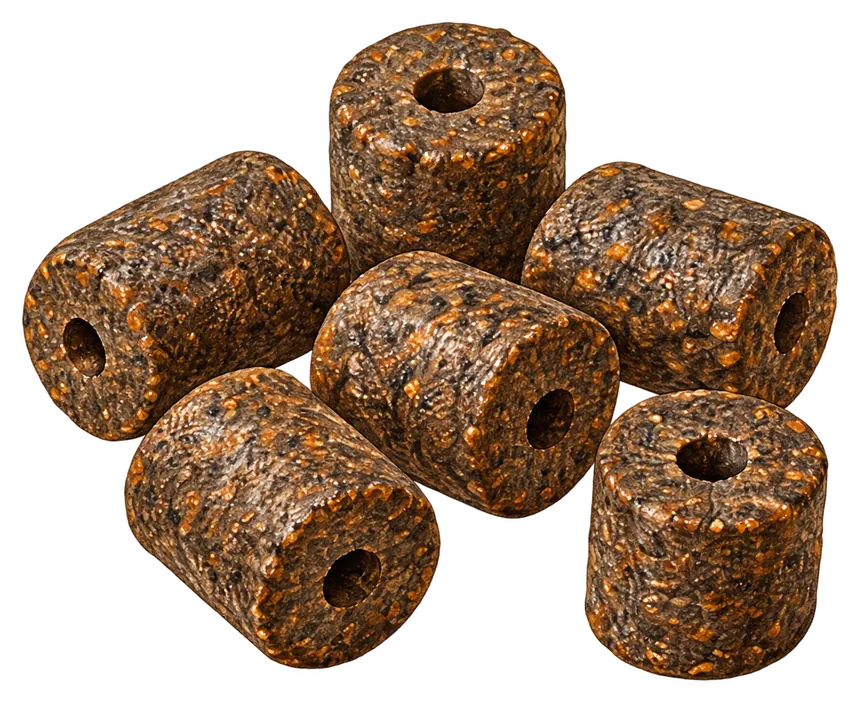 Pellets | Bottom | Stationary on the bottom, often in the feeder | you also want to catch bream and tench with the method feeder |
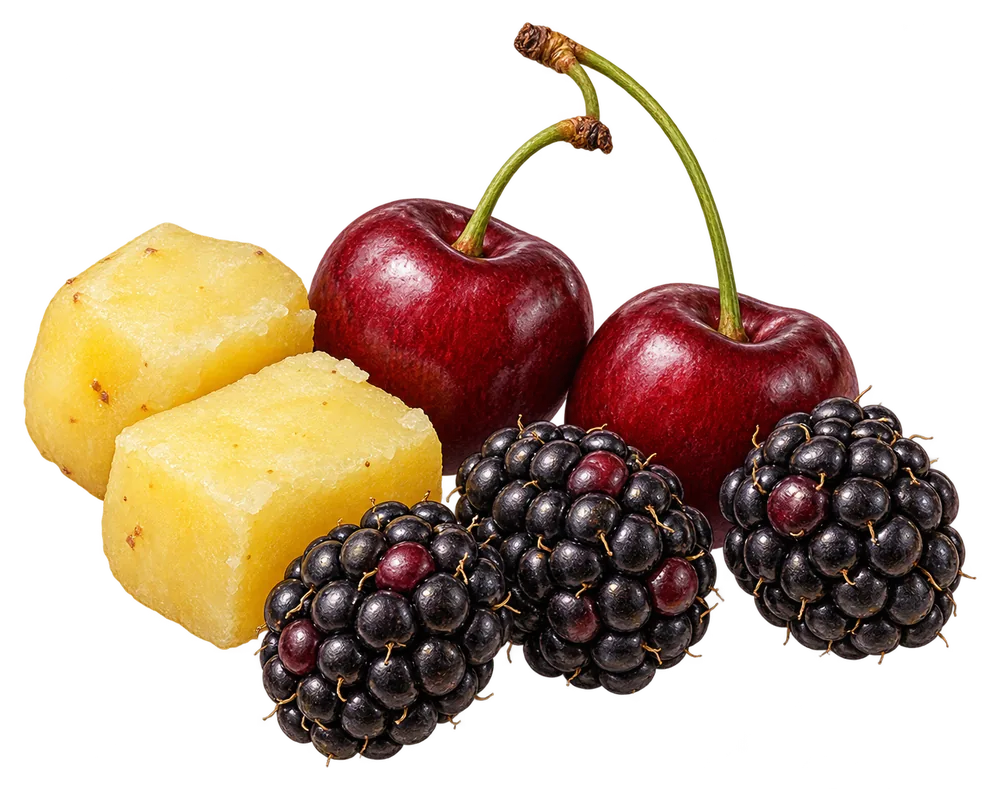 Potatoes & fruit | Bottom | Potato resting on the bottom, cherry drifting | you want to try a cheap big bait |
What you need
- Carp rodA sturdy rod for heavy leads and long casts. More
- LineAbrasion-resistant main line with enough breaking strain for big carp. More
- Boilie needle and stopWithout them the ball will not get onto the hair. More
- Unhooking mat and large landing netProtect the fish when landing and unhooking. More
More on the method: float fishing, bottom fishing and carp fishing.
At a glance
Editorial assessment, not measured values.
If it does not work
A centimetre between the ball and the hook bend is a good guide. If the ball sits against the bend, bait and hook cannot move freely.
It should hover just above the bottom and not lift the whole hooklength. Test it in shallow water and add weight if needed.
Choose larger boilies, up to about 24 millimetres. They tend to keep smaller coarse fish away.
Use a thin needle. A thick needle splits small balls.
Present a pop-up or a snowman made from a boilie and a pop-up; it stays above the bottom.
Match the hookbait to the feed in size and colour, or deliberately make it clearly different, for example by halving it.
Frequently asked questions
Why is it called a boilie?
The name comes from the English word for boiling. The balls of paste are boiled briefly, which gives them a tough outer skin.
Ready-made or frozen boilies?
Long-life boilies are dried and can be stored at room temperature. Frozen product is softer and has to stay frozen. Today the choice is largely a matter of taste.
Which size should I use?
Most often 15 to 20 millimetres. Larger balls tend to keep silver fish away; small ones catch faster but bring more bycatch.
When should I use a pop-up instead of a bottom bait?
Over soft silt, weed or fallen leaves. A sinking boilie sinks in there, while a pop-up hovers just above and stays visible.
Can I catch tench on boilies?
Yes, with small boilies of 12 to 15 millimetres, preferably with a small pop-up. Rudd, roach and perch are then less of a nuisance.
Do I have to soak boilies?
No, but dry boilies give off their flavour only after several hours in the water. Two hours of soaking speeds that up; then use them quickly.
Before fishing, the current permits, state rules and water rules apply: bait bans, number of hooks, closed seasons, protected species and catch limits can differ. Many federal states expressly ban live baitfish. Take bait remains and packaging away with you. All details are guide values without guarantee and do not replace legal advice.
Sources
- Fisch & Fang: Wer erfand den Boilie?
- Fisch & Fang: Hanfboilies, nicht nur zur Winterszeit
- Blinker: Angeln mit Pop-ups auf Karpfen
- Blinker: Schleien mit Boilies fangen
- Blinker: Haarlänge bei der Karpfenmontage
- Rute & Rolle: Boilies, auf die Größe kommt es an
- Angling Times: Are you using the right boilie?
- Angling Times: How to choose the right boilie
- Angling Times: Simple tips to improve your boilie fishing
- Angling Times: Does bait size matter when carp fishing?
- Angling Times: Bottom baits vs pop-ups vs wafters
- Anglerverband Niedersachsen: Faktencheck Anfüttern
- Leibniz-IGB und LSFV Niedersachsen: Hakvermeidung von Schuppen- und Spiegelkarpfen
- Landesanglerverband Brandenburg: Gewässerordnung
The sources explain terms and basic principles. Presentation and values are editorial starting points and depend on water, weather and bait.
More plant-based baits
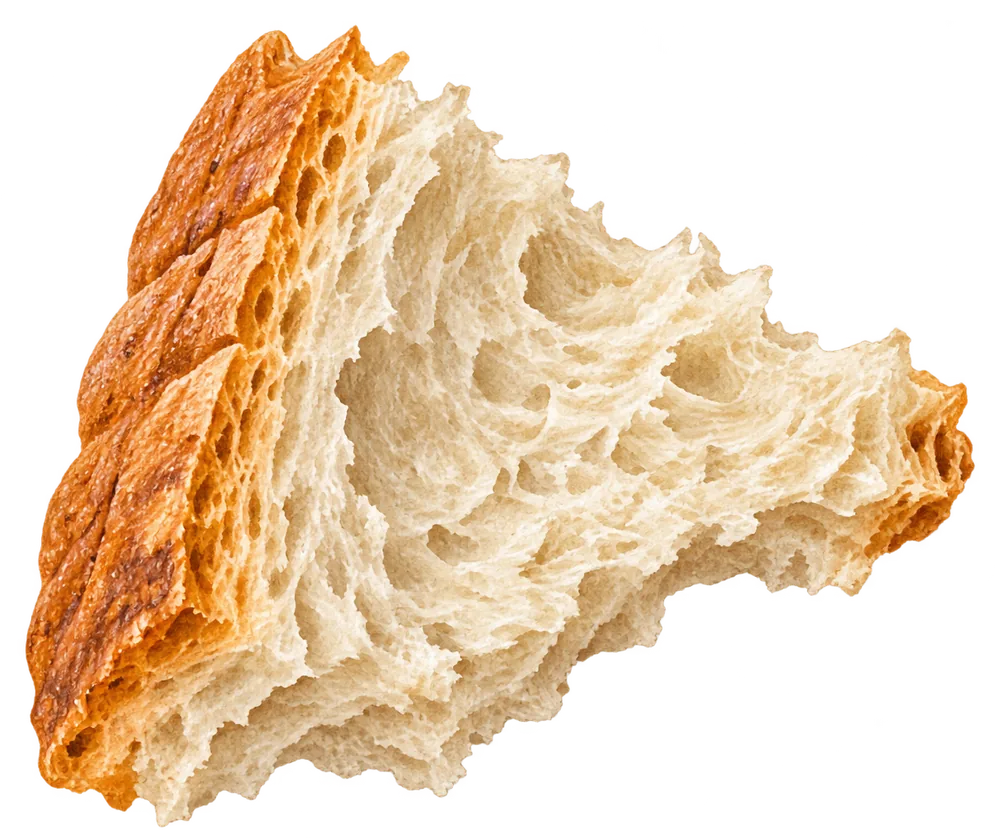 Bread
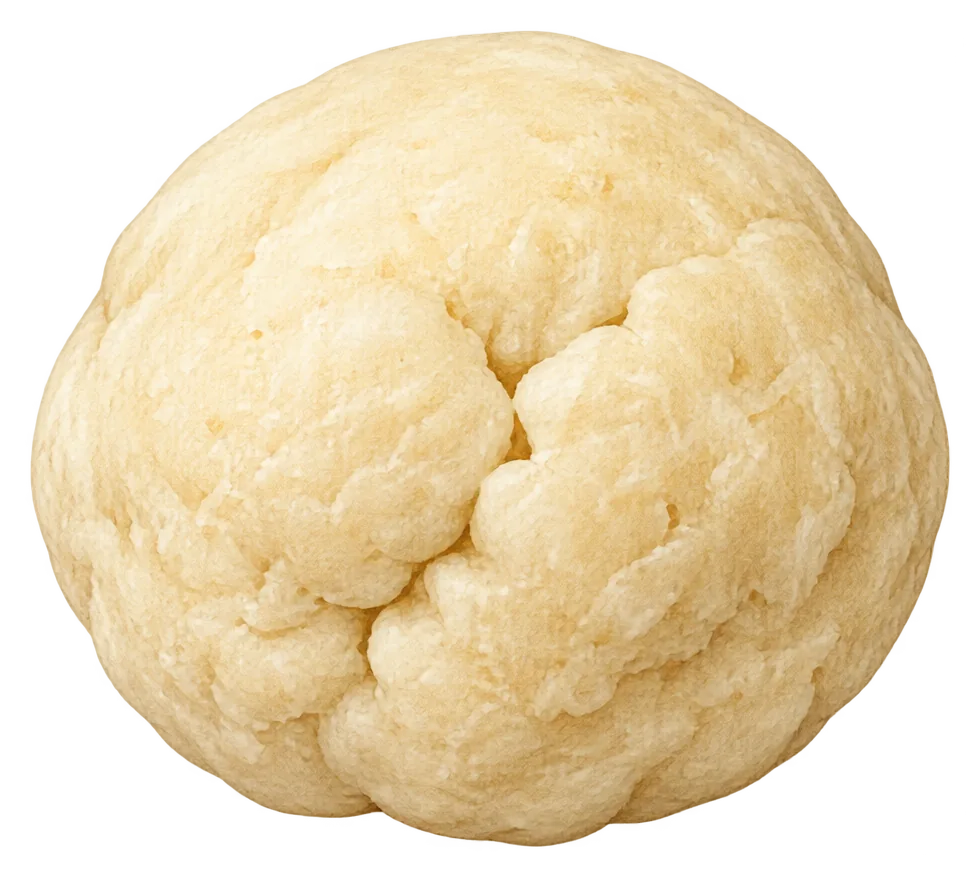 Dough paste
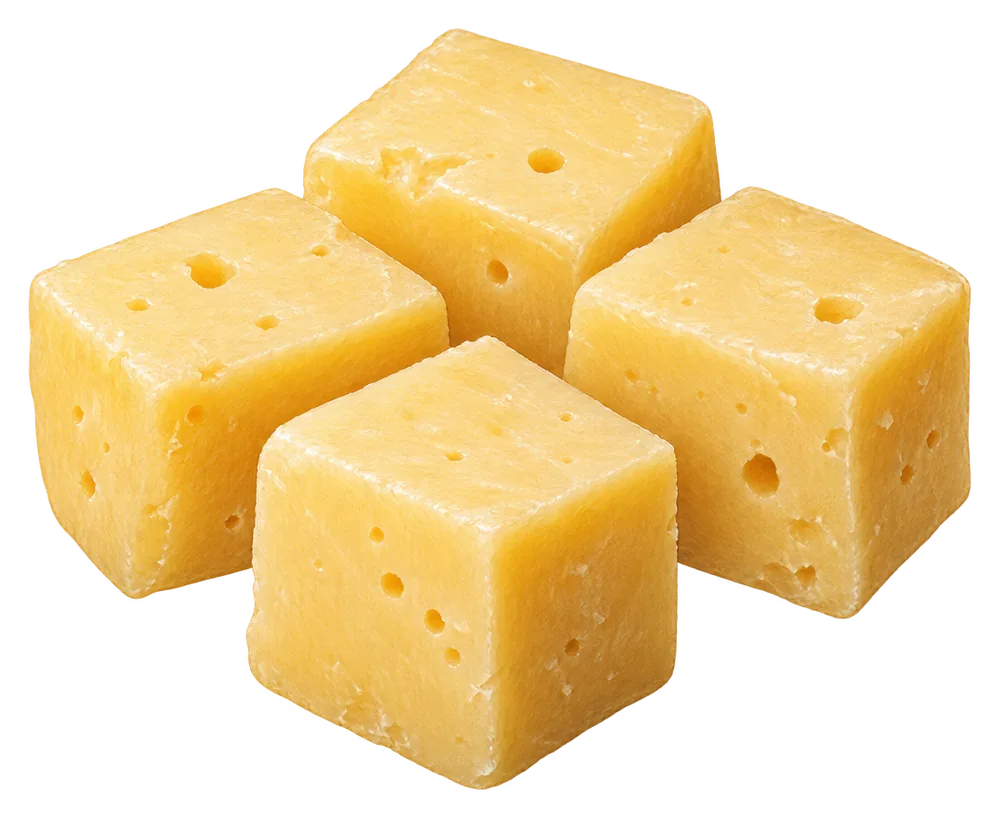 Cheese
Created with AI support from the sources listed (AI notice). Last updated: 2 November 2026. Found a mistake? Write to us. Who is behind the site: About me.