
Knowledge · Lures
Bait paste
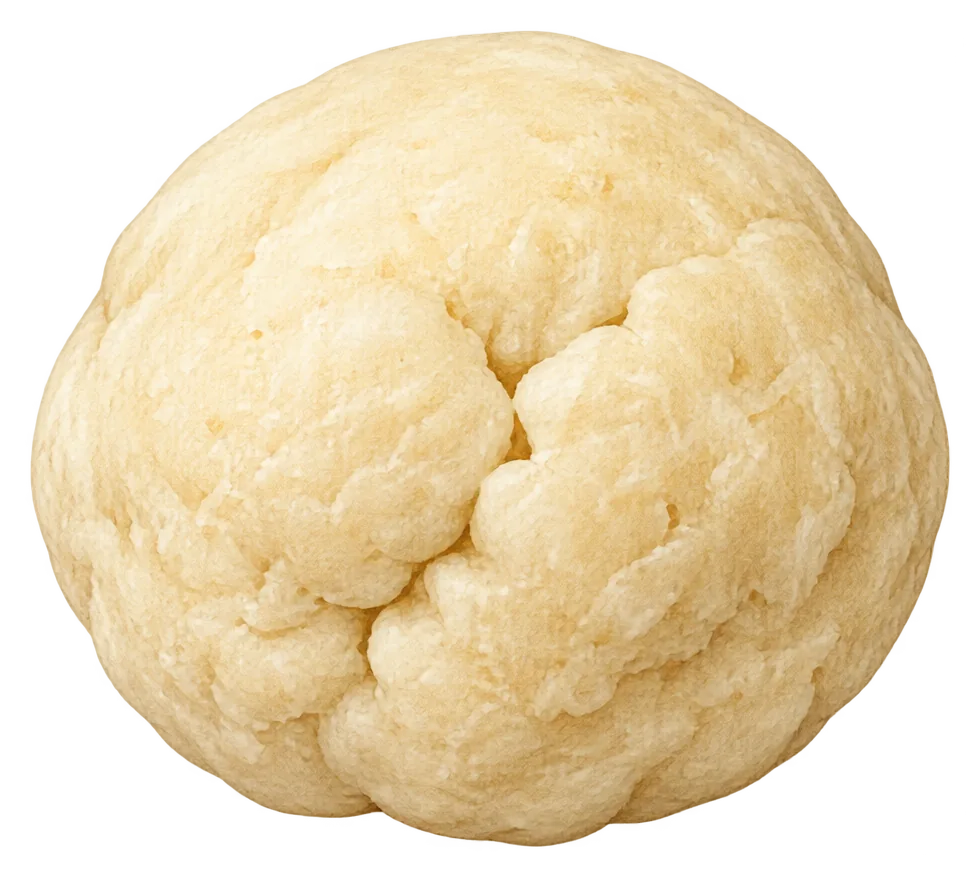
Plant-based baits · Stationary fishing with a float or on the bottom
Dough is one of the oldest fishing baits and almost free: bread or flour, a little water, done. Kneaded yourself, it catches roach, bream, tench and carp. At a trout lake, ready-made trout dough serves as bait that floats and can be moulded around the hook.
- Water depth
- On the bottom or buoyant
- Presentation
- Stationary on a float or on the bottom, towed slowly on a trout lake
- Fishing method
- Waiting game with a float or on the bottom
- Category
- Plant-based baits
roachbreamchubtenchcarprainbow troutgrass carpsilver breamgudgeonPrussian carpbighead carpsilver carpbrown bullhead / Katzenwels
How it works
Dough lures through smell and taste and can be flavoured as you like. The simplest recipe: knead the soft inside of a white bread roll thoroughly. Dough from brown bread without the crust is made in a similar way. For a tough toast dough, you soak one of three slices, place it between the two dry ones and knead everything together. A fourth dough is made of boiled oats thickened with breadcrumbs.
Spices such as aniseed, cinnamon or coriander go onto the dough as a pinch before you knead it. Fish have a keen sense of smell, and an over-spiced dough tends to put them off. For bream, sugar or vanilla sugar will do, for roach aniseed or coriander, and a teaspoon of honey per tennis-ball-sized amount sweetens the oat dough. Cocoa powder colours the dough dark.
The size depends on the fish: a tiny ball on a size 16 hook for baitfish, thumbnail size for roach, rudd, ide, vimba and silver bream, hazelnut size for bream, chub and tench, walnut size for carp. Dough can also be combined with maggots, worms or a grain of sweetcorn.
Trout dough is ready-made dough from a jar. It floats and can be shaped freely. Moulded around the hook like a small spinner blade, it spins on the retrieve and sends out pressure waves that trout respond to. Dough is also a forerunner of the boilie: dip dough balls briefly in boiling water and you get a rubbery skin.
How to present the bait
Stationary on a float or on the bottom, towed slowly on a trout lake
Schematic illustration, AI-generated.
- cast out
- lies on the bottom or hangs from the float
- wait for the bite
- re-bait
Anatomy
The points on the picture above explain the most important parts – on hover or tap.
- Surface: Kneaded smooth, the dough survives the cast better.
- Kneading fold: The right consistency: workable but not sticky.
- Size: From a tiny ball on a baitfish hook to a walnut, depending on the species.
Rig in three steps
- 1. Hook with a dough spiralA spiral on the hook shank holds the dough, especially in current and on long casts.
- 2. Under the floatThe dough ball hangs at the depth where the fish feed or travel. Float rig step by step
- 3. Or on the bottomLarger balls lie on the bottom behind a running lead, for carp also on the hair. Running-weight rig step by step
Drawings: AI-generated, schematic.
When the target fish are in season
Hardly any chancePossibleGoodPeak seasonValues from the catch calendar.
When and where
Coarse-fish dough is presented under a float or on the bottom. Toast dough also holds well on the hook in faster-flowing water, for instance for roach and vimba in the current. Bream are considered keen takers. Where you cast hard or the current pulls, a hook with a spiral on the shank holds the dough much better.
At a trout lake you draw dough along on a light float rig up to about 5 grams. That lets you change the fishing depth within seconds, because the fish switch between the surface, mid-water and near the bottom. Vary speed and pauses; a monotone retrieve brings little. Alternatively, the floating dough sits on the bottom and lifts the hook slightly.
The colour depends on the season and water clarity. In cloudy spring and summer water, bright pastes such as yellow or light green stand out. In clear winter water, dark, muted colours catch better. The colder the water, the stronger the dough may smell of garlic, and the more slowly you work it.
The Gerätekunde (equipment guide) of the Fischereiverein Löningen lists dough among the other baits, alongside bread, cheese, pasta and bacon. Which baits are allowed at a water is set by the water rules (Gewässerordnung) and the fishing permit (Erlaubnisschein).
How to keep the dough on the hook
- Knead until done Knead until the dough turns almost stringy when pulled apart. Then it is ready.
- Shape smooth Knead the ball smooth so the dough survives the cast better.
- Hook with a spiral A spiral on the hook shank holds the dough, especially in current and on long casts.
- Leave the point free The hook point must stay free so the strike connects.
Hooks with a spiral on the shank hold dough much better than a plain coarse-fish hook, especially on long casts. For a running lead on the bottom, the dough must be sticky enough to survive the impact. Shop-bought mixes need time for the gluten to develop. The dough is ready when it turns almost stringy as you pull it apart.
On the bottom a hair hooklength helps more fish hook themselves. A paste cage holds the paste on the hair without hindering the hook point.
How to knead and store dough
Fresh dough kneads well, dried-out dough hardly at all. Opened trout dough dries out over time, so it belongs in a closed jar. In the water it quickly goes soft, and a single missed bite or coarse fish can strip the hook. So check the bait more often and reshape it when needed.
Dough you knead yourself is a foodstuff made of bread, flour and water. Prepare only as much as you need on the fishing day and keep it moist in a tin.
Keep it fresh and present it
Keeping it fresh: store natural baits cool and in the shade, take only as much as necessary and do not tip leftovers into the water. When baiting up, the hook point must stay free so that the strike takes hold.
Bait dough, or another bait after all?
| Baits and lures | Depth | Presentation | Take this lure if … |
|---|---|---|---|
| Bait dough | On the bottom or buoyant | Stationary on a float or on the bottom, towed slowly on a trout lake | this page |
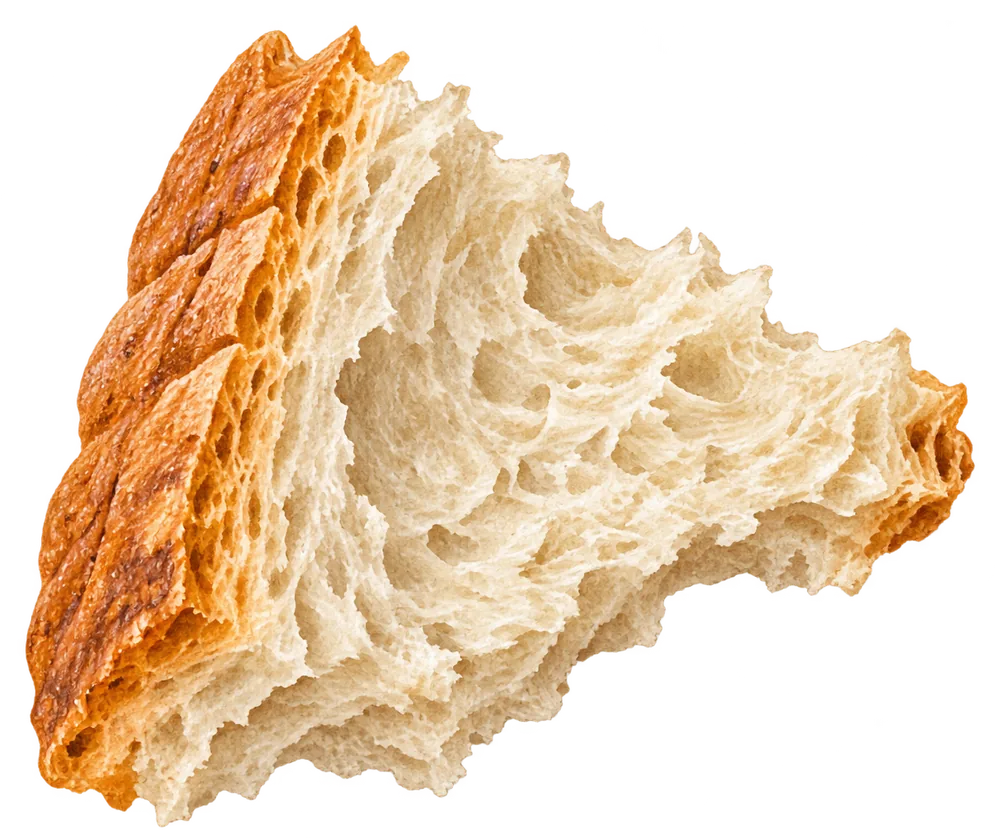 Bread | Surface to bottom | Let it drift without tension; dough resting on the bottom | you want to fish at the surface |
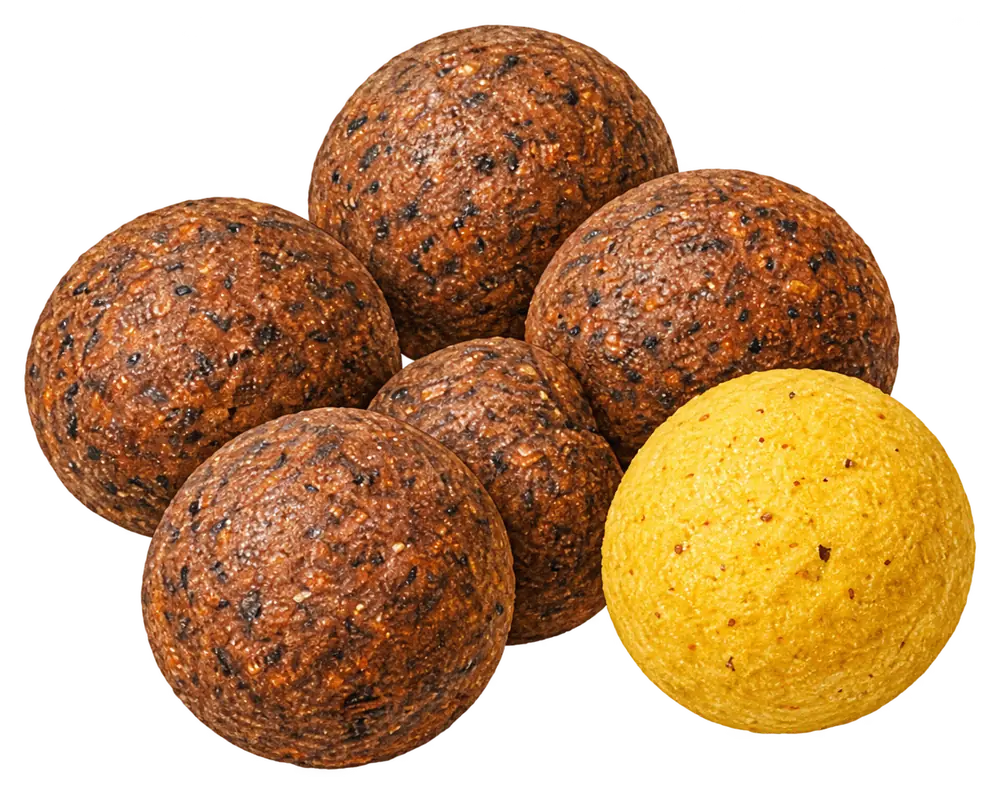 Boilies | Bottom, pop-ups just above it | Resting on the bottom, on the hair beside the hook | the bait has to stay in the water for many hours |
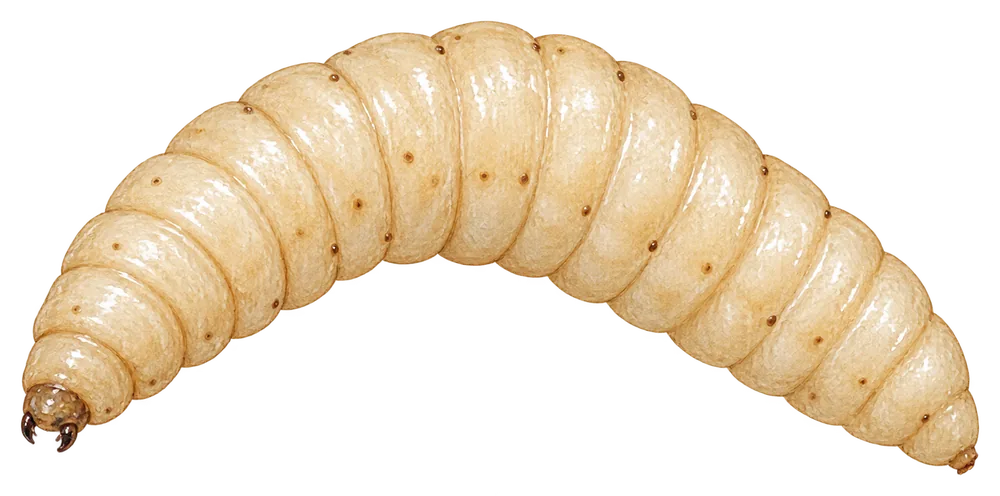 Maggots & larvae | Bottom to mid-water | Stationary on a float or ground rig, in the feed as an attractor | the fish respond better to movement than to smell |
What you need
- Float or bottom rodLight tackle; at a trout lake, a float rod with a fine tip. More on this
- LineThin monofilament line so cautious bites come through. More on this
- Hook with a spiralGives the dough a grip on the hook shank. More on this
- Tin with a lidKeeps the dough moist and workable. More on this
More on the method: Float fishing, Bottom fishing and Trout fishing at a pond.
At a glance
Editorial assessment, not measured values.
If it does not work
Knead it firmer, use a hook with a dough spiral and, with paste, a dough cage on the hair.
Use fresh dough or keep the jar closed so it does not dry out.
Shape it round the hook like a spinner blade or propeller. Dough twisted on itself works too.
Coarse fish and missed bites tear off the soft dough. Check the bait often, reshape it or use a hook with a spiral.
Don’t wind in mindlessly. Change speed, add short pauses and twitch now and then.
In cloudy summer water choose bright pastes, in clear winter water dark ones. In the cold the garlic content may be higher.
Frequently asked questions
How do I make the simplest dough?
Knead the soft inside of a white bread roll thoroughly until it is workable. A pinch of aniseed, cinnamon or coriander adds scent.
How big should the dough ball be?
Thumbnail size for roach, hazelnut size for bream, chub and tench, walnut size for carp. For baitfish, small balls on a size 16 hook are enough.
Why should trout dough rotate?
The spinning dough creates pressure waves that trout respond to. A neatly shaped dough spinner works even when drawn slowly.
Which dough do I use in current?
Toast dough also holds well on the hook in flowing water. A hook with a spiral on the shank helps further.
How do I flavour dough?
With a small pinch of aniseed, cinnamon or coriander, for bream with sugar or vanilla sugar. Too much flavour tends to put the fish off.
Which colour of trout dough, and when?
In cloudy summer water bright, conspicuous colours, in clear winter water dark, muted ones. In cold water it may smell more strongly of garlic.
Before fishing, the current permits, state rules and water rules apply: bait bans, number of hooks, closed seasons, protected species and catch limits can differ. Many federal states expressly ban live baitfish. Take bait remains and packaging away with you. All details are guide values without guarantee and do not replace legal advice.
Sources
- Blinker: Angeln mit Teig, vier Rezepte
- Blinker: Geschleppter Forellenteig
- Blinker: Der richtige Forellenteig, Tipps für die Pastenwahl
- Rute & Rolle: Forellenteig hat ausgedient
- Angling Times: Can paste be used on a leger rig?
- Fisch & Fang: Wer erfand den Boilie?
- Fischereiverein Löningen: Gerätekunde zur Fischerprüfung
The sources explain terms and basic principles. Presentation and values are editorial starting points and depend on water, weather and bait.
More plant-based baits
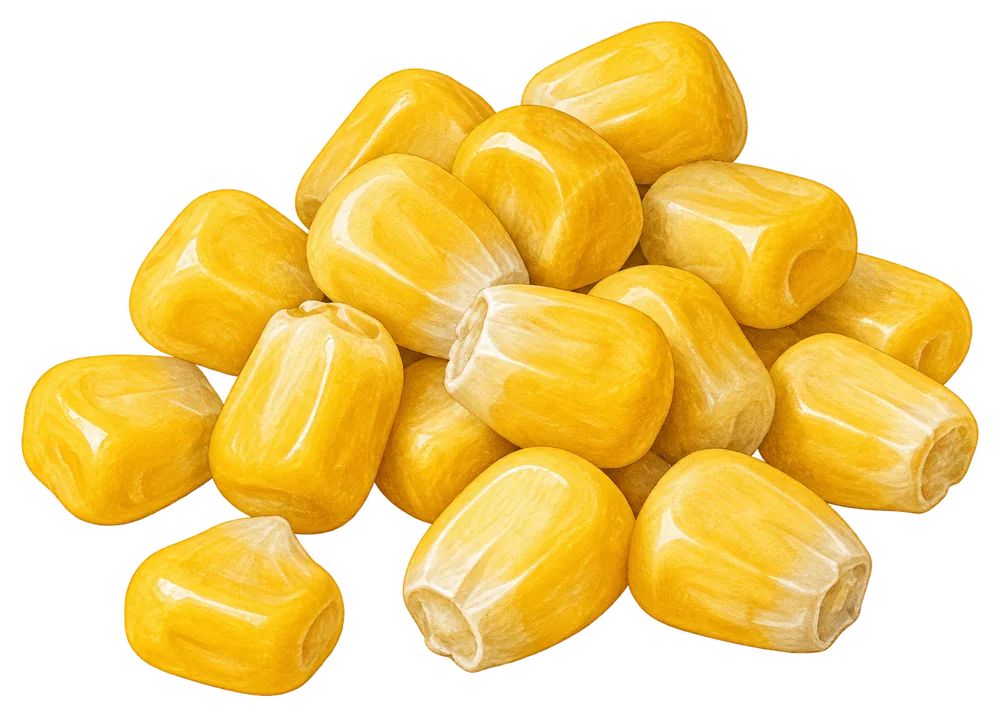 Sweetcorn & particles
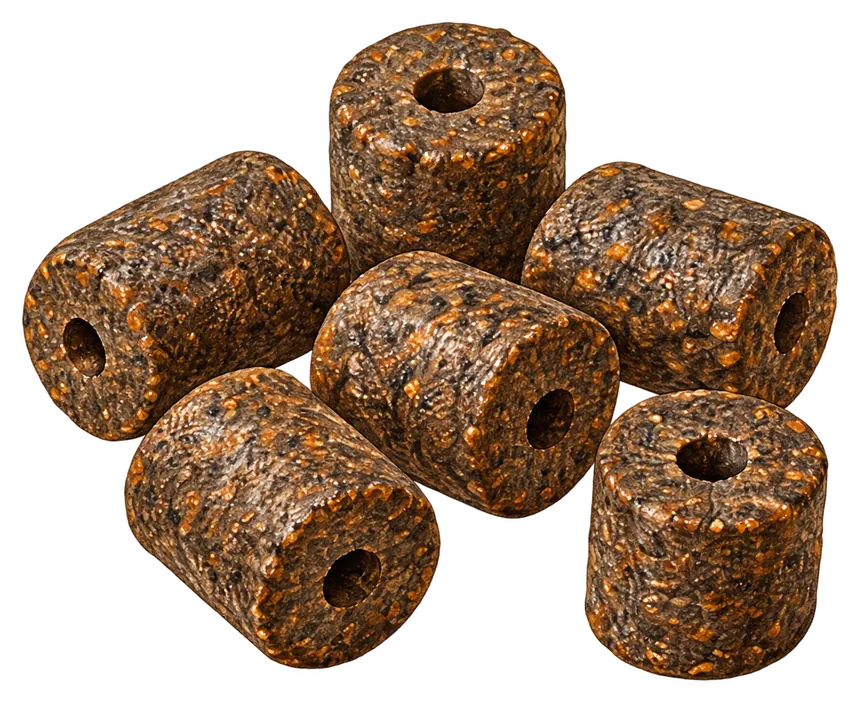 Pellets
 Potatoes & fruit
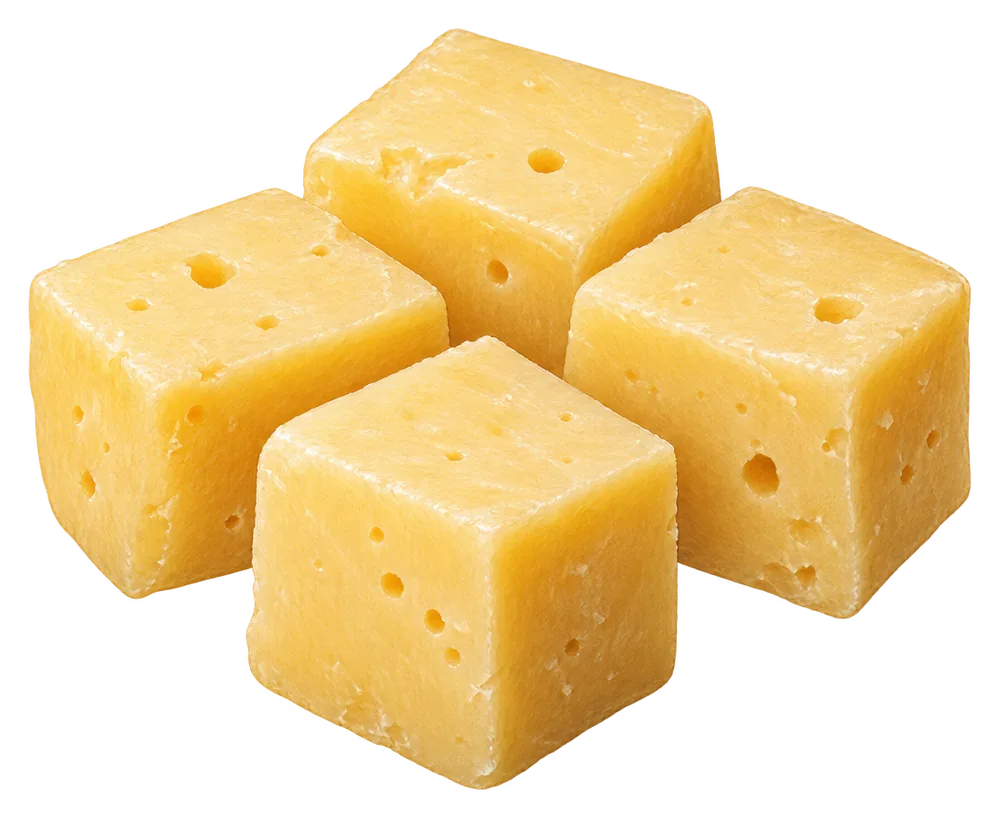 Cheese
Created with AI support from the sources named (AI notice). Last updated: 25 October 2026. Found a mistake? Write to us. Who is behind the site: About me.