
Knowledge – Fish
Bream (Brachse, Blei): Features, feeder fishing and baits
The bream (Abramis brama), also called Brachse or Blei, is the characteristic fish of the bream zone, the slow-flowing lower reaches of rivers. It lives in shoals on the bottom and sifts the soft ground for bloodworms, worms and mussels.
In short: You catch bream best from August to September, in the morning, in the evening and at night. Good spots on a lake: the drop-off and deep ground; on a river: a quiet bay and groyne pockets. Proven baits: worms, maggots, casters and sweetcorn; for big bream also small boilies. Step by step: Fishing for bream.
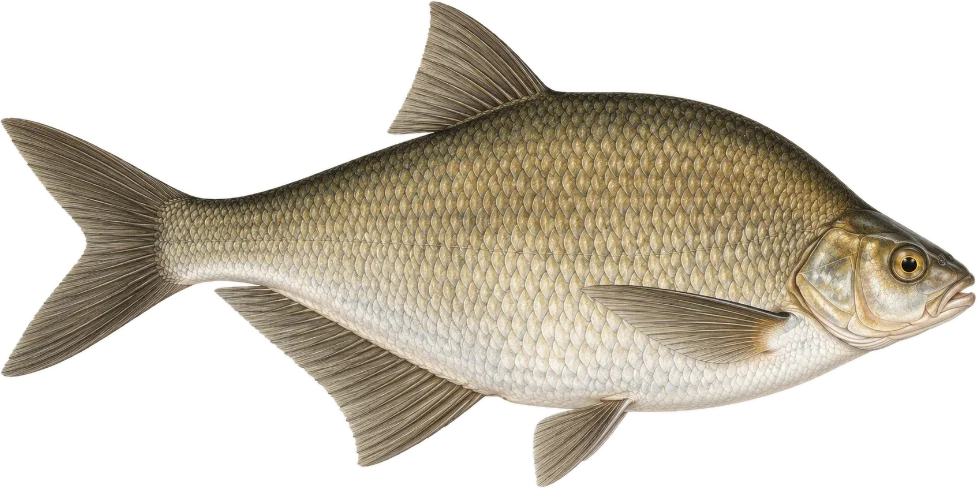
- High-backed body, strongly flattened at the sides, with slimy scales
- Very long anal fin with 23 to 30 soft rays
- Long pectoral fins reaching to the base of the pelvic fins
Catch chances through the year
- Hardly any chance
- Possible
- Good
- Peak season
- Spawning (observe the closed season)
Editorial assessment for waters in Germany, not a measured value and no guarantee. Spawning time is not the same as the legal closed season.
Species profile and sources in the catch calendarAll species compared month by monthThe rules of your federal state
How to recognise a bream
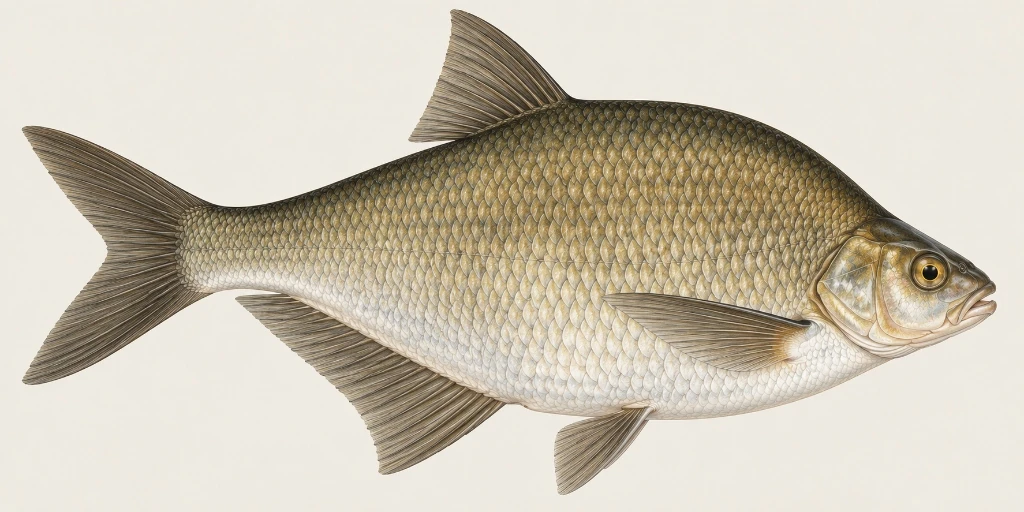
The bream is strongly flattened from the sides and deep-bodied. The slightly sub-terminal mouth can be protruded like a tube, and the eyes are small. The back looks greenish to lead-grey, hence the name Blei (lead). Older fish show a bronze to golden-green tone. The scales are heavily coated in slime, and the fins are grey.
The long anal fin and the tail fin, whose lower lobe is usually longer than the upper, stand out. Laid back, the pectoral fins reach the base of the pelvic fins. At spawning time the males carry striking spawning tubercles on the head that look like pimples. Where food is scarce, bream stay slim and develop a sharp ridge on the back, the knife back.
On average bream measure 30 to 50 centimetres. Older fish over 60 centimetres usually weigh 3 to 3,5 kilograms. FishBase gives maximum values of 82 centimetres, 6 kilograms and 23 years, DTU Aqua for Denmark up to about 25 years.
Sizes at a glance
| Catch | Length and weight |
|---|---|
| Average | 30 to 50 cm |
| Older fish | over 60 cm, usually 3 to 3,5 kg |
| German record (2000) | 8,46 kg |
You are most likely to confuse the bream with the silver bream. The silver bream stays clearly smaller at 10 to 25 centimetres, its pectoral fins do not reach the pelvic fins, its eyes are larger and its mouth protrudes less far. Bream and silver bream cross if they spawn at the same place at the same time. The roach too forms fertile hybrids with the bream. White-eye bream and blue bream, the two other bream species, also have a very long anal fin but stay clearly smaller at 15 to 30 centimetres.
Side by side
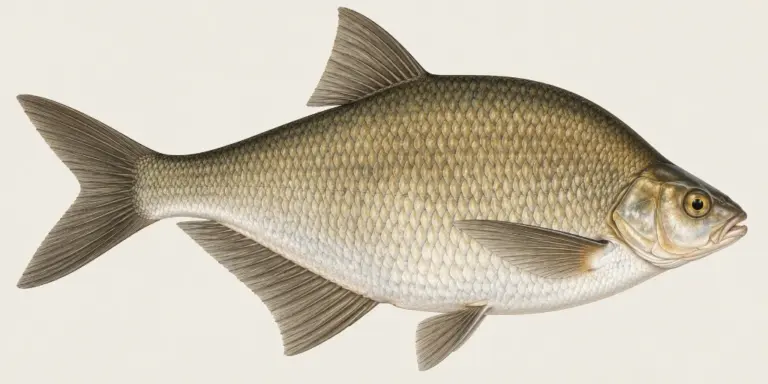
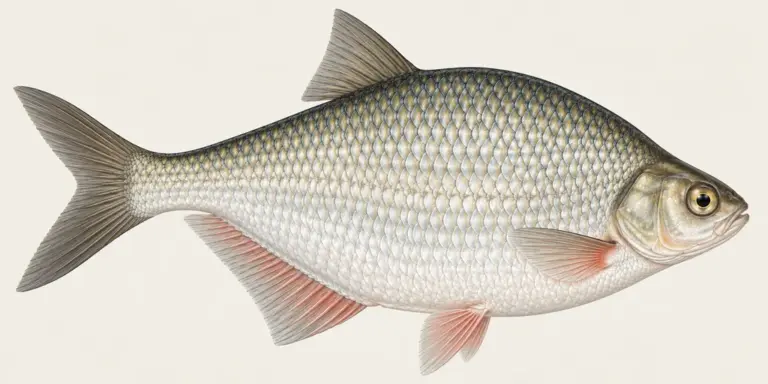
AI-generated illustrations.
Where the bream lives
Bream need soft ground. They are most common in backwaters, in the lower reaches of slow rivers, in estuaries with brackish water and in warm, shallow lakes. They also live in impoundments. In nutrient-rich, cloudy lakes they often make up most of the fish weight. According to DTU Aqua they survive on 1 to 2 milligrams of oxygen per litre, depending on temperature.
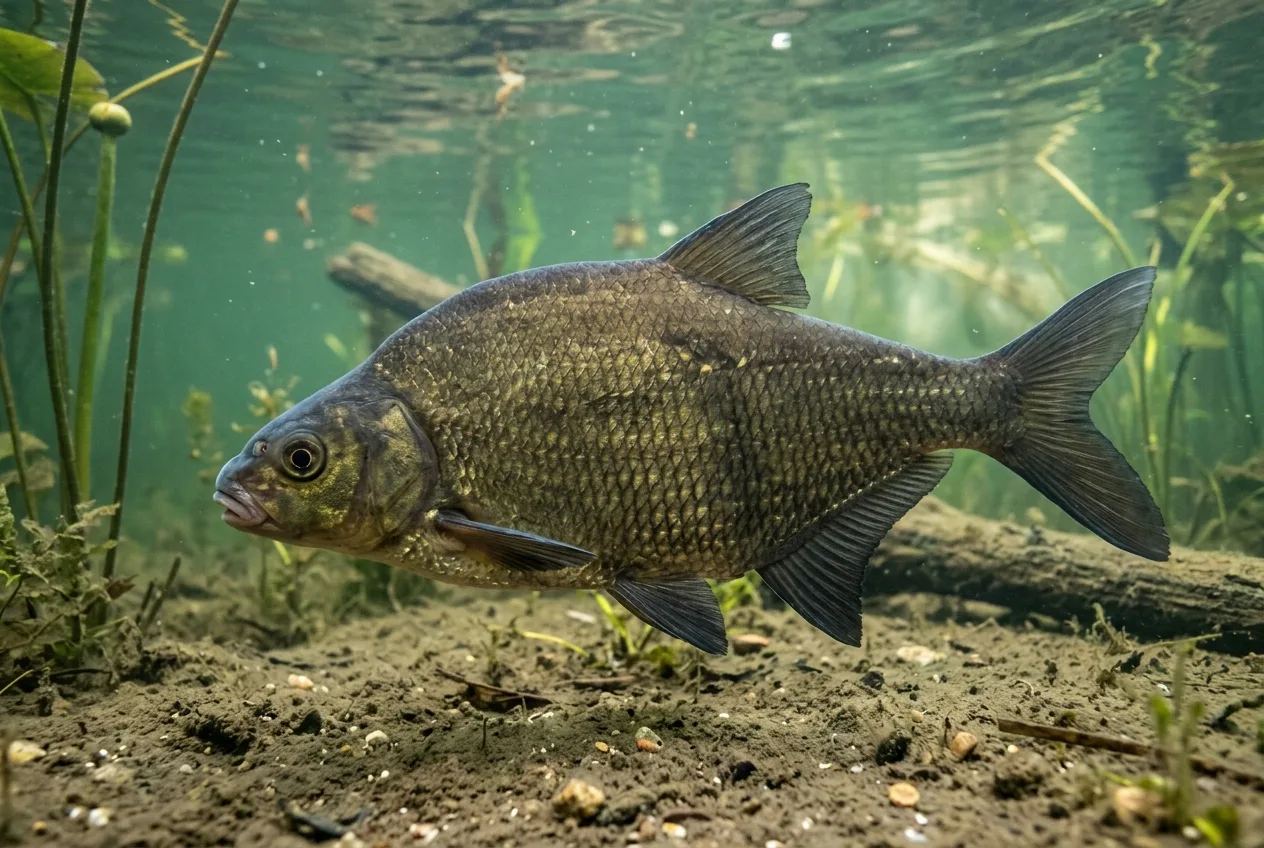
Exactly where they sit depends on age and time of day. Large bream stay on soft clay or mud bottoms and prefer deep areas, coming into the shallows at night. Small bream and juveniles stay in shallow water with plants. In rivers bream prefer quiet bays and groyne pockets to the current. According to anglers, big lake bream stay in the deep and come to the bank only to spawn.
In winter bream gather in large numbers in deep, sheltered spots. Studies by DTU Aqua in Danish lakes show that in late autumn up to 50 to 80 per cent of the stock migrate into flowing waters, mainly fish under 40 to 50 centimetres. In deep lakes, by contrast, they stay in shoals on the bottom. The Red List of Germany (2023) lists the bream as least concern, common and stable in the long term.
Holding spots in the picture
Choose the season and time of day: the picture shows where the species stands then. Spots outlined in red apply only in the chosen season. Tap a fish or a spot in the list to bring it closer. The picture is schematic and AI-generated, every water is different.
Catch chances in springpossible
Catch chance in summergood
Catch chance in autumngood
Catch chance in winterpossible
- J
- F
- M
- A
- M
- J
- J
- A
- S
- O
- N
- D
Spawning season
Active time Good times for catching are early morning, evening and the first hours of the night.
Not prime time Good times for catching are early morning, evening and the first hours of the night.
Active time Good times for catching are early morning, evening and the first hours of the night.
Active time Good times for catching are early morning, evening and the first hours of the night.
In the lake
Water lilies and weed bed
Bream are found here only in spring.
Shelf edge
Bream are found here only in spring, summer and autumn.
Deep bottom
Bream are found here all year round.
Bream live in shoals on the bottom. Big ones often travel through the water far from the bank. You find them at the drop-off, at the breaks of points and, in reservoirs, in the old riverbed.
Spring: chances of a catch according to the catch calendar are possible in March and April, good in May. To spawn, even the big bream of lakes move close to the bank. The eggs are laid at shallow, plant-rich spots along the shore.
Summer: chances of a catch according to the catch calendar are good in June and July, with peak season in August. In lakes and reservoirs bream usually stand farther from the bank by day. Only towards evening do they come close to the shore.
Autumn: catch chance according to the catch calendar is peak season in September, good in October and possible in November.
Winter: chances of a catch according to the catch calendar are possible. Bream spend the winter in large shoals at deeper, sheltered spots.
In the river
Groyne scour hole
Bream are found here all year round.
Calm bay with aquatic plants
Bream are found here all year round.
In rivers bream avoid strong current and prefer to stand in still bays and groyne fields. You often find them in slow-flowing lower reaches, in canals and river harbours.
Spring: catch chances according to the catch calendar are possible in March and April, good in May.
Summer: chances of a catch according to the catch calendar are good in June and July, with peak season in August. In the hot season bream often seek out strongly flowing areas, especially around midday. Towards evening and in the dark they move to calmer areas such as deep groyne pools.
Autumn: catch chance according to the catch calendar is peak season in September, good in October and possible in November.
Winter: chances of a catch according to the catch calendar are possible. Bream spend the winter in large shoals at deeper, sheltered spots.
Depth: Big bream in lakes stay in deep water. They usually come into the shallows only at night or to spawn.
Size comparison: AI-generated drawing, schematic.
How it feeds and spawns
Bream search the bottom with their protrusible mouth. As they do so they stand with the head angled downwards and leave feeding holes and clouds of mud. According to DTU Aqua, adults over 30 centimetres feed almost only on bottom animals, often just bloodworms. FishBase also lists small crustaceans, molluscs and plants. They feed along fixed routes that in large waters first have to be found.
Bream mature late, males at four to six years, females at six to eight. The water must be at least 12 to 15 degrees. According to LFV Bayern, spawning takes place in May and June, in cool water, depending on water temperature, until July (Forstdienst Südtirol), in shallow water at a depth of 20 to 80 centimetres and often at night. Large males defend small territories. Depending on size, a female lays 50.000 to 500.000 sticky eggs. Where predators are absent and food is scarce, bream stunt: they stay dwarf-sized.
When it bites
You catch small bream at all times of day; large ones usually come into the shallow bank water at night. Bream grow best at about 27 degrees. Below about 8 degrees they hardly look for food, according to DTU Aqua. Even so, catches are possible in winter on rivers with small feeders, and the bites are then very cautious.
At spawning time even the big lake fish move to the bank. The shoals spend the winter deep or in quiet bays and groyne pockets of the rivers.
Today’s catch index needs JavaScript. Season and spawning time are in the catch calendar.
You will find the monthly overview of all species and the water temperature check in the catch calendar.
From the blog: Freshwater fish in Germany: which species you catch where · Roach or rudd, bream or silver bream: how to tell these silver fish apart reliably · Where fish hold in winter: winter holding areas in rivers, canals and lakes
What to catch it with
Step by step: Fishing for bream: tips on bait, rig and tackle – season, lies, baits, tackle and rules on one page.
The float is the simplest way (Float rig). The bottom shot lies on the ground. When the bream sucks in the bait, it lifts the shot, the float antenna rises, tips flat onto the water and only then goes under. This is the typical lift bite. That is why floats with a long antenna and little resistance are usual. Plumb the depth beforehand so that the bait lies on the bottom.
In bottom fishing a lot depends on the bite indicator. With a bottom weight or feeder on a medium-power feeder rod (Feeder fishing, Feeder rig), a winkle picker tip, a quiver tip in flowing water or a swing tip in still water shows the bite. The rod lies firmly on two rod rests, and you strike at the slightest pluck. Whip fishing is also common (Whip fishing).
Groundbaiting decides a lot: to attract and hold a shoal, a handful of sweetcorn is not enough. Bream like sweet groundbait made of breadcrumbs, sponge flour and oat flakes with a vanilla, caramel or gingerbread scent. Maggots or small worms in the groundbait increase appetite.
The standard bait is the maggot, often as a bunch; casters catch too. White bread sits less firmly on the hook but attracts bigger fish, as do dung worms and pieces of potato. Sweetcorn, peas and pasta also catch (Sweetcorn and particles) if you have groundbaited. When played, most bream head for the bottom and give up quickly. Only exceptional fish turn broadside to the current. For whip fishing a main line of 0,14 to 0,16 millimetres is enough. For feeder fishing a 0,22 or 0,25 mono is usual, the hooklength is mostly 0,16 to 0,18 millimetres, for very large bream rather 0,22 to 0,25. How to land the fish is covered in Landing and unhooking.
Recognise the lift bite: If the float rises out of the water instead of going under, a bream has lifted the shot lying on the bottom. Strike then.
Read the feeding signs: Feeding holes on the bottom and clouds of mud in the water show where a shoal is rooting through the ground.
Into the bays in winter: On rivers bream sit in winter more in quiet bays and groyne pockets than in the main current. Look there first.
Suitable lures
Worms, maggots, casters and sweetcorn; for big bream also small boilies.
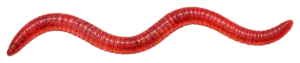
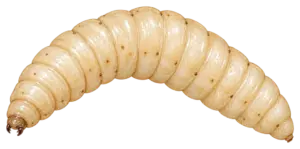
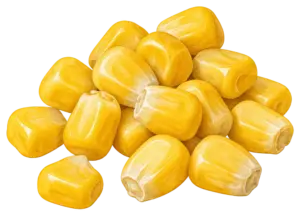
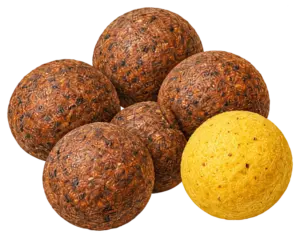
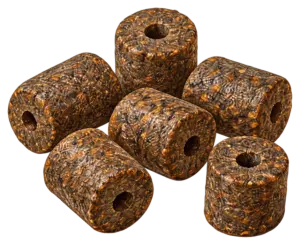
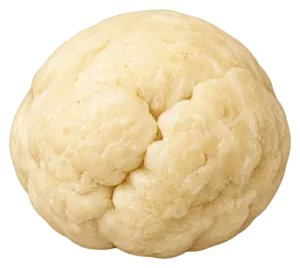
AI-generated illustrations. A click opens the lure’s page.
Rigs for these baits: Feeder rig, Waggler rig, Running lead rig, Float rig.
What to do with a bream
FishBase describes the flesh as bony, bland and soft. Bream are eaten steamed, grilled, fried or baked. How to prepare it is covered in Gutting, Filleting and Smoking.
What you need to observe
Whether a closed season (Schonzeit) or minimum size (Mindestmaß) applies to bream in your water is regulated by the federal states (Bundesland). We give figures only with date and source; the fisheries regulation of your federal state and your fishing permit (Erlaubnisschein) are always what counts. You will find a list of links to the official sources in the Catch calendar.
A vertebrate may only be killed under effective stunning or, where that is reasonable, avoiding pain (§ 4 Tierschutzgesetz). Anyone who kills one without good reason is liable to punishment (§ 17). How to do this with a fish is covered in Stunning and killing.
Protected, undersized or, within a slot limit, oversized bream you return gently with wet hands (Returning fish). Returning fish sits in tension with animal welfare law and is permitted only in line with the management aim and the law of your federal state. The IUCN rates the bream as least concern.
What closed season, minimum size and harvest slot mean and where to find them is explained on the page Closed season and minimum size explained.
What state law says about the closed season and minimum size for this species is in the „Auf einen Blick“ box on the state pages for Berlin, Brandenburg and Saxony. For the other states our overview does not list this species; there the state fisheries regulation (Landesfischereiverordnung) applies.
Frequently asked questions (FAQ)
How do I tell a bream from a silver bream?
The silver bream stays smaller, has larger eyes, a less protrusible mouth and shorter pectoral fins that, laid back, do not reach the base of the pelvic fins. The bream has very long pectoral fins and usually grows 30 to 50 centimetres long.
When do big bream bite?
Usually at night in the shallow bank water; by day large fish often sit in the deep. At spawning time in early summer they come to the bank. It is important that you groundbait beforehand so that the shoal stays in the swim.
What is a lift bite?
The bream takes the bait and lifts the shot lying on the bottom as it does so. The float rises, tips flat onto the water and only then goes under. You can often recognise the species by this alone.
Sources
The rating of catch chances is an editorial assessment. The facts come from these sources, and the text is worded in our own words. The illustration is an original design by Angel Momente in the style of a natural history plate (AI-generated, see the AI notice).
- Landesfischereiverband Bayern: Fischlexikon (Laichzeit, Lebensraum, Nahrung, Aktivität)
- Blinker: Steckbrief Brasse (Merkmale, Lebensweise, Hebebiss)
- Autonome Provinz Bozen, Forstdienst: Brachse, Blei (Laichzeit Mai bis Juli je nach Wasserwärme)
- LAWA-Projekt O 10.20 (Leibniz-IGB, 2021): Temperaturempfindlichkeiten der Fischgemeinschaften
- FishBase: Abramis brama (Höchstalter, Lebensraum)
- DTU Aqua: Fiskebiologi, Brasen (Abramis brama)
- Rote-Liste-Zentrum: Blei (Brasse), Rote Liste der Süßwasserfische Deutschlands 2023: ungefährdet
- Tierschutzgesetz § 4: Töten von Tieren
- Tierschutzgesetz § 17: Straftaten
- Blinker: Brassen angeln, Grundlagen und die besten Methoden (Schnurstärken, Fangzeit im Jahr)
- Blinker: 10 Tipps für große Brassen (Vorfachstärke)
- Blinker: Feeder-Taktik auf Brassen im Winter (Fänge bei Frost am Rhein)
- Blinker: Feedern auf Skimmer, Brassen zur kalten Jahreszeit (Winterstandplätze)
- Wikipedia: Brasse (Fisch)
- Blinker: Brassen fangen im Sommer (Standplätze nach Tageszeit, Fangzeiten)
Created with AI support from the sources listed. Figures only appear in the text if a source gives them. Last updated: 20 November 2026. Found a mistake? Write to us. Who is behind this site: About me.
More in the lexicon
- All fish species at a glance
- Catch calendar – month, water temperature and profile for 93 species
- Line calculator – breaking strain after the knot, drag guideline, backing
- Angling methods