
Knowledge · Lures
Bread
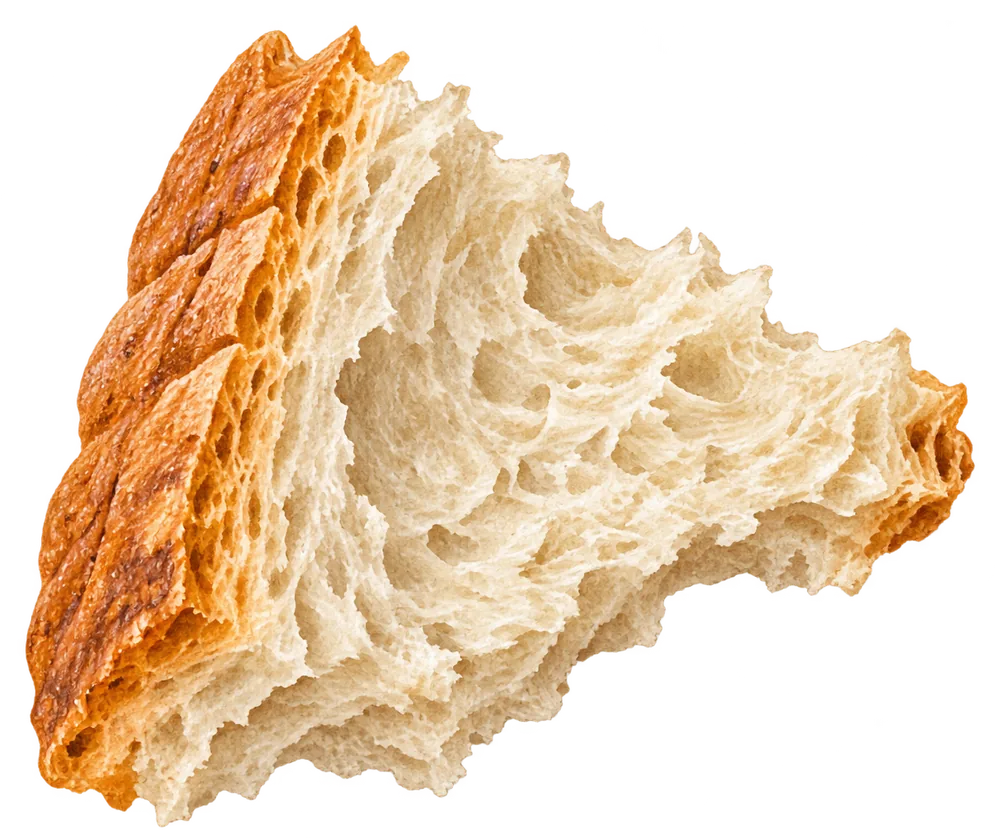
Plant-based baits · Stationary fishing with a float or on the bottom
Bread is the classic among surface baits: a flake on a free line brings chub, carp and ide to the top, and you see the bite with your own eyes. As tough dough or a sunken flake, bread also catches on the bottom. It costs little and sits in every kitchen.
- Water depth
- Surface to bottom
- Presentation
- Let it drift without tension; dough resting on the bottom
- Fishing method
- Waiting game with a float or on the bottom
- Category
- Plant-based baits
chubcarpidegrass carpbighead carpsilver carpbrown bullhead / Katzenwels
How it works
Bread works through sight, smell and movement. The flake floats, soaks up water and can be improved with a flavour spray; crumbs sink slowly and draw fish in. Chub and carp often rise to bread-like flotsam, and the bite is an audible slurp at the surface.
Bread with a sturdy crust holds best. Plain brown or mixed-grain bread has a firm crust and a dense inside; soft white bread only works if you can see the fish and fish close in. Any bread gets tougher if it lies for a day or two with a splash of water in a sealed bag. Shops also sell floating bread with a high binder content that stays on the hook for a long time even when wet.
A dough can be kneaded from white bread, toast or crusty bread with water. Large dough balls belong on a dough spiral on the hair; with small ones the hook point stays free. A firmly kneaded flake with the air pressed out sinks slowly. An angler on the Treene reports that big ide and other coarse fish take sinking flakes rather than floating ones.
How to present the bait
Let it drift without tension; dough resting on the bottom
Schematic illustration, AI-generated.
- present
- drifts with wind or current
- keep the line taut
- cast again
Anatomy
The points on the picture above explain the most important parts – on hover or tap.
- Crust: Tough and buoyant: this is where the hook holds best.
- Crumb: Soft and loose, soaks up water and can be flavoured.
- Loose edge: Don’t squeeze it tight if it is meant to drift. To make it sink, you squeeze the air out.
Rig in three steps
- 1. Free lineJust main line and hook; the bread provides the casting weight. For fish close to the bank.
- 2. Bubble float for distanceClear, half filled with water, fixed with a stop or two shot at a distance from the hook.
- 3. Paste on the bottomKneaded bread on a bottom rig. Large balls go on a paste spiral on the hair, small ones with the hook point left free. Running-weight rig step by step
Drawings: AI-generated, schematic.
When the target fish are in season
Hardly any chancePossibleGoodPeak seasonValues from the catch calendar.
When and where
Traditionally bread is a summer bait, but the season starts earlier. In spring, carp seek out the quickly warming shallows and take floating bread there; it works most reliably from the end of the spawning period and in early autumn. Chub also take bread in winter: in cloudy high water a pale flake stands out especially, and in severe cold a small amount of soaked, squeezed-out bread is enough as feed.
Good spots are carpets of flotsam, pools and eddies where wind and current push food together, plus places where walkers feed ducks. In shallow, manageable lakes carp are never far from the surface; on big lakes you concentrate on shallows and banks. Waterfowl are the difficulty: where ducks swim, they get the bread before the fish. Then a sunken flake or a change of spot helps. If coarse fish interfere, some carp anglers use floating pellets or floating dog food.
How to choose bread, hook and line
- A piece with crust Take a piece of bread with a sturdy crust; it holds best that way.
- Hook through the crust Push the hook through the tough crust, where it holds best.
- Leave the edge loose Don’t squeeze the flake tight if it is meant to drift. To make it sink, you squeeze the air out.
- Point free or hidden This is disputed: some leave the point free so the hook grips reliably, others hide it almost entirely in the flake because carp inspect closely.
For stalking chub on the river you take brown or mixed-grain bread or a bread roll, for carp at the bank toast or rolls. Bring plenty: part of it goes into the water without a hook so the fish stay in the mood.
The hook size depends on the fish. For carp at the surface, authors name sturdy, sharp hooks in sizes 6 to 2 or 4 to 6, for ide size 4 to 8. For chub with a bubble float, a hook with a not-too-small bend on 0,18 mm mono fits. Shapes and sizes are explained on the Fishing hooks page.
Whether the hook point should show is disputed. Some anglers leave it free so the hook grips reliably, others hide it almost entirely in the flake because carp inspect closely.
How to feed bread in moderation
According to the fact check by the Anglerverband Niedersachsen, bread products, mostly breadcrumbs, make up just under a third of German anglers‘ groundbait. The association considers eutrophication caused by anglers often unlikely and points to other nutrient sources such as fertiliser and waterfowl droppings.
The exam questions of the state angling exam in Bavaria (Staatliche Fischerprüfung) judge excessive groundbaiting differently: it raises nitrogen and phosphorus and worsens water quality. So only feed as much as you need to watch the fish.
Whether and how much you may groundbait is regulated by the federal state (Bundesland), the water rules (Gewässerordnung) and the fishing permit (Erlaubnisschein). The water rules of the Landesanglerverband Brandenburg, for example, limit the amount of feed per fishing day and ban bait boats and drones. Read the rules of your water before you settle in.
How to fish the flake step by step
First feed in a few pieces of bread and watch whether the fish feed from the surface. Only then do you put on bait. Surface fishing is 99 percent feeding, watching, feeding again and waiting, writes one carp angler.
Cast in above the fish, at least five metres for chub, and let the flake drift without tension. Give line so it does not drag a furrow. Carp often ignore a flake for a long time and then suddenly suck it in. After a missed bite check the flake, because the hook may have come loose and sunk.
With a shoal of chub you catch a few fish, then change spot, because the fight scares the group. Play the fish out of the shoal quickly and land it a little downstream, best on an unhooking mat.
Keep it fresh and present it
Keeping it fresh: store natural baits cool and in the shade, take only as much as necessary and do not tip leftovers into the water. When baiting up, the hook point must stay free so that the strike takes hold.
Bread, or another bait after all?
| Baits and lures | Depth | Presentation | Take this lure if … |
|---|---|---|---|
| Bread | Surface to bottom | Let it drift without tension; dough resting on the bottom | this page |
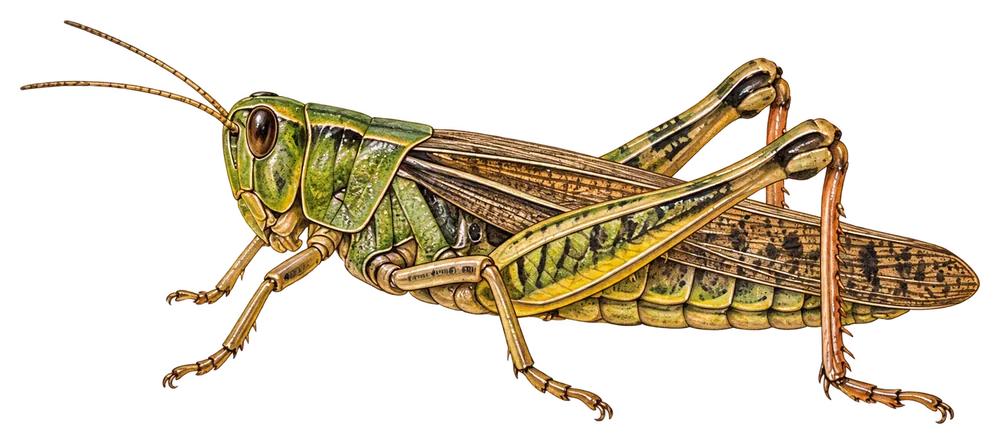 Insects | Surface | Drifts on the surface, in a stream also slightly under water | you catch chub and trout at the surface in high summer |
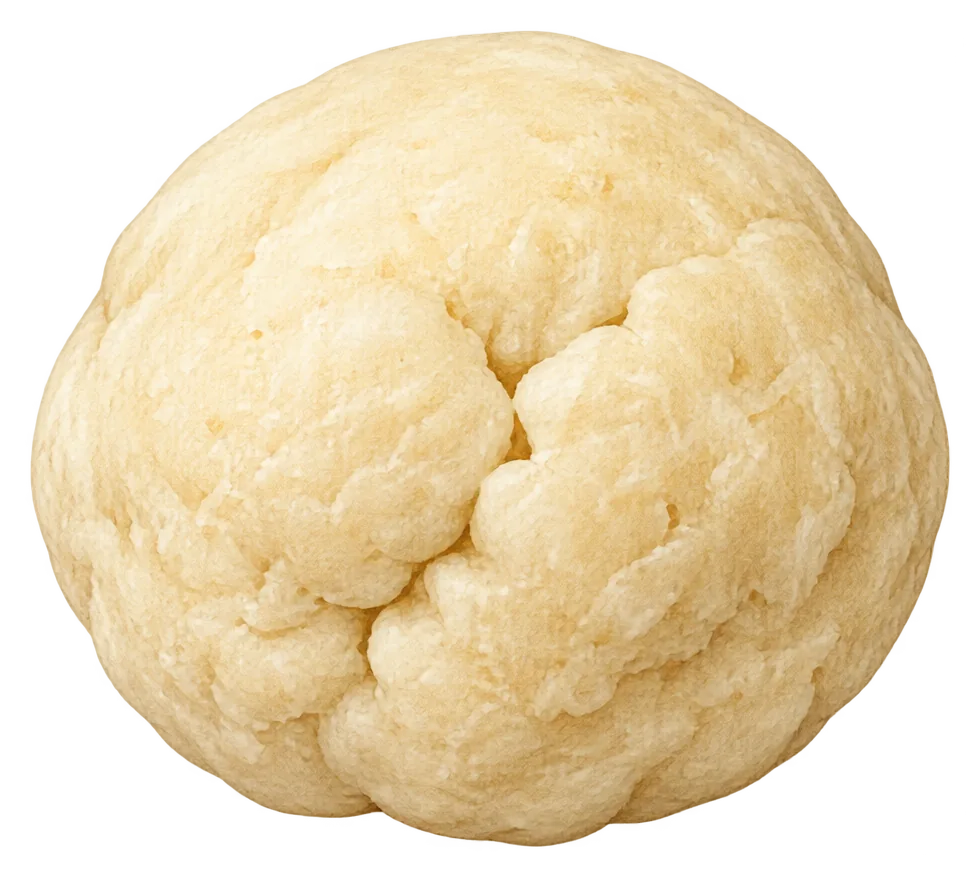 Bait paste | On the bottom or buoyant | Stationary on a float or on the bottom, towed slowly on a trout lake | you want to make the bait kneadable with flavour and present it on the bottom or under the float |
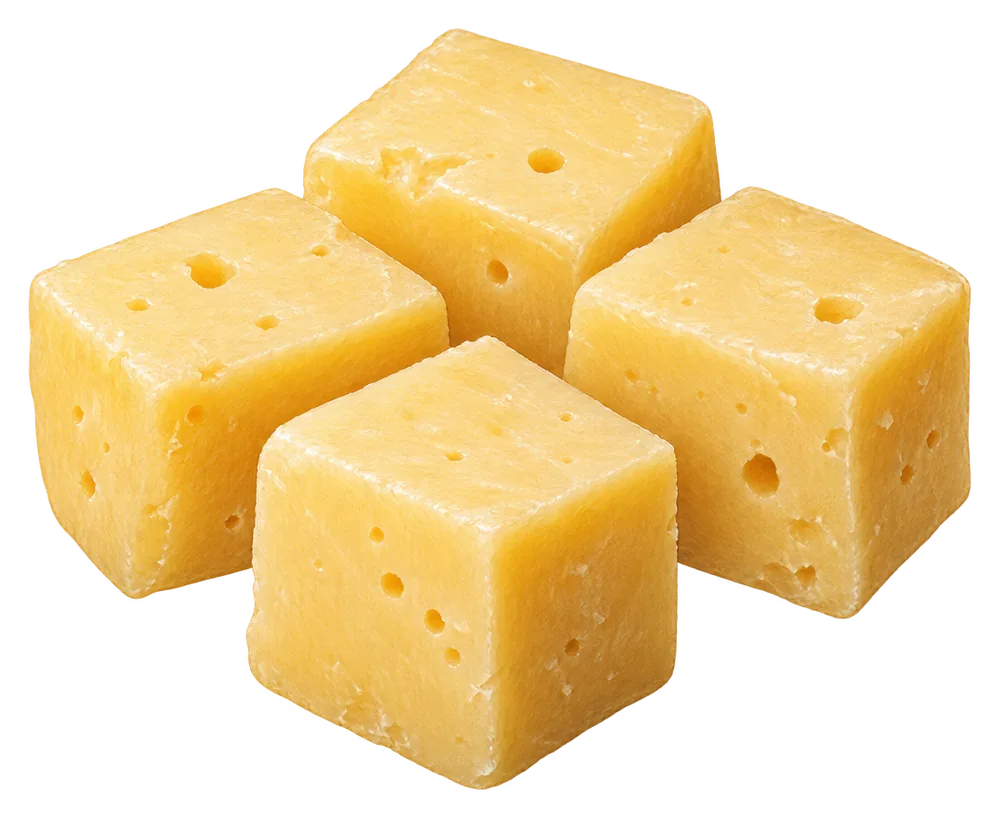 Cheese | Bottom | Stationary on the bottom, paste also drifting | you sit for chub and barbel on the bottom in winter |
What you need
- Soft, light rodPuts the flake down quietly, also possible as a float rod. More on this
- Monofilament lineAbout 0,18 mm for chub, stronger for carp at the surface. More on this
- Polarised glassesShow you feeding fish below the surface. More on this
- Unhooking matProtects big carp and chub when unhooking. More on this
More on the method: Float fishing and Bottom fishing.
At a glance
Editorial assessment, not measured values.
If it does not work
Use a piece with crust and let the bread go tough in a bag for a day or two first. A bubble float helps for distance.
Let it drift without tension, give line and be patient. Carp inspect closely, and some only turn after minutes. Bait up so the hook is less visible.
Change spot or offer a firmly kneaded, sinking flake that the birds can’t reach.
Check the flake. The hook may have come free, with soft bread or after a long drift. Re-bait with a fresh one.
Play fish out of the shoal quickly, land them a little downstream and then change spot.
Feed first and watch until fish feed from the surface. Then place the hookbait among the pieces of feed.
Frequently asked questions
Which bread is suitable for fishing?
For chub plain brown or mixed-grain bread with a firm crust, for carp at the bank also toast or rolls. White bread holds worse and is mainly suited to short range.
How do I make bread hold better on the hook?
Put it in a sealed bag with a splash of water for a day or two, then it turns tough. Reach for pieces with crust, or take floating bread with a high binder content.
Am I allowed to feed bread?
That depends on state law, the water rules (Gewässerordnung) and your fishing permit (Erlaubnisschein). Some water rules limit the amount of feed or ban baiting up altogether. Overfeeding loads the water with nitrogen and phosphorus.
Which hook suits a bread flake?
For carp at the surface, a strong, sharp hook in sizes 4 to 6 or 6 to 2; for ide, 4 to 8. At short range the hook can go straight on the main line.
Does bread catch fish in winter too?
Yes, chub above all. In cloudy flood water a pale flake stands out. In severe cold, feed only a small amount of soaked bread, or no feed at all.
Before fishing, the current permits, state rules and water rules apply: bait bans, number of hooks, closed seasons, protected species and catch limits can differ. Many federal states expressly ban live baitfish. Take bait remains and packaging away with you. All details are guide values without guarantee and do not replace legal advice.
Sources
- Blinker: Brot als Friedfischköder für den Sommer
- Blinker: Angeln auf Döbel mit Brot
- Blinker: Döbel mit der Wasserkugel
- Rute & Rolle: Mit Schwimmbrot auf Karpfen
- Rute & Rolle: Angeln mit Schwimmbrot auf Karpfen
- Rute & Rolle: Brotflocke, noch besser serviert
- Fisch & Fang: Brotflocke auf Talfahrt
- Fisch & Fang: 13 Karpfen-Mythen auf dem Prüfstand
- Fisch & Fang: 50 Tipps für das Döbelangeln
- Landesfischereiverband Baden-Württemberg: Gerätekunde
- Landesanstalt für Landwirtschaft Bayern: Fragenkatalog zur Fischerprüfung
- Anglerverband Niedersachsen: Faktencheck Anfüttern
- Landesanglerverband Brandenburg: Gewässerordnung
The sources explain terms and basic principles. Presentation and values are editorial starting points and depend on water, weather and bait.
More plant-based baits
 Sweetcorn & particles
 Boilies
 Pellets
 Potatoes & fruit
Created with AI support from the sources named (AI notice). Last updated: 23 October 2026. Found a mistake? Write to us. Who is behind the site: About me.