
Knowledge · Lures
Pellets
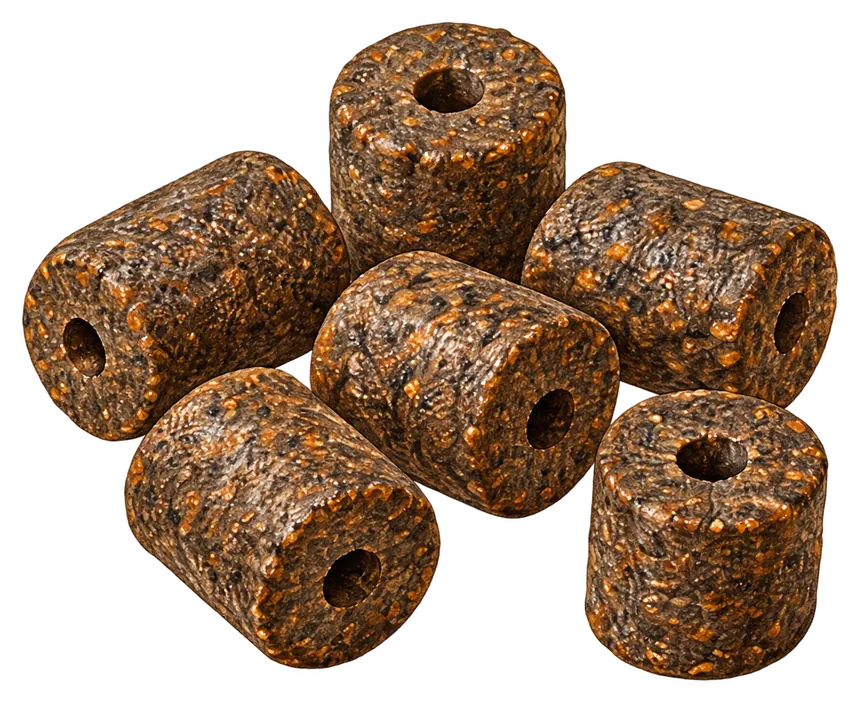
Plant-based baits · Stationary fishing with a float or on the bottom
Pellets come from fish farming and are now an important bait for coarse fish. They range from 1 to about 20 millimetres, hard or soft, sinking or floating. On the feeder and the method feeder they are almost standard.
- Water depth
- Bottom
- Presentation
- Stationary on the bottom, often in the feeder
- Fishing method
- Waiting game with a float or on the bottom
- Category
- Plant-based baits
How it works
Pellets are pressed feed granules. They come from aquaculture, where they serve as high-energy fish feed, and consist of things like fishmeal, soya and cereal flours and fish and vegetable oils, sometimes with milk protein and flavours. Their appeal lies in smell and taste. Halibut pellets smell strongly of fish, are dense and oily, and also stand up to current.
Pellets differ in hardness and buoyancy. Hard pellets can only be presented on a band or drilled on the hair; soft and swollen ones, the expanders, go straight on the hook. Sinking pellets lie on the bottom, slow-sinking ones hover just above it, pop-up pellets float. Micro pellets of 1 to 3 millimetres serve as feed, large ones of 8 to 20 millimetres target carp and barbel.
In winter, expanders are important hookbaits for carp and other coarse fish. For carp in shallow water and for big fish, many anglers rely on hard pellets in summer: small fish struggle to crack them, and they make a noise when thrown in.
Pellets fill fish to different degrees. Pellets for carp contain less fishmeal and fibre than trout feed, break down faster and fill the fish less. So they attract without making the fish full.
How to present the bait
Stationary on the bottom, often in the feeder
Schematic illustration, AI-generated.
- cast out
- lies on the bottom or hangs from the float
- wait for the bite
- re-bait
Anatomy
The points on the picture above explain the most important parts – on hover or tap.
- Drilled hole: Pre-drilled hard pellets go on the hair with a baiting needle and a stop.
- Pressed body: Fishmeal, cereal flours and oils, pressed firmly together.
- Outer edge: This is where the pellet band sits, a small rubber ring that holds the pellet on the hair.
Rig in three steps
- 1. Pellet band or hairHold a hard pellet on the hair with the rubber ring, or put a drilled one on with a stop; soft pellets go straight on the hook. Hair rig step by step
- 2. Short hooklengthOn the method feeder the hooklength is short so that the bait lies in the feed.
- 3. Feeder on the bottomThe filled feeder lies on the bottom and releases the feed right at the hook. Running-weight rig step by step
Drawings: AI-generated, schematic.
When the target fish are in season
Hardly any chancePossibleGoodPeak seasonValues from the catch calendar.
When and where
Pellets are a basic bait for the feeder and method feeder, and with soft pellets for the float too. On the method feeder the bait sits in the middle of a cap of pressed feed. As hookbait you usually take a pellet of 6 or 8 millimetres when the feeder holds 4 millimetres. On rivers with barbel and chub, scatter 8 to 10 millimetres upstream and, for barbel, put two 10-millimetre pellets on the hair; for chub one is often enough.
In winter carp want small morsels, such as grains of sweetcorn or pellets, rather than big baits like boilies. Which kind works depends on the water. Anglers keep flavours and sizes ready in several variants and switch until bites come. Sweet flavours are considered an option in cool weather, savoury ones in warm.
Bream also suck in pellets with their tube-like mouths. As a guide, 4 millimetres is feed only, 6 to 8 millimetres suits bream of 500 to 750 grams and 10 to 14 millimetres bream up to about 2 kilograms. When fishing for ide, a share of pellets or sweetcorn in the feed reduces the number of freeloaders.
Pellets also attract roach and other whitefish. The water sets the amount and the aids allowed: some water rules limit the amount of feed per fishing day and ban bait boats. Only top up once fish have settled on the spot, as the Anglerverband Niedersachsen advises.
How to choose size and attachment
- Hard: never impale You never impale a hard pellet directly; it goes on a pellet band or the hair.
- Pellet band on the hair The simplest way to hold a pellet on the hair is a pellet band. You pull the small rubber ring on with pellet pliers.
- Drilled with a stop Rock-hard halibut pellets come pre-drilled and go on the hair with a stop.
- Soft: straight on the hook You put soft pellets straight on the hook.
Feed and hookbait do not have to be the same size. If you feed 4-millimetre pellets in the feeder, put a slightly larger pellet of 6 or 8 millimetres on the hook. For stocked young carp, 4 millimetres on a band is enough; for big fish, up to 8 millimetres.
A hard pellet does not stay on the hook. The simplest attachment is the pellet band, a small rubber ring that holds the pellet on the hair and can be pulled on with pellet pliers. Halibut pellets are usually rock hard and therefore pre-drilled; they go on the hair with a stop. Without a drill, a loop of hooklength material that wraps around the pellet works. You put soft pellets straight on the hook.
How to prepare pellets for the feeder
Pellets that do not stick fall off the method feeder in flight. You can dampen micro pellets lightly: soak for about a minute, drain and leave to absorb for at least ten minutes. If a handful holds together under light pressure, it is ready. Liquid flavours can make the pellets stickier still.
Larger amounts for a feeding spot go out with a baiting spoon, smaller ones for topping up with a catapult. A little feed is often the key when you want fish to find the hook quickly. Small feed pellets plus larger hook pellets keep the spot attractive without overfeeding the bream.
Keep it fresh and present it
Keeping it fresh: store natural baits cool and in the shade, take only as much as necessary and do not tip leftovers into the water. When baiting up, the hook point must stay free so that the strike takes hold.
Pellets or another bait after all?
| Baits and lures | Depth | Presentation | Take this lure if … |
|---|---|---|---|
| Pellets | Bottom | Stationary on the bottom, often in the feeder | this page |
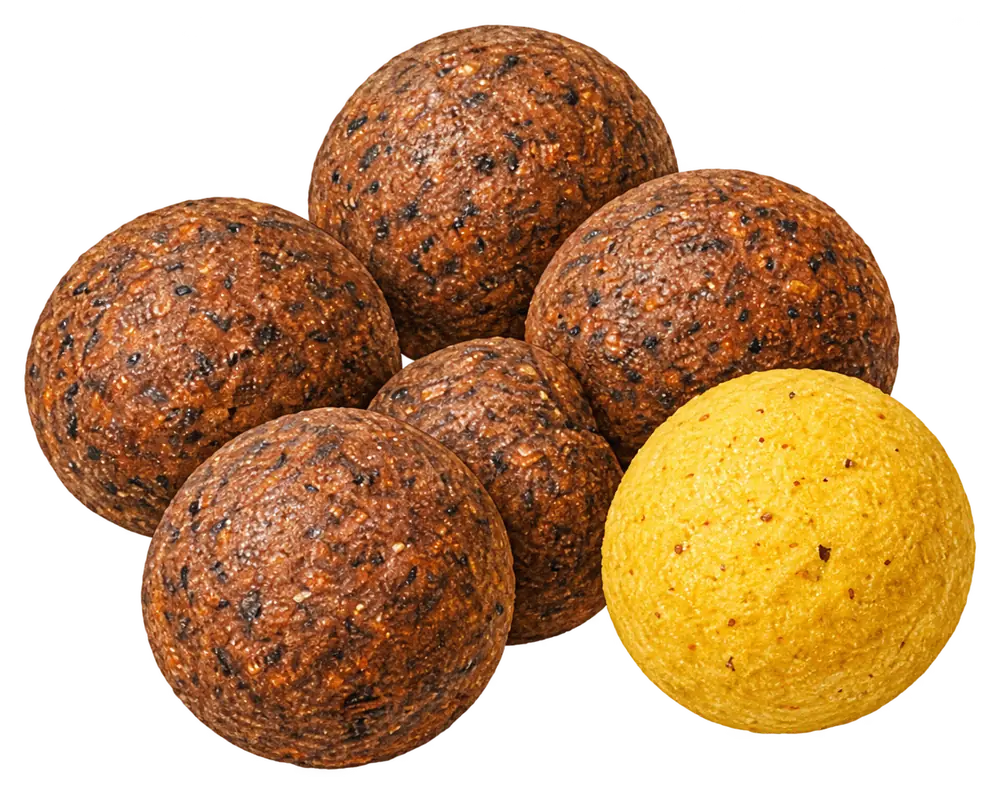 Boilies | Bottom, pop-ups just above it | Resting on the bottom, on the hair beside the hook | you target big carp over a longer time and want a hard bait on the hair |
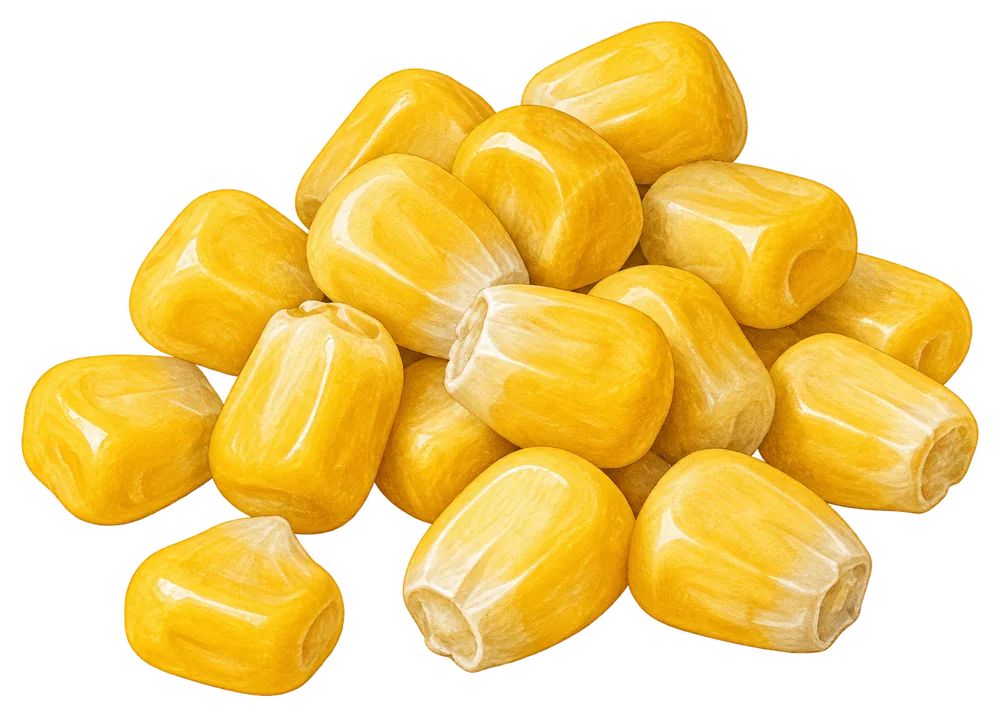 Sweetcorn & particles | Bottom | Resting on the bottom, usually over some feed | you want a cheap bait without special tackle |
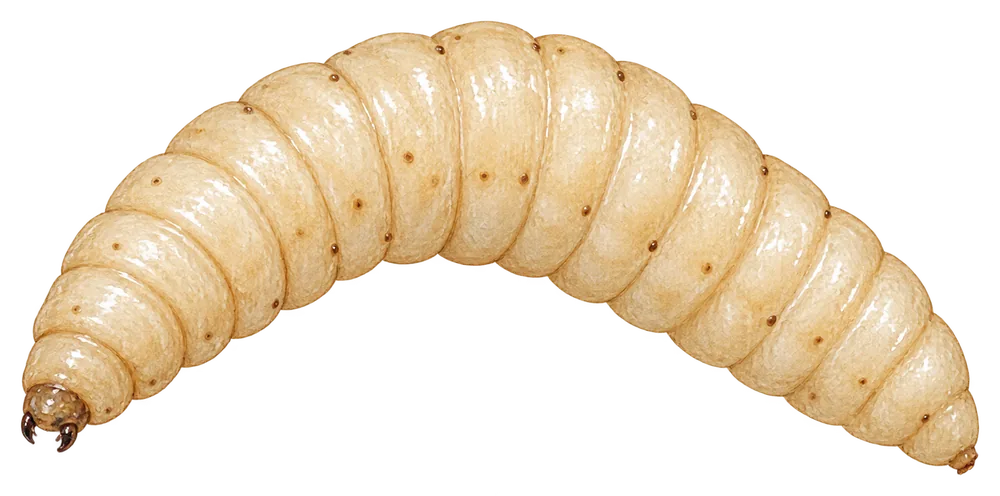 Maggots & larvae | Bottom to mid-water | Stationary on a float or ground rig, in the feed as an attractor | you fish for roach with a fine float |
What you need
- Feeder rodThe fine tip shows the bite; the casting weight must suit the filled feeder. More
- LineBreaking strain to suit the feeder weight and the target fish. More
- Pellet bands, baiting needle, stopsFor attaching hard pellets to the hair. More
- Feeder and method feederPresses the micro pellets evenly onto the feeder. More
More on the method: float fishing, bottom fishing and carp fishing.
At a glance
Editorial assessment, not measured values.
If it does not work
Never impale hard pellets directly; present them with pellet band or on a hair. Soft pellets may go straight onto the hook.
Soak micro pellets briefly and let them take up the water until a handful can be squeezed together. Ready-made pellets vary in how well they stick.
Offer a slightly larger pellet on the hook than in the feed, for example 6 or 8 instead of 4 millimetres.
Hard pellets on a band or hair stand up to small fish longer than soft ones.
Feed a little at a time and top up only when fish are on the spot. Large amounts fill the fish up.
Change variety, flavour and size. Carry a selection of flavours and sizes and swap to sweetcorn if needed.
Frequently asked questions
What are halibut pellets?
Dense, oily pellets with a strong fish smell. For carp fishing they are usually rock hard and therefore pre-drilled; on rivers they also work in current.
How do I attach a hard pellet?
With a pellet band, a small rubber ring on the hair, or with a baiting needle and stop for pre-drilled pellets. Without a drill, a loop of hooklength material helps.
Which size for what?
Micro pellets of 1 to 3 millimetres as feed in the feeder, usually 6 to 8 millimetres on the hook. Large pellets of 8 to 20 millimetres target carp and barbel.
Do I have to soak pellets?
For the method feeder, yes: dampen micro pellets briefly and leave them for at least ten minutes so they stick. As hookbait you use hard pellets straight from the bag.
Do bream take pellets?
Yes, they suck them in with their tube-like mouths. Depending on the size of the fish, 6 to 14 millimetres fit, best with a method feeder or feeder.
How many pellets should I feed?
Little and targeted: a small amount at first, then top up only when fish are on the spot. Large amounts fill the fish up.
Before fishing, the current permits, state rules and water rules apply: bait bans, number of hooks, closed seasons, protected species and catch limits can differ. Many federal states expressly ban live baitfish. Take bait remains and packaging away with you. All details are guide values without guarantee and do not replace legal advice.
Sources
- Blinker: Angeln mit Pellets, mehr als nur Fischfutter
- Blinker: Brassen angeln mit Pellets
- Angling Times: The best Method feeder hookbaits
- Angling Times: Baits to improve your Method feeder fishing
- Angling Times: Hard vs soft pellets on commercials
- Angling Times: Catch more chub and barbel with pellets
- Angling Times: Hair-rigging pellets using the lasso method
- Fisch & Fang: Die Zeit der Pellets, Winterkarpfen
- Rute & Rolle: Karpfenfutter, bei die Fische
- Rute & Rolle: Alles auf Aland
- Anglerverband Niedersachsen: Faktencheck Anfüttern
- Landesanglerverband Brandenburg: Gewässerordnung
The sources explain terms and basic principles. Presentation and values are editorial starting points and depend on water, weather and bait.
More plant-based baits
 Bread
 Dough paste
 Potatoes & fruit
 Cheese
Created with AI support from the sources named (AI notice). Last updated: 25 October 2026. Found a mistake? Write to us. Who is behind the site: About me.