
Knowledge – Fish
Ide: Identification, swims, baits
The ide (Leuciscus idus), called Nerfling or Orfe in the south, is a member of the carp family found in large rivers and lakes. In summer it stands just below the surface and migrates upstream in spring to spawn. Among the cyprinids it tolerates salt water best, which is why it also occurs in the brackish water of the Baltic Sea.
In brief: You catch the ide best in August. Good spots on a river: undercut banks; on a lake: the surface. Proven baits: small spinners and mini crankbaits; when sitting in, maggots, casters, sweetcorn or bread flake; in summer also dry flies. Bavaria protects the ide, called Nerfling there, with a closed season (Schonzeit) from 1 March to 30 April and a minimum size (Mindestmaß) of 30 cm. In Rhineland-Palatinate and Thuringia it is protected all year (as of October 2026). Step by step: Fishing for ide.
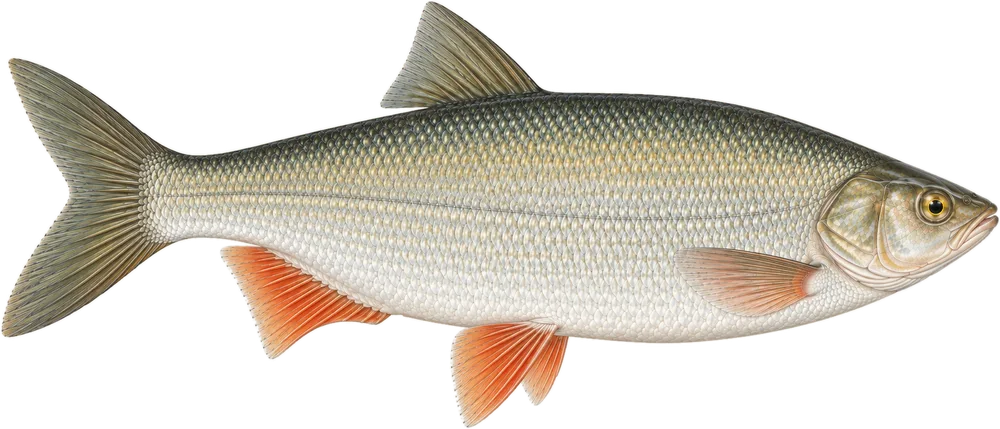
- Small scales: 55 to 60 along the lateral line, noticeably larger in the chub
- Narrow mouth pointing slightly upwards, without barbels, iris yellowish
- Edge of the anal fin curved inwards (concave)
Catch chances through the year
- Hardly any chance
- Possible
- Good
- Peak season
- Spawning (observe the closed season)
Editorial assessment for waters in Germany, not a measured value and no guarantee. Spawning time is not the same as the legal closed season.
Species profile and sources in the catch calendarAll species compared month by monthThe rules of your federal state
How to recognise the ide
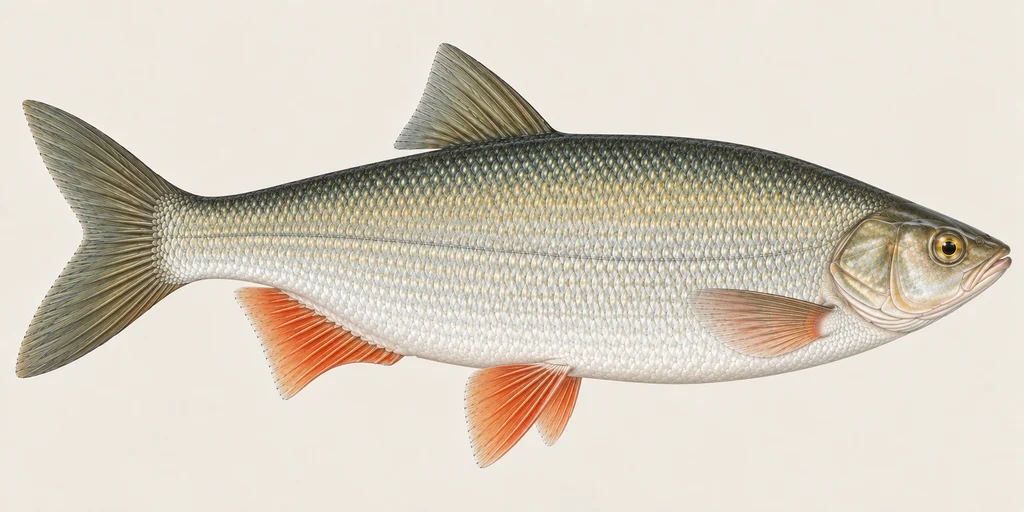
The ide is slightly deep-backed and flattened from the sides, with a small head. The mouth opening is narrow, terminal and points slightly upwards. The iris is usually golden yellow. The back shimmers greenish to bluish grey, the flanks are silvery, and the pectoral, pelvic and anal fins are reddish.
The surest way to identify it is the anal fin: its rear edge is notched, that is, curved inwards. Added to this are small scales, with 55 to 60 counted along the lateral line. At spawning time the flanks gleam brassy, and the males develop spawning tubercles.
Typical sizes are 30 to 50 centimetres. The maximum sizes vary depending on the source between 60 centimetres (Österreichischer Fischereiverband, Hesse report), 80 centimetres (Nationalpark Donau-Auen) and 85 centimetres (FishBase). FishBase also gives a highest published weight of 4 kilograms and a highest reported age of 29 years.
Young fish in particular are confused with the chub, the dace, the roach and the rudd. The chub has larger scales with a dark edge, a lower mouth opening and an anal fin that bulges outwards. On the ide the scales are distinctly smaller, the anal fin is notched, and the tail fin is more deeply forked than on the chub.
Roach and rudd also have larger scales. On the related Frauennerfling (Rutilus virgo) the mouth is inferior and the scales are considerably larger. The mouth distinguishes the ide from the asp: on the asp it is superior, on the ide terminal. According to FishBase the two occasionally hybridise. The orange golden orfe that swims in garden ponds is a cultivated form of the ide.
Side by side
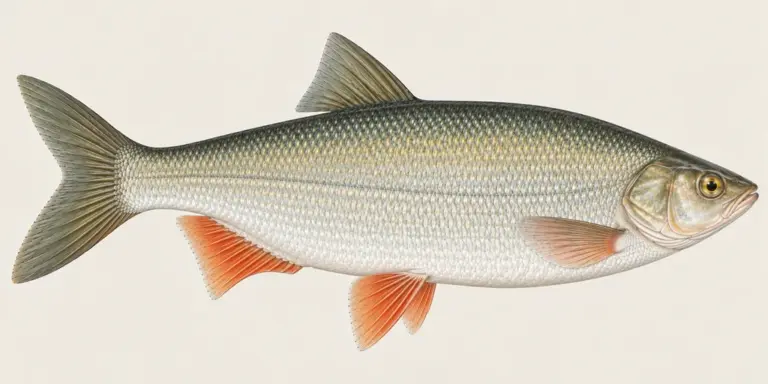
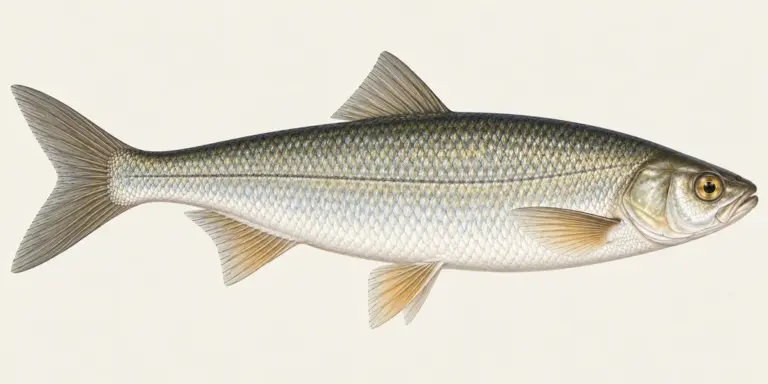
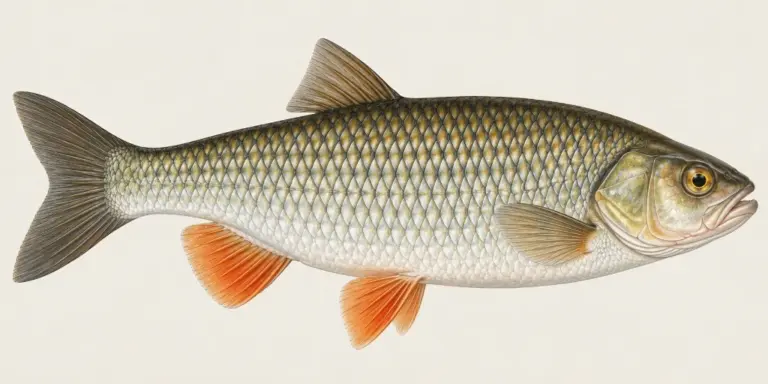
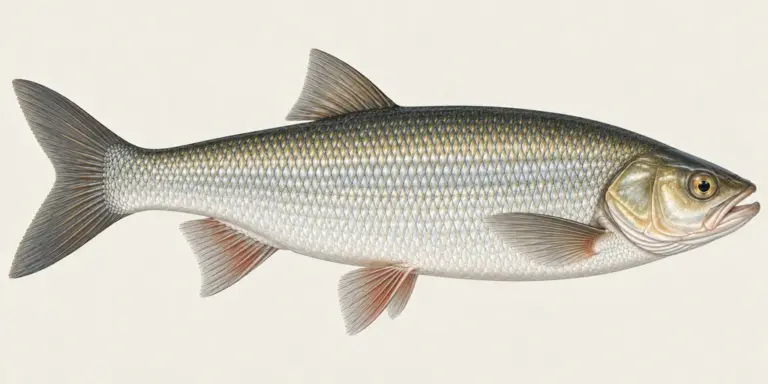
AI-generated illustrations.
Where the ide lives
The ide inhabits the lower reaches of medium and larger rivers in the barbel and bream zones (Fish zones in a river) as well as lakes. In the Danube it is a typical cyprinid and prefers to stand in the free-flowing stretch. It also occurs in the brackish water of the Baltic Sea.
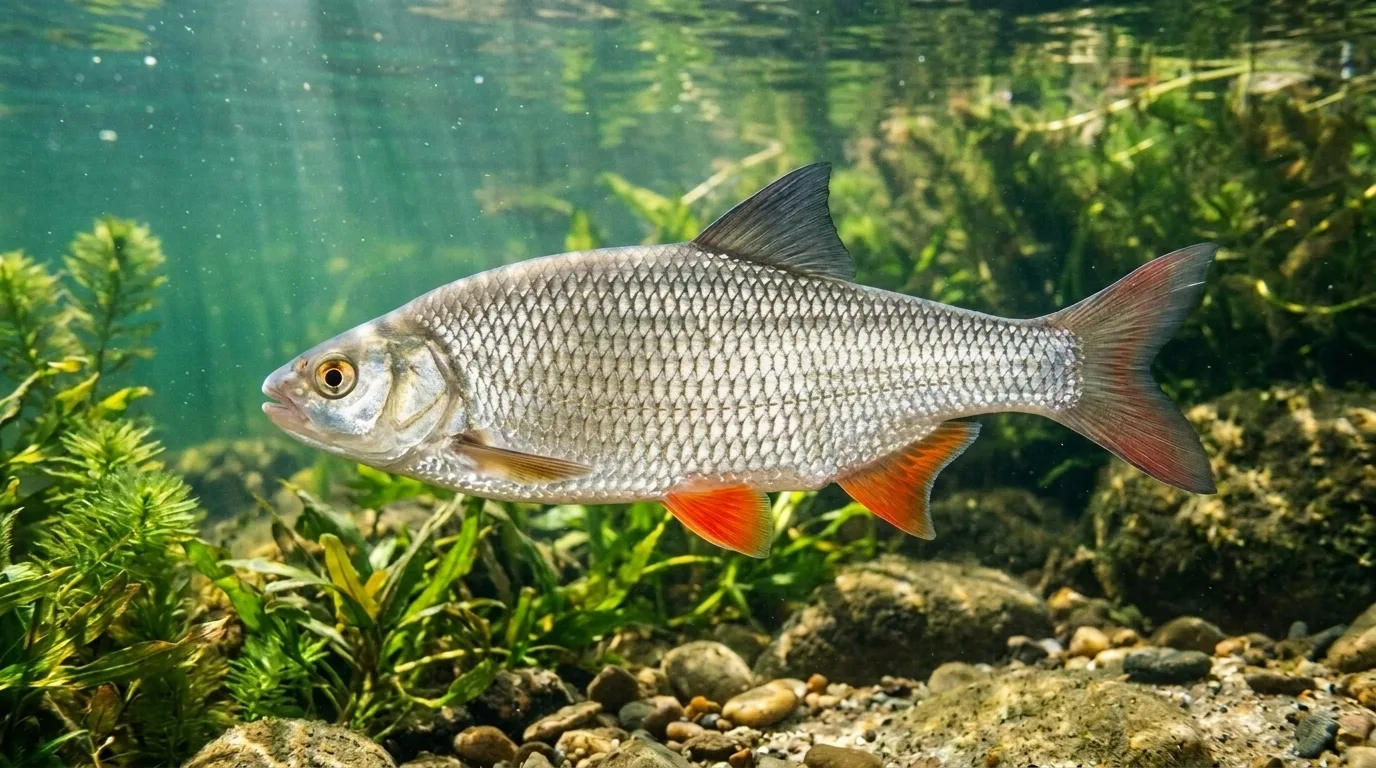
In summer it stays near the surface. Depending on the water it stands at the edges of the current, at groyne heads and weirs, over weed and gravel beds and on shallow, sandy banks, but also in calmer, shallow stretches with a weak current and soft bottom. In open, strong current you find it mainly where cover is lacking. It finds shelter under overhanging bushes, at bridge piers, at driftwood and boats, at the edges of the current and at the mouths of small ditches and streams.
In autumn it withdraws to mid-water and to the area near the bottom of deeper river bends, often below weirs and in front of confluences. In winter it moves into deeper, quiet zones. Little is known about its winter behaviour.
Holding spots in the picture
Choose the season and time of day: the picture shows where the species stands then. Spots outlined in red apply only in the chosen season. Tap a fish or a spot in the list to bring it closer. The picture is schematic and AI-generated, every water is different.
Chance of a catch in springgoodSpawning, observe the closed seasons
Catch chance in summergood
Catch chance in autumnpossible
Catch chance in winterhardly any
- J
- F
- M
- A
- M
- J
- J
- A
- S
- O
- N
- D
Spawning season
In the river
Undercut bank, overhanging branches, timber
Ide are here only in spring, summer and autumn.
Gravelly shallow (riffle)
Ide are here only in spring.
Pools, deep spot
Ide are here only in autumn and winter.
Current seam
Ide are here only in summer.
Calm bay with aquatic plants
Ide are here only in summer.
The ide lives in shoals in the lower reaches of larger rivers. Bigger fish in smaller streams like to stand under overhanging trees and bushes, waiting for food carried down. In the Baltic Sea it also occurs in the coastal zone.
Spring: catch chances according to the catch calendar possible in March, good in April and May. The spawning season falls in this period, so observe the closed seasons. From the end of February ide move up to their spawning grounds, first singly, later in shoals. While the water is cold they stay near the bottom or in the lower mid-water. Spawning takes place in the shallows over sand and gravel, often in small tributaries.
Summer: catch chances according to the catch calendar good in June and July, peak season in August. With the warming, ide live near the surface and close to the bank. They stand at bridge piers, drifting debris, dense weed beds, current edges, groyne heads, weirs and at the mouths of small ditches and streams. Where cover is lacking, they also stand in open, strong current. On the feeder they are also caught on calmer, shallow stretches with weak current and soft bottom.
Autumn: catch chances according to the catch calendar good in September, possible in October, slim in November. As it cools, ide give up life at the surface. They move into mid-water and close to the bottom in deeper river bends, below weirs and at the mouths of small waters.
Winter: catch chances according to the catch calendar slim. In winter ide retreat into deeper, calmer water. Little is known about their wintering places.
In the lake
Deep bottom
Ide are here only in winter.
Just below the surface
Ide are here only in spring, summer and autumn.
The ide also lives in lakes, where it usually stays in a shoal near the surface. Young fish also look for food near the bank.
Spring: catch chance according to the catch calendar possible in March, good in April and May. This is the spawning period, so observe the closed seasons (Schonzeit).
Summer: catch chances according to the catch calendar good in June and July, peak season in August.
Autumn: catch chance according to the catch calendar good in September, possible in October, hardly any in November.
Winter: catch chances according to the catch calendar slim. In winter the ide retreats to deeper parts of the water.
Depth: The ide usually stays near the surface or in mid-water, sometimes also near the bottom. In winter it moves to deeper water.
Size comparison: AI-generated drawing, schematic.
What it eats and when it migrates
Young fish eat animal and plant plankton. Later worms, small crustaceans, snails, insect larvae and small fish are added. In summer the ide also grazes algal mats and hunts insects that fall onto the water. According to FishBase, large fish feed mainly on fish.
In spring the shoals move upstream, according to the Hesse expert report up to 100 kilometres, also into tributaries of the barbel and grayling zones. They spawn on sandy or gravelly bank stretches of small tributaries, streams and ditches. The eggs stick to stones and plants, and the fry hatch after 19 to 20 days. Ide reach sexual maturity in their third to fourth year. After spawning the adults migrate back downstream.
Outside the spawning season the ide roams widely through the water in summer. The LFV Bayern describes small shoals, FishBase and the Nationalpark Donau-Auen rather single fish. Large spawning shoals, on the other hand, are easy to observe.
When it bites
From the end of February the ide move up to the spawning grounds, at first singly, then in large shoals. The sources give March to May (LFV Bayern) or April to June (Österreichischer Fischereiverband) as the spawning season. While the water is cold, the fish stay near the bottom or in the lower mid-water. In the middle of the spawning shoal and during spawning they often take no bait at all.
With the summer warmth they move up to the surface and to cover. Then any bait you present just under the surface is worth a try.
In autumn they become more predatory, and that is when most fish are caught on lures. In deep winter you will hardly catch anything.
Today’s catch index needs JavaScript. Season and spawning time are in the catch calendar.
You will find the monthly overview of all species and the water temperature check in the catch calendar.
From the blog: Roach or rudd, bream or silver bream: how to tell these silver fish apart reliably
How to catch it
Step by step: Ide fishing: tips on bait, rigs and tackle – season, swims, bait, tackle and rules on one page.
In spring you fish close to the bottom. A classic is a lobworm or a bunch of maggots under a float (float fishing). Caddis larvae, also called Sprock, count as a special bait (worms, maggots and larvae). For bigger ide, the angling magazines also rely on feeder fishing: a sturdy feeder rod of 3,60 to 3,90 metres, monofilament mainline of around 0,26 millimetres and a feeder that stays put in the current. Sweetcorn or pellets in the feed keep small fish away, and one or two grains of sweetcorn or a bunch of maggots go on the hook. The bite often shows as a drop-back, and then you strike firmly.
In summer you present the bait at the surface, with a small float set shallow or a bubble float. A flake of bread works, but better are large flies, hairless caterpillars, soft-shelled beetles and, in late summer, grasshoppers. Feed beforehand, and expect ide above cover at any time. According to the Deutscher Angelfischerverband, ide, like common nase, stay at the outermost edge of the baited area. So put the bait at the edge rather than in the middle.
On small, shallow streams, ide in summer feed almost only on insects that fall onto the water. There you catch them with a dry fly, preferably bushy patterns (fly fishing, dry fly).
In autumn you take the spinning rod and fish small pilks, spinners, spoons or twisters near the bottom or in mid-water (spinning). Baitfish the length of a matchstick to a finger on a fine float are considered first choice by bottom anglers. Big ide like to stand in the eddies below weirs then.
The ide is as shy as the chub. If something disturbs it, it refuses every bait. So keep your distance from the water and move quietly.
Check the anal fin first: Before you identify a fish as an ide or a chub, look at the anal fin. If its edge is concave, you have an ide in front of you. If it curves outwards, a chub.
Fish high in summer: Bring the bait just under the surface to the cover: overhanging bushes, driftwood, weir edges. That is where the fish hold in lively current.
Present at the edge of the baited area: Ide stay at the outermost edge of the baited area. Let the rig drift at the edge instead of placing it in the middle of the feed.
Suitable lures
Small spinners and mini crankbaits; when sitting it out, maggots, casters, sweetcorn or a flake of bread; in summer also dry flies.
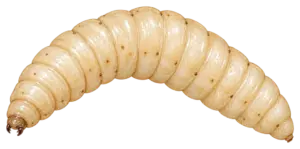
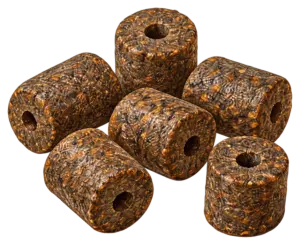
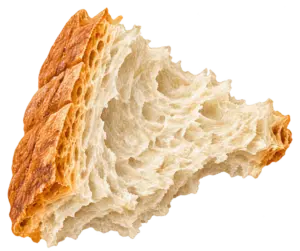
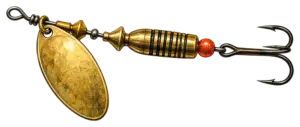
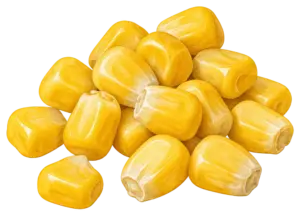
AI-generated illustrations. A click opens the lure’s page.
Rigs for these baits: running leger rig, float rig.
What ide tastes like
As a food fish the ide is not recommended. FishBase describes its flesh as not tasty. How to gut and cut it up anyway is shown in Gutting fish and Filleting fish.
What you need to observe
Closed seasons (Schonzeit), minimum sizes (Mindestmaß) and harvest windows are set by the federal states (Bundesland), and on many waters additionally by the club or leaseholder. They differ depending on the water and the time of year. We give figures only with a date and a source; always binding are the fisheries regulation of your federal state and your fishing permit (Erlaubnisschein). You will find a list of links to the official sources in the catch calendar.
A fish of legal size that you want to keep is stunned and killed straight away in line with animal welfare rules (Stunning and killing a fish). Protected fish, undersized fish and fish that are too big under a slot limit are unhooked with wet hands, ideally in the water, and returned gently (Returning a fish).
The Red List of Germany (2023) lists the ide as least concern. It notes, however, that an evaluation of measurement data from across Germany shows a clear decline and the species may be disappearing unnoticed (Rote-Liste-Zentrum). Regionally things look worse: in Lower Austria it is considered endangered, and in the Danube the stock has almost died out since the chain of power stations was built. So ask locally about any local rules for this species.
If you use baitfish for ide: many federal states (Bundesland) ban fishing with live baitfish, and in Bavaria this is stated explicitly in the implementing regulation to the Fisheries Act. Only dead baitfish are allowed, as far as your state law permits (Deadbait rig).
What closed season, minimum size and harvest slot mean and where to find them is explained on the page Closed season and minimum size explained.
What state law prescribes for this species in terms of closed season (Schonzeit) and minimum size (Mindestmaß) is in the “At a glance” box on the pages for the federal states (Bundesland) of Bavaria, Berlin, Brandenburg, Mecklenburg-Western Pomerania, North Rhine-Westphalia, Rhineland-Palatinate, Saxony and Thuringia. Our overview does not list this species for the other states; there the state fisheries regulation (Landesfischereiverordnung) is decisive.
Frequently asked questions (FAQ)
How do I tell an ide from a chub?
Best by the anal fin. In the ide its rear edge is concave, in the chub it curves outwards. The ide also has distinctly smaller scales and a narrower mouth.
When do ide move up to spawn?
From the end of February, first singly, then in large shoals. Depending on the water and source, the spawning season lies between March and June. In the spawning shoal they often do not bite.
Does the ide also live in salt water?
It occurs in the brackish water of the Baltic Sea and tolerates salt better than the other cyprinids. To spawn it moves into freshwater tributaries.
Sources
The rating of catch chances is an editorial assessment. The facts come from these sources, and the text is worded in our own words. The illustration is an original design by Angel Momente in the style of a natural history plate (AI-generated, see the AI notice).
- Landesfischereiverband Bayern: Fischlexikon (Laichzeit, Lebensraum, Nahrung, Aktivität)
- FishBase: Leuciscus idus (Schuppenzahl, Höchstalter, Lebensweise)
- Land Hessen (HLNUG): Fischökologische Untersuchung der Diemel, Artgutachten, Kapitel Aland
- Fischereibehörde Sachsen: Artenkunde, verwechselbare Fischarten (Döbel, Hasel, Aland)
- NÖ Landesfischereiverband: Fischarten in Niederösterreich, Nerfling (Lebensweise, Kennzeichen, Fangmethoden)
- Österreichischer Fischereiverband: Fischer-Handbuch, Nerfling (Größe, Laichzeit, Geschlechtsreife)
- Nationalpark Donau-Auen: Nerfling (Leuciscus idus)
- Rote-Liste-Zentrum: Aland (Rote Liste der Süßwasserfische Deutschlands 2023: ungefährdet)
- Blinker: Steckbrief Aland (Standplätze im Jahreslauf, Köder, Methoden)
- Fisch & Fang: Pirsch auf Döbel & Co. (Wanderangeln an kleinen Flüssen)
- Deutscher Angelfischerverband: Fisch des Jahres 2020, die Nase (Broschüre, Kapitel Nasenangeln)
- Bayerische Landesanstalt für Landwirtschaft: Prüfungsfragen zur Staatlichen Fischerprüfung 2023/2024 (Maulstellung, verbotene Fangmethoden)
- Blinker: Aland gezielt feedern (Standplätze, Futter im Sommer und Winter, 2026)
- Rute & Rolle: Alles auf Aland (Feedern von März bis Mai, Gerät, Köder, 2026)
- Rute & Rolle: Aland (Leuciscus idus), Fischkunde (Laichzeit März bis Juni)
- Wikipedia: Aland (Fisch) (Größe, Gewicht, Alter, Laichzeit, Verbreitung, Brackwasser)
- NÖ Landesfischereiverband: Nerfling (Aland), Standplätze im Sommer und Winter
Created with AI support from the sources listed. Figures only appear in the text if a source gives them. Last updated: 8 November 2026. Found a mistake? Write to us. Who is behind this site: About me.
More in the lexicon
- All fish species at a glance
- Catch calendar – month, water temperature and profile for 93 species
- Line calculator – breaking strain after the knot, drag guideline, backing
- Angling methods