
Knowledge · Lures
Twister
Soft baits · Spin fishing
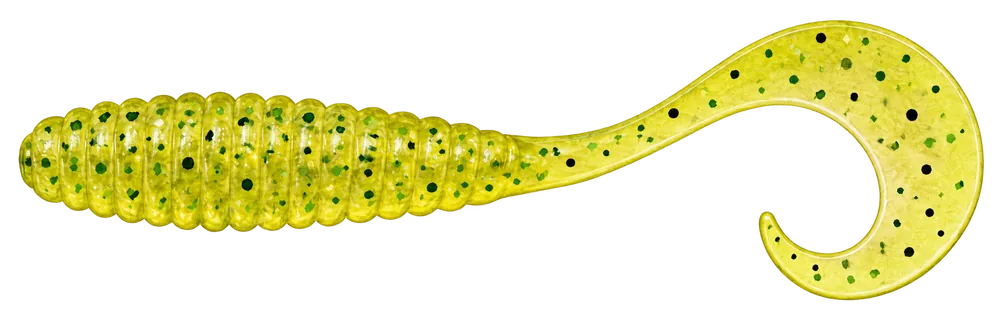
A twister is a soft plastic lure with a sickle-shaped tail. The tail beats quickly and finely even at a slow retrieve, while the body runs calmly. This different movement makes it a classic for perch and pike, and zander take it too.
- Water depth
- Bottom to mid-water
- Retrieve
- Active: reel in steadily or jig, with long sinking phases for sluggish fish
- Fishing method
- Spinning
- Category
- Soft baits
PerchZanderPikeGarfishMackerelColeyHalibutTurbotHorse mackerelSea bass
How it works
With a twister, the movement is in the tail. The sickle tail beats quickly back and forth while the slim body stays largely calm. Pike react strongly to this mix of a lively tail and a centre that is easy to aim at.
The pattern differs from that of most soft plastic shads, whose movement is always the same. Especially where fish know a lot of paddle tails, the twister works like a new stimulus. It stood in the shadow of the soft plastic shad for a long time and still catches just the same.
On the sink, the big tail brakes the lure like a parachute. That lengthens the sinking phase, keeps the lure in view for longer and makes the whole body vibrate. That makes the twister effective from the bank too. The drawback is the massive tail: it makes the lure rise quickly on the retrieve and occasionally costs bites from perch.
The twister counts as a spinning lure made of soft plastic, and the exam questions for the Bavarian angling exam (Fischerprüfung) treat it that way too. It usually sits on a single hook with a lead head; artificial lures with a single hook are regarded as kinder to fish than those with trebles.
How to work the lure
Active: reel in steadily or jig, with long sinking phases for sluggish fish
Schematic illustration, AI-generated.
- Cast
- sink to the bottom
- lift and let fall
- reel in
Anatomy
The points on the picture above explain the most important parts – on hover or tap.
- Head: This is where the jig head or an offset hook sits.
- Ribbed body: Runs calmly and steadily. The slim, soft body frees the hook well on the bite.
- Tail base: This is where the thin section begins that passes the movement on to the tail.
- Curly tail: Beats quickly and finely even at low speed, and brakes like a parachute as it sinks.
Rig in three steps
- 1. Tie on the hooklengthFluorocarbon for perch and zander. Where pike are present, a bite-proof steel or titanium leader belongs in front of it.
- 2. Thread it straight onto the jig headThe body sits centrally on the shank, and the hook point has room. Jig-head rig step by step
- 3. For weed: offset hookThe hook point is hidden in the plastic, so less weed catches on it. Texas rig step by step
Drawings: AI-generated, schematic.
When the target fish are in season
Hardly any chancePossibleGoodPeak seasonValues from the catch calendar.
When and where
Twisters can be used all year round. They are especially strong in shallow water and in weed, where a slim twister with a bulky tail gets through well on an offset hook. Even moody pike can be coaxed out of weed that way.
Perch are curious and their mood changes: one day they chase small fish at the surface, another day they feed on the bottom or in weed beds. The retrieve they accept changes accordingly. With the same lure you can wind through a feeding shoal or jig along the bottom.
When fishing for zander from the bank, twisters and soft plastic shads with a curly or hammer tail score, because the long sinking phase brings bites. In a stream, on the other hand, a more passive soft plastic with a small tail paddle sometimes catches more.
How to choose head and hook for a twister
- Thread it on straight Thread the twister straight onto the jig hook, with the body sitting in the middle of the shank.
- The point needs room A fingertip must fit between the body and the hook point, otherwise you rig it again.
- In weed: offset hook In weed, use an offset hook. Its point is hidden in the plastic, so less weed catches on it.
With a heavier jig head you can retrieve quickly even in shallow water without it running at the surface. A light head or a screw-in belly weight makes it slower, so in very shallow water it does not sink too fast. On a drop shot, a soft twister works well in a light current.
Thread the body on straight to the jig hook. The hook point needs room: if your fingertip does not fit between them, rig it again. In weed, choose an offset hook. Slim, soft twisters with a round cross-section release it well on the bite and give fewer missed bites than deep-bodied, hard lures. Whether an extra hook is allowed is governed by state law, the water rules and the fishing permit (Erlaubnisschein).
How to work the twister
Retrieved steadily, it runs like a spinner at the depth you want. When jigging, you let it touch the bottom regularly. If the fish are reluctant to bite, you work it with the reel alone and give long sink phases of two to three seconds, with the rod at a right angle to the line so that fine plucks come through.
If the fish are feeding actively, inch it twice briefly and take in the slack line with two quick turns of the handle; this stirs up sand and mud. After a missed bite, speed up briefly and let the lure tumble down again, and the perch will usually take it a second time. On an offset hook, wait a moment before striking when a pike bites, because the fish turns away. Otherwise strike at once, and the hook usually sits at the front of the mouth.
How to keep twisters fishing for longer
The thin tails wear out faster than a soft plastic shad; take spares with you. Do not store rigged lures for long, because lead and plasticiser react with each other and the head area turns white. After your trip, open the lure box to dry and separate the soft plastics from the lead heads.
Which colour?
Starting points to try, not rules. Depth and speed are usually more important than colour.
Twister or another lure?
| Baits and lures | Depth | Retrieve | Take this lure if … |
|---|---|---|---|
| Twister | Bottom to mid-water | Active: reel in steadily or jig, with long sinking phases for sluggish fish | this page |
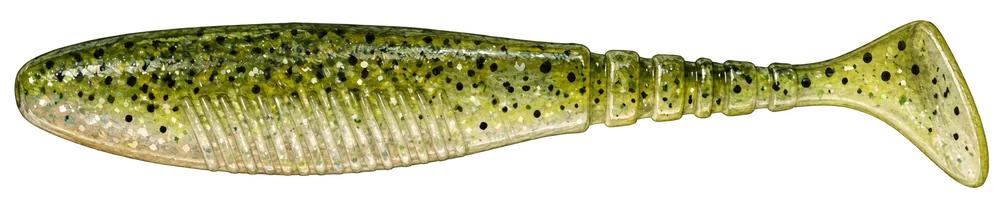 Soft plastic (shad) | Bottom to mid-water | Active: jigging with the rod or lift-and-drop with the reel, bites usually come on the drop | you are jigging for zander on the bottom and want stronger pressure waves |
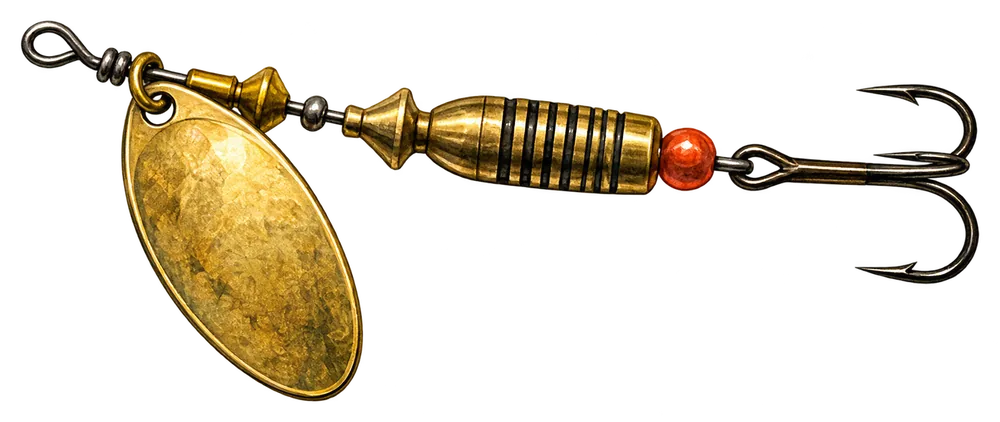 Spinner | Near the surface to mid-water | Active: retrieve steadily, speed up when fish follow | you only want to retrieve steadily and do not need a soft lure |
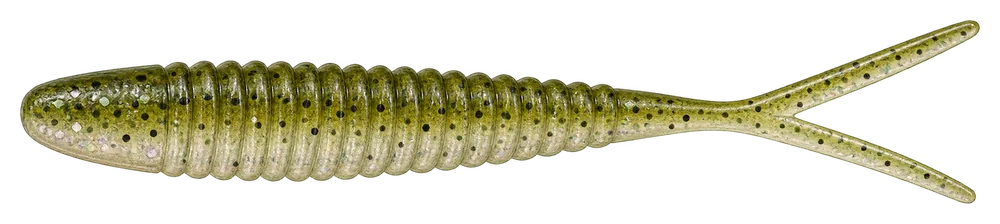 V-tail | Bottom to mid-water | Active: lift slowly, hold it steady near the bottom and let it sink again | cold water makes the fish sluggish and the fluttering tail is too much |
What you need
- Spinning rodA fast rod that passes on small plucks and allows a firm strike. More
- LineBraided main line with hardly any stretch, with a leader in front of it. More
- Jig headsLight heads for slow sinking, heavier ones for quick retrieves in shallow water. More
- Pike traceWhere pike bite, a steel or titanium trace protects against bite-offs. More
More on the method: spinning, pirking and ultra-light fishing.
At a glance
Editorial assessment, not measured values.
If it does not work
The massive tail is often only nipped. After the attack, speed the bait up briefly and let it spin down, or use a model with a slimmer tail.
Wind more slowly or use a heavier jig head; the large tail lifts the bait quickly.
Match hook and lure: a slim, soft twister with an offset hook whose point has room. When a pike bites, wait briefly before striking.
Frequently asked questions
Twister or soft plastic shad?
The twister moves differently from the shad, which always runs the same way, and that helps on heavily fished waters. In a current, on the other hand, a more passive shad with a small paddle tail can catch better.
Can I simply wind a twister in?
Yes. Retrieved steadily, it runs like a spinner, so you can quickly fish out a hunting shoal of perch. With a heavier head this also works in shallow water without it running at the surface.
How do I get a twister through weed?
With an offset hook whose point is hidden in the plastic. Slim, soft twisters release it well on the bite. With pike, you wait a moment before striking.
Which colour suits murky water?
In murky water, bright colours such as chartreuse, yellow or white work well; in clear water, muted tones such as blue, green and brown. In strong sun, translucent models with glitter help.
Why do perch miss so often?
The solid tail sometimes costs bites from perch, and they like to attack anything unfamiliar first. After the attack, speed up briefly and let the lure tumble down again.
Before fishing, the current permits, state rules and water rules apply: bait bans, number of hooks, closed seasons, protected species and catch limits can differ. Many federal states expressly ban live baitfish. Take bait remains and packaging away with you. All details are guide values without guarantee and do not replace legal advice.
Sources
- Blinker: Mit Twister angeln, das solltest du wissen
- Blinker: Jiggen, diese 10 Fehler sollte man vermeiden
- Blinker: Offset mit Gummifisch, Fehlbisse minimieren
- Rute & Rolle: So vermeidest du Fehlbisse
- Rute & Rolle: Schrauben statt stechen
- Rute & Rolle: So reinigst du Jigköpfe richtig
- Fisch & Fang: Angeltechnik auf Zander
- Bayerische Landesanstalt für Landwirtschaft: Prüfungsfragen Staatliche Fischerprüfung 2023/2024
- Fischereiverein Löningen: Gerätekunde
The sources explain terms and basic principles. Retrieve, colour choice and values are editorial starting points and depend on water, weather and lure.
More soft baits
 Pintail (no-action shad)
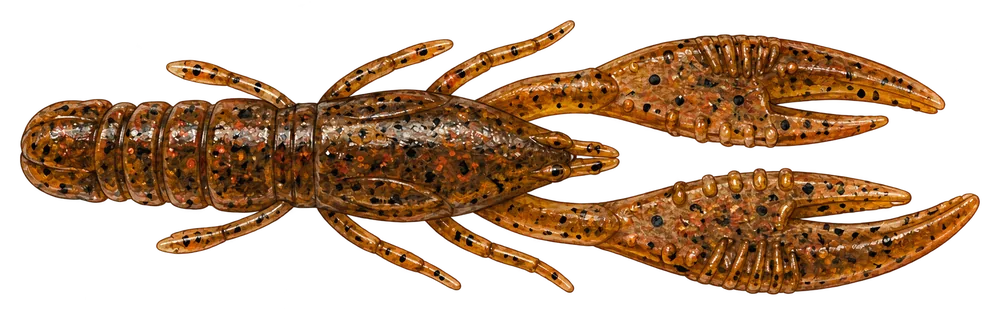 Soft plastic crab
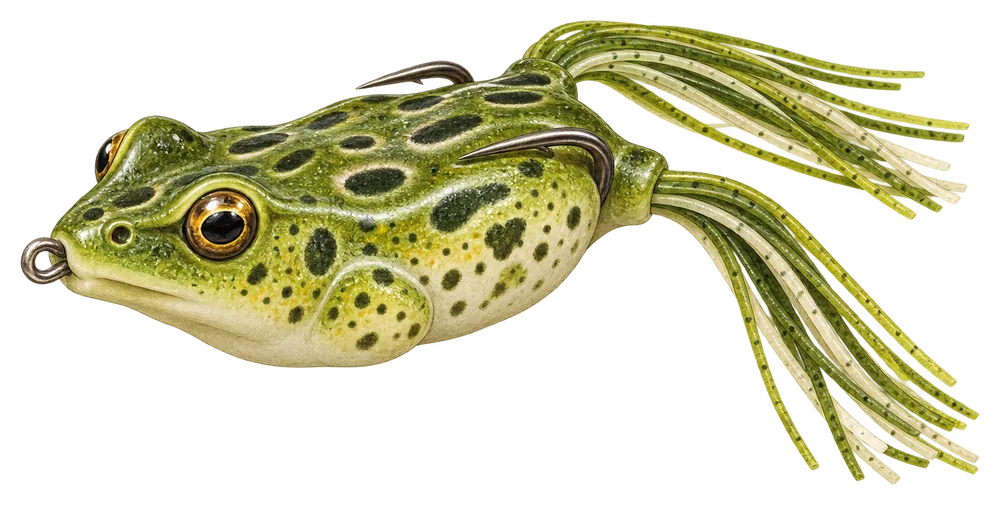 Soft plastic frog
 Soft worm
Created with AI support from the sources named (AI notice). Last updated: 25 October 2026. Found a mistake? Write to us. Who is behind the site: About me.