
Knowledge · Lures
Rubber frog
Soft baits · Spin fishing
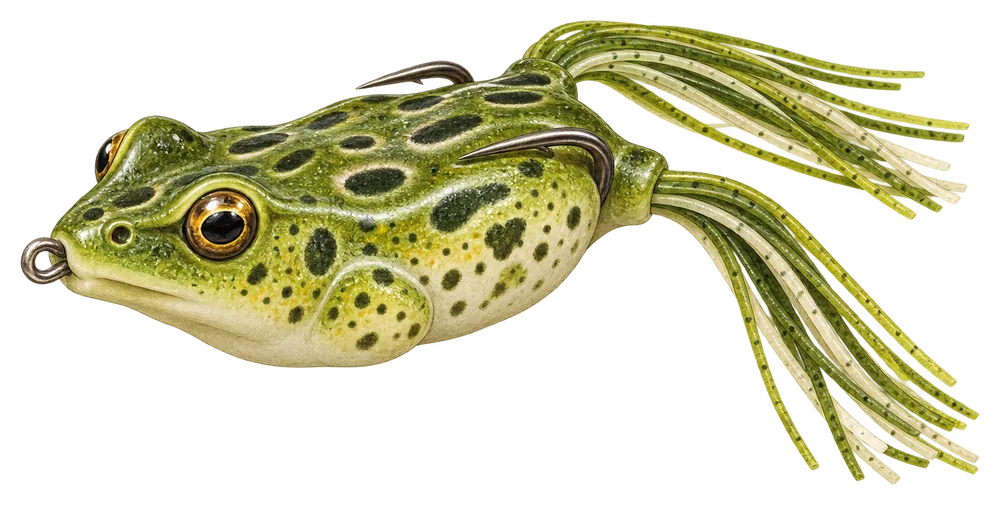
A rubber frog is a surface lure with a hollow body and close-fitting hooks. It can be worked over water lilies and dense weed without picking up much vegetation, and it reaches pike where other lures get snagged. Perch sometimes attack too.
- Water depth
- Surface
- Retrieve
- Active: in short pulls with pauses over weed and water lilies
- Fishing method
- Spinning
- Category
- Soft baits
How it works
Most rubber frogs have a hollow body that protects the hook points. If a fish bites and squeezes the body, the points come out and take hold in the mouth. Other models are more solid and are fished like soft jerkbaits on an offset hook; the point then lies in the rubber. In both cases the lure picks up hardly any weed, but it costs a few bites.
The original swims in short pulls and drifts at the surface in between. You work the lure the same way: short taps of the rod tip into the tight line create a bow wave, followed by a pause. Every model needs its own rhythm. Some need hard jerks from the wrist, others a steady pull with a stop.
Because the frog swims on top, you see every attack. If a fish follows hesitantly, a short stop can trigger the bite. Rubber legs or fringes at the end move with every pull. Perch and pike know frogs as prey, especially where the animals occur in numbers.
How to work the lure
Active: in short pulls with pauses over weed and water lilies
Schematic illustration, AI-generated.
- Cast
- short jerk: splash
- Pause
- reel in
Anatomy
The points on the picture above explain the most important parts – on hover or tap.
- Nose eyelet: The bait is attached here, on a bite-proof leader in pike water.
- Head: Pushes a bow wave in front of it with every pull.
- Hollow body: Gives way on the bite and exposes the hook points.
- Close-fitting double hook: Lies tight on the back and hardly picks up any weed.
- Rubber legs: Move with every pull.
Rig in three steps
- 1. Bite-proof hooklengthIn pike water, a bite-proof leader: steel or very thick fluorocarbon.
- 2. Attach the snapA sturdy snap or clip holds even in thick weed.
- 3. Through the nose eyeletDone: the frog needs no extra weight.
Drawings: AI-generated, schematic.
When the target fish are in season
Hardly any chancePossibleGoodPeak seasonValues from the catch calendar.
When and where
The frog is a summer lure for shallow, weedy lakes, small ditches, reed belts and water-lily fields. A good sign is large shoals of tadpoles in spring: they show that the predators know amphibians as food. In the weed you find pike even in the hot season and still in autumn, and after spawning the big fish stay there for some time. Perch come as bycatch.
Fish from the outside in: first the edges of the field, then gaps and further in. Better pike often stand between the stems, head towards open water. Knee-deep banks are also worth a go; one practitioner casts the frog onto the bank and pulls it into the water with a jerk, which pike know as a trigger. Take care in very warm water, because pike are sensitive to high temperatures.
Hollow body or offset hook: two designs compared
The hollow-body frog has its hooks tight on the back and releases them only on the bite. It runs at the surface but brings more missed bites than other lures, because weed protection has its price. A firm strike increases the chance that the point comes out of the body.
Soft-jerk-style frogs belong on an offset hook. If you choose the hook yourself, take a wide bend and a slim rubber with a round cross-section, because high-backed lures hinder the point. You also slit the rubber slightly so that it comes out better.
How to make the most of bites and play fish in weed
Do not strike by reflex as soon as the water explodes. Many missed bites are down to the angler pulling the lure away from under the fish’s nose. Wait until you feel it in the rod. On the offset hook you wait one to two seconds until the pike has turned away; then the hook slips into the corner of the mouth.
In the fight you hold the fish firmly out of the weed, otherwise it settles in. Anyone who fishes actively reduces deep hooking, which is one of the main reasons for losses in pike after release. Keep an unhooking mat and pliers ready; in water above 22 degrees researchers recommend not catching pike in order to release them.
How to choose tackle and leader
- Bite-proof leader In pike water, tie on a bite-proof leader of steel or very thick fluorocarbon.
- Sturdy snap A sturdy snap or clip goes on the end of the leader, one that holds even in thick weed.
- Into the nose eyelet Hook the snap into the eyelet on the nose. You need nothing more, and extra lead is unnecessary.
- Hook close to the back The double hook lies close to the hollow body. Only when the fish bites and squeezes the body do the points come free.
A short, stiff rod of around two metres transmits short twitches; a long model is harder to control. For weed and big pike, practitioners choose heavier tackle: a casting weight from 80 grams or braid from 0,20 millimetres count as the lower limit. Braid cuts through the plants better than monofilament.
One practitioner ties a fluorocarbon leader of 1 millimetre or steel with a breaking strain of 8 to 12 kilograms to the braid. Fluorocarbon counts as pike-proof only in thick strengths, from about 80 lbs; steel does too if properly made. Check steel leaders regularly for damage and replace them at once if in doubt.
Which colour?
Starting points to try, not rules. Depth and speed are usually more important than colour.
Rubber frog or another lure instead?
| Baits and lures | Depth | Retrieve | Take this lure if … |
|---|---|---|---|
| Rubber frog | Surface | Active: in short pulls with pauses over weed and water lilies | this page |
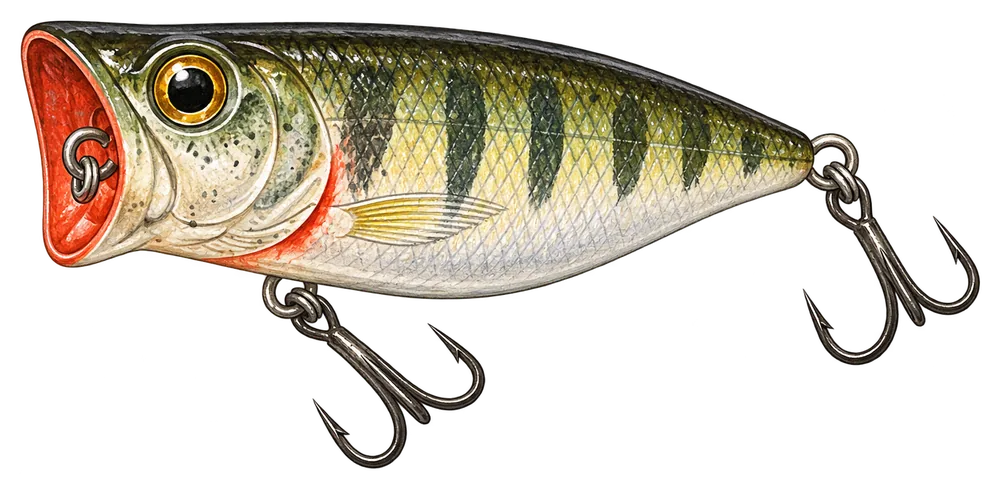 Popper | Surface | Active: short jerks, then a pause | you want to lure with a splash in open water |
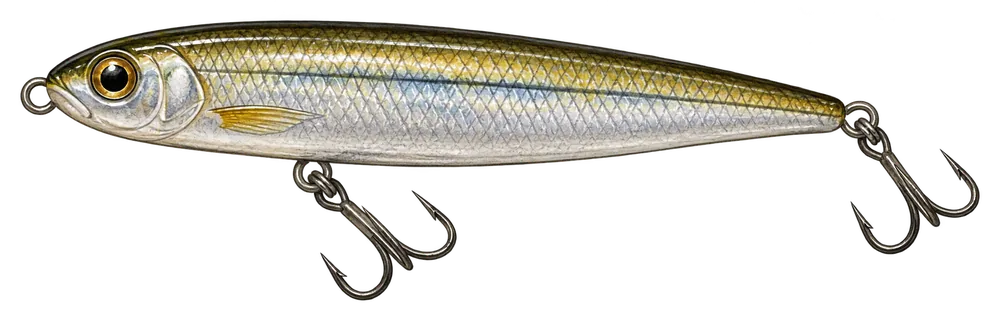 Stickbait | Surface | Active: short twitches in a zigzag, build in pauses | you want to work it in a zigzag over open water |
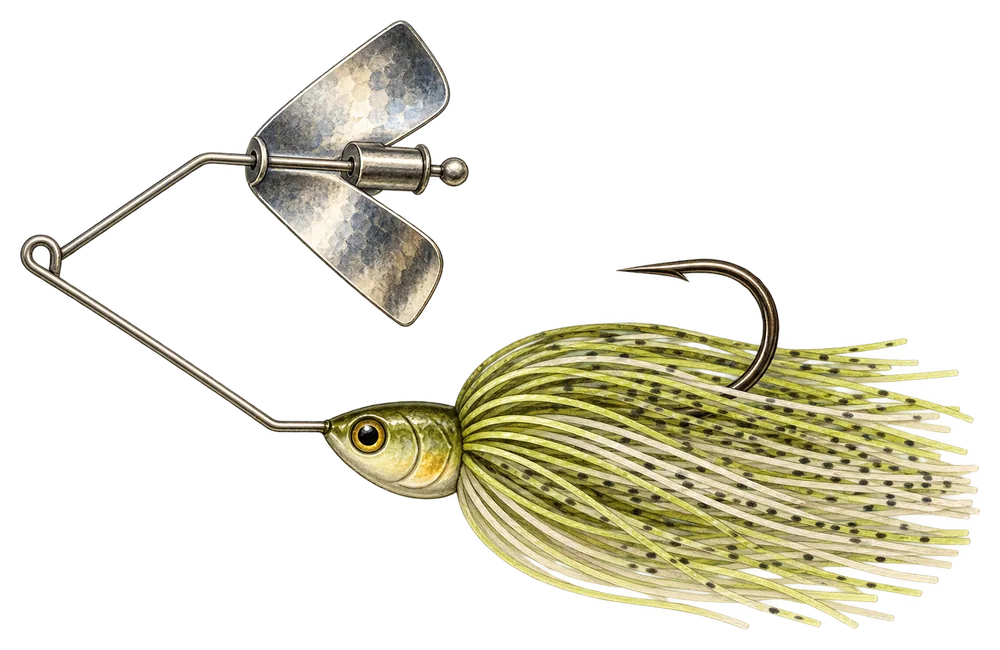 Buzzbait | Surface | Active: retrieve briskly at the surface | you want to wind steadily over weed |
What you need
- Strong spinning rodShort and stiff, so short twitches come through and the fish can be pulled out of the weed. More
- Strong braided lineCuts through weed and transmits the strike directly. More
- Bite-proof leaderSteel or very thick fluorocarbon, because mainly pike bite. More
- Unhooking mat and pliersLand and unhook gently: lay the fish down softly and hold it level. More
More on the method: Spinning.
At a glance
Editorial assessment, not measured values.
If it does not work
Do not strike by reflex: wait until you feel the fish in the rod, then pull through firmly.
A long, soft rod transmits short twitches poorly. A short, stiff rod helps; also look for the rhythm of your particular model.
Apply pressure at once and keep the fish away from the plants; braid and a strong rod are essential.
On the offset hook wait one to two seconds until the pike has turned away, only then strike.
Use strong tackle: line of at least 0,20 millimetres, a sturdy rod. Light tackle becomes a problem in the fight.
From a water temperature of about 22 degrees, better not to fish for pike, because the fish are sensitive then.
Frequently asked questions
Why doesn’t the soft-plastic frog snag in weed?
The hook points sit tight against the hollow body and only come free on the bite. On models with an offset hook, the point is buried in the soft plastic.
When is a soft-plastic frog worth using?
On warm days in water-lily and weed beds, shallow lakes and small ditches, where plenty of frogs live and other lures are hard to fish.
When do I strike with a frog?
Only once you feel the fish on the rod. Strike at the first splash and you often pull the lure away from the pike.
Which trace do I need?
In pike water, choose a bite-proof leader: steel or very thick fluorocarbon. Check steel regularly for damage and replace damaged leaders.
Can I fish for pike in hot weather?
Researchers advise against catching pike when the water is above 22 degrees, and say any you do catch should be returned, because they react badly to high temperatures.
Before fishing, the current permits, state rules and water rules apply: bait bans, number of hooks, closed seasons, protected species and catch limits can differ. Many federal states expressly ban live baitfish. Take bait remains and packaging away with you. All details are guide values without guarantee and do not replace legal advice.
Sources
- Blinker: Oberflächenangeln mit Frosch-Imitaten, Seite 1
- Blinker: Oberflächenangeln mit Frosch-Imitaten, Seite 2
- Blinker: Hechtangeln im Kraut
- Rute & Rolle: Seerosenfeld, Spot Check für Hechte
- Humboldt-Universität zu Berlin und IGB: Waidgerechtes Zurücksetzen, Hecht
- Carleton University und IGB Berlin: Hooking Mortality in Recreational Angling for Northern Pike
- Fisch & Fang: Zielfisch Hecht, Stahl der Wahl
- Blinker: Was kommt vorneweg? Raubfischvorfächer im Vergleich
The sources explain terms and basic principles. Retrieve, colour choice and values are editorial starting points and depend on water, weather and lure.
More soft baits
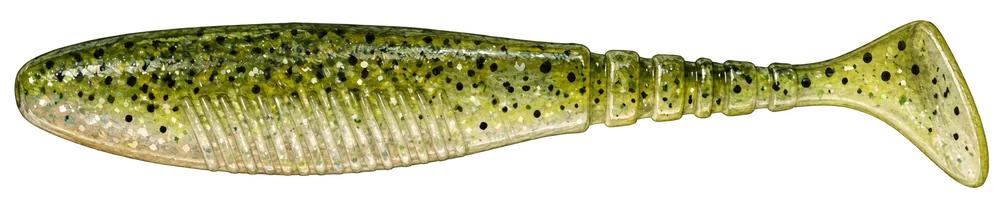 Soft plastic (shad)
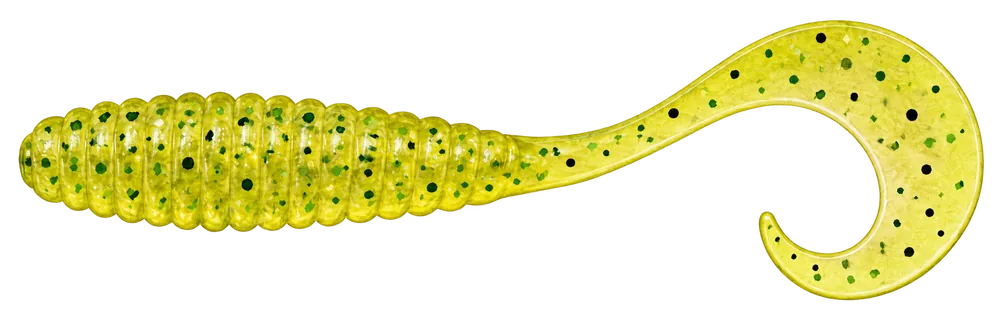 Twister
 Pintail (no-action shad)
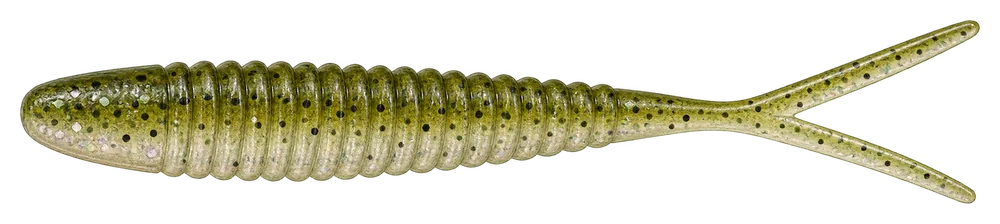 V-tail
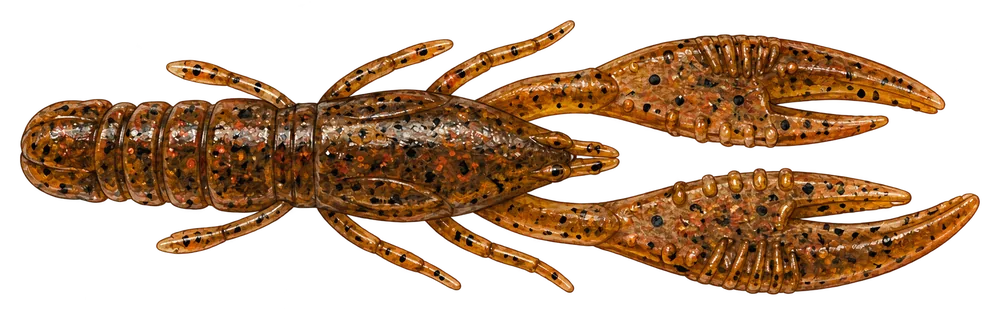 Soft-plastic crayfish
 Soft-plastic worm
Created with AI support from the sources listed (AI notice). Last updated: 31 October 2026. Found a mistake? Write to us. Who is behind the site: About me.