
Knowledge · Lures
Soft worm

Soft baits · Spin fishing
A softworm is a straight, soft rubber worm that imitates an earthworm. It has no beating tail and is drawn slowly over the bottom, shaken or left lying. That makes it a quiet bait for cautious perch; zander and, on the wacky rig, trout take it too.
- Water depth
- Bottom
- Retrieve
- Active: draw slowly along the bottom, twitch and let it lie
- Fishing method
- Spinning
- Category
- Soft baits
How it works
A rubber worm imitates prey that almost every fish eats. Compared with a live worm it lasts a long time, survives many bites, can often be reused and is sold in many colours and lengths. Tail and fringes are missing; its movement comes purely from the retrieve, the weight and the rubber compound.
How the worm behaves depends on thickness and material. Thicker, somewhat stiffer worms react to twitches with quick, sharp movements, slim and soft ones flutter with their ends, mainly on the way down. Very thin worms on a small jig shiver at the slightest twitch; ribbed bodies also hold attractants well.
Classic rubber worms contain plasticisers. For the Ned rig, by contrast, you use floating TPE compounds free of plasticisers, which are very elastic. Perch often suck in their prey greedily; a soft worm that offers hardly any resistance is readily taken. Experienced fish avoid artificial baits more than natural ones, so changing the presentation can help.
How to work the lure
Active: draw slowly along the bottom, twitch and let it lie
Schematic illustration, AI-generated.
- Cast
- sink to the bottom
- drag slowly over the bottom
- reel in
Anatomy
The points on the picture above explain the most important parts – on hover or tap.
- Head end: The offset hook is pushed in here; on the wacky rig the hook sits in the middle instead.
- Soft body: Bends with every pull and flutters on the way down; thick worms react more sharply, slim ones more softly.
- Tail end: The free end moves in the pauses and on the way down; it is often the trigger for the bite.
Rig in three steps
- 1. Tie on the hooklengthFluorocarbon or nylon of 0,20 to 0,30 millimetres for perch; where pike also bite, a fine steel leader.
- 2. Texas rigBullet weight onto the line, tie on the offset hook, bury the point in the worm. The weight runs freely. Texas rig step by step
- 3. Or on the drop shotHook above the weight: the worm shivers on the spot above the bottom. Drop-shot rig step by step
Drawings: AI-generated, schematic.
When the target fish are in season
Hardly any chancePossibleGoodPeak seasonValues from the catch calendar.
When and where
The rubber worm is a bait for difficult days. When perch sit listlessly on the bottom in winter or have become cautious through angling pressure, the Ned rig is seen as a way to coax out a few more fish. It can be worked extremely slowly and therefore suits autumn and winter and heavily fished waters, where big perch know this kind of retrieve less. If the fish prefer it even calmer, the Carolina and drop-shot rigs have advantages.
For snaggy spots you choose the Texas rig, which has proved especially good for long rubber worms. In summer, floating worms on the wacky rig without extra weight at the surface are a productive method when perch are actively hunting. You can also let small worms on a light jig shiver through mid-water; pike turn up there as bycatch, so a fine steel leader belongs on the tackle.
Texas, drop shot, wacky or Ned: four ways to present the worm
- Choose the right hook Depending on the worm, you take an offset or a wide-gap hook.
- Thread on the weight, tie on the hook Thread the bullet weight onto the line and tie on the offset hook. The weight runs freely.
- Push in at the head end Push the offset hook into the head end of the worm.
- Bury the point in the worm The hook point lies inside the worm. That lets you get into snags and obstacles.
On the Texas rig the hook point lies in the worm; it works through snags and obstacles. On the drop shot, weight and bait are decoupled: the weight stays on the bottom, the worm tumbles on the slack line and shivers on the spot. On the wacky rig the hook sits in the middle and both ends wriggle. The Ned rig stands upright on the bottom with a floating worm on a light mushroom-shaped jig.
Besides that there is the Neko rig, in which a small weight sits inside the worm so that one end lies on the bottom and the other points upwards. In winter it is twitched in slow motion. With the bundle rig you thread several thin worms onto a small jig and get a morsel that hops.
How to choose hook, jig and hooklength
On the Texas rig, Blinker recommends hooks of size 1 to 1/0 for baits under 10 centimetres and 2/0 for 10 to 14 centimetres. Depending on the worm, an offset or a wide-gap hook suits. If the hook does not suit a very long worm, you can set it further back. On the drop shot, sizes from 6 to 1 are right, in thin, sharp wire.
The jig head should be as light as possible so that perch can suck in the worm. For small worms a tungsten jig of only 1 to 2 grams is enough. As a hooklength for perch, fluorocarbon or nylon of 0,20 to 0,30 millimetres is enough. Where pike also bite, a short, fine steel leader guards against bite-offs; a thin steel leader displaces hardly more water than mono.
How to work the worm and make the most of bites
The slower the better: small hops, loops and shivers over the bottom, with pauses in between. You always work small worms with a trembling rod tip. On the drop shot you twitch lightly and let the worm sink on a slack line; with no bite you move the rig by one or two turns of the handle.
On the Texas rig the bites usually come on the drop and show as a light tug or the line moving off sideways. Strike firmly but not too hard; you can wait one to two seconds. Since perch can suck the bait in deep, you need pliers to remove the hook. The worm runs on a single hook, which is kinder to the fish than a treble.
Which colour?
Starting points to try, not rules. Depth and speed are usually more important than colour.
Softworm or another lure instead?
| Baits and lures | Depth | Retrieve | Take this lure if … |
|---|---|---|---|
| Soft worm | Bottom | Active: draw slowly along the bottom, twitch and let it lie | this page |
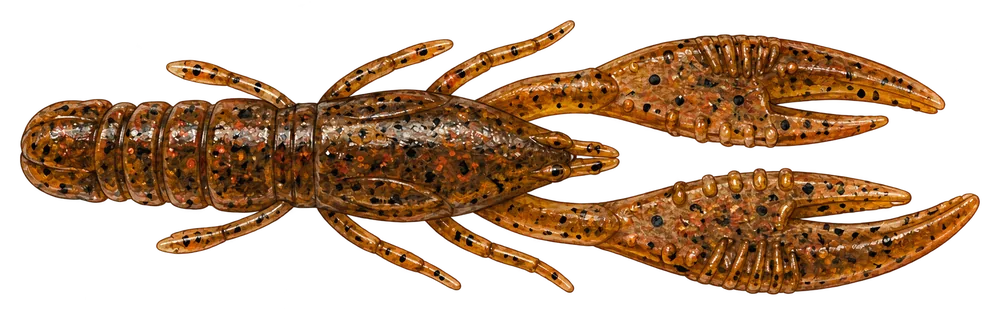 Soft plastic crayfish | Bottom | Active: in short hops over the bottom, with long pauses in between | you want more movement from claws and legs |
 Pintail (no-action shad) | Bottom | Active: short twitches, pauses and sinking, also on the drop shot | you want to offer a fish shape instead of a worm |
What you need
- Fine spinning rodA sensitive tip to detect delicate bites on the drop. More
- LineBraided main line for direct contact, with fluorocarbon in front; for pike a bite-proof leader. More
- Hooks and weightsOffset hook and bullet weight for the Texas rig; alternatively a drop-shot weight. More
- Jig headsLight heads for the Ned rig and wacky; the weight decides how the bait sinks. More
More on the method: Spinning.
At a glance
Editorial assessment, not measured values.
If it does not work
Work it slowly and leave pauses. The calmer the better, especially in cold water.
Watch the line: if it twitches or moves off sideways, you strike.
Strike firmly, because the point first has to get through the rubber.
Choose a lighter one so the perch can suck in the worm without resistance.
Never mix plasticiser-free TPE baits with classic rubber baits, or you get a lump.
Where pike occur, fit a fine steel leader; it catches hardly any worse.
Frequently asked questions
Softworm or real worm?
The rubber worm lasts a long time, is robust and can be used several times. The real worm moves by itself and also lures with scents; where artificial baits are banned at times, the water rules say what is allowed.
Which fish is it suited to?
Mainly perch and zander. On the wacky rig it also catches trout, and small worms are taken by pike, which is why a fine steel leader makes sense.
What is the Ned rig?
A finesse technique: a floating rubber worm on a light, mushroom-shaped jig head that stands upright on the bottom. You work it very slowly with hops, loops and pauses.
Which rig suits which situation?
The Texas rig at obstacles, the drop shot for calm shivering on the spot, the wacky rig for fluttering ends and the Ned rig for sluggish fish in cold water.
Do I need a wire leader?
Where pike occur, yes. A thin steel leader displaces hardly more water than mono of similar thickness and protects against bite-offs.
Before fishing, the current permits, state rules and water rules apply: bait bans, number of hooks, closed seasons, protected species and catch limits can differ. Many federal states expressly ban live baitfish. Take bait remains and packaging away with you. All details are guide values without guarantee and do not replace legal advice.
Sources
- Rute & Rolle: Barsch, da ist der Wurm drin
- Rute & Rolle: Ned Rig, Stehaufmännchen mit Finesse
- Blinker: Mach den Kopfstand, das Ned-Rig für träge Barsche
- Blinker: Texas-Rig, die Erfolgsmontage mit dem Klick
- Blinker: Mit Gummiwurm auf Barsch und Hecht
- Blinker: Drop-Shot trifft Natur, Superköder Wurm für Barsch
- Deutscher Angelfischerverband: Der Flussbarsch, Fisch des Jahres 2023
- Fisch & Fang: Fünf Winter-Barsch-Mythen
- Bayerische Landesanstalt für Landwirtschaft: Prüfungsfragen zur Fischerprüfung 2023/2024
The sources explain terms and basic principles. Retrieve, colour choice and values are editorial starting points and depend on water, weather and lure.
More soft baits
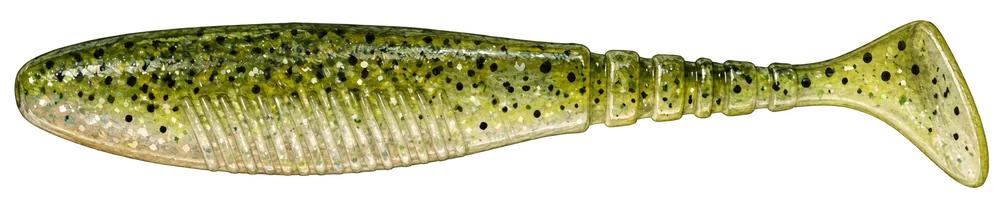 Soft plastic (shad)
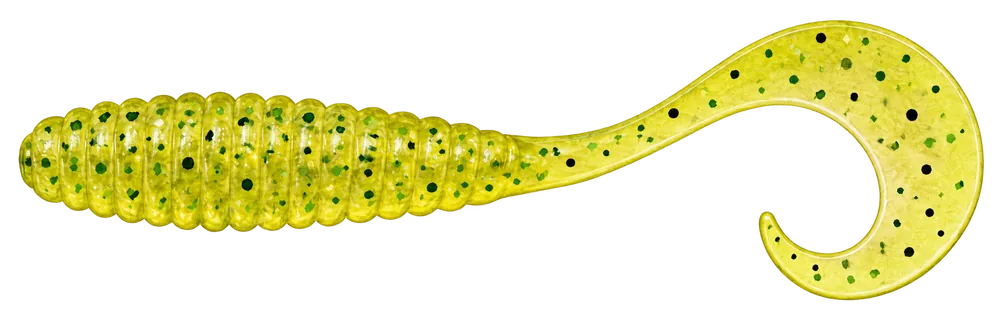 Twister
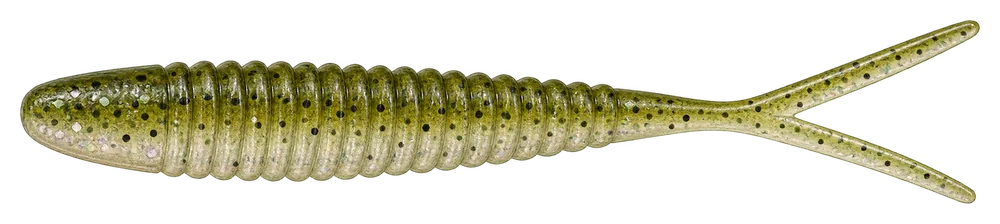 V-Tail
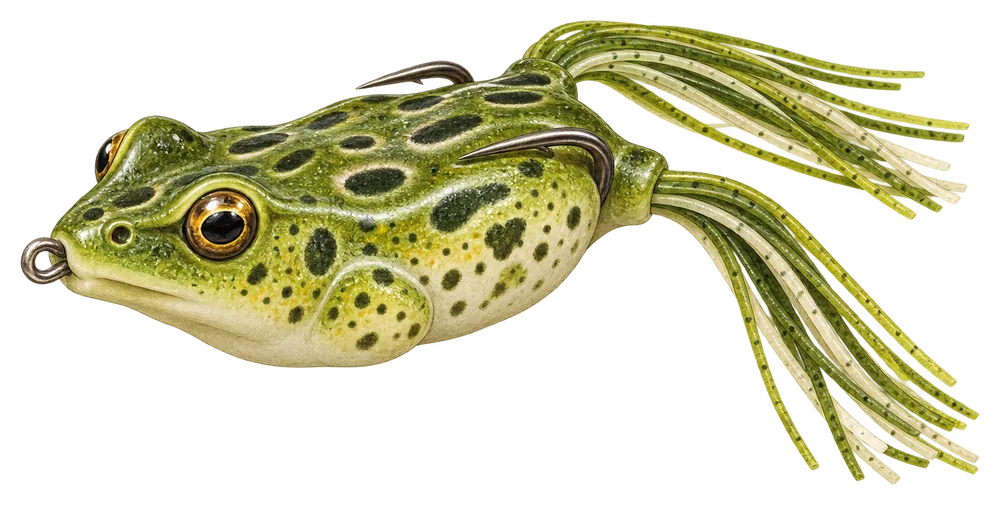 Rubber frog
Created with AI support from the sources named (AI notice). Last updated: 25 October 2026. Found a mistake? Write to us. Who is behind the site: About me.