
Knowledge – Fish
Sea bass: Features, spots, lures, rules
The sea bass (Dicentrarchus labrax) is a slim predatory fish of the European coasts. In France, Portugal, England and the Netherlands it has the same standing among spinning anglers as the sea trout has here. In the German North Sea it is still rare, but is becoming clearly more common.
In short: You catch sea bass best from July to September, at any time of day. Good spots on the coast: surf, stony mixed ground and sandy ground. Proven lures: slim plugs, stickbaits, soft plastic shads and twister tails; crab and prawn flies; dead sand eel. Numbers in the North Sea have been rising for years. EU rule for the North Sea in 2026: 1.2.–31.3. catch and release only, otherwise a maximum of 3 fish a day of 42 cm or more; in SH and NI no targeted fishing in February and March. Step by step: Fishing for sea bass.
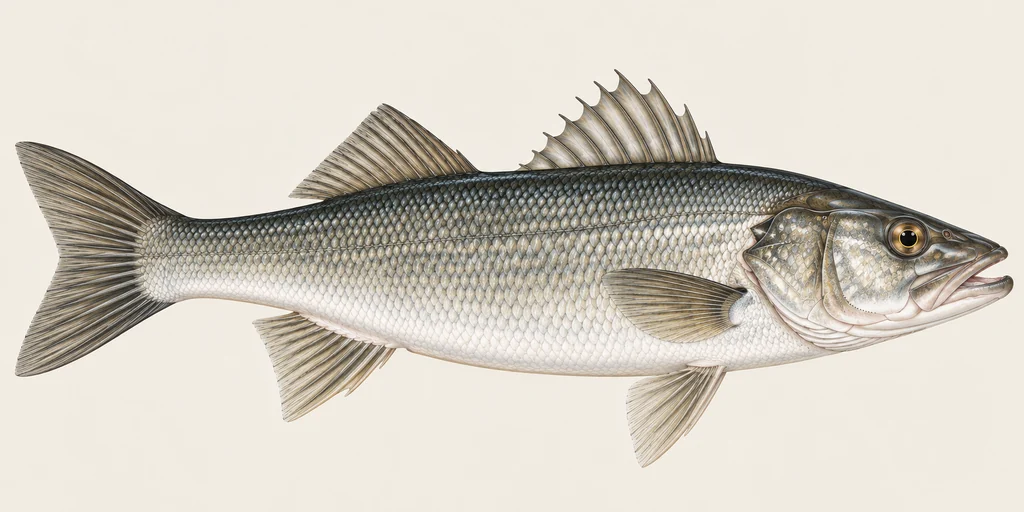
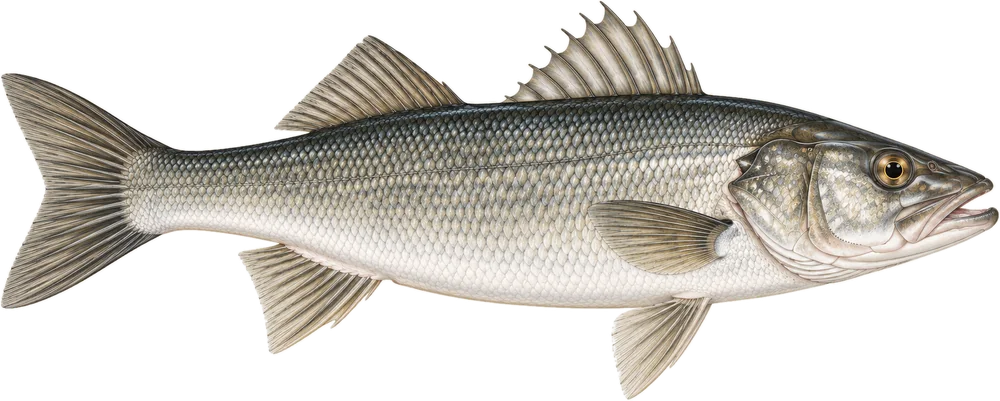
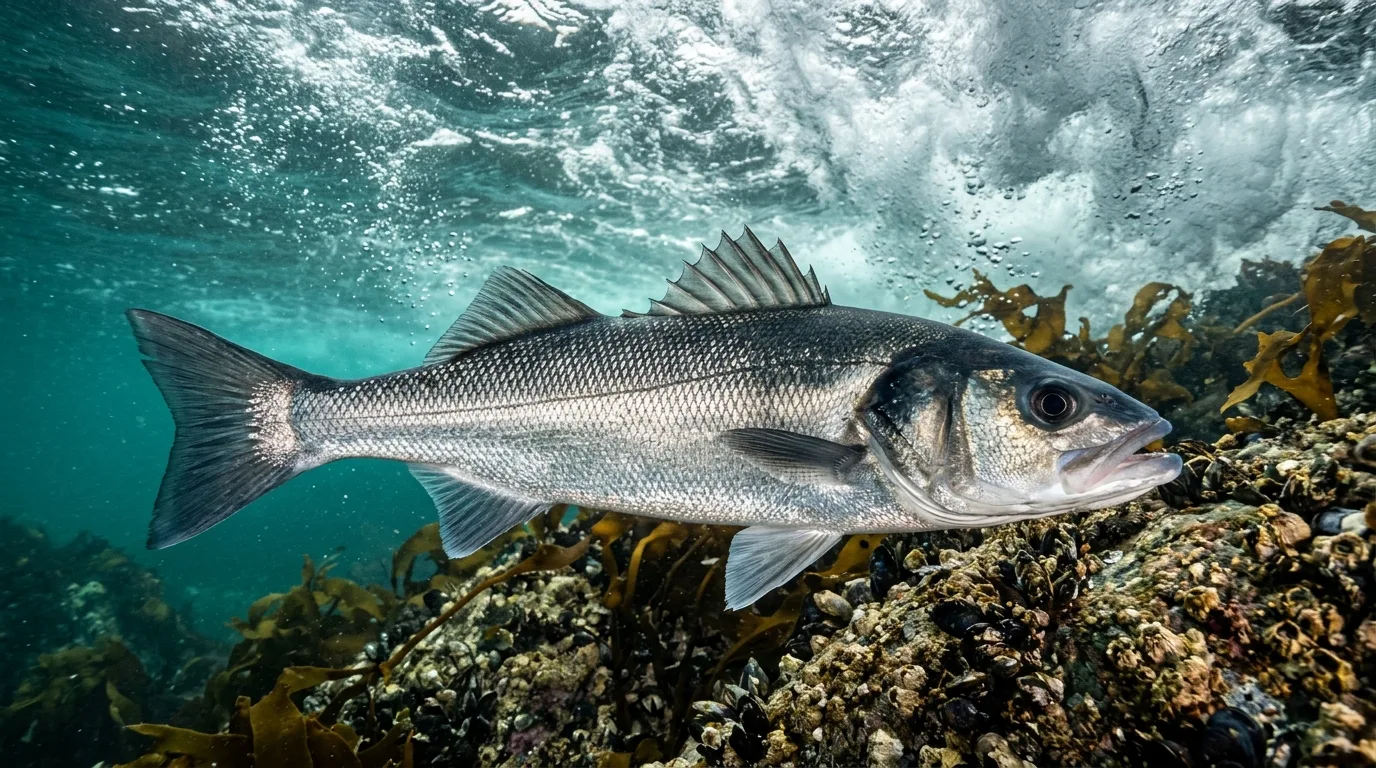
- Two separate dorsal fins, the front one with spiny rays
- Gill cover with two flat spines and a serrated edge
- Silvery-grey, slender body with a darker back
Catch chances through the year
- Hardly any chance
- Possible
- Good
- Peak season
- Spawning (observe the closed season)
Editorial assessment for waters in Germany, not a measured value and no guarantee. Spawning time is not the same as the legal closed season.
Species profile and sources in the catch calendarAll species compared month by monthThe rules of your federal state
How to recognise it
The sea bass resembles a perch but is slimmer and grows much larger. The front dorsal fin with 8 to 10 spiny rays is much smaller than in the perch, followed by a second, soft-rayed dorsal fin. The anal fin has three spines.
The body is grey to silvery, the back darker than the belly. Young sea bass have a few dark spots on the upper back. The gill cover has two flat spines, its rear edge is finely serrated and the lower edge set with strong, forward-pointing little teeth.
FishBase gives a typical length of around 50 centimetres, maximum values of 103 centimetres and 12 kilograms and an age of up to 30 years. In Norway sea bass reach 50 centimetres after five to seven years according to Store norske leksikon.
It shares the divided dorsal fin with the perch. The sea bass is slimmer, however, has a much smaller front dorsal fin and lives in salt water.
When sight fishing in shallow water, mullet are often close by. Experienced fly anglers tell the two apart by the way they swim and their position in the water.
Side by side
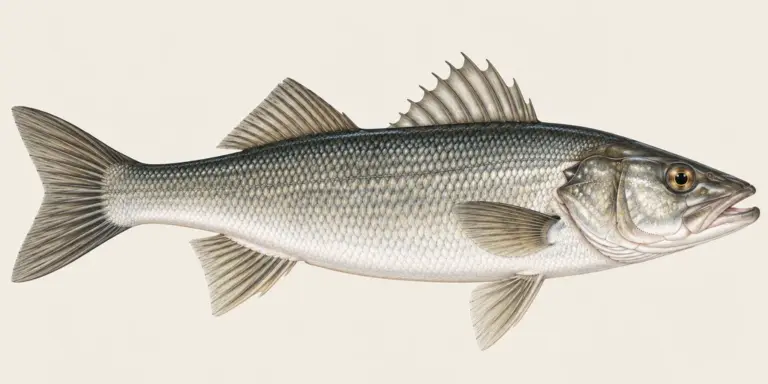
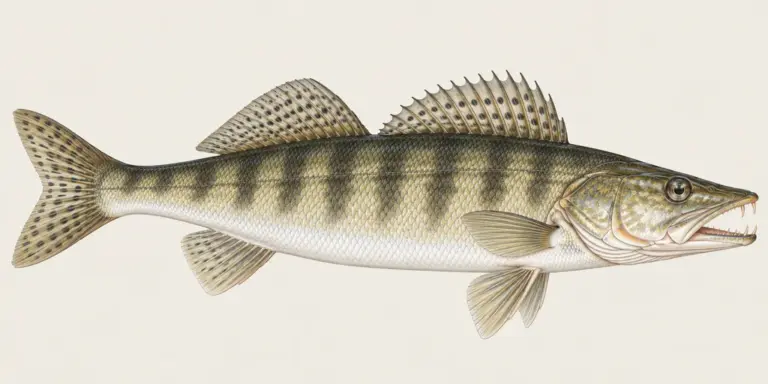
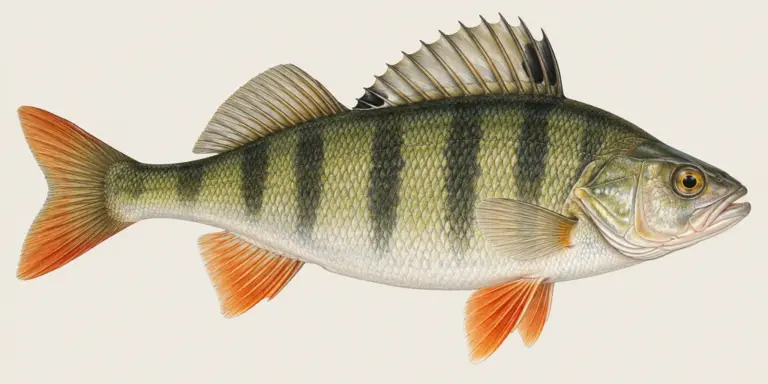
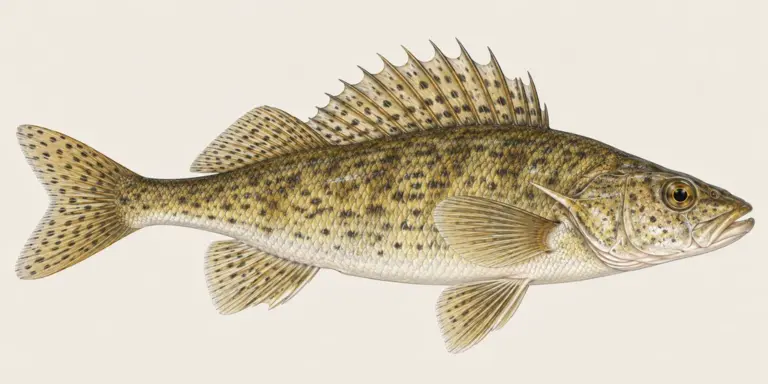
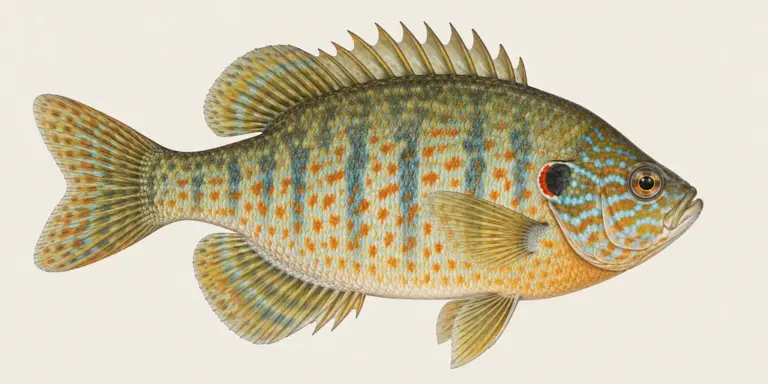
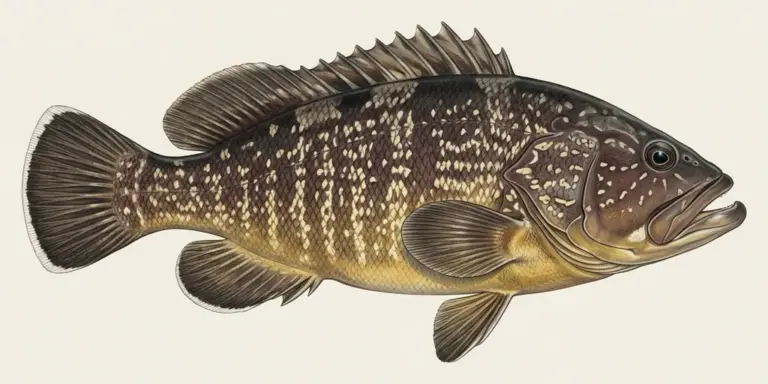
AI-generated illustrations.
Where it holds
The sea bass lives in the north-eastern Atlantic from Morocco to Norway, as well as in the Mediterranean and the southern Black Sea. Only the occasional stray turns up in the Baltic Sea. In Norway it is regularly seen as far as the Lofoten Islands.
It stands close to the coast down to a depth of about 100 metres, but most often in shallow water down to 20 metres. It visits river mouths, lagoons and occasionally rivers. In summer it moves into coastal waters and estuaries, and in cold weather it retreats to deeper water off the coast.
In the German North Sea the Red List classes the stock as rare, but with a marked increase in the short term, possibly encouraged by climate change. There are records of juvenile fish from the Lower Saxony Wadden Sea. Records in the North Frisian Wadden Sea near Sylt and Amrum could point to a self-sustaining stock. In summer, spinning anglers stand on the breakwaters of the German North Sea islands.
Holding spots in the picture
Choose the season and time of day: the picture shows where the species stands then. Spots outlined in red apply only in the chosen season. Tap a fish or a spot in the list to bring it closer. The picture is schematic and AI-generated, every water is different.
Catch chance in springpossibleSpawning season, observe closed seasons
Catch chance in summerPeak season
Catch chance in autumngood
Catch chance in winterhardly any
- J
- F
- M
- A
- M
- J
- J
- A
- S
- O
- N
- D
Spawning season
Active time It is caught round the clock. It comes to the shore mainly at dusk, on hot days the night is often better, and then with bigger fish close to the shore too. On a tidal coast the falling tide until shortly after low water brings the most bites.
Active time It is caught round the clock. It comes to the shore mainly at dusk, on hot days the night is often better, and then with bigger fish close to the shore too. On a tidal coast the falling tide until shortly after low water brings the most bites.
Active time It is caught round the clock. It comes to the shore mainly at dusk, on hot days the night is often better, and then with bigger fish close to the shore too. On a tidal coast the falling tide until shortly after low water brings the most bites.
Active time It is caught round the clock. It comes to the shore mainly at dusk, on hot days the night is often better, and then with bigger fish close to the shore too. On a tidal coast the falling tide until shortly after low water brings the most bites.
On the coast
Surf close to the shore
Sea bass is present here only in spring, summer and autumn.
gully in front of the sandbank
Sea bass is present here only in spring, summer and autumn.
Sandy bottom
Sea bass is present here only in spring, summer and autumn.
Stony mixed ground
Sea bass is present here only in spring, summer and autumn.
Wreck, reef
Sea bass is present here only in spring, summer and autumn.
Deep, colder water
Sea bass is present here only in winter.
Sea bass hunt in the breaking wave on sandy beaches and at rock armour, where small fish and shrimps seek shelter. Good spots are sandbanks next to deeper channels, the channel at the head of a breakwater, reefs and weed edges.
Spring: chance of a catch according to the catch calendar slim in March, possible in April, good in May. Spawning falls in this period, observe closed seasons. The season usually begins at the end of April, once the water warms above twelve degrees.
Summer: chance of a catch according to the catch calendar good in June, peak season in July and August. In summer it moves into inshore waters and river mouths and sits close to groynes, piers and beaches.
Autumn: catch chance according to the catch calendar is peak season in September, good in October and possible in November.
Winter: chance of a catch according to the catch calendar slim. From November the shoals move into deeper water off the coast.
Depth: It lives close to the coast down to about 100 metres, most often in shallow water down to 20 metres.
Size comparison: AI-generated drawing, schematic.
How it hunts and spawns
Young sea bass live in shoals and hunt bristle worms, crustaceans, squid and small fish. Adults are more solitary and eat mainly fish such as herring and sprats. One of the main prey fish is the sand eel.
According to Store norske leksikon the sea bass reaches sexual maturity at around 30 centimetres. FishBase gives four to seven years for males and five to eight years for females in the Atlantic. Spawning takes place in groups and in several batches, on the British Isles in spring, earlier further south. Eggs and larvae drift freely in the water.
When it bites
In summer the sea bass moves into coastal waters and estuaries, and in cold weather it retreats to deeper water. According to the magazines Blinker and Rute & Rolle it only becomes active once the water is above twelve degrees. On the North Sea islands the season therefore usually starts at the end of April and runs into November; during this time the fish stand close to groynes, jetties and beaches.
You can catch them by day and by night. In clear water and sunshine, a fast, aggressive retrieve often brings bites. On hot summer days the night is often better because the fish then come right up to the shore, including larger specimens. Where there are ebb and flood tides, it pays to look at the tide table: Blinker names the ebbing tide as the best time, from about two and a half hours before to one hour after low water, best of all when this phase falls in the morning or evening.
Today’s catch index needs JavaScript. Season and spawning time are in the catch calendar.
You will find the monthly overview of all species and the water temperature check in the catch calendar.
From the blog: Catch advice, catch quotas, angling bans: how to read fisheries news correctly
What you catch it with
Step by step: Fishing for sea bass: tips on lures, rigs and tackle – season, spots, lures, tackle and rules on one page.
Sea bass are mostly targeted with the spinning rod: slim plugs, surface stickbaits, soft plastic shads with a concealed hook, twister tails and spoons. With stickbaits you work the lure with short flicks of the wrist and pause for two to three seconds. If a fish misses the lure, keep working it at the same rhythm and only strike when you feel resistance.
By day it pays to search a spot with six or seven fan-shaped casts and then move on. At night, on the other hand, fish slowly: let soft plastics drift for a long time, retrieve plugs almost in slow motion, with light tackle and jig heads of around 7 to 14 grams.
Fly anglers catch them with crab and prawn patterns in hook sizes 2 to 4, in deeper water with streamers and sand eel patterns on a sinking line. As a natural bait the sand eel is considered the first choice, also fished dead on a spinning rig. For bank fishing with natural baits, strips or fillets of mackerel are also suitable, and under a float also lugworms, which you hook just behind the head.
Do not touch the gill cover: The spines and the serrated edge of the gill cover cut fingers easily. Grip the fish by the lower jaw or use a landing net.
Quietly to the water: At night sea bass come right up to your feet. Switch the lamp on only briefly, preferably with a red light.
Suitable lures
Slim plugs, stickbaits, soft plastic shads and twister tails; crab and prawn flies; dead sand eel.
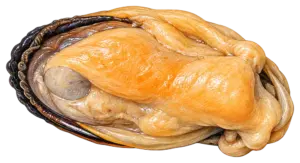
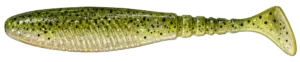
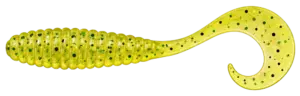
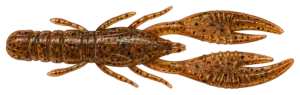
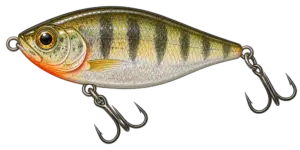
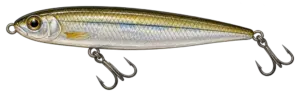
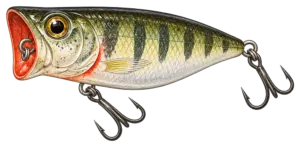
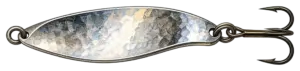
AI-generated illustrations. A click opens the lure’s page.
Also suitable: lugworm, fish strips.
Rigs for these lures: surf rig.
Observe the EU catch rules for anglers; they change every year.
How to use sea bass in the kitchen
The flesh of the sea bass is white and fine, mild in taste yet aromatic, tender yet firm. In Norway it counts as a very good food fish, and in France and Italy large specimens served whole are regarded as a feast. Typical is the whole fish from the grill or baked in a salt crust. Fillets are pan-fried or steamed gently. How to prepare it is shown by gutting fish and filleting fish.
Like any sea fish it can carry roundworms such as Anisakis; they have been found even in sea bass from sea-cage farms. Heating and deep freezing kill the larvae. In fine dining it is also served raw as carpaccio or ceviche; you only eat a fish you caught yourself that way if it has been frozen through beforehand, as is required in the EU for eating raw. You will find the temperature and duration under parasites in fish.
What you need to observe
Closed seasons, minimum sizes and harvest slots are set by the federal states (Bundesländer) and by the fisheries authorities of the neighbouring countries on the coast (Denmark, Norway, Poland). They vary by type of water, stretch of coast and time of year. We only give figures together with the date and source; the fisheries regulation of your federal state and your fishing permit (Erlaubnisschein) are always what is binding. You will find a list of links to the official sources in the catch calendar.
A fish of legal size that you want to keep you stun and kill at once, in line with animal welfare rules. Protected, undersized fish or fish too large under a harvest slot you unhook, if possible still in the water and with wet hands, and release gently. What exactly applies is regulated by state law and your fishing permit (Erlaubnisschein).
For sea bass the EU sets its own rules for anglers, including those fishing from the shore. In 2026 the following applies in the North Sea, English Channel, Irish Sea and west of the British Isles (ICES areas 4b, 4c, 6a and 7a to 7k): from 1 February to 31 March only catch and release with rod or handline is allowed, for the rest of the year you may keep a maximum of three sea bass a day, each at least 42 centimetres. In the Bay of Biscay (8a and 8b) it is two a day. The basis is Verordnung (EU) 2026/249 (as of October 2026); the EU sets the values anew every year. Schleswig-Holstein and Lower Saxony do not permit targeted fishing in February and March at all, because catch and release there conflicts with state and animal welfare law; details are given by the state of Schleswig-Holstein. Since 2026 EU law also provides that sea anglers must be registered and report certain catches via the RecFishing app. For the North Sea, the Portal Fischerei of the federal government and the states provisionally lists sea bass and eel, including released fish. How and from when the obligation takes effect in Germany is explained by the portal.
Denmark also implements the rules for anglers. Depending on sea area and month, a small daily bag limit with a minimum size applies there, and in part of the North Sea only catch and release with rod or handline is allowed. The current version is available from the Fiskeristyrelsen.
The German Red List classes the sea bass as not threatened. According to FishBase the IUCN rates it worldwide as near threatened (Near Threatened, assessment of 2022).
What closed season, minimum size and harvest slot mean and where to find them is explained on the page Closed season and minimum size explained.
What state law prescribes for the closed season and minimum size of this species is given in the box “At a glance” on the state pages for Lower Saxony and Schleswig-Holstein. For the other states our overview does not list this species; there the state fisheries regulation is what counts.
Frequently asked questions (FAQ)
Are there sea bass on the German coast?
Yes, mainly in the North Sea. The Red List describes the stock there as rare but clearly increasing. In summer it is targeted on the North Sea islands.
When does sea bass bite best?
From the end of April, once the water is above twelve degrees, until autumn. Good phases are the ebbing tide around low water as well as morning and evening; on hot days the night is often better because the fish then come right up to the shore.
Which lures catch sea bass?
Slim plugs, stickbaits, soft plastic shads and twister tails, with the fly crab and prawn patterns. As a natural bait mainly sand eel.
Sources
The rating of catch chances is an editorial assessment. The facts come from these sources, and the text is worded in our own words. The illustration is an original design by Angel Momente in the style of a natural history plate (AI-generated, see the AI notice).
- FishBase: Dicentrarchus labrax, European seabass (Größe, Merkmale, Lebensraum, Fortpflanzung)
- Store norske leksikon (L. A. Vøllestad, Universität Oslo): havabbor
- Rote-Liste-Zentrum: Artensteckbrief Wolfsbarsch, Seebarsch (Rote Liste Meeresfische 2025)
- Blinker: Wolfsbarschangeln (Spinnfischen mit Wobblern, Jerken und Twitchen)
- Blinker: Angeln auf Wolfsbarsch, Tag gegen Nacht
- Blinker: Wolfsbarsch mit der Fliege (Krebs- und Garnelenmuster, Streamer)
- Blinker: Sandaal, der beste Köder für Wolfsbarsch und Steinbutt
- Portal Fischerei (BLE, Bund und Länder): Meeresangeln, Registrierung und Fangmeldung nach EU-Kontrollverordnung (Stand Februar 2026)
- Fiskeristyrelsen (Dänemark): Mindstemål og fredningstider, Havbars
- Blinker: Posenangeln auf Wolfsbarsch (Wattwurm)
- Blinker: Steckbrief Wolfsbarsch
- Rute & Rolle: Zum Wolfsbarsch, die Nordsee-Piraten (Saison an den Nordseeinseln, Wassertemperatur)
- Land Schleswig-Holstein: Küstenfischereiverordnung (KüFVO), Anlage 1 Mindestmaße und Schonzeiten
- Verordnung (EU) 2026/249 des Rates vom 26. Januar 2026, Art. 10 und 11 (Wolfsbarsch, Freizeitfischerei)
- Land Schleswig-Holstein: Freizeitfischerei auf Wolfsbarsch 2026
- Fisch-Informationszentrum: Fischlexikon Wolfsbarsch (Kulinarische Verwendung)
- Bundeszentrum für Ernährung (BZfE): Fisch und Meeresfrüchte, Gesundheit und Umwelt
- EFSA: Viele Zuchtfische sind parasitenfrei, aber es werden mehr Daten benötigt
- LAVES Niedersachsen: Sushi selber machen, so gelingt es sicher
Created with AI support from the sources listed. Figures only appear in the text if a source gives them. Last updated: 20 November 2026. Found a mistake? Write to us. Who is behind this site: About me.
More in the lexicon
- All fish species at a glance
- Catch calendar – month, water temperature and profile for 93 species
- Line calculator – breaking strain after the knot, drag guideline, backing
- Angling methods