
Knowledge – Fish
Ruffe: Features, habitat, best time and baits
The ruffe (Gymnocephalus cernua) is a small, stocky relative of the perch and zander. It lives in groups on the bottom of larger rivers, canals and nutrient-rich lakes and feeds mainly on small animals. It is not highly rated as a sport fish, but it occurs almost everywhere.
In short: The best time to catch ruffe is June to October, especially in the evening. Good spots on a lake: deep ground; on a river: pools and holes by the groynes. Proven baits: small pieces of worm or bloodworm (chironomid larvae) on the bottom. The ruffe is on the warning list of Germany’s Red List. Unlike perch and zander, it has two dorsal fins joined together. Step by step: Fishing for ruffe.
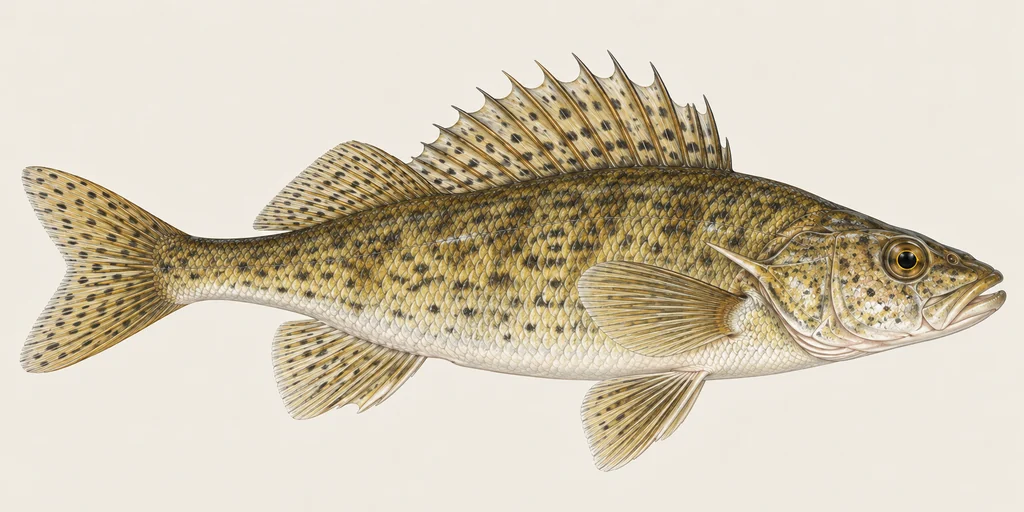
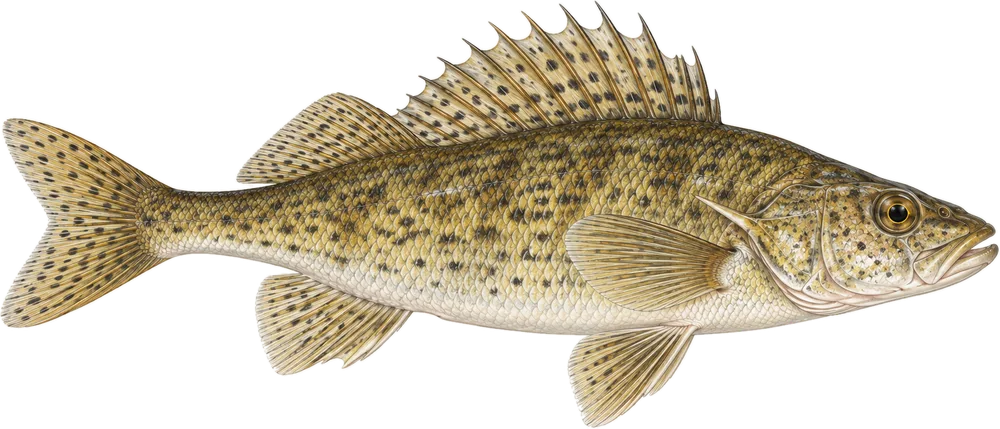
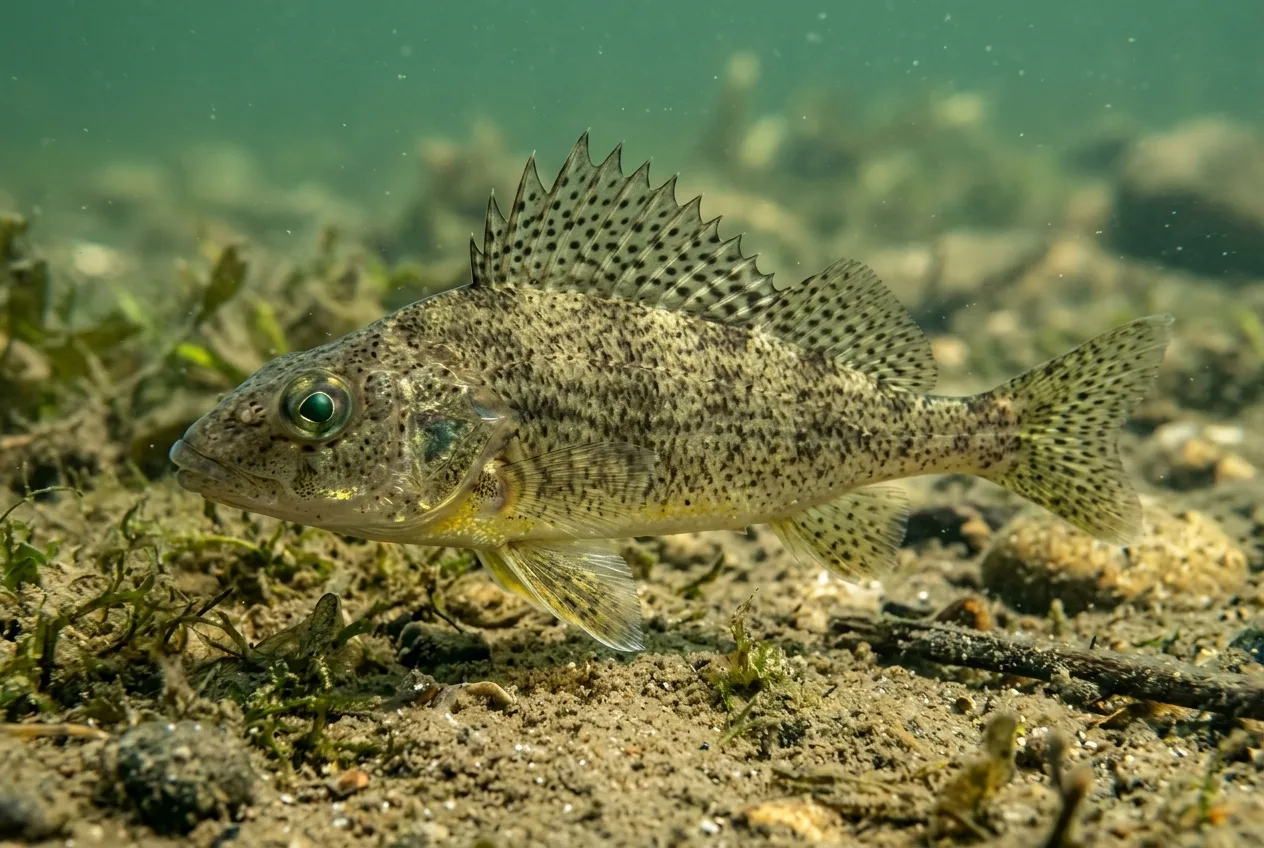
- Two joined dorsal fins, the front one with strong spiny rays
- Gill cover ending in a long spine
- Brownish-yellow to brownish-green flanks with black speckles, also on the dorsal and tail fins
Catch chances through the year
- Hardly any chance
- Possible
- Good
- Peak season
- Spawning (observe the closed season)
Editorial assessment for waters in Germany, not a measured value and no guarantee. Spawning time is not the same as the legal closed season.
Species profile and sources in the catch calendarAll species compared month by monthThe rules of your federal state
How to recognise it
The ruffe has a stocky, slightly high-backed body with ctenoid scales, that is, scales with a finely toothed rear edge. The head is short and triangular, the snout blunt, the mouth small. The two dorsal fins are joined, and the front one carries strong spiny rays and stands higher than the rear one. The pelvic and anal fins also have spiny rays. The gill cover ends in a long spine.
The base colour is brownish-yellow to brownish-green with a brassy sheen. The body, dorsal fin and tail fin are speckled with black. Large canals of the lateral line system lie on the head, covered only by thin skin. LFV Bayern gives an average length of 10 to 15 centimetres and a maximum of 25 centimetres, FishBase a maximum weight of 400 grams.
Small perch and young zander have two separate dorsal fins, while on the ruffe the two are joined. The perch also has five to nine dark cross bands instead of the fine black speckles.
The Danube is home to two close relatives, the Schrätzer (striped ruffe) and the Danube ruffe, which according to the Bavarian State Office for the Environment occur in Central Europe only in the Danube basin and are protected under the Habitats Directive (FFH). The Schrätzer also has a long spine on the gill cover, but three to four broken dark lengthwise lines on its flanks. Anyone who catches a striped little perch on the Danube puts it back.
Side by side
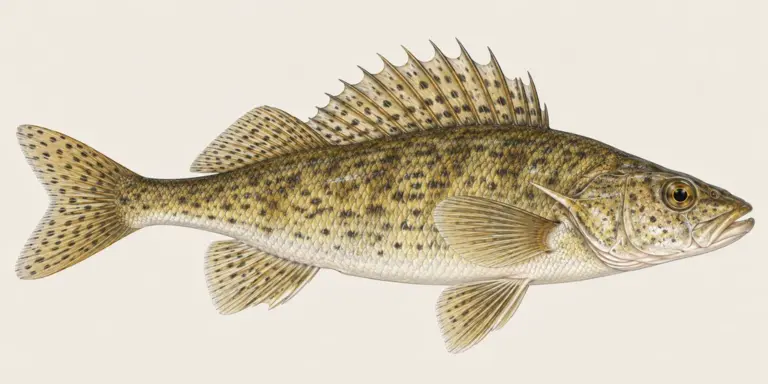
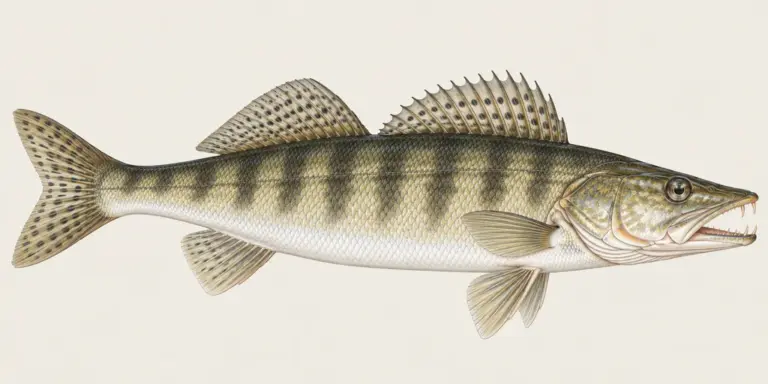
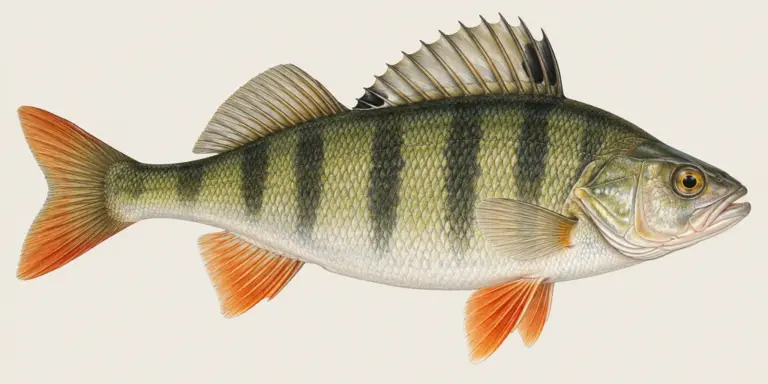
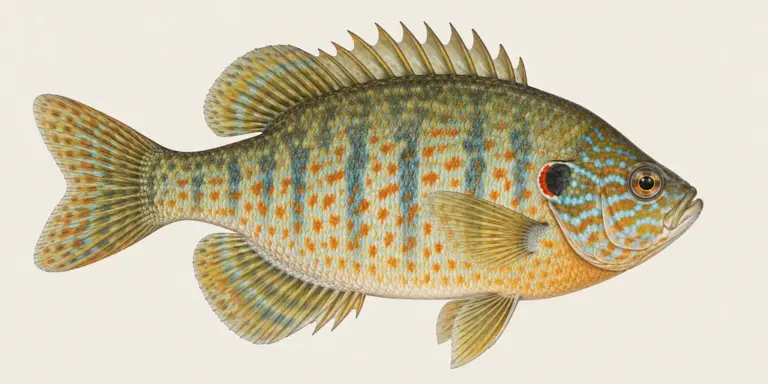
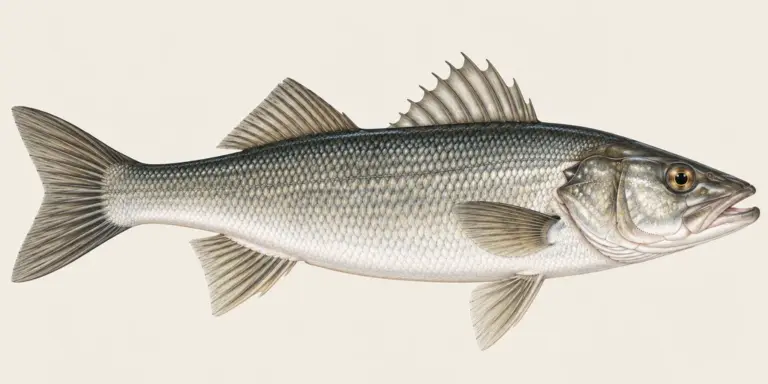
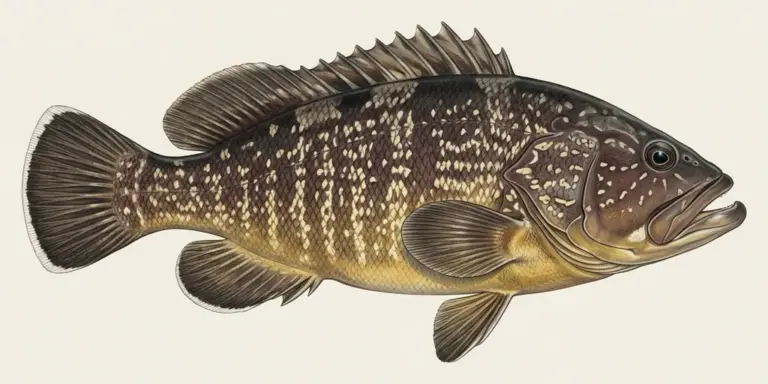
AI-generated illustrations.
Where it holds
The ruffe inhabits larger rivers in the barbel and bream zones, canals, reservoirs and nutrient-rich lakes. According to FishBase it is most common in the mouths of large rivers and in brackish lakes with up to 10 to 12 parts per thousand of salt. In fisheries biology the river-mouth zone even bears its name: the ruffe-flounder zone (Kaulbarsch-Flunder-Region).
It prefers still or slow-flowing water with a soft bottom and few plants, often also deep water over sand and gravel. When ruffe and perch live in the same deep lake, the ruffe usually sits deeper. It increases as a water becomes richer in nutrients. The magazine Blinker puts the decline of many stocks in recent years down to ever clearer water.
Holding spots in the picture
Choose the season and time of day: the picture shows where the species stands then. Spots outlined in red apply only in the chosen season. Tap a fish or a spot in the list to bring it closer. The picture is schematic and AI-generated, every water is different.
Catch chance in springpossibleSpawning season, observe closed seasons
Catch chance in summergood
Catch chance in autumngood
Catch chance in winterpossible
- J
- F
- M
- A
- M
- J
- J
- A
- S
- O
- N
- D
Spawning season
Not a main time With the lateral line system on its head it finds prey even in low light, so it bites on the bottom until dusk.
Not a main time With the lateral line system on its head it finds prey even in low light, so it bites on the bottom until dusk.
Active time With the lateral line system on its head it finds prey even in low light, so it bites on the bottom until dusk.
Not a main time With the lateral line system on its head it finds prey even in low light, so it bites on the bottom until dusk.
In the lake
Water lilies and weed bed
The ruffe is here only in spring.
Deep bottom
The ruffe is here all year round.
The ruffe lives in shoals on the bottom of nutrient-rich lakes and reservoirs, preferably over soft ground with few plants. If it shares a deep lake with the perch, it usually stands further down.
Spring: catch chance according to the catch calendar possible. This is when the spawning season falls, observe closed seasons. From March to May it lays its eggs on shallow bank spots down to about three metres deep, on stones or plants.
Summer: catch chance according to the catch calendar good.
Autumn: catch chance according to the catch calendar good in September and October, possible in November.
Winter: catch chance according to the catch calendar possible.
In the river
Pools, deep spot
The ruffe is here all year round.
Groyne scour hole
The ruffe is here all year round.
In larger rivers and canals it looks for calm areas with soft ground, often in deeper water over sand and gravel. It is especially common in the mouths of large rivers.
Spring: catch chance according to the catch calendar possible. This is when the spawning season falls, observe closed seasons.
Summer: catch chance according to the catch calendar good.
Autumn: catch chance according to the catch calendar good in September and October, possible in November.
Winter: catch chance according to the catch calendar possible.
Size comparison: AI-generated drawing, schematic.
How it feeds and spawns
Ruffe live in groups, often in large packs on the bottom. They eat insect larvae, above all chironomid larvae, plus worms, freshwater shrimps, snails, small mussels, zooplankton and fish spawn. With the sensitive lateral line system on the head they find prey even in the dark. When stocks are very dense or food is scarce they stay small, which experts call stunting (Verbuttung).
According to LFV Bayern, spawning takes place from March to May. The eggs are laid in shallow spots near the bank, in water up to about three metres deep, as gelatinous, sticky strings on stones or plants, often in two batches about a month apart. According to FishBase the females live up to ten years, the males up to seven.
The ruffe itself is prey for zander, eel, pike and cormorant. In North America it was introduced with ships‘ ballast water and has spread widely in Lake Superior. Here, according to Blinker, it competes with immigrant gobies such as the round goby for the same food on the bottom.
When it bites
The best chances are from June to October. In summer, according to an article in Rute & Rolle, it reliably takes on the bottom, and it accepts worms right into late autumn, as a November catch reported by Fisch & Fang from Wolgast harbour shows. There is no season given by authorities or associations for the ruffe. During the spawning period from March to May the fish lay their eggs in shallow spots near the bank; at other times they live in groups on the bottom.
It finds its prey in the dark as well. A session on the bottom can therefore produce ruffe well into dusk.
Today’s catch index needs JavaScript. Season and spawning time are in the catch calendar.
You will find the monthly overview of all species and the water temperature check in the catch calendar.
What you catch it with
Step by step: Fishing for ruffe: tips on bait, rig and tackle – season, spots, baits, tackle and rules on one page.
The ruffe is rarely targeted; the magazine Blinker hardly regards it as a target fish because of its small size. It is caught when bottom fishing with small animal baits, because its food consists almost entirely of small animals on the bottom.
A small piece of worm or bloodworm on a small hook suits its food and its small mouth. The bait must lie on the bottom or drift just above it. The spiny fins and the gill-cover spine are sharp, so you take hold of the fish from the front and smooth the dorsal fin down against the body as you do.
Check the dorsal fin first: A small perch with a continuous dorsal fin and speckles is a ruffe. On the Danube, also look for lengthwise lines so that you do not keep a protected Schrätzer.
Handle with care: Lay your hand over the back from the front so that the spines lie flat against the body. That way you will not prick yourself on the gill-cover spine.
Suitable lures
Small pieces of worm or bloodworm on the bottom.
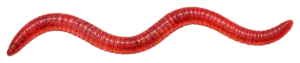
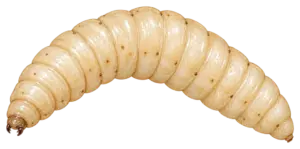
AI-generated illustrations. A click opens the lure’s page.
Rigs for these lures: float rig, running ledger rig.
Seldom a target fish, mostly bycatch when bottom fishing.
Why the ruffe used to end up in the soup pot
Small and spiny as it is, the ruffe was nevertheless once regarded as a valued table fish in parts of Europe. Specialist literature describes its flesh as white, of good texture and tasty, and in some parts of Germany it was even preferred to perch. Today it has almost vanished from the kitchens of central and northern Europe. It plays hardly any commercial role and is used rather as a bait fish for pike.
The usual way of using it was a clear fish soup. In Russia it is still cooked with ruffe today, and ruffe soup was also known in East Prussia and Pomerania. Older cookbooks have you scale, gut and briefly simmer the fish in lightly salted water. If you fry it, a recommendation from the 1940s says to pull off the tough skin afterwards. Watch out for the sharp fins when preparing it.
What you need to observe
The ruffe is on the warning list in Germany’s 2023 Red List. Experts assume a moderate long-term decline and a moderate decrease in recent years. It was previously classed as not threatened. Whether a closed season or minimum size applies to it is set by state law.
Closed seasons, minimum sizes and harvest windows are set by the federal states (Bundesländer). They differ by state, type of water and time of year. We give figures only with a date and a source; what is always binding is the fisheries regulation of your federal state and your fishing permit (Erlaubnisschein). You will find a list of links to the official sources in the catch calendar.
A fish of legal size that you want to keep you stun and kill at once, in line with animal welfare rules. Protected, undersized fish or fish too large under a harvest slot you unhook, if possible still in the water and with wet hands, and release gently. What exactly applies is regulated by state law and your fishing permit (Erlaubnisschein).
What closed season, minimum size and harvest slot mean and where to find them is explained on the page Closed season and minimum size explained.
Frequently asked questions (FAQ)
How do I tell a ruffe from a perch?
The ruffe has two joined dorsal fins and black speckles. The perch has two separate dorsal fins and vertical dark stripes.
How big does a ruffe grow?
Usually 10 to 15 centimetres. LFV Bayern gives a maximum of 25 centimetres, FishBase a maximum weight of 400 grams.
Can the ruffe hunt in the dark?
Yes. A reflective layer in the retina lets it see better in the dark than many other fish, according to Blinker, and through the lateral line on the head it senses prey even without light.
Sources
The rating of catch chances is an editorial assessment. The facts come from these sources, and the text is worded in our own words. The illustration is an original design by Angel Momente in the style of a natural history plate (AI-generated, see the AI notice).
- Landesfischereiverband Bayern: Fischlexikon (Kaulbarsch)
- FishBase: Gymnocephalus cernua (Größe, Alter, Lebensraum, Fortpflanzung)
- Rote-Liste-Zentrum: Kaulbarsch (Rote Liste der Süßwasserfische Deutschlands 2023: Vorwarnliste)
- LAWA-Projekt O 10.20 (Leibniz-IGB, 2021): Temperaturempfindlichkeiten der Fischgemeinschaften
- Blinker: Kaulbarsch im Fokus, der kleine Vetter von Barsch und Zander (2022)
- Blinker: Fischarten richtig bestimmen (Kaulbarsch, Schrätzer)
- U.S. Geological Survey, Nonindigenous Aquatic Species: Ruffe (Gymnocephalus cernua)
- Bayerisches Landesamt für Umwelt: Pressemitteilung 34/2023 (Donaubarscharten)
- Rute & Rolle: Happen für Quappen im Winter (Kaulbarsche im Sommer bodennah gefangen, 2022)
- Fisch & Fang: Wurm fängt! (Kaulbarsch im November, Wolgaster Hafen)
- Journal of Ethnic Foods: Caviar, soup and other dishes made of Eurasian ruffe, Gymnocephalus cernua (2020)
Created with AI support from the sources listed. Figures only appear in the text if a source gives them. Last updated: 27 October 2026. Found a mistake? Write to us. Who is behind this site: About me.
More in the lexicon
- All fish species at a glance
- Catch calendar – month, water temperature and profile for 93 species
- Line calculator – breaking strain after the knot, drag guideline, backing
- Angling methods