
Knowledge · Lures
Maggots and larvae
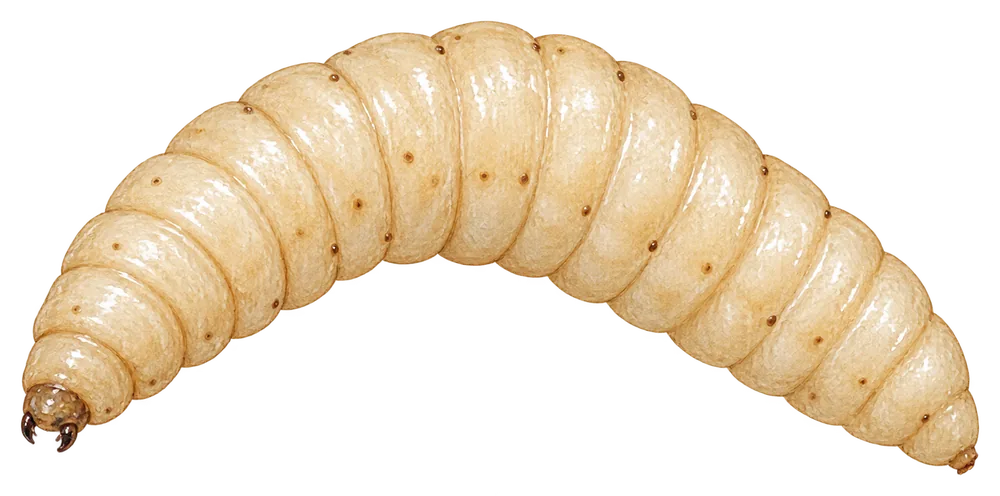
Animal natural baits · Waiting game with a float or on the bottom
Maggots are fly larvae and are among the most widely used baits in coarse angling. They wriggle on the hook by themselves, are cheap and catch everything from roach to carp. Pinkies are the smaller variety, casters the pupated maggots.
- Water depth
- Bottom to mid-water
- Presentation
- Stationary on a float or ground rig, in the feed as an attractor
- Fishing method
- Waiting game with a float or on the bottom
- Category
- Animal natural baits
RoachRuddBreamIdeBarbelChubTenchCarpPerchSilver breamPrussian carpBurbot / Rutte / TrüscheRuffeRainbow troutGraylingWhitefish (Maräne / Renke / Felchen)Alpine char
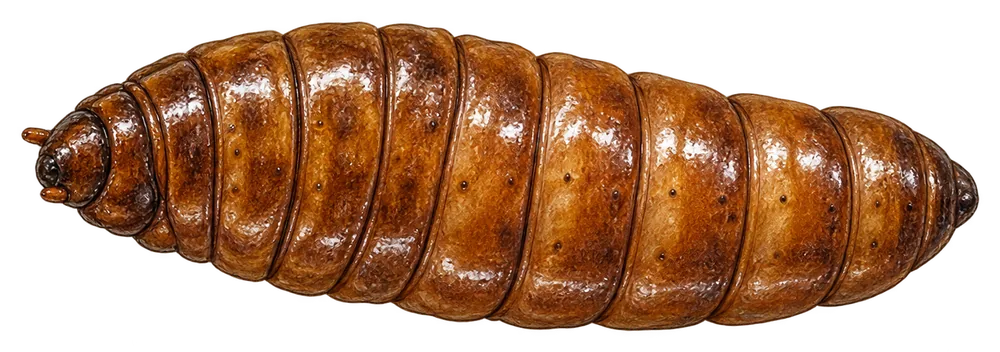
AI-generated illustrations
How it works
A maggot works through its movement and its familiarity. It wriggles by itself and does not need to be worked, unlike a soft plastic shad, for example. Fish know fly larvae as food and are not suspicious; even in winter they take these protein-rich morsels.
Ordinary maggots are larvae of the bluebottle and come from breeding farms. In the tackle shop they are sold in sawdust or maize meal. Pinkies come from the greenbottle and are mostly much smaller. Their pupation takes longer. Casters are pupated maggots. They change colour from pale to dark brown, and over time they float.
The main target fish include roach, rudd and bream. Ide, barbel, chub, tench and carp also bite on them. Even predators such as eel, perch and trout take them, now and then even a pike. The hook size depends on the season: in summer three or four maggots on a size 12 hook are usual, in the cold one or two maggots on a size 16, and in hard frost a single pinkie on a size 18 or 20 hook.
How to present the bait
Stationary on a float or ground rig, in the feed as an attractor
Schematic illustration, AI-generated.
- cast out
- lies on the bottom or hangs from the float
- wait for the bite
- re-bait
Anatomy
The points on the picture above explain the most important parts – on hover or tap.
- Head end: The pointed end with the dark mouth hooks.
- Body rings: The maggot wriggles with them. The wriggling attracts fish.
- Skin: Pierce it only just. If the maggot bursts, it loses fluid and mobility.
- Rear end: The thick end. This is where the maggot is usually baited, so it has plenty of play.
Rig in three steps
- 1. Fine hooklength, small hookA thin hooklength and a small, very sharp hook that catches the maggot only through the skin.
- 2. Shot the floatShot a fine float so that only the tip shows above the water. The bait hangs just above the bottom. Float rig step by step
- 3. Or a running weightAt distance or in the current the maggot lies on the bottom behind a running weight. Running-weight rig step by step
Drawings: AI-generated, schematic.
When the target fish are in season
Hardly any chancePossibleGoodPeak seasonValues from the catch calendar.
When and where
Maggots catch all year round, but fish are cold-blooded: the colder the water, the smaller the bait should be. In summer the ordinary maggot is the standard, in winter many coarse anglers reach for the pinkie. The classic is the float, with the maggot hanging in open water, or the waggler rig. On the bottom it lies behind a running weight and attracts bream, carp and eels.
Maggots also work in feed. Their movement adds to the attraction, and they do not fill fish up as quickly as heavy feed. In winter a few are enough. Feed sparingly overall: in an experiment in a reservoir in 1987, feeding with grain reduced the densities of almost all bottom-dwelling animals, with maggots the effect was similar, and after four months the community had not recovered. Where and how much you may feed is regulated by the federal state (Bundesland) and the water rules.
How to adjust hook and quantity to the season
The hook determines how long the maggot lives. It must be very sharp and thin so that the maggot does not burst when baited. A burst maggot loses fluid and hardly moves any more.
In summer you fish with several maggots on a larger hook. In winter everything gets smaller: one to two maggots on a size 16, in extreme cold a pinkie on a size 18 or 20. A red hook can complement a pale pinkie. If only small fish bite, you bunch several maggots or switch to worm or sweetcorn.
Coloured maggots are not allowed everywhere. Saarland expressly bans coloured maggots, coloured feed and chironomid larvae in its state fisheries regulation. What applies in your state is in the fisheries regulation and on the fishing permit (Erlaubnisschein).
How to bait the maggot
- Take a fine hook The hook must be very sharp and thin so that the maggot does not burst when baited.
- Pierce at the thick end Pierce the maggot at the thick end only just through the skin. That way little fluid escapes.
- Second maggot the other way round You put a second maggot on at the thin end. That way the two do not twist the line when you reel in.
- Leave the point free The hook point must stay free, otherwise the strike does not grip.
Single maggots you pierce with a fine-wire hook at the thick end just through the skin. The less fluid escapes, the longer the maggot stays mobile. Two maggots are baited in opposite directions: one at the thick end, one at the thin end. That way they do not twist the line when you reel in. For carp, barbel or bream you may thread up to six maggots on at the thick end.
After a bite, maggots are often sucked dry and only skin remnants hang on the hook. Replace them at once. Maggots that lose body fluid you sort out. Combined with a grain of sweetcorn, few coarse fish can resist.
How to store maggots and keep things hygienic
Warmth speeds up pupation. In the fridge at about 4 °C maggots keep for up to two weeks, even longer at 0 to 2 °C. Fill the tub only half full, keep the ventilation holes clear and add maize meal or sawdust so that they stay dry. Maggots from the dealer smell strongly of ammonia. So wash them and store them in fresh sawdust.
Casters belong in a freezer bag with a little air, but not none at all. Air and mix them every two days; in the fridge they keep for 8 to 10 days. A smell test checks them: a neutral smell means usable, a sour smell means dead.
You wash your hands after contact with animals or animal waste and always before eating, according to the Bundesinstitut für Öffentliche Gesundheit for 20 to 30 seconds with soap. Breeding maggots yourself brings stench and pathogens into the house; the Blinker editorial team advises against it.
Keep it fresh and present it
Keeping it fresh: store natural baits cool and in the shade, take only as much as necessary and do not tip leftovers into the water. When baiting up, the hook point must stay free so that the strike takes hold.
Maggots & grubs or another bait after all?
| Baits and lures | Depth | Presentation | Take this lure if … |
|---|---|---|---|
| Maggots & grubs | Bottom to mid-water | Stationary on a float or ground rig, in the feed as an attractor | this page |
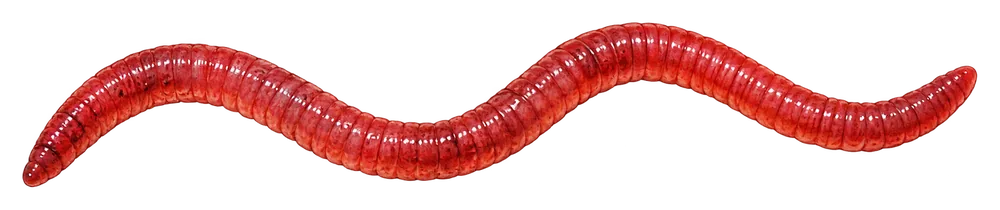 Worms | Bottom to mid-water | Resting under a float or on a bottom rig, and with a sliding float or drop shot also fished actively | bigger fish such as tench, eel or perch are your target |
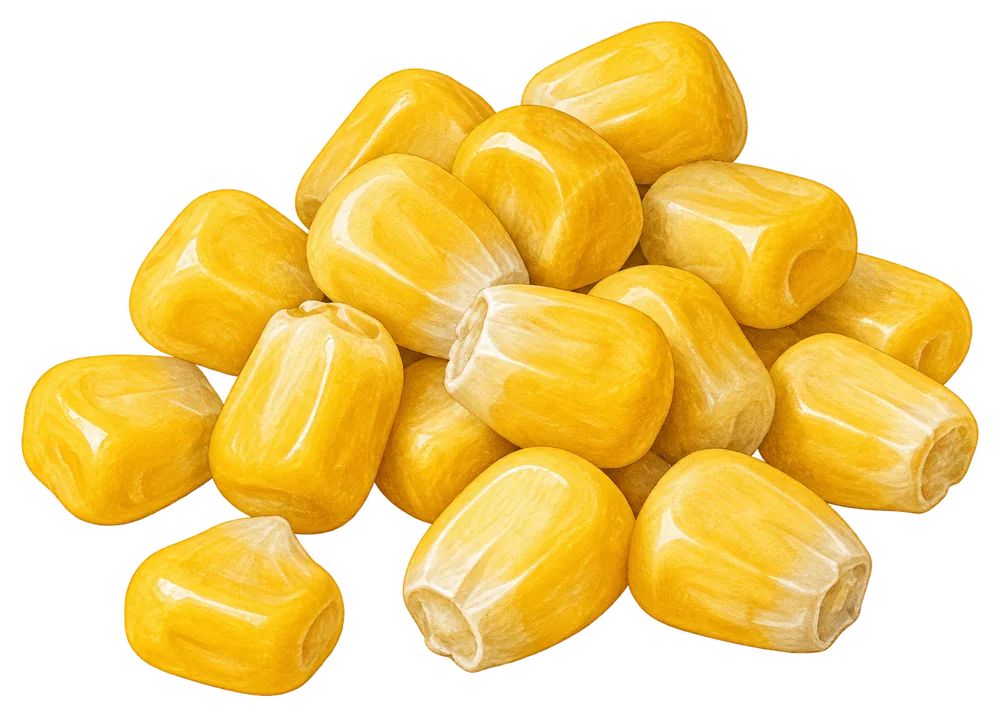 Sweetcorn & particles | Bottom | Resting on the bottom, usually over some feed | too many small fish are ending up on your hook |
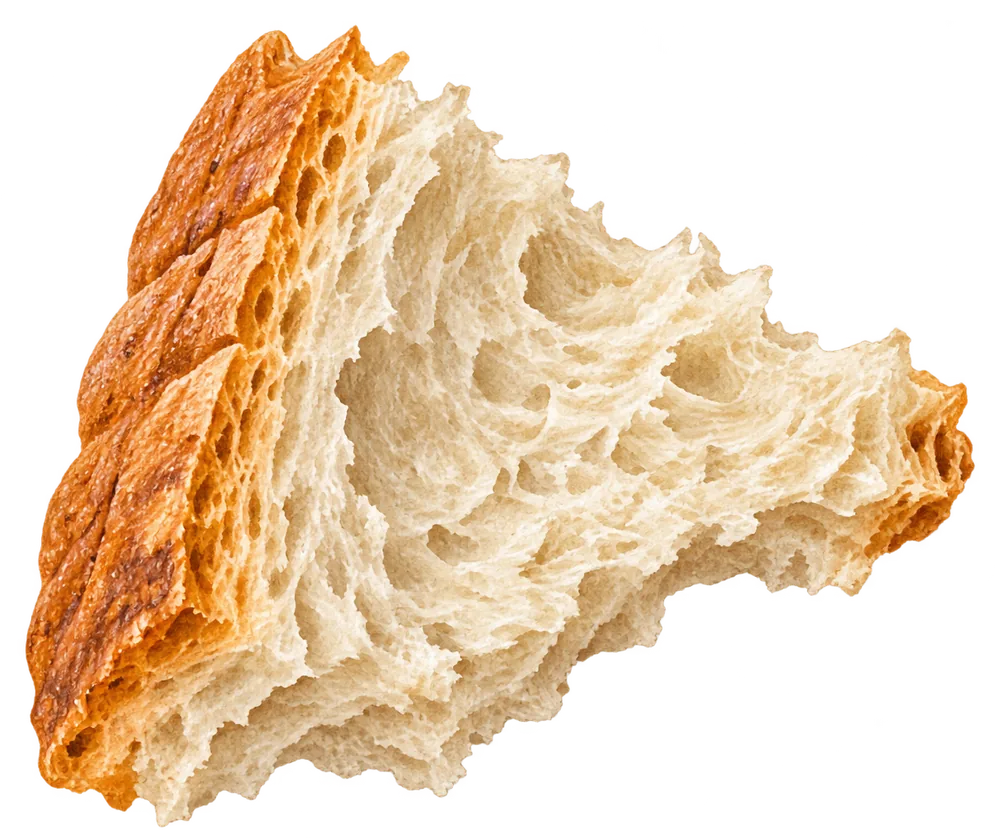 Bread | Surface to bottom | Let it drift without tension; dough resting on the bottom | you want to fish in mid-water or at the surface |
What you need
- Pole or match rodFine tackle, so that even cautious bites become visible. More
- LineThin monofilament main line, the hooklength a little finer still. More
- Maggot tubWith air holes and a tightly closing lid, filled half full at most. More
- HookVery sharp and fine-wire, in small sizes for pinkies. More
More on the method: Float fishing, Bottom fishing, Pole fishing, Feeder fishing, Feeding and groundbait, Ice fishing and Trout fishing at a pond.
At a glance
Editorial assessment, not measured values.
If it does not work
Pierce only just through the skin at the thick end and replace sucked-dry maggots at once.
Store cool until the day of angling, best in the vegetable drawer of the fridge, and do not overfill the tub.
Bunch several maggots or switch to a bigger bait such as worm or sweetcorn.
Use a very sharp, thin hook and catch only the skin at the end.
Wash, dry and take to the water in fresh sawdust.
Fill the tub only half full, close it tightly and shut the lid after every grab at the water.
Frequently asked questions
How long do maggots keep?
In the fridge at about 4 °C for up to two weeks. Fresh they catch best. Stored warm they pupate quickly into casters.
What are pinkies?
The larvae of the greenbottle. They are often only half the size of ordinary maggots and pupate more slowly, which is why they are popular in winter.
What are casters for?
Casters are pupated maggots. They do not move, but are eaten readily and often mixed into the feed.
Which hook suits the maggot?
In summer a size 12 is enough for three to four maggots. In the cold you take a size 16, in frost a size 18 or 20 hook with a pinkie. The hook must be very sharp and thin.
May I feed with maggots?
Whether and how much you may feed is regulated by the federal state and the water rules. Feed sparingly, because feed cannot be taken back.
Before fishing, the current permits, state rules and water rules apply: bait bans, number of hooks, closed seasons, protected species and catch limits can differ. Many federal states expressly ban live baitfish. Take bait remains and packaging away with you. All details are guide values without guarantee and do not replace legal advice.
Sources
- Blinker: Angeln mit Maden
- Blinker: Friedfischangeln im Winter
- Blinker: Caster-Herstellung
- Rute & Rolle: Maden, echte Allrounder für Friedfische
- Canal & River Trust: Large maggots
- Bundesinstitut für Öffentliche Gesundheit: Händewaschen
- Environmental Pollution: Impact of angler groundbait on benthic invertebrates (1987)
- Saarland: Landesfischereiordnung (LFO), § 10
The sources explain terms and basic principles. Presentation and values are editorial starting points and depend on water, weather and bait.
More animal natural baits
Worms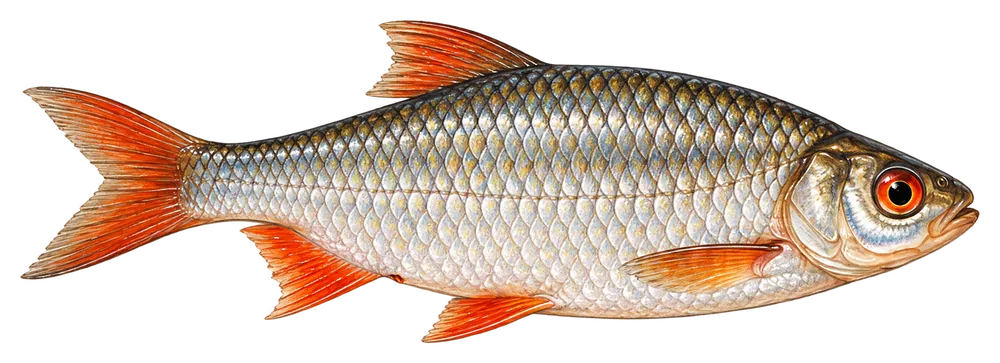 Bait fish
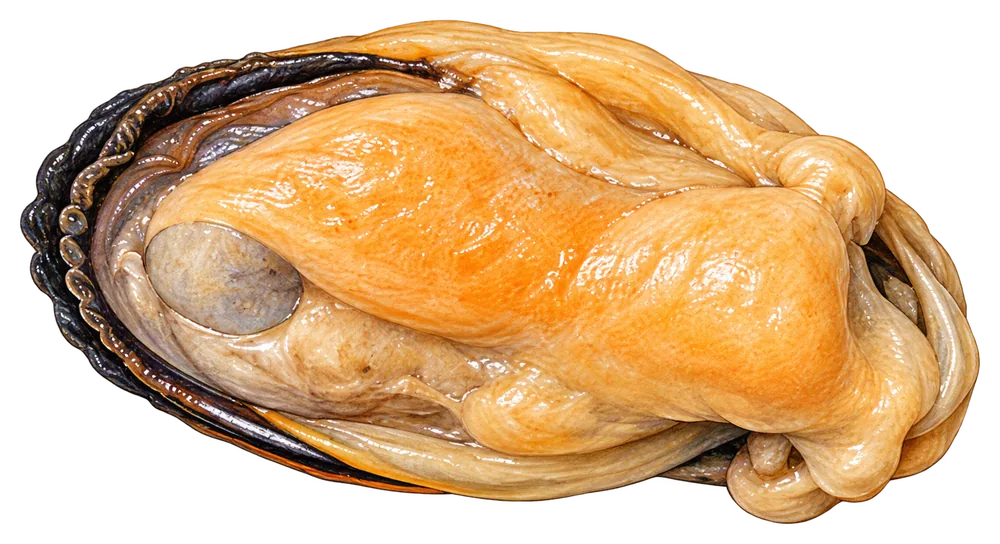 Crustaceans & shellfish
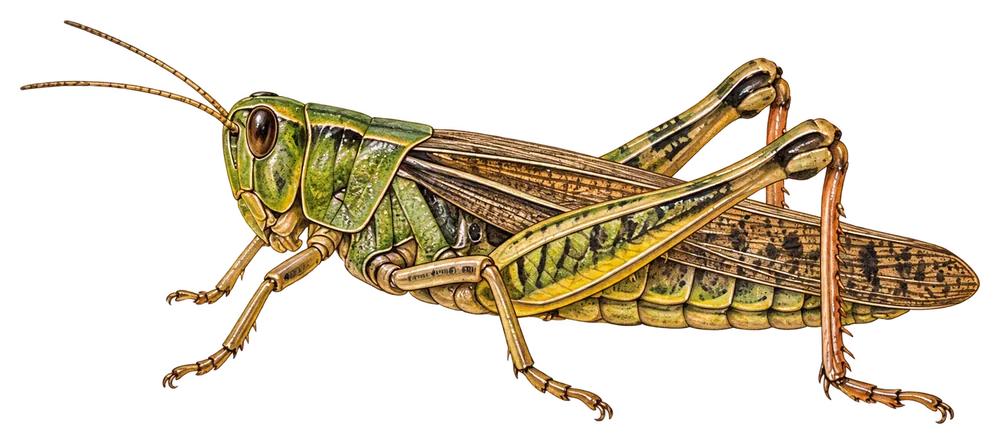 Insects
 Snails
 Offal & meat
 Lugworm
 Ragworm
 Fish strips
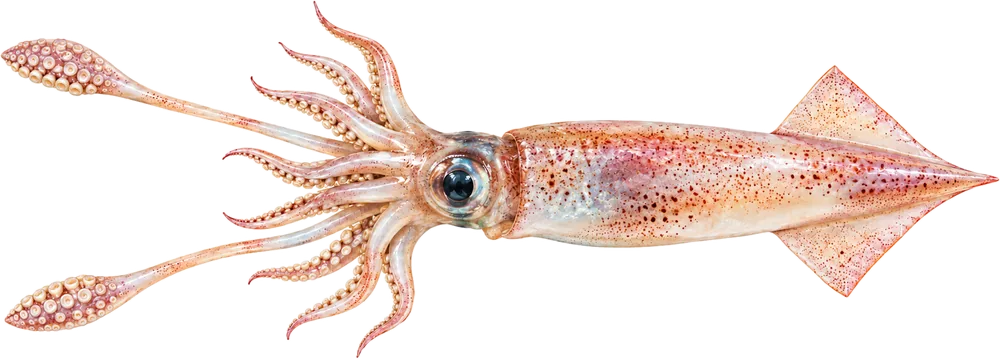 Cuttlefish & squid
Created with AI support from the sources named (AI notice). Last updated: 25 October 2026. Found a mistake? Write to us. Who is behind the site: About me.