
Knowledge – Fish
Carp: Four barbels, cultivated forms, swims, bait
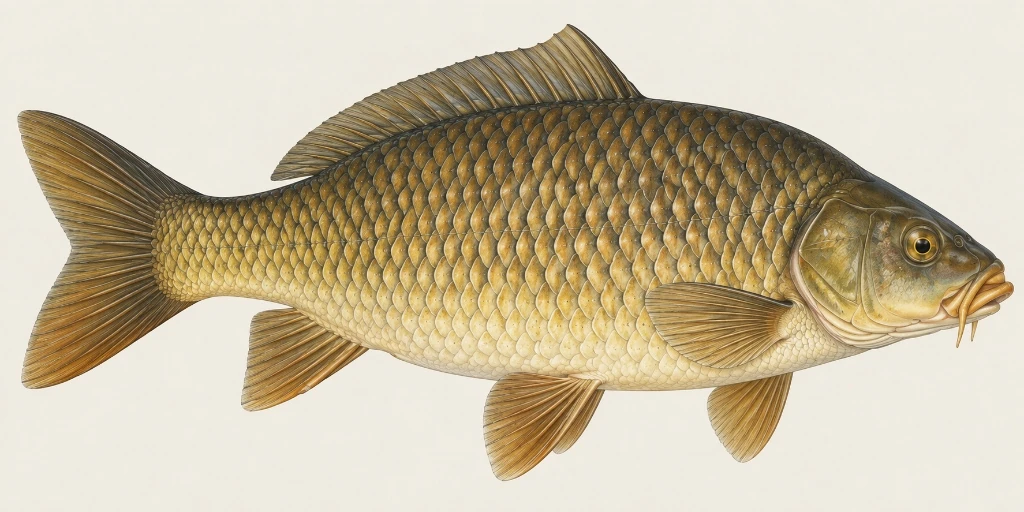
The carp (Cyprinus carpio) is a warmth-loving bottom feeder that occurs as a wild fish, pond fish and stocked fish. You recognise it by its four barbels, catch it between spring and late autumn, and find it in lakes, ponds and slow rivers.
In short: The best time to catch carp is from August to September, especially in the evening. Good spots in a lake: an underwater hump, a drop-off edge and a weed bed; in a river: a quiet bay. Proven baits: boilies, hard maize, particles, soaked wheat or bread. Step by step: Carp fishing.
- Two pairs of barbels on the upper lip
- Lange Rückenflosse
- Large, strong scales, back olive green
Catch chances through the year
- Hardly any chance
- Possible
- Good
- Peak season
- Spawning (observe the closed season)
Editorial assessment for waters in Germany, not a measured value and no guarantee. Spawning time is not the same as the legal closed season.
Species profile and sources in the catch calendarAll species compared month by monthThe rules of your federal state
How to recognise a carp
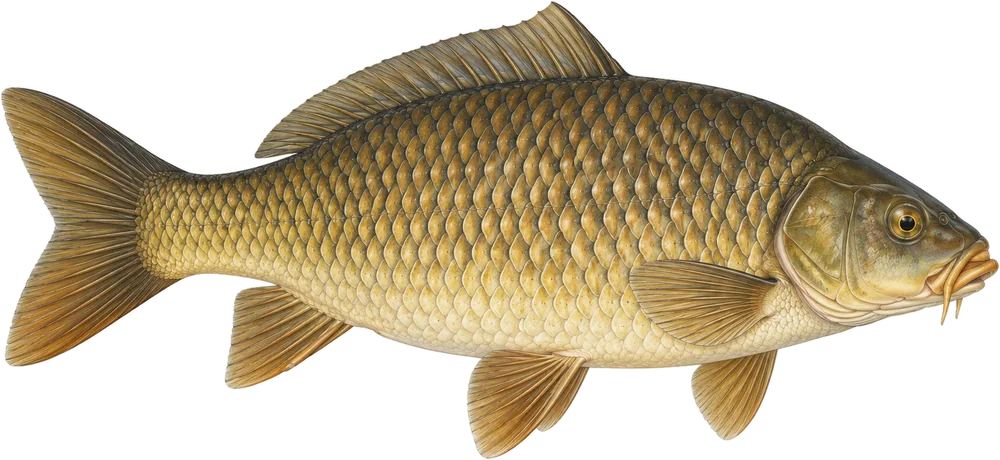
The mouth can be protruded like a snout and has no jaw teeth. The carp crushes its food with strong, molar-like pharyngeal teeth in the throat. What decides identification is two pairs of barbels on the upper lip, with the front pair shorter. In addition there are a long dorsal fin, a deeply forked tail fin and large, thick scales.
The wild form is elongated, with an olive-green back and a yellowish to whitish belly. Most carp measure 35 to 90 centimetres. Individual fish reach 120 centimetres and more than 40 kilograms, which is the exception. Pond farmers sell table carp after the third summer at 1 to 1,5 kilograms. FishBase gives maximum values of 129 centimetres, 40,1 kilograms and 38 years.
Cultivated forms at a glance
| Shape | Scale pattern |
|---|---|
| Scaled carp | full covering of scales |
| Linear carp | one row of scales along the lateral line |
| Mirror carp | a few single scales on the back |
| Leather carp | no scales |
The barbel also has four barbels. But it has an underslung mouth with fleshy lips and lives in clear, oxygen-rich middle reaches over sand and gravel. Crucian carp and Prussian carp resemble the carp in shape but have no barbels. Crosses between carp and crucian carp are possible, the so-called carp-crucian hybrids.
Side by side
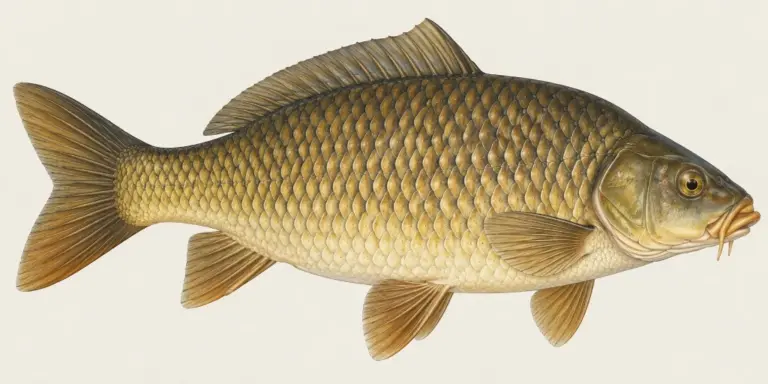
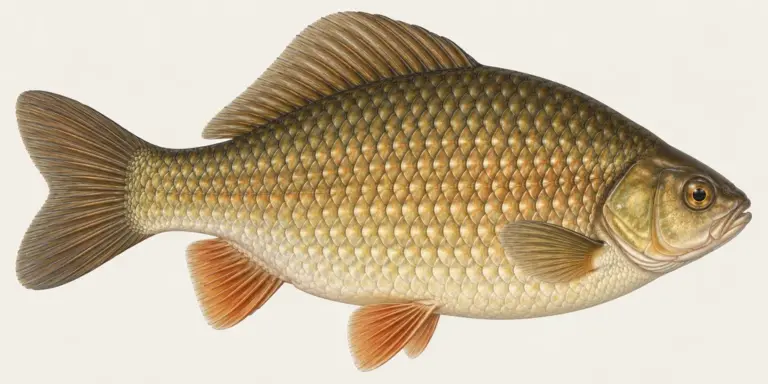
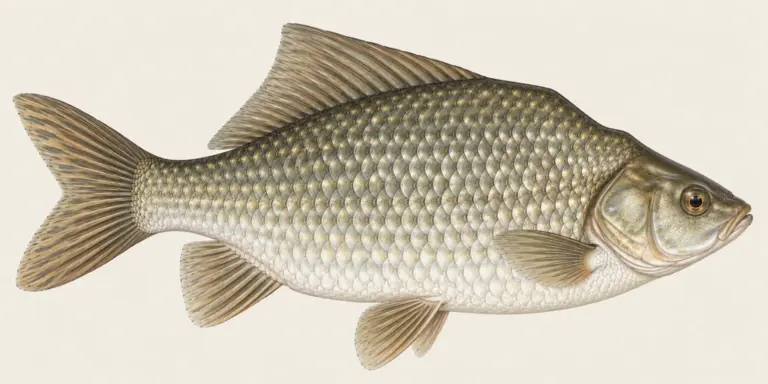

AI-generated illustrations.
Where the carp holds
Carp hold in warm, calm waters with a soft bottom: in large, weedy lakes, ponds, gravel pits and in the lower reaches of slow rivers. FishBase also mentions brackish water. They tolerate water temperatures from just above zero up to 33 degrees. According to the Bayerische Landesanstalt für Landwirtschaft they grow best at 23 to 28 degrees.
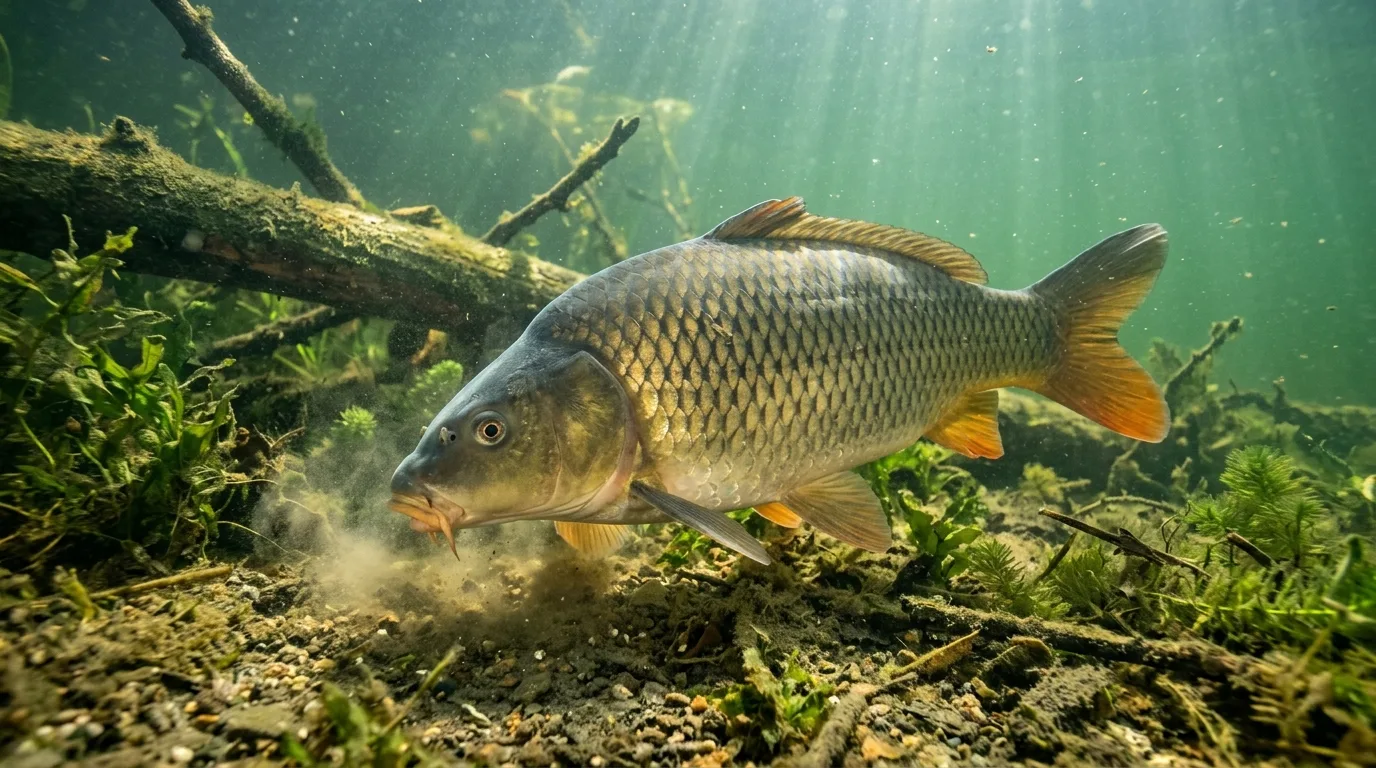
Exactly where they hold depends on the structure of the water. In deep lakes these are plateaus, edges, underwater humps and steep drop-offs, in shallow lakes hollows, channels, weed beds and mussel beds. In calm weather carp look for cover: sunken trees, weed and water-lily beds, and rarely fished stretches.
Natural wild stocks exist only in tributaries of the Black Sea, the Caspian Sea and the Aral Sea. River regulation and mixing with cultivated forms have pushed them back. The Red List of Germany (2023) lists the carp as not threatened.
Holding spots in the picture
Choose the season and time of day: the picture shows where the species stands then. Spots outlined in red apply only in the chosen season. Tap a fish or a spot in the list to bring it closer. The picture is schematic and AI-generated, every water is different.
Catch chances in springpossible
Catch chance in summergood
Catch chance in autumngood
Catch chance in winterpossible
- J
- F
- M
- A
- M
- J
- J
- A
- S
- O
- N
- D
Spawning season
Not the main time Bites are mostly to be expected in the late afternoon and early evening.
Not the main time Bites are mostly to be expected in the late afternoon and early evening.
Active time Bites are mostly to be expected in the late afternoon and early evening.
Not the main time Bites are mostly to be expected in the late afternoon and early evening.
In the lake
reed edge
Carp are found here only in summer.
Water lilies and weed bed
Carp are found here only in spring, summer and autumn.
Shelf edge
Carp are found here only in spring, summer and autumn.
Sunken tree
Carp are found here only in spring, summer and autumn.
Deep bottom
Carp are found here only in winter.
plateau, underwater hump
Carp are found here only in spring, summer and autumn.
Just below the surface
Carp are found here only in summer.
In gravel pits and reservoirs carp hold on plateaus, drop-offs and underwater humps, in shallow lakes on hollows, channels and weed beds. Sunken trees and water lily fields are safe refuges.
Spring: catch chance according to the catch calendar hardly any in March, possible in April, good in May. From a water temperature of about 8 °C carp become active. In a warm wind they follow it to the bank it is blowing onto.
Summer: catch chance according to the catch calendar good in June and July, peak season in August. In the warm summer months carp are often found at the surface, usually under overhanging branches, and cruise through the shallows.
Autumn: catch chance according to the catch calendar peak season in September, good in October, possible in November. Fishing stays good well into late autumn.
Winter: catch chance according to the catch calendar possible. In winter carp mostly gather in deeper areas and feed little. On sunny days from the end of January they also move into the shallows, which warm up faster.
In the river
Pools, deep spot
Carp are found here only in autumn and winter.
riprap, sheet piling, harbour
Carp are found here only in summer, autumn and winter.
Current seam
Carp are found here only in summer.
Calm bay with aquatic plants
Carp are found here all year round.
Free current in mid-river
Carp are found here only in summer.
In rivers carp are found in shallow bays with water lilies, at the ends of bends and at the mouths of tributaries.
Spring: catch chance according to the catch calendar hardly any in March, possible in April, good in May. In spring carp avoid the current. They sit in shallow, calm areas away from the flow, for example in oxbow lakes, where the water warms up first.
Summer: catch chance according to the catch calendar good in June and July, peak season in August. In summer carp move into the main current, because they find more oxygen and food there, such as mussels. Good spots are the edge of the navigation channel and the foot of rock armouring.
Autumn: catch chance according to the catch calendar peak season in September, good in October, possible in November. In autumn carp look for deep, calm areas that cool more slowly: harbour basins with sheet piling and the deep zones in front of weirs and barrages.
Winter: catch chance according to the catch calendar possible. In winter they gather in deep stretches sheltered from the current, such as outside bends, harbours and weir areas. They feed less, but can be caught.
Size comparison: AI-generated drawing, schematic.
What it eats and how it spawns
Carp feed on the bottom: insect larvae, snails, worms and plant parts, and the fry feed on zooplankton. In ponds, water fleas, copepods and insect larvae make up the natural food. Carp are most active at dusk. Feeding craters in the bottom, swirls at the surface and movement in the reeds give away feeding fish.
For spawning the fish seek out shallow, warm, weedy areas at 15 to 20 degrees. In rearing ponds they spawn from May to mid-June, and the sticky eggs adhere to blades of grass and water plants. A female lays more than a million eggs. Whether a year class succeeds depends, in river systems, on rising water in May and lasting warmth.
When it bites
Carp feed and grow mainly in the summer half of the year. Young stocked carp bite comparatively readily in spring from a water temperature of about 8 degrees, and from clearly more than 10 degrees they are actively looking for food. Most carp are caught between spring and late autumn.
Late afternoon and early evening are the most likely times to get bites. Damp, windy weather is considered good, still, clear frosty days bad. In winter carp gather in larger shoals and hardly move. Then it helps to place the bait close to the wintering spots and to feed sparingly but regularly.
Today’s catch index needs JavaScript. Season and spawning time are in the catch calendar.
You will find the monthly overview of all species and the water temperature check in the catch calendar.
From the blog: Fish of the Year 2027: the crucian carp and what anglers can do for it · Carp in autumn: where I fish and how much I feed · More bites from the bank: what I adjust, from swim to hook
How to go about it
Step by step: Carp fishing: tips on bait, rigs and tackle – season, swims, bait, tackle and rules on one page.
First watch the water. Feeding craters, swirls and trembling reeds show active carp. In many waters this is followed by sitting it out with a fixed lead and a hair rig, described in detail under carp fishing. The bait then does not sit on the hook but on a short piece of line, the hair, at first about one centimetre away. When the carp sucks in the bait, it pulls the bare hook along with it. In its flight it runs against the fixed lead, which weighs 80 to 150 grams, and hooks itself.
Boilies have established themselves as bait. Tiger nuts, hard maize and chickpeas (Maize and particles) as well as pellets catch just as well. In heavily fished waters carp learn to recognise danger. There smaller hooks with the same bait size and camouflaged leads help.
There are also lighter ways. With float fishing on sight or between several feeding spots you sometimes catch more carp in one afternoon than in a three-day session. In summer and early autumn carp in shallow water also come to the surface. Then you catch them on bread crust or bread flake (Bread) under a controller float, which keeps the hooklength above the water. How to land a fish and unhook it is covered under Landing and unhooking.
Watch the wind: If the wind is warmer than the water, carp follow it in spring, summer and autumn. If it is colder, they retreat to sheltered stretches.
Read the water: Feeding craters in the bottom, swirls at the surface and movement in the reeds show where carp are feeding. Put your bait there instead of casting blindly.
Camouflage your leads: In fished waters you match the colour of the lead to the bottom and use a smaller hook with the same bait size.
Suitable lures
Boilies, hard maize, particles, soaked wheat or bread.
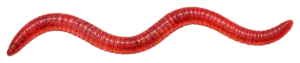
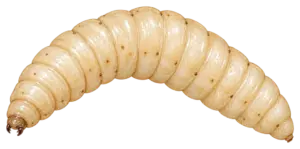
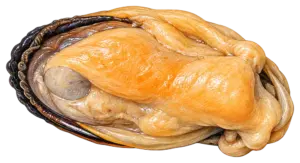
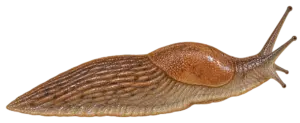
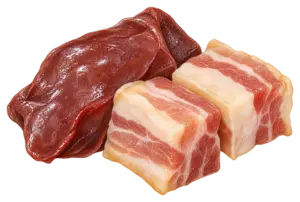
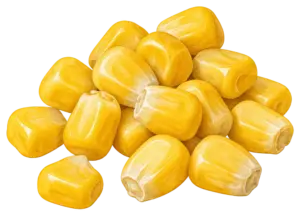
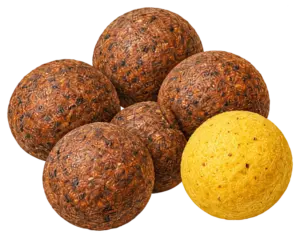
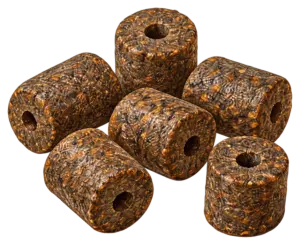
AI-generated illustrations. A click opens the lure’s page.
Also suitable: Bread, Angling paste, Potatoes & fruit.
Rigs for these baits: Hair rig, Feeder rig, Running lead rig, Float rig.
What carp tastes like and what to do with it
Traditionally, carp in northern Bavaria comes to the table as a baked half fish. The Lower Saxon state office LAVES describes its flavour as nutty and the texture as pleasant. The fish is full of small bones. Pond farmers loosen the intermuscular bones with a bone cutter, and at home clean filleting helps. Beforehand you have to scale or skin and gut it. Smoking is also common, for example for a salad of smoked carp.
According to LAVES, an earthy aftertaste occurs only if the fish has not been prepared properly. Farmed carp are held in fresh water before slaughter, that is, kept without food. For a freshly caught fish this step is missing.
From 2017 to 2023 LAVES examined a total of 21 carp from pond farms. It found no parasite stages of relevance to humans, and in the fillet an average of 0,038 milligrams of mercury per kilogram, far below the limit of 0,3. This applies to this sample and does not replace medical advice. It says nothing about fish from a particular fishing water. For that, ask the club or the fisheries authority (Fischereibehörde).
What you need to observe
Whether a closed season (Schonzeit) or a minimum size (Mindestmaß) applies to carp in your water is regulated by the federal states (Bundesland). We give figures only with a date and source, and what is binding is always the fisheries regulation of your federal state and your fishing permit (Erlaubnisschein). As a guest you usually need a fishing permit, which associations such as the Landesanglerverband Brandenburg issue as day or week tickets. You will find a list of links to the official sources in the catch calendar.
A vertebrate may only be killed under effective stunning or, where that is reasonable, avoiding pain (§ 4 Tierschutzgesetz). Anyone who kills one without good reason is liable to punishment (§ 17). How to do this with a fish is covered in Stunning and killing.
You return protected, undersized or, in a harvest slot, oversized carp gently with wet hands (Returning fish). Returning is in tension with animal welfare law and is permitted only in line with the management aim and the law of your federal state. The Red List of Germany of 2023 classes the carp as not threatened.
What closed season, minimum size and harvest slot mean and where to find them is explained on the page Closed season and minimum size explained.
What state law says about the closed season and minimum size for this species can be found in the “At a glance” box on the state pages for Baden-Württemberg, Bavaria, Berlin, Brandenburg, Hamburg, Hesse, Mecklenburg-Western Pomerania, Lower Saxony, North Rhine-Westphalia, Rhineland-Palatinate, Saarland, Saxony, Saxony-Anhalt, Schleswig-Holstein and Thuringia. For the other states our overview does not list this species, and the state fisheries regulation is what counts there.
Frequently asked questions (FAQ)
At what water temperature do carp bite?
The first bites come from about 8 degrees, especially with young stocked carp. From clearly more than 10 degrees they are actively looking for food. Most carp are caught between spring and late autumn.
How many barbels does a carp have?
Four, that is two pairs on the upper lip; the front pair is shorter. Prussian carp and crucian carp have no barbels at all. The barbel also has four, but its mouth is underslung, with thick, fleshy lips.
Does carp taste earthy?
Only if it has not been prepared properly, writes the Lower Saxon state office LAVES. Pond farmers hold the fish in fresh water before slaughter. A freshly caught fish from the water has not been through this step.
Sources
The rating of catch chances is an editorial assessment. The facts come from these sources, and the text is worded in our own words. The illustration is an original design by Angel Momente in the style of a natural history plate (AI-generated, see the AI notice).
- FishBase: Cyprinus carpio (Höchstalter, Aktivität, Laichtemperatur)
- Wikipedia: Karpfen
- LAWA-Projekt O 10.20 (Leibniz-IGB, 2021): Temperaturempfindlichkeiten der Fischgemeinschaften
- Bayerische Landesanstalt für Landwirtschaft: Karpfenteichwirtschaft, Nutzen für Natur und Gesellschaft
- Bayerische Landesanstalt für Landwirtschaft: Auswirkungen des Klimawandels auf die Karpfenteichwirtschaft (Vortrag 2020)
- LAVES Niedersachsen: Karpfen, ein beliebter Speisefisch
- Rote-Liste-Zentrum: Karpfen (Rote Liste der Süßwasserfische Deutschlands 2023: ungefährdet)
- Blinker: Steckbrief Karpfen (Standplätze, Wind, Festblei und Haarmontage)
- Landesfischereiverband Bayern: Fischlexikon (Barbe, Karausche, Giebel)
- Tierschutzgesetz § 4: Töten von Tieren
- Tierschutzgesetz § 17: Straftaten
- Landesanglerverband Brandenburg
- Blinker: Karpfen im Fluss finden (Standplätze nach Jahreszeit)
- Blinker: Karpfen im Winter, 10 Mythen auf dem Prüfstand (Fressen und Standplätze im Winter)
Created with AI support from the sources listed. Figures only appear in the text if a source gives them. Last updated: 21 November 2026. Found a mistake? Write to us. Who is behind this site: About me.
More in the lexicon
- All fish species at a glance
- Catch calendar – month, water temperature and profile for 93 species
- Line calculator – breaking strain after the knot, drag guideline, backing
- Angling methods