
At a glance
- 1 · Swim
- watch for signs of fish, otherwise move early
- 2 · Season
- check the catch calendar and water temperature
- 3 · Presentation
- plumb the depth, let the lead run freely, keep resistance low
- 4 · Tackle
- check the hook point, match hook and hooklength to the mouth
- 5 · Bait
- change the type of bait first, then the colour
- 6 · Bank
- tread quietly, use cover, cast no shadow on the water
- 7 · Water level
- when the level rises: calm areas, only from a firm bank
The swim matters most
Many anglers look at the weather map first before a day’s fishing. Research weights things differently. The angling association Deutscher Angelfischerverband (DAFV) sums up studies on pike like this: what counts most is the choice of spot and lure, time on the water, angling pressure and chance. The weather, by comparison, carries relatively little weight.
So at the swim I watch for signs of fish: a twitch on the float, bubbles rising from feeding fish over the groundbait. If there are none, I change spot early rather than changing the bait. In a fishing trial with artificial lures, researchers caught more pike in shallow water than in deep water. They saw the biggest gain in investing time and choosing the right habitat. In autumn, when the fish move to different holding spots, that applies twice over.
The right time for the species
Every species has its months. In the catch calendar, carp from December to March and tench from November to February are rated “Hardly any chance”. Tench spend the winter buried in the mud. Whether a species is currently protected is decided by your federal state (Bundesland), and on top of that comes your fishing permit (Erlaubnisschein).
Fish have the same temperature as the water around them. If it is above the range that suits a species, the fish are stressed and feed less. If it is below, their energy needs drop, and their appetite with them. In nutrient-rich lakes the deep water also runs short of oxygen in summer, and most fish avoid it. Then I present the bait shallower, above the thermocline, the boundary with the cold deep water.
When it comes to the time of day, I think about the species. Tench stay hidden among the plants during the day and only root through the bottom from dusk onwards. The eel is nocturnal; for eels it has to be night fishing.
Where my bait really lies
When float fishing I don’t guess the depth, I measure it. Otherwise, over a soft bottom or weed, the bait sinks into the mud or between the plants, and the fish don’t find it. So on a new swim I plumb the depth with the plummet before the first bait goes in. I check how much weight my float carries with the float shotting calculator.
When bottom fishing I pay attention to two things. The lead has to be heavy enough to stay put. If wind or current pushes it across the bottom, the hook picks up debris or the rig gets snagged. The lead also runs freely on the main line. That way the fish doesn’t have to drag any weight along when it takes the bait, and it doesn’t become suspicious.
For the same reason, on still water I don’t set the rod up steeply with a tight line. The fish then quickly feels resistance and can’t take line. A bite indicator hanging on the line between the rings gives it some slack. In current, on the other hand, the rod tip often remains the better bite indicator.
If I get a lot of missed bites on a big bait, I go down a size. If tench in heavily fished ponds only toy with the worm without taking it, I mount it on a hair using a hair rig instead of putting it straight on the hook.
Hook and line: fine, but within reason
Float fishing for cautious coarse fish such as tench, I would rather fish fine than heavy. The hook has to match the mouth, because how wide a fish can open its mouth limits which hook size it can take in at all. If the float twitches and the bait comes back nibbled, I go one step finer with hook and hooklength. But only as far as the breaking strain still suits the target fish. I work out beforehand how much breaking strain is left after the knot with the line calculator.
I don’t rely on an “invisible” hooklength. In a trial with different lines in a glass tank, all line types cast clear shadows, including fluorocarbon. Only the thinner ones were somewhat less conspicuous. So for me the diameter counts for more than the material.
After every snag and after longer contact with the bottom, I look at the hook point. If it is blunt, bent or broken off, the hook no longer takes hold, and bites turn into missed bites. A slightly blunt point I touch up with the hook sharpener; if the point is gone along with the barb, a new hook goes on. When spinning, I also check whether the snap still closes cleanly.
Type of lure first, then the colour
If predatory fish follow the lure and then turn away, I change the type of lure first. In the pike fishing trial a soft plastic did better than a metal spoon. The researchers don’t expect big leaps from the type of lure, though.
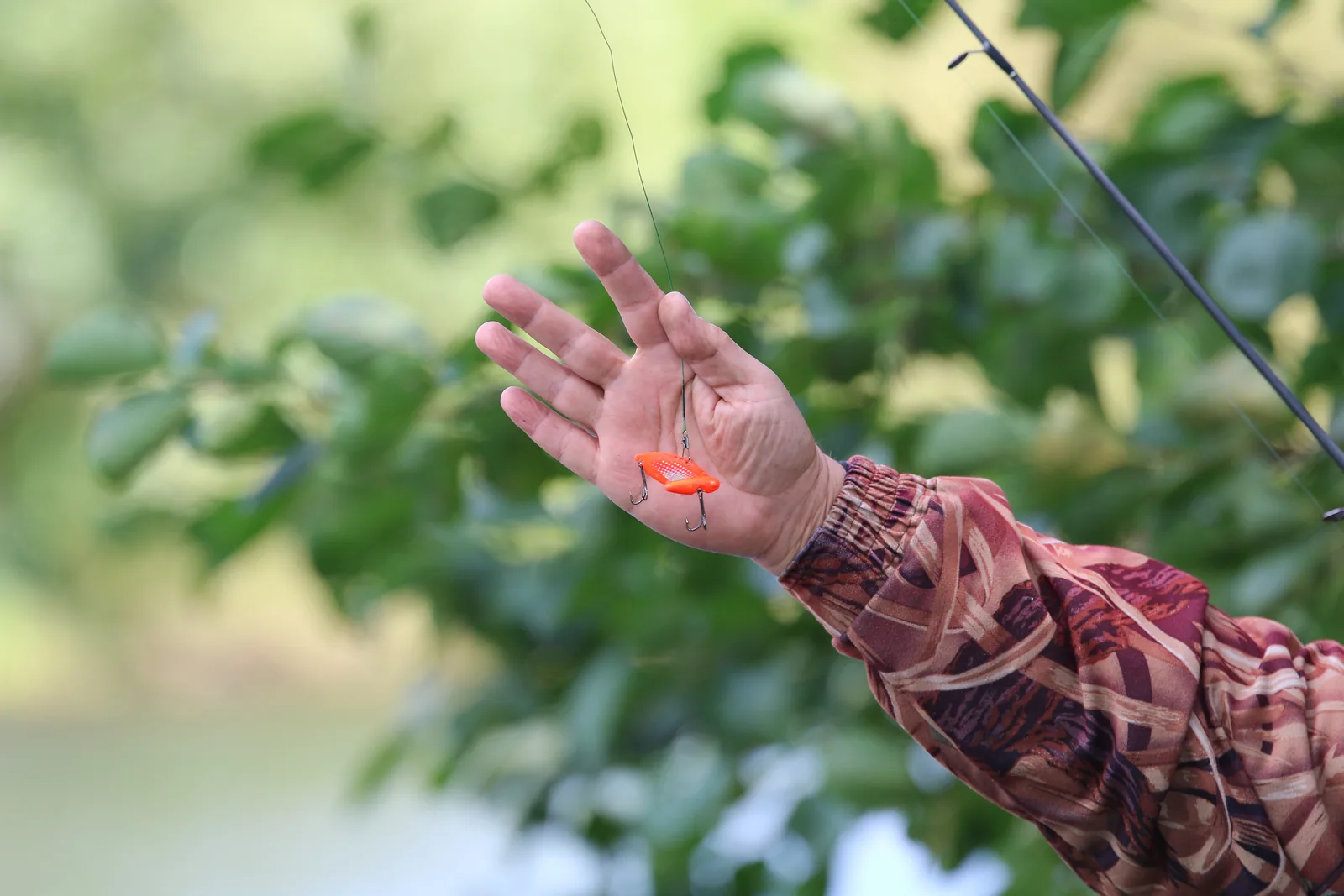
On colour, the studies tend to argue against big differences. Contrast is often more important: a lure with a dark belly stands out well against the bright light from above. So I only change the colour once spot, depth and type of lure are right.
Quiet on the bank
With the lateral line, one of the senses of fish, fish feel currents and pressure changes in the water. Fish holding close to the bank, such as trout, can flee at the slightest vibration from heavy footsteps.
So I approach the water quietly and slowly and use every bit of cover the bank offers. If a trout near the bank sees my shadow, it is gone. Where I can, I approach the spot with the sun in front of me, so that my shadow falls behind me onto the land, and I keep low as I go.
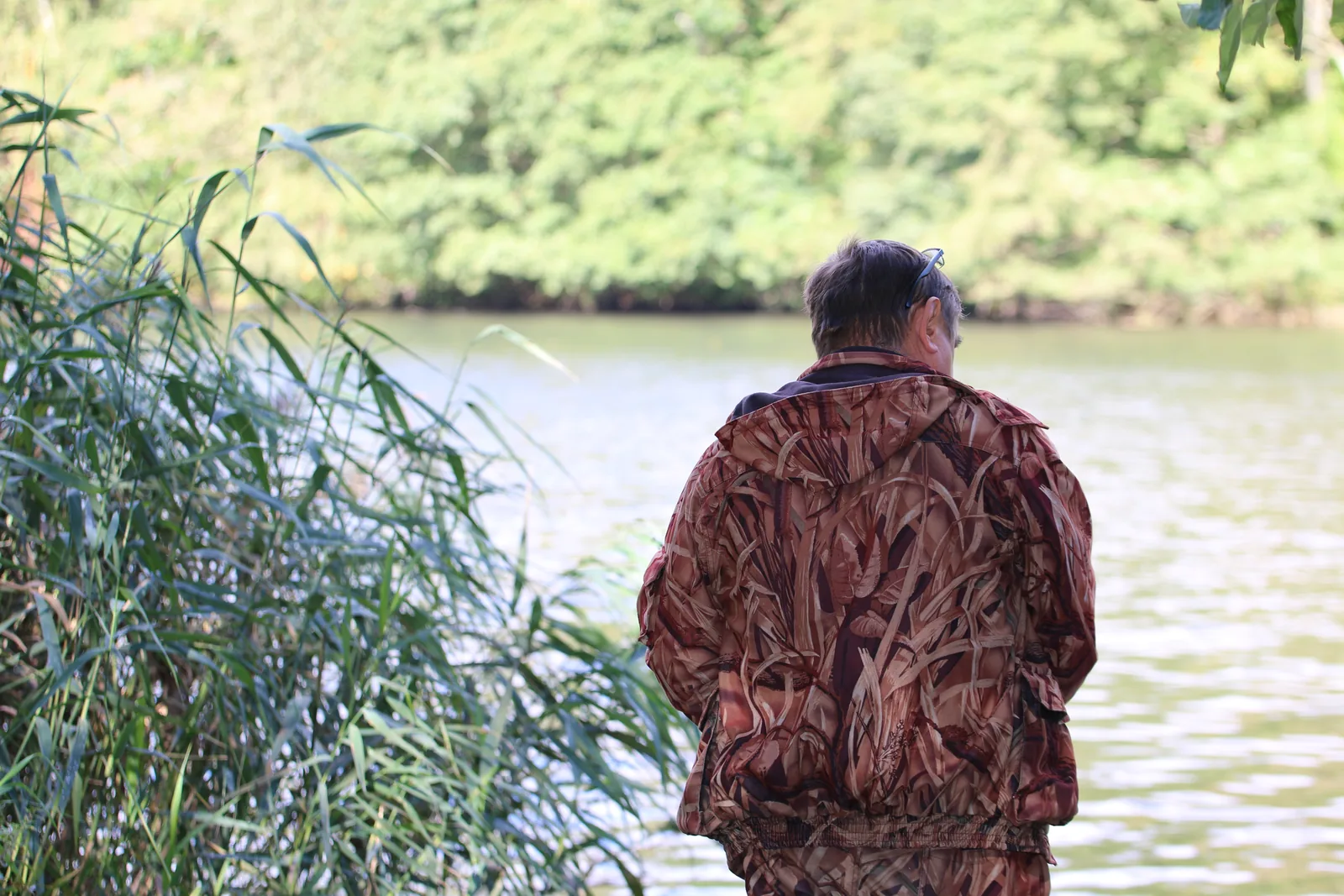
Then there is angling pressure: pike learn to avoid lures, and if a spot is fished day after day, catches drop.
When the river rises
On a river, after heavy rain, I look at the water first. Heavy rain usually makes rivers and streams turbid quickly and strongly, and fish that hunt by sight then feed less. On turbid rivers in Mongolia, catches of salmonids fell by up to 86 per cent after severe thunderstorms.
When the level rises, the stronger current pushes the predatory fish out of the main flow to the calmer margins. I then look for them in shallow groyne fields, the basins between stone dams built out across the river, and in harbour entrances sheltered from the current.
In floods I only fish from a firm bank and don’t go into the water. The DLRG warns that even knee-deep current can sweep a person away.
I take the weather in my stride
I leave air pressure out of it. If a fish rises by just around ten centimetres, it already feels as much difference in pressure as with a change in the weather. I pay more attention to what a change visibly alters at the water: the turbidity after rain and the water temperature. Nor does the old saying about the east wind spoiling a day’s fishing keep me away from the water.
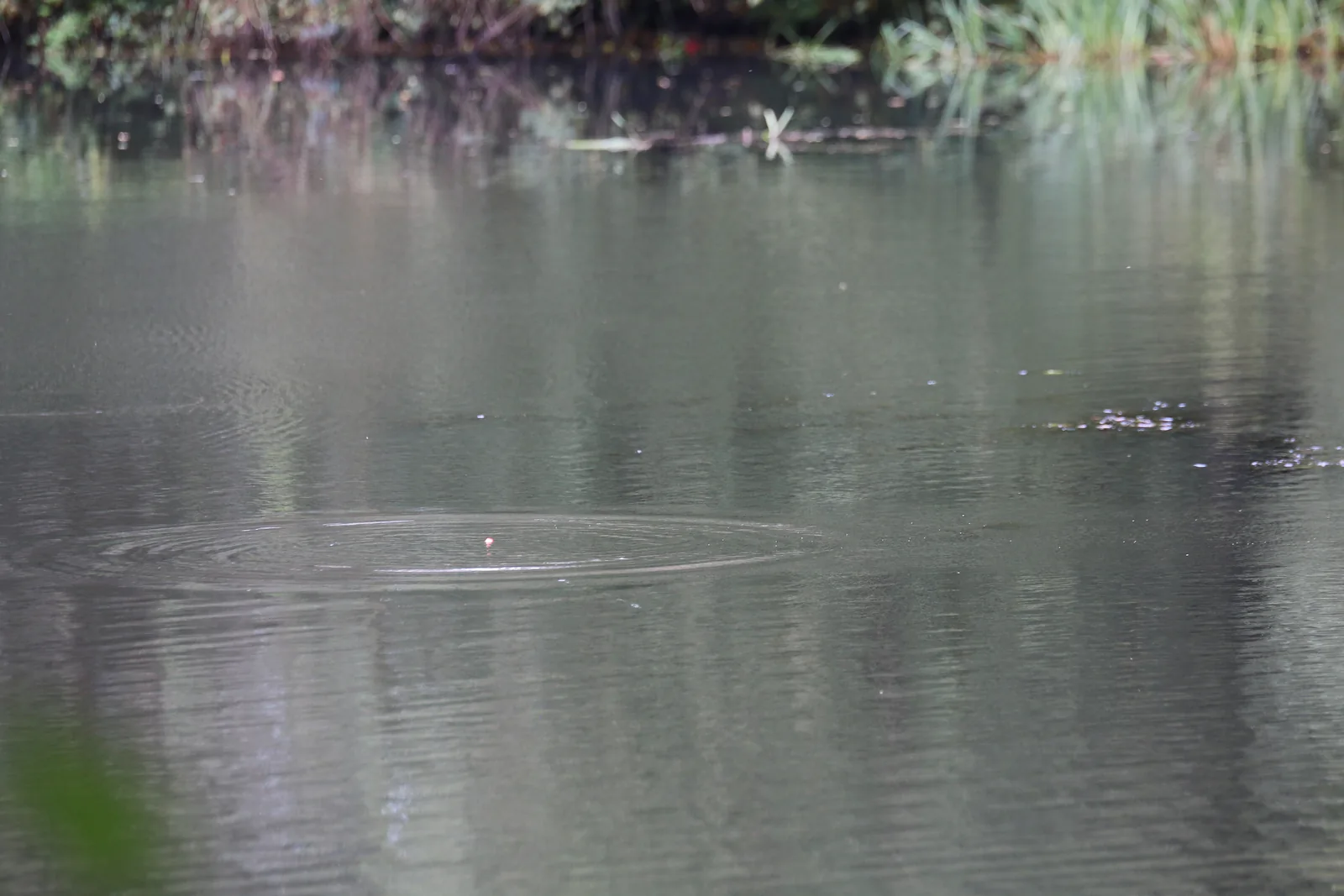
Almost all the study results here come from pike. With carp, zander or trout the relationships may turn out differently.
Frequently asked questions
Does the moon play a part?
A smaller one. In one pike study the fish actually bit better around full and new moon, even though fishing only took place during the day. Time of day, angling pressure and water temperature had a much stronger effect there than the moon, though.
How much does feeding bring?
Feed makes use of the fact that fish are more likely to feed when others of their kind are feeding nearby. But it only attracts fish that are already in the area. That is why for me the swim comes first and the feed second.
What helps when you only get plucks?
I check the hook point first. Then I switch to a smaller bait or a hook one step finer and make sure the fish feels as little resistance as possible when it bites.
Related
- Fishing spots in autumn: where I cast first in autumn when the fish move
- Pike in autumn: lure avoidance, time of day and weather for pike
- Carp in autumn: where I fish and how much I feed
- Fishing in an east wind: what there is to the old saying
- Plummet: measure the depth and set the float to match
- Senses of fish: lateral line, hearing and what a fish sees of the bank
- Weather, air pressure and wind: the studies on weather and catches in detail
- Carp fishing: step by step from baited spot to unhooking
Sources
- Deutscher Angelfischerverband, Fisch des Jahres 2016: Fangbarkeit von Hechten (Gewicht von Platz, Köder und Wetter, Mondphase)
- Arlinghaus und Kollegen, Fisheries Research 186 (2017): Determinants of angling catch of northern pike (flaches Wasser, Lebensraum, Gummifisch und Löffel)
- Landesanglerverband Brandenburg, Institut für Binnenfischerei: Beeinflusst das Wetter den Fangerfolg? (Temperatur, Sauerstoff, Trübung, Mond)
- Lennox und Kollegen, Fish and Fisheries 18 (2017): What makes fish vulnerable to capture by hooks? (Maulweite, Luftdruck, Futter)
- Braun und Arlinghaus: Durch die Augen eines Räubers (Köderfarbe, Kontrast)
- Landesfischereiverband Bayern: Fischlexikon (Schleie, Aal); Landesamt für Umwelt Bayern: Ökosystem See (Sauerstoff im Tiefenwasser)
- Spektrum, Lexikon der Biologie: Seitenlinienorgane; DLRG: Hochwasser (Seitenlinie, Strömungsgefahr)
- Blinker: Wie fange ich eine Schleie, Das erste Mal auf Schleie, Köderkontrolle ist wichtig, Pirschangeln auf Forelle, Angeln bei Hochwasser (Ausloten, Gründelblasen, Fehlbisse, Haar, feines Gerät, Hakenspitzen, Auftreten und Schatten, Hochwasser)
- Rute & Rolle: Grundangeln, so gelingt der Einstieg (Bleigewicht, Laufblei, Widerstand bei der Bissanzeige)
- Fisch & Fang: Die Wahrheit über Fluorocarbon (Wannenversuch, Schatten, Durchmesser)
Text AI-assisted, photos: Iwan Belokurov. Sources opened and checked in October 2026; no graphic was taken from the sources.
All information is a guide only and given without guarantee. The studies apply to the species and waters examined; closed seasons and minimum sizes are set by state law.