
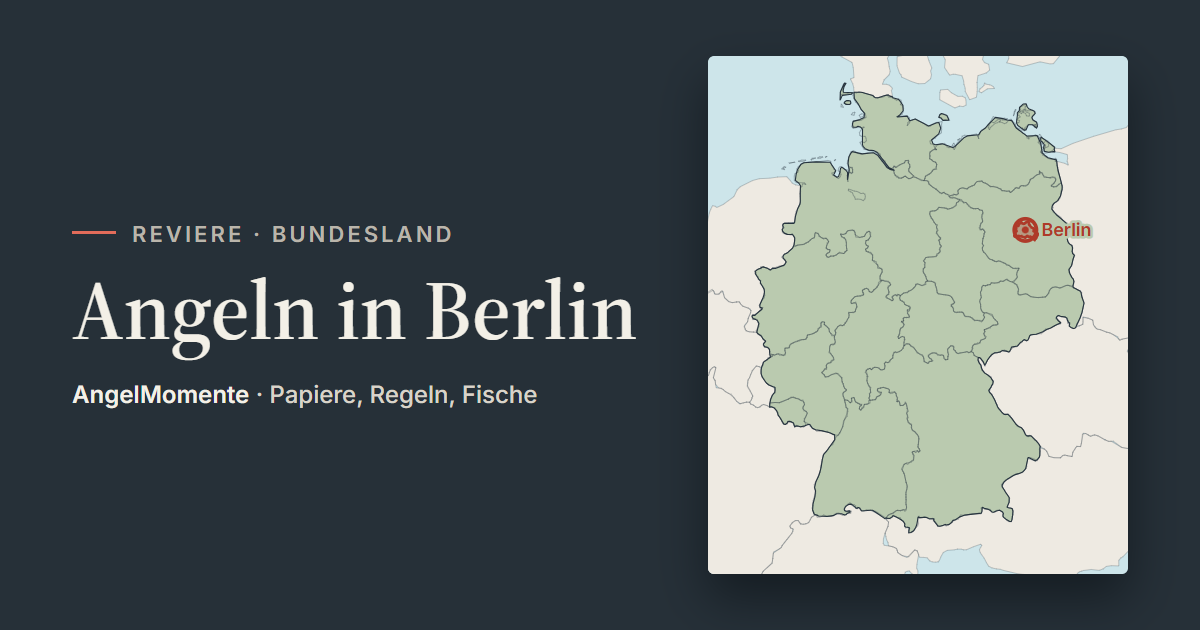
Waters · Federal state
Fishing in Berlin: Fishing licence, rules, closed seasons and waters
Fishing in Berlin means fishing in the middle of a big city, on the Havel, Spree, Dahme and their lakes. You always need two documents for it: the fishing licence (colloquially Angelschein) with the stamp for the fishing levy (Fischereiabgabe) and a fishing permit (Angelkarte) for the water. There is no exception for coarse anglers as in neighbouring Brandenburg.
- Papers
- Fishing licence (Fischereischein) with levy stamp (Abgabemarke) and fishing permit for the water (Angelkarte)
- Season
- all year; lures for predatory fish banned from 1.1. to 30.4.
As of October 2026
At a glance
- Papers
- Fishing licence (Fischereischein) with levy stamp (Abgabemarke) and fishing permit for the water (Angelkarte)
- Licence and permit
- Season
- all year; lures for predatory fish banned from 1.1. to 30.4.
| Fish | Minimum size | Closed season | Catch limit | Note |
|---|---|---|---|---|
| Pike | 45 cm | 1.1.–30.4. | – | closed season applies to hand-held rods |
| Zander | 45 cm | 1.1.–31.5. | 3 eels and zander combined per day | closed season applies to hand-held rods |
| Perch | – | none | – | bait for predatory fish only from 1.5., artificial lures up to 2 cm all year |
| Eel | 50 cm | none | 3 eels and zander combined per day | |
| Wels catfish | 75 cm | none | – | |
| Asp | 40 cm | 1.4.–30.6. | – | |
| Carp | 35 cm | none | – | |
| Tench | 25 cm | none | – | |
| Burbot | 30 cm | none | – | |
| Ide | 30 cm | none | – | |
| Chub | 30 cm | none | – | |
| Bream (Blei) | – | none | – | |
| Roach | – | none | – | |
| Barbel | – | protected all year round | – | |
| Common nase | – | protected all year round | – | |
| Crucian carp | – | protected all year round | – | not even as bait, according to the fisheries office (Fischereiamt) |
| Gudgeon | – | Fishing ban | – | Fisheries office (Fischereiamt): neither catch nor use as bait |
| Round goby | – | none | – | alien species: do not put back (§ 9 para. 4) |
| Topmouth gudgeon | – | none | – | alien species: do not put back (§ 9 para. 4) |
Berliner Landesfischereiordnung (Fassung vom 27.10.2025); the permit (Angelkarte) can be stricter. As of October 2026. The regulation and your permit (Erlaubnisschein) are what count.
The key points in brief
- Two documents: the fishing licence and the permit (Angelkarte) always belong in your pocket when fishing (Fischereiamt Berlin).
- Exam: You get the fishing licence A (Fischereischein A) after a course of at least 30 hours and a passed angling exam (Anglerprüfung); you are admitted from 14.
- Fishing levy: Without the annual stamp the Berlin licence is invalid. In 2026 it costs 21 euros for licence A.
- Visitors: From other federal states (Bundesland) your own fishing licence is enough. Visitors from abroad manage with an angling licence or association membership from their country.
- Lures for predatory fish: From 1 January to 30 April they are banned; artificial lures up to 2 cm remain allowed.
Fishing licence and exam Berlin fishing licence A from the Fischereiamt
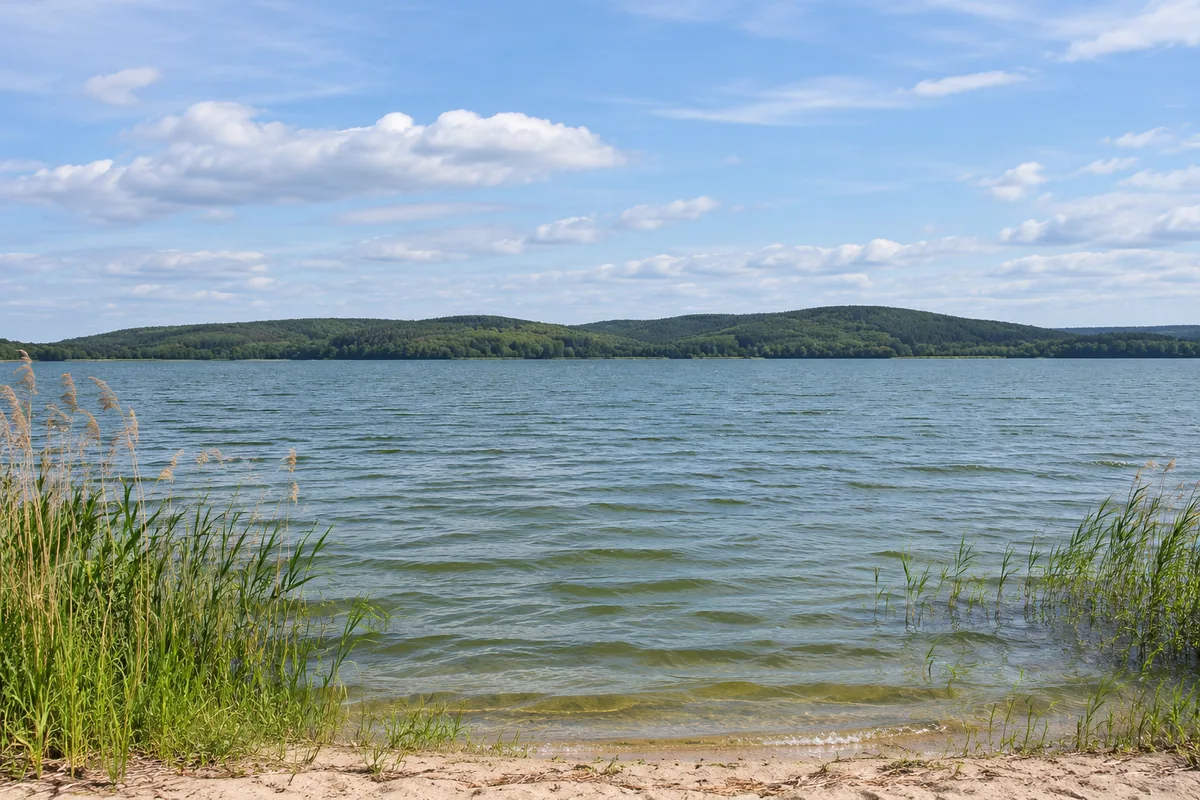
If your main residence is registered in Berlin and you want to fish here, you need the Berlin fishing licence A. It is issued only by the Fischereiamt on Havelchaussee, which is also the lower fisheries authority (Landesfischereischeingesetz, § 1). You must bring the exam certificate, an ID with a certificate of registration and a passport photo, minors also their parents‘ consent (Fischereiamt, Fischereischein). You apply there in person.
Before the angling exam there is a preparatory course of at least 30 hours. The recognised state associations run the course and the exam, currently the Landesverband Berlin des Deutschen Anglerverbands and the VDSF-Landesverband Berlin-Brandenburg (Fischereiamt, Anglerprüfung). The exam is open to anyone from 14 (§ 4). The associations will give you dates, venue and costs.
- Validity and fee: Licence A is available for five years (27 euros) or for one year (18 euros). If you extend it once, you pay half the fee.
- Exams from other states: A fishing or angling exam from another federal state (Bundesland) counts the same as the Berlin one.
- Licences from other states: They are also valid in Berlin as long as you do not live in Berlin. If you move here, you need the Berlin licence.
Without an exam: visitors, holidaymakers, children Visitors from abroad without a fishing licence
- Visitors from abroad: If you have no residence in Germany, you do not need a fishing licence. Instead you show membership of a foreign angling association or an angling licence from your country and buy a permit (Angelkarte) (Fischereiamt, Touristen).
- Young people from 12 to 17: They get a youth fishing licence for one year without an exam (10 euros, levy 4 euros). It is valid only for the coarse-fish rod and only together with a permit, membership of an angling club and instruction by an adult licence holder.
- Children under 12: They do not fish on their own, only with the rod of an adult licence holder and only with the coarse-fish rod. The child may cast, hold and net under guidance, but never stun or kill (Fischereiamt, Kinder).
Permit and fishing levy The Angelkarte as fishing permit (Erlaubnisschein) in Berlin
The permit (Erlaubnisschein) is called Angelkarte in Berlin. It is a contract with the holder of the fishing rights or leaseholder and is valid for one year at most. Only someone who has a fishing licence may take one out (Landesfischereigesetz, § 14). Club members, too, need a permit for club waters; the membership card alone is not enough.
- State-owned waters: For the waters under its administration the Fischereiamt issues the permits itself, also as a digital permit via the online service. Licence and permit must be in the same name.
- Other stretches: For the Lower Havel, the Müggelsee and the Spree in the eastern inner city, fishing associations and federations issue the permits. Who is responsible where is stated in the list of points of issue.
- Fishing levy: It falls due every calendar year, as a stamp in the licence. In 2026 it costs 21 euros for licence A. The law ties it to the fee: three quarters of the fee for the five-year licence, rounded up (§ 8). Stamps are available from the Fischereiamt and from the fishing organisations.
- Exempt: If you do not live in Berlin and hold a fishing licence from another state, you pay no levy in Berlin. A certificate of registration proves your residence.
As of October 2026. The levy for 2027 may change with the fees. The permit may contain stricter conditions than the Landesfischereiordnung, so read it all the way through before your first cast.
Closed seasons and minimum sizes Landesfischereiordnung Berlin
The values in the “At a glance” box come from annexes 1 and 2 of the Berlin Landesfischereiordnung in the version of 27 October 2025 (Anlage 1, Anlage 2). Fish are measured from the tip of the head to the end of the naturally spread tail fin. For pike and zander the closed season applies to fishing with a hand-held rod. Barbel, common nase, crucian carp and many small fish are protected all year round. The regulation has no harvest window. There is, however, a daily limit: per person and fishing day you may take at most three fish of eel and zander combined (§ 18). In the eight weeks after stocking with fish of legal size, fishing for the stocked species is banned.
Special rules Two rods and no live baitfish
- Rods: At most two hand-held rods, only one if it is a spinning or fly rod. You must keep rods that are set out in sight at all times.
- Bait: Live baitfish are banned. You use dead baitfish only in the water they come from, except deep-frozen or dead sea fish (Auszug Landesfischereiordnung). At most 500 grams of groundbait are allowed per day.
- Gear: Banned are artificial lures with fixed multiple hooks, more than three hooks on one rod, pilkers over 30 grams and trolling behind a boat.
- Keep net (Setzkescher): It must be at least 3,50 metres long and may stay in the water only until the end of the fishing day. It is banned in the suction and swell from ships and from an unanchored boat. Fish kept in a keep net do not go back into the water.
- Releasing: You do not release non-native species such as the round goby (Schwarzmundgrundel). Catching fish only to measure and photograph them is banned.
- Night fishing: It is included in the permits of the Fischereiamt (Fischereiamt, Entgelte). At other points of issue the permit decides.
- Bank and boat: Reed beds are off limits; with a boat keep at least 10 metres away. You must not fish in fish passes.
Waters in the state Havel, Spree, Dahme and the Berlin lakes
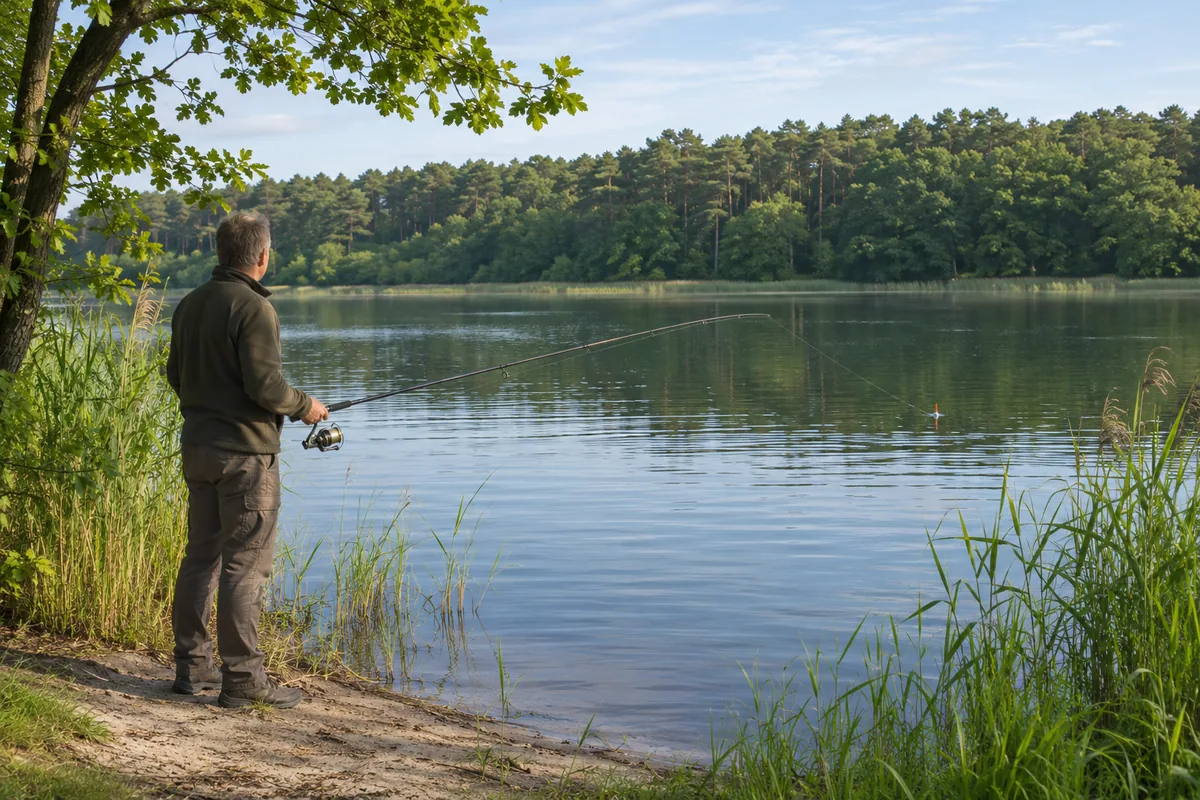
Fishing takes place mainly on the lake-like widened stretches of the Havel, Spree and Dahme and in the larger lakes, together a good 5.500 hectares (Fischereiamt, Bericht 2025). Berlin’s waters are home to 40 fish species. The most commonly caught are perch, roach, pike, rudd, bream, tench and eel. Location, points of issue and local rules are described in the profile Berlin with the Havel and Spree. The Waters atlas shows all streams, rivers and lakes, and the overview of all states is under Fishing in Germany.
Related
- Fishing licence and angling exam
- Closed season and minimum size explained and the catch calendar
- Neighbouring state: Fishing in Brandenburg, where you can fish with the coarse-fish rod even without a fishing licence
- In the fish lexicon: zander, pike, perch and eel
- Fishing ponds and trout lakes in and around Berlin: search by postcode and radius, also across the state border
Sources
- Fischereiamt Berlin: Angelfischen, Fischereischein, Anglerprüfung, Touristen, Kinder, Angelkarten
- Land Berlin: Landesfischereischeingesetz (§§ 1 bis 8), Landesfischereigesetz, Landesfischereiordnung (Fassung vom 27. Oktober 2025)
- ServicePortal Berlin: Angelkarte beantragen
- Fischereiamt Berlin: Fische und Fischerei in Berlin 2025 (10. Juli 2026)
- Fischereiamt Berlin: Fischarten in Berlin
Guide without guarantee, as of October 2026. The Berlin Landesfischereischeingesetz, the Landesfischereigesetz, the Landesfischereiordnung and the conditions of your permit (Angelkarte) are what count.