
Knowledge – Fish
Topmouth gudgeon: Identification, invasiveness and rules
The stone moroko (Pseudorasbora parva) is a small cyprinid from East Asia that has lived in German ponds, ditches and lakes for decades. It breeds prolifically, eats spawn and fish fry and is on the EU list of invasive alien species. For anglers it is not a target fish: anyone who catches one keeps it instead of releasing it.
In short: Invasive species on the EU Union list from East Asia: after catching it, keep and kill it, do not release it, do not take it away alive and do not use it as bait fish. Resembles the sunbleak and the gudgeon. What to do with bycatch: stone moroko as bycatch.
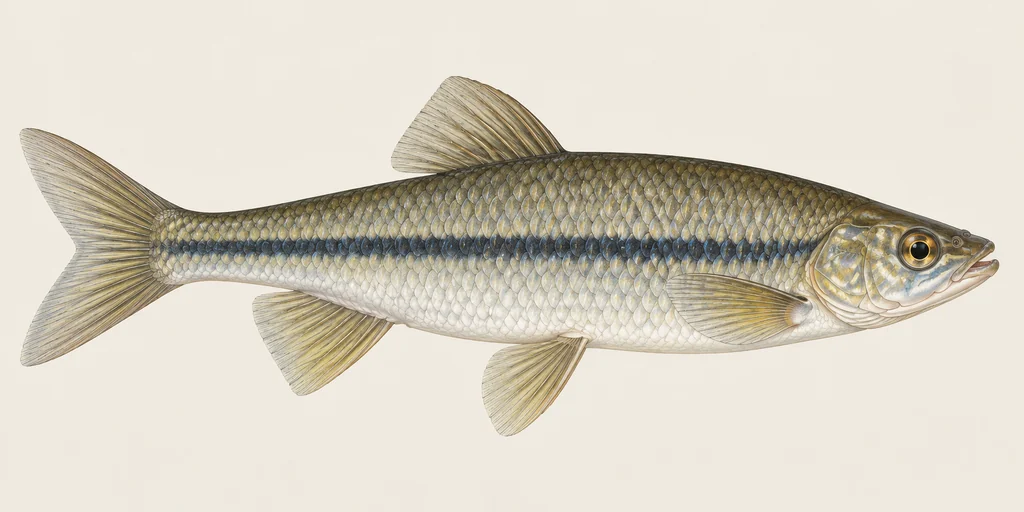
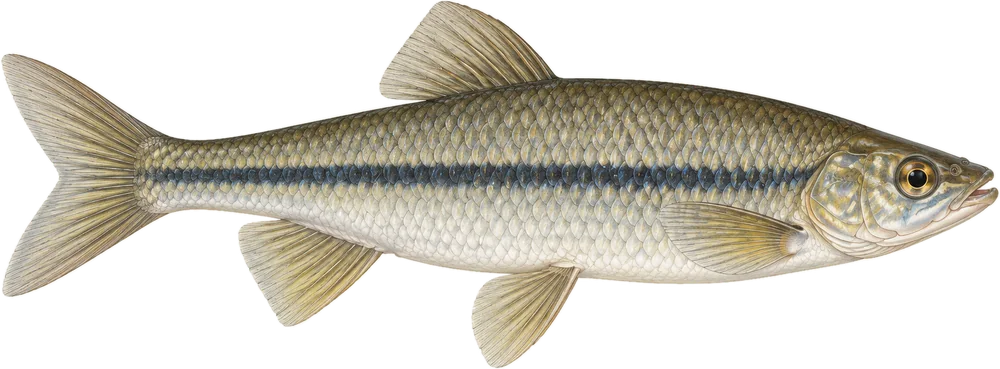
- Small, upturned mouth without barbels
- Continuous dark longitudinal band in the middle of the flank
- Short dorsal fin with a convex edge
Catch chances through the year
- Hardly any chance
- Possible
- Good
- Peak season
- Spawning (observe the closed season)
Editorial assessment for waters in Germany, not a measured value and no guarantee. Spawning time is not the same as the legal closed season.
Species profile and sources in the catch calendarAll species compared month by monthThe rules of your federal state
How to recognise it
The stone moroko is a slender, elongated small fish. The body is a shiny silver-grey to greenish, the back is browner. The small mouth is upturned and set at an angle, and there are no barbels. The dorsal and pelvic fins are short, and the outer edge of the dorsal fin is convex.
The easiest way to recognise it is by a long dark band running along the middle of the flank. In large adult fish, males and females differ in colour. At spawning time the males carry nuptial tubercles, small horny knobs with which they clean the spawning site.
It usually grows to about 8 centimetres. FishBase gives a maximum length of 12,5 centimetres, a leaflet from the Luxembourg environment ministry 110 millimetres. It rarely lives longer than five years.
It is mistaken above all for the native sunbleak. Its lengthwise stripe shimmers bluish silver and is usually distinct only towards the tail; in the stone moroko the band is dark and runs from the head to the tail. The lateral line is more reliable: in the sunbleak it ends after only 8 to 12 scales. The gudgeon has dark spots on its sides and two short barbels at the corners of the mouth, which the stone moroko lacks.
The bleak also has an upturned mouth, but grows larger and has no dark lengthwise band. If you are unsure, it is worth taking a photo from the side in which the mouth and the markings on the flank are clearly visible.
Side by side
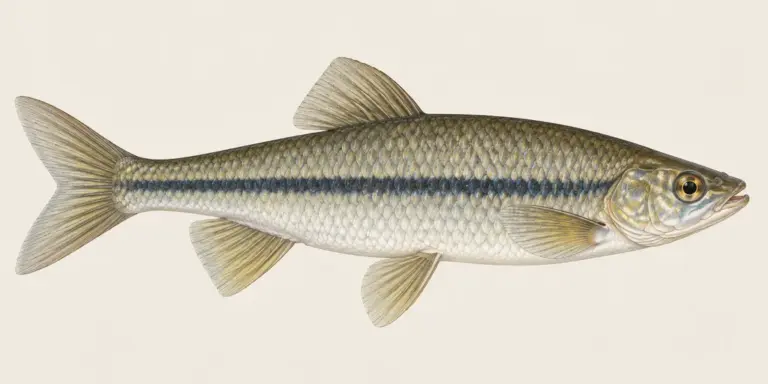
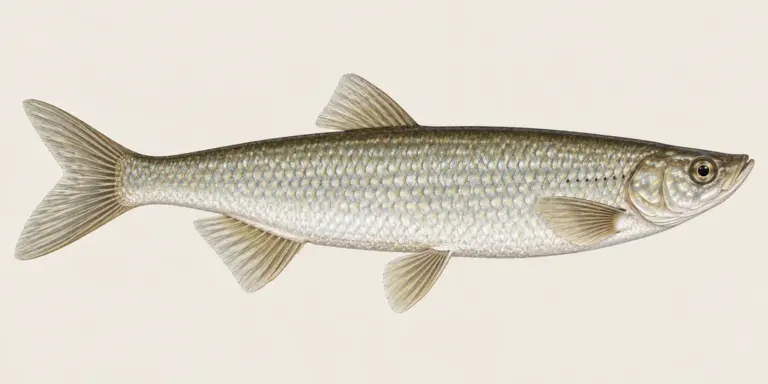
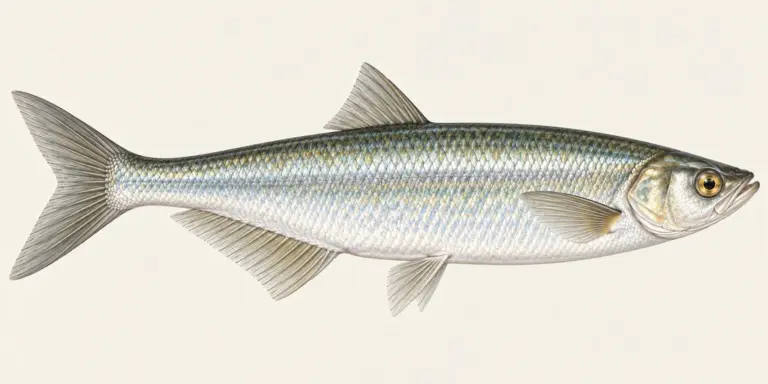
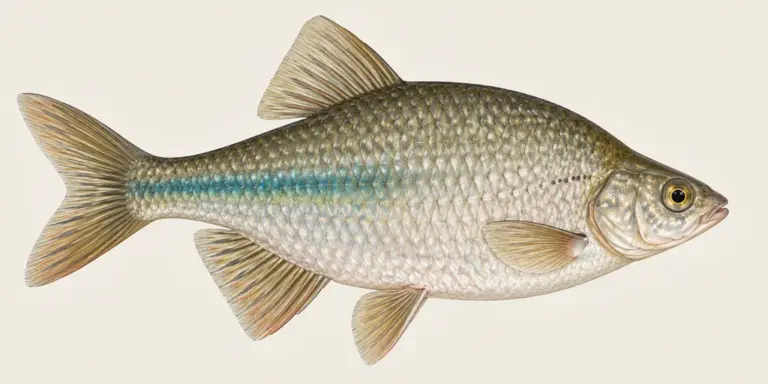
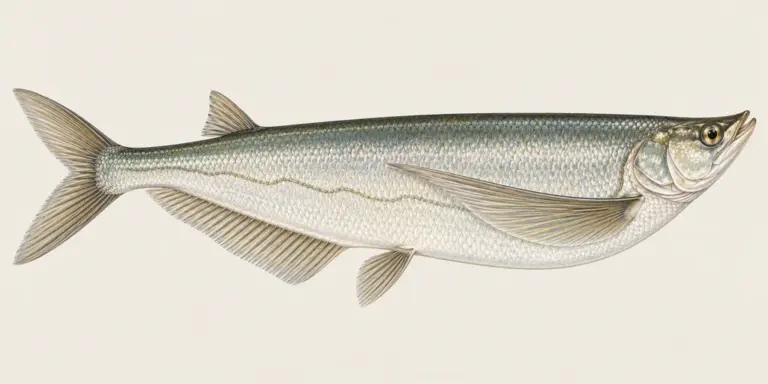
AI-generated illustrations.
Where it comes from and where it lives
The stone moroko originally lives in East Asia, from the Amur to the Pearl River in Siberia, Korea and China. It came to Germany between the 1960s and 1980s, probably together with grass carp, which were introduced at that time. Today it is considered established in most federal states (Bundesländer). Only in Berlin and Bremen is that not the case.
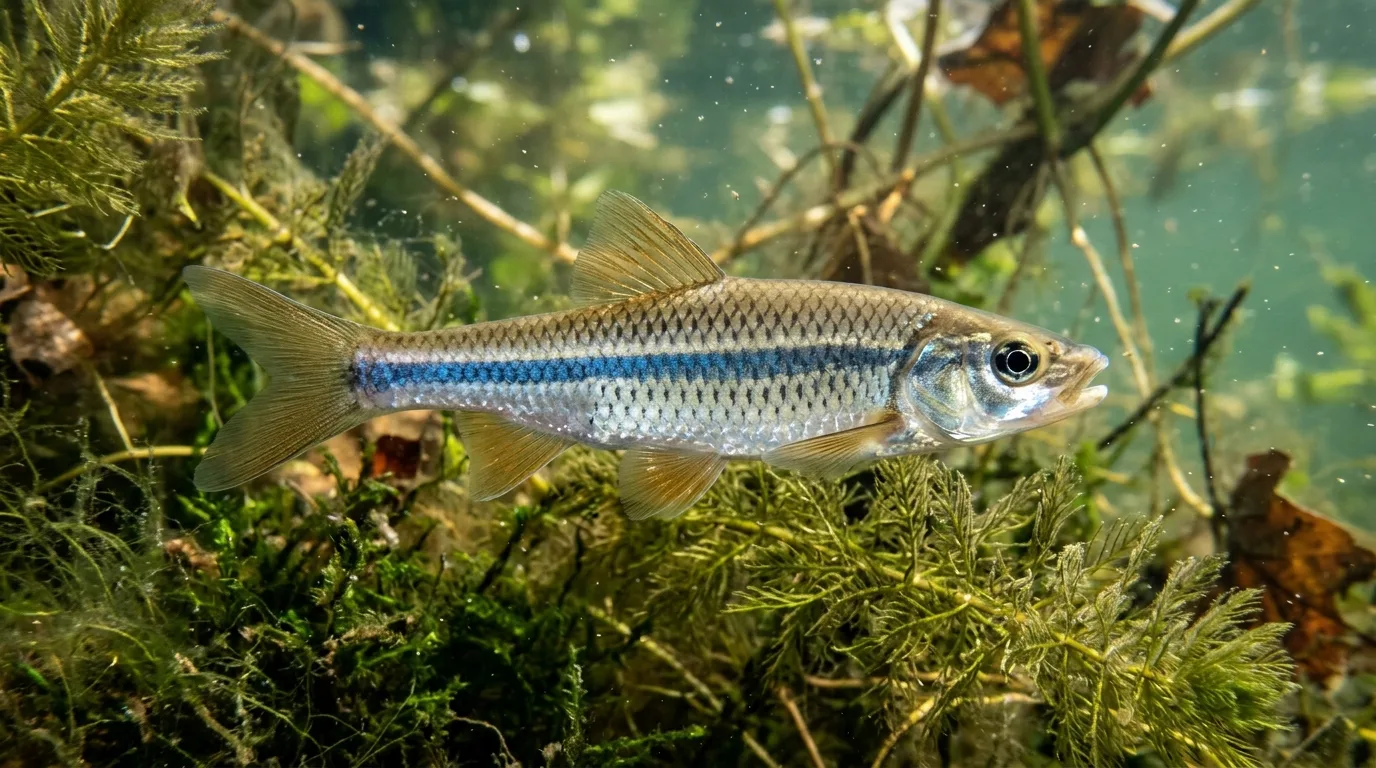
It colonises almost all still and flowing waters except in the high mountains. It feels most at home in sections with slower current and in ponds, ditches and small lakes that warm up well in summer and are richly overgrown. Water temperature and low oxygen levels bother it little.
It is spread mainly through fish farms, stocking with mixed small fish, the ornamental fish trade and angling. Along rivers and canals it also moves on by itself. In Baden-Württemberg it has repeatedly been observed that dense stocks suddenly collapsed completely, without the cause being known.
Holding spots in the picture
Choose a season and time of day: the picture shows where the species sits then. Tap a fish or a spot in the list to bring it closer. The picture is schematic and AI-generated, every water is different.
In the lake
reed edge
The topmouth gudgeon is found here all year round.
Water lilies and weed bed
The topmouth gudgeon is found here all year round.
The topmouth gudgeon mainly colonises ponds, ditches and small lakes that heat up strongly in summer and are densely overgrown. It tolerates warm or oxygen-poor water well and often forms mass stocks there.
Spring: This is when spawning takes place. From April the female sticks the eggs to the roof of hollows under stones, and the male guards them.
Summer: This is when spawning takes place. Until mid-July the females spawn several times, and the males keep watch over their clutches.
In the river
Slack water behind rocks
The topmouth gudgeon is found here all year round.
Calm bay with aquatic plants
The topmouth gudgeon is found here all year round.
In running waters it lives in stretches with little current, for example in calm bays and in the shelter of stones. Along rivers and canals it keeps spreading on its own.
Spring: This is when spawning takes place. In spring the males clean hollows under stones and guard the eggs there.
Summer: This is when spawning takes place.
Size comparison: AI-generated drawing, schematic.
Why it causes problems
The stone moroko eats zooplankton, small invertebrates, insects, plant parts and also fish spawn and fish fry. In this way it competes with the young of native species and at the same time eats their offspring.
Its strength is reproduction. It reaches sexual maturity in its first year of life, at about 3 centimetres in length. A female spawns three to four times per season. The male cleans a hollow under stones, on whose roof the eggs stick, and guards them until shortly before hatching. This is how mass populations quickly arise in ponds.
In fish farms, when it occurs in large numbers in wintering ponds, the stone moroko can even injure larger farmed fish.
When it spawns
It spawns from April to mid-July, mostly in still or very slow-flowing water. During this time the males guard their clutches in hollows under stones.
There is no angling season, because it is not a target fish. In ponds where it has become established, however, it can end up on your hook at any time when float fishing.
You will find the monthly overview of all species and the water temperature check in the catch calendar.
What to do if you catch one
As bycatch: Fishing for stone moroko? – how to recognise the species and why a catch must not go back into the water.
The stone moroko is not fished for deliberately. If you catch one, do not release it, not even into the same water, and never take it away alive. EU law bans releasing it, and the federal states‘ action sheet (Bundesländer) provides for bycatch to be kept. In Bavaria, fish of species that are not listed in the fisheries regulation (Fischereiverordnung) may in addition not be released again. The stone moroko is not listed there.
If a fish is kept, animal welfare law applies: it is stunned and killed straight away. Report larger populations to your club or the fisheries authority (Fischereibehörde), especially in waters where it has not been recorded before.
Avoid bait fish from other waters: Angling is one of the routes by which the species spreads. Check every bait fish before it goes into the bucket, and never put live bait fish into another water.
Empty buckets and nets: Pour out the water from your bucket and keepnet at the water where you caught the fish, not at the next lake. Spawn and young fish are tiny and are otherwise carried over unnoticed.
Suitable lures
We deliberately show no baits for this species.
Invasive species on the EU Union list: it may not be kept, transported, used or released, so also not as bait fish.
What the law says
The stone moroko is on the list of invasive alien species of Union concern (Implementing Regulation (EU) 2016/1141). Under Article 7 of Regulation (EU) No 1143/2014, such species may not, among other things, be deliberately kept, transported, used or released into the environment. Under the Federal Nature Conservation Act (Bundesnaturschutzgesetz), the German authorities must take measures against the species.
The federal states‘ management and action sheet (Management- und Maßnahmenblatt) (Bundesländer) relies on preventing spread into new waters. Stone moroko that turn up as bycatch in catch campaigns, monitoring or fisheries management are to be removed. In the German Red List the species is not assessed, as it is an alien species.
A stone moroko you have caught therefore does not belong back in the water. In addition, Berlin expressly bans releasing alien species after they are caught in its state fisheries ordinance (Landesfischereiordnung) (§ 9 para. 4). Further duties, for example to report, are regulated by the fisheries regulation (Fischereiverordnung) and the fishing permit (Erlaubnisschein) of your federal state (Bundesland) (as of October 2026). You will find a list of links to the official sources in the catch calendar.
What closed season, minimum size and harvest slot mean and where to find them is explained on the page Closed season and minimum size explained.
What state law specifies on the closed season (Schonzeit) and minimum size (Mindestmaß) for this species is in the “At a glance” box on the state pages for Bavaria and Berlin. For the other states our overview does not list this species; there the state fisheries regulation (Landesfischereiverordnung) applies.
Frequently asked questions (FAQ)
May I release a stone moroko or use it as bait fish?
Neither. As a species on the EU Union list it may not be released, not even into the same water, and the EU regulation on invasive species also bans keeping, transporting or using it. You keep it, stun and kill it straight away, and report the find to your club or the fisheries authority (Fischereibehörde).
How do I recognise it for certain?
By the small, upturned mouth without barbels and the dark band running along the whole flank. In the sunbleak the stripe shimmers bluish silver and the lateral line ends after a few scales; the gudgeon has barbels.
Why is the stone moroko a problem?
It breeds very quickly, competes with native young fish for food and eats spawn and fish fry. In ponds it can injure farmed fish.
Sources
The rating of catch chances is an editorial assessment. The facts come from these sources, and the text is worded in our own words. The illustration is an original design by Angel Momente in the style of a natural history plate (AI-generated, see the AI notice).
- FishBase: Pseudorasbora parva (Größe, Alter, Merkmale, Lebensraum, Fortpflanzung)
- Rote-Liste-Zentrum: Blaubandbärbling (Rote Liste 2023: nicht bewertet; Unionsliste nach VO (EU) 2016/1141)
- LANA/Landesamt für Umwelt Rheinland-Pfalz: Blaubandbärbling, Management- und Maßnahmenblatt zu VO (EU) Nr. 1143/2014 (Stand 2018)
- EUR-Lex: Verordnung (EU) Nr. 1143/2014 über invasive gebietsfremde Arten, Artikel 7
- Umweltministerium Luxemburg: Merkblatt invasive gebietsfremde Arten, Blaubandbärbling (Merkmale, Fortpflanzung, ähnliche Arten)
- Bayerische Staatskanzlei: Verordnung zur Ausführung des Bayerischen Fischereigesetzes (AVBayFiG), Aussetzverbot für nicht gelistete Arten
- Land Berlin, Fischereiamt: Berliner Landesfischereiordnung (Fassung vom 27.10.2025), § 9 Abs. 4 Zurücksetzverbot für gebietsfremde Arten
Created with AI support from the sources listed. Figures only appear in the text if a source gives them. Last updated: 27 October 2026. Found a mistake? Write to us. Who is behind this site: About me.
More in the lexicon
- All fish species at a glance
- Catch calendar – month, water temperature and profile for 93 species
- Line calculator – breaking strain after the knot, drag guideline, backing
- Angling methods