
Knowledge – Fish
Sunbleak: Features, habitat and look-alikes
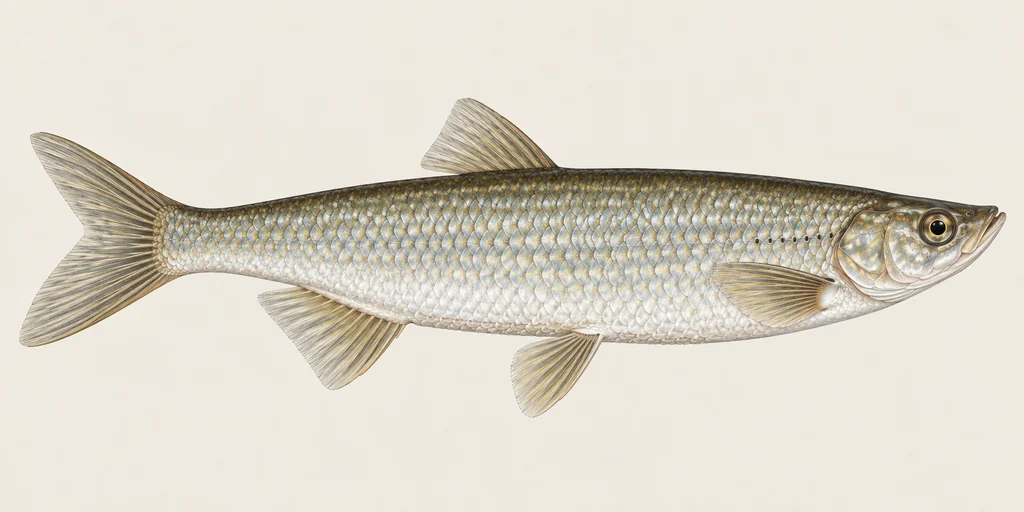
The sunbleak (Leucaspius delineatus) is a small, silvery carp relative that shoals just below the surface of small, plant-rich waters. It rarely grows longer than 8 centimetres and usually lives only two years. It is not fished for deliberately, but is occasionally used as a bait fish.
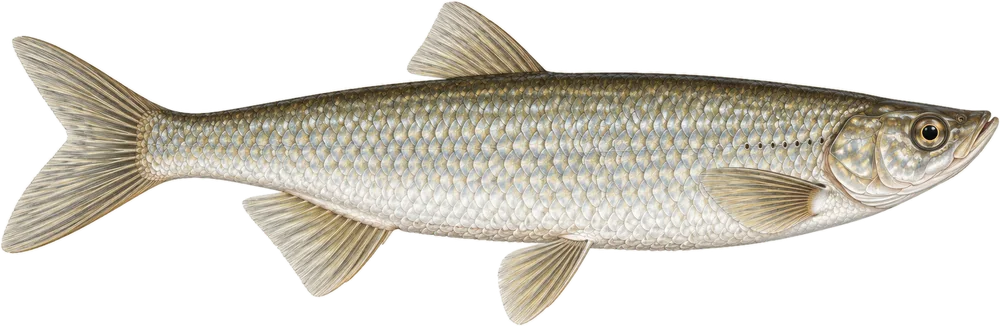
In brief: A small shoaling fish near the surface, easily confused with the bleak. Not fished for deliberately; whether and how it may be used as a bait fish is regulated by state law and the water’s rules (Gewässerordnung).
- Upturned mouth pointing steeply upwards
- Short, incomplete lateral line over no more than about twelve scales
- Scaled keel on the belly between the pelvic and anal fins
Catch chances through the year
- Hardly any chance
- Possible
- Good
- Peak season
- Spawning (observe the closed season)
Editorial assessment for waters in Germany, not a measured value and no guarantee. Spawning time is not the same as the legal closed season.
Species profile and sources in the catch calendarAll species compared month by monthThe rules of your federal state
How to recognise it
The sunbleak has a slim, elongated body with large, silvery scales and a greenish back. Most fish measure 5 to 8 centimetres; the Landesfischereiverband Bayern gives 10 centimetres as the maximum. Females grow slightly larger and stockier than males.
The most important feature is the lateral line. It is incomplete and reaches only over the first 8 to 12 scales behind the head, sometimes it is missing altogether. Above it runs a bluish, shiny stripe, sometimes strong, sometimes pale, best seen on the tail wrist.
The mouth is upturned and points steeply upwards. Between the pelvic fins and the vent the belly forms a sharp keel covered with scales. The anal fin is longer than the dorsal fin, and all fins are translucent. The scales sit very loosely and come off easily when you handle the fish.
The sunbleak is most often confused with the bleak. Both are slim, silvery and have an upturned mouth. The bleak, however, grows 10 to 20 centimetres long, and on its belly edge in front of the anal fin the scales are missing. In the sunbleak there are scales there, and the lateral line ends after just a few scales.
The bitterling also has a short lateral line and a bluish stripe. However, it is much deeper in the body, its mouth is small and does not point steeply upwards.
Side by side
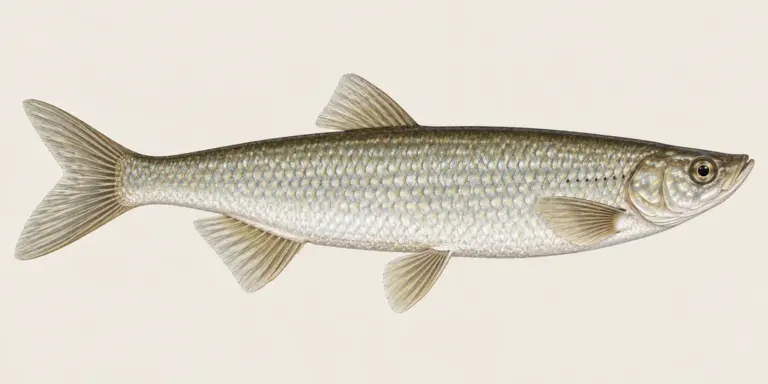
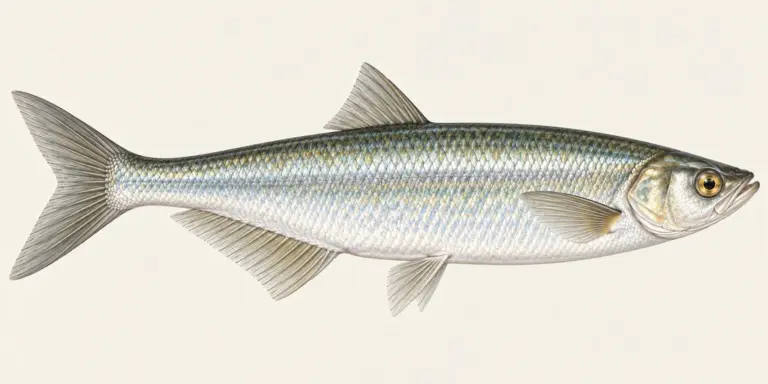
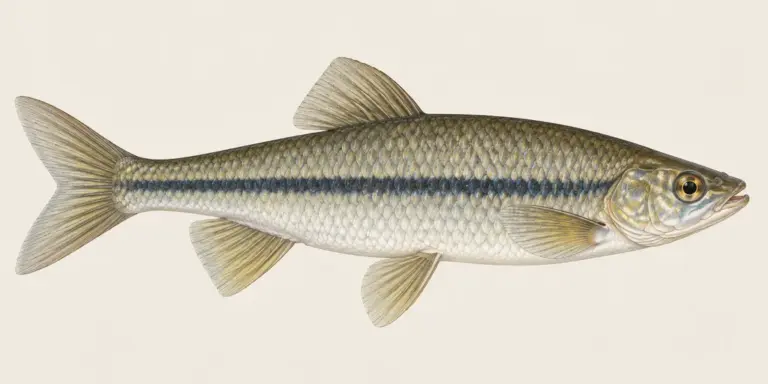
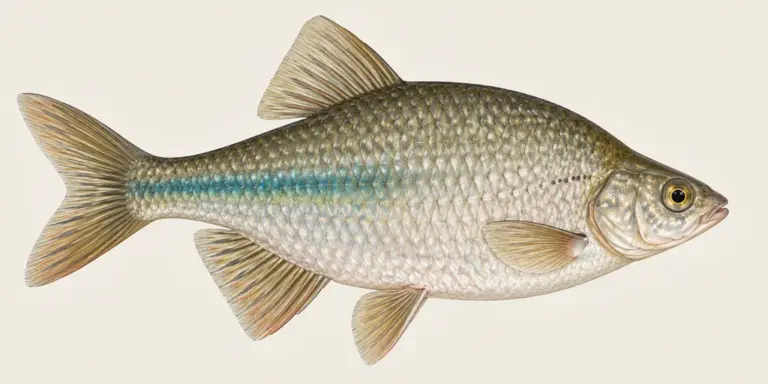
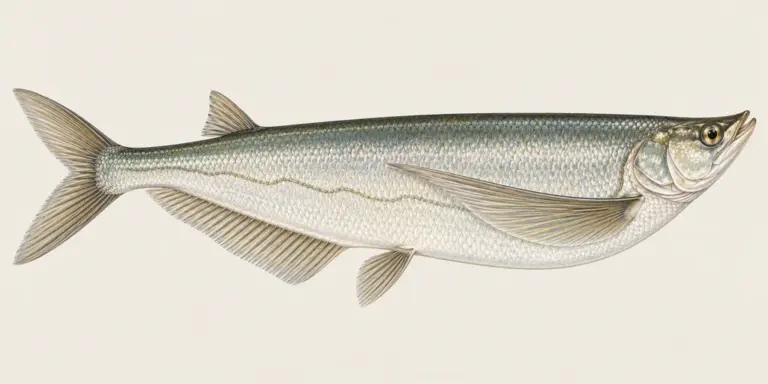
AI-generated illustrations.
Where it lives
The sunbleak lives in still and slow-flowing waters with plenty of plant growth. It also occurs in very small waters: pools, ditches, ponds and peat cuttings are among them. FishBase also names oxbow lakes and other floodplain waters that are connected to the river only at high water.
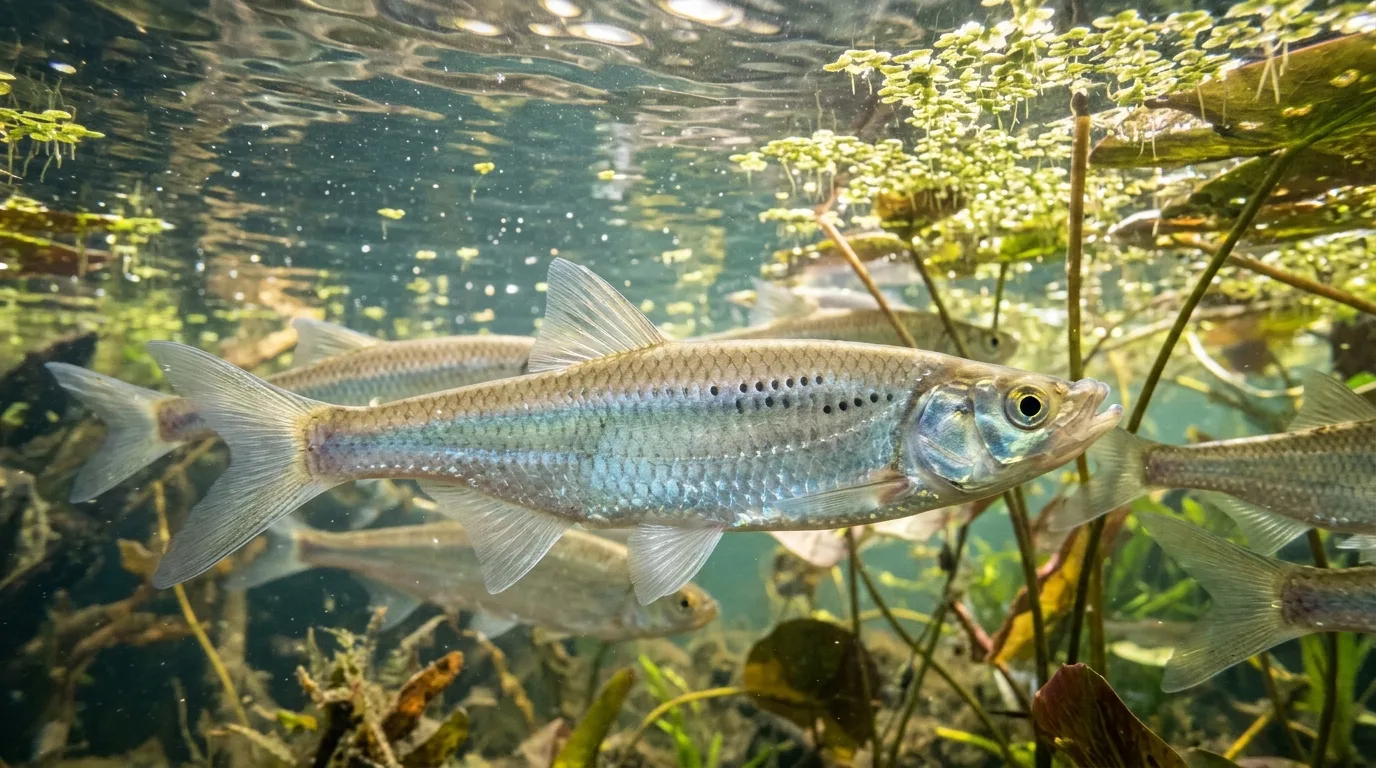
In rivers the species avoids the current and looks for quiet bays and slack spots behind stones or bridge piers.
The sunbleak is above all a fish of the lowlands. The Landesfischereiverband Bayern names the loss of oxbow lakes and floodplain waters as a cause of decline.
Holding spots in the picture
Choose the season and time of day: the picture shows where the species stands then. Spots outlined in red apply only in the chosen season. Tap a fish or a spot in the list to bring it closer. The picture is schematic and AI-generated, every water is different.
In the lake
reed edge
The sunbleak is found here all year round.
Water lilies and weed bed
The sunbleak is found here all year round.
Deep bottom
The sunbleak is found here in winter only.
Just below the surface
The sunbleak is found here all year round.
Sunbleaks roam in shoals just under the water surface, mostly among the plants of the bank zone. They also live in tiny waters such as pools, ditches, peat cuttings and ponds.
Spring: This is the spawning period, so observe the closed seasons (Schonzeit). In spring the females stick their eggs as ribbons to plant stems and roots just below the surface, with the male keeping watch beside them.
Autumn: In autumn the largest shoals form, standing close under the surface.
Winter: Towards winter the shoals break up and the fish seek deeper water.
In the river
Slack water behind rocks
The sunbleak is found here all year round.
Calm bay with aquatic plants
The sunbleak is found here all year round.
In flowing waters the sunbleak avoids the current. It stays in calm, weedy bays or in the quiet water behind stones and bridge piers, often also in floodplain oxbows.
Spring: The spawning season falls in this period; observe the closed seasons (Schonzeiten).
Autumn: In autumn especially large shoals gather near the surface in the calm areas.
Size comparison: AI-generated drawing, schematic.
How it feeds and spawns
Sunbleaks are shoaling fish that stay near the surface among the water plants of the bank zone. They eat animal and plant plankton and insects that fall onto the water. FishBase expressly includes flying insects in their diet.
Spawning takes place in spring. The Landesfischereiverband Bayern gives April and May. The female then has a short egg-laying tube and sticks the sticky eggs in long bands to plant stems, roots or driftwood near the surface.
Its brood care is remarkable. The male cleans the spawning site beforehand and then guards the clutch. By bumping against the plant stem he supplies the eggs with fresh water. According to FishBase he also coats them with a fluid that inhibits bacteria.
Sunbleaks live only a short time. FishBase gives a maximum age of two years.
When you can see it
There is no angling season for the sunbleak, because it is not fished for deliberately. You can watch the shoals at the surface along quiet, weedy banks.
In autumn the shoals are largest, according to FishBase, and stay just under the surface. Towards winter they break up and the fish move into deeper water.
You will find the monthly overview of all species and the water temperature check in the catch calendar.
What to do with a bycatch
The sunbleak is not a target fish.
If one does end up on a small hook, unhook the fish in the water or handle it only briefly with wet hands. The loose scales are easily lost with a rough grip.
Anglers occasionally use sunbleaks as bait fish. Whether you may catch them for that purpose, and with what, is regulated by state law and the water’s rules. Live bait fish are banned in Bavaria, for example.
Look at the belly edge: A scaled keel between the pelvic fins and the vent and a lateral line that ends after a few scales: that is how you tell the sunbleak from a young bleak.
Identify it in the water: If you want a closer look at a sunbleak, leave it in the water or hold it briefly in a wet hand. With a dry grip the loose-sitting scales come off easily.
Suitable lures
We deliberately show no baits for this species.
Not fished for deliberately; catching it and using it as bait fish are regulated by state law and the water’s rules, and live bait fish are banned in Bavaria, for example.
What you need to observe
In the 2023 Red List of Germany’s freshwater fish the sunbleak is rated as of least concern. In the previous list it was still on the near-threatened list; in the long term its numbers have declined moderately.
How it should be treated when angling is regulated by the federal states. In Bavaria, under the Ausführungsverordnung zum Bayerischen Fischereigesetz, the sunbleak is on the list of fish without protection rules, but only for the Elbe, Rhine and Weser catchments. In the Danube catchment it is missing from the list, and a sunbleak caught there may not be released again (§ 11 para. 8, as of October 2026). The same regulation bans fishing with live bait fish. Other federal states may have different rules.
Closed seasons (Schonzeit), minimum sizes (Mindestmaß) and fishing bans are set by the federal states (Bundesland). They differ by state and water. We give figures only with a date and a source; what counts is always the fisheries regulation of your federal state and your fishing permit (Erlaubnisschein). You will find a list of links to the official sources in the Fishing calendar.
What closed season, minimum size and harvest slot mean and where to find them is explained on the page Closed season and minimum size explained.
What state law says about the closed season (Schonzeit) and minimum size (Mindestmaß) for this species is in the “At a glance” box on the state page for Bavaria. Our overview does not list this species for the other states; the state fisheries regulation applies there.
Frequently asked questions (FAQ)
How do I tell a sunbleak from a bleak?
The bleak grows to 10 to 20 centimetres, clearly larger, and has a scaleless belly edge. The sunbleak has scales there and a lateral line that ends after about twelve scales at most.
Where does the German name Moderlieschen come from?
According to Wikipedia, it derives from “mutterlos” (motherless). The article links this to strings of spawn that cling to the legs of water birds and are carried to other waters that way.
May I use sunbleaks as bait fish?
That is regulated by state law and the water’s rules. In Bavaria the species has no protection rules in the Elbe, Rhine and Weser catchments, but live bait fish are banned there.
Sources
The rating of catch chances is an editorial assessment. The facts come from these sources, and the text is worded in our own words. The illustration is an original design by Angel Momente in the style of a natural history plate (AI-generated, see the AI notice).
- Landesfischereiverband Bayern: Fischlexikon – Moderlieschen (Länge, Laichzeit, Kennzeichen, Lebensweise)
- Rote-Liste-Zentrum: Moderlieschen (Rote Liste der Süßwasserfische Deutschlands 2023: ungefährdet)
- FishBase: Leucaspius delineatus, Belica (Größe, Alter, Bestimmungsmerkmale, Brutpflege)
- Wikipedia: Moderlieschen
- LAWA-Projekt O 10.20 (Leibniz-IGB, 2021): Temperaturempfindlichkeiten der Fischgemeinschaften
- Bayern.Recht: Verordnung zur Ausführung des Bayerischen Fischereigesetzes (AVBayFiG) mit Anlage Schonzeiten
Created with AI support from the sources listed. Figures only appear in the text if a source gives them. Last updated: 8 November 2026. Found a mistake? Write to us. Who is behind this site: About me.
More in the lexicon
- All fish species at a glance
- Catch calendar – month, water temperature and profile for 93 species
- Line calculator – breaking strain after the knot, drag guideline, backing
- Angling methods