
Knowledge – Fish
Sabrefish (Ziege): Features, habitat and protection
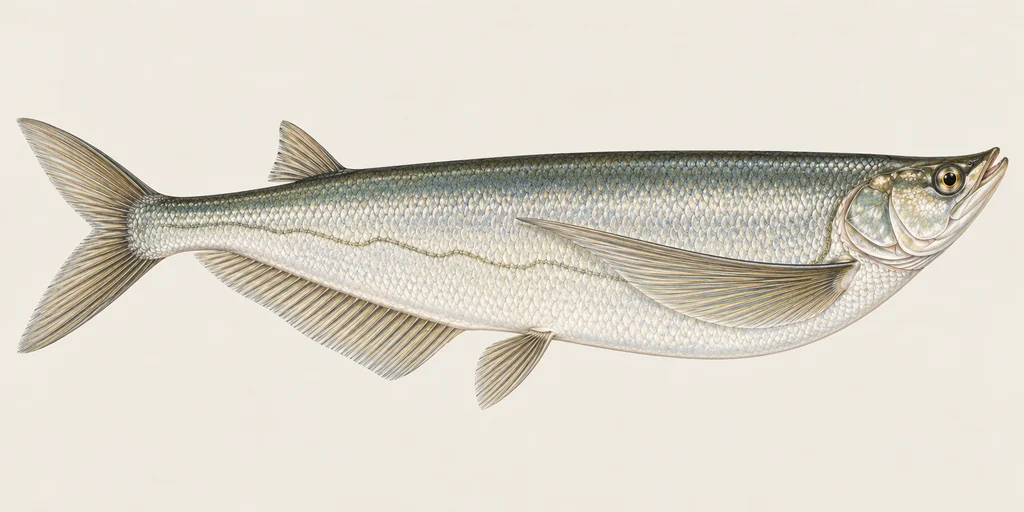
The sabrefish (Pelecus cultratus), called Ziege in the Red List and by the Bundesamt für Naturschutz, is a slender, silvery cyprinid with a straight back, a sharp belly edge and an upturned mouth. It lives in the open water of large rivers, lakes and lagoons (Haffe). In Germany it is extremely rare, regarded as critically endangered and not a target fish.
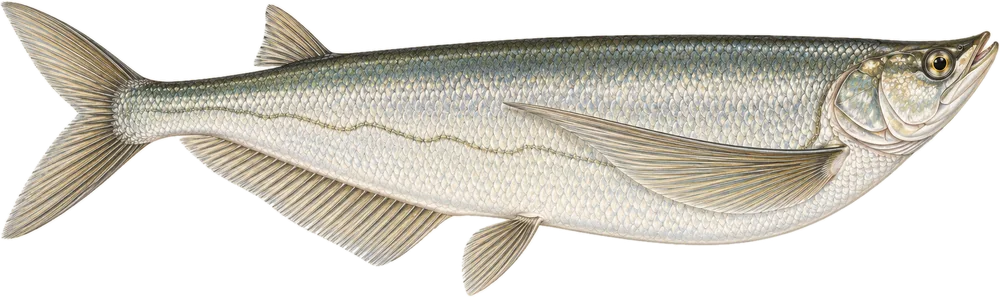
In short: The sabrefish is listed as critically endangered in Germany’s Red List and appears in Annexes II and V of the Habitats Directive (FFH). It is not a target fish; a bycatch is released at once and gently.
- Straight back line and an upturned, superior mouth pointing obliquely upwards
- Sharply keeled belly edge giving the fish its sickle shape
- Very large, curved pectoral fins and a wavy lateral line
Catch chances through the year
- Hardly any chance
- Possible
- Good
- Peak season
- Spawning (observe the closed season)
Editorial assessment for waters in Germany, not a measured value and no guarantee. Spawning time is not the same as the legal closed season.
Species profile and sources in the catch calendarAll species compared month by monthThe rules of your federal state
How to recognise it
The sabrefish is slender and strongly flattened from the sides. The back runs almost straight, while the belly side is drawn out into a sharp, curved edge. This gives the sickle-like shape from which it takes its name. The mouth is upturned and points obliquely upwards.
The very large, curved pectoral fins stand out. The dorsal fin is short, the anal fin long by contrast. The lateral line runs low and wavy. The BfN gives a size of up to 40 centimetres; FishBase gives 25 as the usual length and 60 centimetres as the maximum.
Young sabrefish can be mistaken for the bleak. The bleak, however, has shorter pectoral fins and lacks the sharp, curved belly edge and the straight back. According to the NÖ Landesfischereiverband, the goat-like mouth and the sickle shape make the sabrefish unmistakable.
Side by side
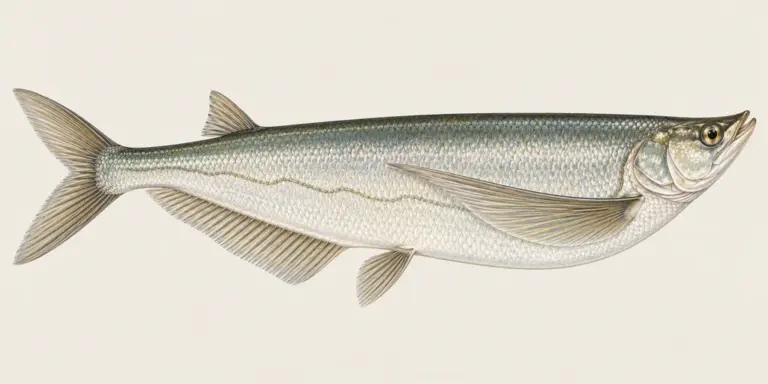
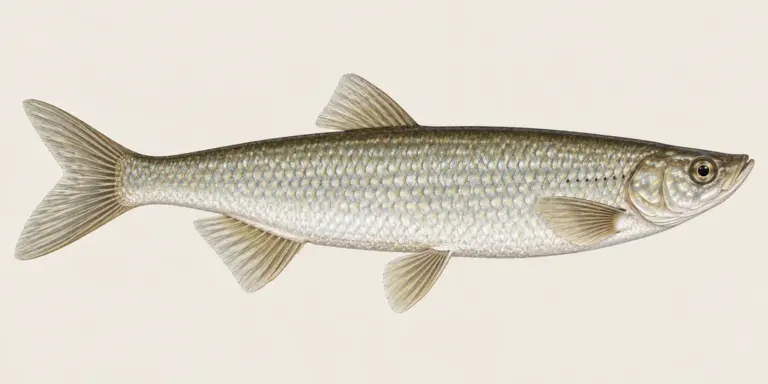
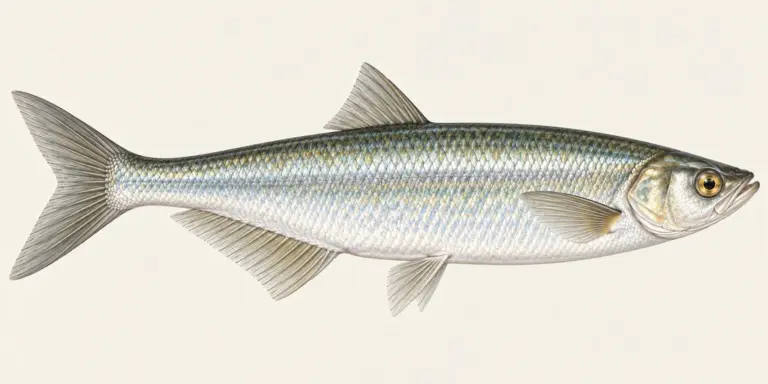
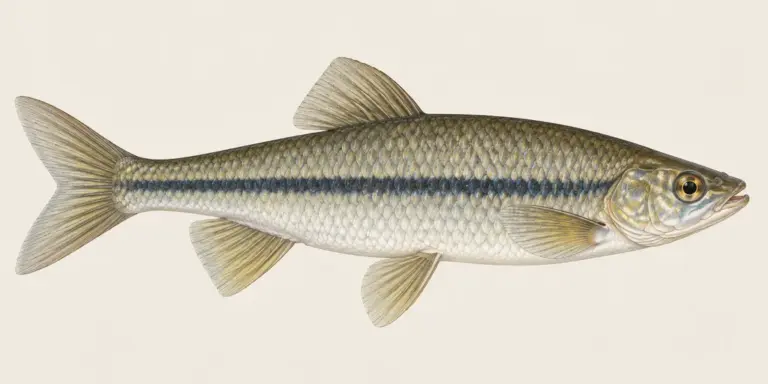
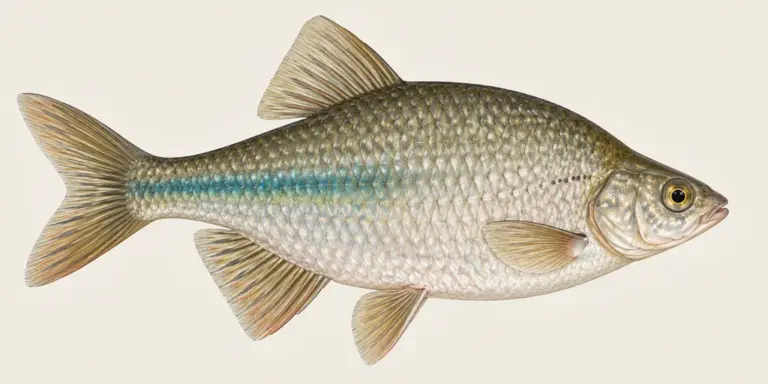
AI-generated illustrations.
Where it lives
The sabrefish is an open-water fish that tolerates salt and fresh water equally. It travels in shoals through the open areas of large rivers, lakes and lagoons. Migratory stocks feed in freshened sea bays or in the lower reaches of rivers. In the Curonian and Vistula Lagoons on the Baltic Sea there are also stocks that do not migrate.
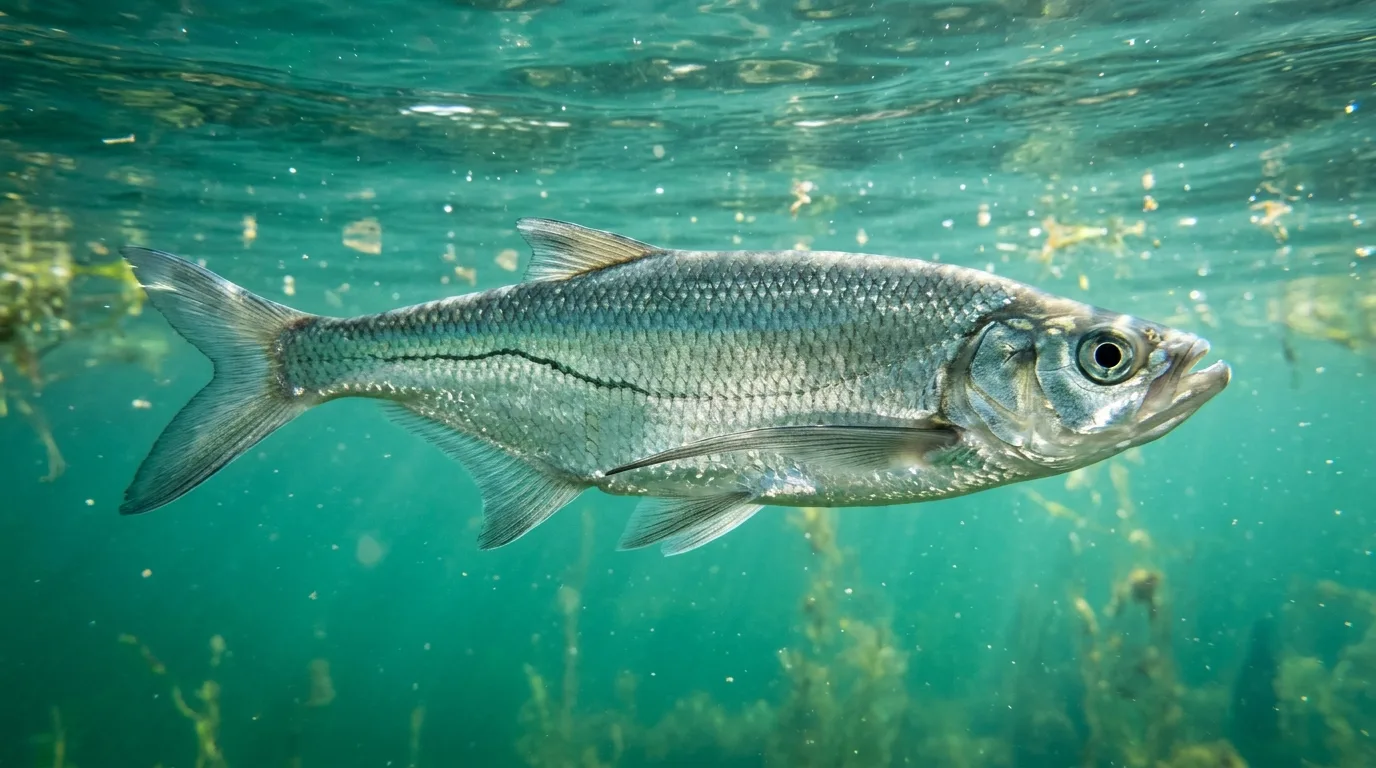
According to the BfN, the core of its range lies in the Baltic region and in the area of the Black, Azov and Caspian Seas and the Aral Sea. In Germany it occurs only around the mouth of the Oder and in the Danube. The Red List assumes these are visitors from Austria and Poland that do not breed here, or only very irregularly. Before the Danube was developed, the species was certainly native in Bavaria.
Holding spots in the picture
Choose the season and time of day: the picture shows where the species stands then. Spots outlined in red apply only in the chosen season. Tap a fish or a spot in the list to bring it closer. The picture is schematic and AI-generated, every water is different.
In the river
Current seam
Sabrefish (Ziege) is found here in spring only.
Free current in mid-river
Sabrefish (Ziege) is found here all year round.
The sabrefish travels in shoals through the open water of large rivers. In Germany there are only rare records, from the Danube and the mouth of the Oder.
Spring: In May and June the females migrate upstream to spawning grounds with moving, oxygen-rich water.
In the lake
Open water
Sabrefish (Ziege) is found here all year round.
Just below the surface
Sabrefish (Ziege) is found here all year round.
In large lakes and lagoons it lives in open water. It feeds on plankton, small fish and insects from the water surface.
On the coast
Open water, mid-water
Sabrefish (Ziege) is found here all year round.
Migrating stocks seek their food in freshened sea bays.
Size comparison: AI-generated drawing, schematic.
How it lives and spawns
According to FishBase, adult sabrefish feed on zooplankton, insects that fall onto the water and small fish.
According to the BfN, spawning takes place in May and June. For this the females travel upriver in shoals and release their eggs freely into the water, where they drift in the current. The spawning grounds need plenty of oxygen and moving water. Depending on her size, a female lays between 4800 and 71.400 eggs. Straight after spawning the fish return to the estuaries to feed, and the juveniles often follow in their first summer.
Sabrefish become sexually mature at four to five years according to the BfN, at three to five years according to HELCOM. HELCOM gives a usual maximum age of nine years; a single female was 13 years old.
Is there a season?
There is no angling season for the sabrefish. The species is critically endangered in Germany and protected by the Habitats Directive (FFH). That is why all months are at zero in the catch calendar.
It is most likely to turn up in spring, when fish ready to spawn move up the rivers. Because weirs and other barriers can hinder this migration, the BfN sees them as a possible cause of the decline.
You will find the monthly overview of all species and the water temperature check in the catch calendar.
What to do with a bycatch
The sabrefish is not fished for deliberately. As a bycatch it is very unlikely in Germany and is most likely on the lower Danube or in the Oderhaff.
Unhook the fish in the water, handle it only with wet hands and release it at once. A photo taken in the water with place and date is valuable to specialists, because records in Germany are very rare.
Look at the belly edge: A straight back above a sharp, curved belly edge and long pectoral fins point to the sabrefish. A bleak has a rounded belly and shorter pectoral fins.
Do not lift a bycatch out of the water: In Germany every sabrefish is a rare record. Handle it for as short a time as possible and keep it in the water.
Suitable lures
We deliberately show no baits for this species.
Critically endangered and protected under the FFH Directive: do not target it, and release a bycatch at once and gently.
What you need to observe
The sabrefish is listed as critically endangered in Germany’s 2023 Red List. It appears in Annexes II and V of the Habitats Directive (FFH). Protected areas must be designated for Annex II species; Annex V concerns species whose removal from the wild may be subject to management measures. In Lower Austria it is protected all year round according to the Landesfischereiverband.
Bavaria protects the sabrefish, called Ziege there, all year round in the Danube basin, and so does Brandenburg. Mecklenburg-Western Pomerania forbids keeping it. As of October 2026. What counts is the fisheries regulation of your federal state (Bundesland) and your fishing permit (Erlaubnisschein); you will find a list of links to the official sources in the catch calendar.
You release a sabrefish at once in the water with wet hands (releasing fish).
What closed season, minimum size and harvest slot mean and where to find them is explained on the page Closed season and minimum size explained.
What state law says about the closed season (Schonzeit) and minimum size (Mindestmaß) for this species is in the “At a glance” box on the state pages for Bavaria, Brandenburg and Mecklenburg-Western Pomerania. Our overview does not list this species for the other states; the state fisheries regulation applies there.
Frequently asked questions (FAQ)
Are Sichling and Ziege the same fish?
Yes. Both names mean Pelecus cultratus. The Red List and the Bundesamt für Naturschutz use the name Ziege; in Austria it is called Sichling.
Where does the sabrefish occur in Germany?
Only very rarely on the lower Danube and around the mouth of the Oder. Experts regard the fish as visitors from Austria and Poland.
May I take a sabrefish?
No. Bavaria protects the sabrefish, called Ziege there, all year round in the Danube basin, and so does Brandenburg, while Mecklenburg-Western Pomerania forbids keeping it (as of October 2026). The species is critically endangered and protected under the Habitats Directive (FFH). A bycatch must go straight back into the water, gently.
Sources
The rating of catch chances is an editorial assessment. The facts come from these sources, and the text is worded in our own words. The illustration is an original design by Angel Momente in the style of a natural history plate (AI-generated, see the AI notice).
- Bundesamt für Naturschutz: Artenporträt Pelecus cultratus (Ziege)
- FishBase: Pelecus cultratus (Größe, Alter, Lebensweise)
- Rote-Liste-Zentrum: Ziege (Rote Liste der Süßwasserfische Deutschlands 2023: vom Aussterben bedroht)
- EUR-Lex: Richtlinie 92/43/EWG (FFH-Richtlinie), konsolidierte Fassung, Anhänge II und V
- NÖ Landesfischereiverband: Fischarten in Niederösterreich, Sichling
- HELCOM Red List: Species Information Sheet Pelecus cultratus (2013)
- Wikipedia: Ziege (Fisch) (Körperform, Flossen, Seitenlinie)
- Bayern.Recht: Verordnung zur Ausführung des Bayerischen Fischereigesetzes (AVBayFiG), Anlage Schonzeiten und Schonmaße
- Land Brandenburg: Fischereiordnung des Landes Brandenburg (BbgFischO), Anlage zu § 2
- LALLF Mecklenburg-Vorpommern: Binnenfischereiverordnung (BiFVO M-V), §§ 3 bis 5
Created with AI support from the sources listed. Figures only appear in the text if a source gives them. Last updated: 8 November 2026. Found a mistake? Write to us. Who is behind this site: About me.
More in the lexicon
- All fish species at a glance
- Catch calendar – month, water temperature and profile for 93 species
- Line calculator – breaking strain after the knot, drag guideline, backing
- Angling methods