
Knowledge – Fish
Bleak / Laube: Features, habitat, best time and baits
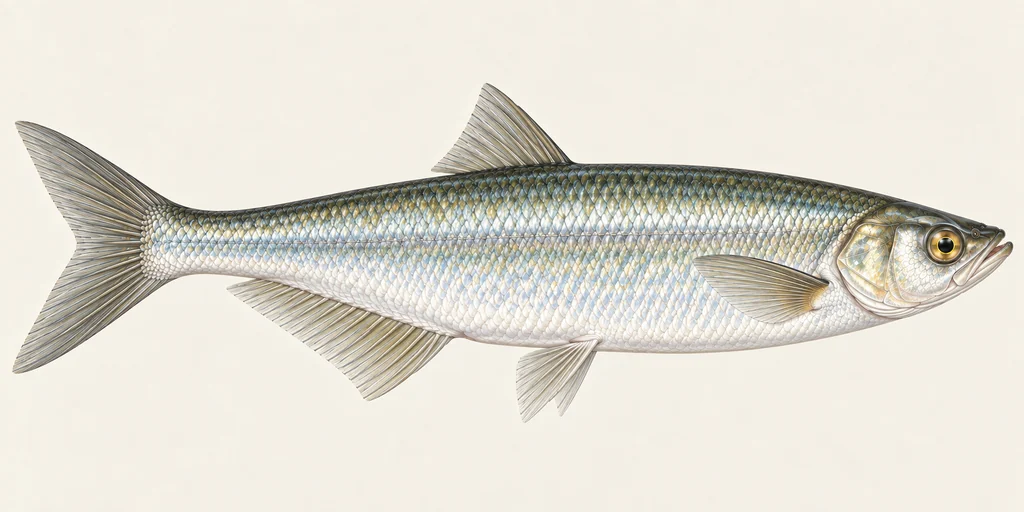
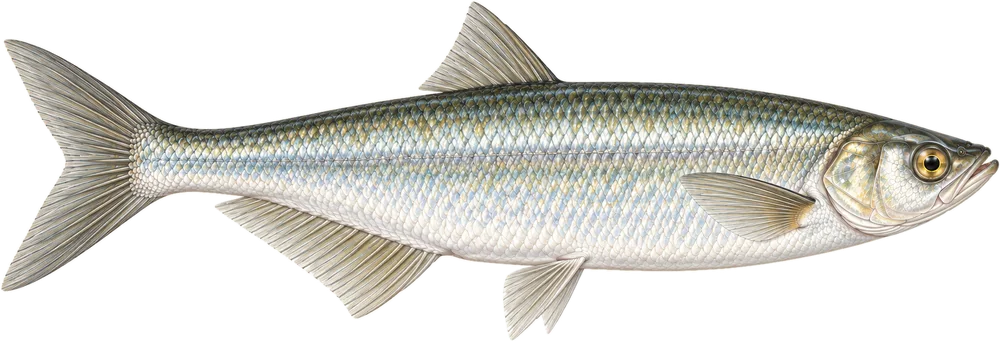
The bleak, also known as Laube in German (Alburnus alburnus), is a slim, silver shoaling fish that lives just below the surface of lakes and slow-flowing rivers. You recognise it by its steeply upward-pointing mouth and its long anal fin. For predators it is an important prey fish, for anglers a small fish for light pole fishing.
In short: The best time to catch bleak is from July to August, in the morning, during the day and at night. Good spots on a lake: the surface and open water; on a river: the main current. Proven baits: a single maggot or pinkie on a shallow-set pole rig, a small bread flake or a tiny dry fly. Use only dead as a baitfish: many federal states expressly prohibit live baitfish. Catching and using baitfish is governed by state law and the water’s rules. Step by step: Fishing for bleak.
- Strongly superior mouth with a gape pointing steeply upwards
- Long anal fin that starts below the end of the dorsal fin
- Slim, silvery shining body with loosely set scales
Catch chances through the year
- Hardly any chance
- Possible
- Good
- Peak season
- Spawning (observe the closed season)
Editorial assessment for waters in Germany, not a measured value and no guarantee. Spawning time is not the same as the legal closed season.
Species profile and sources in the catch calendarAll species compared month by monthThe rules of your federal state
How to recognise it
The bleak has a slim, elongated, laterally flattened body. The small mouth is superior, the gape points steeply upwards, the lower jaw protrudes slightly. The anal fin starts below the end of the dorsal fin and is clearly longer than it. A keel without scales runs between the pelvic and anal fins.
The back is grey to blue-green, the flanks and belly shine strongly silver. The paired fins and the anal fin are whitish with an orange base. The scales come off very easily. Along the lateral line FishBase counts 45 to 48 scales. At spawning time the males carry a very fine-grained spawning rash.
The size figures in the sources are close together. The Landesfischereiverband Bayern gives 10 to 20 centimetres on average and 25 centimetres at most, the Lower Austrian Landesfischereiverband up to 15 centimetres on average. FishBase gives 15 centimetres as the usual length, 30 centimetres as the maximum length and 60 grams as the highest published weight. Bleak become sexually mature from about 10 centimetres.
Most similar is the sunbleak. At 5 to 8 centimetres it stays much smaller, has only an incomplete lateral line with at most about twelve scales and keeled belly scales. Its anal fin is shorter than that of the bleak.
The spirlin has a double row of black dots along the lateral line and a terminal, almost horizontal mouth. In the roach the mouth is terminal, the iris yellow-red and the underside between the pelvic and anal fins rounded rather than keeled. The dace has an inferior mouth and a concave anal fin.
Side by side
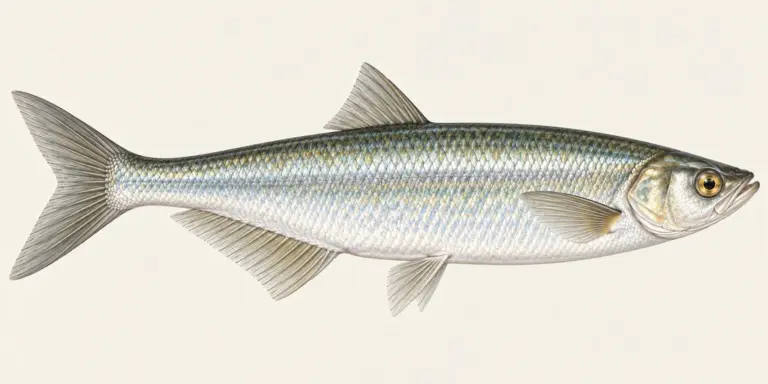
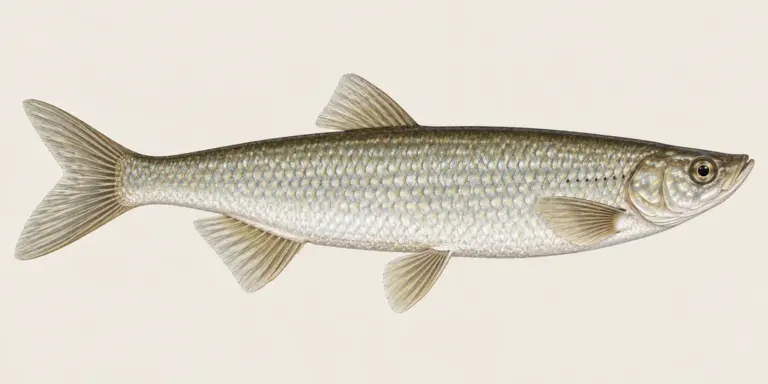
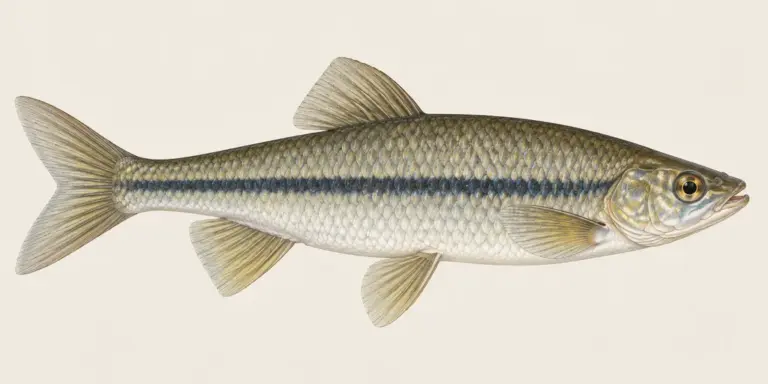
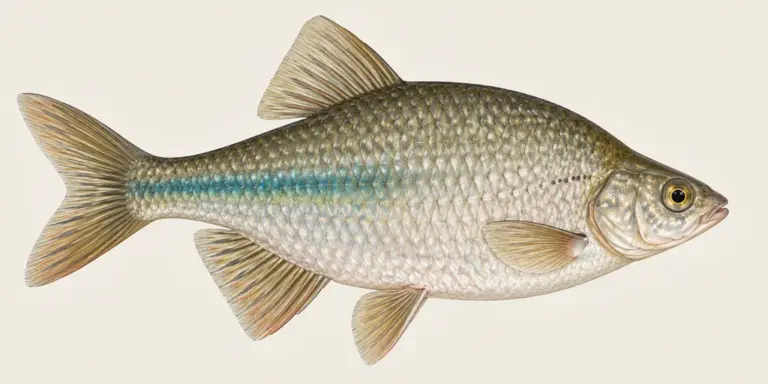
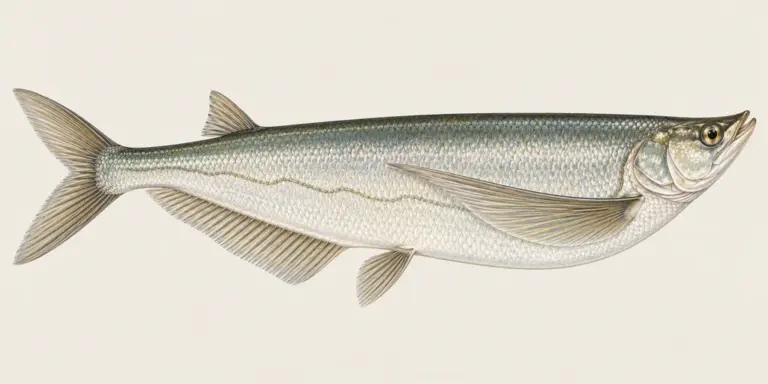
AI-generated illustrations.
Where it holds
Bleak live in shoals in still and slow-flowing waters of the barbel and bream zones: in lakes, in medium to large rivers and in the brackish water of the Baltic Sea. According to the Lower Austrian Landesfischereiverband, they are among the most common fish of larger lakes and rivers in these zones. They live in both the bankside and open water, prefer calm places and avoid overly dense plant growth. In a river that means: the shoals move through the open water of calmly flowing stretches.
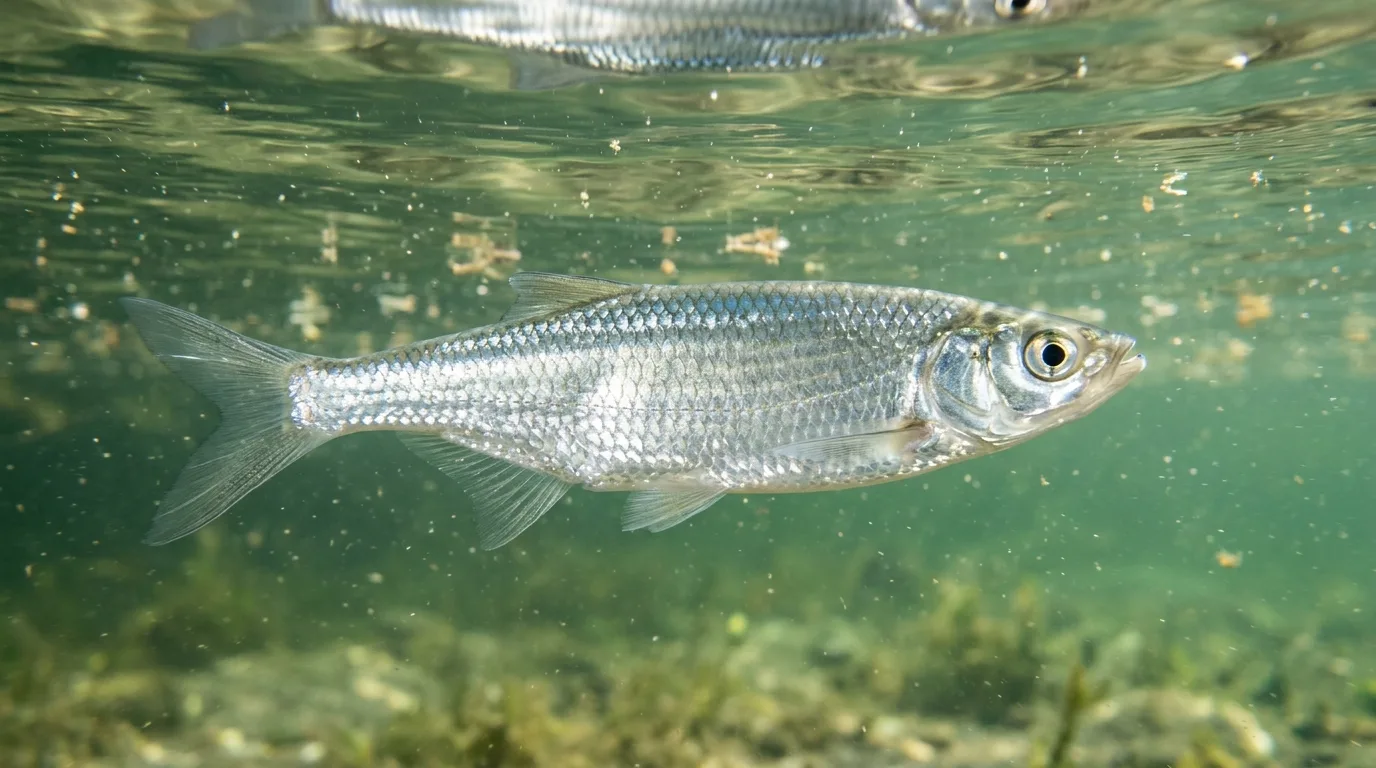
According to FishBase, adults stand in shoals near the surface, mostly near the bank. The larvae live in the bankside zone, the juveniles later move into open water. In winter the shoals gather in oxbow lakes and other calm areas.
In the lower reaches of rivers the bleak is one of the leading species of the reference fish communities. The 2023 Red List rates the stock in Germany as stable, although the counts from water monitoring showed an increase.
Holding spots in the picture
Choose the season and time of day: the picture shows where the species stands then. Spots outlined in red apply only in the chosen season. Tap a fish or a spot in the list to bring it closer. The picture is schematic and AI-generated, every water is different.
Chance of a catch in springgoodSpawning, observe the closed seasons
Catch chance in summerPeak season
Catch chance in autumnpossible
Catch chance in winterhardly any
- J
- F
- M
- A
- M
- J
- J
- A
- S
- O
- N
- D
Spawning season
Active time In lakes the bleak feeds most strongly in the first half of the day and takes windblown insects from the surface at night; in summer the shoal moves from the bank into open water for the night.
Active time In lakes the bleak feeds most strongly in the first half of the day and takes windblown insects from the surface at night; in summer the shoal moves from the bank into open water for the night.
No main time In lakes the bleak feeds most strongly in the first half of the day and takes windblown insects from the surface at night; in summer the shoal moves from the bank into open water for the night.
Active time In lakes the bleak feeds most strongly in the first half of the day and takes windblown insects from the surface at night; in summer the shoal moves from the bank into open water for the night.
In the lake
Deep bottom
Bleak are found here only in winter.
Open water
Bleak are found here only in spring, summer and autumn.
Just below the surface
Bleak are found here only in spring, summer and autumn.
Bleak live in shoals just below the surface, in open water as well as near the bank. There they take plankton and insects that fall on the water.
Spring: catch chances according to the fishing calendar possible in March, good in April and May. This is spawning time, so observe the closed seasons (Schonzeit). From April to June they spawn in the shallow shore zone, on stones, roots and water plants.
Summer: catch chance according to the catch calendar is good in June and peak season in July and August.
Autumn: catch chance according to the catch calendar good in September, possible in October, hardly any in November.
Winter: catch chances according to the fishing calendar hardly any. In winter the bleak retreats to deeper areas or to well-sheltered spots.
In the river
Gravelly shallow (riffle)
Bleak are found here only in spring.
Calm bay with aquatic plants
Bleak are found here only in winter.
Free current in mid-river
Bleak are found here only in spring, summer and autumn.
In rivers the bleak inhabits the open water of slow-flowing, medium to large rivers of the barbel and bream zones. The shoals stand near the surface in open water, often close to the bank, and prefer calm spots.
Spring: catch chances according to the fishing calendar possible in March, good in April and May. This is spawning time, so observe the closed seasons (Schonzeit). During the spawning period from April to June the fish look for shallow spots with flowing water over them.
Summer: catch chance according to the catch calendar is good in June and peak season in July and August.
Autumn: catch chance according to the catch calendar good in September, possible in October, hardly any in November.
Winter: catch chances according to the fishing calendar hardly any. In winter bleak form large gatherings in oxbow lakes and other calm areas.
Size comparison: AI-generated drawing, schematic.
How it feeds and spawns
The bleak eats plankton, including small crustaceans, as well as insects that fly onto the water and insect larvae. It stays just below the surface and lies in wait there for insects. Anglers report that shoals give themselves away on windless days by many small rings.
Spawning takes place from April to June in shallow water. According to FishBase, bleak spawn on shallow, flowing gravel bars or along stony banks, occasionally over aquatic plants. The sticky eggs cling to stones, roots and plants and hatch after about four days. According to the Müritzeum, spawning is lively and the water splashes.
The bleak is the main prey of many predatory fish. The Müritzeum names pike, zander, perch and asp. In the past, the guanine crystals in the scales were used to make so-called fish silver, which was used to coat artificial pearls.
When it bites
In this site’s catch calendar, July and August are at the highest level, April to June and September at the second highest. This is an editorial assessment based on spawning and activity, not a measured series.
Anglers report that the shoal sits at the surface in summer and takes almost anything small enough. When the water turns cold, the shoals retreat to calm areas and the bites become rarer.
Today’s catch index needs JavaScript. Season and spawning time are in the catch calendar.
You will find the monthly overview of all species and the water temperature check in the catch calendar.
What you catch it with
Step by step: Bleak fishing: tips on bait, rig and tackle – season, swims, bait, tackle and rules on one page.
Bleak are caught with a pole or a very light float rig. The Lower Austrian Landesfischereiverband names float and fly rod as methods, and FishBase the smallest hook and a fly as bait. The float is set shallow so that the bait hangs just below the surface.
As bait, anglers use a single maggot or a tiny flake of bread. With small dry flies, bleak can also be caught when fly fishing.
Anglers report that a little fine feed that forms a cloud at the surface keeps the shoal in place. The strike has to come fast because the fish often take the bait only briefly. Caught bleak lose scales quickly. So handle them wet and unhook them quickly, as described in Landing and unhooking a fish.
The bleak is a common baitfish, and FishBase calls it excellent bait for predatory fish. For rig and use, see Deadbait rig. How to keep baitfish is covered under Baitfish keepnet.
Fish shallow: bleak sit high. Set the float so that the bait hangs just below the surface. That is where the shoals are, according to FishBase.
Handle with care: the scales come off very easily. Fish you want to return are best unhooked in the water with wet hands.
Suitable lures
A single maggot or pinkie on a shallow pole rig, a small flake of bread or a tiny dry fly.
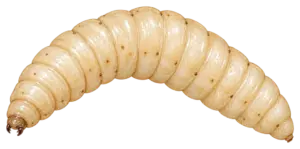
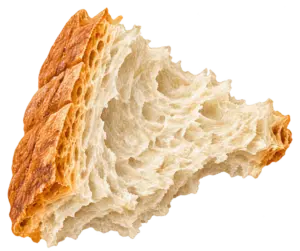
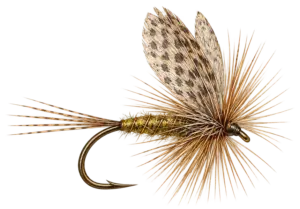
AI-generated illustrations. A click opens the lure’s page.
Rigs for these lures: Float rig.
Use as deadbait only; the rules on baitfish are set out in state law (Landesrecht) and the water regulations (Gewässerordnung).
Bleak as a table fish
According to FishBase, the flesh of the bleak tastes good. Because of its small size, however, the species is of little interest to commercial or sport fishing in its home range. If you want to use small fish, see Gutting a fish for how to go about it.
What you need to observe
The bleak is a common baitfish, for example for zander and asp. Many federal states (Bundesländer) expressly ban fishing with live baitfish; use deadbait. The reason lies in the Animal Welfare Act (Tierschutzgesetz), which permits pain, suffering and harm to animals only for a reasonable cause. Catching, using and transporting baitfish are governed by state law (Landesrecht) and the water regulations (Gewässerordnung).
Closed seasons (Schonzeit), minimum sizes (Mindestmaß) and harvest windows are set by the federal states (Bundesland), and on many waters additionally by the club or leaseholder. They differ depending on the water and the time of year. We give figures only with a date and a source; always binding are the fisheries regulation of your federal state and your fishing permit (Erlaubnisschein). You will find a list of links to the official sources in the catch calendar.
A fish of legal size that you want to keep you stun and kill at once, in line with animal welfare rules. Protected, undersized fish or fish too large under a harvest slot you unhook, if possible still in the water and with wet hands, and release gently. What exactly applies is regulated by state law and your fishing permit (Erlaubnisschein).
What closed season, minimum size and harvest slot mean and where to find them is explained on the page Closed season and minimum size explained.
Frequently asked questions (FAQ)
Are bleak and Laube the same fish?
Yes. Laube is the usual name in southern Germany and Austria for Alburnus alburnus.
How can I identify a bleak with certainty, and how do I catch it?
By the steeply upturned mouth, the long anal fin and the loosely attached silver scales. It is caught with a pole or a light float, set shallow, with a small maggot or a fly.
May I use bleak as baitfish?
Only dead. Many federal states (Bundesländer) expressly ban live baitfish. Details on catching, using and transporting are set out in state law (Landesrecht) and the water regulations (Gewässerordnung).
Sources
The rating of catch chances is an editorial assessment. The facts come from these sources, and the text is worded in our own words. The illustration is an original design by Angel Momente in the style of a natural history plate (AI-generated, see the AI notice).
- Landesfischereiverband Bayern: Fischlexikon (Laichzeit, Lebensraum, Nahrung, Aktivität)
- FishBase: Alburnus alburnus (Lebensweise, Winterlager, Fang)
- Niederösterreichischer Landesfischereiverband: Fischarten in Niederösterreich, Laube (Ukelei)
- Müritzeum Waren: Tierartenlexikon Ukelei (Lebensraum, Beutetier, Verwechslung)
- Bundesamt für Naturschutz: Rote Liste und Gesamtartenliste der Süßwasserfische und Neunaugen Deutschlands 2023 (Naturschutz und Biologische Vielfalt 170/6)
- LAWA-Projekt O 10.20 (Leibniz-IGB, 2021): Temperaturempfindlichkeiten der Fischgemeinschaften
- Wikipedia: Ukelei (Größe, Schuppenzahl, Laichzeit, Köderfisch)
- Bundesministerium der Justiz: Tierschutzgesetz, § 1 (Grundsatz)
- Canal & River Trust: Bleak (Ukelei: offenes Wasser, Fressen an der Oberfläche, Laichzeit)
- Latorre et al. 2023, Reviews in Fish Biology and Fisheries 33: A review and meta-analysis of the environmental biology of bleak Alburnus alburnus (Fresszeiten, Tag-Nacht-Wanderung)
Created with AI support from the sources listed. Figures only appear in the text if a source gives them. Last updated: 27 October 2026. Found a mistake? Write to us. Who is behind this site: About me.
More in the lexicon
- All fish species at a glance
- Catch calendar – month, water temperature and profile for 93 species
- Line calculator – breaking strain after the knot, drag guideline, backing
- Angling methods