
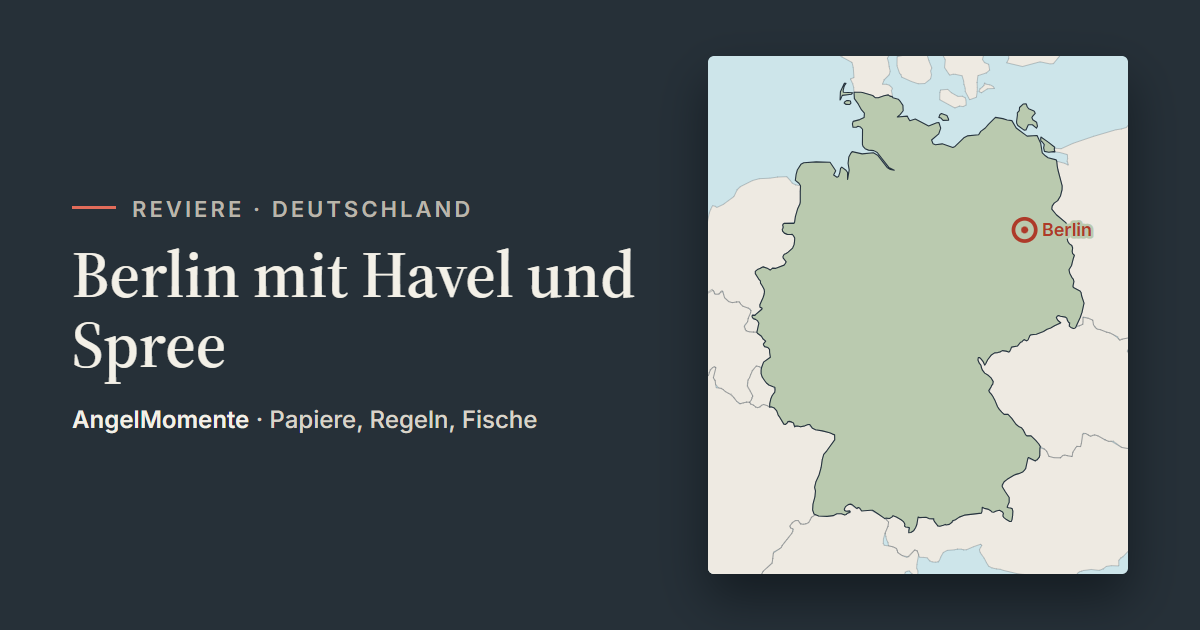
Waters · Germany
Fishing in Berlin on the Havel and Spree
The Havel and Spree make Berlin a city on the water: broad lakes in the west and south-east, plus canals right through the centre. People fish in the middle of the big city, with a fishing licence (Fischereischein) and a fishing permit, under the Berlin Landesfischereiordnung.
- Papers
- Fishing licence (Fischereischein) with levy stamp (Abgabemarke) and fishing permit for the water (Angelkarte)
- Season
- all year; lures for predatory fish banned from 1.1. to 30.4.
As of October 2026
At a glance
- Papers
- Fishing licence (Fischereischein) with levy stamp (Abgabemarke) and fishing permit for the water (Angelkarte)
- Licence and permit
- Season
- all year; lures for predatory fish banned from 1.1. to 30.4.
- Fishing seasons
- Night fishing included in the Fischereiamt’s permits
| Fish | Minimum size | Closed season | Catch limit | Note |
|---|---|---|---|---|
| Zander | 45 cm | 1.1.–31.5. | 3 eels and zander combined per day | |
| Pike | 45 cm | 1.1.–30.4. | – | |
| Perch | – | none | – | bait for predatory fish only from 1.5., artificial lures up to 2 cm all year |
| Eel | 50 cm | none | 3 eels and zander combined per day | |
| Wels catfish | 75 cm | none | – | |
| Asp | 40 cm | 1.4.–30.6. | – | |
| Bream (Blei) | – | none | – | |
| Roach | – | none | – | |
| Carp | 35 cm | none | – | |
| Tench | 25 cm | none | – |
Berliner Landesfischereiordnung (Fassung vom 27.10.2025); the permit (Angelkarte) can be stricter. As of October 2026. The regulation and your permit (Erlaubnisschein) are what count.
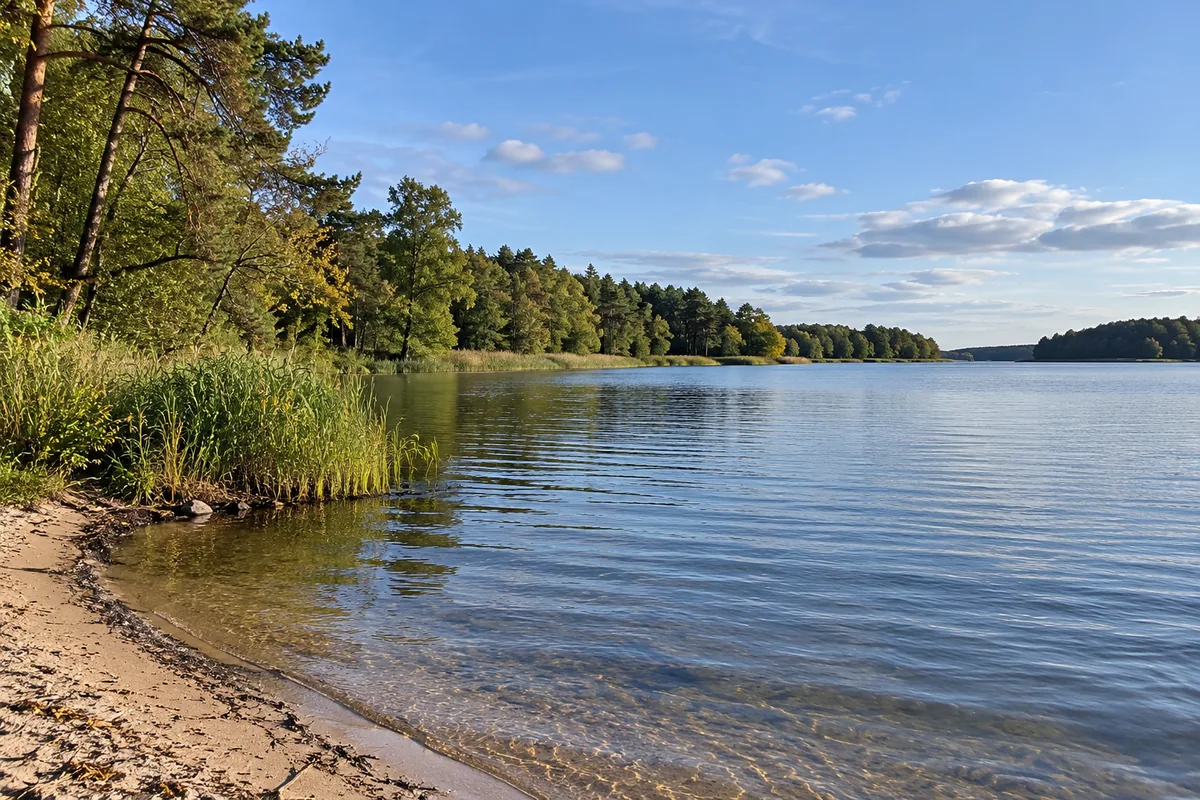
Location and waters Upper Havel, lower Havel, Wannsee and Spree
Of the Havel, which is about 325 kilometres long, around 27 kilometres lie in Berlin. The Spree flows about 46 kilometres through the city and joins the Havel in Spandau. Both are federal waterways here (Senatsverwaltung Berlin, Wasseradern).
- Upper Havel: the section in the north with the Tegeler See.
- Lower Havel: south of Spandau with the Large and Small Wannsee (Fischereiamt, Ausgabestellen).
- Müggelsee: The Large Müggelsee in the south-east covers 766 hectares and the Spree flows through it. It is part of the Natura 2000 protected-area network.
Most of the fishery is shared between the lake-like broadenings of the Havel, Spree and Dahme and the larger lakes, together a good 5.500 hectares of water (Fischereiamt, Bericht 2025).
Fish and best time Perch, roach, pike, zander and eel
Berlin’s waters currently hold 40 fish species, 14 of them non-native. The most commonly caught are perch, roach, pike, rudd, bream, tench and eel (Fischereiamt, Fish species).
- Zander, wels catfish and asp appear alongside pike, perch and bream in the 2025 catch statistics for professional fishers and anglers (Bericht 2025, Tabelle 1).
- Eel is kept going mainly by stocking: in 2025 about 541 kilograms of glass eels went into open waters.
- The round goby (Schwarzmundgrundel) keeps spreading, especially along rock revetments.
- The barbel is considered lost in Berlin.
Predator baits are banned from 1 January to 30 April, and zander are protected until the end of May. So you fish for pike with larger lures from May, and for zander from June. For the other species the catch calendar helps.
Papers and permit Fishing licence and fishing permit, no exceptions
You always need two documents: the fishing licence (Fischereischein, colloquially Angelschein) and a fishing permit for the water (Fischereiamt Berlin). You only get a permit if you hold a fishing licence. Berlin has no exemption for coarse fishing (Landesfischereigesetz, § 14). The licence is valid only with the stamp for the fishing levy (Fischereiabgabe) for the current year, which is 21 euros in 2026 (Fischereiamt, Fischereischein). The exam, the youth licence and the rules for children are on the page Fishing in Berlin.
- Visitors from other federal states: You show the valid fishing licence of your federal state (Bundesland) and the permit. Visitors from abroad prove membership of an angling association or an angling licence from their country (Fischereiamt, Touristen).
- State-owned waters: For the waters it manages, the Fischereiamt issues the permit itself, also as a digital permit through its online service (ServicePortal Berlin). These include the upper Havel with the Tegeler See. This permit is valid only within Berlin. The Fischereiamt’s permits include night fishing (Fischereiamt, Entgelte).
- Other stretches: For the lower Havel and Wannsee, the Fischersozietät Tiefwerder-Pichelsdorf issues permits; for the Müggelsee and Müggelspree, the Köpenicker Fischervereinigung; for the Spree in the eastern city centre, the Landesverband Berlin des Deutschen Anglerverbands. The Fischereiamt keeps the full list.
- Brandenburg all around: Beyond the city limits Brandenburg law applies, where you may coarse fish without a fishing licence (Fischereigesetz Brandenburg, § 17). More under Fishing in Brandenburg.
Special rules Two rods, three eels or zander a day
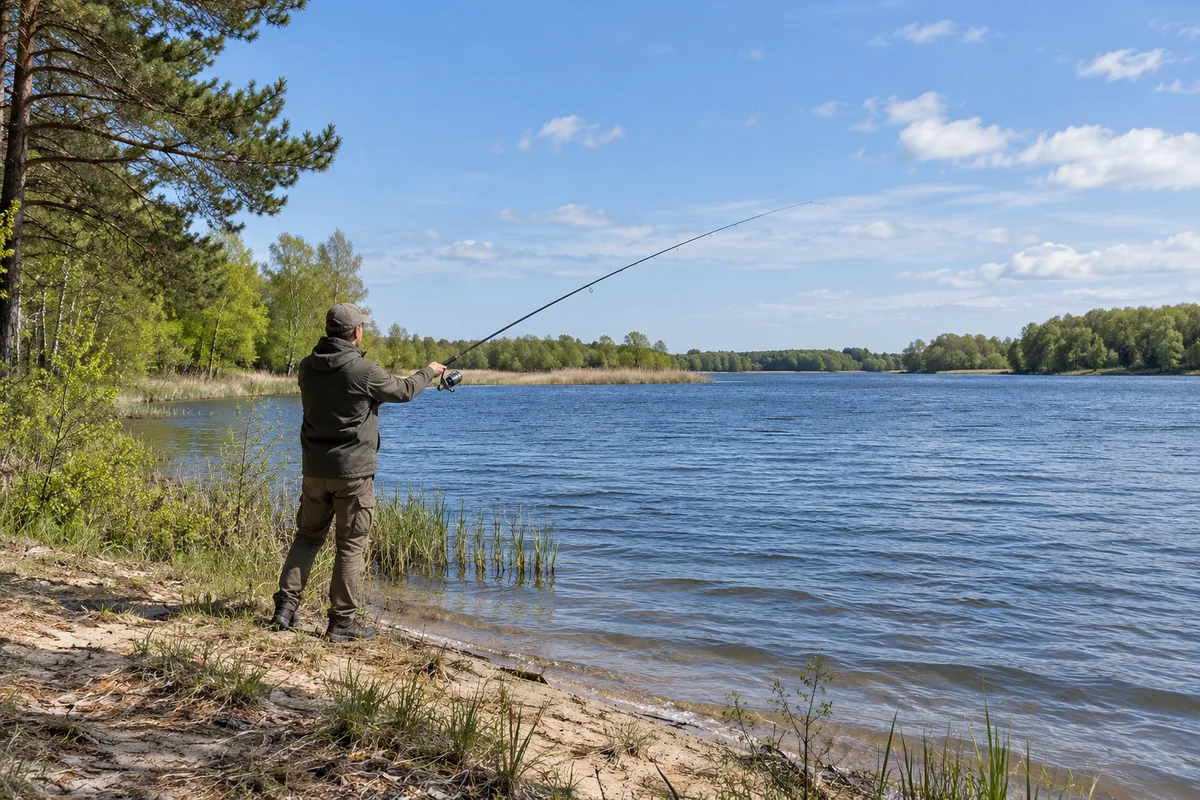
- Rods and bait: Two hand lines at most; with a spinning or fly rod only one. Lures up to 2 cm long are allowed even in the predator closed season (Landesfischereiordnung, § 18). Live baitfish are banned.
- Catch limit: Per person and day you may take no more than three eel and zander combined.
- Banned gear: Lures with fixed treble hooks, more than three hooks on one line, pilkers over 30 grams and trolling behind a boat (§ 15).
- Groundbaiting: A maximum of 500 grams of groundbait per day; pre-baiting on the days before is banned.
- Returning fish: Non-native species such as the round goby do not go back into the water. Catching fish only to measure and photograph them is banned (Auszug Landesfischereiordnung). Crucian carp, bitterling, gudgeon and other endangered small fish are taboo (Fischereiamt, Angelkarten).
- Keepnet: Only until the end of the fishing day. On waterways it is banned where ships cause suction and surge, and from an unanchored boat.
- Locks and weirs: On federal waterways you may not enter federally owned locks and weirs for any purpose other than their intended use (§ 2 WaStrBAV). Fishing is banned in fish passes (Landesfischereigesetz, § 28).
- Reed beds and spawning grounds: You may not enter reed beds, and you anchor your boat at least 10 metres from them (§ 17). Occupied spawning grounds are likewise taboo.
Correct as of October 2026. The fishing rights holders can set stricter conditions in the permit than the Landesfischereiordnung. Where fishing is not allowed at all in Berlin is shown on the map of angling waters in the Geoportal Berlin. If in doubt, ask at the outlet that issued your permit.
Safety
On waterways, ships and motorboats cause suction and surge, which is why the keepnet rule applies there. When you fish on the ice, you mark the hole with twigs or sticks as you walk, as the Berlin ice surface regulation also requires. More under Walking on ice and Boat and life jacket.
Related
- Fishing on rivers and Fishing on lakes
- Fishing in Berlin: fishing licence, exam and visitors
- Fishing in Brandenburg and the Elbe, which the Havel flows into
- In the fish encyclopaedia: zander, pike, perch, wels catfish and eel
- Closed season and minimum size explained
Sources
- Fischereiamt Berlin: Angelfischen, Angelkarten, Ausgabestellen, Fischereischein, Touristen, Fish species
- Fischereiamt Berlin: Fische und Fischerei in Berlin 2025 (10. Juli 2026)
- Land Berlin: Landesfischereiordnung, Anlage 1 und Anlage 2 (Fassung vom 27. Oktober 2025), Landesfischereigesetz, ServicePortal: Angelkarte
- Senatsverwaltung Berlin: Wasseradern unserer Stadt
- Fischereigesetz für das Land Brandenburg; Wasserstraßen-Betriebsanlagenverordnung, § 2
Guide without guarantee, correct as of October 2026. What counts are the Berlin state fisheries act (Landesfischereigesetz), the Landesfischereiordnung, the regulations for the federal waterways and the conditions of your fishing permit.