
Knowledge – Fish
Rudd: Identification, habitat and float fishing
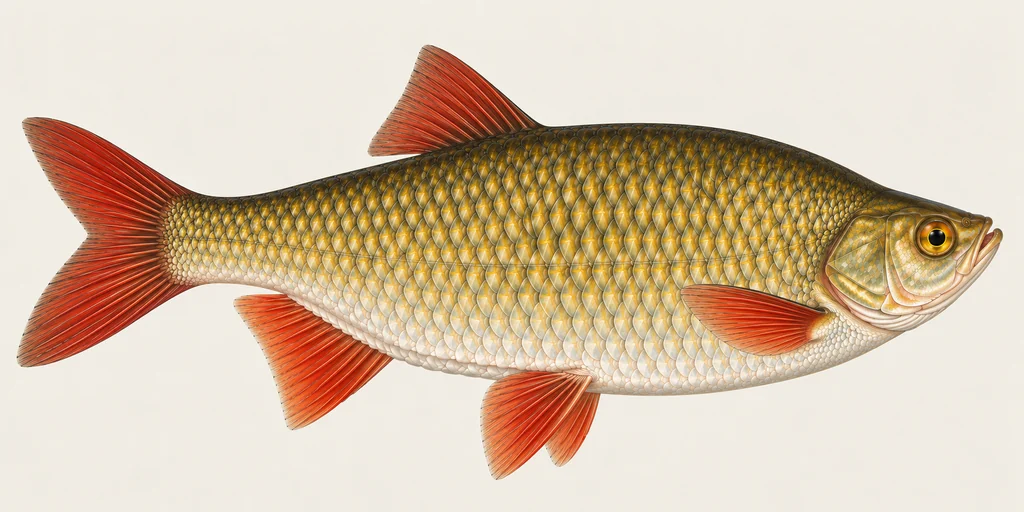
The rudd (Scardinius erythrophthalmus) is a shoaling fish of still and slow-flowing waters rich in plants. It likes to stand close to the bank and the surface and takes food from above, which makes it one of the few coarse fish that you can target deliberately with the fly rod. It is often confused with the roach.
In short: The best time to catch rudd is June to August, above all in the morning and evening. Good spots in a lake: weed bed and reed edge; in a river: calm bay. Proven baits: bread flake or grasshopper on the surface; sweetcorn, maggots, paste or small dry flies. Step by step: Fishing for rudd.
- Superior mouth with the gape pointing obliquely upwards
- Die Rückenflosse beginnt deutlich hinter dem Ansatz der Bauchflossen
- Red fins and flanks shining brass-coloured
Catch chances through the year
- Hardly any chance
- Possible
- Good
- Peak season
- Spawning (observe the closed season)
Editorial assessment for waters in Germany, not a measured value and no guarantee. Spawning time is not the same as the legal closed season.
Species profile and sources in the catch calendarAll species compared month by monthThe rules of your federal state
How to recognise it
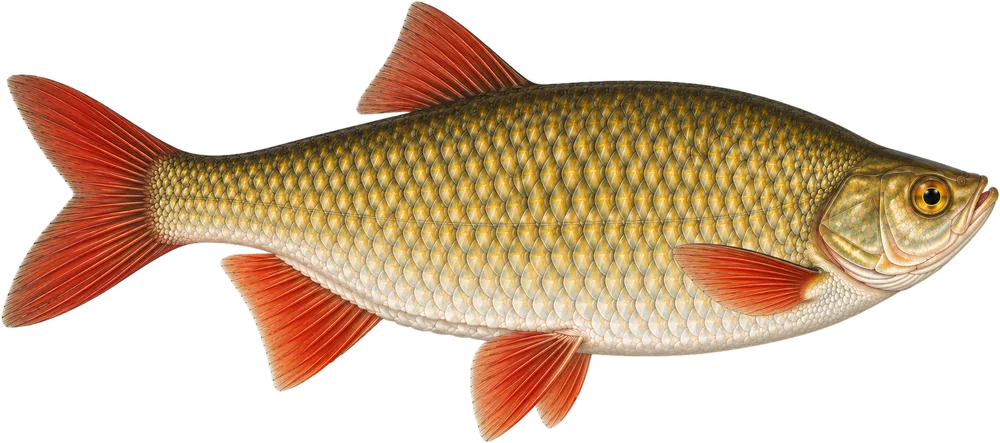
The rudd’s body is deep-backed and stocky. The mouth is clearly upturned, the gape pointing obliquely upwards. The dorsal fin starts clearly behind the base of the pelvic fins. Between the pelvic and anal fins the large scales on the belly form a keel like overlapping roof tiles.
The colouring ranges from greyish silver to a glossy brass; the iris is yellowish to brassy. The fins are light red to strong red, the pelvic fins deep red according to FishBase. The lateral line has 38 to 42 scales (Saxony) or 39 to 42 (FishBase). The rudd is usually 20 to 30 cm long. FishBase gives 61,7 cm as the largest reported length and a maximum age of 19 years.
The rudd is confused with the roach (Plötze). In the roach the mouth is terminal, the dorsal fin starts above the base of the pelvic fins, the belly line between the pelvic and anal fins is rounded, and the iris is red. In the rudd the mouth is upturned, the dorsal fin starts further back, the belly line is keeled, and the iris is brassy to yellowish. The fins help too: in the rudd they are blood red, in the roach orange to red.
Crossbreeds with other cyprinids occur and can make identification harder. In that case check the position of the mouth and the dorsal fin first.
Side by side

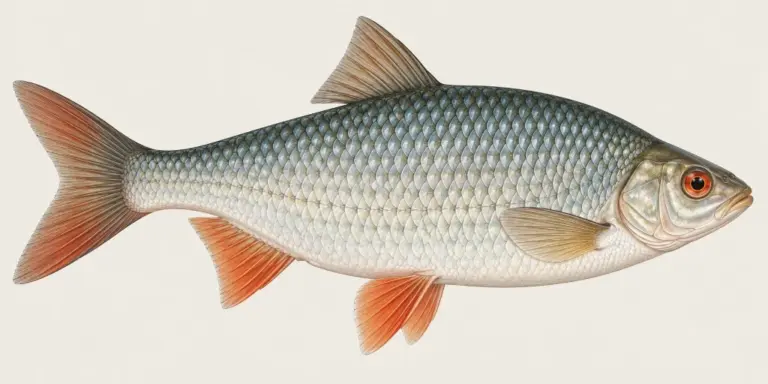
AI-generated illustrations.
Where it lives
The rudd lives in still and slow-flowing waters of all kinds as long as they offer plenty of vegetation, and according to Saxon sources also in brackish water. FishBase lists nutrient-rich, well-vegetated lowland rivers, oxbow lakes, ponds and lakes. It is closely tied to aquatic plants, which provide food and a spawning ground.
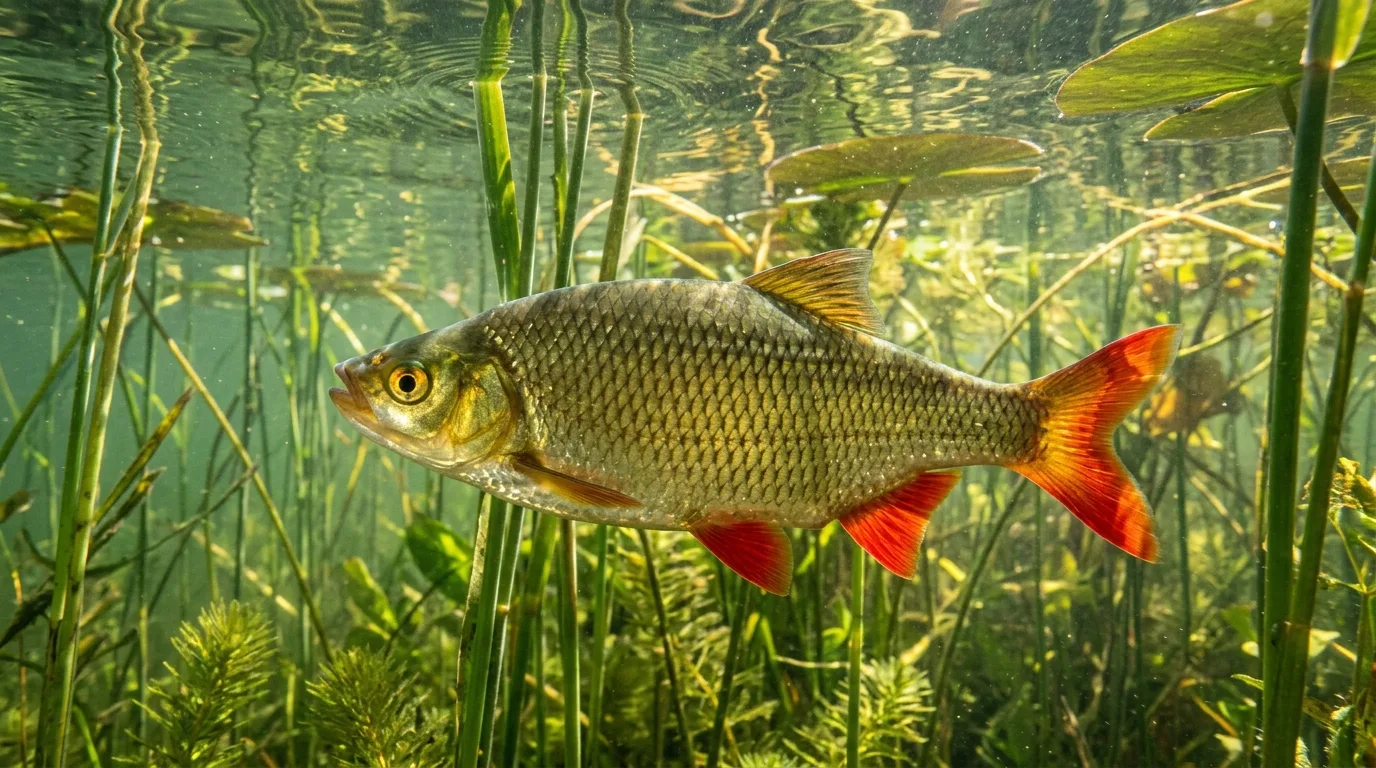
In summer it likes to stay close to the bank and the surface. You target reed edges and the margins of water-lily beds, because that is where the shoals stand.
Holding spots in the picture
Choose the season and time of day: the picture shows where the species stands then. Spots outlined in red apply only in the chosen season. Tap a fish or a spot in the list to bring it closer. The picture is schematic and AI-generated, every water is different.
Chance of a catch in springgoodSpawning, observe the closed seasons
Catch chance in summerPeak season
Catch chance in autumnpossible
Catch chance in winterhardly any
- J
- F
- M
- A
- M
- J
- J
- A
- S
- O
- N
- D
Spawning season
Active time The best biting time for rudd is early in the morning and at dusk in the evening.
No peak time The best biting time for rudd is early in the morning and at dusk in the evening.
Active time The best biting time for rudd is early in the morning and at dusk in the evening.
No peak time The best biting time for rudd is early in the morning and at dusk in the evening.
In the lake
reed edge
Rudd are found here only in spring, summer and autumn.
Water lilies and weed bed
Rudd are found here only in spring, summer and autumn.
Deep bottom
Rudd are found here only in winter.
Just below the surface
Rudd are found here only in summer.
The rudd lives in shoals in shallow, soft-bottomed areas rich in plants, preferably near the bank. The shoals sit at reed edges, among water lilies and in heavily weeded stretches.
Spring: catch chance according to the catch calendar: possible in March, good in April and May. The spawning season falls in this period, so observe closed seasons (Schonzeit). To spawn, the shoals seek out shallow, densely overgrown bank areas. The eggs stick to aquatic plants.
Summer: catch chance according to the catch calendar: main season. On warm days from May to September the shoals take insects that have landed on the water from the surface. After spawning until autumn is when rudd are caught most of all.
Autumn: catch chance according to the catch calendar good in September, possible in October, hardly any in November.
Winter: catch chance according to the catch calendar: hardly any. In the winter months rudd seek out the deeper zones of the water.
In the river
Calm bay with aquatic plants
Rudd are found here all year round.
On a river the rudd lives in slow-flowing stretches rich in plants and in oxbow lakes with a soft bottom.
Spring: catch chance according to the catch calendar possible in March, good in April and May. This is the spawning period, so observe the closed seasons (Schonzeit).
Summer: catch chance according to the catch calendar: main season.
Autumn: catch chance according to the catch calendar good in September, possible in October, hardly any in November.
Winter: catch chance according to the catch calendar: hardly any. In the winter months rudd seek out the deeper zones of the water.
Depth: The rudd likes to stay near the bank and the surface. Big ones sit in the middle of the shoal or beneath it.
Size comparison: AI-generated drawing, schematic.
How it hunts and spawns
Adult rudd eat soft-leaved aquatic plants and algae, plus worms, insect larvae, snails and terrestrial food, meaning insects that have fallen onto the water. The Sächsische Landesamt für Umwelt, Landwirtschaft und Geologie compares the plant use of the grass carp with that of the native rudd, the only species that taps similar food sources. Its upturned mouth suits hunting at the surface.
According to the Landesfischereiverband Bayern, spawning takes place in April and May; other sources give up to June depending on the water. The males then move to the spawning grounds and drive the ripe females into dense growth with loud splashing. The eggs are very sticky, colourless to pale yellow, and adhere to plants in the shallows. The males carry a fine-grained spawning rash. Newly hatched larvae attach themselves to plants with adhesive glands on the head until their yolk sac is used up.
When it bites
The rudd is a summer fish. From after spawning until autumn it can best be caught, as the specialist press describes it. Warm days when the fish rise to insects and give themselves away with rings on the water are especially good for the fly rod.
In spring at spawning time the shoals stand in shallow, densely overgrown bank zones. Anyone fishing then should not disturb the spawning grounds and should know the rules of their federal state on closed seasons.
Today’s catch index needs JavaScript. Season and spawning time are in the catch calendar.
You will find the monthly overview of all species and the water temperature check in the catch calendar.
From the blog: Freshwater fish in Germany: which species you catch where · Roach or rudd, bream or silver bream: how to tell these silver fish apart reliably
What to catch it with
Step by step: Fishing for rudd: tips on bait, rig and tackle – season, lies, baits, tackle and rules on one page.
The usual method is float fishing. Baits that sink slowly or float on the surface are good, such as bread and casters. The float must right itself quickly after going under, because the bait is often taken on the drop. Pre-weighted wagglers fish just under the surface. You have to cast far and very accurately to reach the shoal at the reed edge. A light match rod of three to four metres, lines up to 0,20 mm and hooks of size 14 and smaller are usual.
For groundbaiting, maggots that you fire around the float with a catapult and floating slices of toast bread are suitable. Bread and maggots come into question as bait. Large rudd often stand in or below the shoal. They are more likely to take a lobworm on the bottom than on the surface. If the fish rise to insects, fly fishing pays off: on the fly rod a bushy dry fly on a floating line of class 4 or 5 and a leader with a 0,16 tippet. Blinker also mentions stalking with the long pole, on which a grasshopper dances on the surface.
Approach quietly: A shoal is quickly scared off by a careless approach. Keep your distance, cast accurately to the reed edge or the edge of the water lilies, and take the smallest bubble float if you need one, because bigger ones make too much noise when cast in.
Lead hooked fish away: Lead a hooked fish quickly away from the shoal so the other fish stay in place.
Lift rig: If you leave plenty of play between the top split shot and the float stop, you can let the bait rise and sink like a lift. Tighten the line and it rises; slacken it and it sinks to the set depth.
Suitable lures
Bread flake or grasshopper on the surface; sweetcorn, maggots, paste or small dry flies.
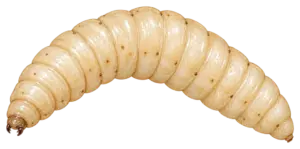
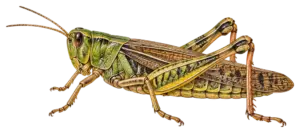
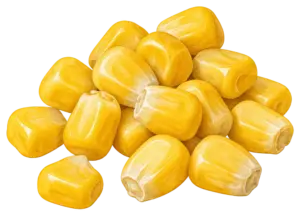
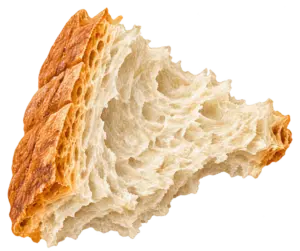
AI-generated illustrations. A click opens the lure’s page.
Rigs for these baits: waggler rig, float rig, running leger rig.
Is the rudd worth cooking?
As a food fish the rudd plays hardly any role; commercially it is fished only to a small extent. That is mainly due to its flesh, which is shot through with many fine bones. As in all carp-like fish, these intermuscular bones sit loose in the muscle and have no contact with the backbone. Anyone who wants to keep a rudd should first stun and kill it and then gut it.
Before the fish goes into the pan, deal with the bones: the back and tail piece are scored crosswise at very close intervals, almost down to the spine, and only then breaded. If you cut the rudd into pieces, do so again only after scoring and in equal thickness so they cook evenly. Without the cutting work you can use a meat grinder, which chops the bones so finely that you no longer notice them when eating. The mass then admittedly resembles minced meat. The cutting technique on the fillet is shown by filleting fish.
What you need to observe
Closed seasons (Schonzeit), minimum sizes (Mindestmaß) and harvest windows are set by the federal states (Bundesland), and on many waters additionally by the club or leaseholder. They differ depending on the water and the time of year. We give figures only with a date and a source; always binding are the fisheries regulation of your federal state and your fishing permit (Erlaubnisschein). You will find a list of links to the official sources in the catch calendar.
A fish of legal size that you want to keep you stun and kill at once, in line with animal welfare rules. Protected, undersized fish or fish too large under a harvest slot you unhook, if possible still in the water and with wet hands, and release gently. What exactly applies is regulated by state law and your fishing permit (Erlaubnisschein).
How different the state rules are is shown by Saxony: the 2022 regulation provides a minimum size (Mindestmaß) for the rudd only in running waters. Always check the rules of your federal state. In Germany’s 2023 Red List the rudd is regarded as not threatened, with a moderately common stock and a long-term decline, stable in the short term. In Saxony it is, according to the 2015 Red List, only on the early-warning list. FishBase lists it as the most widely used baitfish. Many federal states expressly ban live baitfish, see baitfish.
What closed season, minimum size and harvest slot mean and where to find them is explained on the page Closed season and minimum size explained.
What state law prescribes for the closed season (Schonzeit) and minimum size (Mindestmaß) of this species is given in the “At a glance” box on the state pages for Hesse and Rhineland-Palatinate. For the other states our overview does not list this species; there the state fisheries regulation (Landesfischereiverordnung) is decisive.
Frequently asked questions (FAQ)
How do I tell rudd and roach apart?
Rudd: upturned mouth, dorsal fin starts behind the base of the pelvic fins, keeled belly edge, iris yellowish to brassy. Roach: terminal mouth, dorsal fin above the pelvic fins, rounded belly edge, red iris.
Which rig and bait should I use for rudd?
A light float rig or a waggler just under the surface, with bread flake or casters that sink slowly. Hook size 14 and smaller.
When do rudd bite best?
In summer after spawning until autumn, especially on warm days when the shoals rise to the surface for insects.
Sources
The rating of catch chances is an editorial assessment. The facts come from these sources, and the text is worded in our own words. The illustration is an original design by Angel Momente in the style of a natural history plate (AI-generated, see the AI notice).
- Landesfischereiverband Bayern: Fischlexikon (Laichzeit, Lebensraum, Nahrung, Aktivität)
- FishBase: Scardinius erythrophthalmus (Höchstalter, Schuppenzahl, Lebensraum)
- Blinker: Steckbrief Rotfeder (Posenangeln, Köder, Gerät, Fliegenfischen)
- Rote-Liste-Zentrum: Rotfeder (Rote Liste der Süßwasserfische Deutschlands 2023: ungefährdet)
- Sächsisches Landesamt für Umwelt, Landwirtschaft und Geologie: Artenkunde verwechselbare Fischarten (Plötze und Rotfeder)
- Sächsisches Landesamt für Umwelt, Landwirtschaft und Geologie: Gefährdungssituation der Fische und Rundmäuler in Sachsen 2015
- Sächsisches Landesamt für Umwelt, Landwirtschaft und Geologie: Leitlinien für die Nutzung von Graskarpfen in Aquakultur und Fischerei (Vergleich mit der Rotfeder)
- Freistaat Sachsen, Fischereibehörde: Sächsische Fischereiverordnung, Schonzeiten und Mindestmaße 2022
- Wikipedia: Rotfeder (Merkmale, Unterschied zum Rotauge, Lebensweise, Laichzeit, Aktivität)
- Landesfischereiverband Bayern: Lernportal der Fischerjugend, Betäuben und Schlachten (Gräten)
- Landesfischereiverband Bayern: Lernportal der Fischerjugend, Fische vorbereiten für die Zubereitung
Created with AI support from the sources listed. Figures only appear in the text if a source gives them. Last updated: 8 November 2026. Found a mistake? Write to us. Who is behind this site: About me.
More in the lexicon
- All fish species at a glance
- Catch calendar – month, water temperature and profile for 93 species
- Line calculator – breaking strain after the knot, drag guideline, backing
- Angling methods