
Knowledge · Lures
Sweetcorn and particles
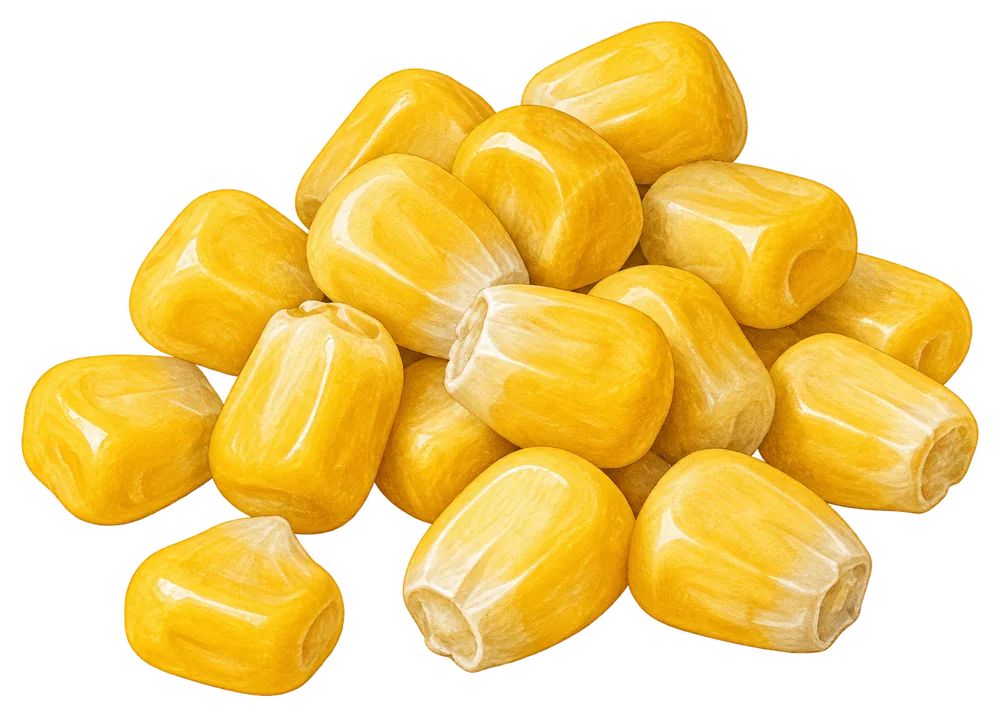
Plant-based baits · Stationary fishing with a float or on the bottom
Sweetcorn is the simplest coarse-fish bait: open the tin, put a grain on the hook. Hard corn, hemp and tiger nuts need preparation. Tiger nuts, in return, are so hard that small fish can hardly crack them, and hemp usually serves as feed.
- Water depth
- Bottom
- Presentation
- Resting on the bottom, usually over some feed
- Fishing method
- Waiting game with a float or on the bottom
- Category
- Plant-based baits
CarpTenchBreamRoachRuddGrass carpPrussian carp
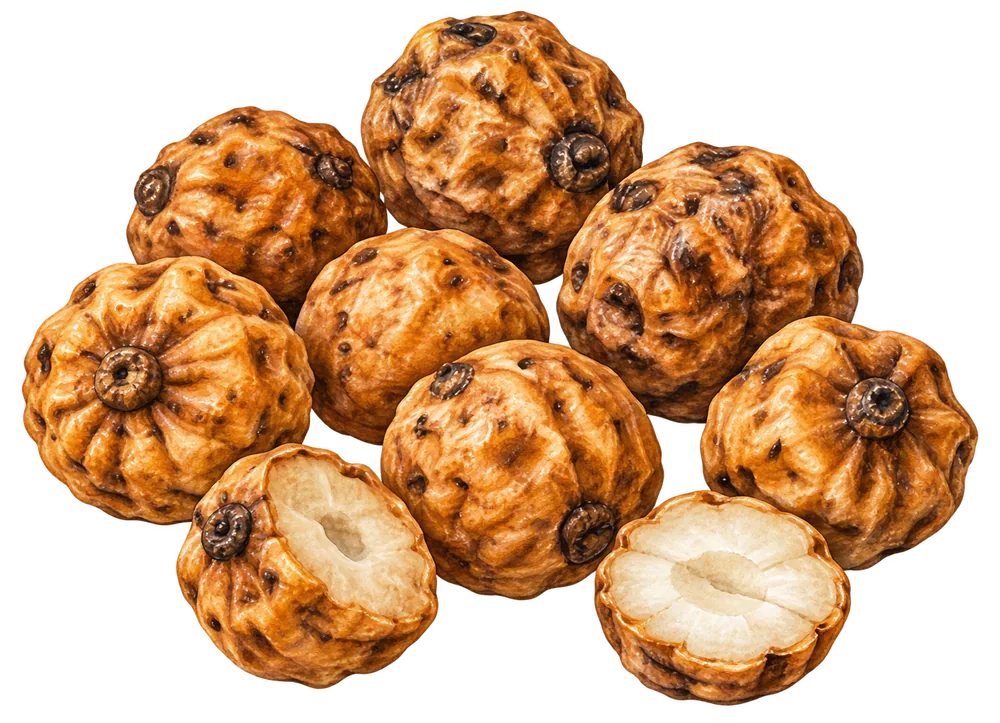
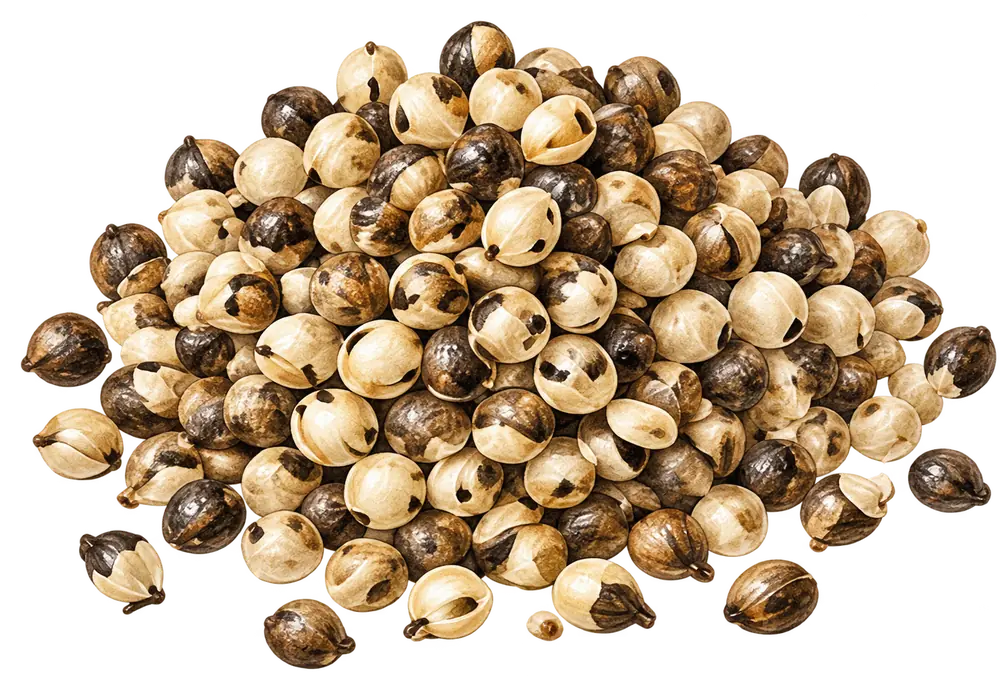
AI-generated illustrations
How it works
Sweetcorn works through colour and sweetness. Even a small handful of yellow grains stands out on the bottom, and carp usually pick up one grain after another. It is not nutritious; its protein content is far below that of a boilie. Even so, carp, roach, bream, tench, rudd and grass carp take it, occasionally even pond trout.
Tinned sweetcorn is soft and ready to use straight away. Prepared angling corn from the shop is usually more evenly shaped and a little firmer, which makes it the better hookbait. For large amounts of feed, hard corn is used, which is soaked and boiled before use: soak for about 24 hours, then boil for around 30 minutes.
Tiger nuts are the tubers of a sedge, also called chufa, and grow to about 15 millimetres. Even after soaking and boiling they stay very hard. Only carp grind them up with their pharyngeal teeth; silver fish, crayfish and waterfowl largely leave them alone. Hemp, by contrast, is small and smells strong. It holds fish on the spot for a long time, but also attracts many silver fish.
No raw particle belongs in the water. Uncooked hemp is ineffective and usually floats. Hemp from the shop is heat-treated and can no longer germinate.
How to present the bait
Resting on the bottom, usually over some feed
Schematic illustration, AI-generated.
- cast out
- lies on the bottom or hangs from the float
- wait for the bite
- re-bait
Anatomy
The points on the picture above explain the most important parts – on hover or tap.
- Grain of sweetcorn: Soft, sweet and yellow. A grain with a firm base withstands the cast better.
- Yellow colour: Stands out on the bottom; even a handful is enough as a trigger. Sweetcorn can be dyed and flavoured.
- Several grains: Several grains can be offered on the hair. An artificial grain makes the chain lighter.
Rig in three steps
- 1. Sweetcorn straight on the hookOne or two grains on a medium hook, as a guide size 8 to 10.
- 2. Particles on the hairThread a tiger nut or hard corn on with the baiting needle and secure it with a stop; up to four grains for sweetcorn. Hair rig step by step
- 3. Bottom rigWeight and bait lie on the bottom, the bait among the feed. Running-weight rig step by step
Drawings: AI-generated, schematic.
When the target fish are in season
Hardly any chancePossibleGoodPeak seasonValues from the catch calendar.
When and where
Particles are used mainly in the warm season. After spawning, carp are hungry, and small grains keep them busy longer than a layer of boilies. In winter small baits have the advantage: a chain of four grains at most is enough.
On heavily fished waters almost every angler feeds particles, but few put them on the hook. Carp therefore often react less warily to grains than to boilies. Anglers report that in autumn carp at times left boilies lying and took only particles.
Tiger nuts are heavy and lie well on firm ground such as gravel pits. On silty ground and in shallow lakes carp anglers lean towards lighter nuts. Roach, bream and tench also take sweetcorn and hemp. Where silver fish are numerous, a chain of corn or a tiger nut is therefore worthwhile.
What you may feed is set by the water. Some associations limit the amount of feed per fishing day and ban bait boats; on other waters groundbait and particles are banned altogether. The water rules (Gewässerordnung) and your fishing permit (Erlaubnisschein) apply. The Anglerverband Niedersachsen advises topping up only once fish have settled on the spot.
How to choose hook, amount and number of grains
- Simple: grain on the hook Put one or two grains straight on a medium hook, roughly size 8 to 10.
- Or: grains on the hair Thread the grains onto the hair with the baiting needle, up to four for sweetcorn.
- Artificial grain at the end An artificial, slightly buoyant grain at the end makes the chain almost weightless.
- Secure it with a stop Finally you secure the chain with a stop.
The hook size depends on the bait. In a trial with small carp, size 10 was used, and England’s biggest carp at the time was outwitted in 1980 with two grains on a size 8. Plump grains partly cover the hook, while a grain with a firm base withstands the cast better. Shapes and sizes can be found under fishing hooks.
Feed little and often: a dozen grains after each bite is usually enough, because too much conspicuous feed on the bottom makes fish shy. Tiger nuts are very filling and belong in the feed only in small part; one rule of thumb says ten per cent at most. As hookbait, one or two nuts over a small handful of free feed are enough.
Carp suck in grains one at a time. A heavy chain on the hair then just lies there although the fish are feeding. With an artificial, slightly buoyant grain at the end the chain becomes almost weightless; four real grains are enough for that.
How to prepare and store particles
Opened tinned sweetcorn keeps two days at most, longer if frozen; use it straight away after thawing. Angling corn from a tackle shop is not meant for eating. Add flavours only in the amount the maker gives; an overdose tends to put fish off. Dyed corn needs at least 24 hours in the fridge to take up the colour.
Wash tiger nuts and soak them for at least 24 hours. Then boil them for 30 to 45 minutes. Hemp swells for about 12 hours and is boiled until the seeds split and the white kernel shows. Nuts must be of food quality.
Leave cooked particles standing in the cooking water. After three to four days a slime containing sugar forms on tiger nuts, and the baits smell sweet-sour. Allow at least three days, a week is better. As long as the water covers the particles, no mould develops. They keep well in a jar and can be frozen in portions.
Keep it fresh and present it
Keeping it fresh: store natural baits cool and in the shade, take only as much as necessary and do not tip leftovers into the water. When baiting up, the hook point must stay free so that the strike takes hold.
Sweetcorn & particles or another bait after all?
| Baits and lures | Depth | Presentation | Take this lure if … |
|---|---|---|---|
| Sweetcorn & particles | Bottom | Resting on the bottom, usually over some feed | this page |
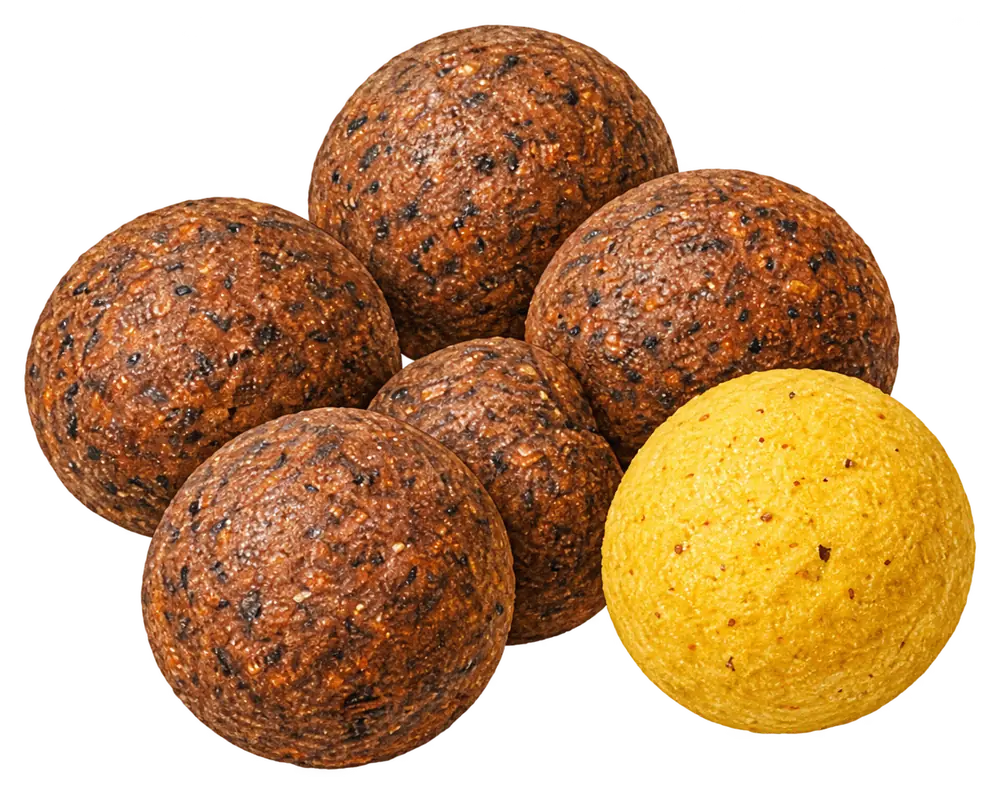 Boilies | Bottom, pop-ups just above it | Resting on the bottom, on the hair beside the hook | you sit for a long time and want a hard, selective, protein-rich carp bait |
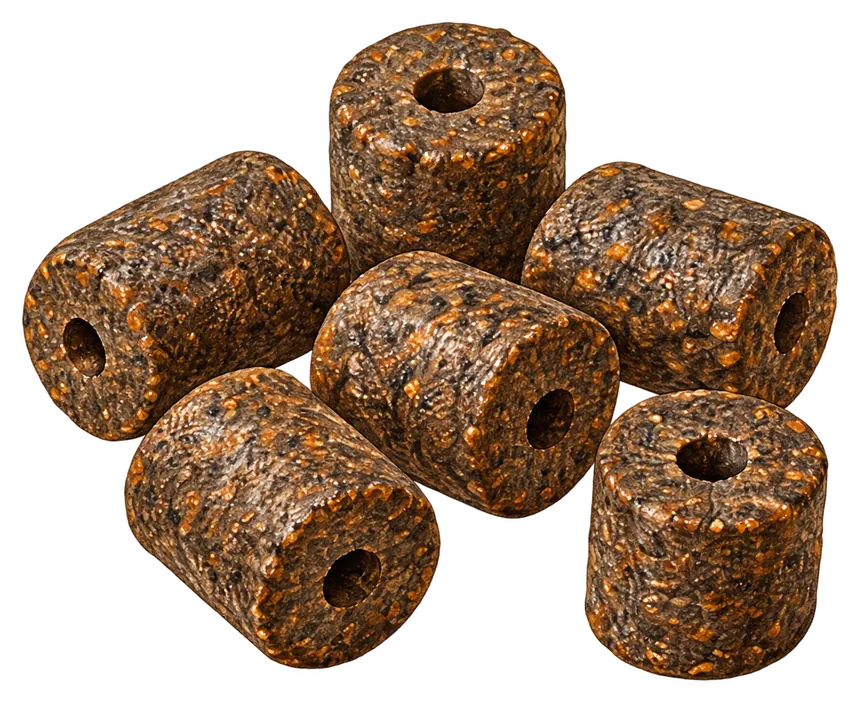 Pellets | Bottom | Stationary on the bottom, often in the feeder | you fish with a feeder or method feeder and want to give off scent by dissolving |
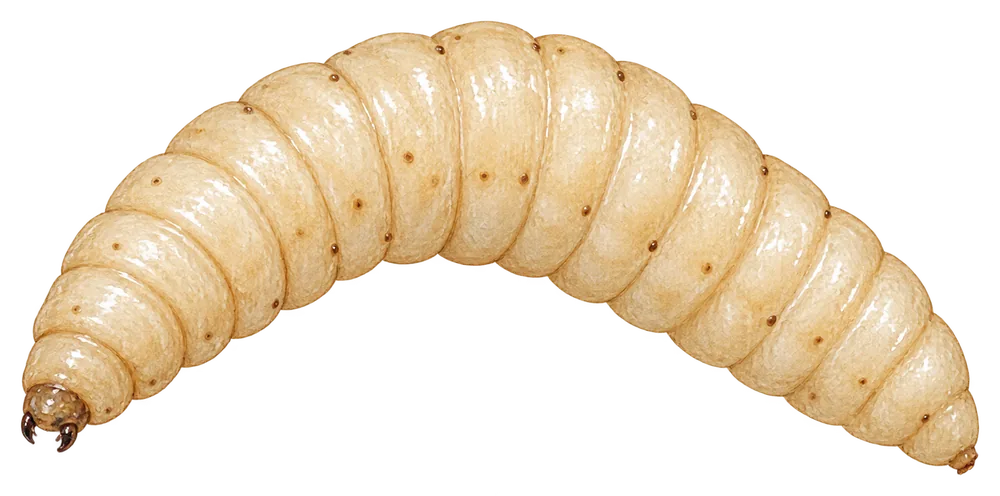 Maggots & larvae | Bottom to mid-water | Stationary on a float or ground rig, in the feed as an attractor | you catch roach and bream on a fine float |
What you need
- Carp or float rodFor particles on the hair a carp rod; for tinned corn, finer tackle is enough. More
- LineBreaking strain to suit the target fish; clearly stronger for carp than for roach. More
- Baiting needle and stopFor everything offered on the hair. More
- Bucket with lidCooked particles stay in their cooking water, covered and fresh. More
More on the method: float fishing, bottom fishing, carp fishing and baiting up and groundbait.
At a glance
Editorial assessment, not measured values.
If it does not work
Soak and boil for longer. Raw tiger nuts, hard corn and hemp do not belong in the water.
Offer a chain of several grains or switch to a tiger nut, which hardly any silver fish can crack.
The grains are sucked in one at a time, and a heavy chain drops through. An artificial grain at the end makes it lighter.
Feed little and often, a dozen grains after each bite. Top up only when fish are on the spot.
That is intended; after a few days a sugary slime forms. The nuts must stay covered by water while this happens.
Check the water rules (Gewässerordnung) and your fishing permit (Erlaubnisschein). Where feeding is banned, only the hookbait without baiting up remains.
Frequently asked questions
Is tinned sweetcorn enough?
Yes, tinned sweetcorn is ready to use straight away and catches almost all coarse fish. For carp, prepared angling corn stays on the hair better because it is firmer.
How do I prepare tiger nuts?
Wash, soak for at least 24 hours, then boil for 30 to 45 minutes. Without soaking, a longer boiling time is chosen. Leave them in their own cooking water.
When is hemp done?
When the seeds split and the white kernel shows. Before that they are soaked for about 12 hours; raw, they are ineffective.
How much sweetcorn should I feed?
Little and often: about a dozen grains after each bite. Too much conspicuous feed on the bottom makes the fish wary.
May I feed sweetcorn and particles?
That is set by the water. Some rules limit the amount, others ban feed or particles altogether. If in doubt, ask the club or the lessee.
How long does opened tinned sweetcorn keep?
Two days at most. Frozen it keeps longer; after thawing you should use it straight away.
Before fishing, the current permits, state rules and water rules apply: bait bans, number of hooks, closed seasons, protected species and catch limits can differ. Many federal states expressly ban live baitfish. Take bait remains and packaging away with you. All details are guide values without guarantee and do not replace legal advice.
Sources
- Blinker: Angeln mit Mais, das goldene Korn für Friedfische
- Blinker: Tigernüsse zum Angeln
- Blinker: Karpfenangeln mit schwerelosem Hartmais
- Rute & Rolle: Partikelköder, kleine Köder, große Wirkung
- Fisch & Fang: Wer entdeckte den Dosenmais?
- Fisch & Fang: Karpfen auf Tigernuss
- Fisch & Fang: Hanfboilies, nicht nur zur Winterszeit
- Fisch & Fang: Fangen ohne Futter
- Fisch & Fang: Herbstkarpfen, Partikel punkten
- Angling Times: How to use and prepare particle baits for carp fishing
- Angling Times: How to use hemp for fishing
- Angling Times: Tips to catch more fish using sweetcorn
- Angling Times: How to fish for carp with nuts
- Anglerverband Niedersachsen: Faktencheck Anfüttern
- Leibniz-IGB und LSFV Niedersachsen: Hakvermeidung von Schuppen- und Spiegelkarpfen
- Landesanglerverband Brandenburg: Gewässerordnung
The sources explain terms and basic principles. Presentation and values are editorial starting points and depend on water, weather and bait.
More plant-based baits
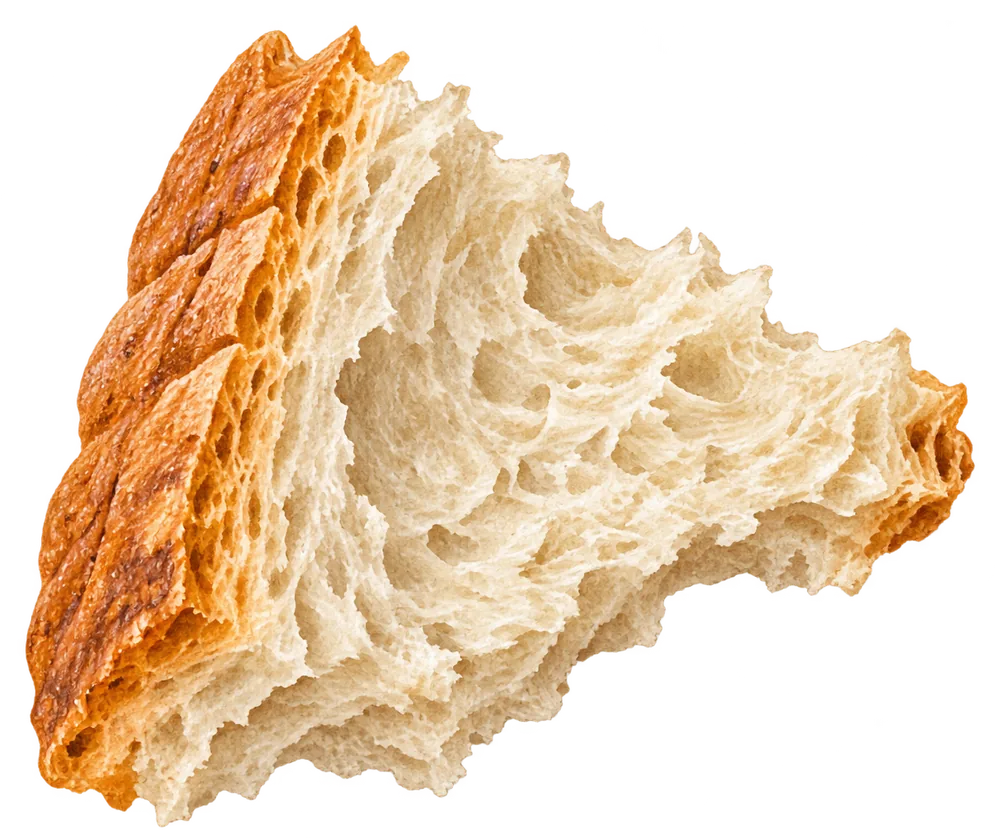 Bread
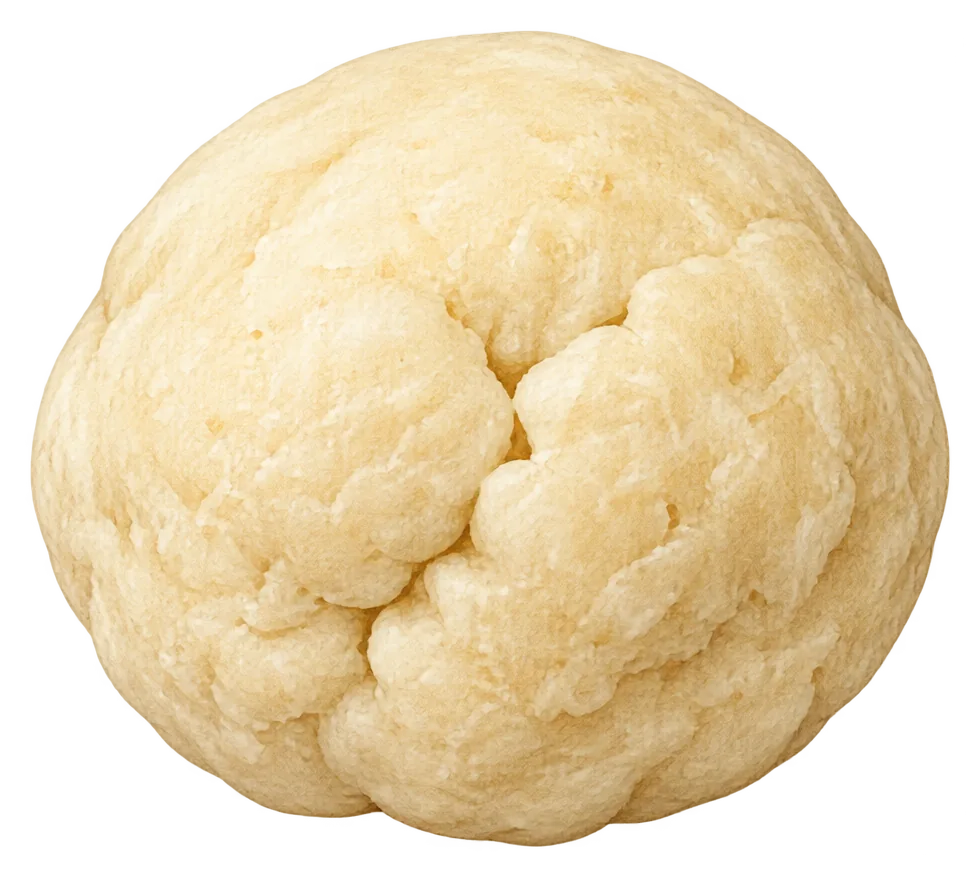 Dough paste
 Potatoes & fruit
 Cheese
Created with AI support from the sources named (AI notice). Last updated: 25 October 2026. Found a mistake? Write to us. Who is behind the site: About me.