
Knowledge · Lures
Cheese
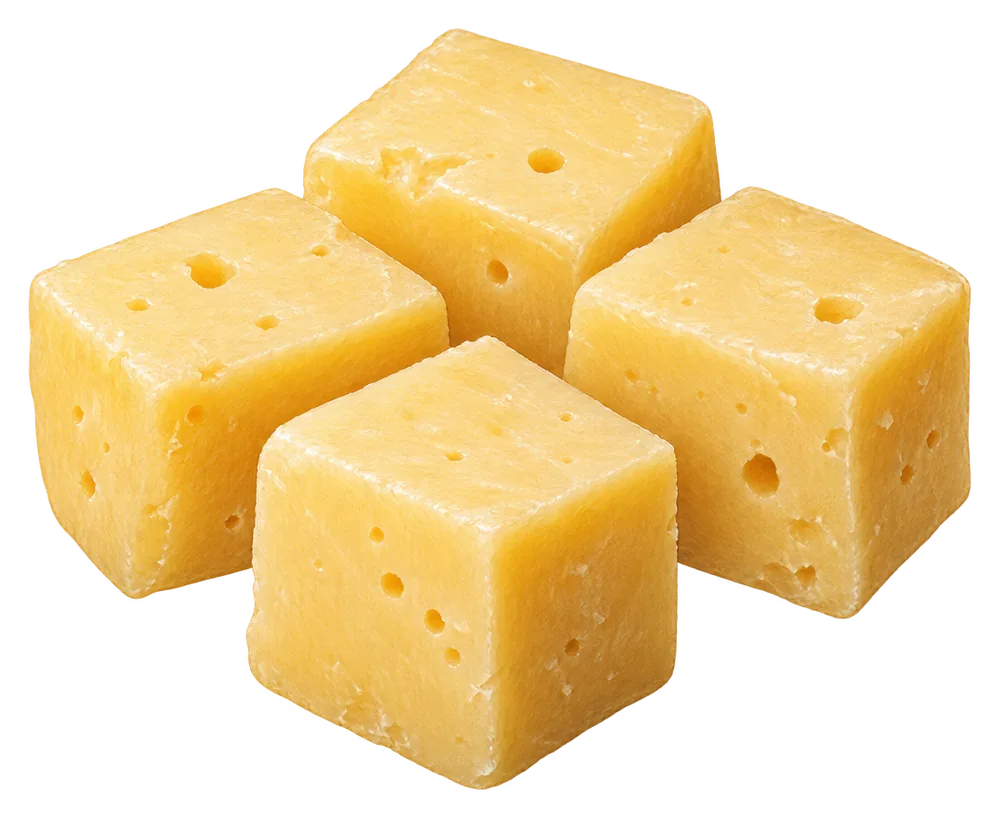
Plant-based baits · Stationary fishing with a float or on the bottom
Cheese smells strong, stays on the hook and is in every fridge. Barbel and chub take it as cubes on the bottom or as a soft paste under a drifting float. It is one of the classic river baits, and cheese paste is among the best baits for chub in winter.
- Water depth
- Bottom
- Presentation
- Stationary on the bottom, paste also drifting
- Fishing method
- Waiting game with a float or on the bottom
- Category
- Plant-based baits
How it works
Cheese attracts with its strong smell and stands out even without a baited spot. Strictly speaking, it is not a plant-based bait, but it is presented like bread and dough. Angling clubs list it in their tackle instruction among the other baits, alongside bread, dough, pasta and bacon. Barbel take the bait without much fuss, which is why a free hook point counts.
Experiences differ on the type. One article names young Parmesan in a piece as the best choice for barbel, because Edam and Gouda smell weaker. Another recommends medium-aged Gouda on the river, because young is too soft. In strong current, however, even this flies off the hair, while hard mountain cheese holds. Firm and strong-smelling is therefore the direction to take.
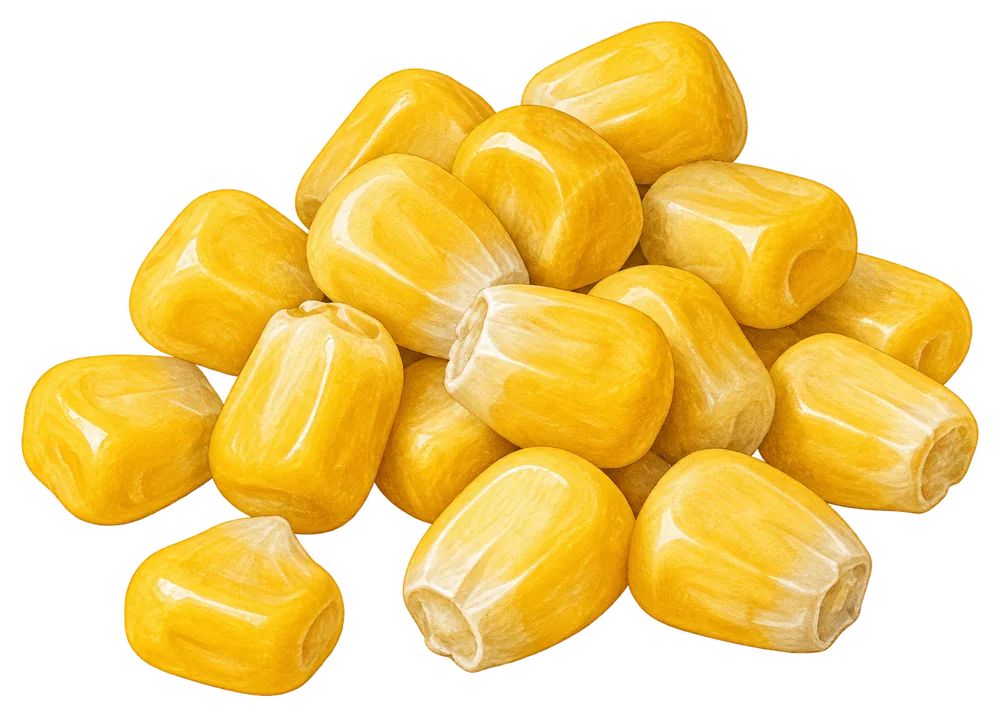
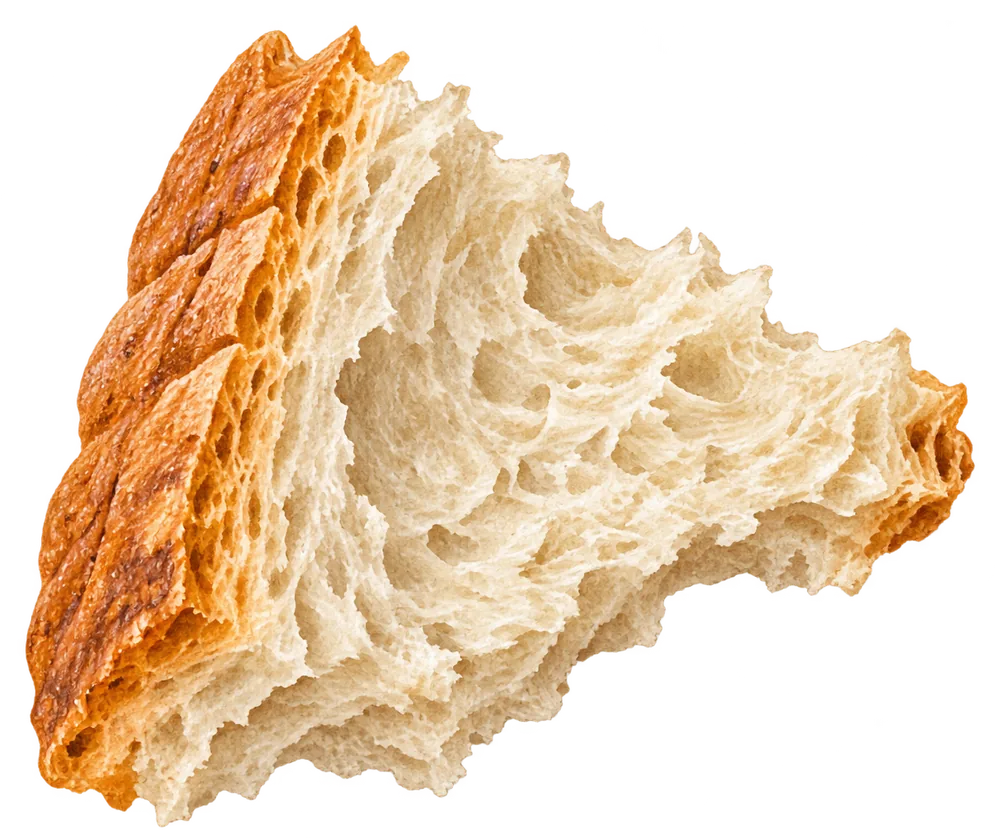
You can knead a cheese paste from cheese without the rind and white bread without the crust. It is one of the winter baits for chub, but turns hard quickly in cold water. It holds better with a dough spiral on the hook or on the hair, and a little cotton wool in the dough helps too. According to anglers‘ experience, barbel like to eat yellow baits such as cheese and sweetcorn; nobody knows why.
How to present the bait
Stationary on the bottom, paste also drifting
Schematic illustration, AI-generated.
- cast out
- lies on the bottom or hangs from the float
- wait for the bite
- re-bait
Anatomy
The points on the picture above explain the most important parts – on hover or tap.
- Cubes: Small and cut evenly, with trimmed corners, directly on the hook.
- Hard cheese: Mountain cheese or older Gouda holds better in the current than soft cheese.
- Cut edge: This is where the hook point sticks out freely, otherwise you get missed bites.
Rig in three steps
- 1. Cubes on the hookThread the cubes on staggered and leave the point free. On a hair rig they hold even in current.
- 2. Bottom rig on a riverRunning or fixed lead on the mainline, just heavy enough for the bait to stay put. Running-weight rig step by step
- 3. Paste under the floatSoft cheese dough drifts under the float with the current and stays on the hook with the point free. Float rig step by step
Drawings: AI-generated, schematic.
When the target fish are in season
Hardly any chancePossibleGoodPeak seasonValues from the catch calendar.
When and where
Cheese is a river bait. For barbel, stretches with an even flow and no strong turbulence are considered promising, and in the current the rig with a triangular or fixed lead lies on the bottom. Barbel like sun, so a session around midday can pay off. The best prospects for specimen fish come at low water in late summer and early autumn.
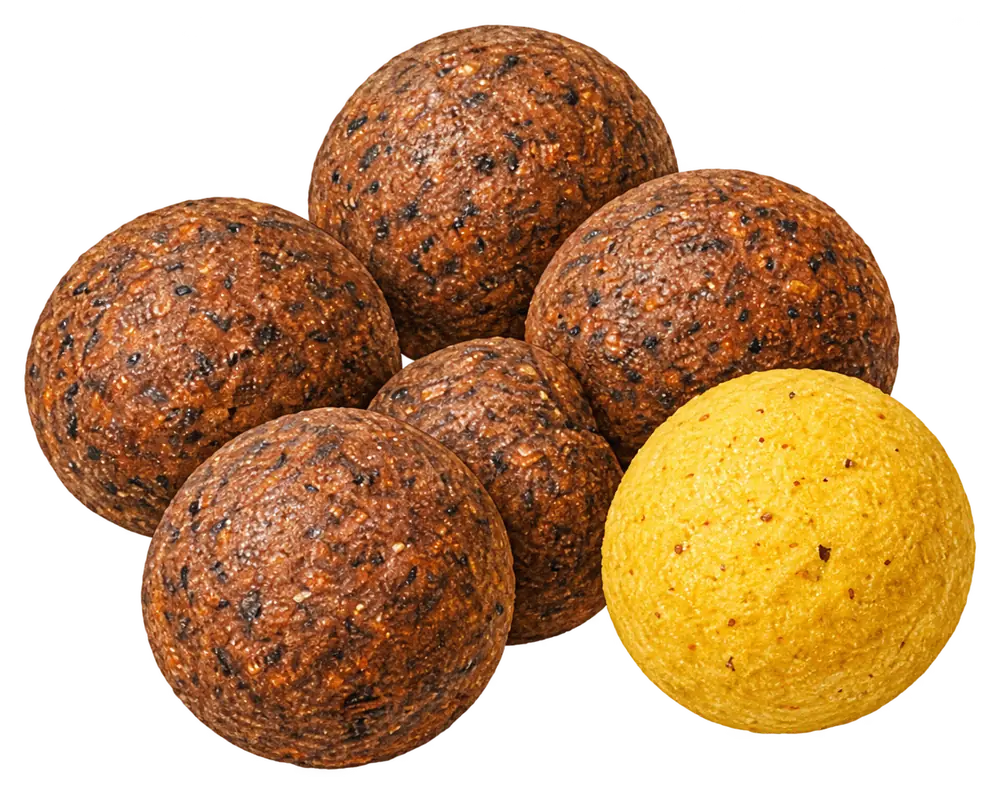
For chub, cheese is mainly a winter topic. Then a bait lying still usually catches better than a drifting one. At high water, the fish hold in slack water, for example behind flooded bushes. Cheese, dough or boilies on the hair mainly catch on long sessions.
How to choose cubes, hook and weight
- Cut the cubes Cut the cheese into even cubes.
- Trim the corners Trim the corners of the cubes slightly.
- Thread them offset Thread the cubes onto the hook offset.
- Leave the point free Leave the hook point free, otherwise you get missed bites.
Cut even cubes, trim the corners slightly and thread them onto the hook offset. Barbel and chub fight hard, so anglers use heavy-wire hooks, and for barbel also at least 0.25 monofilament or braided line. Shapes and sizes are covered under fishing hooks.
Leave the hook point free, otherwise you get missed bites. This applies to cubes as well as dough balls. The questions of the state angling exam (Fischerprüfung) in Bavaria advise against treble hooks with dough baits for reasons of fish-friendly practice.
Choose the weight just heavy enough for the bait to stay in place. In strong current you need more weight for barbel, and triangular leads hold better on the bottom. After casting, a bow of line should form so that the chub feels no resistance when testing.
Cube, paste or hair: three ways to the fish
Cubes suit the bottom weight, the soft paste under the drifting float suits chub. On a hair rig, one angler caught a Rhine barbel on a piece of mountain cheese that held even in the current.
Cheese is an option even where groundbaiting is banned. Strong-smelling baits attract fish without feed, and large dough balls release their scent slowly. Whether groundbaiting is allowed is set out in the water rules, and some bans serve to protect the water.
How to store cheese at the water
The Bundesinstitut für Risikobewertung lists cheese among the foods of animal origin that should be kept in the fridge. On an outdoor picnic, perishable food has to be kept sufficiently cool. At the water, that means: cool bag, small portions, do not leave it in the sun.
Anyone who baits with cheese follows the rules of the water. The water rules of the Landesanglerverband Brandenburg limit, for example, the amount of feed per fishing day. The exam questions in Bavaria rate excessive groundbaiting as a burden, whereas the Anglerverband Niedersachsen often considers eutrophication by anglers unlikely.
Keep it fresh and present it
Keeping it fresh: store natural baits cool and in the shade, take only as much as necessary and do not tip leftovers into the water. When baiting up, the hook point must stay free so that the strike takes hold.
Cheese, or another bait?
| Baits and lures | Depth | Presentation | Take this lure if … |
|---|---|---|---|
| Cheese | Bottom | Stationary on the bottom, paste also drifting | this page |
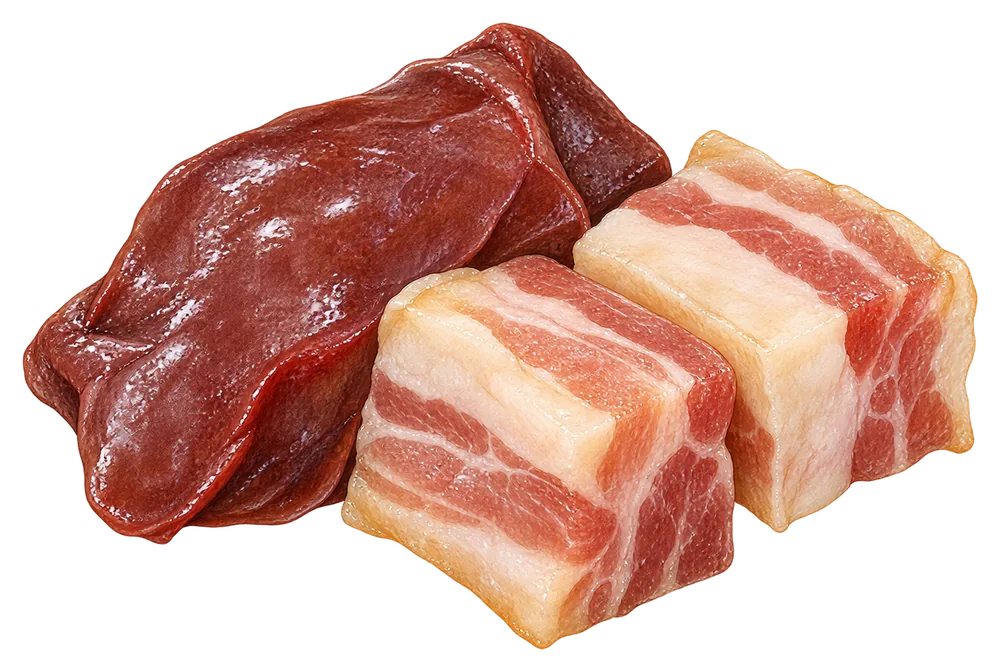 Offal & meat | Bottom | Stationary on the bottom, held at depth in the current with point weighting | in winter you are looking for a heartier bait for chub |
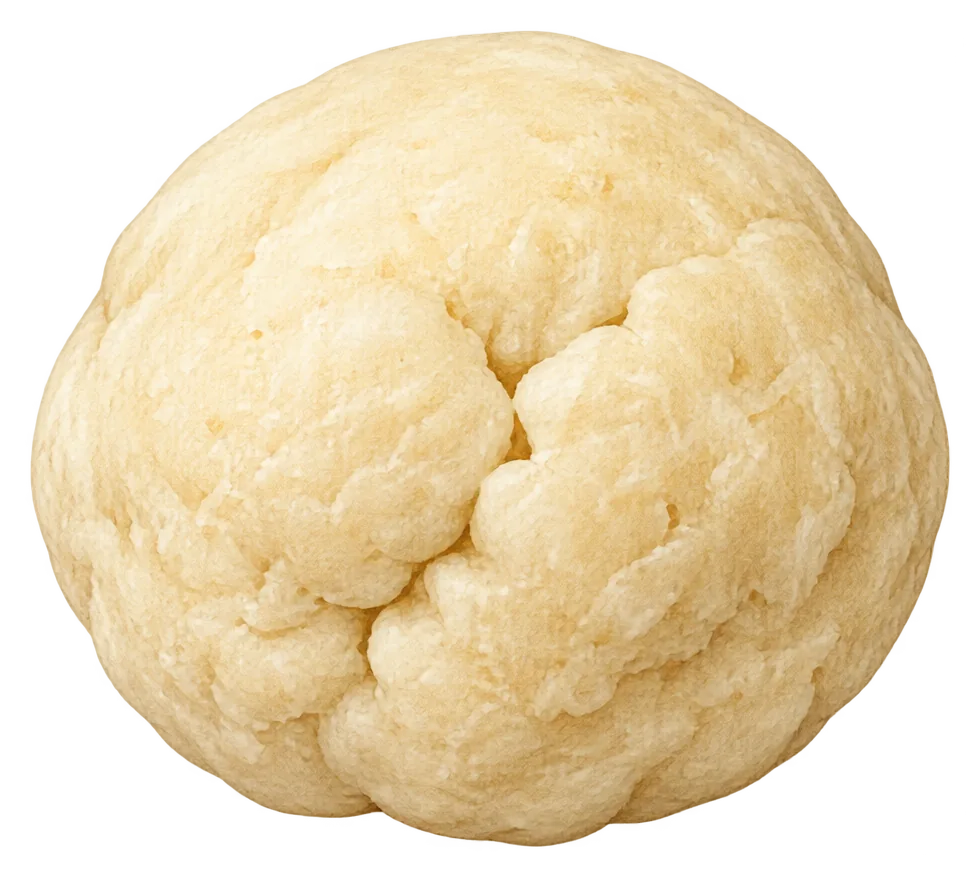 Bait paste | On the bottom or buoyant | Stationary on a float or on the bottom, towed slowly on a trout lake | you want to season and shape the bait yourself |
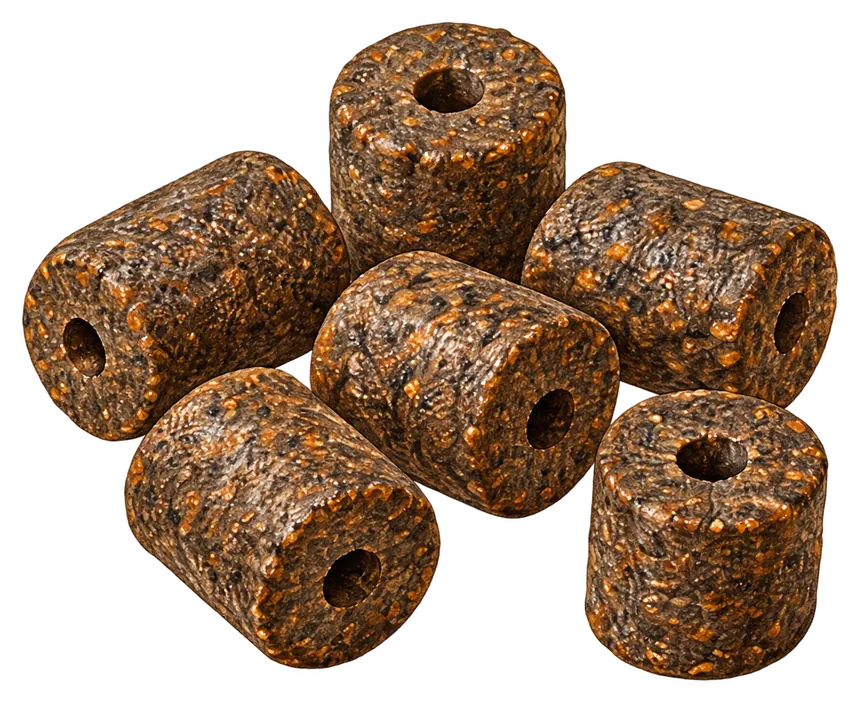 Pellets | Bottom | Stationary on the bottom, often in the feeder | you fish for barbel with a feeder |
What you need
- Bottom or feeder rodFor current, weight and a fighting barbel. More on this
- LineAbrasion-resistant, for barbel at least 0.25 mm monofilament. More on this
- HookHeavy-wire and sharp, point free. More on this
- Cool bagKeeps the cheese cool at the water. More on this
More on the method: Float fishing and Bottom fishing.
At a glance
Editorial assessment, not measured values.
If it does not work
The hook point was hidden in the cheese. Leave it free, otherwise you get missed bites.
Use a harder cheese such as mountain cheese, use a dough spiral, or knead a little cotton wool into the paste.
In cold water, soft cheese dough quickly turns tough. Shape small balls and keep the hook point free.
Choose the weight only as heavy as needed for the bait to stay put, and leave a bow of line. Only strike when the rod tip bends over.
Take a triangular lead or a heavier fixed lead and put the rig down just in front of the rock armour.
Keep it cool in the bag and take out only small portions. Stick to a firmer type.
Frequently asked questions
Which cheese is suitable?
For barbel, use young Parmesan in one piece or medium-aged Gouda; in strong current, hard mountain cheese holds better. Edam works too, but smells weaker.
Cubes or cheese paste?
Cubes for the bottom, soft paste for a drifting float. You knead the paste from rindless cheese and white bread without the crust; in winter it quickly goes hard.
Which fish bite on cheese?
Mainly barbel and chub. For chub, cheese paste is considered a good winter bait; barbel bite with the best prospects at low water in late summer.
Does cheese catch without groundbaiting?
Anglers report that strong-smelling baits such as cheese cubes attract coarse fish even without feed. Where groundbaiting is banned, this is stated in the water rules (Gewässerordnung).
How do I store cheese at the water?
In a cool bag and in small portions. The Bundesinstitut für Risikobewertung says easily perishable food needs adequate cooling during longer stays outdoors.
Before fishing, the current permits, state rules and water rules apply: bait bans, number of hooks, closed seasons, protected species and catch limits can differ. Many federal states expressly ban live baitfish. Take bait remains and packaging away with you. All details are guide values without guarantee and do not replace legal advice.
Sources
- Blinker: Alles Käse, Barben mit Käse
- Blinker: Steckbrief Döbel
- Fisch & Fang: 50 Barben-Tipps
- Fisch & Fang: 50 Tipps für das Döbelangeln
- Fisch & Fang: Fangen ohne Futter
- Rute & Rolle: Steckbrief Barbe
- Fischereiverein Löningen: Gerätekunde zur Fischerprüfung
- Landesanstalt für Landwirtschaft Bayern: Fragenkatalog zur Fischerprüfung
- Bundesinstitut für Risikobewertung: Korrektes Kühlen von Lebensmitteln
- Anglerverband Niedersachsen: Faktencheck Anfüttern
- Landesanglerverband Brandenburg: Gewässerordnung
The sources explain terms and basic principles. Presentation and values are editorial starting points and depend on water, weather and bait.
More plant-based baits
 Sweetcorn & particles
 Boilies
 Bread
 Potatoes & fruit
Created with AI support from the sources named (AI notice). Last updated: 23 October 2026. Found a mistake? Write to us. Who is behind the site: About me.