
Knowledge – Fish
Chub (Aitel): Identification, lies, baits
The chub (Squalius cephalus), known as Aitel in Bavaria and Austria, is a carp-family fish of streams and rivers. It eats almost anything, does not rest in winter and is caught all year round. It stays wary all the same: anyone who wants to catch it must approach the water quietly and know the spot.
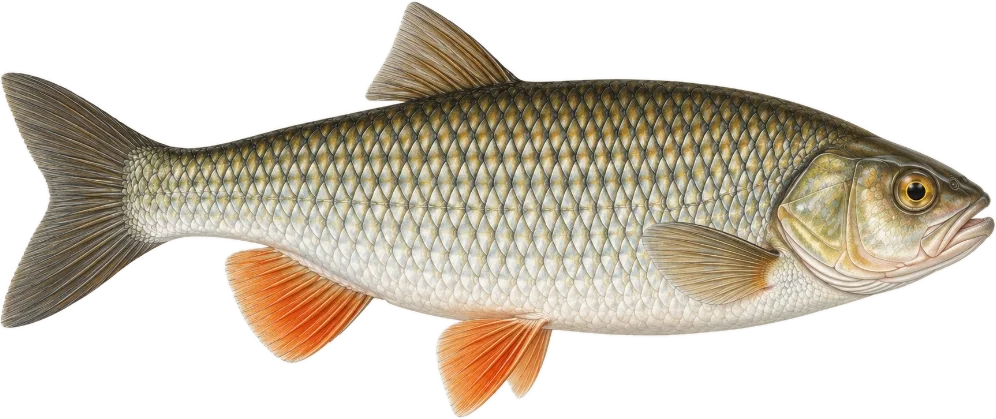
In short: The best time to catch chub is from July to October, mainly in the morning and evening. Good spots on a river: an undercut bank, pools and behind stones. Proven baits: fruit such as cherries, luncheon meat, cheese, bread flake, worms and maggots; big fish also on baitfish, small crankbaits and flies. Step by step: Fishing for chub.
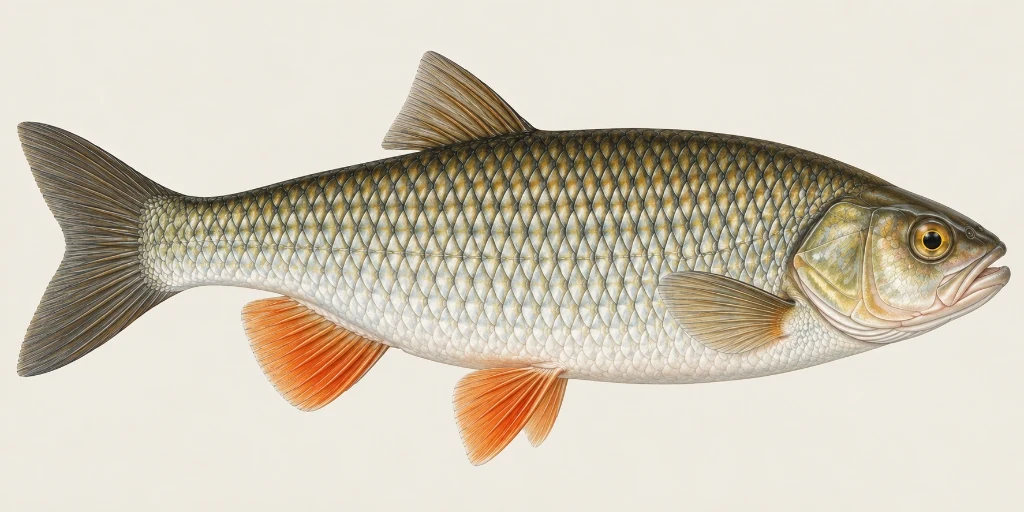
- Large head, wide terminal mouth
- Large scales with a dark edge forming a net-like pattern
- Anal fin curving outwards, pelvic and anal fins reddish
Catch chances through the year
- Hardly any chance
- Possible
- Good
- Peak season
- Spawning (observe the closed season)
Editorial assessment for waters in Germany, not a measured value and no guarantee. Spawning time is not the same as the legal closed season.
Species profile and sources in the catch calendarAll species compared month by monthThe rules of your federal state
How to recognise a chub
The chub has an elongated, almost round body and a large, broad head, with a terminal mouth cleft wide, the corner of the mouth lying almost level with the eyes. The large scales are edged dark at the rear. This produces the net-like pattern by which you can identify it most reliably.
The back shimmers silver to silvery grey, and the pelvic and anal fins are reddish to orange. The anal fin gives it away most clearly: its rear edge is convex.
On average the chub is 30 to 50 centimetres long. From 55 centimetres and five pounds anglers speak of a specimen fish. There are fish over 70 centimetres. FishBase gives 8 kilograms as the highest published weight and 22 years as the highest reported age.
Young fish in particular are easily confused with the dace and the ide. A look at the anal fin decides: in the chub its edge is convex, in dace and ide it is drawn inwards.
The ide has clearly smaller scales and a narrower mouth cleft. In the dace the mouth is underslung. You recognise the asp by its upturned mouth pointing upwards. The chub has a terminal one.
Side by side
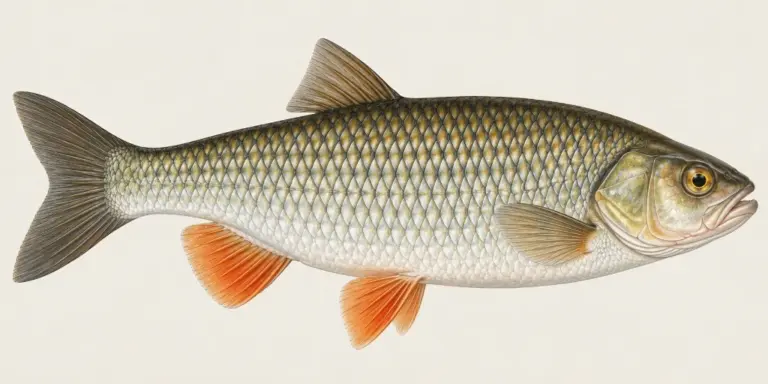
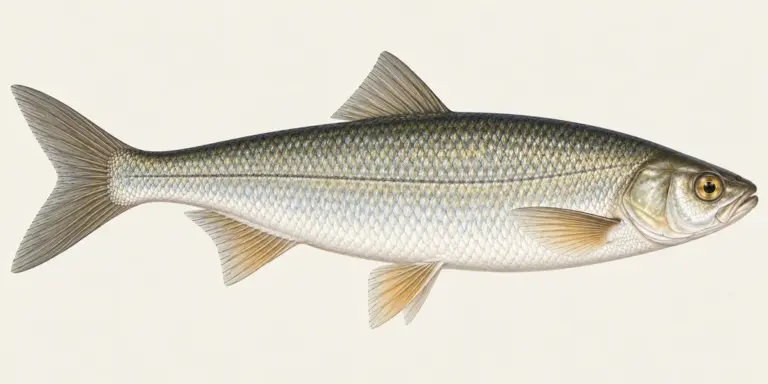
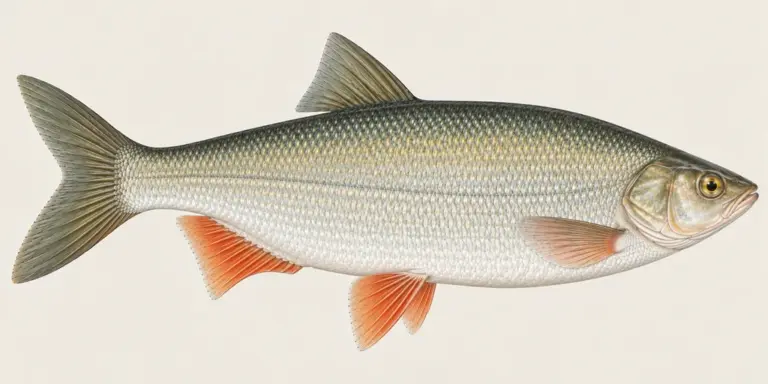
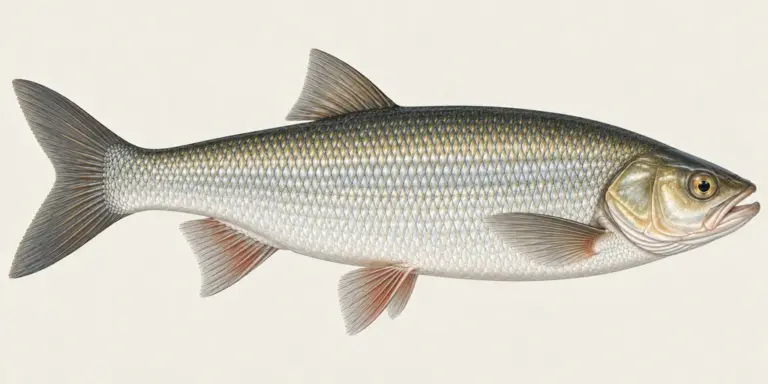
AI-generated illustrations.
Where the chub lies
The chub lives in streams and rivers from the trout zone to the bream zone (more on the zones under Fish zones in the river). According to FishBase it is most common in small rivers and larger streams of the barbel zone with pools and shallow riffles. It is rare in lakes and brackish water.
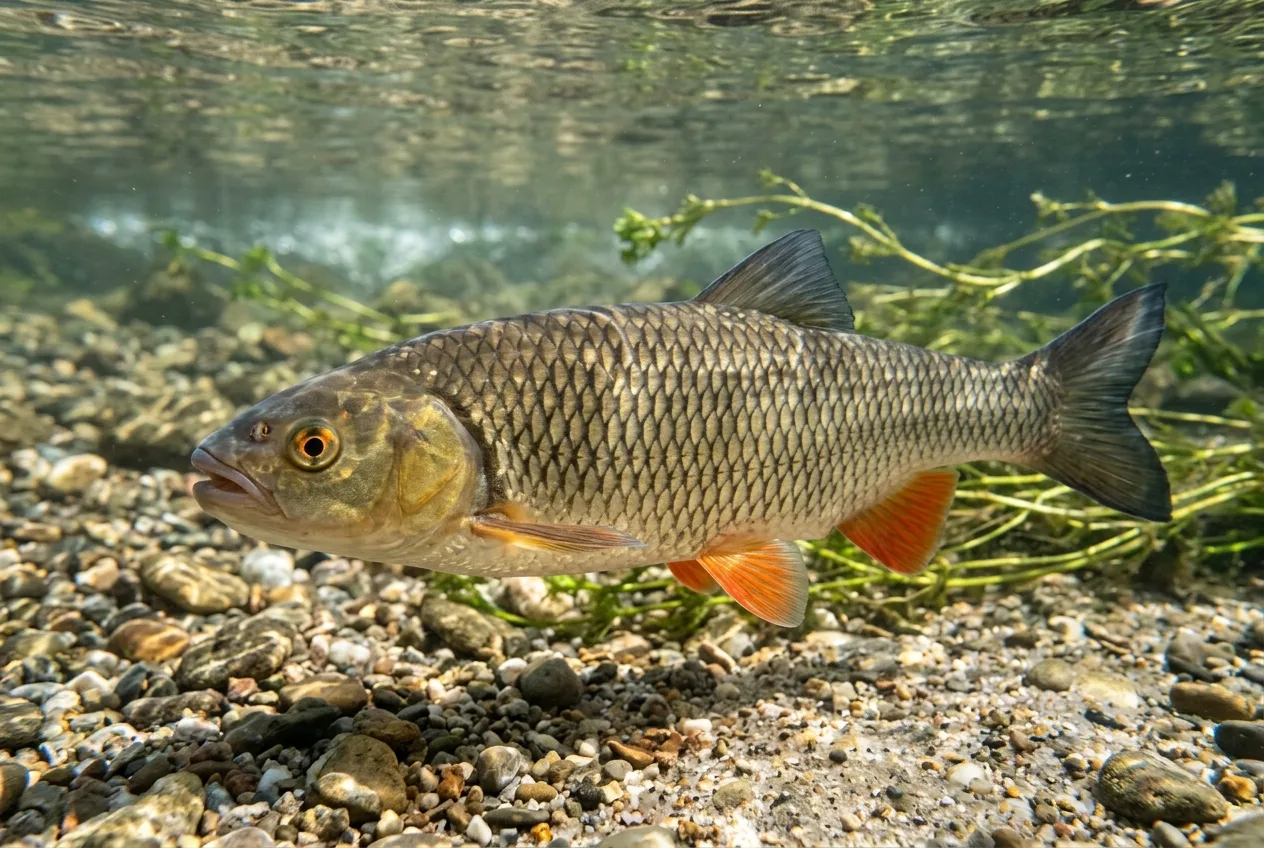
Young fish keep together in shoals at the bank. Older chub usually stand alone. They seek cover: overhanging branches, drifted debris and deep pools. Where they lack this, they move out into greater depths. They prefer calm, ponded stretches above weirs to fast current, and deep pools to shallow riffles.
In winter and at high water they lie in the slack water behind flooded trees and bushes. Then you do better on the river than on a lake.
Holding spots in the picture
Choose the season and time of day: the picture shows where the species stands then. Spots outlined in red apply only in the chosen season. Tap a fish or a spot in the list to bring it closer. The picture is schematic and AI-generated, every water is different.
Chance of a catch in springgoodSpawning, observe the closed seasons
Catch chance in summerPeak season
Catch chance in autumnPeak season
Catch chance in wintergood
- J
- F
- M
- A
- M
- J
- J
- A
- S
- O
- N
- D
Spawning season
Active time Chub are considered sensitive to light and are often caught at sunrise and sunset, in autumn mainly in the evening.
Not prime time Chub are considered sensitive to light and are often caught at sunrise and sunset, in autumn mainly in the evening.
Active time Chub are considered sensitive to light and are often caught at sunrise and sunset, in autumn mainly in the evening.
Not prime time Chub are considered sensitive to light and are often caught at sunrise and sunset, in autumn mainly in the evening.
In the river
Undercut bank, overhanging branches, timber
Chub (Aitel) is found here all year round.
Slack water behind rocks
Chub (Aitel) is found here all year round.
Gravelly shallow (riffle)
Chub (Aitel) is found here only in spring.
Pools, deep spot
Chub (Aitel) is found here all year round.
Current seam
Chub (Aitel) is found here only in autumn.
Calm bay with aquatic plants
Chub (Aitel) is found here all year round.
Large chub usually live singly at lies: under overhanging trees and bushes, at drifted debris, under bridges and in deep pools. Add to that slack areas behind larger stones and small bays. The chub prefers calm impounded stretches above weirs to fast current.
Spring: catch chances good according to the catch calendar. Spawning falls in this period, so observe closed seasons. Spawning takes place in fast-flowing water over a gravel bed.
Summer: catch chances according to the catch calendar good in June, peak season in July and August. In summer the chub sometimes bites poorly. With rich plant growth it then eats a lot of plant food.
Autumn: catch chances according to the catch calendar peak season in September and October, good in November. When the weed recedes, overhanging scrub and undercut banks are especially sought after. Current edges at groynes and stream mouths are also considered good spots in autumn.
Winter: catch chances according to the catch calendar good. The chub does not hibernate and feeds even on very cold days. The colder the water gets, the deeper it holds and the more sluggish it becomes.
Depth: Young chub hold in shoals near the surface. The colder the water, the deeper you fish.
Size comparison: AI-generated drawing, schematic.
What it eats and how it spawns
The chub takes what the water offers. Young fish eat mainly small invertebrates and plant matter, and later fish, crayfish and amphibians are added. Older fish also eat fruit over the course of the year. According to FishBase, large chub live mainly on fish. That is why they occasionally take a baitfish actually meant for the pike.
Spawning takes place in spring between April and June, in fast current over gravel, rarely among water plants. The eggs stick to stones, roots and plants. The males then carry a spawning rash of whitish, granular skin growths. Without gravel bars with water flowing over them, the chub therefore lacks a spawning site.
Chub have a well-developed early-warning system. After the third fish from a group at the latest, the others become wary.
When it bites
The chub does not rest in winter and can be caught all year round. In winter you do best on the river with a bait lying still. Anglers report that particularly big fish often bite at dusk. Over the day the rule is: either the chub bites around the clock or not at all.
In summer it sometimes bites poorly. One explanation is plant growth: when there is plenty on offer, the chub partly feeds on plant matter. Then, as experience shows, you often catch big chub on bread, flies and cherries.
Rule of thumb: when the water temperature falls, present the bait deeper and more quietly.
Today’s catch index needs JavaScript. Season and spawning time are in the catch calendar.
You will find the monthly overview of all species and the water temperature check in the catch calendar.
From the blog: Fishing in November: which fish bite now and where I look for them · Riprap and groynes: reading current from the bank, working lures and freeing snags · Freshwater fish in Germany: which species you catch where
How to catch it
Step by step: Fishing for chub: tips on bait, rig and tackle – season, spots, bait, tackle and rules on one page.
In winter, touch legering with a bottom weight is the standard method, whether with the feeder rod or a soft quiver-tip rod. You choose the bottom weight as light as possible, just heavy enough for the bait to stay in place. Leave a bow of line between the rod tip and the weight, so that the chub feels no resistance when it samples the bait. You will find instructions for setting up under Feeder fishing and Bottom fishing.
For line the trade press names monofilament of 0,20 to 0,25 millimetres, and for hooks heavy-wire eyed hooks in sizes 2 to 10. On a small stream a line of up to 0,20 millimetres is often enough. Luncheon meat (large cubes are no problem), cheese paste and, in murky high water, bread flake all work well as bait. Worms, maggots and sweetcorn are added to these. More on this under Offal and meat, Cheese and Bread. With large baits you wait with the strike until the rod bends.
In summer fruit works. Sweet cherries and grapes on a small hook under the float have tempted shy fish before now (Potatoes and fruit). On small rivers you fish on the move with the drifting float or a rolling bottom weight and walk on after each catch. If the chub are sipping bread from the surface, hang the flake just under the float. The drifting float catches in winter too (Float fishing): a slim float with a carrying capacity of 2 to 4 grams drifts held back with the current, and short stops make the bait rise.
Large chub also take predator baits: baitfish and small crankbaits, best floating models that you let the current carry under obstacles. When spinning, small spinners, spoons and soft plastics also catch fish, and in spring about one in eight reported chub is a lure catch. With the fly it takes bushy dry flies and nymphs (Fly fishing).
Small chub fight in a lively way but briefly. From about three pounds they are tough and make for obstacles. So take a large landing net with a long handle, especially on steep stream banks. How to land the fish gently is explained under Landing and unhooking fish.
Check the cover first: Look at overhanging branches, debris and deep pools. Present the bait upstream and let it drift into the lie.
Move on after three fish: A hooked fish unsettles the whole shoal. Do not stay put, but head for the next spot. Keep back from the bank and do not wave your rod about.
Big bait, late strike: In winter the chub takes big mouthfuls. With meat and cheese baits, wait until the tip bends clearly, and have a large landing net ready.
Suitable lures
Fruit such as cherries, luncheon meat, cheese, bread flake, worms and maggots; large fish also take a deadbait, small plugs and flies.
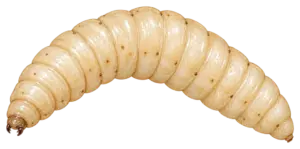
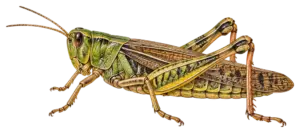
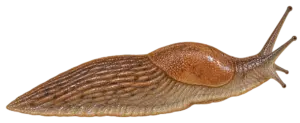
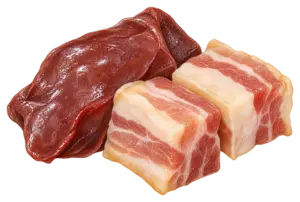
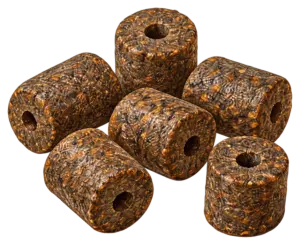
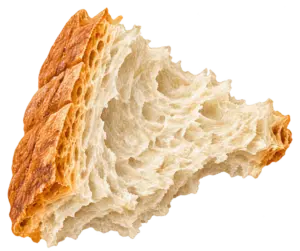
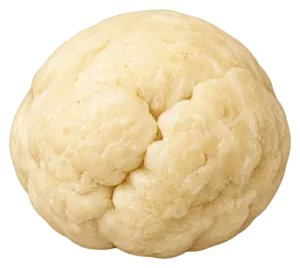
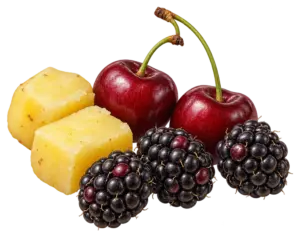
AI-generated illustrations. A click opens the lure’s page.
Also suitable: cheese, spinner, dry fly.
Rigs for these baits: running leger rig, float rig.
How chub tastes and what to do with it
As a food fish the chub is not a first choice. FishBase rates its flesh as of little value. If you still want to eat it, you may only do so if the closed season (Schonzeit), minimum size (Mindestmaß) and fishing permit (Erlaubnisschein) allow it.
How to gut and prepare it is covered in Gutting fish and Filleting fish. Another use is shown in Smoking fish.
What you need to observe
Closed seasons (Schonzeit), minimum sizes (Mindestmaß) and harvest windows are set by the federal states (Bundesland), and on many waters additionally by the club or leaseholder. They differ depending on the water and the time of year. We give figures only with a date and a source; always binding are the fisheries regulation of your federal state and your fishing permit (Erlaubnisschein). You will find a list of links to the official sources in the catch calendar.
A fish of legal size that you want to keep is stunned and killed straight away in line with animal welfare rules (Stunning and killing a fish). Protected fish, undersized fish and fish that are too big under a slot limit are unhooked with wet hands, ideally in the water, and returned gently (Returning a fish).
If you go after big chub with a baitfish: many federal states ban fishing with a live baitfish, and in Bavaria it is stated explicitly in the implementing regulation to the fisheries act. Only a dead baitfish is allowed, where your state law permits it (Deadbait rig).
The IUCN lists the chub worldwide as least concern, assessed in 2022 (FishBase). That does not replace the closed season where you fish.
What closed season, minimum size and harvest slot mean and where to find them is explained on the page Closed season and minimum size explained.
What state law says about the closed season and minimum size for this species is in the „Auf einen Blick“ box on the state pages for Berlin, Bremen and Thuringia. For the other states our overview does not list this species; there the state fisheries regulation (Landesfischereiverordnung) applies.
Frequently asked questions (FAQ)
Which baits catch chub in winter?
Meaty baits on the bottom: luncheon meat, cheese paste, liver or worms. In cloudy high water a bread flake stands out. The bait should lie still, and with big mouthfuls you only strike once the rod bends.
How can I tell a chub from an ide?
Most reliably by the anal fin: in the chub its edge curves outwards, in the ide inwards. The chub also has larger scales with a dark edge and a bigger mouth.
Is the chub a predator?
It eats almost anything, from insects to fruit. As it grows, fish increasingly dominate. Large chub therefore take baitfish and small plugs.
Sources
The rating of catch chances is an editorial assessment. The facts come from these sources, and the text is worded in our own words. The illustration is an original design by Angel Momente in the style of a natural history plate (AI-generated, see the AI notice).
- Landesfischereiverband Bayern: Fischlexikon (Laichzeit, Lebensraum, Nahrung, Aktivität)
- FishBase: Squalius cephalus (Höchstalter, Laichplätze, IUCN-Status)
- NÖ Landesfischereiverband: Fischarten in Niederösterreich, Aitel (Kennzeichen, Unterscheidung, Fangmethoden)
- Land Hessen (HLNUG): Fischökologische Untersuchung der Diemel, Artgutachten, Kapitel Döbel
- Fischereibehörde Sachsen: Artenkunde, verwechselbare Fischarten (Döbel, Hasel, Aland)
- Bayerische Landesanstalt für Landwirtschaft: Prüfungsfragen zur Staatlichen Fischerprüfung 2023/2024 (Maulstellung, verbotene Fangmethoden)
- Fisch & Fang: 50 Tipps: Döbel-Quickie (Winter, Platzwahl, Montage, Köder)
- Fisch & Fang: Pirsch auf Döbel & Co. (Wanderangeln an kleinen Flüssen)
- Blinker: Steckbrief Döbel (Standplätze, Verhalten, Köder)
- Blinker: Winter-Taktik für dicke Döbel (treibende Pose)
- Blinker: Die besten Köder für Döbel im Frühjahr (Anteil der Kunstköder an den Fängen)
- Wikipedia: Döbel
- Blinker: Döbelangeln im Herbst, 10 Tipps (Standplätze, Tageszeit)
- Wikipedia (englisch): Squalius cephalus (Lichtempfindlichkeit, Fressen im Winter)
Created with AI support from the sources listed. Figures only appear in the text if a source gives them. Last updated: 23 November 2026. Found a mistake? Write to us. Who is behind this site: About me.
More in the lexicon
- All fish species at a glance
- Catch calendar – month, water temperature and profile for 93 species
- Line calculator – breaking strain after the knot, drag guideline, backing
- Angling methods