
Knowledge – Fish
Grass carp: Identification, origin, law and fishing
The grass carp (Ctenopharyngodon idella), also called Weißer Amur or Grasfisch in Germany, comes from the large rivers of East Asia. It was introduced to Germany in 1965 to keep ponds free of water plants. It does not breed here by itself, and all stocks go back to stocking. In high summer it is a sought-after, powerful sport fish.
In brief: You catch the grass carp best in August, above all in the morning and evening. Good spots on a lake: weed beds and open water; on a river: groyne pockets and a calm bay. Proven baits: on the bottom hard sweetcorn and tiger nuts on the hair, and on waters heavily fished with boilies, boilies too. Step by step: Fishing for grass carp.
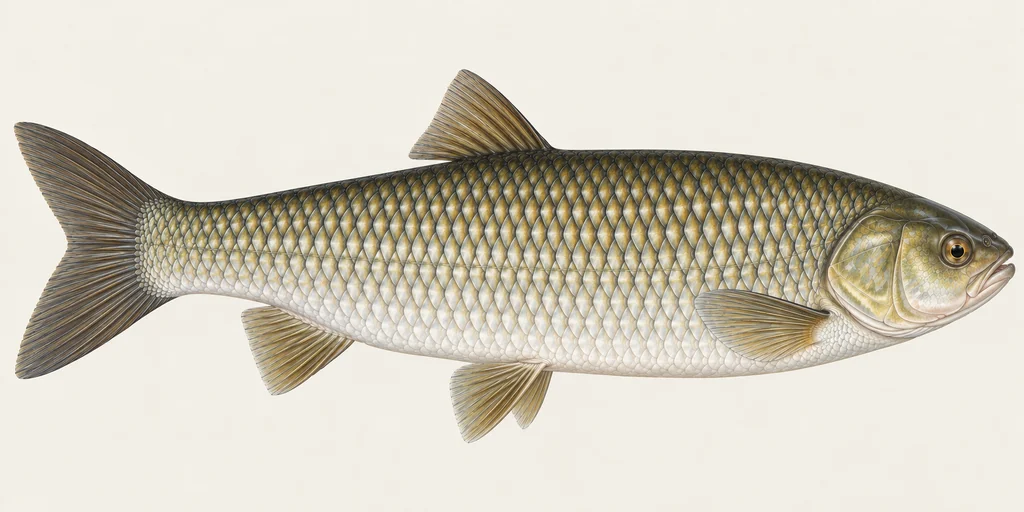
- Broad head with a blunt snout, deep-set eyes and a slightly inferior mouth without barbels
- Large scales with a dark edge forming a net pattern
- Elongated, cylindrical body with a short dorsal fin
Catch chances through the year
- Hardly any chance
- Possible
- Good
- Peak season
- Spawning (observe the closed season)
Editorial assessment for waters in Germany, not a measured value and no guarantee. Spawning time is not the same as the legal closed season.
Species profile and sources in the catch calendarAll species compared month by monthThe rules of your federal state
How to recognise it
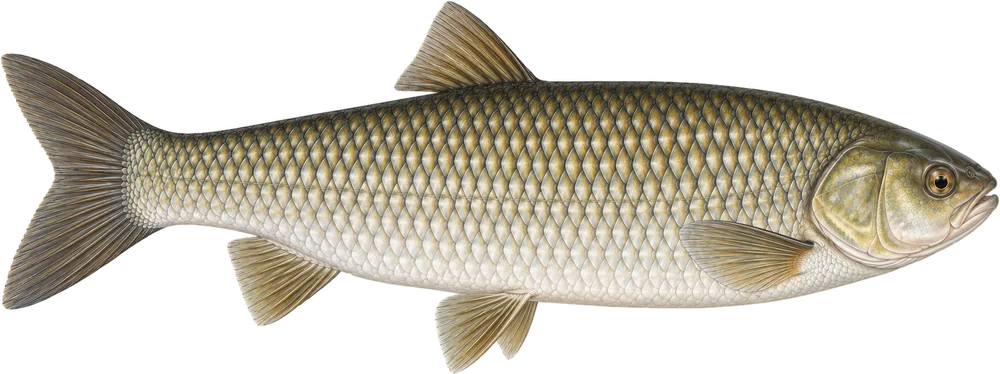
The grass carp has an elongated, almost spindle-shaped, nearly cylindrical body with a rounded belly. The snout is blunt and very short, the mouth slightly inferior, hard and without barbels. The scales are large and firm. The back is olive green to brassy, the flanks are lighter, the belly silvery white to yellowish. The dorsal fin is short and carries 10 to 11 soft rays.
According to Saxon figures, grass carp can grow to 1,50 metres long, weigh 45 kilograms and live for more than 20 years, and FishBase gives the same maximum age of 21 years. The angling press reckons with 130 centimetres as the maximum. In ponds the fish reach about 50 grams after the first year, up to 500 grams after the second and about 2 kilograms after the third summer. They mature after four to eight years, depending on water temperature.
It differs from the carp in its elongated body, the lack of barbels and the short dorsal fin. It is easily confused with the chub because of its body shape. The chub has a large, terminal mouth and yellow-red fins, the grass carp a hard, slightly inferior mouth and large scales. Silver carp and bighead carp also come from Asia. They are often kept in ponds together with the grass carp but look different.
Side by side
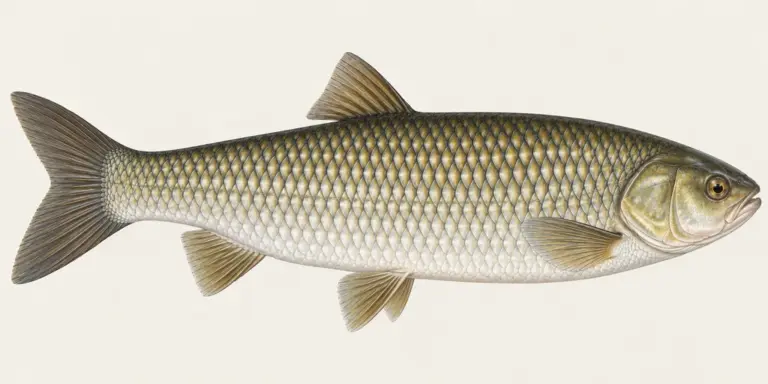
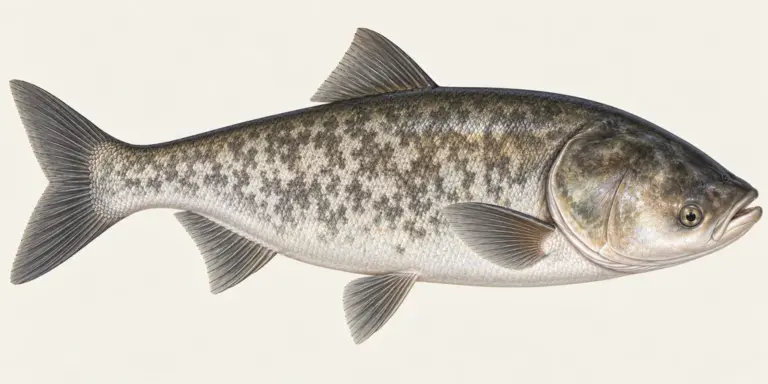
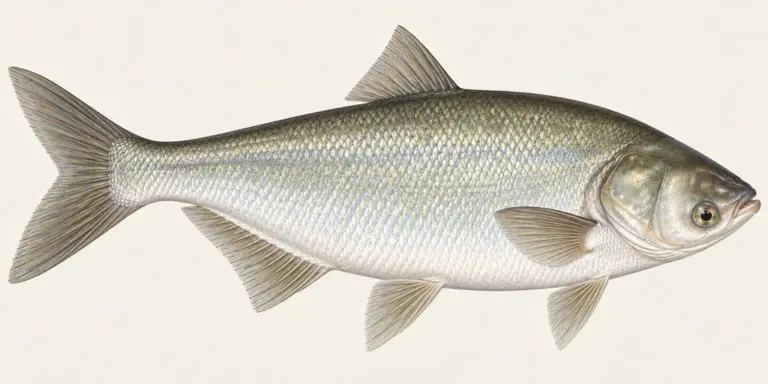
AI-generated illustrations.
Where it holds
The grass carp originally lives in the large rivers of eastern China and eastern Siberia, and according to FishBase also in lakes, ponds and oxbow lakes of large rivers. It has been introduced to many waters in Europe, in Germany first in 1965 to ponds near Chemnitz. FishBase notes that in Europe it survives only through stocking.
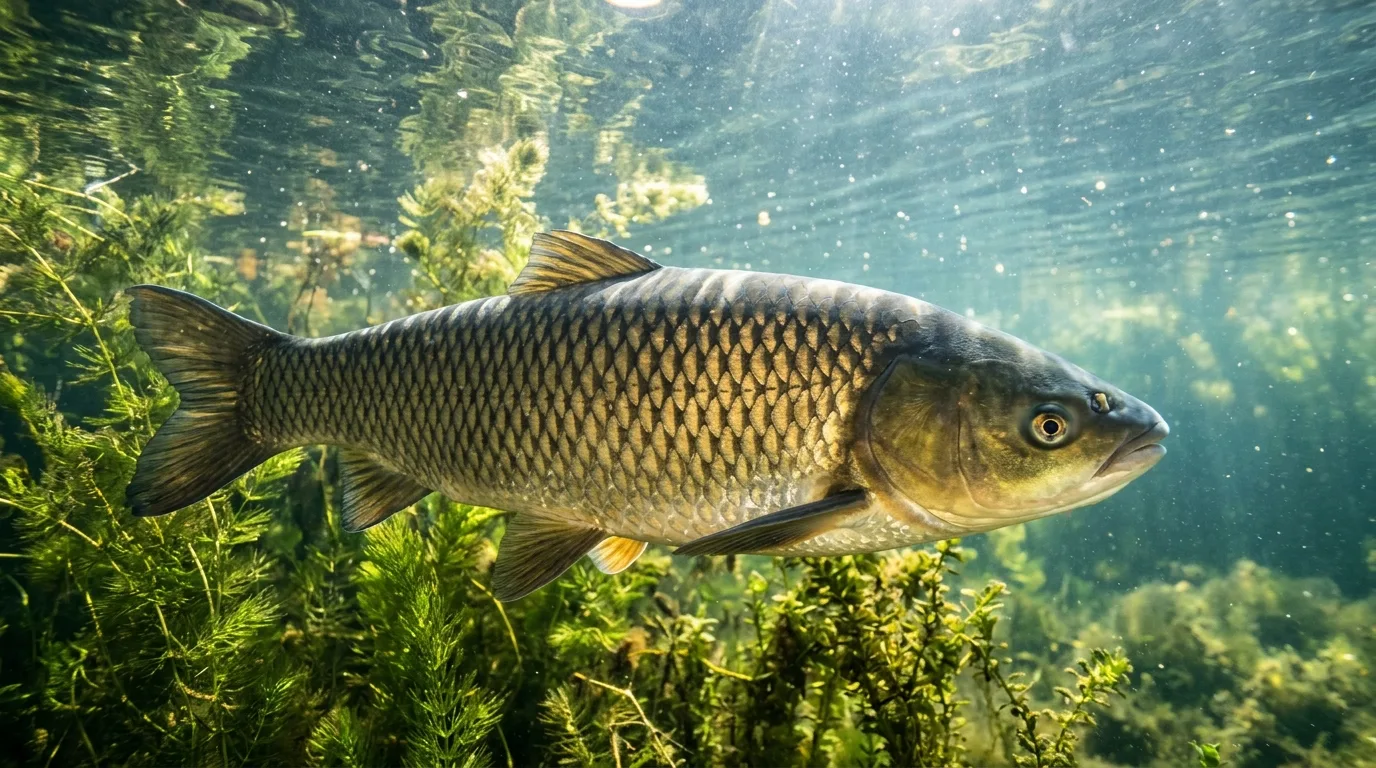
Adult fish prefer large, calm or slow-flowing waters with plenty of vegetation. They tolerate water temperatures from 0 to 38 degrees and low oxygen levels. The Bundesamt für Naturschutz lists the grass carp on its management list of invasive species, with the status unstable. So it does not form self-sustaining populations in Germany. In the Red List register of 2023 it counts as not established.
Holding spots in the picture
Choose the season and time of day: the picture shows where the species stands then. Spots outlined in red apply only in the chosen season. Tap a fish or a spot in the list to bring it closer. The picture is schematic and AI-generated, every water is different.
Catch chances in springpossible
Chance of a catch in summergoodSpawning, observe the closed seasons
Catch chance in autumnpossible
Catch chance in winterhardly any
- J
- F
- M
- A
- M
- J
- J
- A
- S
- O
- N
- D
Spawning season
Active time The grass carp feeds mainly at dawn and dusk.
No peak time The grass carp feeds mainly at dawn and dusk.
Active time The grass carp feeds mainly at dawn and dusk.
No peak time The grass carp feeds mainly at dawn and dusk.
In the lake
reed edge
Grass carp are present here in spring only.
Water lilies and weed bed
Grass carp are present here all year round.
Open water
Grass carp are present here all year round.
Just below the surface
Grass carp are present here in summer only.
Grass carp prefer large, still or slow-flowing waters with plant growth, because they feed mainly on higher water plants. Specialist articles differ on how close to the bank they come: according to one they rarely feed near the bank and tend to keep their distance from it, while according to others they look for shallow, sunny spots, bays and, in spring, weedy margins.
Spring: according to the fishing calendar, catch chances are slim in March, possible in April and good in May. In May and June, when the carp spawn, grass carp move into shallower, densely weedy margins and eat the fresh reed shoots. Zones one to two metres deep are also worth fishing then.
Summer: according to the fishing calendar, catch chances are good in June and July and peak in August. The spawning season falls in this period, so observe the closed seasons (Schonzeit). In high summer, at water temperatures well above 20 °C, grass carp often stay at the surface. Then the small, triangular dorsal fins show above the water.
Autumn: according to the fishing calendar, catch chances are good in September, possible in October and slim in November. When the water temperature falls below about 13 °C, grass carp eat only the bare minimum.
Winter: catch chance according to the catch calendar hardly any.
In the river
Pools, deep spot
Grass carp are present here in autumn only.
Groyne scour hole
Grass carp are present here all year round.
Calm bay with aquatic plants
Grass carp are present here all year round.
In rivers, grass carp prefer places that save energy, in groyne fields and oxbows. FishBase also names the weedy backwaters of large rivers as habitat.
Spring: according to the fishing calendar, catch chances are slim in March, possible in April and good in May. In spring, grass carp on rivers often stand in shallow areas and inside bends, and the baits then lie very close to the bank.
Summer: catch chances according to the catch calendar are good in June and July, with August the peak season. The spawning season falls in this period, so observe the closed seasons.
Autumn: according to the fishing calendar, catch chances are good in September, possible in October and slim in November. In autumn they tend to retreat to deeper pools.
Winter: catch chance according to the catch calendar hardly any.
Depth: FishBase gives a depth range of 0 to 30 metres.
Size comparison: AI-generated drawing, schematic.
How it feeds and spawns
Young fish eat zooplankton and bottom-dwelling animals. Later they switch to higher water plants and also eat detritus, insects and other invertebrates. They prefer soft plants such as duckweed. They hardly touch water lilies, yellow pond lilies and arrowhead. According to Saxon pond-farming documents, effective suppression of underwater plants only begins at water temperatures above 23 degrees.
In its homeland it spawns over gravel bottoms in rivers with a very strong current. The eggs drift and hatch after two to three days. In Germany, natural reproduction is practically ruled out according to the guidelines of the Saxon state office, even in the largest Saxon river, and in ponds and gravel pits all the more so. In Europe the grass carp breeds irregularly only in the Danube.
When it bites
The grass carp is a summer fish. The angling press recommends targeted sitting-in when the water is clearly warmer than 20 degrees and the lakes lie windless. In high summer, when many common and mirror carp hardly bite, sitting in for it pays off. On lakes, according to Fisch & Fang, May and June are also a very good time, when the carp spawn and the water reaches 18 to 22 degrees.
Then the grass carp give themselves away at the surface by their small, triangular dorsal fins. Polarised sunglasses help with spotting. According to FishBase the species tolerates 0 to 38 degrees but is a warmth-loving summer fish.
Today’s catch index needs JavaScript. Season and spawning time are in the catch calendar.
You will find the monthly overview of all species and the water temperature check in the catch calendar.
What you catch it with
Step by step: Fishing for grass carp: tips on bait, rig and tackle – season, swims, bait, tackle and rules on one page.
Bottom fishing as for carp is usual, with a fixed-lead rig and a short hair hooklength. The angling press names a hooklength of 20 to 25 centimetres of braid, a very short hair of about one centimetre and weights of 110 to 160 grams so that the hook takes hold in the hard mouth. In the current of large rivers weights of over 300 grams are sometimes needed. Baits are particles such as hard sweetcorn and tiger nuts: two to three tiger nuts or at most five grains of corn go on the hair. For feeding, a mix of seven parts hard sweetcorn and three parts tiger nuts works well. On waters heavily fished with boilies, grass carp are caught on them too.
Where you lay the baited area depends on the water and the time of year: according to one Blinker author, grass carp rarely feed close to the bank, but in May and June you find them, according to Fisch & Fang, precisely in shallow, weedy bank areas. The way they take bait is also described differently: standing upright and sucking the bottom clean or, unlike carp, pecking without sucking in. The sources agree that the bites are hesitant. The bite alarm often gives only a few bleeps, and at resistance the fish quickly spit the bait out again. Check the hook is sharp after every bite. A strike that finds nothing usually scares off the whole shoal.
Set the drag so that line runs: Grass carp can usually be played in without much pressure but explode at the sight of the landing net close to the bank. The reel drag must keep giving line on powerful runs.
Have an unhooking mat ready: The fish also thrash about powerfully on land. A well-padded unhooking mat protects them. More on landing is on the page Landing and unhooking fish.
Spot rather than guess: In calm weather the grass carp show themselves at the surface with their small, triangular dorsal fins. Watch first before you lay the baited area.
Suitable lures
On the bottom hard sweetcorn and tiger nuts on the hair, and on waters heavily fished with boilies, boilies too.
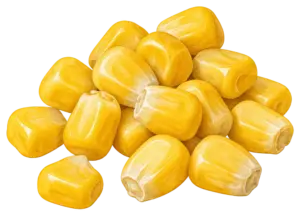
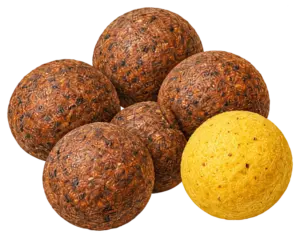
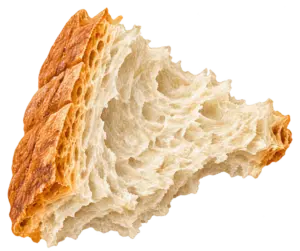
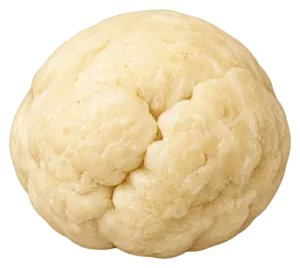
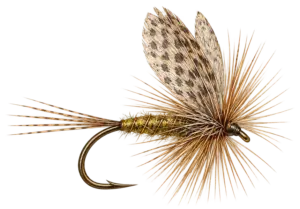
AI-generated illustrations. A click opens the lure’s page.
Rigs for these baits: running leger rig, float rig.
What to do with your catch
Grass carp have firm, white flesh that, according to the state office, can be both boiled and fried. Saxon pond-farming documents also call it excellently suited as hot- or cold-smoked produce. FishBase lists the preparations steamed, fried, grilled and baked.
The scales are large and firm. How to kill the fish properly is under Stunning and killing fish. You will find the further steps under Scaling and skinning, Filleting and Smoking.
What you need to observe
Closed seasons (Schonzeit), minimum sizes (Mindestmaß) and harvest windows are set by the federal states (Bundesland), and on many waters additionally by the club or leaseholder. They differ depending on the water and the time of year. We give figures only with a date and a source; always binding are the fisheries regulation of your federal state and your fishing permit (Erlaubnisschein). You will find a list of links to the official sources in the catch calendar.
A fish of legal size that you want to keep you stun and kill at once, in line with animal welfare rules. Protected, undersized fish or fish too large under a harvest slot you unhook, if possible still in the water and with wet hands, and release gently. What exactly applies is regulated by state law and your fishing permit (Erlaubnisschein).
The grass carp is not a native species. It is not on the EU Union list of invasive species. In Saxony, stocking of open waters such as rivers, reservoirs and former mining lakes is subject to stricter conditions and requires a permit from the fisheries authority (Fischereibehörde). In managed carp ponds no permit is needed. Whether stocking is permitted and whether caught fish may be returned is regulated differently by state law and by the water’s rules. If in doubt, ask your club (Verein) or the fisheries authority. Never stock on your own initiative.
What closed season, minimum size and harvest slot mean and where to find them is explained on the page Closed season and minimum size explained.
Frequently asked questions (FAQ)
Does the grass carp have barbels?
No. The mouth is slightly inferior, hard and without barbels. A similar fish with barbels is the carp.
Does the grass carp breed in Germany?
According to the Saxon state office, practically not. It spawns only over gravelly stretches of large, strongly flowing rivers. The Red List of 2023 lists it as not established, and the stocks go back to stocking.
When and with what do you catch grass carp?
From May into late summer, especially in warm water, on the bottom with hard sweetcorn and tiger nuts on a fixed-lead rig with a very short hair. In May and June the fish often stand in shallow, weedy bank areas, in high summer rather further out.
Sources
The rating of catch chances is an editorial assessment. The facts come from these sources, and the text is worded in our own words. The illustration is an original design by Angel Momente in the style of a natural history plate (AI-generated, see the AI notice).
- FishBase: Ctenopharyngodon idella (Höchstlänge, Höchstalter, Temperaturtoleranz, Eier)
- Blinker: Graskarpfenangeln (Faktencheck, Futter, Montage, Verhalten im Sommer)
- Bundesamt für Naturschutz: Gebietsfremde Fische, naturschutzfachliche Invasivitätsbewertung
- Rote-Liste-Zentrum: Graskarpfen (Gesamtartenliste 2023: nicht etabliert, unbeständig)
- Wikipedia: Graskarpfen (Merkmale, Schuppenzahl, Herkunft, Temperatur, Fortpflanzung)
- Sächsisches Landesamt für Umwelt, Landwirtschaft und Geologie: Leitlinien für die Nutzung von Graskarpfen in Aquakultur und Fischerei in Sachsen (2023)
- Sächsische Landesanstalt für Landwirtschaft: Karpfenteichwirtschaft, Bewirtschaftung von Karpfenteichen, Gute fachliche Praxis
- Sächsisches Landesamt für Umwelt, Landwirtschaft und Geologie: Artenkunde verwechselbare Fischarten (Döbel, Hasel, Aland)
- Fisch & Fang: Graskarpfen, so angelt man sich einen Vegetarier (Mai/Juni im flachen Uferbereich, Blei, Fluss im Frühjahr und Herbst)
- Fisch & Fang: Graskarpfen, Oh L´Amur (Rhein und Main, schwere Bleie in der Strömung)
- Blinker: Graskarpfen angeln, fang die vegetarischen Giganten (Graser picken statt einzusaugen, 2021)
- Blinker: Steckbrief Grasfische (Silber- und Marmorkarpfen: Größe, Nahrung, Fangmethode)
Created with AI support from the sources listed. Figures only appear in the text if a source gives them. Last updated: 27 October 2026. Found a mistake? Write to us. Who is behind this site: About me.
More in the lexicon
- All fish species at a glance
- Catch calendar – month, water temperature and profile for 93 species
- Line calculator – breaking strain after the knot, drag guideline, backing
- Angling methods