
Knowledge – Fish
Wels catfish: Features, best time, bait and cooking
The European catfish or wels (Silurus glanis), also called Waller, is the largest native freshwater fish. It loves warmth, hunts mainly at dusk and at night, and rests in winter. In 2026 it is Fish of the Year in Germany.
In short: You catch wels best from August to September, in the evening, at night and in the morning. Good spots on a lake: weed beds, deep ground and the drop-off; on a river: deep pools, groyne pockets and the current edge. Proven baits: baitfish or a bunch of lobworms on a strong rig; when spinning, soft plastics, spinners, spoons or crankbaits. Step by step: Fishing for wels.
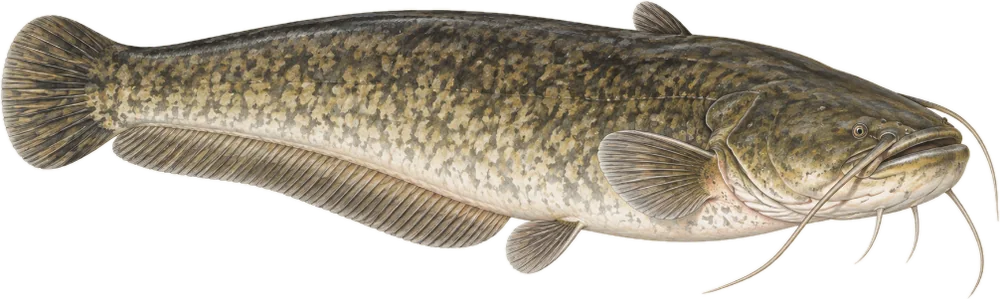
- Long, mobile barbels on the upper jaw, shorter ones on the chin
- Very small dorsal fin, no adipose fin
- Very long anal fin, smooth skin without scales
Catch chances through the year
- Hardly any chance
- Possible
- Good
- Peak season
- Spawning (observe the closed season)
Editorial assessment for waters in Germany, not a measured value and no guarantee. Spawning time is not the same as the legal closed season.
Species profile and sources in the catch calendarAll species compared month by monthThe rules of your federal state
How to recognise a wels
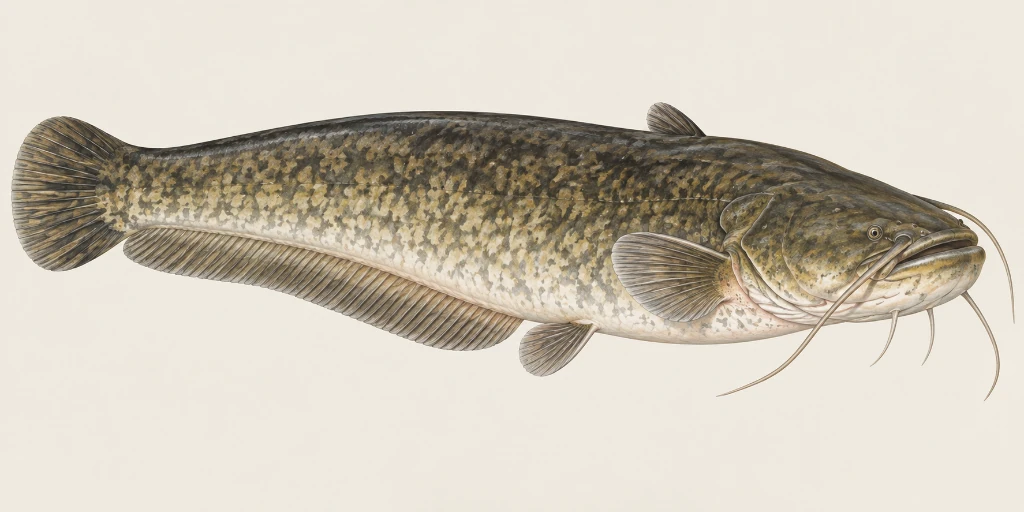
The body is elongated, round at the head and flattened from the sides towards the tail. The skin is entirely scaleless and covered with a thick layer of slime. The head is flat and broad, making up about 20 per cent of the body length, and the eyes are small. The upper jaw carries two long barbels, the lower jaw two pairs of shorter ones, six in all.
The small dorsal fin sits at the end of the first third of the body; there is no adipose fin. The anal fin runs along the whole elongated tail stalk, and the tail fin is small. The mouth holds many small, backward-curved brush teeth but no fangs. The upper side is dark greenish, brownish or almost black and marbled, becoming paler towards the belly. Albinos occur from time to time.
According to LFV Bayern, one to two metres is typical; the table sets out the sources‘ figures side by side. For maximum age FishBase gives 80 years, DAFV 80 to 100. Older reports of 5 metres and 306 kilograms FishBase regards as mix-ups and measuring errors.
Size figures compared
| Specification | Length | Weight |
|---|---|---|
| Average according to LFV Bayern | 1–2 m | – |
| Average according to Blinker | 1–1,5 m | – |
| Largest angling catch from the Po according to Blinker | 2,85 m | 144 kg |
| Documented maximum according to FishBase | 2,73 m | 130 kg |
| Largest documented catch according to DAFV (2025, returned) | 2,92 m | not weighed |
Among native freshwater fish the wels is unmistakable: two pairs of barbels on the lower jaw and an anal fin with over 80 rays reaching almost to the tail fin are found, according to FishBase, in no other freshwater fish in Europe. It differs from the introduced brown bullheads by the lack of an adipose fin.
Side by side
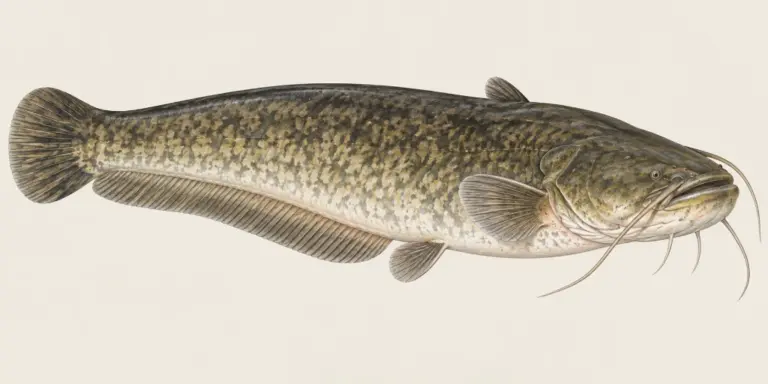
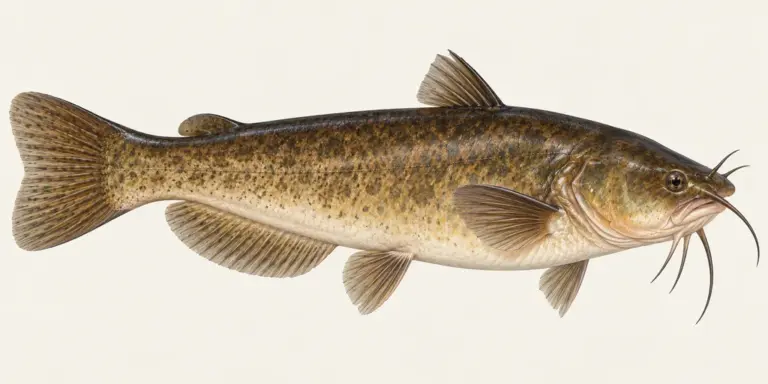
AI-generated illustrations.
Where the wels lives
Wels live in still waters and slow-flowing rivers, in the lowlands, in oxbows and in well-weeded lakes, also in deep reservoirs. LFV Bayern describes them as inhabitants of cloudy, not too cold waters with a soft bottom. By day they lie hidden on the bottom among old timber or in deep pools. They tend to stay in the lower third of the water column, down to about 30 metres.
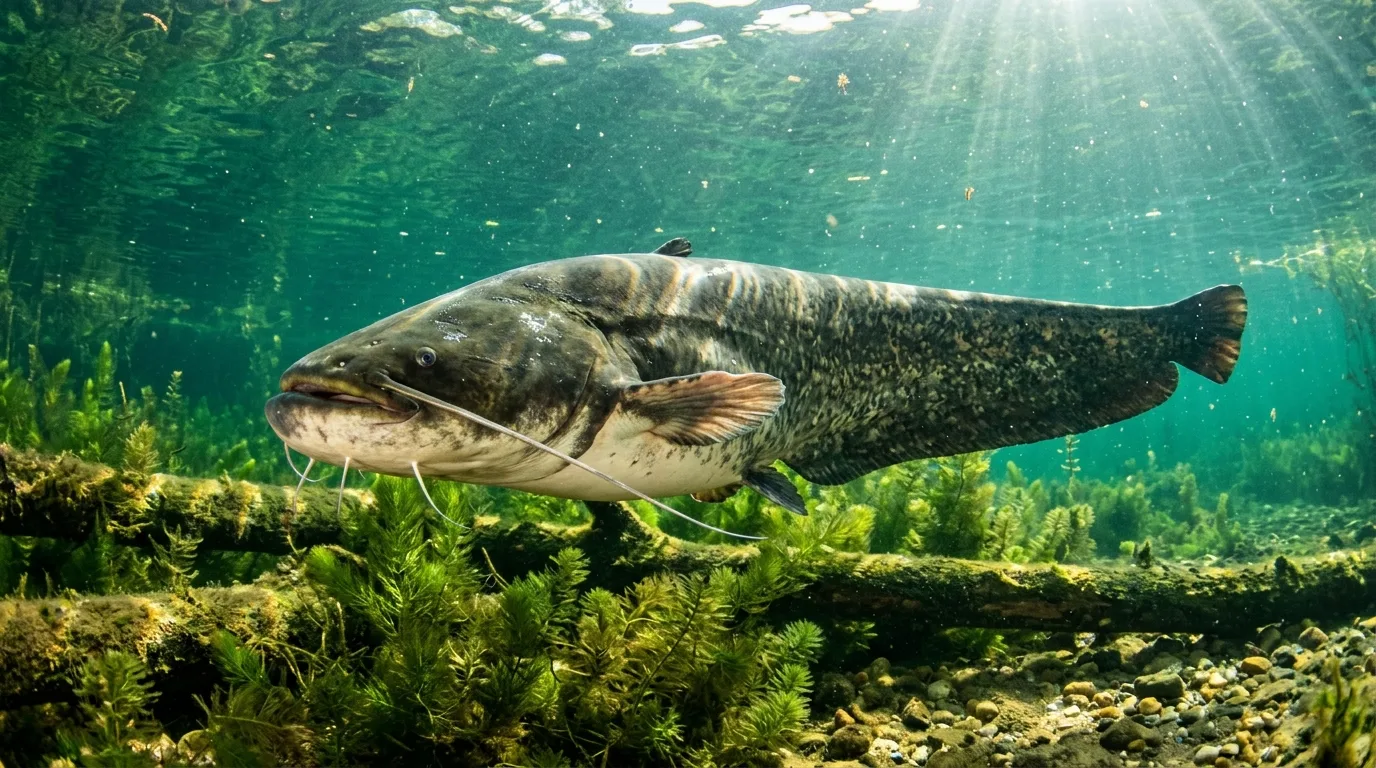
The wels needs waters that warm to over 20 °C in summer and benefits from climate change. The optimum temperature is 25 to 27 °C. It makes no great demands on water quality and oxygen and gets by on just 3 milligrams per litre. In river mouths it moves into brackish water and tolerates up to 15 parts per thousand salt.
Originally the wels belongs to the fish species of the Danube and Rhine systems. Stocking since the 19th century and canals such as the Main-Danube Canal have spread it widely; the wels rivers Ebro and Po are not part of the natural range. More at Fishing on rivers and at the reservoir.
Holding spots in the picture
Choose the season and time of day: the picture shows where the species stands then. Spots outlined in red apply only in the chosen season. Tap a fish or a spot in the list to bring it closer. The picture is schematic and AI-generated, every water is different.
Catch chances in springpossible
Chance of a catch in summerpossibleSpawning, observe closed seasons
Catch chance in autumngood
Catch chance in winterhardly any
- J
- F
- M
- A
- M
- J
- J
- A
- S
- O
- N
- D
Spawning season
Active time The wels is shy of light and moves mainly at dusk and at night, and when the air pressure is falling also during the day.
Not the main time The wels is shy of light and moves mainly at dusk and at night, and when the air pressure is falling also during the day.
Active time The wels is shy of light and moves mainly at dusk and at night, and when the air pressure is falling also during the day.
Active time The wels is shy of light and moves mainly at dusk and at night, and when the air pressure is falling also during the day.
In the lake
Water lilies and weed bed
Wels catfish are found here only in spring, summer and autumn.
Shelf edge
Wels catfish are found here only in spring, summer and autumn.
Deep bottom
Wels catfish are found here all year round.
Open water
Wels catfish are found here only in spring, summer and autumn.
In lakes the wels rests on the bottom during the day among water plants in calm, weedy areas. Deep hollows and drop-offs with big differences in depth count as lies, such as an old riverbed in a reservoir. When hunting it also moves in open water.
Spring: catch chance according to the catch calendar hardly any in March, good in April, possible in May. After its winter rest the wels feeds harder again. The weeks from April to early June, when the water warms up fastest, count as the main catching time.
Summer: catch chance according to the catch calendar possible in June and July, peak season in August. Spawning falls in this period, so observe closed seasons. It spawns from May to July in a hollow in the shallow, weedy bank zone. In June and July the wels takes less prey; from the end of July the warm water counts as favourable again.
Autumn: catch chance according to the catch calendar peak season in September, good in October, hardly any in November. After spawning comes a second peak of feeding before the water cools.
Winter: catch chance according to the catch calendar hardly any. Below about 4 to 7 °C the wels no longer feeds. It rests in deep spots in the lower third of the water or on the mud, often buried.
In the river
Undercut bank, overhanging branches, timber
Wels catfish are found here all year round.
Pools, deep spot
Wels catfish are found here all year round.
Groyne scour hole
Wels catfish are found here only in spring, summer and autumn.
Current seam
Wels catfish are found here only in spring, summer and autumn.
Calm bay with aquatic plants
Wels catfish are found here only in spring, summer and autumn.
In rivers the wels sits in deep hollows and holes, for example in long outside bends and behind groyne heads, above all in the first groynes of a groyne field. The current seams at the mouths of harbours, rivers and oxbow lakes are also named. During the day it rests under overhanging banks and tree roots or in calm, weedy areas.
Spring: catch chance according to the catch calendar hardly any in March, good in April, possible in May. After its winter rest the wels feeds harder again. In spring the stretches below locks are also named.
Summer: catch chance according to the catch calendar possible in June and July, peak season in August. Spawning falls in this period, so observe closed seasons. It spawns from May to July in a pit near the bank in about 40 to 60 centimetres of water, often sheltered by willow roots.
Autumn: catch chance according to the catch calendar peak season in September, good in October, hardly any in November. After spawning comes a second peak of feeding.
Winter: catch chance according to the catch calendar hardly any. In rivers the wels overwinters in bank crevices or pits near the bank and takes almost no food from November to March.
Depth: It tends to stay in the lower third of the water, happily over a muddy bottom. Spots with above-average depth count as catfish lies on lakes and rivers alike.
Size comparison: AI-generated drawing, schematic.
How it lives and hunts
Wels are opportunistic predators and eat whatever is common in the water, mostly silver fish or carp, but also crayfish and invertebrates. Compared with pike and zander they take more small mammals such as rats and mice, and also waterfowl. In spring they eat perch egg strands, in summer more crayfish and insect larvae. Prey is sucked in by a sudden opening of the mouth, together with several litres of water.
To track down prey, wels use smell, touch and above all sound, and according to the BfN also low-frequency tones down into infrasound. Electroreceptors add to this at close range. Young wels live in larger groups, while big ones are mostly loners. When air pressure is falling they often hunt during the day as well.
According to the DAFV, spawning takes place in June and July at water temperatures above 18 °C, while the LFV Bayern gives April to July. A drop in air pressure before a thunderstorm often triggers spawning. The nest or spawning pit lies close to the bank, the sticky eggs measure 1,5 to 2 millimetres, and the male guards them. Wels grow fast and reach sexual maturity after three to four years.
When it bites
Below about 7 °C the wels stops feeding and falls into winter dormancy. It then stays in deep spots, often buried in the mud. It can be caught well from April, best in late summer and still into October, as long as the water is not too cold.
According to Blinker, most fish are caught when the water is at its warmest, usually from the end of July to the beginning of September. A second good phase comes with the rapid warming in spring, above all in April. The wels spawns from May to July. In most states there is no closed season (Schonzeit) then, but in Mecklenburg-Western Pomerania it is protected from 1 May to 30 June, and the minimum size (Mindestmaß) there is 70 centimetres (LALLF, as of October 2026). Below 10 °C in late autumn bites become rare, and in winter only an accidental catch is possible.
An old rule says that wels only bite at night and on the bottom. That is not always true: you also catch them in open water and by day, preferably around midday. In clear water activity shifts to dusk and night, with slight turbidity and more than 3 metres of depth wels are active by day, and in heavily clouded water you catch them day and night.
Today’s catch index needs JavaScript. Season and spawning time are in the catch calendar.
You will find the monthly overview of all species and the water temperature check in the catch calendar.
From the blog: Freshwater fish in Germany: which species you catch where
What you catch it with
Step by step: Wels fishing: tips on bait, rigs and tackle – season, swims, bait, tackle and rules on one page.
When sitting it out on the bank you present the bait on the bottom or under a float in open water. With a float, beginners should not fish deeper than 4 metres, because on the strike there is hardly any contact with the fish. On the bottom you fish self-hooking rigs with a sharp hook from 2/0 to 10/0 on a fixed weight of 200 to 800 grams. Only very thick-wire hooks do not bend open during the fight.
Dead baitfish, bunches of lobworms and strips of squid serve as bait. Many federal states (Bundesland) expressly ban live baitfish. A steel leader is not necessary. The trade press recommends abrasion-resistant Kevlar or braid with a breaking strain of 60 to 80 kilograms, or very thick monofilament of 0,90 to 1,3 millimetres.
Spinning works too: soft plastics of 15 to 18 centimetres on a lead head with a stinger, but also spinners, spoons and plugs. Because wels can hardly tell more than day from night with their eyes, bait colour does not matter. In deep water you first search the surface, then mid-water, and finally the bottom, because they dislike line being pulled over them. When fishing with the wels clonk, you drift in the boat, knock, and present the bait under the boat at the depth the echo sounder shows.
The rod needs plenty of backbone, because it has to absorb the huge tail beats of big wels. From the bank, heavy pike rods or wels rods of almost four metres are used, and 30 to 40 kilograms of braid on the reel is usual. When landing, the wels can do nothing with its brush-like teeth except cause grazes. More on this: Landing a fish and unhooking it.
Look for deep spots and current edges: Areas of above-average depth are good, even hollows of just a few metres. In rivers wels hold on outside bends, behind the first groynes and at the mouths of harbours and oxbow lakes, and in lakes and reservoirs on the edges of old river beds.
Rely on vibration, not colour: Wels see hardly anything and locate their prey by sound and pressure waves. Bait colour is therefore secondary, and the wels clonk deliberately creates pressure waves.
Stay put after the first catch: Wels like to live in company. If you have caught one, according to a specialist article you do not necessarily have to change spot.
Suitable lures
Baitfish or a bunch of lobworms on a strong rig; for spinning soft plastics, spinners, spoons or plugs.
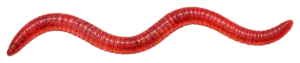 Worms
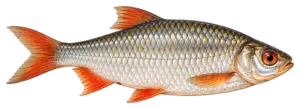 Baitfish
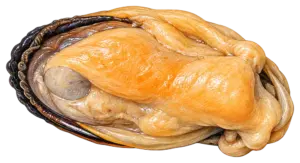 Crustaceans & mussels
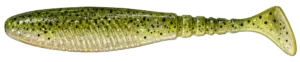 Soft plastic (shad)
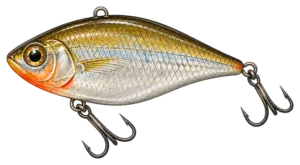 Lipless crankbait
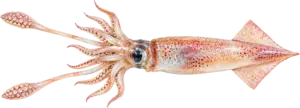 Cuttlefish & squid
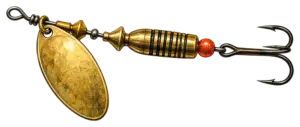 Spinner
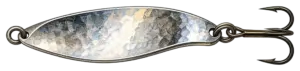 spoon
AI-generated illustrations. A click opens the lure’s page.
Rigs for these baits: Baitfish rig, Running lead rig, Float rig.
Wels in the kitchen
The wels is a popular food fish, especially smaller specimens. The flesh is firm, has few bones and is fairly fatty. Smaller wels up to about 120 centimetres are particularly suitable. Smoked, it is regarded as a delicacy.
Because the wels has no scales, it is skinned: the skin is cut behind the head and pulled off with pliers, which takes some strength. After that comes filleting, and if you like, you can smoke the fillets.
What you need to observe
Closed seasons (Schonzeit), minimum sizes (Mindestmaß) and harvest windows are set by the federal states (Bundesland), and on many waters additionally by the club or leaseholder. They differ depending on the water and the time of year. We give figures only with a date and a source; always binding are the fisheries regulation of your federal state and your fishing permit (Erlaubnisschein). You will find a list of links to the official sources in the catch calendar.
A fish of legal size that you want to keep you stun and kill at once, in line with animal welfare rules. Protected, undersized fish or fish too large under a harvest slot you unhook, if possible still in the water and with wet hands, and release gently. What exactly applies is regulated by state law and your fishing permit (Erlaubnisschein).
According to the nationwide Red List the wels is not threatened. It is not protected. In many parts of Germany, water regulations now even require a caught wels to be kept, or ban returning it. Many federal states expressly ban live baitfish. At your water, pay particular attention to whether fishing from a boat and with a wels clonk is allowed.
What closed season, minimum size and harvest slot mean and where to find them is explained on the page Closed season and minimum size explained.
What state law says about the closed season and minimum size for this species can be found in the “At a glance” box on the state pages for Bavaria, Berlin, Brandenburg, Mecklenburg-Western Pomerania, Lower Saxony, Saxony, Saxony-Anhalt and Thuringia. For the other states our overview does not list this species, and the state fisheries regulation is what counts there.
Frequently asked questions (FAQ)
How big does a wels get?
Usually one to two metres. The BfN gives a maximum of about three metres and 150 kilograms. The largest documented catch is considered to be a wels of 2,92 metres from a Polish reservoir, which was returned.
When does the wels bite?
Mainly at dusk and at night, with falling air pressure also by day, and in clouded water day and night. Below 7 °C it no longer feeds. The main season runs from the end of July to the beginning of September, and April and October are also good.
Is the wels dangerous to bathers?
It has no fangs, only brush-like teeth, and can do people no harm apart from grazes. Reported attacks are probably due to the male guarding his clutch.
Sources
The rating of catch chances is an editorial assessment. The facts come from these sources, and the text is worded in our own words. The illustration is an original design by Angel Momente in the style of a natural history plate (AI-generated, see the AI notice).
- Landesfischereiverband Bayern: Fischlexikon (Laichzeit, Lebensraum, Nahrung, Aktivität)
- FishBase: Silurus glanis (belegte Höchstmaße, Höchstalter)
- Blinker: Steckbrief Wels (Merkmale, Aktivität, Fangplätze)
- Deutscher Angelfischerverband: Fisch des Jahres 2026, der Europäische Wels (Broschüre)
- Bundesamt für Naturschutz: Europäischer Wels, Fisch des Jahres 2026
- Anglerverband Niedersachsen: Wels (Fische in Niedersachsen)
- Blinker: Welsangeln, Tipps und Tricks für den Fangerfolg
- Blinker: Wels filetieren und räuchern, Schritt für Schritt
- Wikipedia: Europäischer Wels
- LAWA-Projekt O 10.20 (Leibniz-IGB, 2021): Temperaturempfindlichkeiten der Fischgemeinschaften
- Fisch & Fang: Zielfisch Wels, todsicher Wels (Gerät, Vorfach)
- LALLF Mecklenburg-Vorpommern: Mindestmaße und Schonzeiten (Binnen); Küstenfischereiverordnung, Fassung September 2026
Created with AI support from the sources listed. Figures only appear in the text if a source gives them. Last updated: 7 November 2026. Found a mistake? Write to us. Who is behind this site: About me.
More in the lexicon
- All fish species at a glance
- Catch calendar – month, water temperature and profile for 93 species
- Line calculator – breaking strain after the knot, drag guideline, backing
- Angling methods