
Knowledge – Fish
Brown bullhead / Katzenwels: Features, habitat and bait
In Germany the terms “Zwergwels” and “Katzenwels” refer to two closely related North American species: the brown bullhead (Ameiurus nebulosus) and the black bullhead (Ameiurus melas). Both are non-native, undemanding and nocturnal.
In short: The best time to catch brown bullheads is from July to August, mainly in the evening and at night. Good spots on a lake: weed beds and jetties; on a river: deep pools and quiet bays. Proven baits: worms on a simple bottom rig, in the evening and at night. A non-native species from North America. The black bullhead (Ameiurus melas) is on the EU list of invasive alien species and must not be released. Step by step: Fishing for brown bullheads.
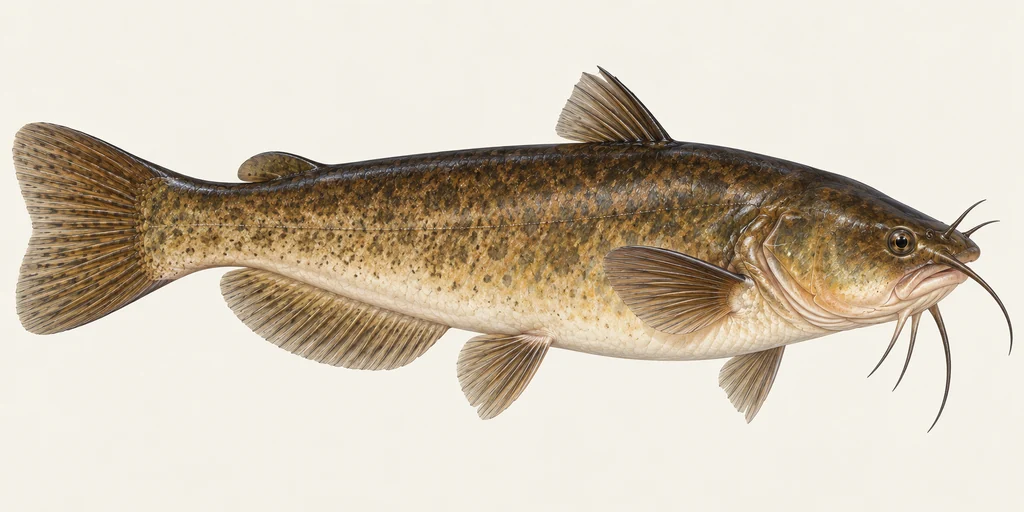
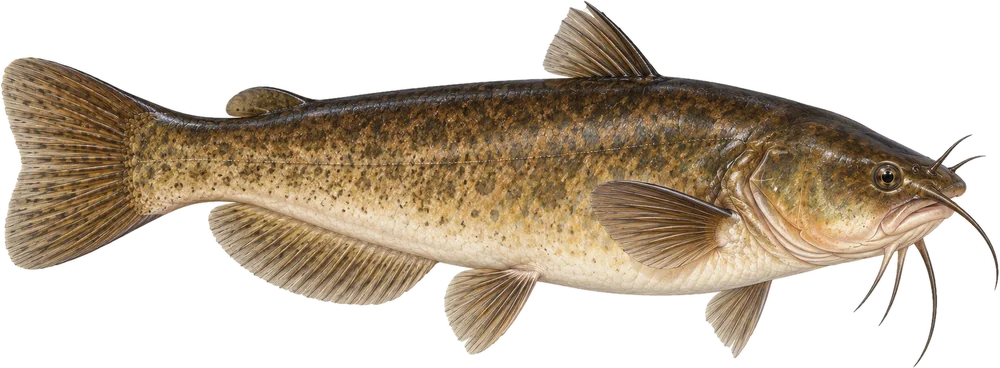
- Eight barbels around the broad mouth
- Adipose fin without rays between the dorsal and tail fins
- Scaleless body, broad, flat head and strong spines on the dorsal and pectoral fins
Catch chances through the year
- Hardly any chance
- Possible
- Good
- Peak season
- Spawning (observe the closed season)
Editorial assessment for waters in Germany, not a measured value and no guarantee. Spawning time is not the same as the legal closed season.
Species profile and sources in the catch calendarAll species compared month by monthThe rules of your federal state
How to recognise it
Brown bullheads have a spindle-shaped, scaleless body and a large, broad head. The mouth is fringed with eight barbels, four each on the upper and lower jaw. An adipose fin sits between the dorsal and tail fins. The first ray of the dorsal and pectoral fins is ossified and forms a spine.
The black bullhead is dark grey to black on the back with a whitish belly. The brown bullhead is dark brown and usually heavily marbled. In Germany the two species are often not told apart. The figures are therefore mixed: FishBase gives 25 centimetres as the common length and 55 centimetres as the maximum length for the brown bullhead, and 26 centimetres and 66 centimetres for the black bullhead. According to the Landesamt für Umwelt Brandenburg, the black bullhead reaches up to 40 centimetres in length at 2 kilograms in weight.
The native wels catfish has no adipose fin. According to the Landesfischereiverband Bayern it has two long barbels on the upper jaw and four shorter ones on the lower jaw, not eight.
Brown and black bullheads differ in the pectoral fin spine. In the brown bullhead its rear edge is clearly serrated, in the black one hardly at all. There is also the number of anal fin rays, according to a description from the USA 22 or 23 in the brown bullhead and 17 to 21 in the black one. The brown bullhead is also usually heavily marbled, the black one plain. The colour of the barbel base is described differently in the sources, so it is not a reliable feature.
Side by side
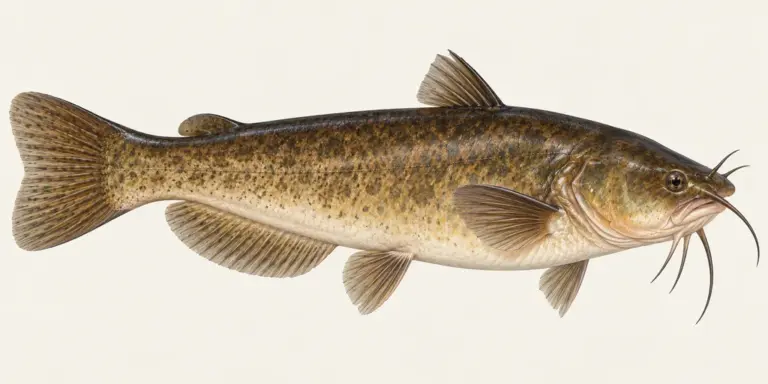
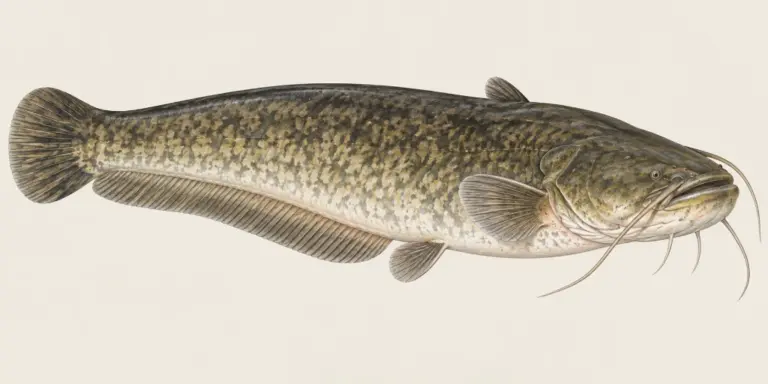
AI-generated illustrations.
Where it holds
Brown bullheads live on the bottom of calm waters: in ponds, lakes, backwaters and oxbow lakes, and in slow-flowing stretches of streams and rivers with a soft bed. According to American authorities they like to stay near underwater plants over sand and mud. They rarely venture into brackish water.
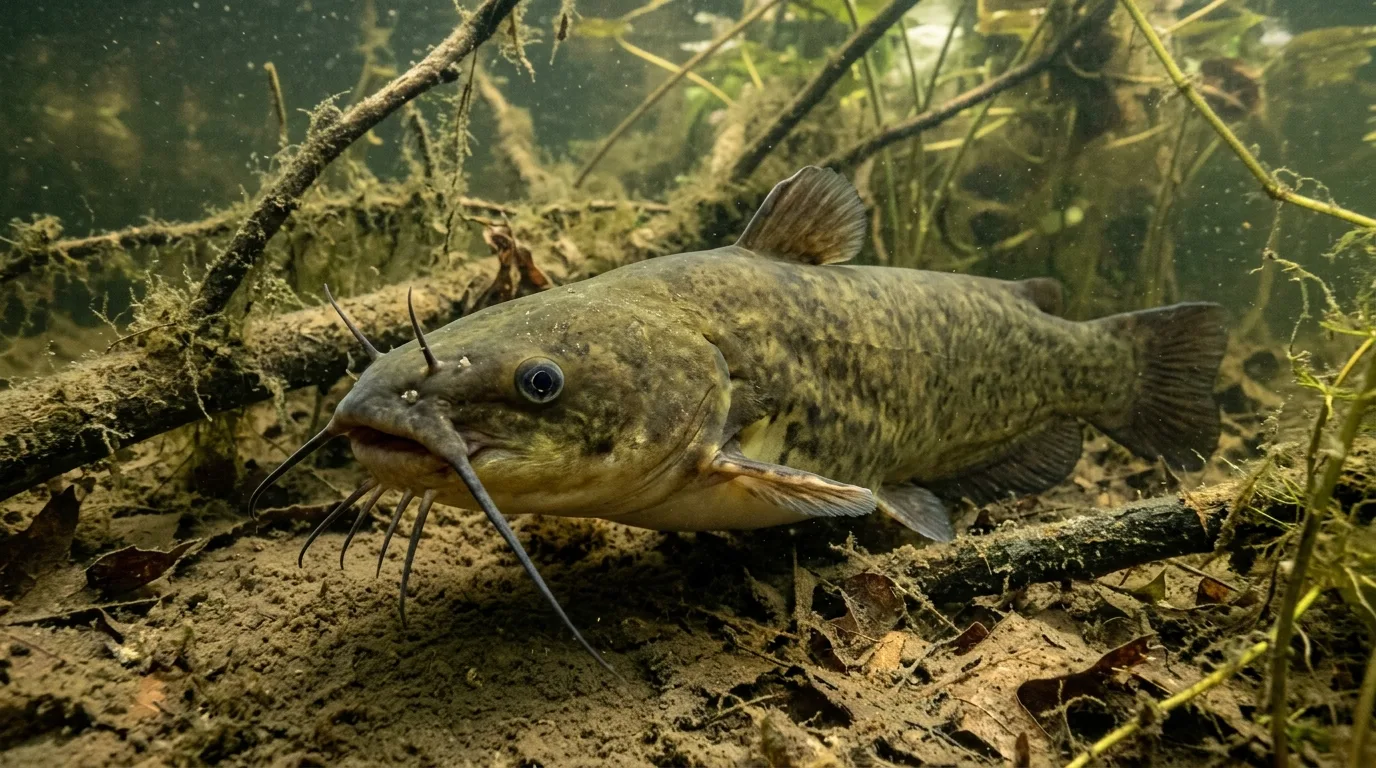
They are extremely hardy. According to the Landesamt für Umwelt Bayern they tolerate a lot of carbon dioxide, little oxygen and temperatures between 0 and 35 °C. FishBase gives up to 31,6 °C as the tolerated value and 37,5 °C as the upper lethal temperature. In adverse conditions they bury themselves in the mud.
In Germany brown bullheads are established over large areas, with the most frequent occurrences in the Elbe and Oder catchments. They reach new waters through release from ponds or aquariums, but also during floods.
Holding spots in the picture
Choose the season and time of day: the picture shows where the species stands then. Spots outlined in red apply only in the chosen season. Tap a fish or a spot in the list to bring it closer. The picture is schematic and AI-generated, every water is different.
Catch chances in springpossible
Catch chance in summerPeak season
Catch chance in autumnpossible
Catch chance in winterhardly any
- J
- F
- M
- A
- M
- J
- J
- A
- S
- O
- N
- D
Spawning season
No main time Brown bullhead are active at night and mostly look for food on the bottom after dark. In the evening they come into the shallows to feed, and in early spring they also bite there during the day.
No main time Brown bullhead are active at night and mostly look for food on the bottom after dark. In the evening they come into the shallows to feed, and in early spring they also bite there during the day.
Active time Brown bullhead are active at night and mostly look for food on the bottom after dark. In the evening they come into the shallows to feed, and in early spring they also bite there during the day.
Active time Brown bullhead are active at night and mostly look for food on the bottom after dark. In the evening they come into the shallows to feed, and in early spring they also bite there during the day.
In the lake
Water lilies and weed bed
Brown bullhead are found here all year round.
jetty, sheet piling, harbour
Brown bullhead are found here all year round.
Shelf edge
Brown bullhead are found here only in autumn.
In ponds and lakes brown bullhead stay on the bottom in quiet areas, mostly over sand or mud and close to underwater plants. During the day they lie idle in weed beds, under jetties or in shady spots along the bank, and at night they search the bottom for food.
Spring: catch chances according to the catch calendar are slim in March, possible in April and May. In spring they are drawn to quickly warming shallows and to inflows; at spawning time in May and June they stand in the shallows near stones and roots.
Summer: catch chances according to the catch calendar are possible in June, peak season in July and August. In deep lakes in summer they usually stay at a depth of about 3.5 to 4.5 metres, because below that oxygen is often lacking.
Autumn: catch chances according to the catch calendar are good in September, possible in October, slim in November. In autumn they feed hard once more and like to stand on shallow points next to deeper water.
Winter: catch chances according to the catch calendar are slim. In winter black bullheads hardly feed any more and bury themselves in deposited material along the lake shore.
In the river
Pools, deep spot
Brown bullhead are found here all year round.
Calm bay with aquatic plants
Brown bullhead are found here all year round.
In streams and rivers brown bullhead stay in weak current over a soft bottom: in deep pools, scour holes and backwaters. The same species also live in small lakes, ponds and reservoirs. In unfavourable conditions they bury themselves in the mud.
Spring: catch chances according to the catch calendar are slim in March, possible in April and May. Spawning takes place in late spring and early summer. The eggs lie in a shallow hollow, often under wood or stones, and are guarded by one of the parents.
Summer: catch chances according to the catch calendar are possible in June, peak season in July and August.
Autumn: catch chance according to the catch calendar good in September, possible in October, hardly any in November.
Winter: catch chance according to the catch calendar hardly any.
Depth: They live on the bottom of quiet waters over soft ground. FishBase gives a depth range of up to 12 metres for the brown bullhead.
Size comparison: AI-generated drawing, schematic.
How it feeds and spawns
Brown bullheads feed at night. Young fish take mainly midge larvae and small crustaceans, older ones molluscs, insects, leeches, crayfish, worms, plant matter, fish and fish eggs. They use their fine sense of smell to find prey. According to the state authorities they compete for food with native fish and eat spawn and fry.
According to American sources spawning takes place in May or June. A female digs a shallow hollow, often under wood or stones. One parent stays with the eggs, guards them and fans water over them with its fins. Even after hatching the parents stay with the young for about five days. Brood care and high reproduction lead to rapid population growth.
In the wild brown bullheads typically live to 6 to 8 years; FishBase gives 9 and 10 years as the maximum age.
When it bites
As warmth-loving nocturnal fish, brown bullheads bite best in summer; in the catch calendar July and August are the main season. According to a US fisheries authority they move into quickly warming shallows and near inflows as early as spring, then also during the day. At spawning time in May and June they dig nests in the shallows near stones and roots. In autumn they come once more into shallow areas near deep water; as the water gets colder the bites drop off markedly. In winter they slow their metabolism right down and hardly feed.
Today’s catch index needs JavaScript. Season and spawning time are in the catch calendar.
You will find the monthly overview of all species and the water temperature check in the catch calendar.
What you catch it with
Step by step: Fishing for brown bullheads: tips on bait, rigs and tackle — season, spots, baits, tackle and rules on one page.
Brown bullheads are easy to catch. An American fisheries authority writes that they are easily taken at night with worms on the bottom. They mostly bite as bycatch when you are bottom fishing for other species with worm. A simple running lead rig is enough. Anglers report that the fish bite mainly in the evening and at night (night fishing).
Watch the spines when you handle the fish. The first ray of the dorsal and pectoral fins is ossified, and in the brown bullhead the pectoral spines are serrated on the rear edge. Remove the hook with a disgorger or unhooking pliers.
The Landesamt für Umwelt Bayern recommends checking fishing gear before moving to another water so as not to spread brown bullheads. This also applies to landing nets and buckets.
Watch the spines: Brown bullheads have ossified rays on the dorsal and pectoral fins, with saw teeth in the brown bullhead. Hold the fish firmly and remove the hook with pliers.
Never move them: Never move brown bullheads to another water, not even from a garden pond. Spread through release is one of the main routes.
Clean your gear: Check your landing net, bucket and tackle before you move to another water.
Suitable lures
Worms on a simple bottom rig, in the evening and at night.
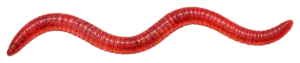
AI-generated illustrations. A click opens the lure’s page.
Rigs for these baits: running leger rig, float rig.
Non-native species: releasing may be prohibited. Check state law and the water’s rules.
What you can do with brown bullheads
In their native North America brown bullheads are considered good to eat, but are rarely used there. FishBase lists hot-smoked and boiled as preparations. The body is scaleless and the skin can be pulled off: Scaling and skinning fish, Gutting fish and Smoking fish show the way.
Whether you may kill a brown bullhead you have caught and take it home at all depends on the species, the state and the water. The Landesamt für Umwelt Bayern considers using caught brown bullheads better than disposing of them.
What you need to observe
The black bullhead (Ameiurus melas) has been on the Union list of invasive alien species since August 2022. The EU regulation prohibits deliberately keeping, transporting, placing on the market and releasing such species into the environment. Releasing is therefore prohibited. They may only be transported in connection with their removal. The brown bullhead is not on the version of the list we checked, but the state authorities rate it as similarly invasive. Because the two species are hard to tell apart at the waterside, the same applies to both: recognise and remove, do not return any brown or black bullhead. The states‘ working group also provides for bycatch to be removed. What your fishing permit (Erlaubnisschein) requires beyond that is governed by state law and the water’s rules.
Closed seasons (Schonzeit), minimum sizes (Mindestmaß) and harvest windows are set by the federal states (Bundesland), and on many waters additionally by the club or leaseholder. They differ depending on the water and the time of year. We give figures only with a date and a source; always binding are the fisheries regulation of your federal state and your fishing permit (Erlaubnisschein). You will find a list of links to the official sources in the catch calendar.
A fish of legal size that you want to keep you stun and kill straight away in line with animal welfare, as described on the page Stunning and killing fish.
What closed season, minimum size and harvest slot mean and where to find them is explained on the page Closed season and minimum size explained.
Frequently asked questions (FAQ)
Are “Zwergwels” and “Katzenwels” the same thing?
In everyday usage, yes. Both names are used for the brown and the black bullhead.
How do I tell the brown bullhead from the black bullhead?
Best by the pectoral fin spine: in the brown bullhead it is clearly serrated on the rear edge, in the black one hardly at all. The brown bullhead is usually heavily marbled, the black one plain.
Do I have to remove a brown bullhead I have caught?
Yes, remove it. The black bullhead is on the EU list, releasing it is prohibited, and it is hard to tell from the brown one at the waterside. So you do not return any brown or black bullhead but stun and kill it straight away. Further requirements are set out in state law and the water’s rules.
Sources
The rating of catch chances is an editorial assessment. The facts come from these sources, and the text is worded in our own words. The illustration is an original design by Angel Momente in the style of a natural history plate (AI-generated, see the AI notice).
- Landesfischereiverband Bayern: Fischlexikon (Laichzeit, Lebensraum, Nahrung, Aktivität)
- FishBase: Ameiurus nebulosus (Höchstalter, Nahrung, obere Letaltemperatur 37,5 °C)
- Connecticut DEEP: Freshwater Fishes of Connecticut, Brown Bullhead (Färbung, Lebensraum in Seen und Teichen)
- Bayerisches Landesamt für Umwelt: Schwarzer Zwergwels, Management- und Maßnahmenblatt zur VO (EU) Nr. 1143/2014 (Stand Januar 2024)
- Landesamt für Umwelt Brandenburg: Steckbrief Schwarzer Zwergwels (Merkmale, Unterscheidung zum Braunen Zwergwels)
- Missouri Department of Conservation: Field Guide, Brown Bullhead (Lebensraum, Nahrungssuche, Laichzeit, Nestbau und Bewachung)
- HLNUG: Unionsliste der invasiven Arten nach EU-Verordnung Nr. 1143/2014 (Stand Januar 2025)
- FishBase: Ameiurus melas (Größe, Alter, Lebensraum, Beifang)
- Europäische Union: Verordnung (EU) Nr. 1143/2014 über invasive gebietsfremde Arten, Artikel 7
- Iowa Department of Natural Resources: Bullheads (Laichphase, Fang beim Laichen, Standplätze je Jahreszeit, Wassertemperatur)
- Wikipedia: Schwarzer Zwergwels (Ameiurus melas: Merkmale, Größe, Alter, Nahrung, Unionsliste 2022)
- Wikipedia (en): Black bullhead (Ameiurus melas: Tagesverstecke, Winter)
Created with AI support from the sources listed. Figures only appear in the text if a source gives them. Last updated: 27 October 2026. Found a mistake? Write to us. Who is behind this site: About me.
More in the lexicon
- All fish species at a glance
- Catch calendar – month, water temperature and profile for 93 species
- Line calculator – breaking strain after the knot, drag guideline, backing
- Angling methods