
Knowledge – Fish
Brown bullhead fishing
Fishing for brown bullhead means: in summer, offer a worm at night over soft ground and treat the catch according to the rules for non-native species. Here is the way there in nine steps, each with a link to the detailed page.
 Choose another fish117 fish with guides
 EelOff-peak season
 EelpoutPossible
 IdePossible
 ArapaimaGood
 GraylingPeak season
 Atlantic salmonSpawning time, please spare
 Brown troutSpawning time, please spare
 Brook troutSpawning time, please spare
 BarbelOff-peak season
 BarramundiSpawning season
 Greater amberjackGood
 Topmouth gudgeonOnly as bycatch
 Blue marlinSpawning season
 BonefishSpawning season
 BonitoGood
 BreamOff-peak season
 Dusky grouperOnly as bycatch
 CobiaPossible
 Spiny dogfishOnly as bycatch
 CodPeak season
 ChubPeak season
 MinnowOnly as bycatch
 European sturgeonOnly as bycatch
 FlounderPeak season
 PerchPeak season
 Largemouth bassGood
 Ballan wrasseOnly as bycatch
 Yellowfin tunaSpawning season
 Giant trevallyGood
 Prussian carpPossible
 BrillPossible
 Gilthead breamSpawning time, please spare
 Golden doradoSpawning season
 Golden mahseerOnly as bycatch
 Dolphinfish (mahi-mahi)Good
 Grass carpPossible
 Great barracudaGood
 GudgeonPossible
 White breamPossible
 DaceOff-peak season
 PikePeak season
 HalibutOff-peak season
 HerringPossible
 GarfishOut of season
 Huchen (Danube salmon)Possible
 Crucian carpOnly as bycatch
 CarpOff-peak season
 RuffeOff-peak season
 VendaceOnly as bycatch
 DabPeak season
 GurnardPossible
 Coley (saithe)Peak season
 Chinook salmonHardly any chance
 King mackerelSpawning season
 LingPeak season
 TuskOff-peak season
 MackerelPossible
 Bighead carpOut of season
 WhitefishPossible
 Conger eelOff-peak season
 Sea troutSpawning time, please spare
 Grey mulletPossible
 Murray codSpawning season
 MuskellungeGood
 Common nasePossible
 Nile perchPossible
 PayaraPossible
 Peacock bassPeak season
 PermitGood
 WeeverOnly as bycatch
 PollackOff-peak season
 BurbotOff-peak season
 AspPossible
 Red snapperSpawning season
 Rainbow troutPeak season
 RoosterfishGood
 RoachPeak season
 RedfishOut of season
 Bluefin tunaOnly as bycatch
 RuddPossible
 Russian sturgeonOnly as bycatch
 HaddockOff-peak season
 SnakeheadPossible
 TenchOff-peak season
 SpirlinOnly as bycatch
 PlaiceOff-peak season
 Greenland halibutOnly as bycatch
 Round gobyOnly as bycatch
 SwordfishGood
 Lake troutSpawning time, please spare
 HakeSpawning time, please spare
 Alpine charSpawning time, please spare
 MonkfishPossible
 SoleOff-peak season
 SailfishGood
 Silver carpOut of season
 SnookPeak season
 PumpkinseedOnly as bycatch
 SpratOnly as bycatch
 Atlantic wolffishSpawning time, please spare
 TurbotPeak season
 SterletOnly as bycatch
 SmeltOnly as bycatch
 Horse mackerelPossible
 TaimenGood
 TarponGood
 TigerfishSpawning season
 BleakPossible
 WahooGood
 Wels catfishOff-peak season
 WhitingPeak season
 Sea bassOff-peak season
 ZanderPeak season
 White-eye breamOnly as bycatch
 Blue breamOnly as bycatch
- Brown bullheadPossible
 VimbaOnly as bycatch
Season in October according to the catch calendar, an estimate and not a guarantee of a catch. The fish pictures are reduced natural-history plates and AI-generated.
Best time
From July to August, mainly in the evening and at night.
In January: Slim chancesIn February: Slim chancesIn March: Slim chancesIn April: PossibleIn May: Possible, spawning seasonIn June: Possible, spawning seasonIn July: Peak seasonIn August: Peak seasonIn September: GoodIn October: PossibleIn November: Slim chancesIn December: Slim chances
Good spot
- Lake: Weed bed and jettyWeed bed and jettyWeed bed, jetty and shelf edgeWeed bed and jetty
- River: Deep pools and quiet bayDeep pools and quiet bayDeep pools and quiet bayDeep pools and quiet bay
Top baits
Starter tackle
- Rod: light to medium spinning or ledger rod
- Line: monofilament with about 2 to 4,5 kg breaking strain
- Hook: long-shank, size 4 to 1/0, or small circle hooks
- Rod: light to medium rod
- Line: monofilament with about 2 to 4,5 kg breaking strain
- Hook: size 4 to 1/0, long-shank
In short
In short: You catch the brown bullhead best from July to August, mainly in the evening and at night. Good spots on a lake: weed bed and jetty; on a river: deep pools and quiet bay. Proven baits: worms on a simple bottom rig, in the evening and at night. Non-native species from North America. The black bullhead (Ameiurus melas) is on the EU list of invasive alien species and must not be released.
Quick to recognise
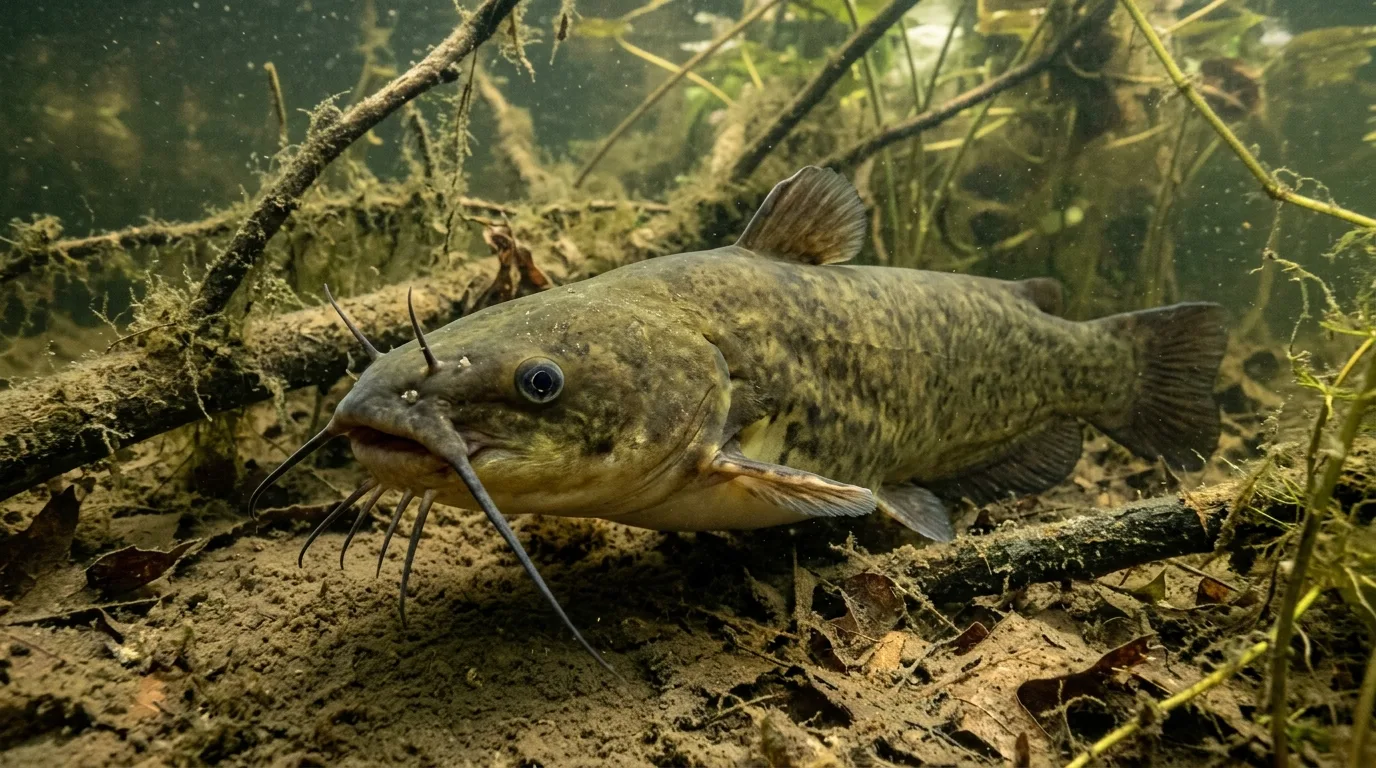
A small, non-native catfish from North America with eight barbels and an adipose fin behind the dorsal fin. In Germany two closely related species go by this name, the brown and the black bullhead. Around 25 centimetres is typical; a maximum of 55 to 66 centimetres is quoted.
When
July and August are the peak season, September is still good, because the warmth-loving brown bullhead bites best in summer. Spawning takes place in late spring and early summer, according to American sources in May or June. In autumn brown bullheads feed heavily once more before winter, but below about 15 °C the bites drop off noticeably. In winter they hardly feed.
- JanHardly any chance
- FebHardly any chance
- MarHardly any chance
- AprPossible
- MayPossible, spawning season
- JunPossible, spawning season
- JulPeak season
- AugPeak season
- SepGood
- OctPossible
- NovHardly any chance
- DecHardly any chance
Peak seasonGoodPossibleHardly any chanceSpawning season
Spring tactics
When the water warms up and rain washes in fresh food, brown bullheads move to the bank and start feeding, at first also by day in the shallows. From late spring they sit further out by day and only come back in the evening. At spawning time they dig nests in the shallows near stones and roots.
Summer tactics
In warm summer water brown bullheads feed almost constantly, but most of all at night. In deep lakes they rest and feed by day at around 3,5 to 4,5 m depth; below the thermocline you will find hardly any.
Autumn tactics
Before winter they feed heavily once more and gather on flat points near deep water. When the water drops below about 15 °C, the bites drop off noticeably.
Winter tactics
In cold water brown bullheads slow their metabolism right down and hardly feed. Targeting them specifically is then hardly worthwhile in this country.
Is it biting today?
In January: Out of seasonIn February: Out of seasonIn March: Out of seasonIn April: PossibleIn May: Spawning season, please spare themIn June: Spawning season, please spare themIn July: Peak seasonIn August: Peak seasonIn September: Shoulder seasonIn October: PossibleIn November: Out of seasonIn December: Out of season
Today’s catch index needs JavaScript. Season and spawning time are in the catch calendar.
Where it is now
In the lake
In ponds and lakes it stays near the bottom in quiet areas, over sand or mud and usually close to underwater plants. It spends the day motionless in the weed, under jetties or in the shade along the bank, and at night it searches the bottom for food.
How to go about it: In lakes you fish at night close to the bank, along weed edges, jetties, long points and shallow underwater humps. In summer in deep lakes it is better to fish just above the thermocline than below it.
| All year round | Weed bed, jetty |
|---|---|
| Autumn extra | Shelf edge |
In the river
In streams and rivers it stands where the current is weak and the bottom soft, for example in deep pools, scour holes and backwaters. In unfavourable conditions it buries itself in the mud.
How to go about it: In streams you look for deep holes, in rivers for quiet oxbows and bays with a soft bottom. The brown bullhead hardly ever stays in the current.
| All year round | Deep pool, quiet bay |
|---|
At the pond
How to go about it: In ponds brown bullhead are often present in large numbers. Place the bait at the edge of weed beds and fish in the evening and at night; there they are often more of a pest than a target species for anglers.
Biting time: mainly in the evening and at night. What that looks like in the water is shown by the picture of the holding spots just below.
Holding spots in the picture
Choose the season and time of day: the picture shows where the species stands then. Spots outlined in red apply only in the chosen season. Tap a fish or a spot in the list to bring it closer. The picture is schematic and AI-generated, every water is different.
Catch chances in springpossible
Catch chance in summerPeak season
Catch chance in autumnpossible
Catch chance in winterhardly any
- J
- F
- M
- A
- M
- J
- J
- A
- S
- O
- N
- D
Spawning season
No main time Brown bullhead are active at night and mostly look for food on the bottom after dark. In the evening they come into the shallows to feed, and in early spring they also bite there during the day.
No main time Brown bullhead are active at night and mostly look for food on the bottom after dark. In the evening they come into the shallows to feed, and in early spring they also bite there during the day.
Active time Brown bullhead are active at night and mostly look for food on the bottom after dark. In the evening they come into the shallows to feed, and in early spring they also bite there during the day.
Active time Brown bullhead are active at night and mostly look for food on the bottom after dark. In the evening they come into the shallows to feed, and in early spring they also bite there during the day.
In the lake
Water lilies and weed bed
Brown bullhead are found here all year round.
jetty, sheet piling, harbour
Brown bullhead are found here all year round.
Shelf edge
Brown bullhead are found here only in autumn.
In ponds and lakes brown bullhead stay on the bottom in quiet areas, mostly over sand or mud and close to underwater plants. During the day they lie idle in weed beds, under jetties or in shady spots along the bank, and at night they search the bottom for food.
Spring: catch chances according to the catch calendar are slim in March, possible in April and May. In spring they are drawn to quickly warming shallows and to inflows; at spawning time in May and June they stand in the shallows near stones and roots.
Summer: catch chances according to the catch calendar are possible in June, peak season in July and August. In deep lakes in summer they usually stay at a depth of about 3.5 to 4.5 metres, because below that oxygen is often lacking.
Autumn: catch chances according to the catch calendar are good in September, possible in October, slim in November. In autumn they feed hard once more and like to stand on shallow points next to deeper water.
Winter: catch chances according to the catch calendar are slim. In winter black bullheads hardly feed any more and bury themselves in deposited material along the lake shore.
In the river
Pools, deep spot
Brown bullhead are found here all year round.
Calm bay with aquatic plants
Brown bullhead are found here all year round.
In streams and rivers brown bullhead stay in weak current over a soft bottom: in deep pools, scour holes and backwaters. The same species also live in small lakes, ponds and reservoirs. In unfavourable conditions they bury themselves in the mud.
Spring: catch chances according to the catch calendar are slim in March, possible in April and May. Spawning takes place in late spring and early summer. The eggs lie in a shallow hollow, often under wood or stones, and are guarded by one of the parents.
Summer: catch chances according to the catch calendar are possible in June, peak season in July and August.
Autumn: catch chance according to the catch calendar good in September, possible in October, hardly any in November.
Winter: catch chance according to the catch calendar hardly any.
Depth: They live on the bottom of quiet waters over soft ground. FishBase gives a depth range of up to 12 metres for the brown bullhead.
Size comparison: AI-generated drawing, schematic.
How
The brown bullhead usually bites as by-catch when you fish on the bottom with a worm at night, and a simple running-lead rig is enough for that. Anglers report bites mainly in the evening and at night.
Easiest way
The easiest way to catch brown bullhead is with a lobworm on a light bottom rig, in the evening until after dark on a warm summer day. Place the bait close to the bank along weed edges, jetties or in quiet backwaters. You do not need to cast far for this.
Night session with worm
The most productive method in summer, when brown bullhead search the bottom for food after dark. Night fishing is banned in some countries and on some waters, so check your fishing permit (Erlaubnisschein).
- Close to the shore
At night brown bullhead move into the shallows along the bank. Good spots are weed edges in ponds, jetties, points and shallow humps in lakes, deep holes in streams and quiet backwaters on rivers.
- Running lead instead of fixed lead
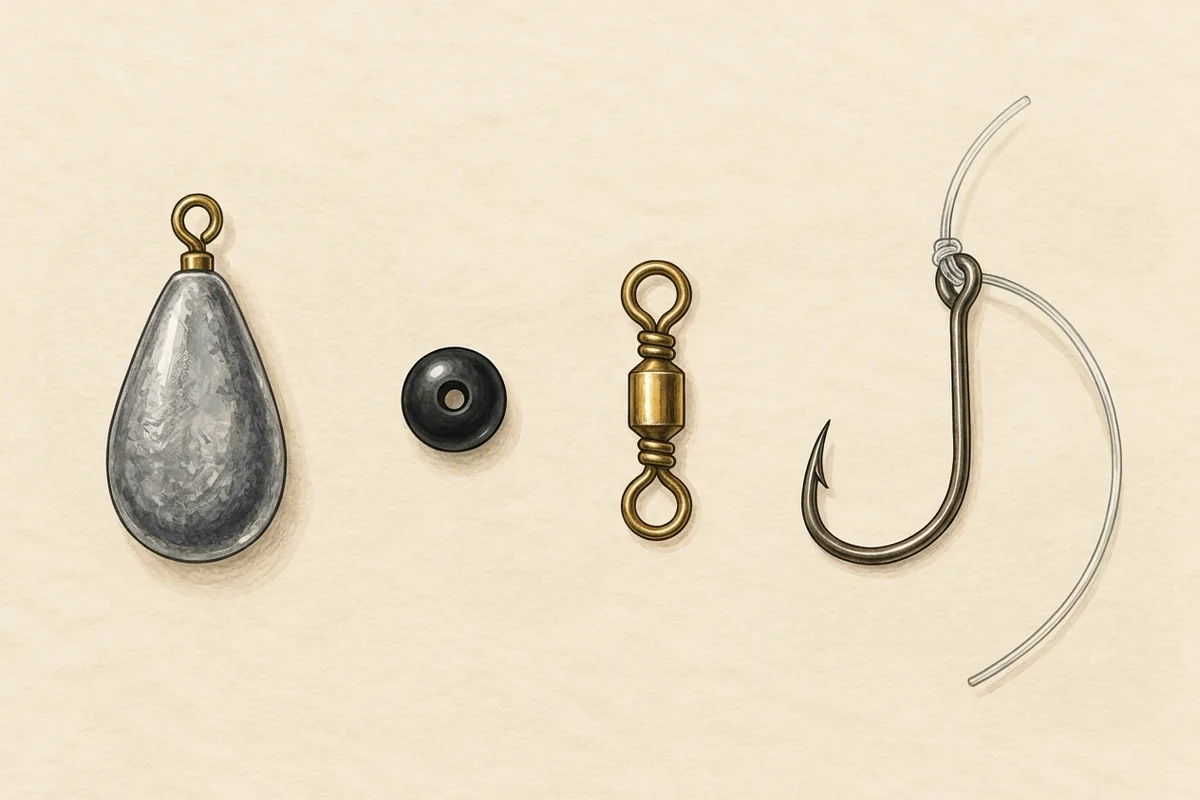
Thread a small running lead onto the main line and put a split shot 15 to 30 cm in front of the hook as a stopper. A weight clamped firmly in place is felt by the fish, and then it drops the bait.
- Worm with the point left free
Put a lobworm or a piece of worm on the hook and leave the point free. Handle the bait with clean hands; smells such as sun cream, petrol or mosquito repellent scare the fish off.
- Cast short
Cast only as far as necessary; the bait should lie still on or just above the bottom. You do not need to move it, so put the rod in a rod rest.
- Tap, then pull
In warm water it first taps lightly, then the line tightens. Stay near the rod; brown bullhead sometimes hold the bait firmly without triggering the bite indicator.
- Short and decisive
Brown bullhead are small and quickly landed. Bring the fish out briskly so that it does not get tangled in the weed.
By day in spring
For the first warm weeks, when brown bullhead also come into shallow, faster-warming water in daylight.
- Warm shallows
In early spring brown bullhead look for shallow areas that warm up quickly and for spots where an inflow brings warmth and food. Cloudy water also makes daytime catches possible.
- Light and free
Use a light running-lead rig with a small weight. In mostly calm water you do not need a heavy lead.
- Worm, liver, fish
Besides worm, a piece of liver, a scrap of a dead baitfish or a dough bait also catch fish.
- Place close to the bank
Place the bait in the shallow area in front of you and keep the line only lightly tensioned. In clear water your shadow does not fall on the spot if you have the sun in front of you or beside you.
- Twitches in cold water
In cool water the line tends to twitch in jerks rather than run off. Finding the right moment to strike takes some practice.
- Unhooking with a tool
Brown bullhead often swallow the bait deep. Remove the hook with forceps or a disgorger; a long-shank hook is easier to grip.
What with
At night it is easy to catch on a worm on the bottom; it tracks down its food with a fine sense of smell. Other natural baits to consider are dead baitfish, liver or meat, bread and fishing dough.
- Wormsalways, especially at night in summer
Lobworms and red worms catch most brown bullhead, because they match the natural food on the bottom and smell strongly.
- Offal and meatwhen small fish strip the worm
Fresh liver is one of the proven baits for brown bullhead and gives off a strong scent trail, which the fish follows with its fine sense of smell.
- Baitfishon waters with plenty of small fish
Brown bullhead eat almost anything that fits in their mouth, including small fish, so a dead baitfish or a scrap of one is a proven alternative to worm.
Tackle
A bottom rod with a simple running-lead rig is enough. Have a disgorger or forceps ready, because the dorsal and pectoral fins carry a bony spine at the front, and on the brown bullhead the ones on the pectoral fins are serrated at the back. Before you change waters, check your landing net, bucket and gear so that you do not carry brown bullhead over.
Night session with worm
- Rod
- light to medium spinning or bottom rod
- Reel
- small fixed-spool reel
- Line
- Monofilament with about 2 to 4.5 kg breaking strain
- Hooks
- long-shank, size 4 to 1/0, or small circle hooks
- Weight, float, lead
- Running lead about 7–14 g, plus a small split shot as a stopper
By day in spring
- Rod
- light to medium rod
- Reel
- small fixed-spool reel
- Line
- Monofilament with about 2 to 4.5 kg breaking strain
- Hooks
- size 4 to 1/0, long-shank
- Weight, float, lead
- small running lead or split shot
Common mistakes
- Lead fixed on the line: If the brown bullhead feels resistance as it moves off, it lets go of the bait. Use a running lead and put only a small stopper in front of the hook.
- Bait with a foreign smell: Sun cream, petrol, oil or mosquito repellent on your fingers transfers to the bait, and the fish avoid it. Wash your hands before baiting up.
- In summer by day on the shallow bank: From late spring brown bullhead move into deeper water during the day. Fish then in the evening and at night.
- Fishing too deep: In deep lakes oxygen is lacking below the thermocline in summer, and hardly any fish stand there. In high summer stay in the upper metres.
- Fish grabbed with a bare hand: The spines on the dorsal and pectoral fins are very sharp. Grip behind the pectoral spines and use a cloth.
Rules
With the brown bullhead it is not about closed season (Schonzeit) or minimum size (Mindestmaß), but about the fact that you must not put it back after catching it.
The black bullhead is on the EU Union list of invasive alien species and must not be released again (VO (EU) 1143/2014, Art. 7). The brown bullhead is not on it, but at the water it is almost impossible to tell from the black one. That is why you keep every brown or black bullhead.
What applies in your country is on the country pages under Fishing waters in Germany.
The regulation and your fishing permit (Erlaubnisschein) are what count. Lake Constance, the Rhine and the coast, for example, have their own rules: Fishing waters in Germany.
After the catch
Playing and landing
With a small circle hook it is enough to tighten the line calmly; a hard strike is not necessary. The fight is short; afterwards grip the fish behind the pectoral spines, protect your hand with a cloth and remove the hook with forceps or a disgorger. If you may keep the fish, stun and kill it straight after landing; you never take a live brown bullhead to another water.
The black bullhead has been on the EU Union list of invasive alien species since August 2022: the EU regulation prohibits keeping, selling or releasing it on purpose, and transport is allowed only for disposal. The brown bullhead is not on this list, but the state authorities rate it as similarly invasive, and the two species are hard to tell apart. That is why the rule for every brown or black bullhead is: recognise it and keep it, never put it back; a working group of the federal states also provides for keeping by-catch. You stun and kill a brown or black bullhead you have caught immediately, the Landesamt für Umwelt Bayern considers using it better than disposing of it, and you never move a brown or black bullhead to another water.
Frequently asked questions
When do brown bullhead bite best?
In the evening and at night, especially in warm summer water. In early spring you also catch them during the day in shallow, quickly warming water.
Which bait for brown bullhead?
Worms catch most fish. Besides them, liver, pieces of dead baitfish and dough baits work.
Which hook size for brown bullhead?
Hooks in size 4 to 1/0 are suitable, preferably long-shank, because the fish often swallow deep. Small circle hooks usually take hold in the corner of the mouth.
How do you hold a brown bullhead correctly?
Grip it behind the pectoral spines and keep your hand away from the spine of the dorsal fin. A cloth between your hand and the fish gives extra protection.
May you put brown bullhead back?
Do not put any back. Under EU law the black bullhead must not be released, and at the water you can hardly tell it from the brown one; the authorities rely on removal anyway. What your water additionally requires is set out in state law and the water rules (Gewässerordnung).
Can you eat brown bullhead?
Yes. Put the catch on ice straight away instead of keeping it in warm water, otherwise the flesh turns soft. You pull off the scaleless skin before preparing it.
Similar species
Anyone who catches the brown bullhead can fish for these species with similar gear:
 Burbot fishingSecondary season
 Eel fishingSecondary season
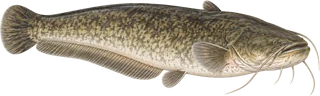 Wels catfish fishingSecondary season
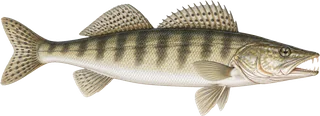 Zander fishingPeak season
Sources
Status: October 2026. The practical knowledge comes from 6 sources, summarised in our own words.
View all 6 sources
- Bullheads (Iowa Fish Species) · Iowa Department of Natural Resources (Fischereibehörde, USA)
- 20 Great Tips for Catching More Bullheads · Game & Fish Magazine (K. Sutton)
- Schwarzer Zwergwels – Management- und Maßnahmenblatt zu VO (EU) Nr. 1143/2014 (Stand Januar 2024) · Freistaat Sachsen, Naturschutzverwaltung
- Invasive Arten: Bedrohung in unseren Gewässern (Seite 2) · BLINKER (Redaktion)
- Lästige Katzenwelse · BLINKER (Redaktion)
- Nachhaltig fischen – Tipps für Angler:innen · Umweltbundesamt Österreich (mit österreichischen Landesfischereiverbänden)
Text AI-assisted, based on the sources named and these pages: Brown bullhead (profile), Bottom fishing, Night fishing, Worms.