
Knowledge – Fish
Fishing for huchen
Fishing for huchen means fishing the bottom in winter with robust tackle, making only a few well-aimed casts at each spot, and bringing plenty of patience. Here is the way there in nine steps, each with a link to the detailed page.
 Choose another fish117 fish with guides
 EelOff-peak season
 EelpoutPossible
 IdePossible
 ArapaimaGood
 GraylingPeak season
 Atlantic salmonSpawning time, please spare
 Brown troutSpawning time, please spare
 Brook troutSpawning time, please spare
 BarbelOff-peak season
 BarramundiSpawning season
 Greater amberjackGood
 Topmouth gudgeonOnly as bycatch
 Blue marlinSpawning season
 BonefishSpawning season
 BonitoGood
 BreamOff-peak season
 Dusky grouperOnly as bycatch
 CobiaPossible
 Spiny dogfishOnly as bycatch
 CodPeak season
 ChubPeak season
 MinnowOnly as bycatch
 European sturgeonOnly as bycatch
 FlounderPeak season
 PerchPeak season
 Largemouth bassGood
 Ballan wrasseOnly as bycatch
 Yellowfin tunaSpawning season
 Giant trevallyGood
 Prussian carpPossible
 BrillPossible
 Gilthead breamSpawning time, please spare
 Golden doradoSpawning season
 Golden mahseerOnly as bycatch
 Dolphinfish (mahi-mahi)Good
 Grass carpPossible
 Great barracudaGood
 GudgeonPossible
 White breamPossible
 DaceOff-peak season
 PikePeak season
 HalibutOff-peak season
 HerringPossible
 GarfishOut of season
- Huchen (Danube salmon)Possible
 Crucian carpOnly as bycatch
 CarpOff-peak season
 RuffeOff-peak season
 VendaceOnly as bycatch
 DabPeak season
 GurnardPossible
 Coley (saithe)Peak season
 Chinook salmonHardly any chance
 King mackerelSpawning season
 LingPeak season
 TuskOff-peak season
 MackerelPossible
 Bighead carpOut of season
 WhitefishPossible
 Conger eelOff-peak season
 Sea troutSpawning time, please spare
 Grey mulletPossible
 Murray codSpawning season
 MuskellungeGood
 Common nasePossible
 Nile perchPossible
 PayaraPossible
 Peacock bassPeak season
 PermitGood
 WeeverOnly as bycatch
 PollackOff-peak season
 BurbotOff-peak season
 AspPossible
 Red snapperSpawning season
 Rainbow troutPeak season
 RoosterfishGood
 RoachPeak season
 RedfishOut of season
 Bluefin tunaOnly as bycatch
 RuddPossible
 Russian sturgeonOnly as bycatch
 HaddockOff-peak season
 SnakeheadPossible
 TenchOff-peak season
 SpirlinOnly as bycatch
 PlaiceOff-peak season
 Greenland halibutOnly as bycatch
 Round gobyOnly as bycatch
 SwordfishGood
 Lake troutSpawning time, please spare
 HakeSpawning time, please spare
 Alpine charSpawning time, please spare
 MonkfishPossible
 SoleOff-peak season
 SailfishGood
 Silver carpOut of season
 SnookPeak season
 PumpkinseedOnly as bycatch
 SpratOnly as bycatch
 Atlantic wolffishSpawning time, please spare
 TurbotPeak season
 SterletOnly as bycatch
 SmeltOnly as bycatch
 Horse mackerelPossible
 TaimenGood
 TarponGood
 TigerfishSpawning season
 BleakPossible
 WahooGood
 Wels catfishOff-peak season
 WhitingPeak season
 Sea bassOff-peak season
 ZanderPeak season
 White-eye breamOnly as bycatch
 Blue breamOnly as bycatch
 Brown bullheadPossible
 VimbaOnly as bycatch
Season in October according to the catch calendar, an estimate and not a guarantee of a catch. The fish pictures are reduced natural-history plates and AI-generated.
Best time
From December to January, mainly in the morning and in the evening.
In January: Peak seasonIn February: GoodIn March: Slim chances, spawningIn April: Slim chances, spawningIn May: Slim chances, spawningIn June: Slim chancesIn July: Slim chancesIn August: Slim chancesIn September: PossibleIn October: PossibleIn November: GoodIn December: Peak season
Good spot
- River: pools, undercut bank and behind rockspools, undercut bank and behind rockspools, undercut bank and behind rockspools, undercut bank and behind rocks
Top baits
Starter tackle
- Rod: about 3 m, casting weight 80–150 g, strong backbone and large rings against icing up; alternatively strong rods of 2,40–2,70 m
- Line: braid 0,30–0,35 mm; in frost monofilament 0,45–0,50 mm
- Hooks: where allowed, large single hooks 1/0–3/0 instead of trebles; check the point after every snag
- Rod: about 3 m, casting weight 80–150 g
- Line: braid 0,30 mm, about 300 m
- Hooks: large single hooks 1/0–3/0, where allowed
In short
In short: The best time to catch huchen is from December to January, mainly in the morning and in the evening. Good spots in the river: pools, undercut banks and behind rocks. Proven baits: huchen braid, large soft plastics, large crankbaits, spoons or a dead baitfish on a rig. Specialist articles name December and January as the best huchen time. The huchen spawns in spring and is hardly to be caught in summer.
Quick to recognise
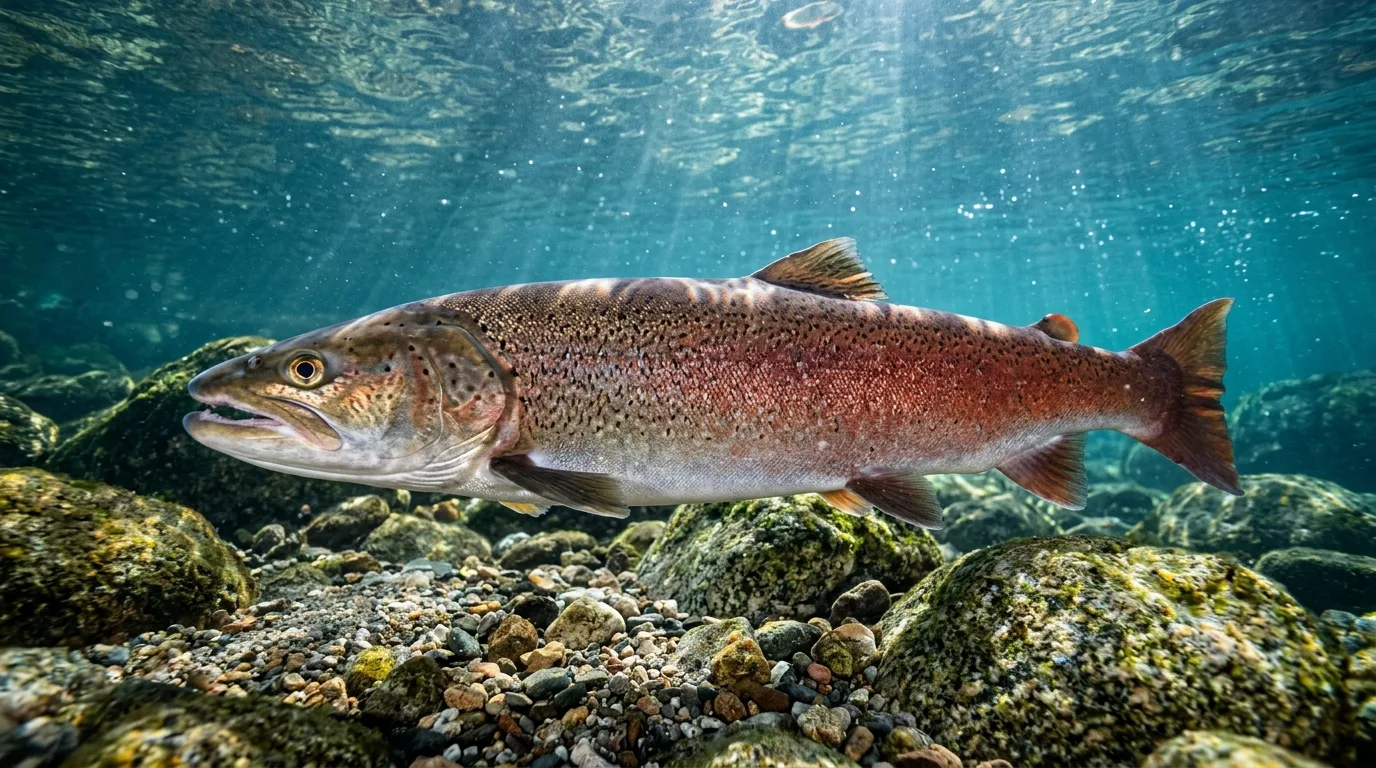
The huchen, or Danube salmon, is a large salmonid that spends its whole life in fresh water and originally occurs only in the Danube basin. 50 to 100 centimetres is typical, the LFV Bayern gives up to 150. In Germany it is considered endangered.
When
Peak season is December and January, November and February are good, because the colder the water, the hungrier the huchen. In summer it is hardly to be caught. It spawns from March to May. Bavaria protects it with a closed season (Schonzeit) from 15 February to 30 June and prescribes a minimum size (Mindestmaß) of 90 centimetres (as of October 2026); the values are listed below under ‘Rules’.
- JanMain season
- FebGood
- MarSlim chances, spawning
- AprHardly any chance, spawning season
- MaySlim chances, spawning season
- JunHardly any chance
- JulHardly any chance
- AugHardly any chance
- SepPossible
- OctPossible
- NovGood
- DecMain season
Peak seasonGoodPossibleHardly any chanceSpawning season
Spring tactics
In spring the huchen spawns and moves into smaller tributaries to do so. Whether you may fish for it at all then is stated on your fishing permit (Erlaubnisschein); do not wade across gravel bars at this time, so the redds stay undamaged.
Summer tactics
In summer the huchen is considered almost impossible to catch. With high water temperatures and low flow, it is better to leave it in peace.
Autumn tactics
In autumn many huchen stretches open, and appetite grows as the temperature falls. After a longer spell of low water, slightly rising, slightly coloured water often gets the fish moving before it turns too murky.
Winter tactics
December and January are considered the best months. Many specialists swear by light snowfall, temperatures around freezing and slightly coloured water, but fish are also caught in clear, cold, low water. In hard frost braid freezes, and thick monofilament helps then.
Is it biting today?
In January: Peak seasonIn February: Shoulder seasonIn March: Spawning, please spare the fishIn April: Spawning, please spare the fishIn May: Spawning, please spare the fishIn June: Out of seasonIn July: Out of seasonIn August: Out of seasonIn September: PossibleIn October: PossibleIn November: Shoulder seasonIn December: Peak season
Today’s catch index needs JavaScript. Season and spawning time are in the catch calendar.
From the blog: Freshwater fish in Germany: which species you catch where
Where it is now
In the river
The huchen is a solitary fish that stays loyal to its spot and holds in deep, shaded places: pools, scoured banks, bridge piers and the water below weirs. It lies in wait for prey at stream mouths and where a pool shallows out. Around 90 per cent hold on the bottom, mostly at depths of two to five metres.
How to go about it: On the pre-Alpine rivers of the Danube basin, huchen hold in weir pools, at bridge piers and in deep outside bends, and hunt on the shallow transitions beside them. Because the fish digest for a long time after a big meal, a good spot can go days without a bite. Take care on icy, snowy banks of riprap and take a phone with you.
| All year round | pools, undercut bank, behind rocks |
|---|---|
| Spring extra | Riffle |
Biting time: mainly in the morning and in the evening. What that looks like at the water is shown by the picture of the holding spots just below.
Waters with rules for huchen
Holding spots in the picture
Choose the season and time of day: the picture shows where the species stands then. Spots outlined in red apply only in the chosen season. Tap a fish or a spot in the list to bring it closer. The picture is schematic and AI-generated, every water is different.
Catch chances in springhardly anyspawning season, observe the closed seasons (Schonzeit)
Catch chance in summerhardly any
Catch chance in autumnpossible
Catch chance in winterMain season
- J
- F
- M
- A
- M
- J
- J
- A
- S
- O
- N
- D
Spawning season
Active time The huchen likes to hunt best at twilight, and by day too when the water is not too clear.
Not a main time The huchen likes to hunt best at twilight, and by day too when the water is not too clear.
Active time The huchen likes to hunt best at twilight, and by day too when the water is not too clear.
Not a main time The huchen likes to hunt best at twilight, and by day too when the water is not too clear.
In the river
Undercut bank, overhanging branches, timber
Huchen are present here all year.
Slack water behind rocks
Huchen are present here all year.
Gravelly shallow (riffle)
Huchen are present here only in spring.
Pools, deep spot
Huchen are present here all year.
The huchen is a solitary fish that stays loyal to its spot and holds in deep, shaded places: in pools, under scoured banks, under bridges and behind weirs. Large boulders and sunken wood also give cover. It lies in wait for prey below weirs, at stream mouths and where deep pools shallow out.
Spring: catch chances according to the catch calendar slim. Spawning falls in this period, so observe closed seasons (Schonzeit). From March to May the huchen moves upstream to spawn, often into the upper reaches of tributaries. The female digs the redd in gravel at a water depth of about 20 to 60 centimetres.
Summer: catch chances according to the catch calendar slim. In summer the huchen is hardly to be caught. Where it holds then is little known.
Autumn: catch chances according to the catch calendar possible in September and October, good in November.
Winter: catch chances according to the catch calendar peak season in December and January, good in February. Winter is the main time, with December and January considered best: the colder it gets, the more the huchen is out looking for prey. Experience differs on the weather; clear, low water and severe cold are named just as much as slightly coloured, rising water at temperatures around freezing.
Depth: It mostly stays in the deeper sections of fast-flowing rivers and prefers a hard bottom of rock or coarse gravel.
Size comparison: AI-generated drawing, schematic.
How
Spin fishing is the rule for huchen. Cast slightly upstream, let the lure sink to the bottom and retrieve it slowly in contact with the bottom. Fly and streamer usually bring only smaller fish.
Easiest way
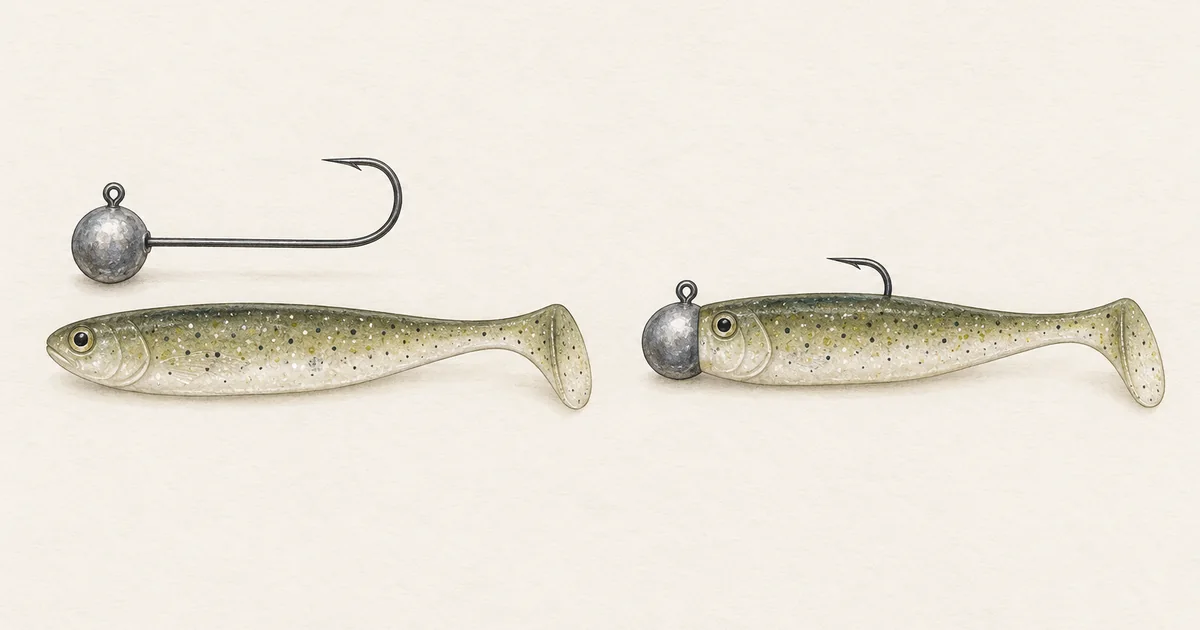
You fish for huchen only on stretches in the Danube basin whose fishing permit (Erlaubnisschein) expressly allows it, ideally at first together with someone who knows the water. Take a strong spinning rod about 3 metres long and a soft plastic (shad) of around 15 centimetres on a jig head, and work it very slowly through the inflow and outflow of the pools in winter.
Soft plastic and huchen braid on the bottom
The standard method in winter, when the huchen holds on the bottom in pools and channels.
- Fish known spots
Instead of searching large areas, you fish known holding spots such as weir pools and deep channels over gravel or rock again and again. Approach quietly; the fish react warily on heavily fished rivers.
- Monofilament as a buffer
Tie a monofilament leader of 0,40 to 0,50 millimetres between the braid and the lure. It stretches during the fight, withstands abrasion on rocks better and protects against break-offs.
- Soft plastic or braid lure
Thread a soft plastic of 13 to 20 centimetres onto a jig head of 15 to 20 grams, preferably in pearl or natural colours. The braid made of rubber or leather strips is the classic alternative.
- Slightly upstream
Cast roughly towards eleven o’clock, that is 15 to 20 degrees against the current, and wait until the lure reaches the bottom.
- In slow motion
Hold the rod almost vertical so that little line lies in the water, and reel very slowly. The current does most of the work; now and then you give a small jerk with the tip.
- Slack line means a bite
If the line suddenly goes slack or the lure shifts sideways, a huchen has often taken it. Strike hard, and with big fish a second time as soon as it pulls away to the side.
- Stay calm
Do not chase a run blindly. The huchen shakes its head, rolls and turns broadside to the current; bring it to you with steady pressure.
- Net it safely
Land it with a large landing net and watch out for icy stones and ice edges. If it has to go back, unhook it in the water.
Crankbait in shallow water
When the huchen comes into the shallows to hunt, usually in low light, you work the inflows and outflows of the pools with shallow-running crankbaits.
- Look for hunting spots
The huchen rests deep but hunts in the shallows: where pools begin or shallow out, on current seams and in eddies. You usually do not have to wade deep there.
- Fit single hooks
Swap the trebles on the crankbait for large single hooks where allowed. They are kinder to undersized fish, and the whole force of the strike is on a single point.
- Steady runners
Use shallow runners that dive 1 to 1,5 metres deep and work evenly even under barely noticeable pull, in natural colours.
- To the far bank
Cast slightly upstream towards the far bank and keep the line tight until the crankbait has reached its running depth.
- Swing in an arc
Let the crankbait swing round in the current and regulate the depth with the rod tip. If it runs too deep it snags, if it runs too high the huchen does not react.
- Work over obstacles
You let a floating crankbait drift over sunken rocks or roots and then bring it back down to depth with a little more pull.
- React at once
If the crankbait suddenly runs erratically or stalls, strike hard at once, even if you feel no clear bite.
What with
The classic is the huchen braid, which you lift and lower slowly and close to the bottom. Large soft plastics on a heavy jig head and spoons, preferably in silver, also catch fish. A dead baitfish, where it is allowed, creeps through the pools especially slowly.
- Soft plastic (shad)winter, on the bottom in pools and channels
On a jig head the soft plastic is easiest to present at the right depth, and it keeps moving even on the slowest retrieve.
- Huchen braidwinter, deep pools
Its fringes play even on a slow pull and trigger the biting reflex, even in rivers where there are hardly any lampreys left.
- Spoonmurky water and twilight
Heavy pearl spoons, converted to single hooks, cast far even on big rivers and shimmer in low light.
Tackle
You need robust tackle: a long spinning rod whose large rings stay free of ice longer in frost, a reel with plenty of line and a strong monofilament leader. Instead of trebles, where it is allowed, use large, sturdy single hooks in sizes 1/0 to 3/0. Weak hooks give way in the hard mouth. The spinning rod page helps with length and casting weight.
Soft plastic and huchen braid on the bottom
- Rod
- about 3 m, casting weight 80–150 g, strong backbone and large rings against icing up; alternatively strong rods of 2,40–2,70 m
- Reel
- Fixed-spool reel size 5000 with a strong drag, line capacity 200–300 m
- Line
- Braid 0,30–0,35 mm; in frost monofilament 0,45–0,50 mm
- Leader
- Monofilament 0,40–0,50 mm, about 0,6–2 m long
- Hooks
- where allowed, large single hooks 1/0–3/0 instead of trebles; check the point after every snag
- Weight, float, lead
- jig head 15–20 g for soft plastics of around 15 cm
Crankbait in shallow water
- Rod
- about 3 m, casting weight 80–150 g
- Reel
- Fixed-spool reel size 5000 with a strong drag
- Line
- Braid 0,30 mm, around 300 m
- Leader
- Monofilament 0,40–0,50 mm
- Hooks
- large single hooks 1/0–3/0, where allowed
- Weight, float, lead
- medium to large shallow runners with a diving depth of 1–1,5 m
Common mistakes
- Mistaking the bite for a snag: Beginners often confuse the take with contact with the bottom. Strike at every resistance; a supposed rock may suddenly move downstream.
- Pulling the lure past the feeding zone: If the huchen sees a lure several times outside its reach, it hardly takes it later. The first cast at a spot has to count; if you stay longer, change the lure after a few casts.
- Wet braid in frost: Braid spooled on wet freezes and puts the line roller, bail and drag out of action. At sub-zero temperatures you switch to thick monofilament and keep the reel out of the water.
- Stiff rod with low-stretch line: Braid and a hard rod lead to many lost fish after the strike. Use a rod that is not too stiff with braid; with monofilament it can be harder.
- Flagging attention: After hours in sleet it is easy to miss the one bite of the day. Expect a huchen on every cast and take a break instead.
Rules
Each federal state (Bundesland) sets its own closed season (Schonzeit) and minimum size (Mindestmaß). Choose your state; the values come from our state pages.
Baden-Württemberg
Our overview for Baden-Württemberg does not list the huchen. What applies there is explained on the page Fishing in Baden-Württemberg, which covers the state’s spots.
Bavaria
- Minimum size
- 90 cm
- Closed season
- 15.2.–30.6.
- Note
- Danube catchment only
As of October 2026. All rules, exceptions and sources: Fishing in Bavaria.
Berlin
Our overview for Berlin does not list the huchen. What applies there is explained on the page Fishing in Berlin, which covers the state’s spots.
Brandenburg
Our overview for Brandenburg does not list the huchen. What applies there is explained on the page Fishing in Brandenburg, which covers the state’s spots.
Bremen
Our overview for Bremen does not list the huchen. What applies there is explained on the page Fishing in Bremen, which covers the state’s spots.
Hamburg
Our overview for Hamburg does not list the huchen. What applies there is explained on the page Fishing in Hamburg, which covers the state’s spots.
Hesse
Our overview for Hesse does not list the huchen. What applies there is explained on the page Fishing in Hesse, which covers the state’s spots.
Mecklenburg-Western Pomerania
Our overview for Mecklenburg-Western Pomerania does not list the huchen. What applies there is explained on the page Fishing in Mecklenburg-Western Pomerania, which covers the state’s spots.
Lower Saxony
Our overview for Lower Saxony does not list the huchen. What applies there is explained on the page Fishing in Lower Saxony, which covers the state’s spots.
North Rhine-Westphalia
Our overview for North Rhine-Westphalia does not list the huchen. What applies there is explained on the page Fishing in North Rhine-Westphalia, which covers the state’s spots.
Rhineland-Palatinate
Our overview for Rhineland-Palatinate does not list the huchen. What applies there is explained on the page Fishing in Rhineland-Palatinate, which covers the state’s spots.
Saarland
Our overview for Saarland does not list the huchen. What applies there is explained on the page Fishing in Saarland, which covers the state’s spots.
Saxony
Our overview for Saxony does not list the huchen. What applies there is explained on the page Fishing in Saxony, which covers the state’s spots.
Saxony-Anhalt
Our overview for Saxony-Anhalt does not list the huchen. What applies there is explained on the page Fishing in Saxony-Anhalt, which covers the state’s spots.
Schleswig-Holstein
Our overview for Schleswig-Holstein does not list the huchen. What applies there is explained on the page Fishing in Schleswig-Holstein, which covers the state’s spots.
Thuringia
Our overview for Thuringia does not list the huchen. What applies there is explained on the page Fishing in Thuringia, which covers the state’s spots.
The regulation and your fishing permit (Erlaubnisschein) are what count. Lake Constance, the Rhine and the coast, for example, have their own rules: Fishing waters in Germany.
After the catch
Playing and landing
Strike hard, because the hook penetrates the bony mouth with difficulty. In the fight keep a balance between pressure and giving way, and land the huchen with a large landing net. A huchen in its closed season (Schonzeit) or one that is too small you unhook in the water and support with wet hands until it swims off by itself. If the rules of your stretch allow you to keep a fish of legal size, it is stunned and killed straight away.
Huchen stretches have their own conditions; you check the closed season (Schonzeit), minimum size (Mindestmaß) and taking of fish beforehand on your fishing permit (Erlaubnisschein). Protected or undersized fish you unhook with wet hands directly in the water. A huchen that you may take, you stun and kill at once.
Frequently asked questions
When is the best time for huchen fishing?
In winter, above all in December and January. During the day the hours before sunset and twilight are considered promising.
Which rod for huchen fishing?
A strong spinning rod of around 3 metres that casts 80 to 150 grams has proved its worth. Oversized rings stay free of ice longer in frost, and soft rods hardly get the hook to bite in the hard mouth.
Braid or monofilament for huchen fishing?
Braid of 0,30 to 0,35 millimetres casts further and gives better contact with the lure, and a monofilament leader in front acts as a buffer. In frost braid freezes; then monofilament of 0,45 to 0,50 millimetres is the better choice.
Which lure for huchen?
Soft plastics from about 15 centimetres on a jig head, shallow-running crankbaits in natural colours and the classic huchen braid. A very slow retrieve matters more than the model.
Where may you fish for huchen in Germany?
Only on stretches in the Danube basin, mainly in Bavaria, whose fishing permit (Erlaubnisschein) allows huchen. Methods, lures and taking fish are often tightly regulated there, and in some waters only the fly is allowed.
Does the huchen bite at night?
It hunts mainly at twilight, and some specialists also catch fish in the hours before midnight. Night fishing is forbidden in some federal states (Bundesland) and waters, so check your fishing permit (Erlaubnisschein).
Similar species
If you catch huchen, you can fish for these species with similar tackle too:
 Atlantic salmon fishingSpawning season, please spare
 Brown trout fishingSpawning season, please spare
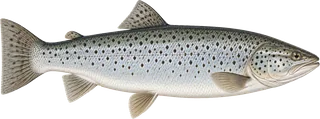 Sea trout fishingSpawning season, please spare
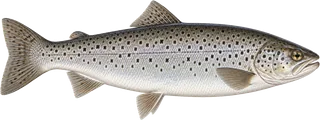 Fishing for lake troutSpawning season, please spare them
Sources
Status: October 2026. The practical knowledge comes from 6 sources, summarised in our own words.
View all 6 sources
- Mythos Huchen – im Winter auf den König der Flüsse · BLINKER (C. Leppin)
- Spinnfischen auf Huchen mit Wobbler und Gummifisch · BLINKER (M. Werner)
- Abenteuer Huchenangeln: Was beim Donaulachs wichtig ist · BLINKER (R. Ovesen)
- Huchen: König der Kälte · FISCH & FANG (W. Hauer)
- Geduldsspiel im eisigen Huchenrevier · FISCH & FANG (S. Keiler)
- Nachhaltig fischen – Tipps für Angler:innen · Umweltbundesamt Österreich (im Auftrag des BMLUK, mit österreichischen Landesfischereiverbänden)
Text AI-assisted, based on the sources named and these pages: Huchen (profile), Spin fishing, Huchen braid, Soft plastic (shad), Spoon.