
Knowledge – Fish
Fishing for pollack
Fishing for pollack means: offer a slim, lively bait by rocks, kelp and wrecks and haul the fish out of cover straight after the bite. Here is the way there in nine steps, each with a link to the detailed page.
Applies to fishing in Sweden: there the pollack is protected, in the Skagerrak and Kattegat at the start of the year, in some fjord areas all year round. The authority Havs- och vattenmyndigheten is binding there, and for Norway the Fiskeridirektoratet.
 Choose another fish117 fish with guides
 EelOff-peak season
 EelpoutPossible
 IdePossible
 ArapaimaGood
 GraylingPeak season
 Atlantic salmonSpawning time, please spare
 Brown troutSpawning time, please spare
 Brook troutSpawning time, please spare
 BarbelOff-peak season
 BarramundiSpawning season
 Greater amberjackGood
 Topmouth gudgeonOnly as bycatch
 Blue marlinSpawning season
 BonefishSpawning season
 BonitoGood
 BreamOff-peak season
 Dusky grouperOnly as bycatch
 CobiaPossible
 Spiny dogfishOnly as bycatch
 CodPeak season
 ChubPeak season
 MinnowOnly as bycatch
 European sturgeonOnly as bycatch
 FlounderPeak season
 PerchPeak season
 Largemouth bassGood
 Ballan wrasseOnly as bycatch
 Yellowfin tunaSpawning season
 Giant trevallyGood
 Prussian carpPossible
 BrillPossible
 Gilthead breamSpawning time, please spare
 Golden doradoSpawning season
 Golden mahseerOnly as bycatch
 Dolphinfish (mahi-mahi)Good
 Grass carpPossible
 Great barracudaGood
 GudgeonPossible
 White breamPossible
 DaceOff-peak season
 PikePeak season
 HalibutOff-peak season
 HerringPossible
 GarfishOut of season
 Huchen (Danube salmon)Possible
 Crucian carpOnly as bycatch
 CarpOff-peak season
 RuffeOff-peak season
 VendaceOnly as bycatch
 DabPeak season
 GurnardPossible
 Coley (saithe)Peak season
 Chinook salmonHardly any chance
 King mackerelSpawning season
 LingPeak season
 TuskOff-peak season
 MackerelPossible
 Bighead carpOut of season
 WhitefishPossible
 Conger eelOff-peak season
 Sea troutSpawning time, please spare
 Grey mulletPossible
 Murray codSpawning season
 MuskellungeGood
 Common nasePossible
 Nile perchPossible
 PayaraPossible
 Peacock bassPeak season
 PermitGood
 WeeverOnly as bycatch
- PollackOff-peak season
 BurbotOff-peak season
 AspPossible
 Red snapperSpawning season
 Rainbow troutPeak season
 RoosterfishGood
 RoachPeak season
 RedfishOut of season
 Bluefin tunaOnly as bycatch
 RuddPossible
 Russian sturgeonOnly as bycatch
 HaddockOff-peak season
 SnakeheadPossible
 TenchOff-peak season
 SpirlinOnly as bycatch
 PlaiceOff-peak season
 Greenland halibutOnly as bycatch
 Round gobyOnly as bycatch
 SwordfishGood
 Lake troutSpawning time, please spare
 HakeSpawning time, please spare
 Alpine charSpawning time, please spare
 MonkfishPossible
 SoleOff-peak season
 SailfishGood
 Silver carpOut of season
 SnookPeak season
 PumpkinseedOnly as bycatch
 SpratOnly as bycatch
 Atlantic wolffishSpawning time, please spare
 TurbotPeak season
 SterletOnly as bycatch
 SmeltOnly as bycatch
 Horse mackerelPossible
 TaimenGood
 TarponGood
 TigerfishSpawning season
 BleakPossible
 WahooGood
 Wels catfishOff-peak season
 WhitingPeak season
 Sea bassOff-peak season
 ZanderPeak season
 White-eye breamOnly as bycatch
 Blue breamOnly as bycatch
 Brown bullheadPossible
 VimbaOnly as bycatch
Season in October according to the catch calendar, an estimate and not a guarantee of a catch. The fish pictures are reduced natural-history plates and AI-generated.
Best time
From June to September, in the morning, in the evening and at night.
In January: Possible, spawningIn February: Possible, spawningIn March: Possible, spawningIn April: Good, spawningIn May: Good, spawningIn June: Peak seasonIn July: Peak seasonIn August: Peak seasonIn September: Peak seasonIn October: GoodIn November: PossibleIn December: Possible
Good spot
- Coast: wreck, reef, drop-off and open waterwreck, reef, drop-off and open waterwreck, reef, drop-off and open waterwreck, reef, drop-off and open water
Starter tackle
- Rod: spinning rod 2,40–3,00 m, casting weight 40–100 g, with a fine tip and strong backbone
- Line: braid 0,12–0,16 mm, 200–300 m on the spool
- Hook: large, sturdy single hook on a jig head
- Rod: strong spinning rod with a casting weight of 40–80 g
- Line: braid 0,12–0,15 mm
- Hook: sea hook size 1 to 2/0
In short
In short: You catch pollack best from June to September, in the morning, in the evening and at night. Good spots on the coast: wreck, reef, drop-off and open water. Proven baits: slim spoons and pilkers, light-coloured feathers and small rubber eels on a paternoster; ragworm or strips of mackerel and herring on the running ledger rig.
Quick to recognise
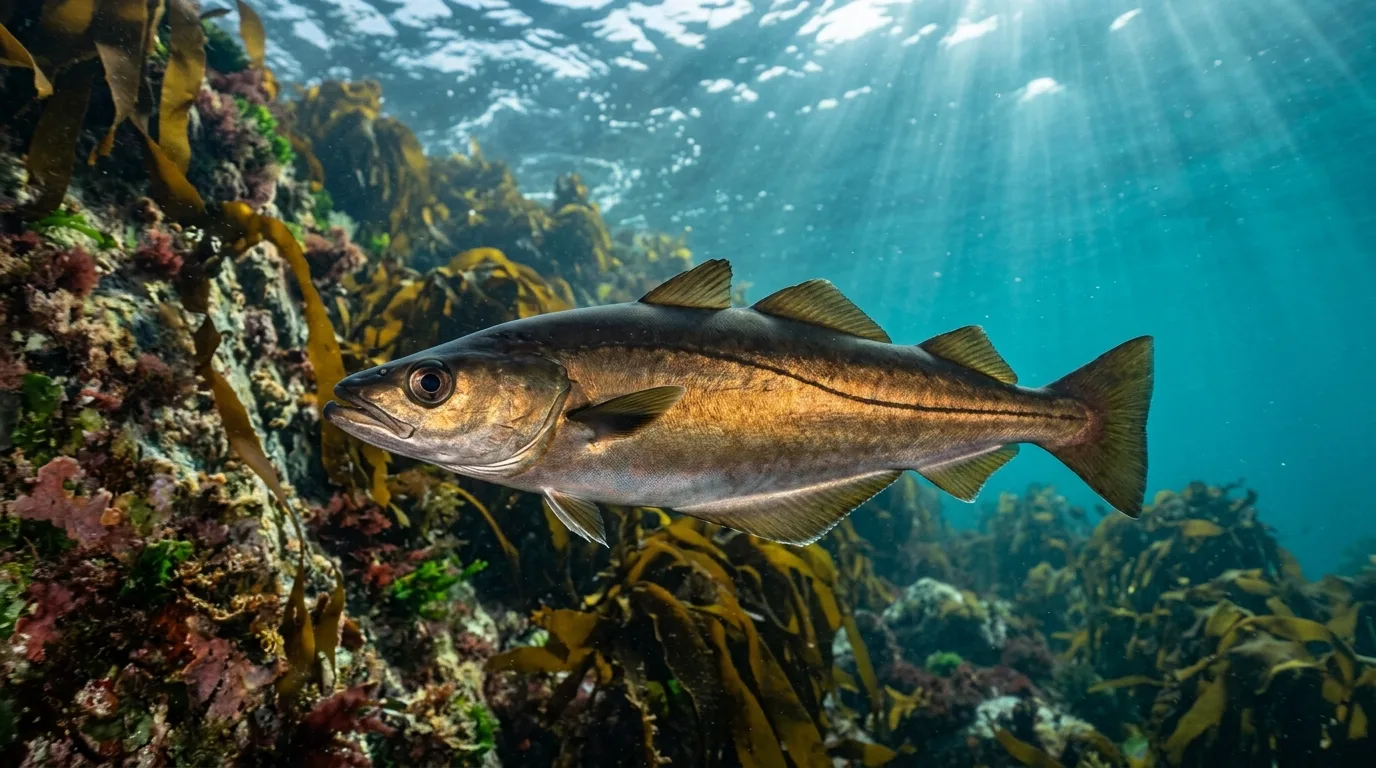
A cod relative with a dark, curved lateral line and no chin barbel, also called wreck fish by anglers. It usually measures 50 to 75 centimetres.
When
The main season runs from June to September, April, May and October are good too, and most happens at dusk. Spawning falls, depending on the area, in the months from January to May, when the fish spawn deep in open water.
- JanPossible, spawning season
- FebPossible, spawning season
- MarPossible, spawning season
- AprGood, spawning
- MayGood, spawning
- JunPeak season
- JulPeak season
- AugPeak season
- SepPeak season
- OctGood
- NovPossible
- DecPossible
Peak seasonGoodPossibleHardly any chanceSpawning season
Spring tactics
When the water temperature rises in spring, pollack move up into shallower areas at edges, plateaus and underwater hills. First attempts are then worthwhile in places with a good current.
Summer tactics
In summer pollack usually hold in mid-water by day, often at a depth of around 15 m in Norway. At dusk and in the light nights of midsummer they rise higher, and then shallow-running baits are called for.
Autumn tactics
The season stays strong until the end of September, and in October they still bite well. Overcast days and the longer dusk now often bring the best hours.
Winter tactics
Because pollack stay close to the coast, you can catch them in winter too, only less often. Depending on the area, spawning begins from January in deep open water. Small baits and a very slow retrieve help with sluggish fish.
Is it biting today?
In January: Spawning, please spareIn February: Spawning, please spareIn March: Spawning, please spareIn April: Spawning, please spareIn May: Spawning, please spareIn June: Peak seasonIn July: Peak seasonIn August: Peak seasonIn September: Peak seasonIn October: Off-peakIn November: PossibleIn December: Possible
Today’s catch index needs JavaScript. Season and spawning time are in the catch calendar.
Where it is now
On the coast
Look for broken rock with kelp, steeply dropping shore edges, reefs and wrecks. The big fish hold further out over underwater rocks and hunt mostly in mid-water. In high summer they often come right up to the surface at night.
How to go about it: From the shore you look for steeply dropping rock with kelp, rocky points and breakwaters with deep water right at your feet. From a boat you fish underwater hills, plateaus and rock faces, preferably with a current. Most bites come close to the edge.
| All year round | wreck, reef, drop-off, open water |
|---|---|
| Summer extra | just below the surface |
Feeding time: in the morning, in the evening and at night. How this looks on the water is shown by the picture of the holding spots right below.
Holding spots in the picture
Choose the season and time of day: the picture shows where the species stands then. Spots outlined in red apply only in the chosen season. Tap a fish or a spot in the list to bring it closer. The picture is schematic and AI-generated, every water is different.
Chance of a catch in springgoodSpawning, observe the closed seasons
Catch chance in summerPeak season
Catch chance in autumngood
Catch chances in winterpossiblespawning season, observe the closed seasons
- J
- F
- M
- A
- M
- J
- J
- A
- S
- O
- N
- D
Spawning season
Active time Dusk is considered favourable, and on into the night too.
No peak time Dusk is considered favourable, and on into the night too.
Active time Dusk is considered favourable, and on into the night too.
Active time Dusk is considered favourable, and on into the night too.
On the coast
Drop-off
Pollack are found here all year round.
Wreck, reef
Pollack are found here all year round.
Open water, mid-water
Pollack are found here all year round.
Just below the surface
Pollack are found here only in summer.
Pollack hold off rocky coasts with broken, heavily overgrown bottom, between kelp beds and rocks, by reefs and wrecks. Good spots are shore edges with rock that drops away quickly and kelp growth. They mostly hunt in mid-water and stay in their territory.
Spring: catch chance according to the catch calendar is possible in March, good in April and May. Spawning falls in this period, so observe the closed seasons. In Norwegian waters the pollack spawns in March and April.
Summer: catch chance according to the catch calendar is peak season. The summer half-year from April to the end of September counts as high season. With warmer water pollack move into shallower zones, and around midsummer they often hunt at the surface at night.
Autumn: catch chance according to the catch calendar is peak season in September, good in October and possible in November.
Winter: catch chance according to the catch calendar is possible. Spawning falls in this period, so observe the closed seasons. Because the pollack stays close to the coast, it can be caught all year round.
Depth: The pollack lives from the coast down to about 200 metres, preferring 40 to 100 metres over stony ground.
Size comparison: AI-generated drawing, schematic.
How
From a rocky shore you cast slim spinning lures and let them sink in a wobbling fall. Surf anglers rely on ragworm, and from a boat you fish a paternoster with small rubber lures or a slim pilker.
Easiest way
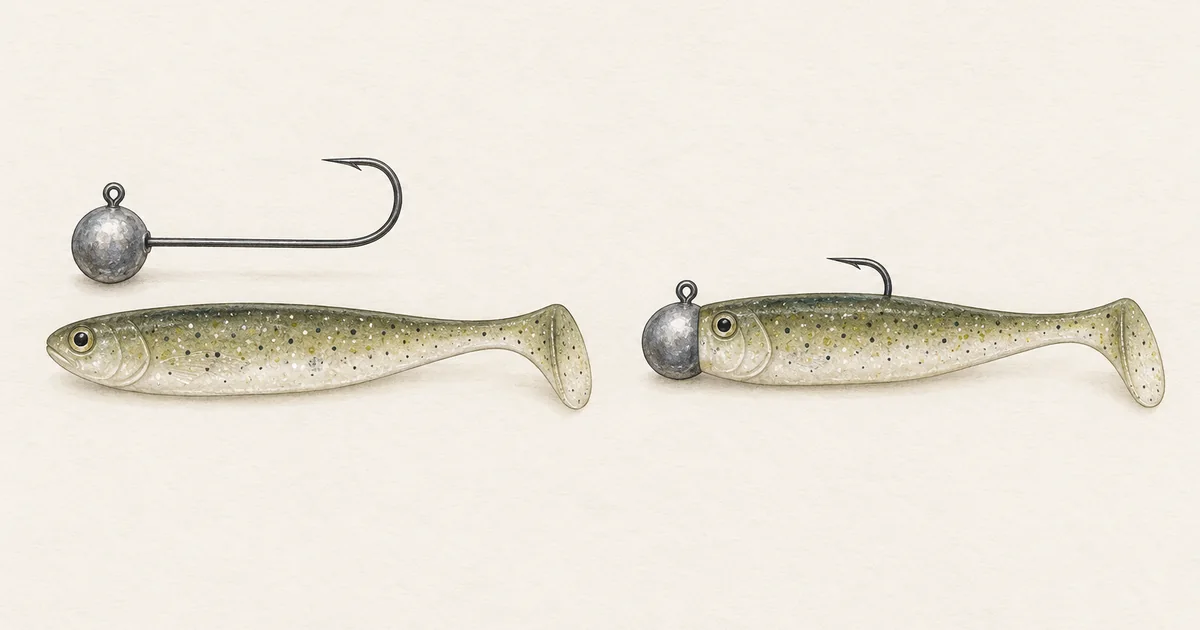
To start, cast a soft plastic (shad) of 10 to 15 cm on a jig head of 20 to 50 g from a boat or a rocky point close to a steeply dropping, kelp-covered rock face. Let it sink to the bottom and wind it up evenly along the wall.
Soft plastic (shad) at the rock face
The most common method from the shore and from a boat, at steep rock edges, kelp forests and underwater hills with current.
- Find a steep wall
Steep rock walls, edges with dense kelp growth and shallower underwater hills with current are the best places. From a boat you lie as close to the wall as wind and swell allow.
- Long hooklength
Knot a leader several metres long of fluorocarbon or monofilament in front of the thin braid. It withstands rock, mussels and kelp, through which a hooked pollack often bolts.
- Right up to the rock
Cast so close to the rocks that the lure almost bounces off them. From a boat you let it sink to the depth at which the echo sounder shows the fish as arches.
- Evenly upwards
Wind the soft plastic up steadily and rather slowly along the wall. Pollack often follow the lure right up to the boat, so do not drop it again too soon.
- Line runs out
You often hardly feel the bite, and suddenly the fish takes line off the reel. Keep the line tight so that the hook takes hold securely.
- Check the first run
The first run often covers 20 to 30 m towards the bottom, and a second attempt often follows. The drag has to pay out line evenly so that the lure does not pull out.
- On the surface
Bring the fish up slowly. If it has to go back, on the boat unhook it right at the surface without lifting it out of the water.
Natural baits in gentle current
From a boat and from breakwaters or jetties when there is hardly any current or no fry shoals nearby.
- Choose a quiet spot
Natural baits show their strength when the current is weak and no shoals of small fish are about. Rock edges are suitable, but so are piers, breakwaters and jetties with deep water in front.
- Running lead on the boom
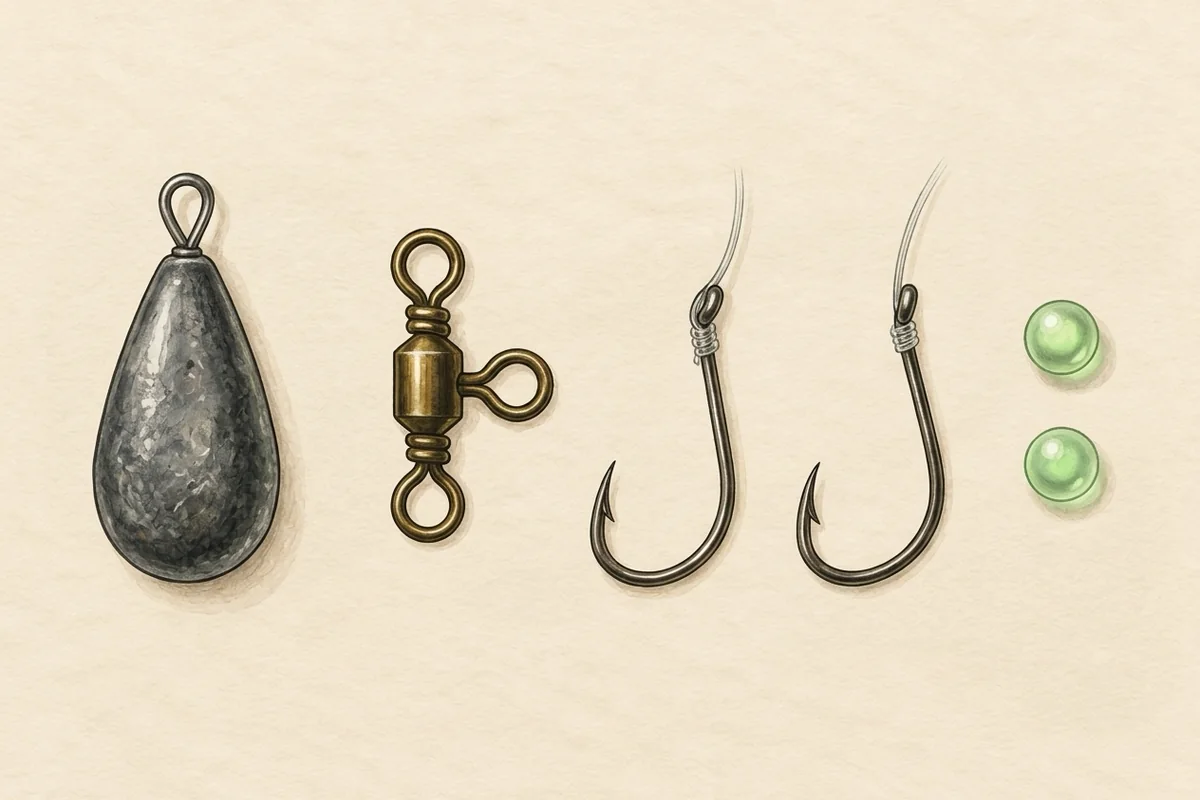
Thread a running lead on a running boom onto the mainline, followed by a long hooklength. Simpler is the side arm of a paternoster, on which the bait also plays freely.
- Cut narrow
Cut a thin strip from herring, mackerel or garfish and put the hook through it only once. That way it moves freely in the current. Whole sand eels are considered a special delicacy.
- Sink freely
With hardly any current you let a strip or a deep-sea prawn fall slowly through the water without a weight. When more current is running, the running lead holds the bait at the depth you want.
- Wait for the pull
Pollack often take natural baits cautiously. Wait until the line clearly moves away, and only then tighten it with a calm pull.
- Test the drag beforehand
Before the first cast take the line in one hand and the rod in the other. If the spool gives evenly with the rod bent, the setting is right for the hard first run.
What with
Soft plastics (shads) and other slim, lively-running lures that you pull in with a jerk and let sink again. If there are no prey fish, ragworm or a thin strip of mackerel or herring on a long hooklength is the better choice. Many bites come on the drop, so keep in contact with the line.
- Soft plastic (shad)all year round at rock faces and underwater hills
A slim soft plastic with a well-working tail runs lively even on a slow retrieve, and it is exactly this calm action that pollack like.
- Cut baitin weak current or without fry shoals, from a boat and from breakwaters
A thin strip of herring, mackerel or garfish usually catches pollack better than worm.
- Ragwormwhen bottom fishing from the shore and in the surf
Surf anglers catch pollack on many coasts with ragworm and bristle worms on the bottom.
Tackle
From the rocks a strong spinning rod, for worm bait from the beach a surf rod, and from a boat a pilker or boat rod. Set the drag before the first cast, because after the bite the fish bolts straight into kelp and rock.
Soft plastic (shad) at the rock face
- Rod
- Spinning rod 2,40–3,00 m, casting weight 40–100 g, with a fine tip and strong backbone
- Reel
- Fixed-spool reel size 4000–5000 or a small baitcaster
- Line
- Braid 0,12–0,16 mm, 200–300 m on the spool
- Leader
- Fluorocarbon or monofilament 0,50–0,60 mm, 2–5 m long, knotted on without a swivel
- Hooks
- large, sturdy single hook on a jig head
- Weight, float, lead
- soft plastic (shad) 8–15 cm on a jig head of 15–50 g from the shore; from a boat, depending on depth and drift, up to about 80 g
Natural baits in gentle current
- Rod
- strong spinning rod with a casting weight of 40–80 g
- Reel
- Fixed-spool reel size 4000
- Line
- Braid 0,12–0,15 mm
- Leader
- Monofilament 0,40–0,50 mm, a good 2 m long on the running boom
- Hooks
- Sea hook size 1 to 2/0
More on tackle
- Spinning rod: choose length, casting weight and action
- Surf rod: long casts from the beach
- Sea rod: surf rod, pilk rod and boat rod
- Line calculator
- Fishing line: monofilament, braid or fluorocarbon?
- Spooling a reel properly – without line twist
- Landing net: mesh, size and handle
- Disgorger: unhooking quickly and gently
Common mistakes
- Fishing only on the bottom: Pollack rarely hold right on the bottom, and mostly hunt in mid-water. After the lure has sunk, wind it up through the whole water column and watch for arches on the echo sounder.
- Braid without a leader: Thin braid wears through quickly on rock and mussels. A long leader of 0,50 to 0,60 mm also survives the bolt through the kelp.
- Drag too tight or too soft: If it is too tight, the line breaks or the hook pulls out; if it is too soft, the hook does not set. Check the setting before the first cast with your hand on the line.
- A rod that is too stiff: Heavy boat rods and spinning rods that are too stiff make fine lure control harder. A spinning rod with a casting weight of 40 to 100 g is enough for most places.
- Too fast for sluggish fish: When pollack bite hesitantly, the smallest changes often decide. Use a smaller soft plastic and retrieve it very slowly.
Rules
In our overview of the states there are no figures for the minimum size (Mindestmaß) or the closed season (Schonzeit) for pollack. That does not mean there are no rules: individual states and water regulations protect the species or set their own limits.
On the coast the rules of the coastal states apply, partly with their own catch restrictions: North Sea coast, Baltic coast of Schleswig-Holstein and Baltic coast of Mecklenburg-Western Pomerania.
The regulation and your fishing permit (Erlaubnisschein) are what count. Lake Constance, the Rhine and the coast, for example, have their own rules: Fishing waters in Germany.
After the catch
Playing and landing
Right after the bite expect a powerful run into kelp and rock and hold as hard as drag and hooklength allow. Then bring the fish up slowly. If you may not take it, unhook it in the water; pollack hooked from great depth often do not survive being returned, however.
A pollack does not survive being returned from 50 metres or more, so only fish there if you also intend to use the catch. You stun and kill fish you keep at once. It is better not to eat the liver: the Norwegian food authority warns against fish liver from coastal areas because of pollutants.
Frequently asked questions
Which soft plastic for pollack?
Slim soft plastics of about 8 to 15 cm with a lively tail on jig heads of 20 to 50 g have proved their worth. Natural dark colours often catch, and UV-active pink is an alternative.
At what depth does the pollack hold?
Mostly in mid-water, rarely right on the bottom. By day in Norway you will often find it at around 15 m, and at dusk and on summer nights clearly higher.
Which rod for fishing for pollack from the shore?
A spinning rod of 2,40 to 3,00 m with a casting weight of 40 to 100 g, a fine tip and strong backbone. A size 4000 reel, thin braid and a long leader go with it.
Does pollack also take pilkers?
Yes, especially when it is sluggish. Present the pilker without droppers and as light as possible, and retrieve it clearly faster than a soft plastic, preferably a level above the bottom.
Which natural bait for pollack?
Strips of herring, mackerel or garfish usually catch better than worms, and whole sand eels are good too. A sea hook of size 1 to 2/0 is enough.
Similar species
Anyone who catches pollack can also fish for these species with similar tackle:
 Cod fishingPeak season
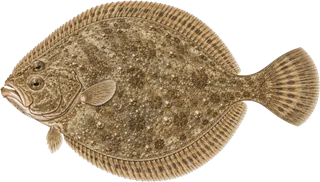 Turbot fishingMain season
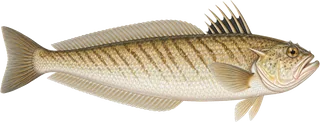 Weever fishingOnly as bycatch
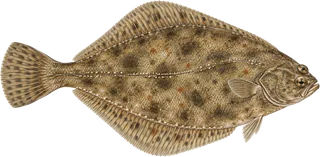 Flounder fishingMain season
Sources
As of: October 2026. The practical knowledge comes from 9 sources, summarised in our own words.
View all 9 sources
- Angeln auf Pollack: 6 Richtige für den Fangerfolg · BLINKER (Redaktion, Tipps von Sebastian Rose)
- Pollack mit Gummifisch fangen · BLINKER (Redaktion)
- Norwegen mit Gummifisch: Weicher Köder, hart am Fisch · BLINKER (Redaktion)
- Norwegen mit Spinnrute: Leichte Erfolge · BLINKER (Redaktion)
- 5 Köder für Pollack · RUTE & ROLLE (Timo Keibel)
- Steckbrief Pollack · BLINKER (Redaktion)
- Angeln in Südnorwegen: Hier ist alles möglich · BLINKER (Gregor Bradler)
- Norwegen: Angeln im Fjord – Technik, Taktik und Traumreviere · BLINKER (Joshua Zettelmeier u. a.)
- Barotrauma bei Fischen: Wie tief darf ich angeln? · BLINKER (Frank Schlichting)
Text produced with AI support, based on the sources named and on these pages: Pollack (profile), Spinning, Jigging with pilkers, Soft plastic (shad), Spinning rod.