
Knowledge – Fish
Fishing for golden dorado
Fishing for golden dorado means: find fast-flowing river stretches and offer a bait that looks like a small fish. Here is the way there in nine steps, each with a link to the detailed page.
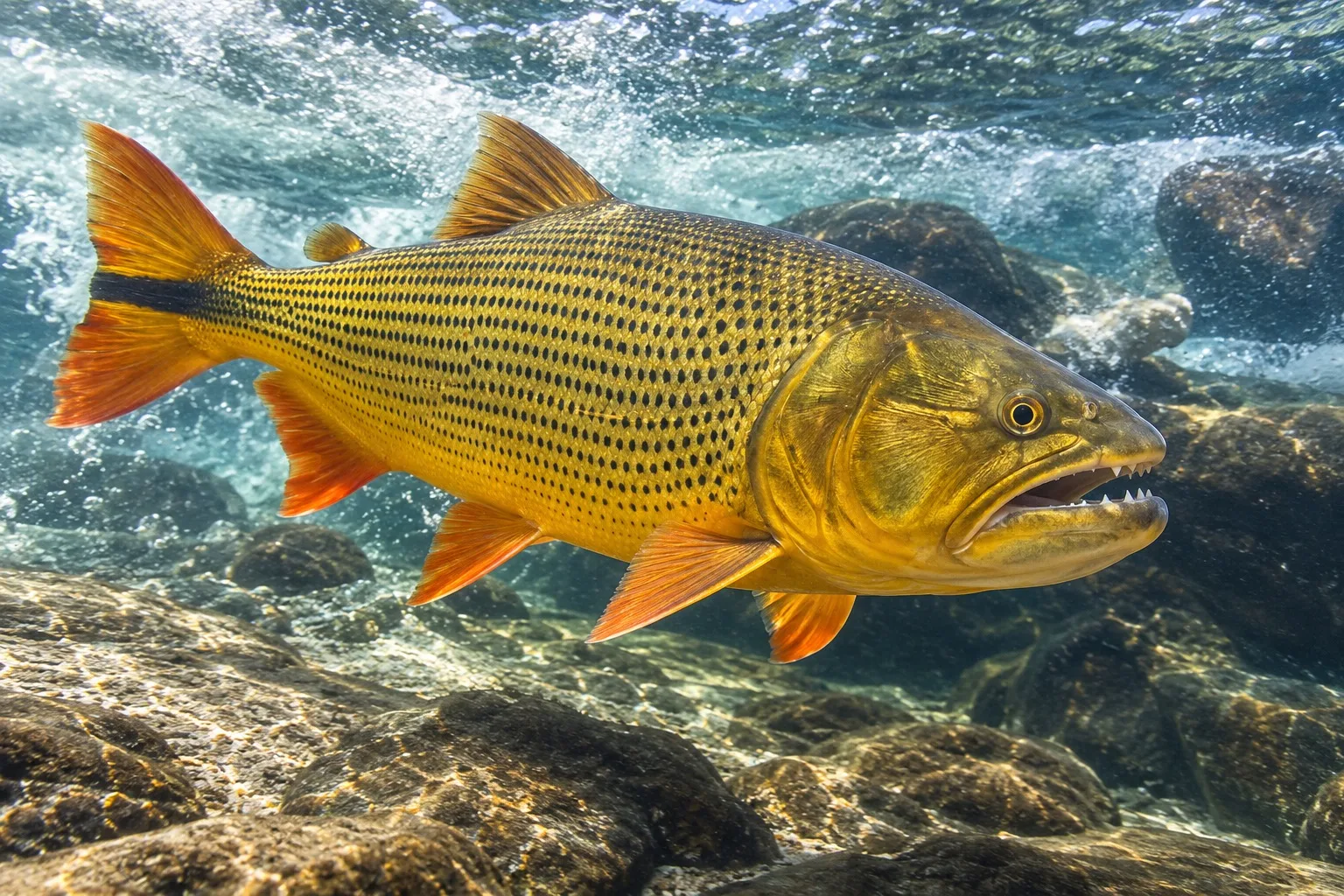
In the Brazilian state of Mato Grosso do Sul, the dorado has been protected by law since 2019: it may not be kept, transported or sold, and anglers may only catch and release it there, after the latest extension until the end of March 2027. The environment agency IMASUL cites similar bans for Mato Grosso and Paraná. Elsewhere, too, it often may only be released.
 Choose another fish117 fish with guides
 EelOff-peak season
 EelpoutPossible
 IdePossible
 ArapaimaGood
 GraylingPeak season
 Atlantic salmonSpawning time, please spare
 Brown troutSpawning time, please spare
 Brook troutSpawning time, please spare
 BarbelOff-peak season
 BarramundiSpawning season
 Greater amberjackGood
 Topmouth gudgeonOnly as bycatch
 Blue marlinSpawning season
 BonefishSpawning season
 BonitoGood
 BreamOff-peak season
 Dusky grouperOnly as bycatch
 CobiaPossible
 Spiny dogfishOnly as bycatch
 CodPeak season
 ChubPeak season
 MinnowOnly as bycatch
 European sturgeonOnly as bycatch
 FlounderPeak season
 PerchPeak season
 Largemouth bassGood
 Ballan wrasseOnly as bycatch
 Yellowfin tunaSpawning season
 Giant trevallyGood
 Prussian carpPossible
 BrillPossible
 Gilthead breamSpawning time, please spare
- Golden doradoSpawning season
 Golden mahseerOnly as bycatch
 Dolphinfish (mahi-mahi)Good
 Grass carpPossible
 Great barracudaGood
 GudgeonPossible
 White breamPossible
 DaceOff-peak season
 PikePeak season
 HalibutOff-peak season
 HerringPossible
 GarfishOut of season
 Huchen (Danube salmon)Possible
 Crucian carpOnly as bycatch
 CarpOff-peak season
 RuffeOff-peak season
 VendaceOnly as bycatch
 DabPeak season
 GurnardPossible
 Coley (saithe)Peak season
 Chinook salmonHardly any chance
 King mackerelSpawning season
 LingPeak season
 TuskOff-peak season
 MackerelPossible
 Bighead carpOut of season
 WhitefishPossible
 Conger eelOff-peak season
 Sea troutSpawning time, please spare
 Grey mulletPossible
 Murray codSpawning season
 MuskellungeGood
 Common nasePossible
 Nile perchPossible
 PayaraPossible
 Peacock bassPeak season
 PermitGood
 WeeverOnly as bycatch
 PollackOff-peak season
 BurbotOff-peak season
 AspPossible
 Red snapperSpawning season
 Rainbow troutPeak season
 RoosterfishGood
 RoachPeak season
 RedfishOut of season
 Bluefin tunaOnly as bycatch
 RuddPossible
 Russian sturgeonOnly as bycatch
 HaddockOff-peak season
 SnakeheadPossible
 TenchOff-peak season
 SpirlinOnly as bycatch
 PlaiceOff-peak season
 Greenland halibutOnly as bycatch
 Round gobyOnly as bycatch
 SwordfishGood
 Lake troutSpawning time, please spare
 HakeSpawning time, please spare
 Alpine charSpawning time, please spare
 MonkfishPossible
 SoleOff-peak season
 SailfishGood
 Silver carpOut of season
 SnookPeak season
 PumpkinseedOnly as bycatch
 SpratOnly as bycatch
 Atlantic wolffishSpawning time, please spare
 TurbotPeak season
 SterletOnly as bycatch
 SmeltOnly as bycatch
 Horse mackerelPossible
 TaimenGood
 TarponGood
 TigerfishSpawning season
 BleakPossible
 WahooGood
 Wels catfishOff-peak season
 WhitingPeak season
 Sea bassOff-peak season
 ZanderPeak season
 White-eye breamOnly as bycatch
 Blue breamOnly as bycatch
 Brown bullheadPossible
 VimbaOnly as bycatch
Season in October according to the catch calendar, an estimate and not a guarantee of a catch. The fish pictures are reduced natural-history plates and AI-generated.
Best time
In April and September.
In January: Possible, spawningIn February: Possible, spawningIn March: GoodIn April: Peak seasonIn May: GoodIn June: PossibleIn July: PossibleIn August: GoodIn September: Peak seasonIn October: Possible, spawningIn November: Possible, spawningIn December: Possible, spawning
Good spot
- River: current edge and main currentcurrent edge and main currentcurrent edge and main currentcurrent edge and main current
Starter tackle
- Rod: spinning or baitcasting rod; the studies give no rod class for big wild fish
- Line: the studies give no strength; choose by fish size and current
- Hook: trebles on the lure (barbed in the trial); single hooks make unhooking easier
- Rod: fly rod, class 6–8
- Line: fly line to match the rod class 6–8
- Hook: streamer size 3–4 on a single J hook
In short
In short: According to the catch calendar the best time is April and September. Good spots in the river: current edge and main current. Proven baits: live baitfish, spinners and small crankbaits on a short wire leader, streamers on the fly rod. In several provinces of Argentina commercial fishing is banned; in Mato Grosso do Sul (Brazil) a fishing ban applies until the end of March 2027, and only catch and release is allowed. Check the rules with the relevant authority before you travel.
Quick to recognise
A powerful, yellowish predatory characin with rows of dark spots and a dark crossbar on the tail base. It grows to about a metre long, measured without the tail fin, and over 30 kilograms in weight.
When
In the La Plata basin April and September are the best months; March, May, August and October count as good. On the upper Paraná spawning runs roughly from October to February with a peak from November to January; on the upper Uruguay, ripe fish were found between August and March. In Brazil the piracema counts as the spawning closed season in the southern summer, and in Mato Grosso do Sul all fishing stops until the end of February.
- JanPossible, spawning season
- FebPossible, spawning season
- MarGood
- AprPeak season
- MayGood
- JunPossible
- JulPossible
- AugGood
- SepPeak season
- OctPossible, spawning
- NovPossible, spawning season
- DecPossible, spawning season
Peak seasonGoodPossibleHardly any chanceSpawning season
Season in the destination
April and September are the best months in the La Plata basin. On the Río Juramento in Salta the first season falls in the cool dry season from May, with water at about 16 to 23 degrees; a second follows from September to December, when the water gets warmer than 23 degrees. With rain and rising water the spawning migrations upriver begin from about September, and then angling rests in many parts of Brazil. Below dams the catch depends heavily on how much water is being released.
Season and biting time
In January: SpawningIn February: SpawningIn March: GoodIn April: Peak seasonIn May: GoodIn June: PossibleIn July: PossibleIn August: GoodIn September: Peak seasonIn October: SpawningIn November: SpawningIn December: Spawning
Where it is now
In the river
Adult dorados hold in fast-flowing stretches of the Paraná, Paraguay and Uruguay and hunt small fish there. Young fish, by contrast, are found over soft mud in weak current.
How to go about it: Adult dorados hunt mainly at dusk in fast-flowing water. Fish rapids, waterfalls and the tailwater below dams, where migrating fish pile up. On shallow, turbid rivers such as the Juramento you drift on a raft and cast to the banks and channels.
| All year round | current seam, main current |
|---|
Holding spots in the picture
Choose a season and time of day: the picture shows where the species sits then. Tap a fish or a spot in the list to bring it closer. The picture is schematic and AI-generated, every water is different.
Chance of a catch in springgood
Catch chances in summerpossible
Catch chance in autumnpossiblespawning, observe closed seasons
Catch chances in winterpossiblespawning season, observe the closed seasons
- J
- F
- M
- A
- M
- J
- J
- A
- S
- O
- N
- D
Spawning season
In the river
Current seam
The golden dorado is found here all year round.
Free current in mid-river
The golden dorado is found here all year round.
Adult dorados look for fast-flowing stretches in the river system of the Paraná, Paraguay and Uruguay and hunt smaller fish there. Young fish, by contrast, stay in weak current over soft muddy bottom. The species makes long migrations and moves into flowing water to spawn.
Spring: according to the catch calendar, the chance of a catch is good in March, peak season in April, good in May.
Summer: chance of a catch according to the catch calendar possible in June and July, good in August.
Autumn: catch chance according to the catch calendar peak season in September, possible in October and November. Spawning falls in this period, observe closed seasons.
Winter: catch chances according to the catch calendar are possible. The spawning season falls in this period, so observe the closed seasons.
Size comparison: AI-generated drawing, schematic.
How
Spinning and baitcasting rods are usual. In a study in Brazil, researchers caught dorados on baitfish on a single hook and on spinners and small crankbaits.
Easiest way
Take a spinning or baitcasting rod, add a short wire leader and attach a spinner or a small crankbait. Cast it into rapids and the water below weirs and dam walls. Your best chances are early in the morning and at dusk.
Spinners and small crankbaits
The usual way with conventional tackle: you cast fast, oxygen-rich stretches where hunting dorados gather.
- Fast water
Good spots are rapids, waterfalls and the tailwater below dams. Below one dam in a study most fish stood when little water was being released; with very high discharge only a few stayed.
- Wire in front of the lure
Connect the main line and the lure with a short piece of wire. Many lures carry trebles; a single hook is easier and faster to remove later.
- Across the current
Cast at an angle across the current and let the lure drift into the calmer water behind rocks and at the edges of the rapids.
- Retrieve actively
Keep the lure moving constantly as you retrieve. In Salta, dorados rarely swallowed actively fished flies on single hooks deeply, and the researchers see this as a reason for the low injury rate.
- The first casts
In a pond trial, dorados attacked lures mainly in the first casts and stopped as soon as one fish was hooked. If it stays quiet, move on to the next rapid.
- Play it quickly
Keep the fish under pressure and bring it in without long pauses. Larger dorados took longer in the study; on average the fight lasted just under three minutes.
- Unhook in the water
Secure the fish in shallow water, for example with a lip gripper, and remove the hook without lifting it out. Have pliers and side cutters ready beforehand.
Streamers from a drifting raft
This is how it is fished on the Río Juramento in Salta: the raft drifts with the current and you cast the fly to the bank and into the channels.
- Drift with the current
Let the raft drift downriver and keep fishing new spots. The Juramento is turbid and in the main current only a little over a metre deep on average.
- Knot on the wire tip
To the leader of 9 to 14 kilograms breaking strain you add a wire tip of 14 kilograms. The fly sits on a single hook of size 3 to 4.
- Fly to the bank
Cast the fly close to the bank, current edges and channels while the raft drifts on.
- Twitching the retrieve
Retrieve the fly in short pulls so that it looks like a fleeing fish. An actively fished fly is usually hooked in the corner of the mouth.
- Many takes
Expect missed bites: in Salta, 60 dorados were landed from 184 takes. Strike at once at every tug.
- Row to the sandbank
While you play the fish, the raft is rowed to a shallow spot on the bank. The fights there lasted from half a minute to a good nine minutes.
- Get out and land it
Step out in the shallows and secure the fish with a second person in the water. That is also where you unhook it.
What with
Baitfish, spinners and small crankbaits suit the prey, because the dorado eats almost only fish. A short wire leader belongs in front of the lure, because several rows of teeth endanger the line.
- Spinnerat rapids and below dams, all year in the season
It flashes in fast water like a prey fish; with lures of this kind researchers caught dorados for their studies in Brazil.
- Crankbaitin channels and behind rocks, when the lure should run a little deeper
Small crankbaits resemble the characins and sábalos that the dorado hunts, and in one catch-and-release trial they were used alongside spinners.
- Baitfishwhen lures are no longer taken after the first casts
In the pond trial, live baitfish produced 60 of 70 catches; whether live bait is allowed is decided by the country where you fish.
Tackle
A spinning or baitcasting rod, plus a short wire leader. The pages on spinning rods and line help with the choice.
Spinners and small crankbaits
- Rod
- Spinning or baitcasting rod; the studies give no rod class for big wild fish
- Reel
- Fixed-spool reel or baitcasting reel
- Line
- the studies give no strength; choose by fish size and current
- Leader
- short wire leader
- Hooks
- Trebles on the lure (barbed in the trial); single hooks make unhooking easier
- Weight, float, lead
- Spinners and small crankbaits that imitate prey fish
Common mistakes
- Lifting the fish out of the water for a photo: Even two minutes in the air led in Salta to acidified blood and clearly impaired reflexes. Take the photo with the fish in the water.
- Levering at the hook for a long time: When the hook was hard to remove, anglers often lifted the fish into the air without noticing. Press the barbs down or use a single hook and long pliers.
- Letting the fish go too soon: Turn it briefly onto its back: if it does not right itself within three seconds, it has not yet recovered. Then hold it with its head into the current until it swims away strongly.
- Releasing far from the catch spot: Dorados that had been carried downstream swam back to the catch spot afterwards at great effort. Put the fish back where you hooked it.
- Carrying on casting in the same spot: After the first fish was hooked, attacks on lures stopped in the trial. After a catch or a few empty casts, move on to the next spot.
Rules
For the golden dorado the rules of the country where you fish apply, not the German fisheries laws. Each country, often each water, sets its own licence, closed seasons, minimum sizes and rules on keeping fish.
What the profile says: In several provinces of Argentina commercial fishing is banned; in Mato Grosso do Sul (Brazil) a fishing ban applies until the end of March 2027, and only catch and release is allowed. Check the rules with the relevant authority before you travel.
The fisheries authority (Fischereibehörde) of the country you travel to is what counts. Ask about the current rules before the trip and read in the profile how threatened the species is.
After the catch
Playing and landing
Strike at once and play the dorado quickly to a shallow spot. Leave it in the water to unhook it, do not reach under the gill covers and do not lift it out for photos. Before release you hold it with its head into the current until fresh water runs through the gills and it stays upright by itself; then you let it go at the catch spot. In many places the dorado may only be released; rules, licence and keeping fish are set by the country where you fish.
In the Brazilian study the risk of death rose the longer the fish was in the air; from 546 seconds out of the water it exceeded 5 per cent. So take the dorado out of the water only as briefly as possible.
Frequently asked questions
How long may a dorado be out of the water?
As briefly as possible, ideally not at all. In one trial the risk of death rose above 5 per cent from about nine minutes in the air, but even two minutes stressed the fish measurably.
Do you need a wire leader for the dorado?
Yes. Researchers fished with a wire tip of 14 kilograms in front of the fly; with natural bait a short piece of stainless steel sat directly at the hook.
Which fly rod for golden dorado?
On the Río Juramento in Argentina the anglers used rods of classes 6 to 8. Added to that were a leader of 9 to 14 kilograms breaking strain and flies of size 3 to 4.
When does the dorado bite best?
It feeds mainly at dusk in fast water. Over the year April and September are the strongest months, and on the Juramento also the weeks from May.
Does a dorado survive being released?
Usually yes, if you handle it gently. In Salta no fish died directly after capture, and of 24 tagged dorados, 22 were still moving days later.
Similar species
Anyone who catches the golden dorado can fish for these species with similar tackle too:
 Chinook salmon fishingSlim chances
 Nile perch fishingPossible
 Fishing for largemouth bassGood
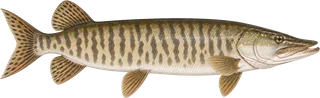 Fishing for muskellungeGood
Sources
Status: October 2026. The practical knowledge comes from 5 sources, summarised in our own words.
View all 5 sources
- Evaluating the consequences of catch-and-release recreational angling on golden dorado (Salminus brasiliensis) in Salta, Argentina (Gagne et al., Fisheries Research 186, 2017; Autorenmanuskript) · University of Massachusetts Amherst und Carleton University (Fish Ecology and Conservation Physiology Lab), erschienen in Fisheries Research
- The influence of catch-and-release on mortality of Salminus brasiliensis (Cuvier, 1816) · Brazilian Journal of Biology (Sanches und Piana, Universidade Estadual do Oeste do Paraná)
- Pesque-e-solte, uma alternativa para conservação de recursos pesqueiros?: avaliação da atividade em Salminus brasiliensis (Dissertation) · Universidade Estadual do Oeste do Paraná (UNIOESTE), Programa de Pós-Graduação em Recursos Pesqueiros e Engenharia de Pesca
- Use of radiotelemetry to track threatened dorados Salminus brasiliensis in the upper Uruguay River, Brazil (Hahn et al., Endangered Species Research 15, 2011) · Inter-Research Science Publisher (Endangered Species Research); Universidade Estadual de Maringá, Carleton University u. a.
- Especies fluviales: Dorado (Salminus brasiliensis) · Secretaría de Agricultura, Ganadería y Pesca, Argentinien (Pesca Continental)
Text AI-assisted, based on the sources named and these pages: Golden dorado (profile), Spinning, Baitfish, Spinner, Releasing a fish.