
Knowledge – Fish
Golden dorado: Features, season, baits and rules
The golden dorado (Salminus brasiliensis) is a large predatory characin from the river system of the Paraná, Paraguay and Uruguay. It migrates long distances upstream to spawn and as an adult feeds almost only on fish. In Argentina and Brazil it is one of the most sought-after sport fish, and in many places it may only be released.
In short: According to the catch calendar the best time is April and September. Good spots on the river: current seam and main current. Proven baits: live baitfish, spinners and small plugs on a short steel trace, streamers on the fly rod. In several Argentine provinces commercial fishing is banned, and in Mato Grosso do Sul (Brazil) a fishing ban applies until the end of March 2027, with only catch and release allowed. Check the rules with the competent authority before you travel. Step by step: Fishing for golden dorado.
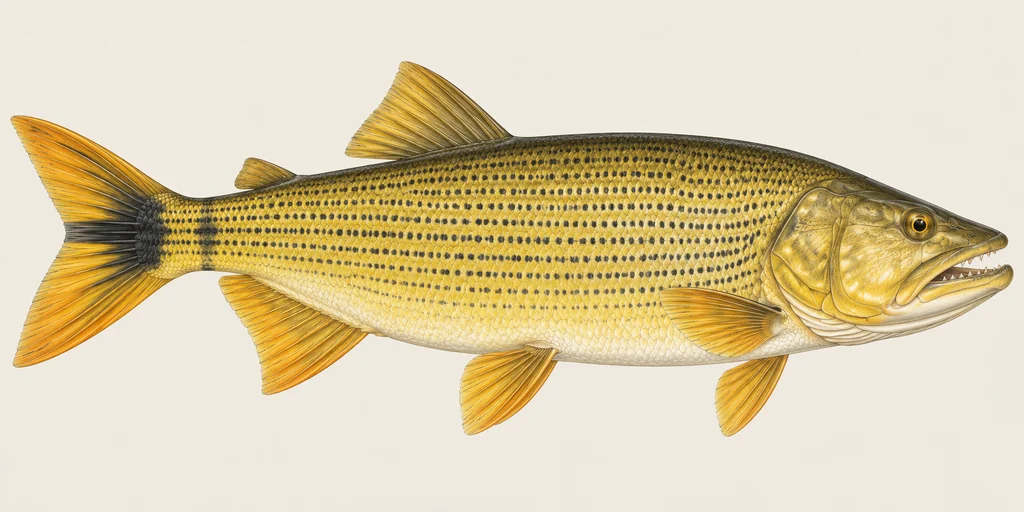
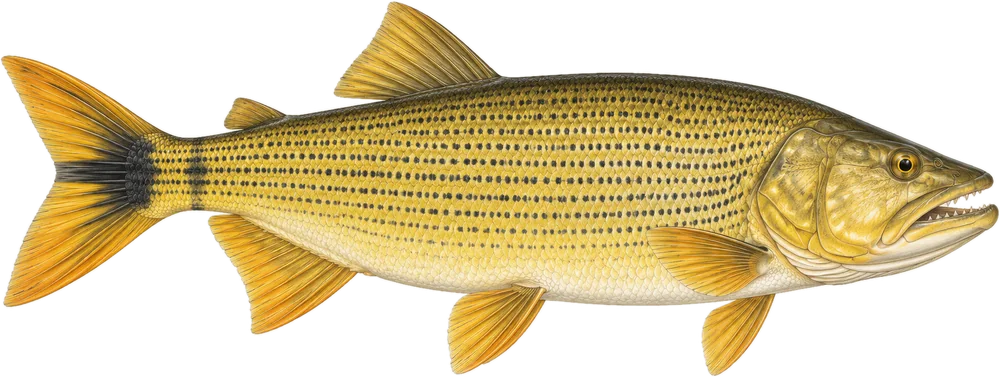
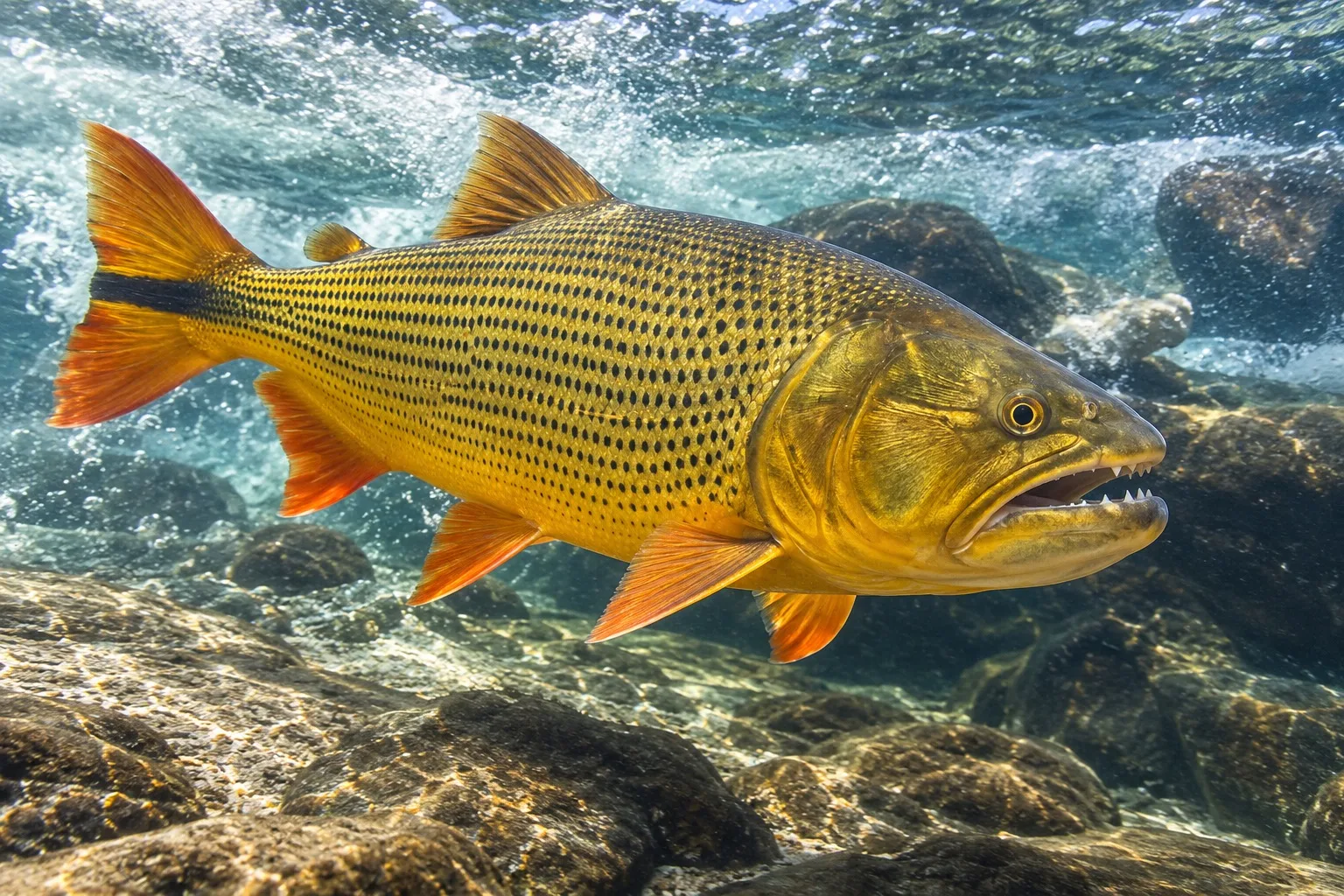
- Yellowish base colour with lengthwise rows of dark dots on the scales
- Dark vertical band on the caudal peduncle, running out into the middle tail fin rays
- Large, conical head with a terminal mouth and several rows of teeth
Catch chances through the year
- Hardly any chance
- Possible
- Good
- Peak season
- Spawning (observe the closed season)
Editorial assessment for the native range (Paraná, Paraguay and Uruguay basins), not a measured value and not a guarantee. The rules of the country you are travelling to are binding.
How to recognise it
The dorado is a powerful characin with small scales and a conical head. The base colour is yellowish, and on the flank scales rows of dark brown dots run together into longitudinal lines. The fins are yellowish to orange with a reddish edge.
The surest feature is a dark brown vertical band on the rear caudal peduncle. It runs out to the edge of the middle tail fin rays, which are slightly elongated in the dorado.
The mouth is terminal and set with several rows of small teeth, with 40 to 50 in the inner row of the lower jaw alone. The lateral line has more than 90 scales.
FishBase gives 100 cm standard length (measured without the tail fin), 31,4 kg and a maximum age of 9 years. The Argentine ministry of agriculture states up to 120 cm and over 30 kg.
The tabarana (Salminus hilarii) lives in the same river system. It has silvery head bones and clearly fewer scales along the lateral line.
The large dourado from the São Francisco basin in Brazil was long considered the same species. Since 2007 it has been treated as a separate species, Salminus franciscanus. It has fewer scales and an even more elongated middle of the tail fin.
The freshwater dorado shares only the Spanish name with the dolphinfish (Dolphinfish (Mahi-Mahi)).
Side by side
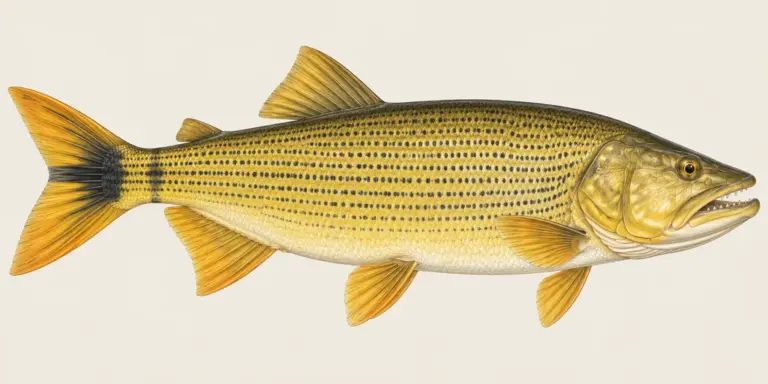
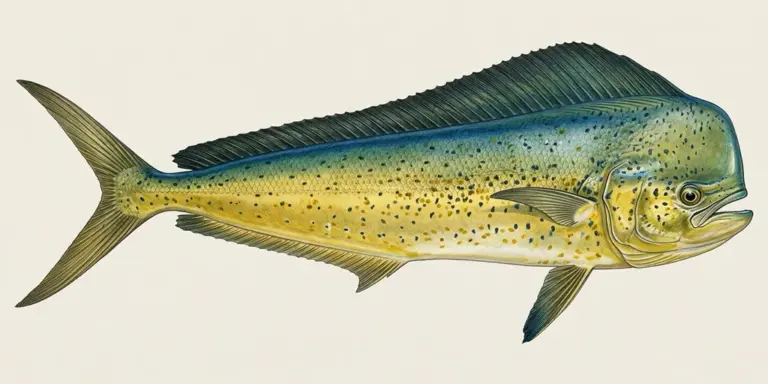
AI-generated illustrations.
Where it holds
The dorado is native to the river system of the Paraná, Paraguay and Uruguay down to the Río de la Plata, and also to the Lagoa dos Patos and the upper Mamoré in Bolivia.
Adult fish seek fast-flowing water. Juveniles tend to stay over soft, muddy bottom in weak current.
The dorado makes spawning, feeding and temperature-driven migrations. On the upper Uruguay, researchers studied a river stretch of about 580 km for 18 years and describe the species as a long-distance migrant.
Holding spots in the picture
Choose the time of day: the picture shows where the species holds. We do not show German seasons for travel fish; the bars give the chance of a catch for each month. Tap a fish or a spot in the list to bring it closer. The picture is schematic and AI-generated, and every water is different.
Chance of a catch per month according to the catch calendar
- J
- F
- M
- A
- M
- J
- J
- A
- S
- O
- N
- D
Spawning season
In the river
Current seam
The golden dorado is found here all year round.
Free current in mid-river
The golden dorado is found here all year round.
Adult dorados look for fast-flowing stretches in the river system of the Paraná, Paraguay and Uruguay and hunt smaller fish there. Young fish, by contrast, stay in weak current over soft muddy bottom. The species makes long migrations and moves into flowing water to spawn.
Size comparison: AI-generated drawing, schematic.
How it feeds and migrates
Adult dorados feed almost only on fish, above all smaller characins and sábalos. They are also cannibals. Very young dorados live on plankton, later on insects and fry.
They move into flowing water to spawn. According to a study on the Rio Verde in the upper Paraná basin, most species there spawn from October to February, peaking from November to January. The dorado reached maturity there at just under 30 cm. On the upper Uruguay researchers found mature dorados from August to March.
The females release hundreds of thousands of eggs. The larvae attach themselves to drifting debris with an adhesive organ on the head, so the current does not sweep them away.
When and where the season is
The season depends on the water. In Brazil the piracema applies in the southern summer, a spawning closed season (Schonzeit), during which all fishing in Mato Grosso do Sul is suspended until the end of February. After that the angling season begins there.
Because the spawning season runs roughly from October to February, the months from March to September frame the angling season. Argentine provinces set their own closed seasons and rules, which you should check before every trip.
What you catch it with
Step by step: Fishing for golden dorado: tips on baits, rigs and tackle – season, holding spots, baits, tackle and rules on one page.
Anglers fish with spinning and baitcasting rods. In a Brazilian catch-and-release study the researchers caught dorados on live baitfish on single hooks and on spinners and small plugs. A short steel trace sat in front of the bait.
Look for stretches with strong current, because that is where the adult fish hold. They hunt small fish, so a lure that imitates a fish matches their food.
Keep the fish in the air only briefly: In the study the risk of death rose with time out of the water. Beyond 546 seconds it was above 5 per cent. The authors advise taking the fish out of the water for as short a time as possible.
Plan for a steel trace: The dorado has several rows of teeth. A short steel trace, like the one the researchers used, protects the main line.
Suitable lures
Live baitfish, spinners and small plugs on a short steel trace, streamers on the fly rod.
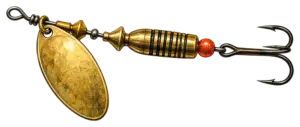
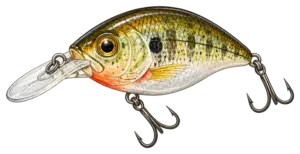
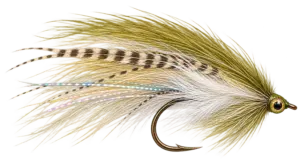
AI-generated illustrations. A click opens the lure’s page.
In many places only catch and release is allowed; sharp teeth.
Which rules apply
According to the Argentine ministry of agriculture, commercial fishing for dorado is banned in several provinces of the La Plata basin because stocks have been declining for years. Sport anglers are subject to the licences and rules of the province concerned.
In Mato Grosso do Sul a state law has banned the catching, transport and sale of the dorado since 2019. Only catch and release, the subsistence needs of professional and bank fishers, and farmed fish are permitted. After the latest extension the ban applies until the end of March 2027 (Law No. 6.390, Official Gazette of Mato Grosso do Sul). Until then studies are to clarify whether it will be extended further. The environment agency IMASUL reports similar bans for Mato Grosso and Paraná.
The IUCN Red List classes the dorado as not threatened worldwide. The information given by the competent authority on the spot is binding: in Brazil the state environment agency, in Argentina the provincial fisheries authority (Fischereibehörde).
Frequently asked questions (FAQ)
May you keep a golden dorado?
In many places you may not. In Mato Grosso do Sul a fishing ban applies until the end of March 2027, with only catch and release allowed, and in several Argentine provinces commercial fishing is banned. Ask the competent authority before you travel.
How big does a dorado get?
FishBase gives 100 cm standard length and 31,4 kg, the Argentine ministry of agriculture up to 120 cm and over 30 kg. It reaches maturity at around 30 to 38 cm.
When does the dorado spawn?
In the upper Paraná basin usually from October to February, with the emphasis on November to January. On the upper Uruguay researchers found mature fish as early as August.
Sources
The rating of catch chances is an editorial assessment. The facts come from these sources, and the text is worded in our own words. The illustration is an original design by Angel Momente in the style of a natural history plate (AI-generated, see the AI notice).
- FishBase: Salminus brasiliensis
- Secretaría de Agricultura, Ganadería y Pesca (Argentinien): Especies fluviales – Dorado
- Zaniboni-Filho et al. (2017), Neotropical Ichthyology: Wide reproductive period of a long-distance migratory fish in a subtropical river
- Revista de Biología Tropical (2020): Reproduction of fishes of the Verde River, upper Paraná River Basin
- Sanches & Piana (2020), Brazilian Journal of Biology: The influence of catch-and-release on mortality of Salminus brasiliensis
- Ota et al. (2018), Neotropical Ichthyology, via Plazi: Salminus brasiliensis
- Lima & Britski (2007), Neotropical Ichthyology: Salminus franciscanus, a new species from the rio São Francisco basin
- Acuario del Río Paraná (Provinz Santa Fe): Dorado
- IMASUL Mato Grosso do Sul: Pesca do dourado continua proibida nos rios de Mato Grosso do Sul até março de 2025
- IMASUL Mato Grosso do Sul: Pesca do Dourado é proibida em Mato Grosso do Sul por cinco anos
- Diário Oficial do Estado de Mato Grosso do Sul, Ausgabe 11.786 (März 2025): Lei nº 6.390, Verlängerung des Dourado-Verbots
Created with AI support from the sources listed. Figures only appear in the text if a source gives them. Last updated: 27 October 2026. Found a mistake? Write to us. Who is behind this site: About me.
More in the lexicon
- All fish species at a glance
- Catch calendar – month, water temperature and profile for 93 species
- Line calculator – breaking strain after the knot, drag guideline, backing
- Angling methods